Friday, February 20, 2026
Album Review: Michael Monroe - Outerstellar
The law of diminishing returns came to mind, which put me into alert mode as the rollout for this latest album began. The three singles that were released in advance felt flat, maybe a bit hollow, and with each new one my hopes for the album dropped accordingly. Was I simply tired of the band treading the same water? Well, a listen back to "Blackout States" told me I still love that one just as much as I ever did, so I'm not sure that's the answer.
To paraphrase Hamlet; Ah, here's the rub. Michael and his band continue to make sleazy rock and roll songs that remind us of the dirty stories of the filthy streets of the old days. That is so quaint, and honestly antiquated, when we're faced with existential crises every time we look at the headlines. I'm not saying artists like Michael should be writing songs that sound like preaching the gospel of modern times, but the wistful feeling about the days when we praised rock stars for being addicts and assholes doesn't play as well when we're all just trying to survive.
But again, none of that would matter if the songs were still as sharp and hooky, which they aren't, at least on the first half of the record. Look no further than "Black Cadillac", which is a slow dirge where the chorus is merely chanting the title, done so with backing vocals that reverberate in a way that masks Michael's voice. That makes the 'gang vocal' actually sound small, and not powerful at all, which goes against the entire way the song is constructed. I don't think it would be all that great anyway, but the choice doesn't help matters.
"When The Apocalypse Comes" trades in a chorus for a single line, which doesn't really work for me as a release after the verse, and especially when the cadence of that verse is one of those moments I swear I've heard before in one of his songs. There's the law of diminishing returns put on display. The same is true of "Painless", although that song at least has a tempo and chord droning that is a little something different for Michael. It distracts a bit from the lack of a compelling melody.
When we hit the middle of the record, "Disconnected" and "Precious" dip into what makes Michael's music so much fun, with "Pushin' Me Back" forming a trio of songs that make me wonder what I had spent the previous twenty minutes listening to. The shift in tone is jarring, as all of a sudden the band sounds alive, the songs have punch, and we've got ample reason to headbang and sing along.
That leaves me asking myself an interesting question; is it better to have a full album that's merely 'ok', or an album that is half forgettable and half really good? That's the difference between this album and the previous one. The second half of this album is really good, and I would probably put ahead of almost all of "I Live Too Fast To Die Young", but the first half is the most tepid group of songs I've heard from this era of Michael's career. I can't say I love either album in full, and I'm not sure I have an answer to the question I just asked. I will likely get more replays out of the good songs on this album, but I might be less eager to put it on knowing what it will take to get there.
My biggest takeaway from "Outerstellar" is disappointment, not so much because of the quality level, but for hearing in it the band still has plenty of great songs in them, but for some reason makes us sit through their worst material before we get to hear it. I don't say this often with records that are only forty-three minutes long, but taking two of those early songs off to make a thirty-six minute album would have made this a better record, and one I'd be far more excited about.
Wednesday, February 18, 2026
Quick Reviews: Austen Starr & Joel Hoekstra's 13
There are a lot of things I know I don't understand about how people and the world work. Among those seems to be scheduling. Whether it's television programming or album releases, the ways in which the people trying to maximize attention and profit choose to release their work to the world often leaves me puzzled as to why they make the decisions they do. Many times, those choices are self-defeating, at least to me. It's certainly possible that I'm the weird one here, but the two albums we're here to talk about today are an example of just this phenomenon.
Austen Starr's "I Am The Enemy" and Joel Hoekstra's 13's "From The Fade".
There are actually two issues of scheduling I feel need to be addressed, so let's start with the most obvious of them. Both of these albums feature the guitar playing and songwriting of Joel Hoekstra. The same label is releasing two albums featuring his work in the same month, which I suppose could be them trying to piggy-back attention from one album to the other among his fans, but it seems to me more likely to burn us out on his playing. I complain often about musicians who are popping up too frequently while doing the same thing, which waters down their trademark sound, leaving at least me feeling less excited every time I see their name.
That isn't quite the case here, as the two albums do take moderately different directions. Austen Starr's album is more compact, more melodic, and has hints of emo creeping in around the edges. Joel Hoekstra's album is heavier, more guitar-oriented, and gives everyone more room to stretch their talents. The basic tones are the same, and Joel's guitar playing ties them together perhaps too much if you listen to the records back-to-back as I did, but these are not clones in the way many other projects from this particular label tend to be.
Both albums feature expert playing, but the difference in voice and approach make for wildly disparate experiences. Austen's voice cuts through the mix, her melodies the focal point of every song. The band is great, but they are serving her songs. Joel's album is all about the guitars, as Girish's voice is often put just low enough in the mix that it's difficult to pick out exactly what he's trying to tell us. Personally, when a production makes me strain to hear important pieces of the song clearly, it makes it difficult for me to enjoy the experience. Girish serves more as texture than anything, with his Axl Rose-isms catching my ear more than any lyric possibly could.
Listening to the albums together, it becomes an obvious matter of philosophy. Do you prefer songs or sound? I am one of those people who listens to music to hear melodies that get caught in my head, which leads me to prefer Austen's album. Joel's is the more impressive album from a musical perspective, but the songs don't shine through in the same way. Even if they were are hooky, the saturated sound of the production is taxing on my ears.
This brings us to the second issue of timing. Girish appeared on America's Got Talent with his band over this previous summer/fall. I am dumbfounded that the label knew he would be on the show, and they did not work to have something in the pipeline to take advantage of that new audience. This is, as far as I know, the first record since then Girish has appeared on, and it doesn't even have his name in the title. I can't help but think this was all a missed opportunity. That's not to say I think sales would miraculously soar, but when you're dealing with what is essentially a niche genre at this point, every little bit can help.
Leaving my self-indulgent musing aside, what we have here are two albums that are both solid efforts. I would not be surprised if more people gravitate toward the heavier rock album, but I'm going to be honest and say the winner of this little bit of circumstance is Austen Starr. Not only do I enjoy her album more, but I come away more impressed that she bested an album filled with veterans.
It's always the songs.
Monday, February 16, 2026
Album Review: Hoaxed - "Death Knocks"
It takes a minute. Do that thing that’s so hard to do in our modern society of up-to-the-minute shitposting and instant gratification and new, uniquely unfulfilling content around every rhythmic click of the second hand.
Be patient.
That’s how you’ll get the most out of Portland’s Hoaxed and their new album Death Knocks. Don’t look for the big bang, the rumbling earthquake, the thundering catharsis. There’s a certain kneejerk desire to compare Hoaxed to, say, Royal Thunder, and while there are similarities, that comparison is a misstep. Hoaxed wins by playing the long game. This is, if it can be said, low-fi dark rock beats for the discerning ear.
Instead, listen for the quiet, defeated desperation of Kat Keo’s vocals, the slow burn, the simmering boil that the album employs again and again. Be patient. It’ll come. Give the record two complete listens. Three. Six. Close your eyes, ignore the distractions. Put your phone away and get lost in the swirling sea of the record as it takes the first three songs to build to the crescendo of the fourth, “The Fallen.” You read that right - it takes more than ten minutes and three songs of clever layering, brooding harmony and slowly building might to get to the album’s first release point.
There’s an interlude called “Looking Glass” (sadly, not a cover of the sublimely excellent song of the same name by Cave of Swimmers, which I bring up only because I would ADORE it if Hoaxed sank their fangs into it and came up with their version,) and even that interlude is crafted and thoughtful and an inexorable piece of the whole. It’s haunting and cinematic and tangentially reminiscent of the work Goblin did for Dario Argento in the late ‘70s (watch Suspiria. Thank me later.)
All that, all that just to get to the album’s best song, “Dead Ringer.” The cut rolls out with an Iommi-ian riff, and then bridges into something dark and staccato and threatening, until the chorus erupts into a strained, chaotic singalong. It’s one of the few choruses on the album that does so, which makes it stand out all the more. If you’ll pardon the vernacular, it’s so damn cool. Hoaxed shows us a glimpse of their power in a way that would make last year’s darling Year of the Cobra look at each other and say “maybe we need a guitarist.”
There are no bad songs on Death Knocks. No wasted space. If there is a criticism that’s fair to levy at all, it’s what we discussed in the opening part of this piece - the listener must be patient with Death Knocks. It’s not going to explode out of the speakers at you. That’s not how it’s designed, not what the band is going for, and not what Keo’s vocals are meant for. There are calculated moments of power, like “Dead Ringer,” “Kill Switch,” or the outro of “Where the Seas Fall Silent,” but Hoaxed purposefully doesn’t show that hand all the time. If you’re looking for an adrenaline fix in your rock, best move along.
If you have the patience and the right ear for it, though, Death Knocks is a deeply rewarding album that should have something novel and enjoyable to offer for fans of all the bands we’ve already mentioned, plus Blood Ceremony, Type O Negative, Ghost, Nim Vind, and you get the idea.
But be patient. Close your eyes. Breathe in your nose, out through your mouth, and wait for the music to come to you. It will.
Thursday, February 12, 2026
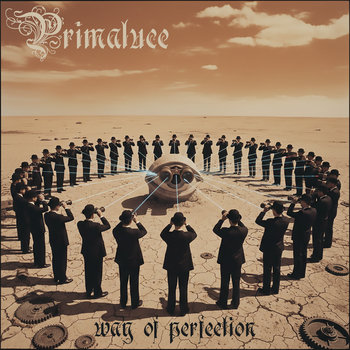
Album Review: Primaluce - Way Of Perfection
We've talked before about the conflation of prog, weirdness, and technicality. Sometimes, the terms get used interchangeably, which gives us the wrong impression about the music we're listening to. Specifically, technicality is equated as a not just a component of progressive music, but as progressive nature in and of itself. If you listen to any amount of music that falls into the categorization of 'djent', you'll be greeted with the argument that merely playing pop songs in rhythms that aren't strictly four-four is enough to qualify as progressive. Technicality does not by itself make music more progressive, more intellectual, or more interesting.
What makes both progressive and technical music most interesting is when the artists can blend unusual ideas and instrumental acrobatics with strong melodic songwriting. That subverts our expectations, and gives us multiple layers for the music to work on. It's special, and also something quite difficult to pull off. Very few bands have been able to master both sides of that coin, from my experience.
Primaluce aims to do just that, blending fret-burning guitar playing with melodic singing that indeed borders on pop music. The first minute of the record is a mixture of cinematic keyboards and frenetic runs of guitar notes that tell us this is an album trying to capture the complicated nature of life. When the vocals enter, the progressive metal edge tones down to an AOR feeling, recalling the best moments of Seventh Wonder and Tommy Karevik. The chorus is a soaring bit of beauty, and a wonderful give-and-take with the musical intricacy, not unlike that band's phenomenal "Alley Cat".
The band, led by Stefano Primaluce, packs a lot into each song. The longest are only seven minutes long, but they are able to ebb and flow, taking us from mood to mood as the notes fly by. Diversity is a key to the record, both from song to song and within each song. The band doesn't stay focused on any one motif or mood for long, letting everything breathe as it kaleidoscopes out from the melodic center.
Though completely different in tone, the approach reminds me of Sunburst's "Manifesto" from 2024, which should have been the Album Of The Year. Like that album, Primaluce is able to play deeply involved music that features melodies more lively and memorable than most of the 'melodic metal' that purports to focus on that aspect above all else. Primaluce's approach to the existential quandaries of life is to focus more on the uplifting aspect, which makes this a rare technical album that leaves me with more of a smile than with musical envy.
There's a lot to enjoy over the course of twelve songs and seventy minutes. The band rarely lets up, delivering strong compositions and performances from start to finish. Last year, progressive metal was headlines by the return of the classic Dream Theater lineup. In a few weeks, we might be getting this year's progressive headliner from the Neal Morse Band. If I'm being honest, "Way Of Perfection" is operating on a higher level than either of them. You could think of this record as being a blend of John Petrucci's wizardry with (classic era) Neal Morse's ear for sticky melodies, and you wouldn't be far off.
I've been largely unimpressed by a lot of the music that is supposed to be important as of late. I thought that was an indication of something wrong with me, but then an album like Primaluce's comes along and reminds me that indeed, I'm still capable of getting swept up in and enjoying a great album when I hear it.
That's what I'm hearing with "Way Of Perfection".
Monday, February 9, 2026
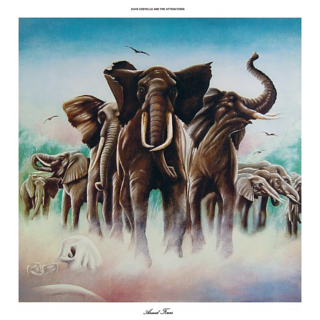
"Armed Forces" & Shooting Yourself In The Foot
Why do I love things that are self-destructive?
That's one of the existential questions I find myself dealing with on a near daily basis. Love is a complicated string of thought, and not something I am going to go into detail about here, other than to say too often I have found myself drawn to things and people that turn out not to be good for me. Whether or not that is a tautology encompassing the entirely of experience is another question I'm not going to be unpacking here, other than to say I've given it serious thought.
When I first discovered the music of Elvis Costello, I dove in and immersed myself in nearly everything he did between 1977 and 1986. I was listening to a flurry of creativity that radiated in every direction, and trying to work my way back to the origin point was not the easiest of tasks. That's true of any artist/band you discover who has a long discography, but even more so when they traverse and explore a wide swath of musical territory.
In those early days, "Armed Forces" was the album that stood out to me as Elvis' pinnacle. It was a pop kaleidoscope, an album that packed its brief running time with sticky melodies and shimmering performances from The Attractions. It was still awkward and literate, but with the costuming of being slick and professional to the nth degree. I preferred that to the rawness of "My Aim Is True", or the angry energy of "This Year's Model", because that was where my mind was at the time.
Over the years, my taste has changed, and so too has my attitude with regards to Elvis' music. My favorite Elvis albums are the ones that strip away the pretense of being anything but himself, the ones that are distilled to the basics of writing and recording. That elevates albums like "My Aim Is True" in my esteem, and puts "King Of America" on the highest of pedestals. It also means that "Armed Forces" is an album that began sinking before I started thinking more in depth about just how problematic the record is.
I went through the same experience with Weezer's "Pinkerton", where I was struck years after the fact by the toxicity and ugliness contained in the songs. "Armed Forces" is an album I always knew had at least one choice in extremely poor taste, but it really is more than that.
Keeping with the Weezer connection, we can start by reading into "Accidents Will Happen" an undercurrent of sexual misconduct. As the first verse tells us of a guy who "says he'll wait forever, but it's now or never", the titular 'accident' becomes the encounter she will soon grow to regret. Add onto that how "they say you're so young", and "they keep you hanging on until you're well hung", and the picture starts coming into focus of a pursuit that should not happen from either side. It is less an accident than it is a failure of the will. And to add insult to the injury, the song is a sloppy mess of writing, with Elvis switching from third to first person in the chorus, which invites more questions about what was happening in his personal life at the time to spark such a song.
"Oliver's Army" is the song that has had to explain and justify itself from the very beginning. Elvis' critique of English politics was slandered by his own choice of language, which is uncomfortable to print even for the purpose of discussion. Describing the scene at an armed checkpoint, Elvis uses the phrase "one more widow, one less white n----r", only to then say how "London is full of Arabs". It's a shocking comment, both because of the casual racism that is delivered without obvious irony, but also because it feels entirely modern. Those same complaints come out of the mouths of the most powerful people in the world today, and I'm not sure whether I'm uncomfortable about the language in the song, or that what was once problematic would probably slide by without a second thought if released right now.
We move on to "Big Boys", and the implications of using a woman for sex before discarding her, because that's what it takes "to be like the big boys". Perhaps Elvis' is innocent compared to the movie theater fellatio of Alanis Morissette's songwriting, but metaphorically calling the woman an 'ugly stick' only good for that purpose is not his finest hour.
Things get worse when we arrive at "Chemistry Class", where Elvis uses the lush arrangement and production to hide the 'pun' of the woman in his sights being in need of "the final solution". We could be charitable in reading this as a legitimate pun about chemistry, but given the language we already heard in "Oliver's Army", and that the next song is literally titled "Two Little Hitlers", the proliferation of racist and dehumanizing language feels like a difficult thing to extend grace over. Elvis then calls her garbage, literally, and implies she's so ill-equipped for the task that any experience she has was, yet again, purely accidental.
Which brings us to "Two Little Hitlers", which is the result of someone thinking they are far more clever than they really are. The song is a story of a dysfunctional relationship that results in her looking through the pages of a dating service for someone who could provide "some effective mating", which would be crude enough, but pales to the fact that Elvis somehow thought it was acceptable to compare this relationship to Hitler. I'm not sure there is any scenario in which that would be in good taste, but this certainly isn't it, especially after just using a term of genocide in regards to a woman in the previous song. No, this is thoroughly disgusting.
If one time is an accident, and two times is a coincidence, what does that make an album that consistently treats women as problems until and unless they are showing their physical affection? The very first line of Elvis' discography says, "now that your picture's in the paper being rhythmically admired", which I once thought was the most clever way of explaining that particular physical act, only to now realize that writing a song about jerking off to a woman's picture is creepy beyond words. Elvis was branded in those days as an 'angry young man' of rock and roll, but did anyone stop to ask what he was angry about? There were occasional bits of politics thrown in, but largely Elvis' anger was directed straight at women. The irony is he seemed as mad at the ones who did sleep with him as the ones who didn't.
I've learned a lot about myself and my own psychology over the years, and I'm rather proud to say I've never written a song with that kind of anger or toxicity in it. Despite these songs swimming in my head all this time, I have been able to avoid falling into the same ugliness. I can blame myself for my failings, I can see that I'm the problem.
So... do I not love "Armed Forces" the same way these days because I am no longer impressed by the ear candy covering the weaker writing, or do I not love "Armed Forces" because I now realize the damage loving such an album can do to me?
The answer is yes.
Thursday, February 5, 2026
Singles Roundup: Bruce Springsteen, Citizen Soldier/Blank Era, Xtasy, & Morrissey
The winter weather has been terrible around here, but what about the music? Let's see what the grab-bag of singles has in store for us this time.
Bruce Springsteen - Streets Of Minneapolis
One of the most surprising aspects of this whole era of politics is that it feels as if we have barely gotten any music in the mainstream that addressed the ways the world is burning down around us. The early 00s and what seems like a quaint brush with evil generated more outrage in music than we've seen as we delve further into the depths of human depravity. Maybe we're on the verge of seeing that change, as the fault line moves further and further from a clean division, and now sees one side desperately clinging to the lifeboat as they refuse to admit they are drowning.
Bruce Springsteen is no stranger to making political music, but it's never been this blunt. "Born In The USA" still goes over people's heads to this day, and "The Rising" was more of an ethos than a statement, while this song is a name-checking diatribe set to music. The cause is righteous, and the targets deserve everything they have coming to them, but I can't help but think a younger version of Bruce would have had a more subtle hand, would have made a better song to anchor his anger.
Bruce's voice doesn't have the same rage in it as his younger days, which draws more attention to how awkward the names of Trump, Miller, and the DHS fit into the rise and fall of a melody. This song almost feels more like it should be shouted through a megaphone at a protest than sung on record. Maybe if it had the searing electric energy of "Adam Raised A Cain", or the weary and somber tone of "Devils & Dust", it would work better. But the language, along with the uplifting backing vocals, give a complicated feeling to a song that needs to be direct at every level.
But if this leads to more music tackling the existential issues of the day, replacing some of these metal bands who have dedicated their entire careers to telling stories that seem to glamorize war, it will have done its job.
Citizen Soldier & Blank Era - 3rd Degree Burns
Not long after releasing the highly enjoyable "Yesterdaze" single, Blank Era is back with this collaboration, which tackles issues of emotional instability. "Feeling means falling apart" the chorus tells us, which is very much true when you aren't in full control of your emotions. That control is a bit of an illusion, of course, as the chemicals that drive and control us are going to flow as they do. 'Control', in that sense, is merely suppressing the things we feel in order to act the part society asks of us. Feeling too much is weakness, feeling sad is a character flaw. That is not true, but it's easy to be convinced of it when the images we see tell us bluster and delusion are 'strength'. It's nice to hear a reminder that not having our shit together all the time is normal. Jaycee just screams it better than some of us can.
Xtasy - Too Late
Do genres become stagnant, or do we reach a point where we need a new experience? That's a matter of philosophical debate, but the melodic rock sphere has felt dull and stuck in place for years now. After the initial swell of retro 80's inspired bands came on the scene, it has felt like more of the same time and time again. The edges have been sanded off the sound, and sometimes the vocals are as lifeless as cliches about Air Supply. We need something unique to generate interest, and for Xtasy, that comes from Silvia's voice. Her piercing tone and charming accent are color that sharpen the edges of a sometimes pastel genre. With contributions from Erik Martensson, Xtasy have some of the best talents in melodic rock behind them. That shows through in this song, which picks up right where "Eye Of The Storm" left off six years ago. This is what melodic rock needs to be, and it's why their upcoming album is one of the few I have circled on my calendar.
Morrissey - Notre Dame
Admittedly, I am writing this bit without having heard more than a brief preview of the track, in addition to the live performances, as the official single doesn't release until tomorrow. If that sounds unfair, it probably is, but I am including it because I already had this post ready, and I feel a need to address how the song illustrates why Morrissey deserves any harsh words we can muster. "Notre Dame" has always been a repetitive and tuneless slog of bland electronica from someone whose voice is that of an old-style crooner, which already puts it in a clash of eras I don't like, but what makes the song intolerable is that Morrissey is releasing it as a single knowing full well it caused controversy when he started playing it live. Why?
Even with a slight lyric tweak for the final version, the song started its life and still exists as an echo for conspiracy theories that the tragic fire at Notre Dame was the result of terrorism at the hands of certain people Morrissey has been fond of vilifying, covered up by the powerful who want to make Morrissey's knee-jerk hatred look irrational. I'm sorry, but no song that originated from a racist conspiracy can have a second life as anything worthwhile. Morrissey's moral bankruptcy is on display in releasing this song, as he has albums worth of other unreleased tracks he could have put on the record, let alone used to promote it. By leaning into the controversy he created, Morrissey is telling us he doesn't feel the least bit sorry for the horrible things he has said, and wants to use it in an attempt to make himself money. There had been rumors this song was a contributing factor to his not being able to get a record deal. Releasing it feels like he is rubbing it in our faces, the same way all the truly awful people in positions of power now feel they are entitled to.
Every time Morrissey pops his head back up, I hate myself a little bit more.
Monday, February 2, 2026
That One Song...
*Editor's Note: Last week's essay about the life-defining albums of 1996 made mention that I might be done being honest about myself as it pertains to music. This piece was half-written when I said that, so consider this a clearing out of the backlog rather than an immediate backtracking. That decision has yet to be made.*
'That one song'... no, I'm not referring to your favorite song from a band or artist, but the one that your relationship with the music wouldn't be the same without. It can be the song through which you discovered them, the song through which you discovered something about the nature of music, or the song through which you discovered something about yourself. They are the songs that echo within us through time, because the beat of each one locks in rhythm with our hearts.
Those songs may or may not coincide with our favorites those artists have to offer, but the connection is a different one. Our favorite songs are the ones we not only love to listen to, but need to listen to, because it feels like part of us would be missing otherwise. 'That one song' is the one whose discovery is the only reason we know about that missing piece at all.
Today, I'm looking at some of my favorite bands and artists to remind myself which is 'that one song' for me. Often, it's easy to get lost in the swirling tempest of thoughts, and the details are buried under the sands of time. Music is too important to let the sediment build up and hide the truth until I am the subject of an archaeological dig.
Meat Loaf
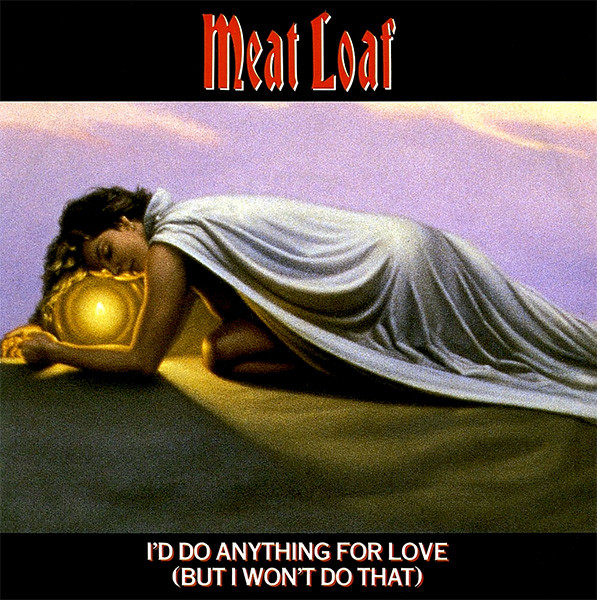
'That one song' is "I'd Do Anything For Love (But I Won't Do That)". My relationship with Meat Loaf (with Jim Steinman perhaps more so, to be honest) is the most important musical relationship in my life, which has only become more important with age and 'wisdom'. Over the last few years, as existential crises have become more of a regular part of life, Meat Loaf is who I turn to when I need something to pull me out of my spiral. It might sound odd to say Meat Loaf is essential to my mental health, but in a way that's the truth. None of that would be possible without this song in particular, because it is the one that started it all. Without this song, the voice in my head would never have had heard Jim Steinman's to know someone else out there likely understood the thoughts that plague me. The lyric to this song in particular has evolved with me in ways that have proven almost prophetic.
My favorite song, though, is "I'd Lie For You (And That's The Truth)", the Dianne Warren penned sound-alike that started the next album cycle. Since I first heard it thirty years ago, I have been swept up in the melodrama of the composition, studio legend Tim Pierce's subtly searing guitar solo, and the concept of the truth being both the best and worst thing we can tell someone. Often, I have felt as if lying is the only way to take the next step forward, as even pulling the moon from the stars and giving it as a gift wouldn't be enough. Now... where could I have ever gotten that idea?
Tonic
'That one song' is "If You Could Only See", which is a song that defined twenty-five years of my life. For all that time, Tonic was my favorite band, this was my favorite song, and I thought I knew myself. This was the song I was taping off the radio again and again to get every last second in the space on my compilation cassette, this was the song that gave me the push to ask for a guitar so I could start to absorb music on a different level, this was the song that sparked everything that exists in the thick stack of lyrics and chord progressions that sits under my desk. Perhaps I would have been better off not traveling down a road I didn't realize was a dead end, but I did take that journey, and it was all because of this song.
My favorite song, though, is "You Wanted More". I wrote my own song at one point that asked a direct question; "What do you know about me, other than I'd sell my soul/To know you looked at me without wanting something more?" I don't know if I realized at the time I was writing an echo of what Tonic had already put in my mind. The need to feel as if I am 'enough' is one that is persistent, and seldom satiated. It's no wonder I gravitate toward songs that don't make me feel worse about those shortcomings.
Dilana
'That one song' is "Falling Apart". We create in our minds a narrative about who the musicians we listen to are, and how their lives and ours intertwine, and occasionally the nodes of connection tie themselves into a permanent knot. That is what this song did from the very first time I heard it, as I not only heard a voice unlike any other, but I heard a song that echoed in my own thoughts. My illusions were replaced over time with knowledge of the soul that bled through the speakers, which only crystalized everything I thought I know in those first few moments. More than just music, this song was the sound of finding a kindred spirit, that rare moment when you discover one of 'your people'.
"Falling Apart" remains my favorite song. That connection has only deepened over the years, with the two of us breaking at the same time, the pieces almost interchangeable as we build ourselves up enough to face the next sunrise. She sang, "I'm so bloody fucked up", and I knew exactly what she meant, I still know exactly what she means, despite my not actually knowing anything about anything. She, and this song, make me feel like maybe I do.
The Wallflowers
'That one song' is "I've been Delivered". It's hard to remember a time before words dominated my thoughts. I've been speaking in metaphor for so long, and priding myself in twisting turns of phrase, that the junction leading me down that path is a moment in life that deserves a commemorative plaque. That would belong to this song, which is the one responsible (or culpable, depending on your view) for unlocking the poet inside me. It was hearing the line, "I can't fix something this complex, any more than I can build a rose", that sparked my imagination in ways I had never contemplated. I may not have mastered the complexity, or fixed anything with my words, but what would I be without them?
My favorite song, though, is "Letters From The Wasteland", for being a song that marries Jakob's obscure poetry with a muscular form of classic rock that felt to me like everything the 70s was supposed to be, but never was. The line that ends the chorus, "may take two to tango, but boy, it's takes one to let go" has proven itself to be true time and again. The song is a reminder that you cannot hold onto people who want to walk away.
Jimmy Eat World
'That one song' is "23", the closing number from "Futures". That is an album of longing and painful memories, which explains why I love it as much as I do, yet it ends on an optimistic tone. The final lyric says "don't give away the end, the one thing that's still mine". I have often worked in monochrome so that any sliver of light will look like a silver lining, and the writer in me appreciates the hope of being in control of the future. I have questioned fate many times, coming to the conclusion hat free will doesn't make any difference to the way events feel, and the fact that this song can give me any sense of better days waiting on the horizon is the sort of thing that seldom slips through my cracks.
My favorite song, though, is "Dizzy", which might be the perfect example of the band's brand of hopeful melancholy. There is sadness to the tone and chord choices, but the swell of the chorus fills me with something resembling hope. And then there's the line, "if you always knew the truth/then the world will spin around you/are you dizzy?" That is one of those lyrics that sounds simple, but speaks to deeper meanings. It asks if being the center of the universe is everything it's cracked up to be, since the swirl around us might drive us mad more than pump up our egos. Having never been there, I love that thought.
Blues Traveler/John Popper
'That one song' is "Miserable Bastard", from John Popper's solo album. I could say that "Hook" was a precognition on my part about the cynicism that would later define my personality, but I'm not going to do that. It's hard to draw distinction between most of the songs on "Four", because I listened to that album hundreds of times when it was one of barely a handful of CDs I had. It's this song from John Popper's solo album that I continue coming back to, because it was around that time when people started noticing the fact and calling me bitter about life. I was the proverbial miserable bastard, and the line "I need to feel rejection to feel anything at all" resonated more than the Peter Pan references. While I would later see more of myself in the Cyrano talk of "Sweet Pain", this song was a rallying cry for a long time.
My favorite song, though, is indeed "Hook". Even if the cynicism of the song is not as intended as I have always thought, being able to read it that way brings a wry smile to my face. Truthfully, the reason it is my favorite Blues Traveler song has less to do with Popper's lyrics and melody, and everything to do with that harmonica solo being perhaps my favorite solo ever. Trying to whistle along as he blares the highest notes is one of the true joys of music.
Halestorm
'That one song' is "Innocence". The moment that crystalized for me that Lzzy Hale's voice is one of the rare things in life that traces the electrical pathways inside me in a way that calms those nerves was hearing her scream as the last chorus of this song entered my ears. While I am often confused by emotions and experiences, the passion of those few seconds were obvious even to me. From that instant, Lzzy's voice felt like a piece of the patchwork making me up, whether she was being playful and mischievous, or baring her darkness. She became a woman for all seasons, to borrow a phrase, and one of the few treasured voices of this life. I could say something about Lzzy singing, "I just want to take your innocence" but that's a conversation I don't want to have.
My favorite song, though, is "Killing Ourselves To Live". The grind of the riff is irrationally sexy, as is Lzzy's gritty performance. There is a rumble in her voice that is hard to explain, but could be metaphorically explained as the boiling tempest of a burning soul. Halestorm has never been more anthemic than they are on this song, and I find in the lyric a message that being together, no matter how short the time may be, will always be better than having more time if we have to spend it on our own. Songs that move us fill that hole, at least to some degree, while we wait for fortune to smile upon us.
The Smiths/Morrissey
'That one song' is "There Is A Light That Never Goes Out". I've said more than once that I hate myself for enjoying Morrissey, both for who Morrissey is, and what the music says about me. Morrissey's is the voice of self-loathing, and this song is a reminder of one of the moments in life that most makes me wish precision lobotomy could remove individual memories without causing larger damage. I was introduced to Morrissey by someone who wound up making me question whether entire episodes of life could be created solely within my own mind, and Morrissey's melodrama felt like a way to be able to laugh at the things about myself I hated. I'm still laughing, and I still hate them. What this song told me is that maybe my imagination is all I need... of course it's broken now, so that's gone to shit. How appropriate.
My favorite song is indeed this one. While I love the sad melody of "Friday Mourning" just as much, there are few Morrissey lyrics that stay with me. This would be one of them, and it's because I understand the sentiment of death feeling like a better option than rejection. To have only a moment of happiness, but to have it be the final moment, is preferable to spending a lifetime wishing for something you once had, or maybe never had. It also reminds me of a song called "I Want To Be Buried In Your Backyard" by Nightmare Of You, which I think was a version of Morrissey more attuned to my senses, even if it was only for one album.
VK Lynne
'That one song' is "Butterflies In A Beehive". Art is a vital and necessary part of life, which can be hard for artists to remember, in a bit of irony. Often, as we worry that the work we pour our hearts and souls into are being utterly ignored, we lose our faith in art as anything but a form of therapy. It's only when someone outside the creative bubble reminds us that everyone else relies on the artists to bring color and joy into the world that we can feel our sense of purpose rejuvenated, and we are reminded that even if we only bring that joy to ourselves, that is more than existed before we created something out of nothing. It is a lesson I have needed to learn more than once, and one I need to be reminded of again at this very moment. Art is feeling distant and faded in my mind, and it's a fascinating question whether the feeling of nothingness is better than the knowledge of it.
My favorite song, though, is "Crawl". I am a sucker for power ballads to begin with, so the dramatic swell of the song as VK begins to belt out the chorus is practically irresistible. So to is the message of stepping out of one's skin to become a new, and hopefully better, version of oneself. That kind of metamorphosis is a tempting thought, one I wish I believed in. I'm more prone to thinking that shedding my skin would reveal a rusted shell where my soul was supposed to have been installed. Still, I like hearing the hope that someday the wires that make me the mess I am will short out in a way allowing me to feel normal for once. It's certainly no fun to be stuck inside yourself.