Thursday, January 21, 2016

Album Review: Mano Humana - "Sombras"


South American metal has a certain flavor, doesn’t it?  A natural rhythmic heaviness that permeates every moment of the experience and makes the entire showcase idiomatically South American.  Every act from the continent has possessed this same quality and Chileans Mano Humana are no exception.  Their record “Sombras” continues to carry the banner for the genre like so many that have come before.

Hold the phone, though.  Mano Humana is not just offering straight up and down South American metal, now are they?  Certainly, there’s the usual pounding and grunting that accompanies the idiom, the aural assault that surrounds and immolates the senses, but there’s something else in the brew.  There are some hardcore roots mixed into the soul of this record, plus just a little Fear Factory, too.  It sounds strange, but true; while Mano Humana hardly qualifies as industrial, some of the dry deliveries and stark, singular lines of “Grita En Silencio” strike as coming from the old school FF playbook.  In the end, the total package offers a diversity of sound that’s refreshing in a splinter genre often trapped by its own patterns.

Mano Humana stumbles somewhat in the delivery on this promise, however.  The mix of all these ideas can be creative and intriguing, but too often regresses back to the mean.  “Sombras” shows the great potential of the idea, but sadly becomes a template example of South American metal in the long honored and imitated tradition of Sepultura and all who came before.  In addition, several of the selections on the back end of “Sombras” are just plain too long.  The musical idea of “Arbol” ends before the song does, the piece dragging on for another minute of the same measures repeated.

While that’s a huge hurdle to overcome, the good news is that Mano Humana also shows flashes of brilliance.  The bass intro of album opener “Jueces” would be captivating all on its own for about an hour, the blur of notes capturing the attention and drawing the listener’s adrenaline into the mix.  The doubly screamed, practically in-the-round chorus of “Acata y Ataca” (‘Abides and Attacks’) is infectious and enticing.  The hardcore inflection of “Desintrospeccion” and the veneer of industrial throughout the record are well-executed accents to the hallmarks of South American metal that we expect.  So there’s plenty of musical hope for the future of Mano Humana.

And naturally, as all these albums have, there’s a song with a title ending in ‘-cia,’ which is then screamed while clearly enunciating every syllable.  In this case it’s the thumping “Demencia” which works pretty well.

So “Sombras” is a mixed product.  The great single moments, like “Jueces” are truly great, but there are more than a fair share of dead spots on the album, which drag down the experience as a whole.  It’s an occasionally frustrating mix, only because Mano Humana clearly has so much talent, leaving the listener wanting more of the flickers of evident greatness.

Wednesday, January 20, 2016

Album Review: Monster Truck - "Sittin' Heavy"


Almost as a conscious reaction to the digitization of music and the heavy influence of electronic production, rock is experiencing a revival like no one could have predicted, in nearly every genre permutation.  One of those, with roots deeply tied to the synthesis of rock and southern blues, is actually led by a Canadian band, Monster Truck, hailing from Ontario.  Don’t allow any location bias though – the band’s very logo conjures up echoes of the Marshall Tucker Band and Lynyrd Skynyrd.  Two and a half years ago Monster Truck dropped their debut full-length “Furiosity,” a wonderful blend of rock stylings that made what was old new again, and the sky has looked fairly blue for the group ever since.  So what could we expect from their follow up, “Sittin’ Heavy?”

Remember those old commercials for Nutra-sweet or Folger’s coffee or Krusty Brand Imitation Gruel or whatever it was where the narrator would declare that four out of five people couldn’t taste the difference between an original product and a different or new one?  That’s sort of the feeling between the excellent “Furiosity” and the strikingly similar “Sittin’ Heavy.”  The album sings many of the same themes and platitudes, highlighting love lost and gained, weary souls and soft appeals to an overthrow of oppression in whatever form.  The new record invokes its most serious sense of déjà vu when listening to “For the People” which is an awful lot like “Power of the People” from a couple years back, down to the cadence and big chorus.

Now, in its defense, that does mean that “Sittin’ Heavy” hits many if not all of the same high watermarks that “Furiosity” did, displaying unusual versatility within a seemingly narrow band of rock and roll.  The fact that Monster Truck is capable of producing material that draws from classic and modern rock as well as metal and country and keeps each piece comfortably within their own idiom is a compliment to the writing ability of all involved.  You can chill to the easy twang of “Black Forest” or be whipped into a fervor by “Don’t Tell Me How to Live” or even crack at a smile at the upbeat piano of “Things Get Better” all in one sitting, which is admirable.

But there is a certain luster that is inevitably lost when it feels like you’ve done all those things before.  I’m as much a sucker for organ fills as the next guy, maybe more so, but it doesn’t feel as novel and innovative this time.  “Sittin’ Heavy” could have escaped with being a redux of “Furiosity” if the themes and ideas had changed, but even the messages of the songs and the very lyrics are functionally interchangeable with the previous record.  Not to belabor the point, but Monster Truck would have gained considerable traction (no pun intended) if the concept of “Sittin’ Heavy” had been different.

Many times when a band creates the same basic album again, the quality is subject to the law of diminishing returns.  As beloved as they are on this site, Texas Hippie Coalition are among the thousands of bands who are perpetrators of this, with their first two records remaining the gold standard and the subsequent albums falling in a lesser category.  Monster Truck, by contrast, avoids this trap, as “Sittin’ Heavy” is every bit the success that “Furiosity” was, the new record merely being a victim of not being released first.

If you did not hear “Furiosity,” feel free to start your Monster Truck collection with “Sittin’ Heavy” and know that you are listening to a high caliber product.  Again, there’s nothing wrong with this new effort in and of itself; it’s actually rather good.  If you are already a fan of Monster Truck’s debut though, rent this before you buy, as you may find yourself essentially paying for the same thing again.

Tuesday, January 19, 2016

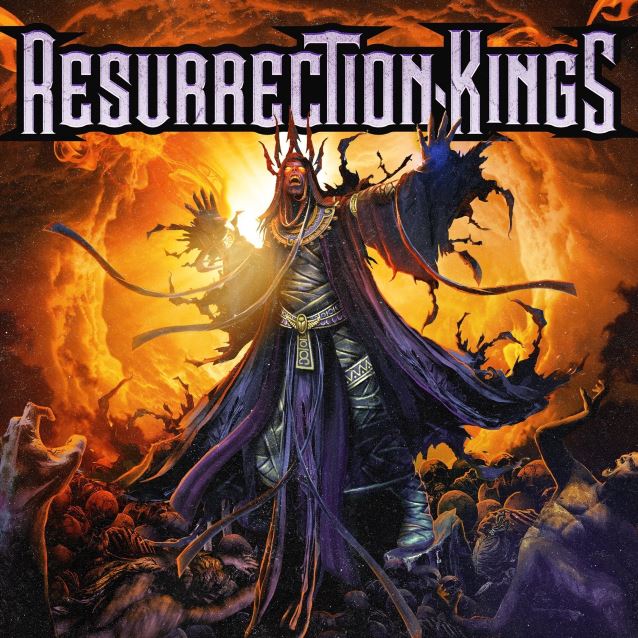
Album Review: Resurrection Kings - Resurrection Kings


Time passes whether we want it to or not. Life marches on, and eventually everything becomes nothing but a memory, destined to live on through our recollections of better times. I feel that way about Ronnie James Dio, who has been gone for far longer than it feels like. It's been long enough, in fact, that we have reached the point where people are no longer listening to Dio merely to pay tribute, but are ready for the surrounding characters to return to the stage to keep the spirit alive. That's where we get to Resurrection Kings, the new project that brings together Criag Goldy and Vinny Appice from the second DIO lineup for the first time since then. So the question I ask myself going into this record is; can DIO members make music that sounds like DIO without being a painful reminder that the man is gone?

I've always thought Craig Goldy got a raw deal. While the first three DIO albums are classics, I consider "Dream Evil" to be every bit as good as any of those, and the similarly Goldy-penned "Master Of The Moon" was the best Dio album after that period. His style wasn't flashy, but his writing was solid, and was certainly better than the period of time when it was becoming sad what DIO had become.

"Distant Prayer" kicks off the album, and immediately showcases a big difference. Goldy's guitar tone is a huge, saturated wall of chords. It certainly makes the band sound big, but I actually don't like it, and much prefer the tighter tone he displayed on "Master Of The Moon", where his playing was more articulated by the relatively light distortion. This almost sounds like he's trying too hard to be metal. That said, the song is a solid track, with a decent riff, and a Dio-esque vocal line from Chas West. In a smart decision, he sounds nothing like Dio, which would have been one step too far into the nostalgia circuit.

"Livin' Out Loud" borrows the chord voicings of "I Could Have Been A Dreamer", but then squanders them on a song that doesn't have much to offer. The main riff is a mess of pinch harmonics, the pace is slow and without a groove, and then the main hook never lifts the track up. It's the kind of song that needs a huge personality to sell it as anything at all, and frankly, these players don't have the charisma or presence to stand out on their own.

We do get some really good tracks here. "Wash Away" and "Who Do You Run To" merge the heaviness and melody in the old DIO fashion, and are very nice throwbacks to the past. The ballad "Never Say Goodbye" is nice, and leads into "Path Of Love" which is easily my favorite song on the record. That's the one where everything comes together, and Goldy's riffing style finally meshes with a melody that can be sung along with.

I can speculate about the good and the bad here. I have a strong feeling that the strongest tracks here are the ones that the band had help in writing, while the ones that they created on their own are the ones that let me down. There's enough difference in the melodic approach to make me think I'm right, and it reveals why I struggle with these kinds of bands. They have the right names and faces from a classic act, but they're missing the key writer that made that music so great. Goldy and Appice might be authentic, but without Dio's ear to guide the songs in the right direction, they aren't strong enough songwriters to make engaging music on their own. And while Chas West does a fine enough job with the vocals, he isn't going to take the reigns and do that for the band.

So what Resurrection Kings have done here is put together an album that keeps the spirit of DIO alive, but reminds us that is will never be replicated, because the beating heart of it is gone. Resurrection Kings' debut is a decent listen, but there's not enough shown here by the band to make me think it will be a lasting endeavor.

Monday, January 18, 2016

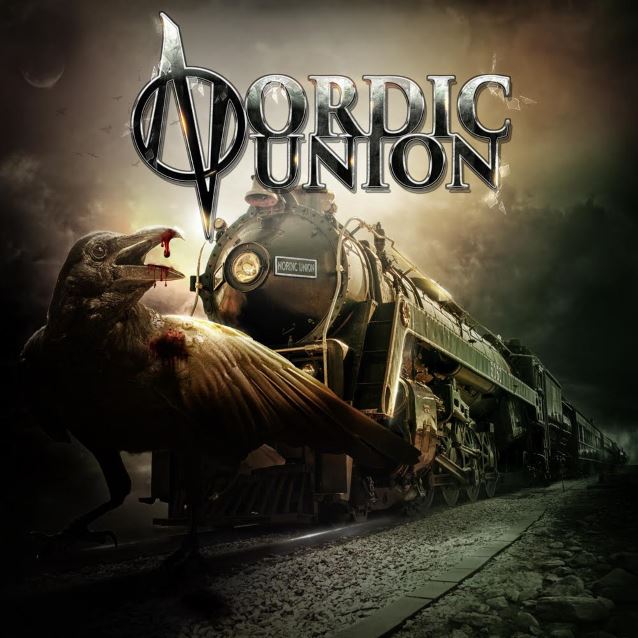
Album Review: Nordic Union - Nordic Union


If you follow the world of European melodic rock and AOR, the chances are pretty good that you are well aware of the major players in Nordic Union, even if you probably don't know their names. Ronnie Atkins is the singer of the long-running Pretty Maids, and Erik Martensson is the driving creative force in both Eclipse and W.E.T. Considering that Ronnie guested on the last Avantasia album, and Eclipse put out one of the year's most highly regarded albums of its kind (which I'm not sure how I didn't get around to), their profiles have arguably never been higher. So by combining them into this project, there is no shortage of expectations for something that could give us a slightly different take on the sound, along with songs that should show off the wisdom of their collective experience.

"The War Has Begun" opens the record in fantastic fashion, going between soft acoustic guitar, some decidedly heavy riffing for this style, and a big chorus that layers vocals to make it a huge call-to-arms. Ronnie doesn't have the prototypical voice for melodic rock, which is actually a benefit, because his slightly rougher tone helps balance the muscle given to the guitars. Often, when these kinds of bands try to get heavier, the vocalists aren't convincing enough to pull it off. Ronnie can, so when Nordic Union borders on metal, which they do frequently here, it all sounds natural.

"Hypocricy" carries on in an unusual spirit. The main line of the song is a deep, heavy riff that comes from modern rock radio, and then the chorus explodes with all the sheen of modern pop. They don't necessarily belong together, but they're both great parts, so I'm not complaining at all. That chorus is one that is going to stick to the wall, and to you, because it's so energetic. Hearing that song, and the following "Wide Awake", it's hard not to find yourself nodding your head along with the beat. I don't mean this as anything but a genuine compliment; they're a modern take on the sugar-rush of "Livin' On A Prayer".

The first track that was released to whet our appetite was "When Death Is Calling", a song that stands up as a highlight, even among the competition. The opening guitar line recalls HIM's "Wings Of A Butterfly", before turning into a stomping, crushing melodic metal monster. That song made me think Nordic Union had the chance to produce something great, which is exactly what a single is supposed to do.

As the album progresses, we get some tracks that tend towards the heavier side like "21 Guns", and some that are softer like "Every Heartbeat", but they maintain a level of quality where every one of them has a big chorus that you find yourself wanting to sing along with. None more so than "True Love Awaits You", a lighters-in-the-air ballad that balances the records heavier tinges with one song that is unapologetically saccharine. It doesn't hurt that it, like most ballads, is also a great track.

The record ends in fine form with "Go", which is ironically titled, because that's the last thing we want Nordic Union to do. After eleven tracks proving their worth, I don't want them band to slip away like a lot of these projects can. "Nordic Union" is a fantastic little album, and maybe a case of the whole being more than the sum of the parts. I haven't heard enough Pretty Maids or Eclipse to say with certainty, but I can't believe either of those bands is better than Nordic Union. This year is off to a great start with albums like this coming out. This is absolutely good enough, and enough fun, to be a serious contender for Album Of The Year.

Saturday, January 16, 2016

Single Review: Weezer - King Of The World


Weezer has just announced the release of their new, self-titled album for April 1st, and unveiled a new single for the occasion.

Let's start with the song. After releasing the god-awful "Thank God For Girls", and the decent "Do You Wanna Get High?", there was no telling what we would get this time out. This song falls squarely in-between the two, with lyrics that are still as vapid as anything a 14 year old could write in his spiral bound notebook, but the actual melodic construction is solid. It feels like a song that could have been a decent track on the last album, which exceeded every expectation I could have had, but that's about it. It lacks any kind of spark, and Rivers continues to be the most lazy, dejected vocalist in all of rock. He doesn't sound like he cares, which given the quality of his words, isn't hard to believe. This song is ok, but it wouldn't even be good enough to be on "Make Believe". It's late-era Weezer, which means you have to have suffered their Stockholm syndrome to enjoy it as more than a fleeting bit of entertainment.

But there's more to talk about than just the song here. Weezer has, officially, become the worst running joke in all of music. By going back to the well of self-titled albums, Weezer is showing that they truly are devoid of anything approaching creativity. I thought they had made strides with the previous album, which I honestly enjoyed, but here we have then reverting back to their recent form, turning out songs that anyone in their 40s should be embarrassed to have ever heard, let alone written.

Weezer gained their fame writing songs that awkward teenagers connected to, which leads us to the sad part. While twenty years have passed, and those fans are well into adulthood, Weezer has spent every year since then trying to turn back the hands of time, pandering to the next wave of pre-teens, rather than growing with the audience who loved them (at the time) unconditionally. The amount of pandering they do to youth is pathetic, and even though I'm not as old as Rivers, I realize that I'm already well beyond the point of thinking it's acceptable.

I write this as a bit of an explanation, and to get some thoughts down, because I'm fairly certain I'm done with Weezer. I have no plans to review the new album, or even to listen to it. It may happen if it falls into my lap, but I won't be looking forward to it.

My time with Weezer will now be spent purely in nostalgia.

Thursday, January 14, 2016

Album Review: Suppressive Fire - "Bedlam"


Self-releasing an album is an arduous thing, fraught with concerns and complications and trials.  To release music with the backing and resources of a record label puts all the decision making in the lap of the user, like a UNIX operating system on full tilt.  There is no partner in the journey, and success or failure can be decided by as thin an immaterial a line as how good a huckster you may be.  So, the release of Suppressive Fire’s “Bedlam” implies a certain level of conviction in the resolve of the band.

The North Carolina three-piece mashup of death and thrash has put together their first full-length record, and it packs a lot into every square measure of traditional thrash pounding.  Each cut resonates with the kind of downbeat thump and galloping madness that so swept over the world of metal in the late eighties.  The subtle influence of death metal’s underpinnings means that “Bedlam” isn’t a carbon stock of the broken-glass crunch of thrash’s birth pangs from the early ‘80s, but rather a full-bodied recitation of the genre’s best days in the second half of that same decade.  To wit, “Bedlam” is less Exodus’ “Bonded By Blood” and more Testament’s “The New Order.”

Suppressive Fire does a lot of things right, beginning with the album’s general gritty feel.  Some of that is no doubt of product of the production capability that the band had at their disposal, which is perfectly adequate but not more than that, but some of it is certainly a product of the band’s desire to recreate the halcyon thrash experience.  There is grime in the corners of “The Hellwraith” and in the sludgy band saw whirling of the title track.  The creosote-soaked measures of thrash may turn off aural purists who like to hear every note, but the accumulated fuzz helps lend Suppressive Fire a good bit of authenticity.

Additionally, the band excels in short bursts of creative soloing and properly rhythmic riff-based mayhem.  The staccato throwback opening of “Thy Flesh Consumed” speaks to the artistry and aplomb of Joseph Bursey as he plies his understanding of the genre’s tenets and transitions smoothly into a wonderfully mosh-y riff.  While “Bedlam” doesn’t exactly leave a lot of open space to the imagination, it does have a pretty solid grip on the idea of pacing, engaging the listener while not burning them out.  “Pyrophoric Blood” and “Ironsights” both feature fantastic bridges and breakdowns, capable of withstanding even the highest level of thrash scrutiny.

Where “Bedlam” starts to stumble is in the connecting glue.  While the band shows great prowess in the composition of short bursts, “Bedlam” is almost better listened to as a series of brief thrash movements, rather than a collection of cohesive pieces.  The band tends to default to the same basic collection of sounds during the verses, and the vocal performance of Aaron Schmidt is fine, but not compelling enough to overcome the long stretches of boilerplate thrash that makes the listener shrug his or her shoulders and wait with varying patience for the next solo.  Several of the selections (“Bayonet Penetration,” for one,) are too long, running out of musical idea before the verses come to their conclusion.

So what we’re left with is an album that shows a ton of promise on the part of Suppressive Fire, but doesn’t deliver a complete listening experience.  The samples of this record’s best work are excellent and gratifying for any thrash fan, but the album as a whole has too many protracted periods of regression to the mean.  That said, Suppressive Fire has real talent, and with more experience and some refinement could easily challenge the best names in the modern genre.

Tuesday, January 12, 2016

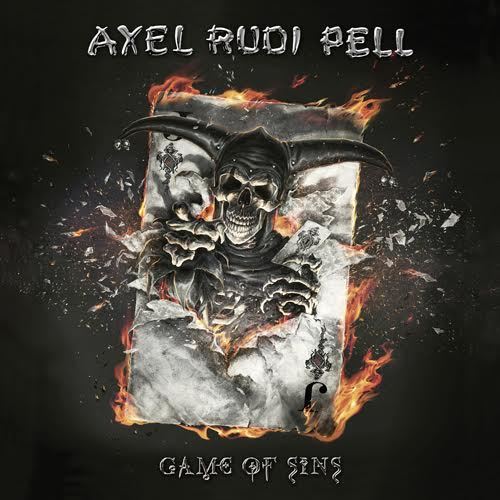
Album Review: Axel Rudi Pell - Game Of Sins


Axel Rudi Pell is one of those artists who has been around seemingly forever, and who has a reputation for putting out wildly consistent albums, which is another way of saying that they all sound the same. That's not always a criticism, for as long as an artist has a sound I enjoy, I don't complain about getting more music that fits my taste. Over the years, I've sampled several of Axel's albums, and I always leave with the same impression; I like what I hear, but I'll get back to them next time. That next time is here.

The obligatory introduction is a bit different this time around, with a sound that is a mix of sinister circus and demented polka. That is merely a prelude, as "Fire" opens the album with all the trademarks; Axel's oversaturated guitar sound, plenty of classic rock, and Johnny Gioeli's fantastic voice. Album after album, he continues to deliver great performances that should garner more attention, since his voice is that good. The song itself is a standard melodic metal song that doesn't do anything we haven't heard many times before, but I don't mind when it's done well, and that's the case here.

As the press release that comes with the album says, "Game Of Sins" might just be the heaviest album in recent years. There's a slightly higher focus on the big, pounding songs that lean more towards the metal side, rather than classic rock. Axel's guitar tone has always been pure metal, and a point of contention, but so many of his songs are rooted in the sound of Rainbow. The title track is an epic in the vain of "Stargazer" and "Gates Of Babylon", but it's betrayed by the guitar tone, which simply doesn't match the tone of the song. Axel pushes the amps so hard that when the main riff kicks in, the chugging guitars sound weak and fuzzy, rather than hitting you over the head with their power.

But aside from that, there isn't much to complain about here. Axel and his band have been at this for long enough that they know exactly what they're doing. What you get here is an album of rock solid, melodic metal that never strays from what Axel has always done. There's a couple tracks a bit more up-tempo, a ballad that ups the cheese factor, and songs that are highly enjoyable to listen to. In that respect, "Game Of Sins" is a clear winner.

There is another side to the story, however. I'm not going to argue that Axel should be changing up his sound, since there's nothing wrong with it. But after as many albums as he has released, it is harder to write a truly exceptional song in that same style. Nothing on here is even close to not being good, but even some of the phrasings are starting to sound familiar. They're still enjoyable, but I don't think any of the songs can possibly hit as hard as the first time you would have heard an Axel Rudi Pell album.

So my takeaway from "Game Of Sins" is that if you've ever liked Axel Rudi Pell, this will be another no-brainer. It's every bit as good as the records he's been putting out, and an enjoyable way to pass some time. I don't think it will carve out a place in this year's memory, but not every album has to do that. Sometimes, being a good listen is enough, and if that's true here, "Game Of Sins" has done its job.

Monday, January 11, 2016

Album Review: Avantasia - Ghostlights


It's hard to believe it's been fifteen years since Tobias Sammet stepped outside of Edguy and redefined the world of power metal. That might sound like a dramatic statement, but consider where we were at that time. The first wave of power metal bands were running on fumes, either completely devoid of new ideas, or trudging along with replacement members. The entire scene was stale, and waiting for someone to justify why new music should continue being made. Then along came "The Metal Opera", which not only made people stand up and take note, it gave every composer something to shoot for. The multi-singer concept album became a standard trope, and we are still seeing bands following Avantasia's lead.

Even for a trail-blazer, continuing to lead the masses is difficult. After releasing what is, depending on the day, my favorite metal record in the form of "The Metal Opera Pt II", Avantasia has been a bit of a hit and miss affair. Tobi was still writing songs that no other metal composer could match, but as the Avantasia world expanded, the music got stretched into places it wasn't meant for. Those detours aside, I still loved the records Avantasia was putting out, until we hit "The Mystery Of Time". That record, with the darker atmosphere, and singers who too closely resembled each other, for the first time felt tired. There were a handful of gems, but the record as a whole seemed to be a signal that Avantasia might be running out of steam. So while I am always excited to see what Tobi has come up with, the prospect of the second part of that story did make me have doubts.

Oh, how wrong I was.

If Tobi redefined power metal fifteen years ago, "Ghostlights" has the potential to do the same thing for another generation.

"Mystery Of A Blood Red Rose" kicks the album off, and sets the stage for high drama. A song written with Meat Loaf in mind, Tobi does his best impression as he sings one of the best Jim Steinman songs he never wrote. He has so perfectly captured the sound and spirit of that music, from the percussive piano to the spot-on backing vocals, that it warmed the heart of this lifelong Meat Loaf fan. It is such a glorious song to open the record with, that from the first time I heard the pre-release single, I wondered how Tobi would be able to top it.

That is answered with the remaining tracks, which never let up. "Let The Storm Descend Upon You" fills both the slot and the role of "The Scarecrow", a twelve minute epic that oozes drama. The orchestral flourishes tear through you, Jorn makes his welcome return to Avantasia, and the whole thing gets capped off with the kind of swelling melody where you can't help but smile. I can see why someone might call it derivative, but when the writing is this good, there's nothing wrong with revisiting an old favorite.

And that's what I take away from "Ghostlights", that it's an album as much about looking through the history of Avantasia as it is looking towards the future. "The Haunting" is a cousin to "Death Is Just A Feeling", with Dee Snider in the sinister role, but it takes a song we knew, spins it to dizzying dramatic heights, and gives us something more amazing than we could have expected. "Isle Of Evermore" recalls "What Kind Of Love", while Bob Catley returns for the closing "A Restless Heart And Obsidian Skies", which borrows a hint of the chorus from the masterful "The Story Ain't Over", but both tracks use that familiarity as a comforting decoy that hides just how sharp the songwriting is.

We get evidence of that in a song like "Seduction Of Decay", which gets the best performance out of Geoff Tate in ages. At first glance, it sounds like a track that didn't come together, one that is lacking the Avantasia spirit... until it's a day later and you find yourself singing it back in your head. Even what appeared to be a weak track will, in time, reveal itself to be one that etches itself in the hardened surface of your mind. And where I have taken issue with Tobi lately is in his more traditional power metal songs, but the two on display here are the best he's written in a decade. Both the title track and "Unchain The Light" speed along with the typical gusto, but boast choruses that fuse the traditional with Tobi's hookier modern style. They have converted even me back to that side.

Even when Tobi throws out a gigantic curveball in the form of "Draconian Love", with slathered on Gothic influence and vocals that could have come from Type O Negative, for lack of a better term, it feels like home. Combine all of that with a production that is the heaviest Avantasia has ever had, but remains crisp, clear, and dynamic, and you have a record that is nearly flawless. In fact, despite being a critic, there is only one complaint I can register about the entire seventy minute affair. Michael Kiske might be a legend, and he has all the power and range he ever did, but his performance on the record is a bit of a lazy, slurred mess. His lines are nearly unintelligible, and his sloppy singing is the only scar on an otherwise perfect record.

I don't give out star ratings, but if I did, "Ghostlights" would be one of those rare albums that gets a perfect score. I've been following Tobi's music for at least a decade, and I consider him my favorite songwriter in all of heavy metal, and I can't say I've ever heard him better than he is here. Nostalgia will probably make it so that "Ghostlights" will have a hard time becoming my favorite, but that doesn't stop me from being able to assess the situation and tell you this; "Ghostlights" is the best record Tobi has ever written. It is a stunning display of the power of metal, and the beauty of melody. "Ghostlights" is Tobi's masterpiece, it raises the bar for all of power metal once again, and it is the probably unconquerable front-runner to be the album of the year.

Albums like this are why I love music.

Tuesday, January 5, 2016

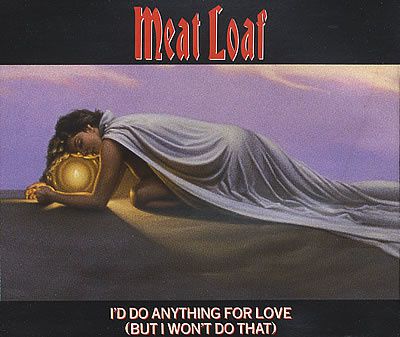
What Is 'That' Meat Loaf Sings Of?

Despite being a massive hit, and enduring as part of popular culture for twenty years, there is still a mystery that has yet to be resolved to a satisfactory degree.

What won't Meat Loaf do for love?

People have been speculating ever since the song came out what the titular 'that' is, and to this day there is no consensus as to exactly what it refers to. There are the theories that it's all nonsense made up because Jim Steinman thought it sounded good, and there is the explanation Meat Loaf gives that the song clearly explains the four things he won't do, but I have a different thought.

Meat Loaf is not altogether incorrect in his assessment, but it is incomplete. The song absolutely does mention four specific things his character won't do for love. They are, in order:

"I'll never forget the way you feel right now"

"I'll never forgive myself if we don't go all the way, tonight"

"I'll never do it better than I do it with you"

"I'll never stop dreaming of you every night of my life"

On their own, each could be a possible answer, but the clearer picture comes when they are added to the context of the duet section that ends the song. When the female character tells Meat Loaf that "you'll see that it's time to move on", one implication becomes apparent to me.

The 'that' Meat Loaf is singing about is loving someone else. Throughout the song, Meat Loaf proclaims all the things he will do for love, from running into hell to colorizing the world. But he is promising that to one specific woman, and when she tells him that he might feel that for someone else in the future, he denies that it could ever happen. In his character's mind, that love can only exist for her. There is no possibility of feeling that way for anyone else.

So when Meat Loaf is singing that he won't do 'that' for love, keeping in mind the context, he is telling her that he can't leave and find someone else to shower with his terrifyingly intense affection. You could read into the song that she thinks he's a bit crazy, and is trying to point him in a different direction, but he is having none of it.

While it might be more fun to have the song remain a mystery, or even to consider it nonsense to promulgate a pun, I don't believe either of those is correct. In my mind, the answer has been staring us in the face the whole time, but we didn't want to see 'that'.

Monday, January 4, 2016

Album Review: Forever Still - Tied Down


Let's be honest for a moment; mainstream rock is usually flaccid and boring, because it's meant for the mainstream. That word does carry with it connotations of the lowest common denominator, and the vast majority of bands that aim for that kind of success are more than happy to live down to the reputation. That makes it that much sweeter when we find bands that are making music that can appeal to the masses, but still contains an artistic heart. It might be difficult, but mainstream music can surely be enjoyable as more than background music, if the musicians know what they're doing.

I had that feeling last year, when I listened to the most recent EP from the Danish band Forever Still. Led by the stirring vocals of Maja Shining, those songs were a small dose of music that was all that's good with mainstream rock. I went back and listened to their earlier EPs, and found that with the songs they've been putting out, there was the core of a good album waiting to get greater exposure. That message has been received, as those EPs are gathered together, and augmented with a couple new tracks to make "Tied Down", the conceptual debut album that lives up to my expectations.

The first six tracks are the "Scars" and "Save Me" EPs, presented in order. If you've listened to those EPs already, you already know and enjoy these songs. If you haven't, what you get are six tracks that show the varied facets that Forever Still is able to present through their music. You get "Scars", which opens the album with a stomping riff, the occasional scream to pump up the angst, and a chorus that shows Maja's plentiful vocal talents. There's moodier fare in "Miss Madness" which features somber pianos through the verses, but comes back to basics with one of Maja's rousing choruses.

We repeat the process over the next few songs, with the energetic "Awake The Fire" positioning itself to be a live favorite, "Breathe In" dipping a toe into electronic waters to balance the heavier riffs, and "Save Me" once again stirring up emotion with a slower pace and darker theme. These are all quality tracks that only suffer from the fact that I've already been listening to them. The quasi-ballads are my favorite tracks here, and they're still just as effective as the first time I heard them, and Maja's voice resonates just as hard.

The material that's new for the album closes out the track listing. "Your Light" is another solid rocker, but there's more interesting fare ahead. "Alone" marries a deep and heavy riff with hints of keyboards and electronics adding texture, which makes Maja's massive chorus hit even harder. By playing with the dynamics just a bit, they do an excellent job of manipulating the song for its greatest impact.

I don't want to short-change the rest of the band, who do a commendable job with their instruments, but this variety of music is centered on the vocal delivery, which makes Maja the main reason the album succeeds. Her voice is phenomenal, able to be harsh, powerful, or tender and emotional depending on what the song calls for. Coupled with her ability to craft melodies that fit her voice, and capture your attention, she is the unquestioned star of the album.

"Tied Down" only has one real flaw; its length. These ten tracks are all very good, but they add up to a quick thirty-five minutes. I do admire that they're careful not to give us a record that wears out its welcome, I have to say I wouldn't mind an extra song to push it a few minutes longer. This is also one of the rare cases where I'm not bothered by the usual dark tone of the guitars, because it fits the album's theme of exploring life's darker moments. It fits together properly.

It's hard to make grand pronouncements at the start of a year, and I'm not going to try to assess where this album is going to sit come the end of the year. What I can say is that Forever Still has gotten 2016 off to a rocking start, and "Tied Down" is the kind of debut album that raises expectations for the future. There's no reason, after hearing this record, that Forever Still can't be the next big thing.