Monday, March 14, 2016
Album Review: Mob Rules - Tales From Beyond
When I was first getting into power metal during my college days, Mob Rules was one of the first bands I stumbled across. Back then, I couldn't tell the difference between what was good and what wasn't, but what is interesting to me is that the first impression they left didn't keep them in my consciousness very long. Over the course of time, I've lost track of what they've been up to, and I'm not sure when the last time I heard an album of theirs was. That changes now, with "Tales From Beyond" reminding me that Mob Rules has been an important name in the prog/power game for twenty years now. That deserves another look.
"Dykemaster's Tale" gets things started in a way I appreciate, sounding remarkably like the opening of a modern Iron Maiden song. Since I am one of the staunchest defenders of the progressive version of Iron Maiden, this approach is one that I wholly endorse, and now wonder why it hasn't been copied more often. That feeling continues throughout the song, as everything about the guitar work feels completely from the Iron Maiden school, with the clean guitar part right before the chorus using note choices that I would have sworn came from Steve Harris. Sure, it would be easy to call the song a bit of a rip-off, but that would be missing the point. Mob Rules is copying a sound, but it's a great sound, and they're doing it excellently. There's no reason that song couldn't have fit right in on "The Book Of Souls".
They return to their traditional power metal sound on "Somerled", which is more predictable, but still hits with plenty of power and a big, hooky chorus. Mob Rules can write this style just as well, as they show. "Signs" is the obvious connecting point, where they blend choruses of their usual sound with verses and riffs that adhere more to the Iron Maiden school. That brings up a small point of contention here. The riff they use to anchor the song contains what sounds like variations on suspended chords, but the guitar tone is too distorted for the minor changes to be heard clearly. A slightly cleaner sound, yes like Iron Maiden uses, would make it stand out even more.
I don't intend to keep harping on the similarities between this album and late-era Iron Maiden, but with each passing song I keep hearing more and more little bits that remind me of those albums, which I say with the utmost appreciation. Despite Mob Rules being a good band, this album would be far less interesting if it was adhering strictly to the traditional power metal playbook. Plenty of bands ape Maiden's 80s output, but few have the prowess to tackle the more cerebral, more progressive band they have become. The fact that Mob Rules does such a good job of recreating that feeling, all the while writing really good songs, is a testament to their talent as a band.
And like Iron Maiden's recent work, the least interesting track on the entire album is the short, traditional "Healer", which glides by with one of those power metal choruses that uses long notes to replace interesting melodies. That is precisely what makes the approach of the rest of the album so interesting; the contrast with what we're all expecting.
Included in that would be the three part title track, which is based on the same source material as the hit movie "The Martian". Over the course of fifteen minutes, the band takes the music on a storytelling journey, running the gamut of their sounds, including Part II, where Klaus Dirks has never sounded more like Bruce Dickinson. Like a lot of massive attempts at grandeur, there are sections that could have been condensed for the sake of brevity, but it's a valiant attempt at stretching their creative wings and proving themselves capable of more than we might assume. It's a less immediate group of songs than the rest of the album, but they work in context.
Overall, "Tales From Beyond" is an album that will hinge on what you think of modern Iron Maiden. That sounds weird to say, but I think it's the best way of summing this up. Mob Rules has made an album that fits that style so well that I'm not sure you can like one and not the other. If you are someone who thinks Iron Maiden has lost their way, you are likely to think Mob Rules has done the same. But if you're someone who appreciates that progressive take on what traditional heavy metal can be, "Tales From Beyond" is the best example of it that Iron Maiden themselves didn't make.
Sunday, March 13, 2016
Critical Rewind: Recent Albums Of The Year
As a critic, I am always trapped in the moment. I am constantly thinking about what I'm listening to, what I still need to listen to, and what is soon to come. There isn't much time for reflection after the fact, which means it is often difficult to assess how my opinions have changed as time wears on. It's only natural that time and experiences are going to alter what records wind up as my favorites, and which ones fade away because they became progressively less interesting. Each year, as I look back at the previous year's list of favorite to remember exactly what I was lauding, I see what by then look like obvious mistakes in my taste. What interests me is that while the order of the albums is up for discussion, the ones that top my list, my absolute favorites, have not been among them. I've done, for myself, a remarkably good job of selecting my favorite record each year.
To illustrate this, let's look back at the last few years.
2010: Tonic - Tonic
At the time, I was concerned that my choice was a byproduct of Tonic being my favorite band. While I thought the record was great, it was not what I had been expecting, and there was a hint of disappointment. That doesn't sound like the recipe for an Album Of The Year, but I went with it anyway. I was right. In the years that have followed, as both the album and I have grown, I have uncovered much more to love in it that I had at the time. It has grown in stature, and has shaken off any hints of disappointment that I had. I was not old enough to see what the record is, and appreciate it thusly. It is clearly my favorite album from 2010, and is still one I listen to regularly.
2011: Dream Theater - A Dramatic Turn Of Events
Here we reach the one mistake I made. I allowed these albums to share the title, because I couldn't separate the two sides of my personality. I can now, and I should have then. While Halestorm's record is still a sweet bite of pop/rock, Graveyard made an album that has come to define an entire genre of music. If rock has taken a page from yesteryear, it is being written by Graveyard, and "Lights Out" is their shining moment. It is an album that bobs and weaves, that ebbs and flows, that balances power and beauty in a way that no other rock record in recent years is able to. I listen to Graveyard regularly, as I feel they are the best band of the last decade, and more often than not I find myself reaching for "Lights Out". Time has shown me the light, and Graveyard should have unquestionably won the award in 2012.
2013: Dilana - Beautiful Monster
This was the easiest choice of all, and not because Dilana is my favorite singer of all time. That would have been enough to win the crown, but "Beautiful Monster" is so much more than an album made by someone I like. It is a raw, visceral experience, the kind of record that comes along so rarely. I don't consider myself an emotional person, but this record moves me. It makes me feel something that music almost never does. Even now, nearing three years since its release, I still find myself being hit the same way by the honesty and vulnerability of these songs. It is not just a great album, it's one that left a deep impact on me and in some ways changed how I view music. It has also ascended into my current Top Five Favorite Albums list, which means there is no doubt it was the best record of 2013.
2014: Transatlantic - Kaleidoscope
This year saw a competition between Neal Morse and himself, although time has changed my feelings. The actual battle should have been between Transatlantic and Edward O'Connell, who finished #3 that year. The latter is a record that I have spun nearly once a fortnight for two solid years now, and have yet to become slightly weary of. "Kaleidoscope", on the other hand, is not a record that allows for such replays. But while I would be tempted to change my vote on that basis, the listening experience "Kaleidoscope" gives is so massive, and so intense, that it is clearly the better album. It takes effort to find the time to play it in full, but the songs are able to sweep me away in a way that is not common. It's a transcendent album, and is still my favorite of 2014.
2015: Jorn Land & Trond Holter - Dracula: Swing Of Death
Just two months ago I named this the Album Of The Year. Although two months isn't much time to pass, little has happened to change my opinion. If anything, what has happened is that the other records from my list have faded somewhat, leaving this as an even more formidable front-runner. There was no record that was as enjoyable to listen to as this one, which I tested by playing this album mercilessly. As the plays piled on, the songs never got old, they never got dull. It is a brilliantly sharp album, one that embraces the camp and fun that make music easy to love. No, it makes no profound statement about life, and it doesn't attempt to plug into our emotional core, but it does something more; it entertains, and nothing did it better.
The question now is; what will join these as the best album of 2016? Have I already heard it? Or is the best yet to come?
To illustrate this, let's look back at the last few years.
2010: Tonic - Tonic
At the time, I was concerned that my choice was a byproduct of Tonic being my favorite band. While I thought the record was great, it was not what I had been expecting, and there was a hint of disappointment. That doesn't sound like the recipe for an Album Of The Year, but I went with it anyway. I was right. In the years that have followed, as both the album and I have grown, I have uncovered much more to love in it that I had at the time. It has grown in stature, and has shaken off any hints of disappointment that I had. I was not old enough to see what the record is, and appreciate it thusly. It is clearly my favorite album from 2010, and is still one I listen to regularly.
2011: Dream Theater - A Dramatic Turn Of Events
Dream Theater isn't a band that I had any history with at the time this record came out. I wasn't in the scene when their classics came out, nor had I gone back and listened to them. I listened to this record because of the drama that surrounded it, and when I did, I heard something that even Dream Theater themselves has never replicated. There is jaw-dropping playing and musicianship all over the record, as there always is, but what amazes me here is that in trying to prove that they were going to be ok moving forward, they wrote the more powerful and melodic songs of their career. I can still put this on and wonder why they are such mediocre songwriters at all other times. This is, to me, their defining album, and clearly my favorite of 2011.
2012: Graveyard - Lights Out/Halestorm - The Strange Case Of...
Here we reach the one mistake I made. I allowed these albums to share the title, because I couldn't separate the two sides of my personality. I can now, and I should have then. While Halestorm's record is still a sweet bite of pop/rock, Graveyard made an album that has come to define an entire genre of music. If rock has taken a page from yesteryear, it is being written by Graveyard, and "Lights Out" is their shining moment. It is an album that bobs and weaves, that ebbs and flows, that balances power and beauty in a way that no other rock record in recent years is able to. I listen to Graveyard regularly, as I feel they are the best band of the last decade, and more often than not I find myself reaching for "Lights Out". Time has shown me the light, and Graveyard should have unquestionably won the award in 2012.
2013: Dilana - Beautiful Monster
This was the easiest choice of all, and not because Dilana is my favorite singer of all time. That would have been enough to win the crown, but "Beautiful Monster" is so much more than an album made by someone I like. It is a raw, visceral experience, the kind of record that comes along so rarely. I don't consider myself an emotional person, but this record moves me. It makes me feel something that music almost never does. Even now, nearing three years since its release, I still find myself being hit the same way by the honesty and vulnerability of these songs. It is not just a great album, it's one that left a deep impact on me and in some ways changed how I view music. It has also ascended into my current Top Five Favorite Albums list, which means there is no doubt it was the best record of 2013.
2014: Transatlantic - Kaleidoscope
This year saw a competition between Neal Morse and himself, although time has changed my feelings. The actual battle should have been between Transatlantic and Edward O'Connell, who finished #3 that year. The latter is a record that I have spun nearly once a fortnight for two solid years now, and have yet to become slightly weary of. "Kaleidoscope", on the other hand, is not a record that allows for such replays. But while I would be tempted to change my vote on that basis, the listening experience "Kaleidoscope" gives is so massive, and so intense, that it is clearly the better album. It takes effort to find the time to play it in full, but the songs are able to sweep me away in a way that is not common. It's a transcendent album, and is still my favorite of 2014.
2015: Jorn Land & Trond Holter - Dracula: Swing Of Death
Just two months ago I named this the Album Of The Year. Although two months isn't much time to pass, little has happened to change my opinion. If anything, what has happened is that the other records from my list have faded somewhat, leaving this as an even more formidable front-runner. There was no record that was as enjoyable to listen to as this one, which I tested by playing this album mercilessly. As the plays piled on, the songs never got old, they never got dull. It is a brilliantly sharp album, one that embraces the camp and fun that make music easy to love. No, it makes no profound statement about life, and it doesn't attempt to plug into our emotional core, but it does something more; it entertains, and nothing did it better.
The question now is; what will join these as the best album of 2016? Have I already heard it? Or is the best yet to come?
Saturday, March 12, 2016
Album Review: Lody Kong - "Dreams and Visions"
In the strange, wonderful and strangely wonderful novel “Snow Crash,” author Neal Stephenson describes the sound of made-up band Vitaly Chernobyl and the Meltdowns as, pardon some paraphrasing, being launched headlong through a wall of fishhooks. Lody Kong, raised out of the burnt sand of the Phoenix desert, brings that phrase rushing back to mind. As if to accentuate the point, a quick glance at the band’s official Facebook page lists their musical genre simply as ‘fuck,’ which may be a joke but probably isn’t.
There’s a universe of hype swirling around Lody Kong, as the band is fronted by the brothers Cavalera. No, not Max and Igor, but Zyon and Igor Jr, two of Max’s sons taking up the mantle of their forebears. Naturally, the metallosphere is abuzz with the concept of another band fronted by two Cavaleras, Lody Kong needing only a coming-out party in the style of “Beneath the Remains” to complete their coronation.
To that end, the band has offered up their debut full-length record, “Dreams and Visions,” a furious mash of distortion and reverb that thuds along like a primal juggernaut emerging from a dark, abysmal cave. There is a threshold at which distortion as a signature becomes overbearing, but Lody Kong has plumbed the depths of that well and gone so far past the barrier that the effect has circled back on itself – there’s a certain ground-teeth enjoyment in the coiled mess of Lody Kong’s sound that seems paradoxical but is nevertheless inescapable.
Part of Lody Kong’s secret is that while it’s metal fans who are drooling in anticipation, the act is actually in many ways a punk band. The fuzzy blankets of down-tuning that run through the whole record may distract from the core, but there’s little denying the basic punk roots (no pun intended) of the title track – in many ways, “Dreams and Visions” is like listening to Black Flag’s “Damaged” on steroids, up to and including the raw, rough edges that gave that iconic record some personality.
If we’re bring honest, that includes the vocals of Igor, which are the low point of the record. His profile is sort of middling and lacks in a specific tone, which to go back a little was also true of Henry Rollins for “Damaged.” Now, that’s not necessarily an awful thing, but Igor’s dry-lung delivery may turn off some listeners who can’t get past his particular brand of speak-singing. There’s certainly hope here if you’re looking for a more well-rounded performance. Igor is, after all, exceptionally young, and many vocalists take a record or two to find their voice, including genre luminaries like Rollins, Phil Anselmo, Chris Cornell and James Hetfield.
Where we do see the metal threads gets woven into the fabric of Lody Kong (or at least the hardcore ones,) are more on the second half, where there’s a well-patterned thud to tracks like “Smashed and Blasted.” These are the kinds of songs where the lyrics are in no way important, not even a little. These pieces are designed solely to move bodies in a mosh pit at an alarming rate, and “Dreams and Visions” hits that spot pretty dead-on.
“Dreams and Visions” pretty much has two speeds, which doesn’t leave for a ton of versatility, but that’s hardly the point. For those who would anticipate that a record with this pedigree would sparkle with high production values and solid financial backing, boy, are you in for a shock. This is a professionally-mixed pile of space junk careening through a burning atmosphere, and for the most part, Lody Kong is really good at being just that.
Thursday, March 10, 2016
Album Review: Circus Maximus - Havoc
With the new wave of extreme and djent progressive metal bands that have been flooding our ears, it's easy to forget where we were just a few short years ago. Our memories don't need to be long to remember a wave of more traditional progressive metal that was supposed to carry us into the future; bands like Cloudscape and Circus Maximus. They were going to be the next step in progressive metal, but something happened along the way, and that style got usurped, which leaves Circus Maximus in an odd situation. Without the conceptual tie-ins of Vanden Plas, or the rub from a 'legend' like Leprous, what do we make of power leaning progressive metal these days?
We open with "The Weight", which bears no resemblance to the legendary song by The Band, but does tell us what we need to know about Circus Maximus. Over the course of six minutes, we get simple riffs piled into a structure that takes a few detours, we get instrumental bits that sound reminiscent of everyone from Dream Theater to Deep Purple, and the vocals are a softly beautiful melodic sort that bring some levity to the proceedings. It's a very nice track, but it also feels a bit too familiar - not in the sense of being a rip-off, but because it too perfectly does exactly what we would expect.
That feeling doesn't hold on "Highest Bitter", but perhaps it should have. This song takes a different course, with an Eastern motif running through the riffs, but the song itself plods along for too long without an interesting melody, and when the chorus does come, it isn't powerful enough to make the wait worthwhile. It's the same case with the title track, which tries to be heavier with down-tuned guitars playing a riff that Muse would be happy to take. It's a short track, but it isn't snappy. The melody is barely there, and the arrangement gives us little else to latch onto. The momentum the opener tried to establish disappeared very quickly.
That is the most disappointing aspect of "Havoc"; the utter lack of hooks. The band has taken a turn more towards modern rock on this record, and in doing so they have stripped away the elements of progressive metal that make it most appealing. Progressive metal is one of the few places left where a heavy band can still play and sing beautiful melodies, but those aren't what drives this album. This is a cold, modern, rhythmic album that appeals to the people who listen to drum and bass music, but leaves me feeling empty and hollow. They have the talent, and the singer, to be doing something fantastic, but this record isn't it.
When they try to do that, like on the eight minute "Loved Ones", they come close, and at the very least they make music that is exciting and interesting to listen to. The majority of the album isn't, which I'm sorry to say. Call it confirmation bias if you want, but it's an approach I rarely like, and I don't like it here either.
I'm not going to say more on the negative side here, because it wouldn't be fair. Circus Maximus has tried something different here, and they've taken a road that I don't want to do down. It's not at all surprising that I don't enjoy a record that is built on a foundation I think is wrong-headed. That's fine, and more power to anyone who enjoys it. I just won't be one of them.
Wednesday, March 9, 2016
Album Review: Blood Ceremony - "Lord of Misrule"
Okay, so whenever someone who’s uninitiated first encounters Blood Ceremony, there’s a general predilection to say ‘oh, it’s Black Sabbath with a flute.’ The brain connects those pathways easily, and then without further inspection, the die is cast and the listener thinks they know Blood Ceremony inside and out.
But lo, we know there’s more to the story, don’t we? The Canadian doom-y quartet hits all those hallmarks, yes, but they also expand into further and more indirect influences, gathering a throng of musical ideas ranging from devilish to celebratory and stirring them into a cavernous cauldron of rhythm, emotion…and yes, flute.
The band that first impressed with their self-titled debut in 2008 and floored us with the apex of “The Eldritch Dark” in 2013 returns this year with “Lord of Misrule,” an album that promises both more of the same and something inimitably more.
This record takes inspiration from the old Feast of Fools, which up until roughly the Enlightenment was celebrated in England in the saturnine custom of pagans. The celebration was always roughly concurrent with Christmas and involved, among other revelry, the naming of a Lord of Misrule, who wielded authority during the festival, but was often sacrificed to Saturn at the end of it. The band has said that there’s no single concept running through this new record, but that the central idea was in their minds during composition.
So what does the album sound like? Let’s hit the highlights (spoiler, there’s a bunch.)
What one notices first and foremost is that Blood Ceremony is folding in many more aspects of rock and metal than they did even in their most recent works. To hear “Half Moon Street” is to hear an opening that swaggers like a gunfighter sauntering confidently into an old west saloon…but if the saloon were full of suspicious-looking elves and owned by dryads. There’s an earthiness that underwrites the entire song, including into the second half when the powder keg explodes and we’re thrust headlong into a shoot-out at the Tolkien corral. The name Ian Anderson gets dropped a lot (too often) when talking about Blood Ceremony, but Alia O’Brien unleashes the most righteous flute solo (words I didn’t think I’d type today,) since Anderson was in his heyday. If you hadn’t gathered, “Half Moon Street” is the album’s best cut.
But wait, there’s more! While the Black Sabbath comparisons in this genre are overused and over-simplified, they’re not always without merit. While those boys would never have penned the flighty outro to “Loreley,” Iommi and company could have absolutely crafted the rusted, grinding edge of “The Rogue’s Lot,” a slow burning dirge that throws shadows in its wake.
We’re not done! Tune in a few songs later and you’ll walk unheeding into “Flower Phantoms,” and now we’re hearing….sixties folk pop? Short a tambourine, that’s exactly where we are, and the riff of Sean Kennedy is the perfect tone to replicate that feeling of go-go gone by, Michael Carrillo’s drum beat a spot-on replica of rolls and fills from nearly fifty years ago. It’s a song that shouldn’t work but mysteriously does, part of O’Brien’s continued spell on the listener and the capable craftsmanship of the band as a whole.
“The Eldritch Dark” was a top ten album in 2013, and at the risk of making a rash judgment, “Lord of Misrule” might well be better than that record, which tells you its prospects as we forge ahead. Blood Ceremony has dropped a nearly flawless album of retro-metal and classic rock, and it is not to be missed.
Tuesday, March 8, 2016
Album Review: 3 Doors Down - Us And The Night
Like a lot of bands that came around during the time that has been lumped under the banner of 'post-grunge', 3 Doors Down made a big splash when that sound was all the rage, and then has receded more into the background as rock music of all stripes struggles to find any popularity. Even when talking about a band that was mainstream, like them, you have to almost be a die-hard fan just to know what's going on. It should come as no surprise, then, for me to say that the band hadn't crossed my mind in several years, and I couldn't name you a track from their last several releases. That's not because of any feelings I have for them, but merely because rock music in the mainstream has been marginalized that much.
You can make the argument that rock music has evolved over the years, and that's true. However, there are certain ways that rock has changed, and there are certain ways that are obvious pandering to get another hit or two before the end of a career. Listening to the opening song here, "The Broken", it seems obvious to me which way the wind is blowing. The song has autotune, drum effects, and a synth that is too pop even for the worst 80s hair band. Even the rhythm being played is a take-off on indie rock, and has virtually nothing to do with the kind of rock I remember 3 Doors Down playing. That said, what's really at question is whether the song is any good, and the answer to that is... sort of. It's got the surface level appeal of modern pop, but it doesn't have much teeth, and there doesn't seem to be enough there to dig into on repeated listens. It's pleasant, but a bit like empty calories.
"In The Dark" follows, and is a much better track. It does away with the pretense of modern pop, and instead focuses on what the band is good at; delivering melodic rock that puts writing a good song ahead of reinventing the wheel. It shows a better sense of evolution, having turned the lights on and scrubbed away the darkness and grime of the post-grunge era, preferring to make something more akin to modern arena rock. It's a good sound for the band, and definitely is a better path to explore.
When I hear the vocal timbre on "Still Alive", it hits me what I'm hearing. 3 Doors Down has somehow morphed into what Daughtry was, until the flaming disaster that was their last album. Let's dispense with something right away; I don't mean that as a knock in the slightest. The first two Daughtry records are magnificent examples of how to fuse pop and rock in a way that feels organic, and when 3 Doors Down is focused on following that train of thought, they do themselves proud. "Believe It" is a really good song, and one I easily could have heard on rock radio back when I still paid attention to it. It's right in my wheelhouse, and it works.
There is diversity to the record, as well, and it comes with the usual issues. The ballad "Inside Of Me" is saccharine but effective, and is a needed reprieve. "I Don't Wanna Know" is a controversial song, with an approach that mirrors something Ed Sheeran might do, but it goes too far down the pop line even for a rock fan like me who still likes pop melodies. It doesn't have the authentic feeling that "Pieces Of Me" does, when that song properly uses its acoustic guitars.
Then we have the case of a song like "Love Is A Lie", which is a tight little rocker with a hooky as heck chorus. The only problem is that it immediately reminded me that the melody had almost idenitically been written by Nickelback a decade ago. The similarity dimmed my affection for the track. That's then balanced out by "Us And The Night", which goes back to hitting all the right marks.
So what the record amounts to is a bit of confusion. We get several fantastic songs that perfectly blend pop and rock, but then we also get a handful of tracks that are too pop-oriented for the band's own good, because they don't fit in with what we know of their sound. And, to be honest, they aren't nearly as good at writing those tracks. The good material on "Us And The Night" is great, but the band isn't willing to double down on their strengths in an environment that won't reward that. I understand it, but I don't like it, because it makes this album far less than it could have been. It's still good, but it clearly could have been better.
Monday, March 7, 2016
Album Review: Droids Attack - "Sci-Fi or Die"
Confession time. I am a nerd. Not like a League of Legends-playing, Doctor Who-swallowing, PC elitist nerd, but I definitely know the tactical value of siege tanks, remembering to carry a towel when I travel, and can tell a Rodian from a Vorlon. So I feel right at home diving into an album called “Sci-Fi or Die” by a band named Droids Attack, even if I am instantly reminded of the ‘Simpsons’ episode where Mark Hamill is being harassed and Homer angrily yells “NNNEERRDDSS!”
What we have here is an album that taps into many of the rich veins of metal fandom over the course of forty years of metal, steeped largely in the dirty rhythms and stop-and-go riffs of the blues metal tradition. The album really gets going with “Clawhammer Suicide,” a piece that puts the pedal down and crosses the intersection of Annihilator’s cadence with Clutch’s tone. These moments are when Droids Attack impress the most, employing copies (clones? Replicants? Life Model Decoys?) of the best tropes metal has to offer and infusing them into a giant, multi-title crossover.
The other look we get prominently on this, the band’s fourth full length album, is a less dramatic but still effective distorted mash that reminds of the headiest days of Viking Skull, a crafting of sludgy, noisy rock that’s being made for sludgy, noisy rock’s sake. What stands out is that hidden in the noise of the middle third of “Sci-Fi or Die” is a trick that lofty artists like Rush used to use to great effect – the ability to create to play a minimalist riff and occasionally change one or two notes out in order to create a more varied-sounding experience. Droids Attack do this a couple of times, both in “Mashenomak” and “The Maze,” and it works fairly solidly in an unexpected medium.
However, Droids Attack leans on this trick too often, creating a record that as it drags into the later tracks, sounds awfully similar to itself. Even within the songs, if a discerning listener simply clicks through the songs at about ten-second intervals, what he or she will hear is the same basic structure repeated ad nauseum. Even minor variances within the riffs can’t wholly prevent the turning gears of repetition, so “Mashenomak Strikes Again” and “Rebirth” sound uniform from beginning to end. Droids Attack has already displayed the talent to avoid this pitfall, so the ceaseless back and forth oscillations of the riffs don’t really grip the memory like seeing attack ships on fire off the shoulder of Orion.
So here’s the deal – what we’re left with for “Sci-Fi or Die” is essentially a really nerdy metal album made by nerds for nerds and there’s nothing wrong with that. There’s a market for that. Let’s be honest here, the metal scene has long been collected with nerdery of all stripes. I mean, come on, have you ever really listened to Venom’s “Welcome to Hell?” That’s the ramblings of three homely nerds who were frustrated because women wouldn’t touch them. So we’re merely experiencing the next in a long tradition.
That said, while “Sci-Fi or Die” is a capable album that ably captures and replicates the mechanics of honest and pure metal (with some progressive undertones,) it perhaps does not properly engender the spirit of the genre, or capture the imagination.
Sunday, March 6, 2016
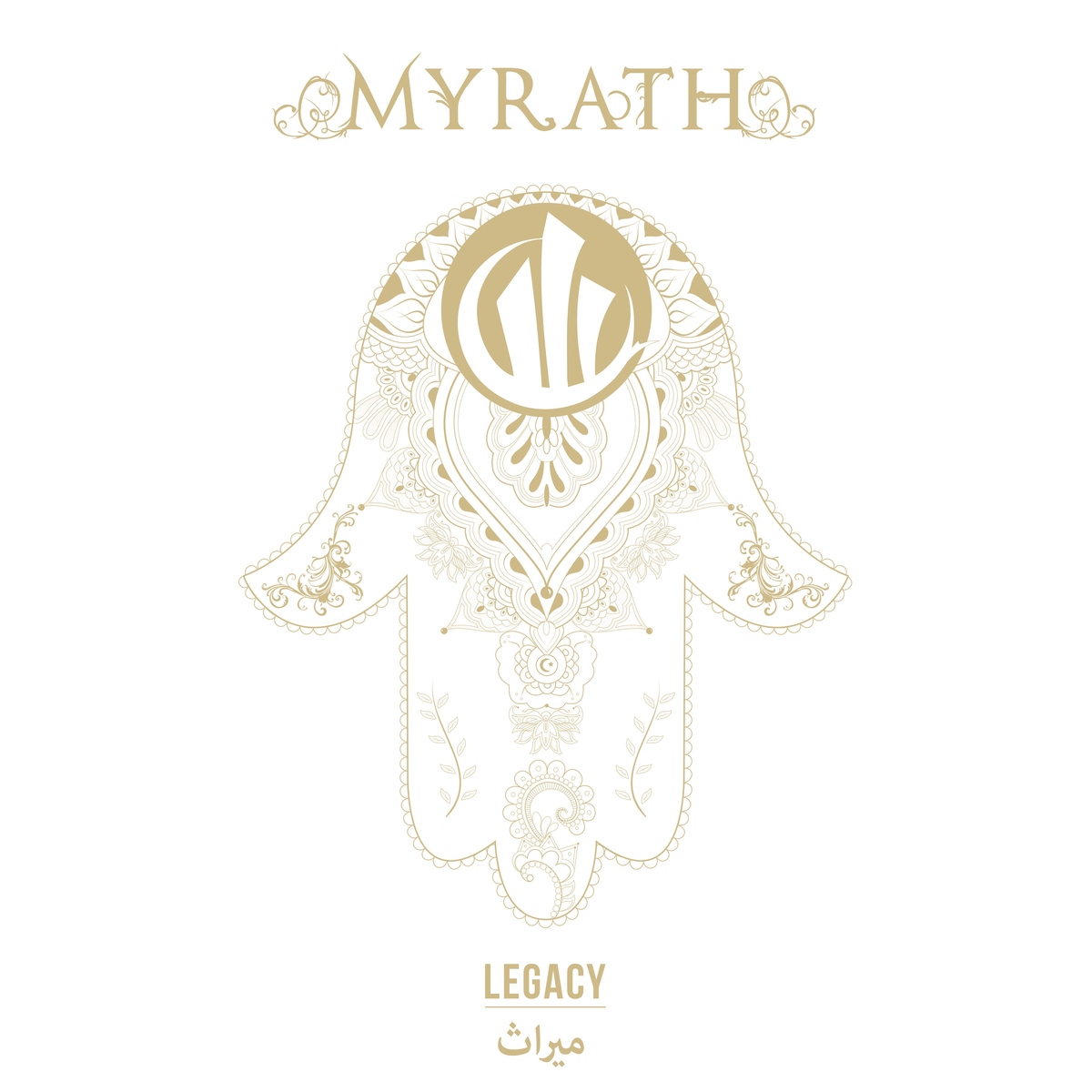
Album Review: Myrath - Legacy
Given the proliferation of metal bands, everyone needs to have a gimmick of some sort in order to stand out from the crowd, or so it seems. That's how we end up with bands dedicated to telling the history of Vikings, or of World War II, or in the worst of them all, a group of white guys from the United States lecturing everyone on ancient Egyptian lore. But, while most of the gimmick sounding bands don't actually have anything to do with the subjects they pick, there are actual bands who hail from places and cultures that make them unique by simple virtue of who they are. Myrath is one of those, a nominally progressive metal band that uses their Tunisian heritage to give a new feeling to their brand of prog metal, one that far exceeds the pandering done by the rest.
We get to hear it right away in "Believer", the first proper song on the album. It opens with a jaunty rhythm, but the main orchestral melody is played with some unusual intervals that sound completely original in this context. We're so ingrained by the standard notes guitars are capable that we can forget cultures have used instruments that play in the negative space. Myrath does that with the outside elements throughout this record, which can be a bit jarring, but more often makes you perk your head up and note that what they're doing is actually progressive; they're challenging the boundaries of 'normal' metal.
They also manage to do something that very little metal can anymore; be uplifting. There's a sense of optimism to the melodies running through these songs that drips of positivity, that makes the songs engaging and fun. Metal is so dark so often that it's refreshing to hear a record that doesn't mind letting in some light. When you get sections like the slapping breakdown in "Get Your Freedom Back", or the djent riffs in "Nobody's Lives", the expectation from everything we've ever heard is that the songs will get sucked down into a mire of faux-emo misery, but Myrath doesn't let that happen. Instead, the songs make sure they return to big, positive hooks.
"The Needle" might just be the best track here, as it builds from a sinister riff that brings to mind Guns 'N Roses classic "Rocket Queen", and takes off with a massive, hulking pop chorus that is absolutely killer. It's the kind of song that makes you wonder why metal usually seems intent on ridiculing the very thing that makes music so enjoyable. Even a song called "I Want To Die" can't bring things down too far, with a sweeping melody and dramatic flourishes that give it gravitas beyond simply being dark.
The record doesn't let up, either. I might call "Believer" a bit weak, but from then on the songs just keep hitting with huge hooks over and over again. And if you get the version that comes with the bonus track "Other Side", that just adds another tally in the win column. It's hard not to listen to a song like "Duat" and get swept up in Myrath's ability to spin a song. And there's something about the lo-fi, roaring twenties piano, leading off "Endure The Silence" that brings a smile to my face. The unusual little details Myrath throws into these songs always work, and never feel wedged in just for the sake of being different.
"Legacy" is an album that's hard to accurately describe. There's something about their blend of foreign elements with traditional melodic prog metal that doesn't fit neatly into our lexicon, leaving my with little to say but that this is an album that you owe it to yourself to at least check out. Myrath is making hugely melodic music that truly does something different, and that deserves respect. The fact that they pull it off this well deserves applause. "Legacy" is a great record, and along with the releases I've already reviewed from Sunburst and Redemption, have already made this a banner year for progressive-leaning metal.
Tuesday, March 1, 2016
Album Review: Black Wizard - "New Waste"
Pardon a brief rant at the outset – one of the most God damned annoying things in the whole metal genre is that when it comes to the world’s population of metal bands, large and small, fully a third of the field (and that’s a conservative percentage by some measures,) and damn near everybody who doesn’t specifically play thrash, death or black metal, gets stuck with the label ‘RIYL – Black Sabbath.’ Now don’t get it twisted; Sabbath means a whole bunch to the genre, but there’s only two real possibilities here. The first is that the law of probability and basic human common sense (who are not always friends, by the way,) conspire to conclude that this assertion about the Sabbath family tree is total crap. The second, and this has perhaps even more damning repercussions, is that the metal genre is much less diverse than we want to believe, and that metal fans are largely pacified by the same ol’ thing with a new coat of paint every few years. (The second option sends a chill down the spine as it immediately rings with at least a glimmer of truth. I don’t want to talk about it anymore. Let’s move on.)
I tell you that story to tell you this one; every so often, a band appears that is actually fucking deserving of the comparison to Sabbath, a band who ties many influences together but lives at the intersection of blues and doom (and I don’t mean the subgenre) that permeated the musical DNA of the boys from Birmingham. Black Wizard is one of those bands. (Side note: Black Wizard also sounds like somebody who could have opened for MF Doom in like, 2002. Neither here nor there. Carry on.)
What we have here with the band’s fresh album “New Waste” is a heady and ambitious throwback to the simpler days of metal, combined with some modern storytelling and pleasantly acrimonious vocals to create an image of both solid rocking and emotional discomfort. Where Black Wizard excels is in setting an atmosphere without flagellating a deceased equine – the middle third of “Vivian Girls” thuds the same small cabal of distorted chords over and over, centering on the positively Iommi-an point that this is kinetic but single-minded music, complete with intent and purpose. What keeps this and similar sections from droning on into oblivion is that Black Wizard knows when to release the tension of their songs, never letting one idea sit idle for too long.
Yet there are hundreds if not thousands of garage-band caliber would-be Sabbath disciples, so what separates Black Wizard from the throng? These British Columbians, possibly through intent but more likely through accident, also conjure in the mind’s eye the name of the currently defunct Priestess, a rock/metal hybrid band from the other side of Canada, who similarly specialized in injecting some adrenaline into prototype blues-metal riffs. “New Waste” closes with a two song set of “The Priest” and “Final Ripper,” both of which sound like sludgy cousins of the best moments of Priestess’ first record, the connection made doubly appropriate because of the vocal similarities of Black Wizard’s Adam Grant and Priestess’ Mikey Heppner. The two tracks are the album’s two best, combining Black Wizard’s penchant for big, mobile riffs with their deep understanding of the connections with metal’s heritage.
So far, we’ve compared Black Wizard to two other bands and perhaps not done a great job of showing what makes these upstarts unique. The answer, unfortunately for the reader, is that it’s difficult to describe, and best understood by simply hearing the album. With all the inky, swirling darkness that surrounds “New Waste,” there’s still a jaunty sense of fun buried deep in the album’s core, not always easy to detect but perceptible in the swinging toe-tap of cuts like “Eliminator.” The founders of the band were formerly unhappy construction workers, so there may be some catharsis concerning the turn to making music for a living that causes a hint of smile-inducing appreciation to be woven into the riffs of “Revival” and others. Nevertheless, it’s that strain of pleasure that disrupts the serious face of “New Waste” and actually makes the album a better experience for having it.
Now, “New Waste” isn’t perfect. There’s a throwaway or two, and the dice roll of a near-ballad with “Laughing and Lost” was unnecessary, but these are minor footnotes in the grand scheme of the record.
“New Waste” represents a great step for Black Wizard, a pedestal that they can be proud of and turns heads with. It’s a wonderfully enjoyable record for metal fans of many stripes, and welcome relief to fans who are tired of hearing unwarranted comparisons to Black Sabbath. Black Wizard is the real deal.
Album Review: Revenience - Daedalum
Darkness and metal go hand in hand, but what darkness is can't quite be defined. Heaviness does not by itself make music dark, despite what death metal will tell you, and even minor chords by themselves don't get the job done. Darkness is a feeling more than anything, one of those 'I know it when I hear it' concepts. There are days when gloomy, dark music is what you want to hear (I write this as it's raining), and there's a new band aiming to provide the soundtrack to those moments; Revenience.
The album kicks off with the short symphonic opening, "In A Landscape Of Winter", which does an effective job of setting the mood for the cold and dark music that is about to come. "Blown Away By The Wind" is the first proper song, and flows out of that symphonic introduction well, as the former track proves to not be an orchestral bit tacked on to make the album seem more grand than it really is. There is a theme of symphonic and Gothic elements that were hinted at in the intro, which makes it a necessary part of the experience.
As the song progresses, we get to hear what Revenience is all about. The guitar sound is remarkably clear, with production values that perfectly balance every element of the music. The orchestrations are suitably gloomy, and play well off the clean vocals, which anchor the song with a strong melodic component. The growls are used as a counterpoint, which is how they should be used, as the focus is put where it most belongs. A lot of bands that try this sort of thing rely too heavily on their death metal elements to make sure everyone considers them heavy and truly metal, but they render themselves uninteresting by letting the growls stand in the way of truly melodic singing. Revenience doesn't makes that mistake.
"Shamble" follows, and is the song I first encountered by seeing the music video. It's a song that captured my attention then, and still does, by blending a palpable sense of melancholy, heightened by the sparse use of piano, with a melodic hook that brings the sense of foreboding doom of a deeply twisted Vaudeville performance. It's a far better method of introducing unsettling and depressing sounds into metal than the shrieking misery of black metal. One sounds human and emotive, the other sounds like a bad joke.
"Flail" turns over the pre-chorus to the growled vocals, and that section reveals the band's biggest shortcoming. The verse's syncopated gallop, and the chorus' attempt at a massive hook are both wonderful, but there's a black hole in the middle. The band is not well suited for death metal, especially in the hollow sound of the vocals, and the inclusion of those elements as anything but background coloring is a mistake. Debora Ceneri is a strong enough singer to not need the growls to get the point across. Her work is the highlight of virtually every song here, giving the band an identity that can make them stand apart from every other band that borrows that guitar tone and plays riffs that come from the same school.
That phenomenon continues through the second half of the album, where songs like "Not My Choice" thrive on heavy atmosphere and rock solid melodic hooks, while "A-Maze" has flashes of brilliance that are weighed down by death metal forays that don't add anything to the composition. Instead of contrasting light with dark, it is dark with another kind of darkness, which doesn't achieve the desired effect.
But by the time the spritely forty minutes is over, Revenience has proven that their take on Gothic metal is absolutely relevant, and they have a ton of potential. I can definitely see how they can tweak the formula to make a truly stunning album, but "Daedalum" shouldn't be sold short. It's a debut album that makes it clear Revenience is a band that has a bright future in front of them. They don't play my type of metal, and they still won me over. That should tell you something.
Subscribe to:
Posts (Atom)