Tuesday, April 26, 2016

Megadeth "Poisonous Shadows" in 360!


Regardless of your opinion of Dave Mustaine and Megadeth (and my own views are varied and complex on the subject,) their release yesterday of a 360 video taken from the Virtual Reality  for "Dystopia" is a fun watch and academically intriguing from a production standpoint.  The ability to control your own camera and move it in real time as you see fit, essentially making your own music video, is a new concept, and the vaguely surreal movement of the camera overall brings to mind shadowed memories of the "Virtual Insanity" video by Jamiroquai.

Anyway, take this for a spin.  Cool concept.

Monday, April 25, 2016

Album Review: The 69 Eyes - Universal Monsters


The world is a small place, we notice, as our degree of connectivity has made reaching every corner of the globe as easy as ordering a pizza. We can get music from countries we didn't even know existed, and see and hear from musicians who we would have otherwise lived our entire lives never knowing. So yes, the world is smaller than is used to be, but it's still a massive place, and we cannot possibly know everything there is to know. Case in point; The 69 Eyes are here to release their eleventh studio album, and despite a career lasting more than twenty years, this is the first encounter I've ever had with them.

So what do we get from this album by the heroes of 'goth 'n roll'? Sadly, for the geek in me, the title is not a reference to an album written about the classic monsters of the early Universal Studios movies.

Instead, what The 69 Eyes deliver is an album of hard-charging, old-school rock and roll with tinges of Gothic flavor to give them a distinct flavor. Take the opening song, "Dolce Vita". The song opens up with a riff that is pure rock and roll, but as soon as the vocals start, you know you're getting something different. With a deep tone and a spoken cadence that is straight out of the Goth scene of yesteryear, the song rumbles along into a chorus that wonderfully blends dark attitude with catchy rock hooks.

The first single, "Jet Fighter Plane", takes things in a different direction, with some extra punk attitude thrown into the proceedings, mixed in with a piano line that completely undercuts the snarling vocal. It's actually a great bit of misdirection, because it keeps the song from rigidly adhering to expectations. Even if you thought you knew where the song was going, the little details like that are just enough to keep you guessing. That is the feeling I get from "Blackbird Pie", which twists and distorts the old nursery rhyme into a heavy, dramatic burst of Gothic flare. I'm not sure I've ever heard the story told with such a sinister voice, but it definitely fits the theme.

There's something unique about virtually every song here. "Lady Darkness" has a swinging rhythm that bounces along and reminds me of the pre-Ghost band Subvision, while in "Miss Pastis" we get what sounds like an accordion and a surf-rock riff. They're little details, but giving each song its own identity goes a long way to making sure that they are all memorable outside the context of the album. You can listen to the oddly familiar "Shallow Graves", followed by the Dio-esque drama of "Jerusalem" and know they're the same band, but they don't sound anything alike.

Of course, all of these little details wouldn't matter if the songs they color weren't good. Uniformly, the songs on "Universal Monsters" are damn solid. The energy and the hooks are both more subdued than I would usually go for in rock and roll, but that works with the tone the band maintains, and these songs are written in a way where they don't feel like they should be played and faster or heavier. If I could mangle a phrase, this is chilled-our rock music. You wouldn't use it as the soundtrack to a raging party, but it would be perfect for when the obnoxious guests have left, and you're having a late-night conversation that takes an unexpectedly deep turn.

So what we get with "Universal Monsters" is a record that understands how an album is supposed to be built, and offers us forty-six minutes of dark 'goth 'n roll' that does the moniker proud. Sure, I think the title was a missed opportunity for some blatant nostalgic storytelling, but The 69 Eyes don't need that to make a compelling album. "Universal Monsters" isn't my usual style, but it won me over.

Sunday, April 24, 2016

Album Review: The Jayhawks - Paging Mr. Proust


Whether they like it or not, it will always be 1992 for The Jayhawks. No matter how much time has passed, or how much water has flowed under the bridge, they will always be remembered for the unique combination of Gary Louris and Mark Olson, and how they helped to write the playbook for alt-country, or Americana, or whatever you want to call the music they were making. The fact that the band kept going when Olson left has become a footnote, especially in light of his return for the band's last album, "Mockingbird Time". But Olson is gone once again, and we are faced with a different reality: The Jayhawks are a far different, and in many ways more interesting band when he's not around.

Interesting is the first word that comes to mind when listening to this new album, because Gary Louris and the rest of the band have made an album that is hard to pin down, hard to define, and also a bit hard to embrace. At their best, whether they were being experimental or not, the band's best songs were rooted in strong harmony and sweet melody. That is not always the case here.

The first single, "Quiet Corners & Empty Spaces" opens the album exactly how you would expect it to, feeling like nothing has changed since "Rainy Day Music". Louris' vocals have that familiar tinge of melancholy, the guitars shimmer as they pluck out arpeggios, and the chorus has that laid-back 60 AM radio feeling that they do so well. It's a perfect track to remind us of where this iteration of the band left off, and why "Rainy Day Music" is one of those albums that should have garnered much more attention.

Things take a detour right after that. "Lost The Summer" has heavy guitars that are swamped under so much echo they sound wretched, and the song then wanders through spacey verses, before hitting on a weak chorus. I think it was supposed to be a song that sets an atmosphere, but none of that comes through, and instead, it stunts the album before it can build up any momentum. That actually is a common theme here. The Jayhawks are too good a band to not write some great songs, but here those songs are surrounded by material that tries new things, and all of them fall flat.

The songs that play to the strengths of The Jayhawks are lovely additions to the band's canon. "Lovers Of The Sun" is tender beauty, "Isabel's Daughter" is stacked with gorgeous harmony vocals, while "The Devil Is In Her Eyes" could be a lost Louris/Olson collaboration, it's that good.

But we also get songs that belie the band's tendencies for songcraft. A song like "Ace" is five and a half minutes of a single groove being beaten into the ground, which might be excusable, if it was a good groove, or if there was a melody over the top of it. Neither is the case, and it sits in the middle of the record like a giant, rusted anchor.

I'm not one of those people who thinks The Jayhawks live and die based on Olson's presence. They made bad records with him, and frankly, I've always seen them as being driven by Louris anyway. "Rainy Day Music" is a favorite of mine, so I have no dog in the fight. But I get the impression on this album that, after the reported acrimony of the last album cycle, they wanted to be different and do new things. That's all well and good, except they didn't do things they are good at. The songs that sound like The Jayhawks are good, and the experimental material, to be charitable, is there too.

The Jayhawks can make good records in this incarnation. This isn't one of them. Whatever the band's feelings were, "Mockingbird Time" was a better record. I wasn't disappointed by the one.

Thursday, April 21, 2016

Album Review: Texas Hippie Coalition - "Dark Side of Black"


Most times when at artist returns to their roots in order to find inspiration, it is a lion in winter, a veteran act with much more road in the rearview than the windshield, trying to peel back the veil of years and discover a musical fountain of youth.  By contrast, the Texas Hippie Coalition, still a young band by band standards, have circled the wagons on both their sound and their production, a conscious effort to inject some new but familiar dark blood into the band’s life.  The resulting product is “The Dark Side of Black,” a raw and brutally efficient ten-cut record that promises a heaping helping of dry-rubbed, red (black?) dirt mayhem, that sounds more like a companion to the debut album “Pride of Texas” than it does any of their work in the last five years.

Now metal fans, I know what you’re thinking.  Whenever any band, new or old, starts talking about being ‘heavier’ or ‘darker’ you have to suppress an involuntary shudder.  Those are the predominately meaningless buzzwords that have become ubiquitous in the very heart of our chosen genre – it is the music equivalent of a TV show being ‘edgy.’

But wait a minute!  Skip by album opener “Come Get It” for a second and fixate your attention on the album’s single “Angel Fall.”  You ever see the old movie “Sneakers?”  There’s that scene where Whistler suddenly and accidentally discovers what Janek’s little black box can actually be used for, and he looks up and just says ‘holy…cow.’  That’s sort of the feeling of “Angel Fall.”  This is new.  This is a marriage of southern metal swagger and chorus paired with double-timed thrash beat-downs.  THC hasn’t ever written a song like this, a powerhouse of machine-gunned rage coupled with the band’s penchant for deliberately paced sing-along choruses.  Now we’re getting somewhere.

(Sidebar apropos of nothing – the first pass through, I heard the lyric “dead, red rose” as “Derrick Rose” which I thought was funny because I could only picture Derrick Rose looking up suspiciously from eating a sandwich somewhere, sure he just heard his name on the wind.)

“Dark Side of Black,” as we discussed briefly at the top, starts to synergize with “Pride of Texas” at multiple points, beginning with “Knee Deep,” which sounds nearly like a redux of the earlier album’s “Leavin’” both in tone and pacing.  It’s another reminder that that THC has hit upon a fairly workable formula for slower (dare I suggest ‘romantic’) songs that still have some teeth and a sinister sneer.


And then we’re back on pace, continuing with the new look Texas Hippie Coalition as guitarist Cord Pool and bassist John Exall thunder through “Villain,” setting a deeply rhythmic stage for vocalist Big Dad Ritch to lay down his idiomatic, bravado-laden vitriol, all creating a new version of the same THC bombast that we’ve come to expect over the last decade.
Speaking of Cord Pool, the man is just barely that, easily the youngest member of THC and yet his playing on this album, through some combination of his own maturity and the producing of Pantera veteran Sterling Winfield, belies just how young he really is.  Pool’s winding, artful lead for “Dark Side” is a sort of coming-of-age for him as a guitar player, demonstrating his ability to not just slam out infectious rhythms, but actually compose a multi-faceted aural visage that could play in both high and low metal circles.  This is juxtaposed against his shred for “Rise” (because doesn’t every metal band write a song called “Rise?”) which in combination gives listeners a look of a guitar player who is coming into his own as a shining talent.

And we don’t even have time to talk about “Into the Wall,” which bears a lot of fun, romping punk hallmarks and might be the most fun song on the record.

Now listen, Big Dad Ritch said that he wanted the seams of this album to show, that the production should be raw and fast and borderline crude, to match the band’s fastest writing period for an album ever.  Well, that was achieved, as the grit on this album again takes us back to “Pride of Texas,” Winfield leaving a lot of production magic safely untouched in his closet.  Which is fine for the album as a complete, authentic experience, but does mean that there are some parts which don’t work, as the puzzle pieces don’t always fit cleanly.  In particular, “Hit it Again” didn’t really need to be seven and a half minutes long, as THC is not the band who’s going to use that time to explore different directions.  Accordantly, Ritch’s lyrics are passable but not especially novel or different from what we’ve come to know as THC, bearing the telltale signs of a flurry of inspiration that had to be gotten down before the ideas escaped into the ether.  Of course, the attraction to Big Dad’s bellow has always been the swagger and bravado above all else, which remains perfectly and enjoyably intact for this record.

In the end, “Dark Side of Black” is easily the band’s best record since “Rollin’” and is in contention to be their best album to date, sure to move bodies and develop a sentimental connection with fans.  Big Dad Ritch and John Exall, the originals, have put a lineup around them they can have faith in, as this foursome has found a way to reinvent the band’s sound while not forsaking the hallmarks that got them here.  At the top we talked about rarities in music, and this last is perhaps the rarest and most laudable of all.  “Dark Side of Black” is excellent by any standard.

Wednesday, April 20, 2016

Album Review: Haken - Affinity


Over the last few years, possibly no band has done more to elevate their stature than Haken. Their previous records have been nearly unanimously praised by both critics and progressive musicians, to the point where it's hard to find a dissenting opinion. They are considered one of the shining lights of prog at the moment, which makes it all the more curious that I don't think I've given them a fair shake yet. I've heard bits and pieces of their music, but nothing, not even the rapturous talk, has been enough to convince me I'm missing out on anything. As this new album arrives, I'm willing to consider the error of my ways, and so I dive headlong into the abyss.

After the obligatory minute of noise that supposedly sets the stage, "Initiate" follows literally from the title. What we get is four minutes of shifting tones and sounds, with jangly Smiths-style chords, a heavy breakdown, pianos, and plenty of crooning. It's a lot to fit into four minutes, and frankly, it's probably too much to try, since none of the parts are especially strong. It's one of those songs that's pleasant enough to listen to, but you can tell as you're hearing it that you won't be able to remember a lick of it when the album is done.

The literal theme continues on "1985", which is a time capsule unearthed from prog's past. Between the synth tones and the faker than fake drumming, the sound is pulled so hard from the 80s that it feels like a relic, and makes the song come across as a gimmick. It's hard to take it seriously in the present, since it was consciously made to feel like it was from another time, minus the bass drop, of course. The shame of that is that not only are the sounds they borrow from the darkest days of prog, they are also horrible when compared to what the band can do when they play things straight. It was an unnecessary trick that drags down what is otherwise a very good song. The pieces are more well-integrated, and the main hook of the song is more than solid.

"The Architect" delivers the heaviest dose of prog on the album, stretching to nearly sixteen minutes, and packed to the brim with spastic riffing and ramshackle songwriting that bounces from here to there like Daffy Duck before his personality was changed from insane to paranoid. It's in here that I hear the problem I've always had with my experiences listening to Haken; they don't carry on the through-line of their songwriting well enough. They come up with a nifty riff or a solid melody, and then it's gone thirty seconds later, because they have something else they want to try. While that might excite the people who condemn songs for following an A-B-A-B structure, it also means that these songs take detours when they don't need to, and needlessly dilute their own power. "The Architect" has great ideas in it, but there's also a good five minutes or more of padding that doesn't add anything to the crux of the song. If that was trimmed out, we would have a sharper, leaner, more powerful song.

The only through-line Haken hits on repeatedly is the recurring theme of digitization, which rears its head in the form of stilted, distorted vocals bits that are supposed to sound like the voice of a computer. They are not interesting in the least as musical bits, nor do they add anything of note to the songs, other than to propagate the conceit. We'd be better off without them, to be honest.

The shorter tracks here tell the story. Songs like "Earthrise" still have some of the tricky instrumentation Haken likes to employ, but there it's used in a way that doesn't distract from the song. We don't turn into a brick wall, but instead just get a solidly written and executed song. That shouldn't feel refreshing, but it is. Hearing that, or "The Enless Knot", it makes me wonder why the 'epic' was put together in such a disjointed fashion. It's not as though Haken can't write a good song, they just let prog overtake them.

I can hear in "Affinity" what it is people love about Haken. They're seriously talented, and can take prog in a direction that not many others can. That said, they are also a band that is frustrating to listen to, because they insist on being weird for the sake of being weird too often, often at their own expense. There's a lot to like in "The Affinity", but not enough for me to say it makes a great album.

Tuesday, April 19, 2016

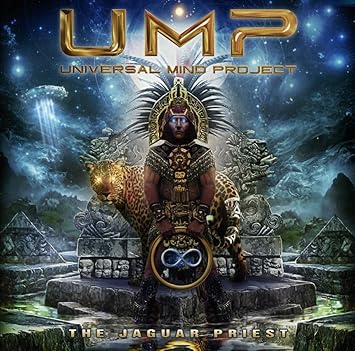
Album Review: Universal Mind Project - The Jaguar Priest


It feels like every month we get a power or progressive metal album that features an all-star cast. I'm not exactly complaining, but I do wonder why so many of these projects pop up, when the core members could be building their own bands instead. It's a trend that started with Avantasia, but that was a side project that eventually grew into something far bigger. These smaller projects that are done on the side of bands that aren't that big to begin with, they confuse me. If the takeaway is that the songwriters need the names of established acts to get any attention, I'm not sure that's much of a selling point. Still, there have been many of these get-togethers that have been very good, so I try to give as many of them as possible a chance.

The core of Universal Mind Project's sound lies in the dueling male and female vocals, which is actually something that isn't done on an album length scale very often. And when "Anthem For Freedom" opens the record with a big, sugary hook sung by both singers, it's apparent that the approach works. The song has a big, cheezy synth line that could have come from an 80s pop song, which gets balanced out by a few growled vocals. You get the standard progressive guitar and keyboard solos, and it all gets wrapped up into an appealing package.

Likewise, "The Bargain Of Lost Souls" is a beautifully dramatic song, lush with string embellishments, and sung by Nils K. Rue of Pagan's Mind. He puts in a great performance, and the song is exactly what good progressive power metal should be; heavy, hooky, and interesting. But like a lot of these sort of projects, the songwriting isn't as consistent as I would like to hear. While the tracks I mentioned are fantastic, they're alternated with tracks like "Truth", which has a bland melody, and "Awakened By The Light", which embraces the prog side too much, and doesn't settle on a single idea long enough to develop it.

The simpler songs, like the piano ballad "A World That Burns" work better, because they're more focused. It's easy for anything that touches in prog to get so engrossed in the playing that the songs suffer, and that happens on this album when the songs try to stretch out a bit. Even those numbers aren't without charm, but they don't pack the same punch. Neither does the appearance by prog trivia answer Charlie Dominici, whose vocals get so buried under layers of echo that he might as well have phoned in his performance. The last time he released a record, he could still sing, so I don't understand making him sound like the mic was malfunctioning while he recorded his parts.

And really, I don't see the necessity of the roster assembled for the album. While it's interesting to hear a couple of these people, by and large I think the album would have been more effective had they limited the vocalists to the two actual project members, so they could develop chemistry together, and give the project a more unified sound. If you ask me what Universal Mind Project sounds like, it's a hard question to answer, because of that fact.

But let's not be too hard on this. While I would have made different choices, this is still a good record. There are a couple of fantastic tracks, and several more good ones here. I would like for it to lean more in the power and less in the prog direction, for the sake of the songwriting, but "The Jaguar Priest" remains a well-executed example of what they're going for. There is certainly plenty of potential for the next outing to improve on the shortcomings on display here, but this is a solid debut. No, it's not Avantasia, but it's better than Timo Tolkki's awful attempts to recreate it. Better by far.

Monday, April 18, 2016

Album Review: Gypsy Chief Goliath - "Citizens of Nowhere"


One of the fundamental problems with genre labels is that they leave very little room for interpretation and flexibility.  By this point, the metalverse has more or less worked out what each of its three hundred thousand or so subgenres should sound like, and anytime somebody doesn’t fit the mold, they’re simply assigned a new genre label.  The manic scramble to label that which we haven’t heard before could probably be classified as an obsessive compulsive disorder, if you really look at it objectively.  Which brings us to Gypsy Chief Goliath, the Canadian stoner metal band that is more than just typical stoner metal fare.  The band and their new release “Citizens of Nowhere” blends and weaves Type O Negative, Clutch, and Kyuss with maybe, just maybe, a little Candlemass sprinkled in there for atmosphere.  It’s an expansive journey that stays on point without holding back.


There’s a certain vein of malice running through the circulatory system of “Citizens of Nowhere,” one that is capably real and ably portrayed by the musicians.  We’ve seen bands like Midnight Ghost Train or Black Wizard take on dour tones in the past, but they have difficulty holding and selling it within their natural blues structure.  Gypsy Chief Goliath, by contrast, wallows in the entangling mud of deep tones and vocals growls to lend an air of malice into a genre that is too often placated with wisps and flights of hallucinogen-induced fancy.  Sure, “Holding Grace” has some light-hearted tones, but the stark main riff helps create a little bit of ominous discord, while the vocal delivery combines the most enthusiastic parts of Viking Skull and Orange Goblin.


Where GCG excels is in patience.  “Citizens of Nowhere” is a premier exhibition in craft, taking its time and never rushing to a conclusion too early.  The album lets the tension build, whether in the grime-soaked halls of “Odyssey” or the otherworldly deep construction of “Elephant in the Room”.  Harmonica or no harmonica, “Black Samurai” is a thick plodder that absolutely refuses to budge more than it has to, but instead uses every part of its six minutes to its advantage, sewing in a blues-y guitar solo and some tidal rocking.  For a band that is capable of showing as much bite as this band is, the ability to let the songs either breathe or brood is a huge advantage over many of their contemporaries.


The one thing worth mentioning is concerning Gypsy Chief Goliath is that stoner metal purists may find themselves wishing that the band would use their melodic aptitude more to their advantage.  To call the band ‘stoner metal’ is accurate only to a point (not that the labels matter a whole heck of a lot,) because the band insists on using a more violent edge within their analog sound.  Academically that’s very interesting, but from a listening standpoint it sounds occasionally disconcerting.  GCG teeters precariously on the line between threatening and soulful which can make for a challenging listen if the goal is to simply space out and let the warm tones flow through you.


Overall, more good than bad here.  Substantially more.  Gypsy Chief Goliath does a lot of things right, even if their concoction is occasionally confusing in direction and intent.  “Citizens of Nowhere” is an enjoyable and dynamic listen, particularly for fans who are inclined into this style of music.  It’s not just your father’s stoner metal anymore.

Friday, April 15, 2016

Mea Culpa - Time Crunch & Opinion Solidification

As a critic, my job is to relay my opinion of a record to you in a way that is hopefully informative enough to give you an impression of what that record is like, and whether it's worth your time to check it out. What never gets said, but is an underlying premise of this whole enterprise, is that opinions are nto static. You don't hear a record once, understand everything about it, and never need to reflect on how your views have changed with time and more experience.

I take great pride in my ability to judge how the arc of history is going to bend, at least as it pertains to my taste. Writing as many reviews as I have these last few years, I have found the ability to fairly consistently peg my first impression along the lines of how my opinion will ultimately settle out. The degree of my feelings might change slightly, but in the overwhelming majority of cases, I stand by nearly every word of the review I have written. But that's not to project an image of infallibility. I do make mistakes, and when that happens, I feel like it's my responsibility to own up to it.

That is why I am issuing a 'mea culpa' right now.

The review I wrote recently for Zakk Wylde's new album, "Book Of Shadows II", was indeed a positive one. I shared my affection for the record, and gave it due praise. Unfortunately, the circumstances of that review did not let me write a review that looks accurate, even just a week or so later. I received the album a week before the release date, and wanting to be timely, I got the review done in short order, as I often have to. But in the week that has followed, as I have listened through the album nearly a dozen more times, it pains me how wrong I was.

I should not have written that review.

I should have written something far more glowing, because the added element of time has let the album grow, to the point that I have to call it a heavy contender for the crown of Album Of The Year. You would not have gotten that impression from the review posted here, and I feel that going back and editing it after the fact to change the tenor of it would be dishonest. Instead, I am saying here that I was wrong in my initial judgment, and that if I could go back and do it again, I would tell everyone reading this that they owe it to themselves to go to iTunes or their favorite distributor, and listen to the samples of this album. I'm convinced that should be enough to illustrate just how good it is.

It has made an indelible mark on this year.

Thursday, April 14, 2016

Readying for the Next Round-Up: A Conversation with The Texas Hippie Coalition


It seemed an impossible dream as little as seven years ago, but The Texas Hippie Coalition has worked and toiled to build their momentum into a surging longhorn stampede that is giving the people what they want and knocking on the door of metal's elite.  As the red dawn of their new album "Dark Side of Black" approaches, Big Dad Ritch sat down with us to talk his band, his direction, the group's chemistry, and barbecue.

D.M: Let’s talk your new record – what’s new and different on this one?

BIG DAD RITCH: I think it’s just a darker approach than previous albums.  We always stay true to ourselves and where we come from, from a Texas attitude and red dirt ways.  But we have really turned up the heavy a notch, you know what I mean?  Try to make this album a little bit heavier than previous albums.

D.M: New producer for this record, too, now working with a guy who used to produce Pantera, what’s that like?

BDR: Oh, it’s freaking awesome.  You know, me and Sterling [Whitfield] have known each other a few years, know each other from a few places, having mutual friends, somebody we can reach out to whenever we need something.  I always wanted to work with Sterling, just in the previous albums, with the label, I wasn’t privy to picking my own producer, they always picked up two or three and sent me down that path.  ‘Pick one of these guys.’  This time around, I just looked straight up and down and said ‘this is who I want to work with,’ and they made it happen for me.

D.M: When people hear Texas Hippie Coalition, their automatic name association is with Pantera – do you resent that connection?  Is it a bad thing that your bands are so closely associated and people might overlook you?

BDR: If it could be a relationship like Waylon [Jennings] and Willie [Nelson], that would be awesome.  I think that the fact that I am most definitely influenced by Phil [Anselmo] and by all things Pantera – I really do think that many of the songs that we write Pantera wouldn’t venture to write.  It’s the attitude that we bring, and also my lyrical styling is a little bit different than Phil’s.  I think the things we do have in common is the true realness of Texas and that real power groove that you can’t escape.  If you listen to the albums in their entirety, people will say ‘oh, I heard a little ZZ Top in there,’ or ‘I heard Pantera there.’  It’s always good to hear those things because those are people you aspire to be like.  But it’s also good when you hear people say ‘I heard some black, dark, kinda Johnny Cash stuff in there.’  That’s when you know that everybody’s getting everything you’re putting into the chili, you know what I mean?

D.M: To that end, your love of Johnny and Hank and Waylon and Willie and all of them is very public, but on the heavy side, who are you looking to for inspiration?

BDR: Inspiration really can come from everywhere.  I can be inspired by a country song, a hip-hop song or really most anything, but mostly lyrics come from life.  When it comes to writing lyrics, I draw from a lot of people, Bob Marlette, Michael Hayes, Cord Pool, you never know what I’m going to pull out of my hat.  That’s how you get stuff like “Knee Deep” which represents the southern red dirt country feel that we have.  Then you get songs like “Hit it Again” which are definitely representative of the southern rock vibe, rock and roll, southern rock.  You get into the heavy stuff, the power groove, you can tell where some of our influences come from.  You listen to me lyrically, you can definitely tell that my influences come from some of the greats, and some of the best out there today.  Like Clutch.  I love Clutch.  I’ve seen Pantera probably thirty-five times I know for sure.  I’ve seen Clutch about twenty times as well.  Anytime somebody says ‘hey, Clutch has got a show, you guys wanna open for them?’ I never even try to find out what I’m getting paid, I just say yes.  I will do that show for the price of the ticket.  Being out on Mayhem [Festival,] there were a lot of great bands the year we were out, we got to see a lot of the heavier side of the music field.  I think all of them, Mushroomhead, Ice T, all of them had a little bit of impact on us, there’s something to this movement, and we don’t have to confine ourselves.  We can become free-roaming.  That’s the great thing about being in this band, we can lend ourselves to a country tone, a red dirt tone, a rock and roll, let’s get out and party Motley Crue-type vibe, and then also get out there and throw the heavy stuff on you that may have been from Black Label Society, Danzig or Korn.  A lot of people try to get on one channel, we’re trying to tune it all in.

D.M: You mentioned Mayhem – you guys were out there, it increased your exposure, there were a lot of people who may have been there for other bands but got tuned in to you – were you disappointed to hear about the death of Mayhem?  How did it help your band?

BDR: When I left [Mayhem] I went to speak with John Reese.  People often say that we’re hard to work with.  Man, if you go to a club and speak with them and the people in the front of the house, they’re gonna let you know that we’re one of the easiest people to work with.  In the moment, we are easy.  The one thing that’s hard is that we don’t pay to play.  And we won’t go on your tour and get paid nothing just to go on your tour.  We’re not young kids with parents taking care of everything.  Every bill that’s being paid, we’re paying that bill.  And that was one thing John Reese said, we kept pushing and pushing and pushing and he did purchase us.  He said one of the reason people may perceive us as being difficult or hard to work with is because we’re no pushovers.  And we’re really not pushovers.  We stand strong for what we believe in, and what we believe in is the almighty dollar [laughs].  John Reese came out to a bunch of the shows, and a lot of the bands on the tour would be surrounding our stage, on our stage and be there with us during our set.  All coming out and even getting in our prayer circle, our positive energy circle, just loving what we do.  John Reese told me ‘I’m so glad I got you guys, because these Mayhem fans are loving you guys, and I’m so glad I got to introduce you to larger crowds.’  At the end of everything, I went to his office and his people and I told him that up until this tour, everything we are to this point, we’d done it on our own.  But everything we do from this point forward, John Reese and Mayhem definitely played a role in what Texas Hippie Coalition is becoming and will become.  They definitely deserve our respect and our gratitude.

D.M: A quick aside – ten, fifteen years ago, did you ever say to yourself ‘someday I’m going to hang out with Ice T?

BDR: [Laughs] Never!  I never did.  I love Body Count.  I have this thing about one-man empires, which is something I aspire to one day be, the likes of Rob Zombie, the likes of Ice T, the likes of Ozzy Osbourne.  Those are my idols and the people I look up to.  Quite often when people talk about me and the people I look up to, it’s Nikki Sixx, bass player, not a frontman.  Pepper Keenan, guitar player, not a frontman.  The people that inspire me to be better like Vinnie Paul.  He’s a drummer, but he has his hands in so many different things and he’s just growing his brand, expanding his name.  When I met Ice T, the day that I first met him at the first [Mayhem] show in California, I stepped off stage and at the bottom of the stairs is Ice T and his son, and he looks up at me and he says ‘man, I just wanted to tell you, you are one bad ass mutha fucker.’  And I said, ‘damn it, Ice T, if we could take the stage and I could give you this mic and you could announce that to all these people, ‘cause I have been telling them for many years now that I am a badass.’ [laughs]  ‘And I believe that a lot of them believe me, but if you go up there and back my claim, I know damn sure they’re gonna believe me.’

D.M: Bending back to your new record – what’s your writing process for an album and was it different this time?

BDR: You know, I am constantly writing lyrics in my head.  I never write anything down on paper until I go into the room to sing.  And then I really only use it for reference, so I know the difference between when I’m saying ‘yes, we will’ and ‘you know we will.’ [laughs]  Just to make sure I’m not tripping over words.  I always keep all that gathered up, and when I officially started putting songs together for this album, I wanted a darker approach.  The process with each and every song writer I work with, we either go to their place or I bring them to my lake house, we work on songs.  This album was all written and produced very quickly.  Fastest I’ve ever done an album.  I wanted to make sure this album was not seamless, that this album wasn’t perfect.  I wanted the seams to show, I wanted there to be imperfection, I wanted there to be a feeling of rawness.


D.M: Cord Pool – when he first joined the band he was super young.  Now that he’s had a few years to settle in, as you watch him, how has he progressed?

BDR: When he first got in the band, my bass player, John Exall, said ‘this guy is not the guy.’  I told that this was the guy who was going to get us down to one guitar player.  This guy is that good, he will one day be revered the same way [Eddie] Van Halen is revered.  He said you’re crazy, it’s never gonna happen, we need to find somebody already in the business, already knows the business, is mature.  Now, my bass player’s like ‘dude, if ever in my life I was wrong and you were right, this is the time, because Cord Pool is the man!’  I said ‘damn it, John, he’s a dang guitar hero and he just doesn’t know it yet.’ And that’s the best kind.  Most of these guys think they’re guitar heroes and they’re just average guitar players.  That’s one of the main reasons I went after Sterling Winfield, was to have someone who was used to working with a great guitar player, but could still pull something immaculate out of someone who already thought they were the best.  We all know Dime[bag Darrell] not only thought he was the best, but he was the best.  Cord is starting to come into his own, he started helping me write some of the songs on this album.  Up to this point he’d only written one song in the past, and on this album he’s a contributing factor on three or four and the complete contributing factor on two.  His mechanical styling throughout the album is on point, with the rhythms, but where he steps above on this album is in his leads.  They are immaculate.  I can honestly say on almost every album I’ve ever made, I am the high point.  I just say that because I’m cocky, I’m arrogant, I’m a dickhead.  On this album, there are times I say Cord shines above all, and when there’s someone in the band who can do that, especially when I think so highly of myself, that’s a mountainous thing.  Cord is a bad boy, and he’s going to be a bad man very soon.

D.M: Is he old enough to drink yet?

BDR: He is!  [Laughs] He is, but he don’t like us to say anything about his drinking in case his mama finds out.

D.M: You and John Exall are the last remaining originals in the band, what’s your relationship with him and are you two the heart and soul of the Texas Hippie Coaltion?

BDR: From the very beginning when I wanted to start this band, I was a fishing guy and I had a company called Five Time Productions where we put on UFC-like fights, we had cages.  I used to say if it starts with an ‘F’, I do it, I fuck, I fight, I fish.  When I wanted to start a band, John was the first guy I talked to.  He said let’s do it.  Ever since the beginning, if there’s fixing to be a gunfight, John is the guy that he’s not waiting for you to ask him to join you in the street to fight these guys, he’s already got his guns on and is handing you your belt with your guns in it and is saying ‘let’s go shoot ‘em.’  [Laughs]  He is ready to go to war, anytime, it doesn’t matter.  When it comes to this cause, which is Texas Hippie Coalition, I am always about it, but in the same breath, John fights for this cause every bit as hard as I do, every minute of every day.

D.M: Getting to the important stuff – who makes the best barbecue in Texas?

BDR: Probably me.  Right now, I’ll tell you, I don’t eat steaks anywhere but at my house, because nobody can cook a steak better than me.  And I don’t very often eat barbecue abroad unless somebody says there’s a great joint.  I do have a little barbecue joint in my hometown called Randy’s, used to be Lou’s, I go down there and I get me some brisket every now and then.  But I never take his barbecue sauce, and I think he gets offended, but you know me, I don’t care.  That’s because my barbecue sauce, Red River Red, is the best sauce in the nation.  You can’t keep it bottled, we sell five hundred gallon vats.

D.M: You’ve been all over the country, have you found anyplace that compares to Texas barbecue?

BDR: Yeah.  Kansas barbecue is a little too sweet for me, Tennessee is just getting something wrong in their barbecue.  Down in Georgia though, every now and then I can get a good dry rub down in Georgia, once in a while I can get some good sauces in Georgia.  They’re very competitive in that market, but I would have to say that Texas is the home of the best bbq.


D.M: I recently was down in Texas and had the whole boot culture explained to me. So, who is your boot ‘guy’?

BDR:  Whatever’s on sale.  You know, I ain’t like those girls out there, I can handle just taking whatever’s on sale.  As long as it’s got real cowhide.

D.M: Does that go for your hats as well?

BDR: Actually, Jason Aldean gives me all my hats.

D.M: Other important stuff – should the Cowboys go get Johnny Manziel?

BDR: [Laughs] Man, I like Johnny Football.  I really do.  I even like his cockiness at A&M.  He kinda reminds me of, well, not every highway patrolman, because there are a lot of good highway patrolman, but he’s kinda like that one highway patrolman who’s just a little too proud to be behind that badge.  Even if that’s kinda conflicting with what I like or dislike, if we only had to go to him three or four games a year, since it seems apparent that if Romo’s in he’s not gonna play a full sixteen games, why not have somebody with the fire of Manziel?  Or hell, if we can pay him very little money, I’ll take Tim Tebow back there, because I think if Romo was out for four-game skid, I think they could at least get us two of those four.  [Laughs]  I’d rather spend the money on defense, definitely defense.  We’ve got one of the greatest offensive lines in the NFL, so we just need to find that running back who can take it to the next level with the running back, because you could see without Murray it hurt us.

D.M: A lot of people’s first exposure to the Texas Hippie Coalition was years ago when you appeared, of all places, on the Jerry Springer show.  How did that happen?

BDR: Man, it was just weird.  Jerry Springer’s bodyguards are all Chicago police.  If you know anything about Chicago, you know Chicago police have one of the hardest jobs on the planet.  Those guys gave us a holler about doing some stuff with them, we were all about it.  Across the United States, it seems like the alpha male types really like to work out to Texas Hippie Coalition.  In New York we get police escorts, in Philadelphia we get police escorts, in Florida the police pull us over [laughs].  Out in Arizona, the SWAT team always sends us messages from out there, all those guys send us stuff about how much they love THC.  I always tell people that if we’re playing in Tulsa, you should rob a bank that night, because every police officer will be at that show [laughs].  Whenever, Pete is his name, he gave us a holler, said hey, why don’t you come do the ‘Jerry Springer’ show, Jerry would love to have you.  So we did the show and did one pay-per-view as well.  It was hilarious fun.  As you know I was a bodyguard in the TV one, and I dang near got thrown down to the ground by a big ole’ girl.  It was one of the funniest things in my life.  Springer, when he was talking about how the guy couldn’t keep his pants up, the guy said ‘well, I’m a big guy, I can’t keep my pants up,’ and Jerry asked me to stand up and said ‘he’s a big guy and his pants are up and you can’t see his underwear,’ so I told him that’s because I don’t wear any.  The crowd started chanting ‘show us!’ so, it’s not on the TV show, but right to Jerry’s face, I said ‘it’s my goal in life that more people see my ass than see your face, Jerry, so here we go’ and I dropped trou and let everybody see my ass!  [Laughs]

D.M: We’ll get you out of here on this – as you said, you’re not kids, you have some perspective and experience.  Dating back to the beginning of your band, what’s something you could do differently if you could, and what’s your advice to young bands out there?

BDR: I probably wouldn’t do anything differently.  One thing I might do is realize a little bit earlier is that every guy you take the stage with the first time is not going to be there the hundredth time.  And that every guy you take the stage with the hundredth time is not going to be there the three hundredth time.  In this band, we’ve seen guys – Wes Wallace left and came back, Timmy Braun has left and come back, The Kid [Ryan Bennett] left and came back.  We’ve got a lot of good friends we’ve made along the way, but everybody’s gotta follow their own career path.  Some guys just couldn’t ride the bull for the full eight seconds, so they left for that reason.  Other guys just couldn’t keep their nose to the grindstone and pay attention to what’s important in the task at hand.  If you go out there every night thinking you gotta do drugs with everyone that offers, of if you gotta go drink with everyone that offers to buy you a drink, the next day when you go to take the stage, you won’t be a hundred percent.  And those people in the audience are paying for the hundred percent show, they’re not paying for the eighty-five percent show.  So, in life, I wish that at an early age I would have understood that I am gonna hurt relationships and I am gonna lose friends.  I wish I would have realized at an early point that I don’t have to drag all this on until the point that it becomes painful for everyone.  My advice to anyone out there with music is that listen, you’ve got a band.  There’s four of ya.  One of you quits, that’s doesn’t mean the other three have to quit.  There’s another guy out there.  That drummer quits, believe me, there’s another drummer out there who wants that spot, who wants to be in that band.  Go get him.  Get him in there and keep on going.  If you don’t think a band can go on going through endless amounts of people, Fleetwood Mac’s one of the biggest bands ever in the history of music, and they’ve had over sixteen band members. [Laughs]

Wednesday, April 13, 2016

Album Review: Thunderstone - Apocalypse Again


During the height of the power metal boom about a decade ago, Thunderstone was one of the bands that looked poised to ride that wave to a long and fruitful career. They wrote pretty good songs, they had a good sound, and they possessed a singer who was a step above many of the inferior bands on the scene. Everything should have been working out for them, but things didn't go according to plan. Their popularity waned, and when Pasi Rantanen left the band, they changed course and made an album that made many wonder if the band had lost their minds in addition to their way. Six years later, Pasi is back with the band, and with him comes hope that Thunderstone might be able to recapture a bit of the glory days.

We kick things off with "Veterans Of The Apocalypse", which finds itself in a time warm, going back to that period when power metal was seemingly everywhere. Pasi sounds as good as ever, and the chorus hits with the necessary hook. I would nitpick a bit and say that the transitions from verse to chorus and back are rougher than they should be, but as long as the song is strong, it's not a big issue. I understand why it was picked to open the album, with the lyrics fitting the theme, but "The Path" would have been a better choice. It's a far superior song, with both a heavier atmosphere, and a bigger hook that recalls the very best songs Thunderstone wrote back when. It's an excellent track, and it raises expectations for what this album can be.

That heavier, modern edge continues to run through the tracks. "Fire And Ice" is about as heavy as Thunderstone should be, while "Through The Pain" takes things a bit too far. The main riff of the song is a slightly grinding, bending series of notes that is heavy, yes, but it isn't really pleasant to listen to at all. Worse, it leads into a fantastic chorus that doesn't play on that darker, heavier vibe at all. They're two very distinct ideas that probably should have been turned into two songs, letting each part serve a more cohesive whole. But you could put anything around that chorus and it would be a good song.

We also get an odd bit of sequencing, where several songs in a row have structures where we get a verse of just bass and drums after the initial guitar riff. It's a common enough way of injecting some dynamics into a metal song, but to put several of those songs one after the next draws attention to it. I would have preferred spreading them out a bit more.

The second half of the album is different, and takes a few chances. There's "Higher", with it's roaring Hammond organ, which feel like the entire song was quickly written around. It sounds lovely, but the song itself is easily the weakest on the album. Then we get "Days Of Our Lives", which tacks on over a minute of dramatic keyboards as an intro to a standard metal song for some reason. It's good, don't get me wrong, but it harkens back to the first track, and how it isn't the smoothest of compositions. And then we close the album with the nearly eight minute "Barren Land", which throws everything we've heard so far into the blender, coming up with a mix that doesn't really satisfy. It doesn't sound epic enough to be epic, and the band uses that trope as an excuse to skimp on the hooks. It's an underwhelming was to finish the record.

What "Apocalypse Again" does well is remind people that Thunderstone isn't dead and gone. With Pasi back in the fold, they're a much better band. There are a few tracks here that are phenomenal, and the album does a fine job of serving as their comeback. Hopefully, it will be used as a way of getting the kinks out, and the band can hit their home run next time around.