Wednesday, April 21, 2021
Album Review: Reach - The Promise Of A Life
The album's theatricality is apparent right off the bat. "New Frontier" opens things with some lo-fi whistling, only to then introduce horns after the main riff plays through a couple times. It gives the song a definite wind-swept, sort of Western atmosphere that does stand out from what we expect out of modern rock. That part is interesting, and the transitions in and out of that main riff sound like something out of the orthodox is going on, but the hook of the song doesn't live up to that standard of not being standard. The band obviously is trying to be playful with their songwriting, but they don't deliver the memorable melody to pay off the experimentation.
"The Law" is even less interesting. Build on a percussion loop and a very synthetic sounding bass, the groove is too lackadaisical to get you moving, and the chorus mixes mediocre falsetto vocals and the repeated title, neither of which is very addictive. It's essentially a dance track, but no one is going to feel energized by it. Then there's "Young Again", where the opening chords and vocals remind me of "I've Had The Time Of My Life", except that song builds into a glorious 80s anthem, and this one is more low-key mediocre rock.
It amazes me that a band like Reach is intent on trying a little bit of everything, and wants to be daring with their music, and yet they forget they have to write great songs first. Perhaps it shouldn't surprise me. Maybe they know they aren't great songwriters, and use the experimentation as a way to convince us they're actually doing something more impressive than they are. I see through that. Experimentation for experimentation's sake is not something to be impressed by, or to praise. Anyone can do something poorly. Reach is proving than on much of this album.
"Satellite" is one of the few good songs. They aren't trying to be more than a Muse-like modern band, and by keeping their ambitions in check, the song actually has something to it. It still isn't a great song, but it does show me that Reach has potential to be better than what the rest is showing me. When they say every cloud has a silver lining, this is what they mean, even if it turns out to be tin foil when you get up close.
I look at this album a bit like an artist submitting a portfolio. While it's impressive to see how much ground they think they can cover, when none of it is done expertly, I'm left wondering what the point is. Giving us one approach done really well is far more appealing than six done half as well. Reach is a band like one of those impressionists who sort of sounds like a bunch of famous people, but not convincingly like anyone in particular. They have spread their wings far enough they don't feel connected to their body anymore.
Tuesday, April 20, 2021
Jim Steinman: His Music Was His 'Neverland'
We talk about our lives as though they are movies, pulling scenes from our memories as we recount them, hearing in our minds a soundtrack that has been with us all along. The important times in our lives come with songs that fuel our memories, whether they were literally playing at the time, or they echo the meaning we felt. Music is a powerful force to make us feel, and it is a language we share to say things we might not have the words to convey to another soul.
My soundtrack began with Jim Steinman. I didn't know it at the time, of course. "I Would Do Anything For Love (But I Won't Do That)" was the biggest song in the world, and all I knew about music was what came through the car speakers on the short jaunts from one place to the next. I was young enough to have never given music much thought, but I could tell there was something special about what I was then hearing. Meat Loaf had caught my attention, and as the next song came along, then the album, then the VH1 special playing some of it live, I was sucked in.
It's a cliche to say that small town life leads us to dive into the realms of fantasy, sci-fi, and even the Gothic. Such socioeconomic thought was well beyond my means at that age, but there was something about the stature and grandeur of the music on "Bat Out Of Hell II" that swept up this person who often felt small. I would later hear recounted Jim Steinman's quote; "If you don't go over the top, how are you going to see what's on the other side?"
I have never been good at putting that into practice, but the psychology meshed with my own. Meat Loaf was a ridiculous man singing ridiculous songs full of ridiculous lyrics. And I loved it.
Part of me, at that age, was convinced it was just because of the line in "Life Is A Lemon And I Want My Money Back" where Meat screams, "you can shove it up your ass!" Another part of me knew there was something more to it than that. The Peter Pan and Three Stooges references were the appeal to the child in me, but underneath the humor was a melancholy you were only supposed to see in passing. Steinman's music was about excess, but also not having what you wanted in excess. He amplified everything up to enormity as a musical phallic pump, which is a joke I'm sure he would crack a smile at.
Jim Steinman knew something it takes a lot of us to learn; we never truly grow up. The names and faces change, the settings shift, but the dynamics of life are never all that different from when we are teenagers. We still struggle with identity, we fight to gain acceptance, and we feel miserable when comparing ourselves to those who seem to have everything. That's why his songs continue to work. Even as he was still writing about being a high school football player, or what the girls at the prom did under the bleachers, it continued to speak to us. We never stopped being those people in those places. We added new layers, but the core remained.
The best Steinman music (and there is bad, don't get me wrong) was defiant. He was defiantly weird and eccentric, and his music stood out from everyone else. Plenty of people have borrowed his style from time to time, from Avantasia to Creeper, but no one ever lived it the way he did. Any song of his was the work of a unique voice. No one else wrote like him, or sounded like him, for that matter. Meat Loaf was the conduit for much of his best work, but only because Meat was an actor who understood how to play the part as he was instructed. It was always Steinman at the helm, pulling the strings to make the piano burn with a fiery passion.
Did I become a sarcastic, sardonic person because of the one-liners in Steinman's songs? That's impossible to answer, but it would be foolish to say I didn't learn a thing or two from him. I cursed him for writing, "There are no lies on your body, so take off your dress. I just want to get at the truth." I cursed him becuse it was such a brilliant line, I wished I had thought of it myself. I cursed him, but I loved him for it. There have been few lyricists over the years whose words truly made me think, made me work to improve my own linguistic turns. Jim Steinman is one of those people. My voice is very different than his, but I notice little threads that give depth to the weave that is my personality, and those come from him. I'm glad now I put a song on my most recent release that was intended as an homage to him. "I Can See You When I Close My Eyes (But Not A Second Before)" was my attempt to tip my hat at the influence he has had on me as a musician, and as I am writing this, it helps to know I realized this before right now.
Perhaps the thing I appreciate the most about Jim Steinman is that he has made people spend the last twenty-five years asking the same question; What is "that"?
The answer was right in front of us, and I've written before what I believe that answer to be, but how many songs have ever been such a mystery? It was almost a riddle he put front and center just to taunt us, because I like to think he was that kind of guy. He had to be. The music he made was not just over the top, it was the ultimate ego trip. He was selfish, because his songs took petty feelings and lustful yearnings, and made them seem and sound bigger than the universe itself. His music was so big and so loud he was daring the world to ignore him, because what he was thinking and feeling was the only thing that mattered.
One of the last songs we got from him was "What Part Of My Body Hurts The Most?" Today, the answer isn't my heart, because there is enough music he left us that will fill the cracks left behind. Jim Steinman was the first songwriter who spoke to me, and I still hear his voice echoing in my mind.
I always will.
Monday, April 19, 2021
Album Review: The Offspring - Let The Bad Times Roll
"Americana" ruined The Offspring. Now that they had tasted success, they tried to replicate it. The budget got bigger, the target was raised higher, and in order to weasel their way into more minds, they had to dumb themselves down. Music for the masses must, in a way, be music for the lowest common denominator. That is where "Americana" found The Offspring.
It is an album that fails across many levels. There are the handful of great songs, but they were already finding themselves being more repetitive, lazier, and dumber. The cover of "Feelings" was a way of sounding subversive, but actually filling up a track on the record without having to write one. "Staring At The Sun" builds like an approaching freight train, but it's two verses that are both repeated twice. The band was being lazy, maybe because they knew they already had the songs they needed to keep the ride going, so the rest didn't matter.
"Pretty Fly For A White Guy" and "Why Don't You Get A Job?" are the nadir of The Offspring's career. Both are novelty songs that happened to explode in the public consciousness. Both are truly awful songs that set up the next decade of the band's career, the long descent we are still experiencing.
Let's look at the latter first. "Why Don't You Get A Job?" is a novelty lyrically, but mostly for it's plagiarism of The Beatles' "Ob la di, Ob la da". By taking a melody everyone already knew, and replacing the rest of the song with their cringe-inducing story, it was yet more laziness. It wasn't much different than putting out a cover song as a single, except they were trying to make us believe it was all their doing. It was, to put it in the terms of the time, the band being posers. How lame.
Then there is "Pretty Fly For A White Guy", a song that you would swear must have been a Weird Al song, if you didn't live through the time. Except that if Weird Al were to do it, the result would have been better (he did, actually; "White And Nerdy", which is superior). The song was a painful joke, treated as a joke, replayed so many times it lost even the modest chuckle it generated the first time. The more often we heard it, the less funny it got, the more annoying the poor song holding up the joke became.
When it became a big hit, The Offspring knew what they needed to do. The albums that came after all featured a novelty song to put out as a single, and bad comedy in other places. Dexter Holland has a PhD, yet chooses to come across like a teenager still watching "Beavis & Butthead" episodes and thinking they're the greatest thing ever.
"Conspiracy Of One" is a far better record, but "Original Prankster" is another pathetic novelty song that was used to trick people into listening to the better punk songs. "Special Delivery" and "One Fine Day" both venture into bro-comedy, and show that the band wanted to be as much a party outfit as they did punks. I like "Splinter" more than a lot of people, but you still get the novelty song "Hit That" as a weak single, along with the surf novelty "Da Hui", and the truly painfully unfunny "When You're In Prison". And after that, no one was even paying attention anymore, so we don't need to talk about those records.
But with nine years of silence, people are actually interested in what The Offspring have in store for us again. They have been working on this record for at least five years, and they tell us they have multiple albums worth of songs, and what they have given us.....
Sucks.
The two singles put out before release mercifully kept me from ever thinking the band was going to recover. The title track is a horrible composition. Based on a pun, the segments of the song don't fit together at all, nor is the main thrust of it enjoyable to listen to. It's hokey as have been all their lead singles, but it's cheesy without even the glint of being funny. It sounds like old men trying to sound young, which is one of the saddest things you can imagine. And let's not get started on Dexter's line about "Mexicans, Blacks, and Jews". Then there is "We Never Have Sex Anymore", which is a weak song built on a tired complaint. It isn't funny, or insightful, or even well-written blandness. As much as Dexter's line on "Bad Habit" all those years ago about waving his gun around to shut people up has aged incredibly poorly, he's old enough now to know how bad a lyricist he is, yet he continues.
But the worst is yet to come. In some ways, the centerpiece of this album is "Gone Away". Yes, the same "Gone Away" from "Ixnay On The Hombre". The Offspring are revisiting one of their own songs and putting it on this album, and not for any noble reason. They didn't have an artistic revelation that meant they needed to present the song to us in a new way. No, they are doing this specifically because Five Finger Death Punch had a big hit (in the rock scene) with a cover of it, and the band obviously feels like they should be able to ride the popularity of their own song. Or they feel like they can play it better in this guise. Both might be true, but to waste a slot on this album with a cover of their own song, for such ignoble intentions, is hard to swallow.
I almost don't need to say anything else about this album. What could be worse than saying they are reacting to what Five Finger Death Punch has done?
There is more I could say, though. I could mention how they waste a minute of such a short album with an interpretation of "In The Hall Of The Mountain King", or how "The Opioid Diaries" tackles the same ground "The Kids Aren't Alright" did, only worse, or how Dexter's diction is so unclear at one point it sounds like he's singing about Donkey Kong.
The whole record, like most of their career now that I've looked back at it, is a combination of bad comedy and playing to macho stereotypes. I don't know if Dexter believes this crap, or if he's playing to what he thinks the punk audience wants, but there's no reason or excuse for a line about his woman at least leaving dinner on the stove for him. All the times he's called women bitches and hos over the years are boiled down in that one line, and it leaves a very sour taste in my mouth. It's like the reaction I had a few years ago when revisiting Weezer's "Pinkerton". I'm deeply saddened to realize the toxicity music was putting into my head when I was younger.
The only good thing I can say about this record is that it opened my eyes to things I always knew about The Offspring, but hadn't really thought enough about. Now that I have, they look very different to me. Bad times, indeed.
Friday, April 16, 2021
Album Review: Rob Zombie - The Lunar Injection Kool Aid Eclipse Conspiracy
Any attempt to decipher the motivations of twenty-first century Rob Zombie may well be a fool’s errand. Admitting this is hardly revolutionary; this has largely been the case since ever since his film career, once burgeoning with great promise, intersected and subsequently became inextricably tied to his music career, circa 2003. It is difficult to see what inspires him more as an artist, and above that, more difficult to ascertain what he’s trying to prove.
The unfortunate upshot of all these branches growing increasingly tangled is the distinct reality that Zombie has become a jack of all trades and a master of none. He has yet to produce an album that speaks to the legacy-defining accomplishment of either “Hellbilly Deluxe” or its follow up “The Sinister Urge.” However, there seems to be some belief in camp Zombie that the more verbose and nonsensical an album’s title is, the greater the chance it will rekindle past glory. Thus, “The Lunar Injection Kool Aid Eclipse Conspiracy.”
The album departs with great promise. After the customary scene-setting open, the first jet out of the hanger is “The Triumph of King Freak (A Crypt of Preservation and Superstition.)” This track romps and rattles with the throaty rumble that so capably identified all the greatest moments of Zombie’s musical history, be they White or Rob. This kind of thundering, chaotic distortion fest that abandons craft in favor of impact is the hallmark of Zombie that was often duplicated but never replicated.
And then….nothing.
The album first of all, is too long. It is bloated with throwaway narrative tracks – six of them to be precise. This adds roughly five minutes to the total proceedings, which isn’t much in the grand scheme, but obliterates any sense of flow or pacing. Far too often, the listener is asked to stop their immersion to take in some ambient Pro Tools track or piece of esoteric dialogue.
In keeping with strange trends that don’t matter singularly but point to a perturbing trend overall, Zombie again chooses to write a song that does not feature common English language words in prominent sections of the chorus. His most famous of these was the single “Ging Gang Gong De Do Gong De Laga Raga,” and now he occupies the same space with “The Ballad of Sleazy Rider,” which showcases an even more nonsensical chorus than the title would suggest. At best Zombie is, for some inexplicable reason, trying to inject scat singing into metal, and at worst has become too complacent in his writing to bother putting together compositions with actual verbiage.
For all that, the worst sin, and perhaps the most damning thing that’s ever been said about a Rob Zombie project of any kind, is that it’s boring. There is no urgency, no hunger to the proceedings of “The Lunar Injection.” It seems sacrilege to even suggest, but this sounds for all the world like the album of an artist who is comfortable sitting on his laurels. The prominent single “Crow Killer Blues,” meanders without real direction or purpose. Even the irrepressible talent of guitarist John 5 seems throttled back – there is some evidence of his versatility in spots, but it is worth nothing that unlike Zombie’s previous album, John does not seem to merit a writing credit this time.
Zombie is, as far as his musical career is concerned, a prisoner of success. White Zombie changed the way we think about the presentation of popular metal, and theorized, whether through intention or accident, that metal could be beat-based rather than guitar-based. Rob Zombie, as a solo artist, forever raised the bar for the presentation of the music, both in the production and in the live setting. It’s been a long time since either permutation of Zombie has produced an album that resonates with any frequency remotely close to those hallmarks. Looping back to the top, the question is being begged – why is Rob persisting, and what is the intent? Only he knows the answer.
Wednesday, April 14, 2021
EP Review: Jo Below - No Control
Opening with "Ms. Death", the band quickly makes me question their own nomenclature. The riff that comes out of the speakers is less Aerosmith and more Godsmack. Other than Johanna's vocals, the song is far more of a post-grunge modern rock than anything to do with the classic era. What's oddest about the song is how the chorus is the least energetic section of the track. The main riff has some power, and the verses have a slinky muted riff, but the chorus just sort of hangs there without doing a lot.
"Where Are You Now?" takes a different approach, with a hint of "Complicated" era Avril Lavigne to the layered guitars and Johanna's vocal tone. This song feels much more natural, and perhaps a better indicator of what Jo Below is best suited for. Not every band is equipped to play as heavy as the possibly can, and that's where I feel "Ms. Death" get the band pointed in the wrong direction. Making that the first thing we hear isn't the right indication for what Jo Below is really all about.
When they are content to be a bit lighter, and draw more from the alternative scene, I like them. "Another Dimension" is a solid track that could admittedly use a bit more punch through the verses, but has enough melodic power to win you over by the end. The same is true of "I Confess". Really, everything past the opening track is good stuff, if you're of the mind to enjoy the time period they are most referencing. Given their own choices, I'm not sure they are.
The biggest problem with this EP is that it doesn't deliver on what the band proposes. This is not at all a modern take on classic rock, nor is it going to become classic when it is no longer modern. I realize they're just words, and they don't really make a difference, but they do. Expectations matter when you're assessing the emotional response you get to music, and when the band sets us up for one thing and delivers another, it invites disappointment that otherwise wouldn't have been there.
What that means is "No Control" is an EP with four good songs, one mistake, and a bit of an identity crisis. If they can just commit to being who they are and wear it with pride, Jo Below can be a good band.
Monday, April 12, 2021
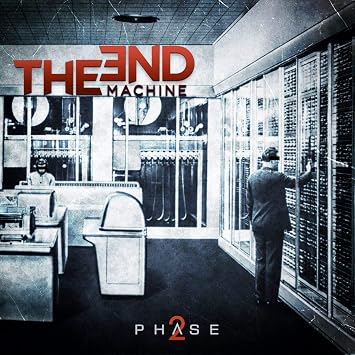
Album Review: The End Machine - Phase2
Their first album was a bait-and-switch, where the first single had me excited, even though I've never given a damn about anything any of them have ever done. It was a great track, and when I sat down to listen to the rest of the album, it was firmly boring. It wasn't bad, per se, but it also didn't sound for one second like an album put together by three guys who simply had to keep making music together because they loved doing so.
For album number two, they lose their drummer to retirement, and try to be even more Dokken-ish. I'm not sure whether I'm supposed to take that as them getting back to their roots and being themselves, or if it's an admission the first album didn't do as well with old Dokken fans as they were hoping it would.
The first track, and first single, "Blood And Money", gets us off to a very 80s start. It's up-tempo and energetic, but written in that 80s style where the chorus melody has little movement and hook to it. So many songs of that time were written with simple one line chants as the main hook, and it's a methodology I've never found to be that appealing. I think it would work in a sweaty club when you're half drunk and your voice blends with a couple hundred others, but it isn't very captivating on record.
What makes this even more frustrating is they write a song like "Dark Divide", which is everything I could want from them. It still sounds like it's from their era, but the melody and hook has so much more sing-along quality to it. It very much reminds me of "Alive Today", and both of those songs stand out like a sore thumb among the rest of the band's work. I wish they could hear what I do in those songs, because if they could put together a few more written in that style, I think they would be on their way to finding an identity as more than a continuation of Dokken.
Once again, The End Machine have made an album that reminds me of a Statler and Waldorf riff:
"It's not bad."
"Yeah. It's not good either."
There's nothing wrong with "Phase2", but there's also nothing compelling about it. Unless you are a devoted Dokken fan from back in the day, these songs are fighting to break free of a past I don't want to live in. Maybe you do, and they certainly do. I'm looking forward.
Friday, April 9, 2021
Album Review: Icon Of Sin - Icon Of Sin
Everyone has influences, I get that. There's nothing wrong with taking a couple of cues from the people who inspired you. There is, however, a line where taking influence becomes ripping them off, and that's when it can get a bit uncomfortable. If you're presenting yourself as an artist, and what you do is nearly a clone of someone else, I'm not sure what to say. It might be impressive, but it feels so much like a cheap gimmick.
That's where Icon Of Sin comes in, because there is no way to listen to them without being smacked in the face by the Bruce Dickinson impression being done by singer Raphael Mendes. It's an impressive feat, and I give him all the credit in the world for how well he pulls it off, but it's distracting this the idea that this is a band I should be listening to. By going so far to copy Bruce's voice, it sounds more like an excuse to parade that talent than to give this band their own identity.
The lack of creativity is apparent right from the start, since the first song is a title track of a self-titled album. Yes, the band, album, and song are all called "Icon Of Sin". Nothing makes me think you put less effort into your work than that triple play, so five minutes into the album I'm already having serious doubts about them.
One of the things I've always wondered about modern metal is why more bands didn't take inspiration from Bruce Dickinson's solo albums, "Accident Of Birth" and "The Chemical Wedding". Icon Of Sin does, which I appreciate, but that's where we get back to the problems of copying. Some of the vocal lines, especially in "Shadow Dancer" also feel like an attempt to write what Bruce would have. The entire album comes across as play-acting Bruce Dickinson. There isn't anything at all about this record that tells me who Icon Of Sin are, other than big fans. They don't really have anything in their sound that is theirs, that is unique, that I should want to listen to instead of a Bruce Dickinson album. Let's be real here; Icon Of Sin can't touch Bruce's best solo work.
Gimmicks can be good thing. Ghost works in large part because of their gimmick. Icon Of Sin doesn't. The entire length of the album, I couldn't shake the feeling of 'meh'ja-vu. That's a new term I'm coining for when something feels eerily familiar, but obviously inferior. Sure, it's comforting to hear something that sounds like what we already love, but it's also pointless. All the similarity does is make the comparison impossible not to make, and that's not going to work out favorably.
Icon Of Sin is the sort of band that's amusing for a song or two, just to hear the novelty, but they aren't a band to listen to in the long-term. They need to be something other than the band that sounds like Bruce Dickinson. They don't show any of that here, so this isn't a record I would recommend.
Wednesday, April 7, 2021
Album Review: Infinite & Divine - Silver Lining
Like a lot of new bands, there are growing pains to be heard on this record. For one thing, this is at least the third time already this year I've run across an album with a song sharing the same name as the band itself. I don't know if that has something to do with the assembly line nature of music in certain places, or if it speaks to a lack of creativity, but it's a little thing that puts doubt in my mind.
There's also the fact that being new, the members of the band haven't yet fully found their songwriting voice. They have a sound that takes many of the tones of the 80s, but gives them a heavier edge. That's quite nice, but across these eleven songs the quality of the melodic writing ebbs and flows. They have a good sound and a very good singer, but the hooks aren't always standing out and demanding my attention. On the aforementioned namesake song, the hook is solid and sturdy enough to be a fist-raising moment, but that feeling doesn't come across often enough.
Part of that comes from the production choices, like how on "Keep On Moving" there are barely any backing vocals when the chorus comes along. I get that Tezzi's voice is supposed to be the centerpiece, but adding more layers is integral to making the bigger moments sound big, especially when you're competing with metal guitars. Psychologically, it's harder to get the audience invested in singing along with the song if they only hear the one voice. Backing vocals not only sound more substantial, they invite the listener to participate. Or at least that's my philosophy.
There are some really good moments, and I hear a future star in Tezzi. The longer the album plays, the more I find myself loving her voice. That actually is the biggest issue I have with the record; they don't put her front and center enough. She is clearly the appeal to the band, and the mix of the album puts the guitars (and the synths when they're around) just as loud as her. She needs to be even more present, so we can hear clearly the work she is putting in, and what makes this band different from their competition.
"Silver Lining" is a mixed bag of an album, which is what I expect out of a new band like this. They have talent, and they have the best selling point they could in Tezzi, but they need some refinement in their songwriting, and in how they balance the elements of their sound in a mix. If they can get a little help upping the melodic ante, their future could be very bright. At the very least, I'm looking forward to Tezzi's inevitable guest appearances on other records. She's got something.
Monday, April 5, 2021
Album Review: Good Terms - Turning Point
The best way I can describe Good Terms is to take "From Under The Cork Tree" era Fall Out Boy, and strip away the personality from the lyrics. The way the band builds songs comes from not just that era of emo, but their particular approach to the genre. In a lot of ways, this sounds like a record that could have been a transitional piece between "Take This To Your Grave" and "From Under The Cork Tree". (I may get some heat for this, but Fall Out Boy's early work is not nearly what fans make it out to be. That record in particular is embryonic compared to what would come afterward.)
So what Good Terms are delivering is classic (it's my frame of reference, so deal with it) emo that happens to be a little bit rougher around the edges than the stuff that I remember listening to back in the day. It clearly sounds to me as if their influences were the same things I was checking out, which is both a welcoming echo of the past, but also a bit of an odd realization that perhaps emo hasn't evolved or changed much at all since the last time I was paying it any attention. I do sometimes worry that the extreme fragmentation of music, and the audience, leads to genre silos that are never allowed to change.
They sound their best on "Wither Away", where the half-time drumming makes the chorus sound more powerful, and gives it a chance to let the audience bang their heads along with the music. I have flashbacks to the early 2000s when it plays, and that's everything I want out of a record like this. As much as emo was at one point in time a form to express the angst and anguish of a certain age, it now exists for some of us as a comforting reminder of how we made it through that period. The issues feel smaller now, and we can both see and hear how we make more of it than perhaps we needed to. Emo allows us to vent, but also to measure our own growth.
I realize I'm not saying a lot to describe the album itself, but I suppose that's because I don't need to. Some music is more about a feeling it gives you, and that's what I get from Good Times. Their brand of emo is a throwback to a period of music I often feel was better (at least for my taste). The minor shifts from one song to the next, or dissecting a lyric here and there, are far less important than the overall reaction the album evokes.
Evolution takes us in new directions, but looking through the historical record, we can always see the line we came from. Good Terms may not be as far down the line as these years might lead you to expect, but they are a direct line back to an ancestry I was sad to see go. Having an album like this is a nice reminder, and it's especially handy to have in a month that looks bleak for promising new releases. Good Terms also has some good timing.
Friday, April 2, 2021
Album Review: Sweet Oblivion - Relentless
As soon as that record came out, there were rumblings of discord behind the scenes, with accusations the record needed to be salvaged from Tate's terrible ideas. Given the histories of the two people involved, I believe Tate would have dragged the project down, but since it's his name on the cover as "featuring", it's no surprise he is back and his cohort is not. This is a new Sweet Oblivion, already, which is discouraging before it even starts.
The good news is that this lineup largely continues on where the first album left off. They are clearly trying to pay homage to old Queenryche, which happens to be the sound that Tate sounds best with. Every time he has ventured away from melodic hard rock, it has been a disaster. That he is in his comfort zone means this is better by default. It's a solid record that plays to the right strengths, and people who were relieved when the first album brought Tate back from the dead will be happy they don't have to write him off again.
The bad news is that this lineup have made a record that isn't as good as the first one. The guitar playing isn't as nuanced this time, removing some of the 'intellectual' feeling. The hooks aren't as uniformly strong, which I attribute to Tate likely having more control of what he was singing. The biggest issue, for me, is the production. Tate's voice warbles in a hollow way, and the processing on him doesn't help. He sounds a bit alien to the resrt of the band, and it continues a long-running trend of older artists who now make albums that sonically aren't appealing.
The lesson we can learn from this record is that it's important who is involved in making a record. With the two Sweet Oblivion records, you have Geoff Tate and a crew of musicians trying to make the same sort of music. The results are different, though, because not everyone is replaceable. When you lose the main songwriter, producer, and person pushing the direction of the project, it can't be the same. That's rather sad, since I thought Sweet Oblivion had a chance to really be something. After hearing this album, I don't hear as much of that. It's fine, but it's a step down.
Change isn't always a good thing, even when you try to hide it. This record is evidence of that.