Saturday, July 30, 2016

Album Review: Jinjer - "King of Everything"


Part of the beauty of music that different genres can originate in one place and then be assimilated, permutated and regurgitated in a new but still recognizable form.  Punk, and the various derivatives thereof, were one of the cardinal genres to exhibit this behavior, as it became the music of choice for upstarts and protest groups the world over in the Cold War era.  Hardcore and metal, both spiritually descended at least somewhat from that paternal genre, followed suit, and now we have Jinjer, arguably the loudest and most explosive band to emerge from Ukraine.

Jinjer is a band that makes an amalgam of a plethora of different styles and throws them with intentional haphazard at the listener, dished out in any ol’ order, consumed in a frantic rush.  The base of the band’s idiom lies in the roots of dirty, unrefined hardcore, the downward pressure of decades of grime and distortion cooking a bizarre gemstone unearthed as a sort of anthropological study of the genre as it currently lives.

One part angry hardcore and one part punk sensibility, Jinjer also mixes in some metal, both experimental and conventional with a visual dose of a post-modern Rosie the Riveter, all messily blended together and turned irrefutably to eleven.


 Their new record “King of Everything” does a lot of things.  That’s the end of that sentence, it doesn’t require a qualifier like ‘well.’  It just plain does a lot of things.  The mix of clean and harsh vocals coming from front woman extraordinaire Tatiana Shmailyuk gives the album an interesting dichotomy, moreso becomes it seems somewhat impossible that such divergent sounds could all come from one person.  Nevertheless, her vocal performance as it rages through “Captain Clock” or “Sit Stay Roll Over” serves as a microcosm of what Jinjer is trying to achieve with their music on the whole.

The sludge of the album breaks up creatively in a few spots, most notably in a cut right in the middle, “I Speak Astronomy.”  It’s here that we see some real versatility within the structure (if it can be called such without insult,) where Jinjer varies the pace and the style to suit two different moods.  The beginning is the natural smasher and banger that fans have come to appreciate from the band, but the second half is a different story, an airy and much lighter idiom that injects some atmosphere into the record right when it reaches a stifling apex.

Which probably paints a solid picture of what’s going on here overall.  “King of Everything” does try a few tricks, but nearly always couched within their base musical style, which in many cases suffocates the experiment.  There are some interesting experimental sections, particularly on the back half of the record as it careens into “Pisces,” but there’s a lot of noise in the surrounding margins that can make it difficult to discern.

It’s hard to recommend “King of Everything” unilaterally, as the acerbic quality of the music and the brash confidence exhibited within can be a hard sell for many listeners.  For those patient enough to sift and dissect the album, it’s a record not altogether different than MaYaN’s “Antagonize” from a couple years back, though for different reasons.  A challenging listen, but not a wholly unrewarding one.

Tuesday, July 26, 2016

Album Review: 3 Pill Morning - Never Look Back


A coupe of years ago, when I was writing somewhere else, I reviewed the debut album from a band called 3 Pill Morning. At the time, I viewed it as acceptable modern rock in the Nickelback vein, but called it mostly forgettable. Since that time, my proclamation has been proven to be accurate, as I had altogether forgotten about the band and their album when this sophomore release came across my desk. The name sounded familiar, so I dug through my archives, and found that yes indeed they were the same band I encountered back then. I'm always hopeful that with age will come wisdom, so I gladly hit the play button and gave the band another chance to impress me.

Right out of the gate, it's apparent the band intends to hit harder this time out. "Electric Chair" has one of those pulsing riffs that I can imagine creating havoc in a live show, in a good way. There's bounce and energy in it, and it balances nicely against the more melodic chorus. The hook is a bit flat and tame compared to where the instrumental is trying to take things, but it's a solid opening number that gets the job done.

The other thing that is clear early on is that 3 Pill Morning ascribes to the belief that the lower the tuning, the heavier the sound. I don't believe that for a second, but they drag the opening riff of "The Hunted" so far down that it might as well be played on nothing but basses, like Spinal Tap did as a parody. It's not the band's fault, but rock music needs to do away with this awful trend. The good news, for them, is that the song that follows is pretty darn good. It uses dynamics, and has some of the anthemic feeling that should go over well.

And it's in the chorus of that song, as well as "Out The Door", that I hear something familiar. Jeff Stebbins' vocals draw ever closer to sounding like Dexter Holland of The Offspring. It's not something I expected to hear, since it's a unique tone, but it does give 3 Pill Morning an identity that separates them from many of the rest of the bands I've heard lately that play this kind of modern rock. It's an acquired taste, but if you like it, that bit of familiarity is a welcome detail.

What strikes me as the album unfolds is that the band has grown quite a bit since their debut album. The songwriting is far more consistent this time around, as it seems every song sounds like it could be a single. That means that by the time you get to the end of these eleven songs, you've been inundated with hooks. Perversely, that focus on making every song so memorable might make the whole package a bit less so, because every song is mining the same territory. That doesn't, however, change the effectiveness of each song. 3 Pill Morning is writing some really good modern rock, and have effectively put all the Nickelback jokes you could make to bed. They're well beyond that now.

Ultimately, "Never Look Back" is a big step in the right direction for 3 Pill Morning. They sound like a better, more confident band than they did before. Sure, there are still ways in which the album could be punched up a bit, and I would like to see them use the sharpness that comes from a more normally tuned guitar, but their growth as songwriters is what is important here. If you've been disappointed that The Offspring have become an alternative rock band, and think they don't do it well, 3 Pill Morning is the answer. This sounds like what The Offspring have been shooting for, and "Never Look Back" should do just that, because this is a good album to start a new chapter.

Monday, July 25, 2016

Album Review: Zodiac - Grain Of Soul


We always applaud originality in a band, but we seldom consider the downside of that quality; namely that when you crave more of that sound, there isn't any other option out there. You are strangled by the lack of supply. It was in the search for more bands that sound like the almighty Graveyard that I encountered Zodiac. Their last album, "Sonic Child", fit the bill as a record that was a throwback in sound, but a diverse collection of songs that made sure every part counted. I was late to the party, but I enjoyed it quite a bit as a record that knew the right way to write classic rock. So hearing that Zodiac was not only back, but was going to be releasing the heaviest record of their career, I was certainly intrigued by the possibilities that meant, while at the same time worrying that such a focus on one aspect of their sound could be a harbinger of issues.

Both sides of that coin are evident throughout "Grain Of Soul". This is certainly Zodiac's most focused, heaviest record yet. There aren't many detours from the simple riff-heavy sound that the initial singles hinted at. If you heard "Rebirth By Fire", with its swaggering riff and minimalist chorus, you already have a good idea of what to expect from the rest of the album. The surprises that come are not in the form of what sound each successive song with have, but rather in the form of whether or not Zodiac is going to stick to what they do best.

There are two groups of songs that make up this record, one being fantastic, and one being opportunities I feel are missed. When Zodiac is writing songs that focus on delivering catchy riffs and hooks, and layering the vocals in the choruses, they are a heck of a rock band. The aforementioned son, along with numbers like "Follow You" and "Down", are every bit as good as Graveyard is. "Down", in particular, is a remarkably effective song that uses its extra time to build tension, and then release it in the best hook on the entire record. It shows Zodiac taking what they already did well, and use the production to up the impact through the weight of the guitars.

But there are also songs that don't fulfill that promise. "Animal" has an almost Motorhead pacing, and culminates in a chorus that is too bare-bones to really have melody to it. It's pure rhythm, and misses out on what good vocals can add. But the worst song is easily "Crow", which is the lone three minute detour from heavy rock. That would be a good thing, except it's a bluesy country number that has no point to it whatsoever, and even less melody. It's poorly written, and doesn't belong on this album.

Despite putting it in the disappointing category, I can't complain about "Animal" much. "Crow" is the only song here that isn't worth its time, and other than that one obvious failure, Zodiac delivers quality hard rock that balances riffs and vocals where both are given their chance to shine, and both are considered important enough to make memorable. There are some missteps here and there, and I prefer the sprawl of "Sonic Child", but "Grain Of Soul" is a solid record that does its job. There's more than enough good material on here to make it a record well worth hearing.

Thursday, July 21, 2016

Tonic Week: The Top Ten Tonic Songs

Having held the position as my favorite band for more than a decade, picking apart Tonic's career to rank their songs is a task of great difficulty. I have so many memories entwined with their songs, and nary a single one of them is easily expendable. Tonic is remarkable for the consistency of their work, which is the greatest gift for a fan such as myself, but a curse when it comes to the task of assessing the relative merits of each work. I have my favorites, of course, but they change often, depending on my frame of mind. There are several songs I feel incredibly guilty about leaving off this list, but there can only be room for ten.

1. “If You Could Only See”: The quintessential Tonic song, and for good reason. “If You Could Only See” is a bite-sized encapsulation of everything Tonic is. It has the balance of acoustic guitars with hard rock, the intelligent additions of sonic color, and the melodies that seem to pour effortlessly from them. It may not be a particularly adventurous composition, but it's as close to the perfect rock single as can be written. No matter how many times I hear it, it's as great as the first time.

2. “Mountain”: “Mountain” has a different feeling than any other Tonic song, which makes it special. It builds slowly, and when the fire explodes, the song carries an undercurrent of anger that works well against the strong melody. Some of the band's best guitar moments are found in the song, and it feels more epic than anything else they ever wrote. There's something about the way Emerson snarls the line “I'm gonna burn calling her name,” that is viscerally satisfying.

3. “You Wanted More”: Tonic isn't known as a riff band, but “You Wanted More” boasts one of those great rock riffs, the kind so simple you wonder how no one had thought of it before. That would be enough to make it noteworthy, but the song constructed atop that riff is one of Tonic's most melodic, boasting a sugary melody in the chorus, a lyrical guitar solo, and fantastic harmonies. Pop and rock may never have mixed quite as effectively as on this song.

4. “Soldier's Daughter”: Another entry from “Lemon Parade”, this song is Tonic's most affecting ballad. The clean electric guitars break up in a way acoustics don't, giving the song a melancholy aura that plays off the mood beautifully. As the song transitions into the bridge, and picks up steam, Emerson cranks out some striking melodies, while avoiding the pop flourishes that would come on later records. “Soldier's Daughter” is a pure rock ballad, and one that is an expert piece of songwriting.

5. “Sugar”: Tonic is equally adept at playing pop music as rock, and “Sugar” is their best pure pop song. Raising the key a whole step gives the melody extra polish, while the guitar solo is an exercise in minimalist beauty. The song is so catchy you don't even notice that the structure is not that of a typical pop song, which is the kind of twist that can only be achieved through sheer skill.

6. “Take Me As I Am”: Tonic doesn't always show off their rock side, but when they do, they're a great rock band. “Take Me As I Am” is Tonic at their rocking best, with another of those simple riffs that get stuck in your head, married with a soaring chorus that makes me wonder why all rock bands can't write songs like this. One of Tonic's most uplifting songs, it's also one of their best.

7. “Count On Me”: Another example of Tonic's ability to mix pop and rock, “Count On Me” is a slightly more pop-oriented take on “If You Could Only See”. On the surface, it's another wonderfully melodic pop song, but the little riff that pops up in the chorus is deceivingly heavy, and amplifies the emotional weight of the song. And when Emerson hits those falsetto notes in the bridge, it takes the song to an entirely different level.

8. “Future Says Run”: Tonic subverts pop music by doing things that are outside the box, which “Future Says Run” is an example of. Played in an odd tuning, that nature gives the song on off-kilter rhythm that doesn't sound like anything else they have ever done, and like nothing else that you're likely to hear from a pop band. What amazes me is that they're able to utilize these tricks without drawing attention to what they're doing, blending them into the songs as though it was completely normal.

9. “Roses”: Tonic songs often have beautiful harmonies, and nowhere is that more evident than on “Roses”. The chorus of the song is entirely made up of their three-part harmonies, which are a gorgeous juxtaposition to the driving, two-note riff. Songs like this should be simple to write, but they are exceedingly difficult. Tonic writes them so easily that its a thing of wonder.

10. “Bigger Than Both”: Tonic's comeback album may have leaned a bit too heavily towards pop, but when they flexed their rock muscles, they were still there. “Bigger Than Both” is another one of those songs that manages to take roaring guitars, and combine it with beautiful melodies in a way that bands simply don't do anymore. It was a throwback to their own best work, and one that lived up to any expectations I had.

Wednesday, July 20, 2016

Tonic Week: Discography

Tonic does not have the most expansive discography, consisting of only four albums over the course of the last twenty years, but they have made four albums that each have their own identity, and work together to showcase the various facets of the band. Nothing about the four albums repeats themselves, and having not flooded the market with an endless string of similar records, diluting their sound, each one is a vivid signpost marking a moment in time. Let's look at Tonic's four efforts:

Lemon Parade (1996)

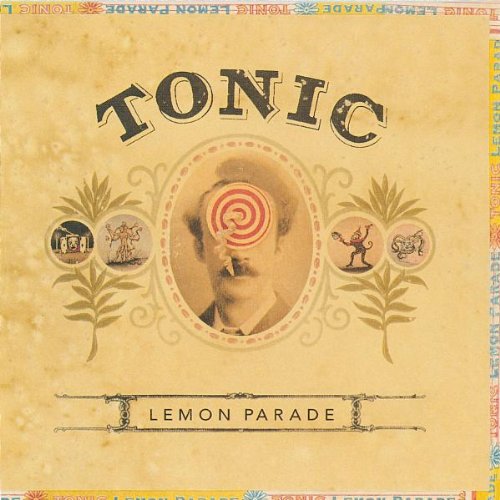
"Lemon Parade" is Tonic's classic, and for good reason. It contains their biggest hit, it went platinum, and to this day it resonates because it was not the same as the rest of the music rock bands were making to get on the radio. Underneath the dirty sheen of the post-grunge production, "Lemon Parade" is a classic rock record, borrowing more from Led Zeppelin and Fleetwood Mac than anything that was popular at the time. For that reason, it never feels dated, it never feels tied down to that particular moment in the 90s. "Lemon Parade" could have been released in 1976, and it would have sounded exactly the same.

The genius of the record is the way the songs explore diversity, without ever sounding like a hodgepodge of material thrown together for the sake of making a record. Heavy rockers like "Casual Affair" sit next to the mournful melancholy of "Soldier's Daughter", and it makes perfect sense. "Lemon Parade" sees Tonic at their heaviest, their loosest, and their best. From top to bottom, these songs are almost all among Tonic's best, culminating in the massive "Mountain", a song that builds and explodes in a way they never even attempted again. Bands rarely start a career with a fully formed sound, but Tonic did on "Lemon Parade".

Sugar (1999)

After the success that "Lemon Parade" generated, it would have been easy to go into the studio and try to replicate that sound. Instead, Tonic turned their attention elsewhere, and made a kaleidoscope of guitar-pop. The heavier moments were still there, but the songwriting tightened noticeably, taking out the extraneous moments for a leaner attack. Instead of going on a journey with the band, "Sugar" jumped out of the speakers and wore you down with relentless melody. The diversity was still in full effect, with songs running the gamut from deep and heavy rock to soft ballads, but this time you could hear the two sounds beginning to pull away from one another.

"Sugar" is a record of highs. It isn't quite as consistent as "Lemon Parade", but it made up for that with a string of exceptional songs that more than outweighed the change in direction. "Future Says Run", "You Wanted More", Mean To Me", and the title track are legendarily great songs whose only problem is that they shine a bit too brightly. "Queen" and "Top Falls Down" have more than enough grit and swagger to hold their own, but "Sunflower" and "Drag Me Down", while being very good songs, simply aren't on the same level. But that doesn't stop "Sugar" from being Tonic's pop manifesto.

Head On Straight (2002)

For their third outing, Tonic once again shifted directions. If "Sugar" had veered a bit too far down the pop boulevard, "Head On Straight" was an over-correction in the opposite direction. This is Tonic's heaviest record, and its most unrelentingly rock album. From start to finish, Tonic is plugged-in, turned up, and proving that they are a rock band first and foremost. But while "Sugar" was unable to fully bridge the two sides of Tonic's identity, this record didn't even try. We get the token pop song with the sickeningly catchy "Believe Me", but otherwise Tonic rips through a set of songs that barely nods their heads to their pop roots.

That doesn't mean the songs aren't as catchy as ever. "Roses", "Take Me As I Am", and "Count On Me" are all songs with gargantuan hooks that should have been far bigger hits than they were, while the darker material like "Ring Around Her Finger" and "Let Me Go" provided the breathing room we needed after being floored by those perfectly crafted pieces of rock. The only downside to the album is how the heavy focus on being a rock band sapped Tonic of part of their identity. The record has almost no acoustic guitars on it, save for "Irish" (my single least favorite Tonic song), which robs the record of a key component of Tonic sounding like Tonic. It's a record with fantastic songs, but it doesn't quite sound like Tonic.

Tonic (2010)

Which brings us to Tonic's most recent album. It took three records, and a hiatus in between, for Tonic to finally find the right balance of who they are. This record is tightly wound pop/rock in accordance with "Sugar", uses its muscular guitars like "Head On Straight", and throws in more than enough acoustic guitars and pianos to sound like classic Tonic. While an eponymous album so late in a career is usually a sign of creative distress, it works here, because "Tonic" is Tonic finding and honing their voice.

If you threw the first three albums into a blender, the result would sound much like this record. You have the obvious hits in "Release Me" and "I Want It To Be" that fit the mold of previous Tonic favorites, the tight pop nuggets like "Torn To Pieces" that couldn't be more perfectly addictive, and the changes of pace like "Precious Little Bird" and "Bigger Than Both" that recall some of the looseness from "Lemon Parade". At times the writing is a bit too tight, the songs too constricted by their focus on removing anything that isn't vital, but that leaves an album without an ounce of filler. Tonic was always a great band writing great songs, but with this album they figured out how to write great Tonic songs.

Sadly, though, there hasn't been another album in these following years to serve as evidence that I'm right, or that I'm terribly wrong. Hopefully there will be new Tonic music someday. But for now, these four albums are the cornerstones upon which my favorite band rests.

Tuesday, July 19, 2016

Tonic Week: "Lemon Parade Revisited" Review


When important albums reach milestone anniversaries, the trend in recent years has been for bands to head out on the road and play the record in its entirety. It's a nice tip of the hat, but it can also be an easy gesture that shows how far the band has drifted away from that moment in time. Tonic's landmark debut album, "Lemon Parade", is now celebrating twenty years since its release, but they are not taking the easy way out. Instead of playing a few special concerts that few fans will be able to attend, and that become predictable once you know what's happening, Tonic went back into the studio to re-imagine "Lemon Parade" into something new. You may not think unplugging the guitars is a drastic change, but the acoustic setting, along with a lifetime of experience with these songs, does make "Lemon Parade Revisited" a completely new experience with an old favorite.

What you get from this approach is a deeper understanding of the nuances in the songwriting. While the original "Lemon Parade" was at times a victim of the fitting gritty production, elements of the songs get lost in the haze. While "Casual Affair" and "Thick" were bursting with the power and energy of the roaring Marshall amps, the same songs here are shown to have sides of themselves we didn't hear before. "Thick", in particular, evolves from the most of-its-time grunge influenced song into an almost Celtic rumination of profound sadness. Without the distortion, the deeper identity becomes clear.

Obviously, the songs that were already doused with acoustic guitars and softer textures are the most similar to their original counterparts. "Mr. Golden Deal" is the least changed on the album, but even it benefits from the extra shot of clarity the new recording entails, as well as Emerson Hart's more matured vocal. The decades of experience singing these songs, and living life, get thrown into these familiar songs, showing them to be malleable to the changing guard of time.

But what is most interesting, and most exciting, about this album is being able to hear Tonic strip down some of their most rocking material. There was pronounced power to the raging of the band when the songs called for their all, but there's something profound to be discovered in the quieter moments. The acoustic guitars make the riff in "Casual Affair" come to life, without the notes blurring into each other. What was once a wall of powerful rock and roll has now revealed the groove that live performances have highlighted for years.

This approach also reveals that "Lemon Parade" was never an album that was dependent on its production to succeed. There are plenty of records that cannot exist in any form other than the one we get to hear, records that don't have anything of substance under the sheen of studio gloss and the immediate punch of heavy guitars. These acoustic versions of the songs show that "Lemon Parade" has always been more of a classic rock record than it has ever gotten credit for. There's an old saying that any good song can be played with just an acoustic guitar and a voice. This record is a testament to that adage.

In fact, there's only one place where the acoustic guitars leave me wanting. "Soldier's Daughter" is one of Tonic's best songs, and this version is still beautiful, but the acoustics just can't quite match the sound of sadness the original clean electrics could. The song is missing that little bit of extra melancholy that made it truly unique.

There is no replacing the original "Lemon Parade", and that's not the point of this record. "Lemon Parade" is a classic, and it's a hallmark in the lives not just of the band members, but for countless of us who have spent the last twenty years considering the album to be a dear friend. "Lemon Parade Revisited" is a sonic memory, a wistful reminiscence of the past. It is audio nostalgia, and while the original will always be the version I find myself reaching for first, "Lemon Parade Revisited" is perfect for a lazy day, relaxing, and thinking about what used to be.

Tonic breathed new life into their classic album, and have redefined how to celebrate a milestone. It's not often you get to hear your favorite songs like it's the first time all over again. Thanks to Tonic, I got that chance.

Monday, July 18, 2016

Tonic Week: My "Lemon Parade" Story


I was on the verge of turning thirteen as the summer of 1996 progressed, old enough to have developed an affection for music, but too young to have a fully developed sense of cynicism. My main outlet at the time was still Top-40 radio, which had yet to succumb to the ills that now plague it. Good music was still propagating the charts, and I was more than happy to suck up as much of it as I could. The endless repetition that now seems quaint and absurd was then a blessing, an opportunity to hear my new favorite song regularly, before the idea of being able to access any music ever recorded at any time was barely a thought in someone's mind.

I filled tapes with these songs, trying to dutifully gauge the lengths by estimation, ensuring my mixes would not cut out the best parts of songs, nor would they require ten seconds of an out-of-favor song from remaining in between the favored sons. As I was compiling one of these tapes, I found myself succumbing to the obsessive part of my personality. I had taped a new song, cleanly and perfectly, and without any thought I found myself listening to the screech of the tape rewinding again and again, so I could hear that song even more often than it was on the radio.

That song was the most played song on all of radio for a year, and I still reverted to my tape to hear it more often. That song was "If You Could Only See", and it was my first exposure to a record that would fundamentally change me.

I would not hear "Lemon Parade" in full until a few years later, as "Sugar" was preparing for release. Acquiring music was more difficult in those days, and I did not have a taste for collecting CDs at that point. Having been burned by singles that led me to disappointing albums several times before, I had let the album slip by. I have come to realize that missing out on the album at its release was the best thing that could have happened to me, because even with two years of extra wisdom and musical experience, I wasn't ready to hear what the album had to offer.

My initial listen to "Lemon Parade" was not positive, or at least not as positive as it would later be. Compared to the shimmering pop of "Sugar", the earlier album was a darker, dirtier bit of rock music that clearly formed out of the stew of post-grunge. In my headspace at the time, that kind of music was the last thing I wanted to hear, so "Sugar" seemed to be the clearly better record. But, since I lacked a large collection of albums to fill all my waking moments, I returned to "Lemon Parade", giving it plenty of chances to correct me.

Slowly but surely, I began to see "Lemon Parade" in a different light. Instead of sounding like an album that was riding the last frayed strands of grunge's coattails, I heard a batch of songs that had more in common with classic rock, filtered through the dingy aesthetic of the mid 90s. In that light, despite the fact that I did not have any background with the bands that inspired Tonic, I began to appreciate the album more with each time I spun it. Within a few months, it would grow from being an album I would have tossed aside, to being one of my favorites.

That was true to such an extent that I was convinced to pick up an instrument. I got a guitar so that I could learn how to play some of those songs that I was obsessed with. I did eventually commit some of those riffs and chord progressions to muscle memory, but what happened was more important than that. As I learned Tonic's songs from the notation on the internet, I saw patterns that sparked my own imagination. Tonic, and "Lemon Parade" in particular, inspired me to begin writing my own songs.

In fact, "Lemon Parade" became the blueprint I would use to learn how to write songs. In my mind, that was the album I was always trying to create for myself, and though I have never come close to reaching that height, I do believe that I have managed to write songs that for a few moments live up to that legacy. Along the way, I realized that the music that was innate within me, the music that flowed out without my trying to guide it, was molded from the form of "Lemon Parade". It was unconscious, but through my own creative explorations, I realized that Tonic had early on hit upon the exact formula of music that spoke to my heart.

Over those years, my love for "Lemon Parade" grew, to the point where it was second only to the album that made me love music in the first place. Tonic was my favorite band, and even their disappearance after "Head On Straight" wasn't going to discourage me. With every song I wrote for myself, it became ever clearer how much Tonic had meant to me, how much they still did.

And now, twenty years removed from that initial contact, I find myself looking back and wondering what I would be like if I hadn't heard "If You Could Only See" at just the right time in my life. Without "Lemon Parade", I certainly would not have become a songwriter myself, I more than likely never would have known the feeling that comes from coaxing music out of a guitar, and I may not have ever fallen in love enough with music to become the fan and writer I am today. Simply put, "Lemon Parade" may have changed the entire trajectory of my personality. Even now, twenty years later, I still put on "Lemon Parade" and feel that same rush. I still marvel at how "If You Could Only See" captivates me like few other songs ever have, at the powerful melancholy of "Soldier's Daughter", at the powerful rhythms of "Wicked Soldier". Time has not taken away the spark of youth when it comes to "Lemon Parade". I hear it now as sharply as I ever have, and it means just as much to me.

"Lemon Parade" is my favorite album, and now will likely always be.

Saturday, July 16, 2016

Album Review: Scour - "Scour"


In the HP Lovecraft classic short story “Dagon,” the narrator, when he first sees the entire breadth and fearsome countenance of the nightmarish creature he perceives, tells the reader “I think I went mad then.”  Among some metal fans, there is a perception that something of this nature happened to Phillip Anselmo somewhere along the way.

With this as the backdrop, his new side project Scour has released a six-track EP of the same name that sees Anselmo join forces with heavyweights from Pig Destroyer, Cattle Decapitation and Decrepit Birth, among others.

Scour’s debut effort goes by in a blur – the entire thing can be listened to in roughly twenty minutes, and that’s if you get a break to grab a glass of water or go to the bathroom in the middle.  What we’re faced with here is six bite-sized samples of a grand new experiment from Phil and his friends, where the central question seems to be ‘what would it sound like if Phil Anselmo sang for a black metal band?’

The answer to that question, in short, is ‘not great.’  At the risk of sounding patronizing, these are very experienced musicians who have stood on the shoulders of popular success to varying degrees, so it’s hard to unilaterally condemn Scour as an experiment among friends.  That said, the EP is exceptionally raw and each song ends before there’s really a concept of what’s going on in the first place.  Each cut mixes together elements from several different types of extreme metal genres – black, death, grind whatever you want to call it, but it doesn’t do anything especially interesting with them, especially at under three minutes a piece.

Phil is, one supposes, a perfectly acceptable vocalist for this style, and is made even more convincing if you heard the album first and don’t know it’s him – the automatic mental associations with Pantera and Down can skew the perception of the vocals.  For Scour, Phil takes on a whole (well, he’s still load and abrasive, so not quite whole,) new persona as a vocalist, but it doesn’t make a great impact one way or another on the quagmire of low-res sound underneath.

This is the freedom of owning your own record label, I suppose.  Phil can release Scour to his heart’s content under the Housecore Records name, and the only record exec who has to clear it is him, so that’s fairly open and shut.  Still, there’s an element of the Metallica/Lou Reed release “Lulu” about Scour; if Phil and his friends (singling out Phil over the others because he owns the label, after all,) want to have a jam session and experiment with some new sound, that’s all well and good, more power to them.  That doesn’t mean it needed to be public, though.

“Dagon” ends with the narrator saying “The end is near. I hear a noise at the door…It shall not find me…The window! The window!”  Scour may elicit this reaction in some listeners.

Friday, July 15, 2016

Album Review: Forty Winters - "Rotting Empire"


We’ve all been privy to the axiom hundreds of times in our adult lives: ‘don’t judge a book by its cover.’  We recite it with rolled eyes and flat cynicism, but somewhere inside, the entirety of the population recognizes the ring of truth within the rote words.  This goes just as easily for music as it does for literature, with cover art an oftentimes important piece of the total musical puzzle.

So here we go with the lesson again, this time for Forty Winters’ “Rotting Empire.”  To look at the cover art is to expect little (with all respect to the artist who put ink to paper.)  A sunset, a lot of orange, a pile of rotting bones, some ghouls, a rivulet of some sort of fluid, you get the idea.  Looks like a pretty typical bottom-barrel grind record.

What’s inside is starkly different, however.  Living somewhere at the highway intersection of Pro-Pain and Autopsy, Forty Winters brings the power and pace of the former while channeling the macabre mentality of the latter, giving us a finished product that resonates both as a gore-soaked decaying metal remnant and a supercharged punk/metal beat down.

The other aspect of “Rotting Empire” that comes as a surprise is the depth of the production.  Albums of this type typically suffer from a sound that is too thin even by the crunchy glass standards of thrash, but Forty Winters has made sure that the ever-present thump of bass is intact.

The trade here, before we get into specifics, is that Forty Winters (hailing from south Florida, for those curious,) is giving us an awful lot of the same thing.  Which for albums like this that live under the banner of ‘hit hard and hit often,’ isn’t necessarily a bad thing, but it does mean that “Rotting Empire” is sort of akin to a crater lake; the sound is very deep, but the total spectacle isn’t very broad.

Again, that’s not necessarily an issue for albums of this type, but it does mean that the continual rolling rampage of album opener “Summoning Spirits” sounds very much similar to album closer “Disease of Time,” the only difference being a moderate adjustment to pace.  As such, it’s difficult to single out individual tracks from the record, as one sort of blends into the other without pause.

We’re getting carried away though, and it probably sounds at this point like “Rotting Empire” has few feathers in its cap, which isn’t the case.  Rather, Forty Winters, who as much as admits in their press release that they’re learning and gaining confidence as they go, shows some very promising hallmarks.  Full production sound aside, “Empty Tombs” displays a well-measured gallop, doubly so because the cadence of the lyrics has been patterned to fit inside it.  “Choke” is a full-bodied thrasher that accomplishes a lot in two minutes and seventeen seconds, showing above all that Forty Winters is aware of how to cut out the fat and get to the meat quickly and with quality, which is no small thing.

So, is “Rotting Empire” an all-time classic?  If we’re being honest, probably not.  However, it does show great promise from a young group of musicians, the combination of hardcore punk and death ideals itself being an interesting juxtaposition.  There’s some nice rhythm here and a fair amount of solid pounding, so while “Rotting Empire” doesn’t get full marks per se, it does scratch a particular itch for many metal fans.  Just know that the cover art isn’t completely representative.

Thursday, July 14, 2016

Album Review: Blues Pills - "Lady In Gold"


Let’s start by facing the truth of this thing – nobody has produced an album like this in probably forty or forty-five years, a pure revival of soul and rock and roll from back in the days when those genres walked hand in hand.  That’s what we’re faced with for Blues Pills’ new album “Lady in Gold,” a turn slightly away from the band’s blues namesake and embracing a more pop-slanted evolution in companionship with the blues’ closest cousin, soul.

At the headline of “Lady in Gold” is vocalist Elin Larsson.  Her voice comes through with the same kind of conviction in its tone as John Garcia – no, they don’t have the same timbre or sound, but her voice has that same kind of believability, which makes for a highly authentic listen.  “Little Preacher Boy” is where this comes through the most, taking what otherwise might be an average track and elevating it to a position of eloquence.

The album’s title track is the leadoff hitter and most robust selection to be had.  For all the good on this record, and there’s a lot of it, this is perhaps the only ‘excellent’ track, and if we’re being frank, it’s the primary reason to invest in this record.  The song is explosive and incredibly catchy, with a vocal hook embedded in the chorus that will pleasantly meander around the listener’s brain for days at a time.  The clever layering of the piece means that the Hammond organ (real or reproduced) sits subtly at the bottom, leaving just a hint of its presence in a few selected notes.

Blues Pills shows some credible variety in songwriting, most notable in the depth of emotion displayed during “I Felt a Change” and the transition to comparatively raucous appeal in “Gone So Long.”  The ability to write two songs with such variation is one thing, but the forethought to pair them together is what makes the combination work, and in reality floats the entire middle third of the record.

The bombast of the later track comes back two songs later for “You Gotta Try,” another track which asks us to get up and sway in time with the beat, bringing to mind shadowed memories and microfiche articles about rock clubs in the last century.   It is this kind of song that cultivated a musical scene which exhibited uncontested dominance for roughly three and a half decades.  No, that doesn’t mean Blues Pills is doing anything revolutionary, but sometimes the ability to inject life into a genre that’s been dormant for years is accomplishment enough, and such is the case here.

There are a few detractors to mention on this album.  First, it’s probably one song too long.  On a single listen, I managed to do all my household chores and have a conversation with my wife about plans for the next week, and then still wonder how many songs were left to go.  The answer was one, hence the conclusion that the album is one track too many.  Secondly, the B-side of “Lady in Gold” features a collection of well-executed compositions that all draw from the same cathartic songwriting well, resulting in a lot of songs that sound similar to each other and convey the same idea.  It’s a little like one of those old IROC races – entertaining, but everyone’s driving the same car.  In the digital age of 2016 when a song can be skipped with a mere touch, both of these are marginal issues at best.

Also, this may be something, it may be nothing.  My esteemed colleague in this venture, Chris C, was a deep devotee of the first Blues Pills album; if memory serves, he had it as a top three album for the year of its release.  I, by contrast, liked it but didn’t love it.  Now, the roles are reversed, as I find myself greatly enjoying this record (does it make the top ten?  Tune in in December to find out!) while Chris C is much more lukewarm on “Lady in Gold,” basically handing it off to me for editorial because he could not come to a solid conclusion (and there’s nothing wrong with that – we pass albums between each other without coming to a verdict with alarming frequency.)  So, opinions vary.

As we said at the top, Blues Pills has produced an album of some renown in a motif that’s been dormant for an awful long time.  If you’re a rock fan, rock revivalist or curious about the long journey of how we got here in music, “Lady in Gold” is well worth the time.  A great record.  (By the by, can we talk about how Nuclear Blast is quietly putting together a very strong throwback rock lineup?  Good work outta them.)