Time continues its never-ending march forward, and yet it seems that society has never spent more time looking backwards. Whether we're talking about the constant stream of old movies and tv shows that are being brought back to life, or styles of music that were once left behind, the past never truly dies anymore. We might choose to focus on different periods, but the punctuation now leaves the story open to continue at any time. The Sonic Dawn are one of the bands that shuns the present, and doesn't care about the future. They came with a recommendation for fans of Graveyard, which was enough to get me to give them a listen. I haven't found them yet, but if there's another vintage sounding rock band out there with that kind of potential, I want to be there to find them.
That recommendation turns out to not be the most accurate. While "Eclipse" is certainly mired firmly in the past, right down to being recorded to tape and vinyl, The Sonic Dawn is drawing from the psychedelic rock of the 60s, whereas Graveyard spins on the hard rock of the early 70s. It might not sound like the biggest chasm, but there is a big and audible difference between the two approaches.
The record opens with "Forever 1969", which sums up the band's attitude, and follows in a pattern. There is another album I recently reviewed that contained a song titled "1974", which waxed nostalgic for that time, and there was a song on a record I dearly loved a while back called "1985", which did the same thing. I feel like the conceit is too easy, and too blunt, to be effective. And when the band obviously wasn't alive at the time they're singing about, it also rings hollow, like throwing a penny into an empty dumpster.
I'll say this, though. The Sonic Dawn are able to capture the sound of late 60s psych rock very well. From the tones of the instruments, to the slight haze that permeates the production like a layer of dust on the recording tape, you could easily be fooled into thinking this record was recorded back in the day. There's a whole industry now centered on bands that are doing this, which I don't quite get. Vinyl is a terrible format that requires a recording to be abused in order to keep the needle in the groove. Why would we want to sound like that, when we can have perfect reproduction of the sound a band can create? Obviously, a lot of people have gotten confused, and associate the sonics of records from the past with the quality of the music they contained. The records were great in spite of the production limitations, not because of them.
And like many of these vintage style bands, The Sonic Dawn fall into that category where they pour so much of themselves into getting the sound just right that they don't give the same attention to the songs. These are compositions that set feelings and moods, and give us little in the way of guitar licks or vocal lines to grab hold of. Everything here is rather ethereal, floating by and leaving no mark. You know how you can spray perfume in the air and walk through it, getting only the slightest hint of the scent? That's what this record feels like. You get the impression of music, but not the satisfaction.
As I'm writing this, The Zombies were just voted into the Rock & Roll Hall Of Fame. Listening to this record, I was thinking about "Odyssey & Oracle". That record had a similar sonic palate, but was full of songs that had interesting motifs and ideas, songs you would remember even if you didn't like them. "Eclipse", on the other hand, is like the styrofoam that better record would be packed in to be shipped to the stores. It has no identity of its own, and makes no statement about the talents of the band. As I said this sounds like a record that could have been released in 1969, I would also believe it was a record that has spent that long being ignored.
By now I should know that making vintage rock and roll is among the hardest things a band can try to do. Very few have ever done it well once, let alone repeatedly. Maybe The Sonic Dawn can do it sometime in the future, but they haven't done it here.
Wednesday, January 30, 2019
Monday, January 28, 2019
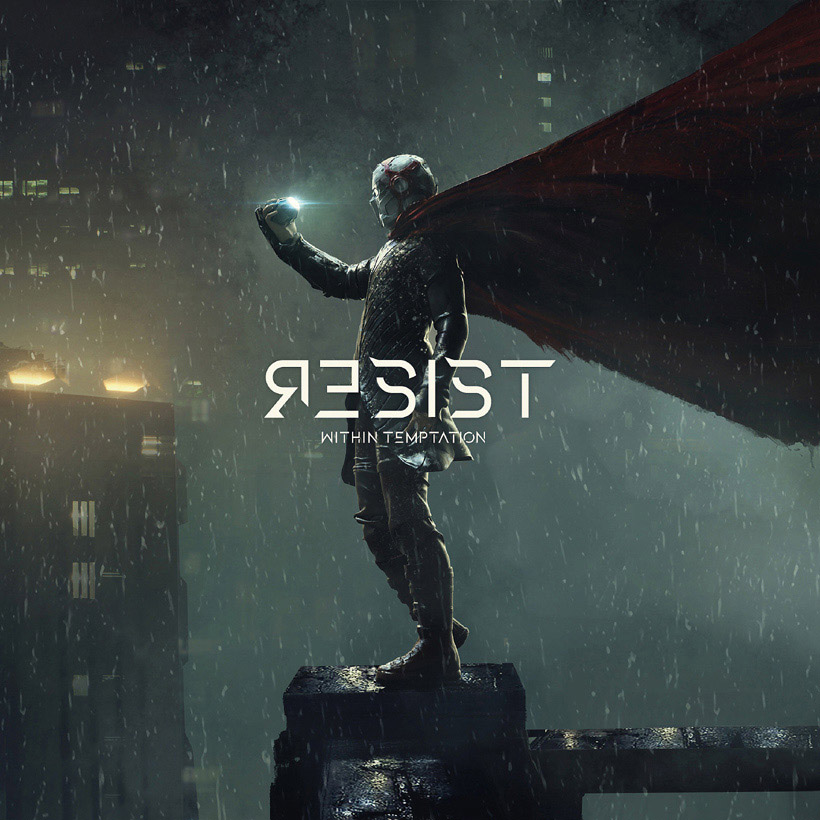
Album Review: Within Temptation - Resist
There are two things you can say about a band that create the most drama and fear; 1) singer change, and 2) style change. In either of those cases, even the most dedicated fans can find themselves looking at the off ramp. Pulling off a change is not easy, and the risk is too much for many to even contemplate. Given how fragile a career as an artist can be, I don't blame them one bit for sticking with what works. But even when a band changes in a direction I don't happen to enjoy, I give them a lot of credit for following their art where they think it needs to go. That's where we see the divergence of art and business, and it's nice to see bands that put the emphasis on the former.
Within Temptation undergo one of those changes with "Resist". After a career establishing themselves as a dramatic, symphonic metal powerhouse, they are on quite a different tract here. Sharon den Adel spent last year focused on her solo album, "My Indigo", and that influence has definitely found its way into Within Temptation's sound, which has stripped down and become more 'alternative', for lack of a better word.
That is made clear in the first song, "The Reckoning". There is the usual symphonic flair to open the song, but then the verses turn into a slightly electronic, alternative rock feeling, complete with deep guitars that bring the old nu-metal style to mind. The song even features guest vocals from Jacoby Shaddix of Papa Roach, so there is your reference point. This is going to scare off a lot of fans, and it will catch many more off-guard, but there's no reason to be scared. Though it's different, it's still hooky music that has real charm. And it's certainly oceans better than the album Papa Roach just released before this.
With "Endless War", the band even throws in skittering trap cymbals that wouldn't be out of place in a hit rap/pop single. It's an unusual thing to hear in this kind of music, and it certainly surprises you the first few times. But when you start to understand what this record is doing, it makes more sense. Within Temptation is doing what Amaranthe has been doing, giving pop music a metallic makeover. I realize that word is going to trigger some people, but that is what these songs are at their core. If you don't like pop, "Resist" is not going to be the album for you.
Anders Friedman of In Flames guests on "Raise Your Banner", and is another fitting partner, as In Flames' recent material is also of the same mind as where Within Temptation is right now. What we have here is in many ways "My Indigo" with the heft of a metal band backing it. I don't think that's quite fair to say, though, because I found that record to be rather dull and toothless. "Resist" is cut from the same cloth, but it is the side you present to the world in your dress, while the other record was the side on which you tie off the loose strings.
If you listened to Amaranthe's "Helix" last year, that is the best way of telling whether or not you're going to enjoy "Resist". Within Temptation has given us a darker, less manic version of that record. There isn't anything precocious about it, but its hooks are nonetheless sharp. For listeners with my inclinations, this record is an interesting change of pace that satisfies on more than one level. I realize, though, that the target audience for a band like this doesn't have the same feelings toward pop music that I do.
I have never followed Within Temptation that closely, so the shift in styles for this record isn't shocking for me. What I hear is an album entirely of its own world, one that shows metal and pop don't have to be as different as we sometimes think they are. Within Temptation has made an album titled "Resist", and unfortunately I feel a sizeable portion of their audience is going to do just that. Change doesn't always get accepted, especially when it is a move towards a more mainstream sound. Don't let that stop you. "Resist" might be something different, but it's also something quite interesting. There's just something about this record that works. The more I've listened to it, the more I've come to love it.
Within Temptation undergo one of those changes with "Resist". After a career establishing themselves as a dramatic, symphonic metal powerhouse, they are on quite a different tract here. Sharon den Adel spent last year focused on her solo album, "My Indigo", and that influence has definitely found its way into Within Temptation's sound, which has stripped down and become more 'alternative', for lack of a better word.
That is made clear in the first song, "The Reckoning". There is the usual symphonic flair to open the song, but then the verses turn into a slightly electronic, alternative rock feeling, complete with deep guitars that bring the old nu-metal style to mind. The song even features guest vocals from Jacoby Shaddix of Papa Roach, so there is your reference point. This is going to scare off a lot of fans, and it will catch many more off-guard, but there's no reason to be scared. Though it's different, it's still hooky music that has real charm. And it's certainly oceans better than the album Papa Roach just released before this.
With "Endless War", the band even throws in skittering trap cymbals that wouldn't be out of place in a hit rap/pop single. It's an unusual thing to hear in this kind of music, and it certainly surprises you the first few times. But when you start to understand what this record is doing, it makes more sense. Within Temptation is doing what Amaranthe has been doing, giving pop music a metallic makeover. I realize that word is going to trigger some people, but that is what these songs are at their core. If you don't like pop, "Resist" is not going to be the album for you.
Anders Friedman of In Flames guests on "Raise Your Banner", and is another fitting partner, as In Flames' recent material is also of the same mind as where Within Temptation is right now. What we have here is in many ways "My Indigo" with the heft of a metal band backing it. I don't think that's quite fair to say, though, because I found that record to be rather dull and toothless. "Resist" is cut from the same cloth, but it is the side you present to the world in your dress, while the other record was the side on which you tie off the loose strings.
If you listened to Amaranthe's "Helix" last year, that is the best way of telling whether or not you're going to enjoy "Resist". Within Temptation has given us a darker, less manic version of that record. There isn't anything precocious about it, but its hooks are nonetheless sharp. For listeners with my inclinations, this record is an interesting change of pace that satisfies on more than one level. I realize, though, that the target audience for a band like this doesn't have the same feelings toward pop music that I do.
I have never followed Within Temptation that closely, so the shift in styles for this record isn't shocking for me. What I hear is an album entirely of its own world, one that shows metal and pop don't have to be as different as we sometimes think they are. Within Temptation has made an album titled "Resist", and unfortunately I feel a sizeable portion of their audience is going to do just that. Change doesn't always get accepted, especially when it is a move towards a more mainstream sound. Don't let that stop you. "Resist" might be something different, but it's also something quite interesting. There's just something about this record that works. The more I've listened to it, the more I've come to love it.
Friday, January 25, 2019
Album Review: Starbreaker - Dysphoria
Magnus Karlsson has written a lot of music over the years, maybe too much. When I first encountered his work, there were a string of albums I thought were great. The first two Allen/Lande albums were both great, and Bob Catley's "Immortal" is one of my favorite albums of all time. But as time went on, and Magnus kept putting out more and more material, I found myself growing numb to each new release. Keeping himself ensconced in Primal Fear for a few years helped matters, but even when The Ferrymen came out, I couldn't get as excited as I should have been, even though the record was good. There is just so much Magnus-penned material out there, and it all sounds so similar, nothing but the absolute best can cut through the chaff.
Starbreaker has always been one of those projects I didn't get into. It's not that the first two records were bad, or that they didn't have great songs ("End Of Alone" and "Days Of Confusion" were awesome), but the records paled in comparison to what I knew Magnus was capable of. So their return, in the wake of yet more TNT drama, wasn't going to get me overly excited. And when the first single, "Pure Evil" came out, and Tony Harnell's vocals were rougher than ever when he tried to belt high notes, I was worried about what a full record would have in store for us.
That song is the most obvious attempt to make something heavy and aggressive, and it's where Starbreaker doesn't work, because Tony's voice isn't 'heavy'. After that leads off the record, we get two songs in "Wild Butterflies" and "Last December" that are more mid-tempo, and those riffs not only sound heavier than the thrashier picking in the opener, but these songs are able to fit Tony's voice better, allowing him to stay in the best part of his range, and giving more room for the melody to shine. They're both very good examples of why Starbreaker made an impact when they first came on the scene.
The ballad "Beautiful One" tests our patience more than most. It goes through the first two verses and choruses as a very soft piano ballad, before the band kicks in behind one of Magnus' most expressive guitar solos. Tony follows that up with one more chorus at the top of his range, which isn't nearly as effective as he thinks it is. His gets shrill, and the lyric gets washed out by his wailing. What was supposed to sound powerful instead comes across weak. He doesn't slip into it all that often, but so many singers who have (or had) high ranges can't resist showing it off, even when the middle of what they're capable of sounds much better.
The majority of the record is the solid melodic metal that Magnus Karlsson has been pumping out for years. If you know his style, you already know whether or not this record is for you. What changes from record to record is the degree to which the blade is sharpened. For me, he hasn't matched those early records in recent years, but things seem to be turning around. I enjoyed The Ferrymen's album more than his work in Primal Fear, and more than the majority of his solo albums (though he did write one hell of a Sabbath tune for Tony Martin), and this new Starbreaker album is right in that line.
I wouldn't say the highs are quite as high as they were on the first two Starbreaker records, but I enjoyed this one throughout more than I did those. "Dysphoria" is a fine album that not only acquits itself nicely, but it also shows Tony was right to escape TNT, given how awful their latest record without him was. Score: Tony & Starbreaker - 1, TNT - 0.
Starbreaker has always been one of those projects I didn't get into. It's not that the first two records were bad, or that they didn't have great songs ("End Of Alone" and "Days Of Confusion" were awesome), but the records paled in comparison to what I knew Magnus was capable of. So their return, in the wake of yet more TNT drama, wasn't going to get me overly excited. And when the first single, "Pure Evil" came out, and Tony Harnell's vocals were rougher than ever when he tried to belt high notes, I was worried about what a full record would have in store for us.
That song is the most obvious attempt to make something heavy and aggressive, and it's where Starbreaker doesn't work, because Tony's voice isn't 'heavy'. After that leads off the record, we get two songs in "Wild Butterflies" and "Last December" that are more mid-tempo, and those riffs not only sound heavier than the thrashier picking in the opener, but these songs are able to fit Tony's voice better, allowing him to stay in the best part of his range, and giving more room for the melody to shine. They're both very good examples of why Starbreaker made an impact when they first came on the scene.
The ballad "Beautiful One" tests our patience more than most. It goes through the first two verses and choruses as a very soft piano ballad, before the band kicks in behind one of Magnus' most expressive guitar solos. Tony follows that up with one more chorus at the top of his range, which isn't nearly as effective as he thinks it is. His gets shrill, and the lyric gets washed out by his wailing. What was supposed to sound powerful instead comes across weak. He doesn't slip into it all that often, but so many singers who have (or had) high ranges can't resist showing it off, even when the middle of what they're capable of sounds much better.
The majority of the record is the solid melodic metal that Magnus Karlsson has been pumping out for years. If you know his style, you already know whether or not this record is for you. What changes from record to record is the degree to which the blade is sharpened. For me, he hasn't matched those early records in recent years, but things seem to be turning around. I enjoyed The Ferrymen's album more than his work in Primal Fear, and more than the majority of his solo albums (though he did write one hell of a Sabbath tune for Tony Martin), and this new Starbreaker album is right in that line.
I wouldn't say the highs are quite as high as they were on the first two Starbreaker records, but I enjoyed this one throughout more than I did those. "Dysphoria" is a fine album that not only acquits itself nicely, but it also shows Tony was right to escape TNT, given how awful their latest record without him was. Score: Tony & Starbreaker - 1, TNT - 0.
Wednesday, January 23, 2019
Album Review: Evergrey - The Atlantic
As I sit down to listen to the new Evergrey album, the sky is grey and the landscape is white. Snow is falling, the wind is blowing, and the world just seems a little bit more miserable than most days. That makes it the perfect time for me to be listening to Evergrey, one of the most somber metal bands to ever exist. With their dark guitar tones, and Tom Englund's mournful voice, they have left a wake of melancholy through the history of modern metal. I will admit that my relationship with the man, and his band, is not a great partnership. I have found most of Evergrey's music to be too far down that rabbit hole, with the only record of theirs I truly enjoy being "Torn", one of those that the 'real fans' scoff at. Couple that with Tom's entry into the fold of Redemption for an album that didn't capture me the way the previous records did, and I hedge my bets every time I see their name pop up.
The first single, "A Silent Arc", opens the album with a suitably frosty tone. There's a hint of the windswept tundra to start things off, followed by a riff and verse that would be old-school death metal if not for Tom's vocals. It's heavy, a bit unexpected, and a pleasant surprise. What I'm not as fond of is how after getting off to such a ripping start, the song begins to trade in slow doom, followed by a chorus that finds Tom crooning long notes that don't add up to much of a melody. That section of the song is rather boring, if I'm being honest, and doesn't fit in at all with its surroundings.
The next track, "Weightless", follows the same basic formula, but does it better. The guitar work is still surprisingly heavy, it has some dexterous playing to it, and Tom croons his way through the song. The difference is that the chorus of this one doesn't slow to a crawl to feel cinematic. There is a more forceful melody, letting Tom's voice carry the song, and not serve as the song by itself. It's a hybrid of what Evergrey has been doing, and the "Torn" era, which is a potent combination.
My main complaint with the last two albums was that they sounded lifeless, not mournful. There is a difference, and that has been righted this time out. The album is still dark, and the sounds anything but happy, but there is still a sense of life and energy running through these songs that lets them capture the beauty of the dark, and not get swept up in the cold cast by the shadows.
I'm not fond of the section in "A Secret Atlantis" that spends a lengthy bit of time with spoken word elements buried where you can't even make much of them out in the mix, but that is a far more minor gripe than I have been having with Evergrey in a long time. And it is largely the only gripe I have. After we get past the opening song, Evergrey is delivering their best material in quite a long time. Whereas I often feel they rely on charisma more than songwriting, they tip the balance in the right direction on this record. It's by no means Evergrey gone pop, or Evergrey turned happy, but it's the first record since they have returned from their break where I haven't found myself dragging.
I can't see why any Evergrey fan wouldn't be happy with "The Atlantic". As far as this style of prog metal goes, Evergrey has long been one of the biggest names, and this is one of their better albums in years. That should be enough of a selling point.
The first single, "A Silent Arc", opens the album with a suitably frosty tone. There's a hint of the windswept tundra to start things off, followed by a riff and verse that would be old-school death metal if not for Tom's vocals. It's heavy, a bit unexpected, and a pleasant surprise. What I'm not as fond of is how after getting off to such a ripping start, the song begins to trade in slow doom, followed by a chorus that finds Tom crooning long notes that don't add up to much of a melody. That section of the song is rather boring, if I'm being honest, and doesn't fit in at all with its surroundings.
The next track, "Weightless", follows the same basic formula, but does it better. The guitar work is still surprisingly heavy, it has some dexterous playing to it, and Tom croons his way through the song. The difference is that the chorus of this one doesn't slow to a crawl to feel cinematic. There is a more forceful melody, letting Tom's voice carry the song, and not serve as the song by itself. It's a hybrid of what Evergrey has been doing, and the "Torn" era, which is a potent combination.
My main complaint with the last two albums was that they sounded lifeless, not mournful. There is a difference, and that has been righted this time out. The album is still dark, and the sounds anything but happy, but there is still a sense of life and energy running through these songs that lets them capture the beauty of the dark, and not get swept up in the cold cast by the shadows.
I'm not fond of the section in "A Secret Atlantis" that spends a lengthy bit of time with spoken word elements buried where you can't even make much of them out in the mix, but that is a far more minor gripe than I have been having with Evergrey in a long time. And it is largely the only gripe I have. After we get past the opening song, Evergrey is delivering their best material in quite a long time. Whereas I often feel they rely on charisma more than songwriting, they tip the balance in the right direction on this record. It's by no means Evergrey gone pop, or Evergrey turned happy, but it's the first record since they have returned from their break where I haven't found myself dragging.
I can't see why any Evergrey fan wouldn't be happy with "The Atlantic". As far as this style of prog metal goes, Evergrey has long been one of the biggest names, and this is one of their better albums in years. That should be enough of a selling point.
Monday, January 21, 2019
Album Review: Puppy - The Goat
It isn't too often you get to hear a rock band that is unashamed of being influenced by pop music, or what used to be considered pop music even though it was actually rock. Ghost is the one that comes to mind right now, considering that "Prequelle" ruled 2018 as a record that leaned hard into their love of pop. It's a situation that partly explains why people keep saying rock music is dead. Of course it will sound that way, when the mainstream (which we are all subject to, even if unintentionally) can find nothing about it to grab onto. If you make niche music, it will be treated as such. That shouldn't be a surprise.
That brings us to Puppy, who state multiple times in the press materials that come with their debut record that among other groups to influence them are Weezer. I'm assuming they mean the brief window when Weezer was actually good, so I won't hold their current status against Puppy. And yes, there is definitely a through-line between the two. Puppy, like Weezer was once, is a guitar heavy power pop band at heart. Puppy, however, is heavier and more keen on actually being a rock band than Weezer was. While they sang about having a KISS poster on the wall of the garage, Puppy actually sounds like they've listened to the great old hard rock bands (no, I don't include KISS as one of them).
Going back to my introduction, I find Ghost to be a solid place to start talking about Puppy. The sound of "The Goat" is one that isn't far removed from "Prequelle", if you removed the overt 80s influences from the latter. They both have nods to power pop, dreamy backing vocals, and a focus on adding riffs to the mix. Add in the fact that Puppy features vocals that similarly come from a nasal-tinged singer who might otherwise be considered weak, and we almost have a situation where Puppy is the 90s alternative version of "Prequelle". I find that rather interesting.
A song like "Poor Me" is a good example of how Puppy can catch us off-guard. The song opens with a riff that borrows from the doomy Sabbath playbook, and yet the chorus is pure mid 90s college radio rock. It's the moment on the record that most readily reminds me of "The Blue Album", and it's a sound I haven't heard in ages. I can't think of any bands at the moment who are doing this. There are plenty of power-pop bands, but they either are heavy as a feather, or they have taken the Jack White school (which is to claim anything that isn't pure blues worship is 'pop', when it isn't).
The band's sound is inviting, and dare I say 'warm'. There is something inherently pleasing about a band that offers fuzzy, crunchy guitars and smooth melodies as well. It doesn't hurt that it brings to mind a period of time when I was first getting into music. Like it or not, nostalgia works.
The problem, though, is the same one I have with much of the power-pop influenced music I come across. While it is melodic, it doesn't hook me. That is to say the songs are all lovely, but may not have the killer instinct the very best offers up. Whether you liked it or not, I would venture to say you remembered "Dance Macabre" the very first time you heard it. That's what the best songs are able to do, and as enjoyable as Puppy can be, I didn't get that impression from their songwriting. There isn't a song, or a few songs, that stand out as instantly unforgettable.
That means the album as a whole sounds more cohesive, with no obvious booms and busts. Over these dozen tracks, Puppy has delivered an album that gives us a take on rock that has been long absent. It's fun to hear this again, and as long as Puppy takes the right lessons from their influences, there's a lot of ground left to explore. "The Goat" may not live up to its title as an acronym, but it's a fun album that has plenty of charm.
That brings us to Puppy, who state multiple times in the press materials that come with their debut record that among other groups to influence them are Weezer. I'm assuming they mean the brief window when Weezer was actually good, so I won't hold their current status against Puppy. And yes, there is definitely a through-line between the two. Puppy, like Weezer was once, is a guitar heavy power pop band at heart. Puppy, however, is heavier and more keen on actually being a rock band than Weezer was. While they sang about having a KISS poster on the wall of the garage, Puppy actually sounds like they've listened to the great old hard rock bands (no, I don't include KISS as one of them).
Going back to my introduction, I find Ghost to be a solid place to start talking about Puppy. The sound of "The Goat" is one that isn't far removed from "Prequelle", if you removed the overt 80s influences from the latter. They both have nods to power pop, dreamy backing vocals, and a focus on adding riffs to the mix. Add in the fact that Puppy features vocals that similarly come from a nasal-tinged singer who might otherwise be considered weak, and we almost have a situation where Puppy is the 90s alternative version of "Prequelle". I find that rather interesting.
A song like "Poor Me" is a good example of how Puppy can catch us off-guard. The song opens with a riff that borrows from the doomy Sabbath playbook, and yet the chorus is pure mid 90s college radio rock. It's the moment on the record that most readily reminds me of "The Blue Album", and it's a sound I haven't heard in ages. I can't think of any bands at the moment who are doing this. There are plenty of power-pop bands, but they either are heavy as a feather, or they have taken the Jack White school (which is to claim anything that isn't pure blues worship is 'pop', when it isn't).
The band's sound is inviting, and dare I say 'warm'. There is something inherently pleasing about a band that offers fuzzy, crunchy guitars and smooth melodies as well. It doesn't hurt that it brings to mind a period of time when I was first getting into music. Like it or not, nostalgia works.
The problem, though, is the same one I have with much of the power-pop influenced music I come across. While it is melodic, it doesn't hook me. That is to say the songs are all lovely, but may not have the killer instinct the very best offers up. Whether you liked it or not, I would venture to say you remembered "Dance Macabre" the very first time you heard it. That's what the best songs are able to do, and as enjoyable as Puppy can be, I didn't get that impression from their songwriting. There isn't a song, or a few songs, that stand out as instantly unforgettable.
That means the album as a whole sounds more cohesive, with no obvious booms and busts. Over these dozen tracks, Puppy has delivered an album that gives us a take on rock that has been long absent. It's fun to hear this again, and as long as Puppy takes the right lessons from their influences, there's a lot of ground left to explore. "The Goat" may not live up to its title as an acronym, but it's a fun album that has plenty of charm.
Friday, January 18, 2019
Album Review: The Three Tremors - The Three Tremors
Let's get this out of the way at the start; The Three Tremors is a horrible band name, for two reasons. First, it just sounds terrible. The connotation is either that the band is as welcome in your life as an earthquake, or they want to be associated with the cheesy sci-fi movie that is currently so popular that attempts to reboot it keep failing. Second, these guys have taken the name that was associated with the long-desired project that would have brought Bruce Dickinson, Rob Halford, and Geoff Tate (originally Ronnie James Dio) together. So these three have taken the name that was supposed to belong to three singers they can't put the batteries in the microphones for, and I'm not supposed to now compared each and every note of this record to what they would have done? Sorry, but when you invite the comparison, the baseline for this record is Dickinson's song, "A Tyrrany Of Souls", which he has said he wrote for that project. If these guys can't live up to that standard (which is going to be damn hard), all they've done is damn themselves.
So who do we have stepping into this fire? We have Tim 'Ripper' Owens, owner of a good voice that has sung on a large amount of the blandest metal of the last twenty-five years. He is the personification of the word 'generic'. We have Harry Conklin, who has long fronted Jag Panzer. If you're asking yourself, "who?", that's the point. And spearheading the whole thing, and writing all of the music, we have Sean Peck of the band Cage, who have rightfully spend their entire career toiling away in the underground. The promise of this album, given all of that, is generic heavy metal with a lot of high-pitched shrieking. Don't I look excited?
In fact, the very first thing we hear on this album is one of those shrieks. They waste no time getting to the throat-shredding, which gives us no opportunity to warm up to what they're doing before we're thrust headlong into it. I'll be honest here; I am not, and have never been, a fan of super high screaming. I find it a very annoying vocal style, both because it physically hurts to listen to too much of it, but also because it's nearly impossible to properly enunciate the lyrics when you're at the very top of your range.
The other factor is that those vocals are so associated (at least in my mind) with King Diamond that I find it hard to take them seriously. They come off to me like a character in a cheesy stage play, and not something that is 'heavy' or 'cool'. Screaming your balls off isn't metal, it's the vocal equivalent of Yngwie Malmsteen shredding his arpeggios so fast you can't even tell what the notes are supposed to be.
Basically, this album comes across much like Judas Priest's recent "Firepower", but with far more high vocals. That's not just because Ripper is here. The songwriting largely comes from the "Painkiller" mold, which says that relentless pounding and screaming is a suitable replacement for melodies and hooks. "Invaders From The Sky" and "Bullets Of The Damned" get things started with that formula, and neither one of them has a melody that is memorable, mainly because the notes are so high they blend together.
It doesn't help that all the high vocals sound the same. There isn't enough differentiation between Peck and Ripper's high register, which makes having both of them here a gimmick more thna a necessity. Conklin does stand out a bit more, but mostly because his voice sounds like it's giving out trying to reach the notes on "When The Last Scream Fades". And the title of that song calls back to one of my biggest pet peeves in rock and metal. If you're writing about screaming, it pretty much concedes your screaming isn't getting the job done.
As I mentioned earlier, "A Tyrrany Of Souls" is the one song we know was written for the real heavy metal trinity, and it looms over this album like the Sword Of Damacles. Not only is there not a single track that can hold a candle to that amazing song, there isn't anything that could sit on the same record. These songs aren't even good enough to be filler on a great record. The only way this record is "one of the great power metal records", as the press release states, is if the only metal you know is "Jugulator". That record is actually an apt comparison.
What galls me most about a record like this is how they bring together three voices when one would suffice. It's all a gimmick, but it isn't one that is well thought out. When Tobias Sammet brings people in for Avantasia, they all serve a purpose, and they give the songs something he couldn't on his own. On this record, all three singers could handle all the vocal parts easily on their own. Their voices are similar, which makes the whole point of them teaming up irrelevant. If you played this record for someone who isn't intimately familiar with these guys, I would imagine many of them wouldn't even notice it wasn't one singer the whole time.
I didn't like The Three Tremors from the derivative nature of their name, and I like them even less after listening to the record. This is the kind of poorly-written heavy metal that only appeals to people who think 'heavy' is a synonym for 'good'. If you're one of those people, yeah, you're probably going to like The Three Tremors. If you're a listener who doesn't want to be screamed at for an entire record without hearing a single melody, this record is more along the lines of the natural disaster the name implies. No, it's not terrible, but it's pointless. And in some ways, that's even worse.
So who do we have stepping into this fire? We have Tim 'Ripper' Owens, owner of a good voice that has sung on a large amount of the blandest metal of the last twenty-five years. He is the personification of the word 'generic'. We have Harry Conklin, who has long fronted Jag Panzer. If you're asking yourself, "who?", that's the point. And spearheading the whole thing, and writing all of the music, we have Sean Peck of the band Cage, who have rightfully spend their entire career toiling away in the underground. The promise of this album, given all of that, is generic heavy metal with a lot of high-pitched shrieking. Don't I look excited?
In fact, the very first thing we hear on this album is one of those shrieks. They waste no time getting to the throat-shredding, which gives us no opportunity to warm up to what they're doing before we're thrust headlong into it. I'll be honest here; I am not, and have never been, a fan of super high screaming. I find it a very annoying vocal style, both because it physically hurts to listen to too much of it, but also because it's nearly impossible to properly enunciate the lyrics when you're at the very top of your range.
The other factor is that those vocals are so associated (at least in my mind) with King Diamond that I find it hard to take them seriously. They come off to me like a character in a cheesy stage play, and not something that is 'heavy' or 'cool'. Screaming your balls off isn't metal, it's the vocal equivalent of Yngwie Malmsteen shredding his arpeggios so fast you can't even tell what the notes are supposed to be.
Basically, this album comes across much like Judas Priest's recent "Firepower", but with far more high vocals. That's not just because Ripper is here. The songwriting largely comes from the "Painkiller" mold, which says that relentless pounding and screaming is a suitable replacement for melodies and hooks. "Invaders From The Sky" and "Bullets Of The Damned" get things started with that formula, and neither one of them has a melody that is memorable, mainly because the notes are so high they blend together.
It doesn't help that all the high vocals sound the same. There isn't enough differentiation between Peck and Ripper's high register, which makes having both of them here a gimmick more thna a necessity. Conklin does stand out a bit more, but mostly because his voice sounds like it's giving out trying to reach the notes on "When The Last Scream Fades". And the title of that song calls back to one of my biggest pet peeves in rock and metal. If you're writing about screaming, it pretty much concedes your screaming isn't getting the job done.
As I mentioned earlier, "A Tyrrany Of Souls" is the one song we know was written for the real heavy metal trinity, and it looms over this album like the Sword Of Damacles. Not only is there not a single track that can hold a candle to that amazing song, there isn't anything that could sit on the same record. These songs aren't even good enough to be filler on a great record. The only way this record is "one of the great power metal records", as the press release states, is if the only metal you know is "Jugulator". That record is actually an apt comparison.
What galls me most about a record like this is how they bring together three voices when one would suffice. It's all a gimmick, but it isn't one that is well thought out. When Tobias Sammet brings people in for Avantasia, they all serve a purpose, and they give the songs something he couldn't on his own. On this record, all three singers could handle all the vocal parts easily on their own. Their voices are similar, which makes the whole point of them teaming up irrelevant. If you played this record for someone who isn't intimately familiar with these guys, I would imagine many of them wouldn't even notice it wasn't one singer the whole time.
I didn't like The Three Tremors from the derivative nature of their name, and I like them even less after listening to the record. This is the kind of poorly-written heavy metal that only appeals to people who think 'heavy' is a synonym for 'good'. If you're one of those people, yeah, you're probably going to like The Three Tremors. If you're a listener who doesn't want to be screamed at for an entire record without hearing a single melody, this record is more along the lines of the natural disaster the name implies. No, it's not terrible, but it's pointless. And in some ways, that's even worse.
Wednesday, January 16, 2019
Album Review: Inglorious - Ride To Nowhere
With their first two albums, Inglorious has gained some traction with their bluesy hard rock, and especially their vocals. Nathan James has earned his plaudits as one of the best singers out there right now, and that has gotten a lot of ears tuned in. Myself, I wasn't as taken with them as a lot of people were. They had the right elements, but neither of the records had the right spark, or that certain something that makes great albums stand out from the pack. The talent was there, and it was early enough that they should be growing and getting better. That should be the story of this record, but instead the unavoidable context is that after "Ride To Nowhere" was recorded, the entire band, other than James, dissolved. When the band hits the road, and the next time they step into the studio, they will be a completely different collective. That leaves this album in an odd place, a landmark of a group that no longer exists. It is sort of a modern fossil.
The album kicks off aggressively with "Where Are You Now?", which has the same kind of exotic flair that Rainbow employed on "Stargazer" and "Gates Of Babylon". Obviously, this song isn't a seven minute epic, but it does give a bit of a new attitude to the band's sound. It's also perhaps the first time I've heard something in Inglorious that makes me think they are capable of being great. I get that same feeling from "Never Alone", which is a southern-style song that brings in acoustic guitars to play with the dynamics, and has the same feeling Blackberry Smoke conjured up on "The Whippoorwill".
There are some great production choices made on this record, as well. The guitars have a gritty, organic quality to them that I absolutely love. "Tomorrow" is a great melodic rocker, but it's the guitar tone that seals the deal. You can hear the amp breaking up as the verse chords are struck, and there's enough breathing room to the tone that the solo is able to cut through it and absolutely soar. The feel of the music would have been killed if the amps were cranked, and you couldn't get the spaces in between the notes like that.
What impresses me most about the record is that even when the band is playing their heaviest, like they do on "Liar", the songs are now more melodic and memorable than they have been in the past. There is a real sense of growth and development to the songwriting, where they are keying in on what they do best, and sharpening the tips of their pens.
The first two albums showed Nathan James to be a great old-school rock singer, and now he's got an album of songs that can stand up to his voice. I say quite often that most of these bands that aim to sound like classic rock aren't writing great songs. Copying the tones and sounds is easy, but writing is hard. "Ride To Nowhere" not only sounds like a classic rock record, it feels like one too. That's the skill very few bands have been able to achieve, and only one has been able to keep going for more than one record.
That brings me to the hard part of this review. "Ride To Nowhere" is without doubt the best Inglorious record yet. It is head-and-shoulders above the first two, and it hits every mark I could want it to. So what's hard about a damn good rock and roll record? Well, that would be the questions it brings to mind. Is this the beginning of something great, or does the band's collective lineup swap mean it we start an entirely new chapter next time? Those are questions will have to wait to be answered.
For now, let's just take the time to say that "Ride To Nowhere" isn't that at all. It takes us to classic rock's happy place, and does it darn well. With this one, Inglorious has made a top-notch album.
The album kicks off aggressively with "Where Are You Now?", which has the same kind of exotic flair that Rainbow employed on "Stargazer" and "Gates Of Babylon". Obviously, this song isn't a seven minute epic, but it does give a bit of a new attitude to the band's sound. It's also perhaps the first time I've heard something in Inglorious that makes me think they are capable of being great. I get that same feeling from "Never Alone", which is a southern-style song that brings in acoustic guitars to play with the dynamics, and has the same feeling Blackberry Smoke conjured up on "The Whippoorwill".
There are some great production choices made on this record, as well. The guitars have a gritty, organic quality to them that I absolutely love. "Tomorrow" is a great melodic rocker, but it's the guitar tone that seals the deal. You can hear the amp breaking up as the verse chords are struck, and there's enough breathing room to the tone that the solo is able to cut through it and absolutely soar. The feel of the music would have been killed if the amps were cranked, and you couldn't get the spaces in between the notes like that.
What impresses me most about the record is that even when the band is playing their heaviest, like they do on "Liar", the songs are now more melodic and memorable than they have been in the past. There is a real sense of growth and development to the songwriting, where they are keying in on what they do best, and sharpening the tips of their pens.
The first two albums showed Nathan James to be a great old-school rock singer, and now he's got an album of songs that can stand up to his voice. I say quite often that most of these bands that aim to sound like classic rock aren't writing great songs. Copying the tones and sounds is easy, but writing is hard. "Ride To Nowhere" not only sounds like a classic rock record, it feels like one too. That's the skill very few bands have been able to achieve, and only one has been able to keep going for more than one record.
That brings me to the hard part of this review. "Ride To Nowhere" is without doubt the best Inglorious record yet. It is head-and-shoulders above the first two, and it hits every mark I could want it to. So what's hard about a damn good rock and roll record? Well, that would be the questions it brings to mind. Is this the beginning of something great, or does the band's collective lineup swap mean it we start an entirely new chapter next time? Those are questions will have to wait to be answered.
For now, let's just take the time to say that "Ride To Nowhere" isn't that at all. It takes us to classic rock's happy place, and does it darn well. With this one, Inglorious has made a top-notch album.
Monday, January 14, 2019
EP Review: Bexley - Lost In The Moment
I would like to say that women in rock and roll have achieved a level of respect and acclaim that is fitting of their contributions. I would like to, but I can't yet. Things are getting better, and there are so many women who are rocking harder and better than most of the men, but we still live in a society where it almost feels novel when our rock music isn't coming from a burly guy covered in ugly tattoos and a dirty beard. I wish that weren't the case, since many of the women on the scene are giving us rock the way it was meant to be played, while the boys all scream about how no one likes them, apparently blind to the fact they aren't liked precisely because they're whining children.
Bexley is the latest to throw her hat into the ring, giving us this debut EP that wants to put some real thought and feeling behind her rocking tendencies. Lead single "Run Rabbit Run" is a female empowerment anthem, telling us we wouldn't know what to do with Bexley if we, the hunters, ever caught her. I'm sure she's right about that. The guitars buzz behind her like a far heavier version of Sleater-Kinney, while I would like to think the title is a literary reference to John Updike (not that I am an Updike fan, but I do like artists who are a bit high-minded). The song has been gaining attention, and I can see why. It's a good, solid rock track that doesn't have any pretences about being what it isn't, and it doesn't get so dirty it would put off the non-devoted.
"Deal" is an even bigger track, where the chorus absolutely explodes behind a wave of mammoth guitars, and what I think are subtle synths as well (the mix is a bit cloudy). It's another song that could absolutely be a single, and not in the glory days like I usually say. There's a modern tinge to the production that would let the song fit in on the rock charts today. No one can listen to this and seriously make the case that Theory Of A Deadman is more deserving of airplay.
"Falling To Pieces" sounds like a track that could have come off Foo Fighters' "One By One", and while I like the gritty feeling, I wish the chorus of the song was more developed than a repetition of the title. I understand it wants to reinforce a point, but it isn't as interesting to listen to as the bridge, which could have also been included after the first go-round to give the song a bit more 'oomph'.
On sometimes, Bexley's vocal hits notes that bring Lzzy Hale to mind. Considering how great Lzzy is, that can only be a good thing. Bexley shows on these songs she has many sides to her voice, many colors she can use, and she is still learning how to hone them into a weapon that fits what the song calls for. It's a learning process, but you can definitely hear how much potential is there for when she focuses on her strongest attributes. We finish things off with "Toxic Love", a song that speaks to harmful relationships. The topic is dark, which the song mirrors, although it might be a little bit too much down that particular path.
Bexley's debut EP is five songs, but in that short amount of time she shows us a range of sounds and styles she can tackle as her career unfolds. Some are more enjoyable than others, but she makes clear across "Lost In The Moment" that there are many more moments still to come.
Bexley is the latest to throw her hat into the ring, giving us this debut EP that wants to put some real thought and feeling behind her rocking tendencies. Lead single "Run Rabbit Run" is a female empowerment anthem, telling us we wouldn't know what to do with Bexley if we, the hunters, ever caught her. I'm sure she's right about that. The guitars buzz behind her like a far heavier version of Sleater-Kinney, while I would like to think the title is a literary reference to John Updike (not that I am an Updike fan, but I do like artists who are a bit high-minded). The song has been gaining attention, and I can see why. It's a good, solid rock track that doesn't have any pretences about being what it isn't, and it doesn't get so dirty it would put off the non-devoted.
"Deal" is an even bigger track, where the chorus absolutely explodes behind a wave of mammoth guitars, and what I think are subtle synths as well (the mix is a bit cloudy). It's another song that could absolutely be a single, and not in the glory days like I usually say. There's a modern tinge to the production that would let the song fit in on the rock charts today. No one can listen to this and seriously make the case that Theory Of A Deadman is more deserving of airplay.
"Falling To Pieces" sounds like a track that could have come off Foo Fighters' "One By One", and while I like the gritty feeling, I wish the chorus of the song was more developed than a repetition of the title. I understand it wants to reinforce a point, but it isn't as interesting to listen to as the bridge, which could have also been included after the first go-round to give the song a bit more 'oomph'.
On sometimes, Bexley's vocal hits notes that bring Lzzy Hale to mind. Considering how great Lzzy is, that can only be a good thing. Bexley shows on these songs she has many sides to her voice, many colors she can use, and she is still learning how to hone them into a weapon that fits what the song calls for. It's a learning process, but you can definitely hear how much potential is there for when she focuses on her strongest attributes. We finish things off with "Toxic Love", a song that speaks to harmful relationships. The topic is dark, which the song mirrors, although it might be a little bit too much down that particular path.
Bexley's debut EP is five songs, but in that short amount of time she shows us a range of sounds and styles she can tackle as her career unfolds. Some are more enjoyable than others, but she makes clear across "Lost In The Moment" that there are many more moments still to come.
Friday, January 11, 2019
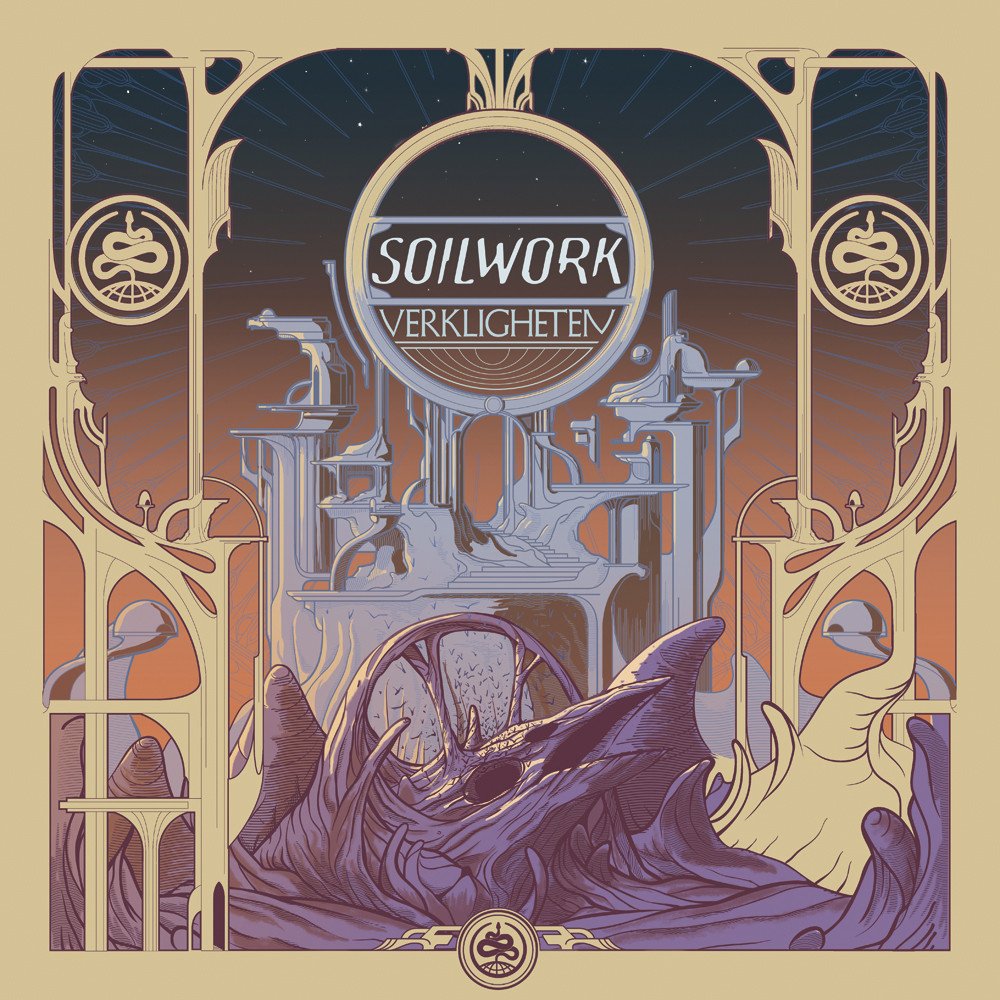
Album Review: Soilwork - Verkligheten
How do I say this without sounding insulting... In recent years, Soilwork has been... slowing down. I don't mean they're getting old, or that they have gone soft, but they are now putting out records with less frequency than they did in the old days. I totally get it, too. They're a big enough name that they can head out on tour or the festival circuit without a new record behind them and do just fine. There's no need to put out records when they aren't ready to, and that's fine. And it's not as though we haven't heard from the most visible member of the group. Bjorn Strid's side-project, The Night Flight Orchestra, has been incredibly busy. The only problem with that is while that other band is a fun nostalgic diversion, it's still an appetizer compared to the meatier main course that is Soilwork. So I'm glad to see the focus has shifted back this way for 2019.
And as if to make a statement about what kind of record they want this to be, "Arrival" opens the proper tracks with a blast beat. The song spends its running time pounding relentlessly, with the drumming up in the front of the mix, and Bjorn's vocals surprisingly in the back. This is the older, more mature Soilwork, so the guitars aren't the old melodeath style from the "Figure Number Five" days. There are chord voicings that feel more from prog, and even the chugging parts are played with a tone that softens the blow of each down-pick. The construction is aggressive, but the production isn't, which I find an interesting turn of events.
What I also notice is that hints of The Night Flight Orchestra are creeping in around the edges. The musical backdrop is still cheese free, but Bjorn's vocals have taken on the sound of his other band. His voice is strong, but his cleans are run through the same production style that makes them sound a bit plastic and inhuman. The recordings Soilwork made years ago were more raw, for sure, but hearing his voice in a more pure form was part of the appeal. One of the main complaints I have about what Bjorn has been doing lately is the way his voice is processed on record. He doesn't need the help, and honestly, I find it distracting, especially when his harsh vocals still sound as natural as ever.
While "Arrival" has double-bass drumming even during the soft jazzy instrumental break, I'm more fond of "Full Moon Shoals", where the main riff introduces some groove to the proceedings. It is about as far from melodeath as Soilwork gets, with fewer melodeath influences, and a chorus that sounds like 80s rock. That said, it's the sort of catchy song that I imagine will go over great on the festival stages. We don't use the word often, but for this kind of music it's a fun listen.
The band is busy experimenting throughout the record. We get "The Nurturing Glance", which has a riff that could have been on an 80s Dokken record, and that is followed by "When The Universe Spoke", where the musical backdrop is almost pure black metal. Hearing Bjorn softly crooning over that frosty landscape is something rather unique. I'm not sure I would say it works, since there isn't anything at all memorable about the droning guitar chords, but it stands out among the album. This is certainly not one of those records where every song is a carbon copy of the formula.
Despite the diversions, the main takaway I have from "Verkligheten" is one of consistency. From beginning to end, Soilwork has put together an album that is quality. There aren't any highlights I would point to as being the obvious best songs, but by the same token, there aren't any that stand out as being filler. This version of Soilwork might not reach the same exhilarating highs, but they know how to deliver time and time again. If you want an album like the old days, one that combined melodies with vicious death metal, you're not going to get that here. Soilwork has refined their sound, and now even their heaviest, harshest moments are something different than that. But if you have been on board with their evolution over the years, what you will hear is another chapter that builds upon their legacy. "Verkligheten" is what Soilwork sounds like in 2019, and that's just fine with me.
And as if to make a statement about what kind of record they want this to be, "Arrival" opens the proper tracks with a blast beat. The song spends its running time pounding relentlessly, with the drumming up in the front of the mix, and Bjorn's vocals surprisingly in the back. This is the older, more mature Soilwork, so the guitars aren't the old melodeath style from the "Figure Number Five" days. There are chord voicings that feel more from prog, and even the chugging parts are played with a tone that softens the blow of each down-pick. The construction is aggressive, but the production isn't, which I find an interesting turn of events.
What I also notice is that hints of The Night Flight Orchestra are creeping in around the edges. The musical backdrop is still cheese free, but Bjorn's vocals have taken on the sound of his other band. His voice is strong, but his cleans are run through the same production style that makes them sound a bit plastic and inhuman. The recordings Soilwork made years ago were more raw, for sure, but hearing his voice in a more pure form was part of the appeal. One of the main complaints I have about what Bjorn has been doing lately is the way his voice is processed on record. He doesn't need the help, and honestly, I find it distracting, especially when his harsh vocals still sound as natural as ever.
While "Arrival" has double-bass drumming even during the soft jazzy instrumental break, I'm more fond of "Full Moon Shoals", where the main riff introduces some groove to the proceedings. It is about as far from melodeath as Soilwork gets, with fewer melodeath influences, and a chorus that sounds like 80s rock. That said, it's the sort of catchy song that I imagine will go over great on the festival stages. We don't use the word often, but for this kind of music it's a fun listen.
The band is busy experimenting throughout the record. We get "The Nurturing Glance", which has a riff that could have been on an 80s Dokken record, and that is followed by "When The Universe Spoke", where the musical backdrop is almost pure black metal. Hearing Bjorn softly crooning over that frosty landscape is something rather unique. I'm not sure I would say it works, since there isn't anything at all memorable about the droning guitar chords, but it stands out among the album. This is certainly not one of those records where every song is a carbon copy of the formula.
Despite the diversions, the main takaway I have from "Verkligheten" is one of consistency. From beginning to end, Soilwork has put together an album that is quality. There aren't any highlights I would point to as being the obvious best songs, but by the same token, there aren't any that stand out as being filler. This version of Soilwork might not reach the same exhilarating highs, but they know how to deliver time and time again. If you want an album like the old days, one that combined melodies with vicious death metal, you're not going to get that here. Soilwork has refined their sound, and now even their heaviest, harshest moments are something different than that. But if you have been on board with their evolution over the years, what you will hear is another chapter that builds upon their legacy. "Verkligheten" is what Soilwork sounds like in 2019, and that's just fine with me.
Wednesday, January 9, 2019
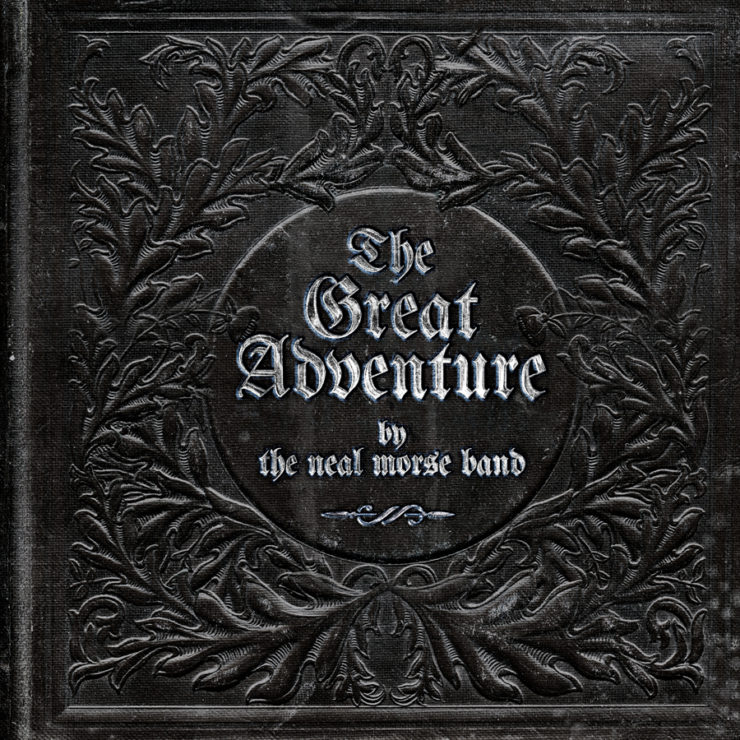
Album Review: Neal Morse Band - The Great Adventure
At this point, there isn't anything left to say about the course of Neal Morse's career. Over the last twenty years or so, he has proven himself to be one of the best, and most important, figures in modern prog. People can disagree one which of his records, or bands/projects, are the best, but few people who know anything about prog will deny his stature as being well-deserved. But here's the thing; while I am a big fan of Neals, and have several of his albums in my collection, I have a very hard time with double albums. "The Similitude Of A Dream", which this album is the sequel to, was another great prog epic from Neal and his band.... that I haven't listened to in full in more than a year. Look, there's a lot of great music on it, and I wrote very highly of it when it came out, but I don't know how I'm supposed to regularly find almost two hours of uninterrupted time to listen to the entirety.
That is a concern here as well, with this double album clocking in an an hour and forty-three minutes. Even if you are a fan of the music, which I certainly am, it's a lot to take in all at once. I'm not sure how often I will have the requisite block of time to revisit the album as it is intended.
As you would expect from an album like this, we start out by setting the scene with an overture, which this time stretches ten minutes as it introduces us to some of the sounds and themes of the record. We revisit a melody from "Similitude", and then get thrown into some of the heaviest music to come from Neal since "Sola Scriptura". That feeling continues on in the first single, "Welcome To The World", where a thread of anger (from the character) is prevalent through the verses, which gives an interesting tinge to the huge layers of overlaps and harmonies that make up the melodic hook. It sounds like a less scattered version of one of Neal's "Thoughts" songs, and it makes a stirring first impression.
The first disc flows between these heavy moments and softer, more narrative passages. Both are highlighted by Eric Gillette's guitar work, which gives the band a huge dose of crunch, but also solos that can either shred or play huge melodic phrases, depending on what's needed. He continues to assert himself as a vital cog to the band, and it's his playing that most sets The Neal Morse Band apart from Neal's solo albums.
"I Got To Run" packs a lot of prog into six minutes, ebbing and flowing enough for an entire epic. It's one of the more unusual numbers for a Neal album, with musical and vocal phrasings that I wouldn't have expected. The construction of the album can leave the songs sounding a bit odd if you aren't listening to the whole record at once. "To The River" sits in the middle of Disc 1, and serves as an intermezzo, re-interpreting the hook from "Welcome To The World". It's a nice moment, but the repetition makes the song on its own a bit unimportant. Considering the amount of time asked of us, I feel like every minute should be vital to the story.
As Disc 2 begins, we are treated to a second overture, followed by "Long Ago", a more acoustic song where I finally put my finger on a feeling I had. The swirling keys sparked my memory, as the main melody Neal sings about "a love that never dies" brings me right back to "World Without End", where there is a section that sounds very similar. I'm not sure if the recurring themes in the album are only supposed to call back to "Similitude", or if they go further back through all of Neal's career. I didn't hear any others that stood out so clearly.
"Fighting With Destiny" is among the darkest pieces Neal has ever put on record, with his vocals in the chorus as close to sinister as he is going to get. His usual melodic stock-in-trade is replaced with something very much different than the norm, and that helps to make this adventure feel like one. This isn't simply another Neal Morse album doing what all Neal Morse albums do. There are new shades and colors in here, and they open up new possibilities for where the band can go in the future.
Then we get "Welcome To The World 2", where the song is built on a truly dark and heavy riff that would have sounded right in place on Dream Theater's "Train Of Thought", that once again gives way to the single's main hook. For those keeping count, that is three times now a song has centered on that hook across the two discs. I agree it's a great melody, but I don't think I'm analytic enough when it comes to music to dissect the entire 103 minutes to see how the jigsaw pieces connect to form a complete image when the puzzle is complete. In other words, if there's a pattern to how the callbacks are presented, I didn't see it.
So what are the main takeways from "The Great Adventure"? Like the previous album, it is a sprawling double album filled with plenty of great songs and musical motifs. And like the previous album, it is also so lengthy listening to it in total will not be a common occurrence. When it's on, it's classic Neal Morse with a twist to it. "The Great Adventure" shows all the reasons why Neal's career is continuing to grow with this band. Neal has never put out an album that wasn't at least close to great, and that doesn't end here. "The Great Adventure" is a fitting companion to "The Similitude Of A Dream", and is a fine path to travel on its own.
That is a concern here as well, with this double album clocking in an an hour and forty-three minutes. Even if you are a fan of the music, which I certainly am, it's a lot to take in all at once. I'm not sure how often I will have the requisite block of time to revisit the album as it is intended.
As you would expect from an album like this, we start out by setting the scene with an overture, which this time stretches ten minutes as it introduces us to some of the sounds and themes of the record. We revisit a melody from "Similitude", and then get thrown into some of the heaviest music to come from Neal since "Sola Scriptura". That feeling continues on in the first single, "Welcome To The World", where a thread of anger (from the character) is prevalent through the verses, which gives an interesting tinge to the huge layers of overlaps and harmonies that make up the melodic hook. It sounds like a less scattered version of one of Neal's "Thoughts" songs, and it makes a stirring first impression.
The first disc flows between these heavy moments and softer, more narrative passages. Both are highlighted by Eric Gillette's guitar work, which gives the band a huge dose of crunch, but also solos that can either shred or play huge melodic phrases, depending on what's needed. He continues to assert himself as a vital cog to the band, and it's his playing that most sets The Neal Morse Band apart from Neal's solo albums.
"I Got To Run" packs a lot of prog into six minutes, ebbing and flowing enough for an entire epic. It's one of the more unusual numbers for a Neal album, with musical and vocal phrasings that I wouldn't have expected. The construction of the album can leave the songs sounding a bit odd if you aren't listening to the whole record at once. "To The River" sits in the middle of Disc 1, and serves as an intermezzo, re-interpreting the hook from "Welcome To The World". It's a nice moment, but the repetition makes the song on its own a bit unimportant. Considering the amount of time asked of us, I feel like every minute should be vital to the story.
As Disc 2 begins, we are treated to a second overture, followed by "Long Ago", a more acoustic song where I finally put my finger on a feeling I had. The swirling keys sparked my memory, as the main melody Neal sings about "a love that never dies" brings me right back to "World Without End", where there is a section that sounds very similar. I'm not sure if the recurring themes in the album are only supposed to call back to "Similitude", or if they go further back through all of Neal's career. I didn't hear any others that stood out so clearly.
"Fighting With Destiny" is among the darkest pieces Neal has ever put on record, with his vocals in the chorus as close to sinister as he is going to get. His usual melodic stock-in-trade is replaced with something very much different than the norm, and that helps to make this adventure feel like one. This isn't simply another Neal Morse album doing what all Neal Morse albums do. There are new shades and colors in here, and they open up new possibilities for where the band can go in the future.
Then we get "Welcome To The World 2", where the song is built on a truly dark and heavy riff that would have sounded right in place on Dream Theater's "Train Of Thought", that once again gives way to the single's main hook. For those keeping count, that is three times now a song has centered on that hook across the two discs. I agree it's a great melody, but I don't think I'm analytic enough when it comes to music to dissect the entire 103 minutes to see how the jigsaw pieces connect to form a complete image when the puzzle is complete. In other words, if there's a pattern to how the callbacks are presented, I didn't see it.
So what are the main takeways from "The Great Adventure"? Like the previous album, it is a sprawling double album filled with plenty of great songs and musical motifs. And like the previous album, it is also so lengthy listening to it in total will not be a common occurrence. When it's on, it's classic Neal Morse with a twist to it. "The Great Adventure" shows all the reasons why Neal's career is continuing to grow with this band. Neal has never put out an album that wasn't at least close to great, and that doesn't end here. "The Great Adventure" is a fitting companion to "The Similitude Of A Dream", and is a fine path to travel on its own.
Subscribe to:
Posts (Atom)