Friday, October 31, 2025

Album Review: Cold Steel - "Discipline and Punish"


It took a few runs to get this to open up, but once Cold Steel’s new full-length Discipline and Punish unraveled, there’s a lot here to like.  It just needs to be viewed through the proper lens.

The Tampa-based thrashers (are they thrashers?) are trying to fuse a few different brands of metal into a single mix, and at first it sounds messy, but ultimately that may be the point.  The album doesn’t take long to get there, either - album opener “No Escape” starts with a thunderous, Crowbar groove, and then moves into a second phase that is pure Pro-Pain, and then back again.  The big thumping riff is devilishly simple in construction, but that’s what makes it so effective.  We talk a lot here about the necessity of empty space in riffs, and this one leaves plenty of breathing room between thuds.


Then “Protocol” starts, and now we’ve moved into that modern thrash space that everyone has tried to emulate since Power Trip, with varying success (coincidence? Arthur Rizk produced this record, who also used to produce Power Trip.)  Cold Steel does a pretty good job of following the blueprint for what thrash needs to sound like to be captivating in the 21st century (Dead Heat take notice.)


It’s only a little father down in “Blacksmith of Damnation” that we start to see different influences creep into the proceedings.  The verses of this song are one thing, but it’s the first minute and the spaces in between where, if you listen right, you can hear a Fear Factory song (back when they were good,) trying to break out, just with a different production style.


The middle third of the album plods along without any particular comment.  Cold Steel doesn’t deviate a lot from the boilerplate in that section, and it drags a little, much like the middle third of Lazarus A.D’s classic The Onslaught, but without the same level of pure talent on display to carry the songs.


Don’t lose heart, though - stick with it for the last three tracks.  Beginning with “Fever Dreaming,” something magical happens, and for all the sound and fury of the album’s introductory third, it’s the ending flourish which makes it a special record.


“Fever Dreaming” is a…thrash…ballad?  None of those descriptors feel like they should be in the same sentence together, but it works.  The ragged vocals of Jose Menendez shouldn’t work in concert with the oversized, dramatic riffs and backing…keys, synth, chorus, whatever that is...but they do.  There’s a depth here that’s charming and infectious in its own way.


This is all followed by the thrash-rap (not a typo) “Smoking Mirrors,” which may secretly be the album’s best song.  It is, at worst, it’s most creative.  If fans of Alien Weaponry squint hard enough, they may see some of the same seeds in the way this song is constructed relative to the Māori band.  Again, should this work?  Who knows?  But it does, and it’s a lot of fun.


And we finish with “The Coldest Death,” which is back to form for the way most of the songs are written, but adds some end-of-album flourish with some of the lessons learned from “Fever Dreaming,” and a tingly guitar tone not entirely foreign to the sound of “Hallowed Be Thy Name,” a classic album closer.


If there is a fault of Discipline and Punish, it’s that 1) the title of the album is a little redundant, and 2) of all the influences and similarities in sound we’ve discussed above, the band isn’t quite as luminary at those same things as the names that were dropped.  What’s in Cold Steel’s favor, though, is that they are 1) very young and 2) the fact that they’ve blended those elements already speaks to the accomplishment of both this album, and future endeavors.  


Thursday, October 30, 2025

Album Review: Taylor Acorn - Poster Child

I often refer back to Kelly Clarkson's "Breakaway" album as being an inflection point, as it was the perfect synthesis of 00s pop and rock. That formula was a winner, as the record sold millions and spawned some of the biggest singles of the time, but it's one that hasn't been followed very often or very well since. Perhaps it is merely a culture that has moved on to other things, or perhaps writing songs sticky enough is harder than even I imagine, but pop music has rarely been able to capture the rock energy and deliver on the music that can bridge the gap.

I say that as preface to this statement; Taylor Acorn may have just come closer than anyone to making the "Breakaway" for the next generation.

From top to bottom, "Poster Child" is absolutely jam-packed with massive hooks and smoothly crunchy guitars. In many places, her voice even takes on the same smoky hue as Clarkson's. When she starts the album off telling us "you're pissing me off", it isn't hard to hear it as a cousin to the attitude in "Since U Been Gone". The song goes on to talk about the sad habit of prioritizing other people's happiness above our own, which only works if you prescribe to a submissive lifestyle. For everyone else, it becomes a difficult cycle of self-torture where we try to please people without knowing how, and not reminding ourselves that no one can possibly please everyone.

And perhaps that revelation is the reason this record is able to exist. If Taylor was trying to please everyone, she would not be making an album with a throwback sound to her youth (and my 20s - wait, I'm that old now?), and she certainly wouldn't be trying to shake free of the genre silos we currently suffocate in. This record isn't pop, yet it is. This record isn't rock, yet it is. This record isn't pop/punk, yet it is.

In "Hangman", Taylor sings about the children's game, which is a fitting metaphor here. The game had no rules of how many pieces we had to re-articulate to put enough weight on the answer to break its neck, and there are no rules for what Taylor is doing here. This record is not focus-tested and aimed squarely at a ready audience, it sounds like her love letter to the music she remembers and wants to embody. That alone makes it exciting, when so much feels done for the sake of being done.

There are other moments on the record where Taylor's vocals sound a lot like that other Taylor we all know, except she is not putting on an act as an artifice to distract us from the deteriorating quality of the prose. What Taylor inadvertently does is use her voice to take us on a bit of a journey through the evolution of pop over the last twenty years, which at least to my mind points out how much life has been sucked out of the enterprise.

Taylor sings that she's the "poster child for screwing up", but whatever mistakes may have been made in life have been worth it to wind up here. If the saying goes that 'comedy is tragedy plus time', that would mean art is pain plus time. Enough has passed that Taylor's life has been pressurized into this gem of a record. Which color gets refracted will depend on the angle you look at it from, but from my perspective this is nearly the entire rainbow arcing toward that pot of gold.

Taylor Swift set records a few weeks ago with the release of "The Life Of A Showgirl", but she no longer has the best release from a Taylor this year. Taylor Acorn has reached into the recent past, and used rock to smash through the ennui of this year. "Poster Child" is one of the best records of the year, and the best example of what pop music can still be that I've heard in years. There's a chance it grows roots and becomes the best such album since "Breakaway".

Need I say more?

Monday, October 27, 2025

"We Didn't Start The Fire", But Maybe We Should Start A New One

What is the worst song of all time?

That's a question without an actual answer, so perhaps I should rephrase it. What popular song offends me most as a listener and (former?) songwriter?

That's a question with an actual answer, and that answer is Billy Joel's "We Didn't Start The Fire". There are multiple layers to its awfulness, each of which injects exponent math into the world of music, turning what might have been a stupid novelty song into a lasting memory of a time that had nothing memorable about it. Before going any further, I feel like I need to say this; No matter what I say from here on out, I love Billy Joel's run of 80s singles, and I even do have a lot of affection for "We Didn't Start The Fire".

That doesn't mean it's not terrible.

Novelty songs hold a particular brand of appeal. They remind us of a specific moment in time, which is only explained by the context of when they were produced. For example, the fact that Cherry Poppin' Daddies and Brian Setzer had hits at the same time with old-fashioned swing music is utterly incomprehensible now, and only makes sense if you were there for that very brief window of time in which that nostalgia hit. Pastiches are made all the time, but few of them break through being exactly that and become remembered songs of their own.

Billy Joel was a hearty proprietor of those sorts of songs. He had released "For The Longest Time", which was a throwback to old Motown and vocal groups. He had also released "Uptown Girl", which was his love letter to 60s pop. Billy was not an 'Artist' spelled with a capital letter. He was an artist who knew he was making a commercial product for a commercial audience. He made music because it was his job, feeding us empty calories, and then retiring when there wasn't a need on either end to continue the relationship.

His penchant for novelty hit its apex with "We Didn't Start The Fire". Billy Joel looked at the world of pop music and decided what we needed most was a history lesson, but not one that actually told us anything of importance. No, his lesson would merely be to name-check as many things as he could that happened during his lifetime. So in making a song that was supposed to be about the world, he actually made it about himself. That's... something.

Looking at the lyrics, we can see this is not a song in any normal parlance. Billy is not telling a story, nor is he trying to make any sort of cogent point. The verses come and go with lists of pop-culture nouns, not sounding that different than if you were playing "The $10,000 Pyramid" about celebrities and the news.

"Harry Truman, Doris Day, Red China, Johnnie Ray
South Pacific, Walter Winchell, Jo DiMaggio"

The first lines of the song tell you everything you need to know. Billy throws out references with zero context, saying absolutely nothing about who these people are, what they did that was notable, or why we should still give a shit about any of them. He was that old guy name-checking the past as if to tell us why things were better in his day, but he was younger when he wrote this song than I am now, so he wasn't even old enough to feel that curmudgeonly about the state of the world.

Unlike when Fall Out Boy tried to update the song, Billy at least has the decency to go in chronological order. We move from the fifties through the eighties, spending decades wondering when Billy is going to get to the point of any of this. The song is very much as if Barenaked Ladies "One Week" or Beck's "Loser" were actually about anything, rather than a bunch of random words thrown together because they fit the right cadence.

"We didn't start the fire
It was always burning, since the world's been turning"

Now we get to the 'message' of the song. Billy is finally telling us the reason for playing this word-association game that sounds more like a dementia screening test than a pop song. The point is that the world has always felt like it was falling apart, always felt like it was on fire, always had problems we will never be able to solve.

That is absolutely true, and it's a point that can be worth making... except that Billy doesn't make that point.

Billy mentions Richard Nixon and Watergate, but doesn't tell us what the words mean. He leaves it for us to do the research for every reference he makes, which is a failure of his imagination. Songs should not require us to do homework, because a syllabus is not the same thing as learning. Billy has given us the outline of what he thinks is an important story about how the world hasn't changed, even as it constantly changes. The outline is nothing, though, without the meat-on-the-bone that fills in the story.

If you read the cast listing on a movie's IMDB page, you haven't seen the movie. If you've only heard Billy list a bunch of historical names, you haven't learned anything about who or why he mentioned them.

"We didn't start the fire
No, we didn't light it, but we tried to fight it"

No, Billy, you didn't. Fighting against the inertia of cultural rot would involve telling us what's actually going on, what was so wrong with it, and maybe giving us an indication of how things could have been fixed. To bitch without providing any answers is bad enough, but he doesn't even bitch about the problems that are annoying him. Billy assumes you can figure it out just by his stuttering out a few names. Complete sentences were too much for him at this point.

Billy Joel was rarely a good lyricist, and he only got worse as he could sense his own impending disinterest with writing songs. The nadir of that apathy is "We Didn't Start The Fire", a song so lazy few people can remember the words, let alone the point.

The worst thing that can happen to a novelty song is to become a hit, because when that happens, it serves as an aural wormhole from one shitty moment to another, echoing its stench throughout time. I would ask what we were thinking making this song a hit, but that would be even more thought, and I've already put more of it into this song than Billy ever did.

Billy and his generation might not have started the fire, but they didn't let it consume the master tapes of this song. That blame falls squarely on him, and perhaps that shouldn't be so easily forgiven.

Friday, October 24, 2025

Album Review: Nine Treasures - "Seeking the Absolute"


It’s hard to know exactly what to make of Nine Treasures, and that comes with the additional recognition that the quandary is not of the band’s own making.

Most folks’ first exposure to Nine Treasures came in the 2015 Mongol Metal compilation album, alongside Ego Fall and genre standout (and brief media darling) Tengger Cavalry.  Listening to that record at the time, Nine Treasures was clearly a band not like the other two - softer, with more emphasis on rock sensibilities and less reliance on metal beats and the juxtaposition of traditional throat singing against heavy guitar.


And then along came The Hu, who subsequently drew attention away from all the bands who had come previously, and became the pacecar for all metal from the Far East.  Well, Nine Treasures is a little more in line with The Hu’s sense of rhythm and accessibility, but Nine Treasures isn’t like The Hu, either.


Nor do they have to be.  What they’ve shown in their career, and continue to show with this new full-length album Seeking the Absolute, is that Nine Treasures has a different idiom than the other three bands we’ve mentioned entirely.  Yes, they still have solid rock thump (look no further than “The Ultimate Evolution,”) but the band is also willing to explore the space in a style bordering on prog.  Nine Treasures is, and always has been, more Rush than Motörhead, or heaven forfend, Metallica.


That doesn’t stop the band from blending those lines and writing a few savory rock cuts that are easy to bop along to.  It’s hard to listen to “Just Like You” and not find yourself rolling your shoulders along just a little.  It’s groovy and catchy, neither of which are terms often applied to many of the Mongol metal bands who have come before (with some apologies to The Hu.) Either way, it’s eminently accessible.


“Steel Falcon” does the same thing, albeit it a little heavier.  Oddly enough, these aren’t the compositions where Nine Treasures feel at their best.  Which leaves us in an odd place, because the basic structure of “Lonely Old Horse” is awesome, but begs for a little more overdrive to slam the point home.  So, Seeking the Absolute is an exercise in paradoxes to some degree - it could punch harder in some moments, but the punch it does utilize doesn’t always equal the accomplishment of the more exploratory tracks.


That doesn’t even get into the largest complication of all, which is that Nine Treasures will invariably be judged against stalwarts like The Hu and Tengger Cavalry because of their associated heritage, but that’s hardly a fair comparison, either.  Nine Treasures is their own band with their own goals and skills, and to lump them with their countrymen is lazy at best.  To wit, to associate The Ramones and The Doors together because they’re both American is a fool’s errand.


Seeking the Absolute is an album with many strong points, and as noted, a few weaknesses.  The critical takeaway here is that the album must be judged by the listener on its own merit, and not compared against a preconceived notion of what a rock/metal album from a Mongolian band should be.


Thursday, October 23, 2025

Singles Roundup: Megadeth, Rob Zombie, & Neal Morse

Human beings are losing out to the algorithm, as this week proves out:

Megadeth - Tipping Point

I don't really have any thoughts about Megadeth calling it quits. Aside from the fact that no one ever stays retired (*cough* Rush *cough*), Megadeth feels like a band that is already retired. Dave hasn't been able to sing at all for years, and their last four or five records have all come and gone without making a dent. The only thing notable about them retiring is that Dave didn't feel the need to stick it out past Metallica just for the spite of it.

The final album is introduced to us with this song, which doesn't make me feel anything. The song is centered around speed, which is perhaps the least interesting thing a song has to offer. The main riff is simple chugging that has no groove whatsoever. It's merely a picking exercise, without any of the charm of Slash's that became "Sweet Child O Mine". This one thrashes through the verse, getting to a 'chorus' where Dave recites the title, almost speaking. It has little musicality to it, and doesn't stick with me at all. A different riff and feeling are introduces as the song gets through the solos, which are what Dave really cares about, but by that time it's too late. Anything good that comes then is in service of a song that doesn't deliver on its core goal.

I won't say this song proves Megadeth should have retired long ago, but I won't say I'm going to be sad about no more music like this coming along.

Rob Zombie - Punks & Demons

I once described Rob Zombie as a filmmaker who still makes music to fund his real passion, and never has that felt more on the nose than it does now. To play to the fans, he has welcomed back some of his collaborators from his classic days, but as we all have learned by now, time does not wait for anyone. Despite the band being back together, so to speak, this is not a return to the days of "Dragula" and "Living Dead Girl" breaking our necks with how hard they made us headbang.

Instead, Rob has gone all in on not trying to write songs anymore. The guitars skitter along, the 'riff' mostly being noise. Rob growls his vocal atop that, a harsh attack that is utterly indecipherable to me, that culminates without even noticing when the chorus comes and goes. This is noise as art, which is a bit like a horror movie that is nothing but the kills without a narrative to put them together. If that's what you're doing, you are more or less admitting you want to make a fake snuff film. That's what this song sounds like to me; death put to tape.

And hopefully that will be the last I have to say about Rob.

Neal Morse - Reach Deep/Grab It All/LeavingCalifornia

These songs are all from Neal's upcoming 'songwriter' album, where he is going to eschew prog for something more straight-forward and personal. I do like when he doesn't get bogged down in the prog of it all, but over the years Neal has developed a habit of saving all of his good ideas for the prog albums, leaving the songwriter albums to be rough sketches of wandering thoughts that never hit upon the infectious melodies that make his best music work. That's the case here, as these songs find Neal rambling through his life story, with seemingly endless verses that culminate in some of his weakest melodic hooks.

He has told these stories before, and subscribes to the theory of telling his testimony multiple times, so we are getting rehashes of rehashes at this point. The subject matter isn't even the problem, as you can get away with almost anything if the song is enjoyable enough to listen to. That's where Neal is falling short, as this is nowhere near as memorable as "Songs From November", which was the last one of these records that worked for me, and it's even further removed from his "God Won't Give Up" religious album, which might be the catchiest bit he's ever put out. These songs are just... flat.

Monday, October 20, 2025

Thinking About If I'm An Intellectual

Am I an 'intellectual'?

That's a difficult question to answer, because there is a very good chance you and I would draw different lines on where things shift into being pretentious. Intellectualism is more than mere intelligence, it's an attitude that embraces reason above emotion, and gives the impression of looking down on those who prefer to wallow in the shallow end of the theoretical brain vat. And yes, I realize just by making that allusion I am feeding into the perception.

The case for being an intellectual is obvious. I studied philosophy in college, and at one point wrote a twenty-page paper to work through my one original philosophical theory (which I have touched on over the years here) merely for the fun of it. As you have seen in the essays I post here, I find myself often thinking through the ramifications of the music we listen to, what our tastes say about ourselves, and how art can both explain and even define the people we are. That I can drop a pun about Duchamp and douche-bags is entirely in line with my personality.

The case for not being an intellectual is also obvious. I am the sort of person who claims Meat Loaf and Jim Steinman as my favorite artists, and the shapers of my identity. I listen to Steinman inserting 'boner lines' into several of his songs, and I find it stupidly charming. Depending on the day, I can still recite between most and all of the lyrics to Billy Joel's "We Didn't Start The Fire", which might be the single dumbest song ever written.

I wouldn't be helping the case to say we could look at this through utilitarian means, adding up the points on either side, which I think tells the whole story. While I am not generally the haughty type, and I have more than my share of moments where I go for the cheap option, I cannot deny that I prefer to actually use my brain.

There was a point in my life when I considered myself a Slayer fan. Not to any massive degree, but I enjoyed Slayer more than anyone who knew me would have assumed. Over the years, as the electricity running through the synapses in my mind has broken in my patterns of thought, Slayer has become a friction that now rubs me the wrong way. There's a specific point that illustrates this shift, which comes from the "God Hates Us All" album. In college, that was a record I listened to quite a bit, which is the sort of thing I shouldn't say out loud anymore.

They have a song called "Payback" on that record, which is a song that makes me question if evolution is theoretical like time travel, in that they can both go backwards. Kerry King writes, "Fuck you and your progress, watch me fucking regress." Nothing I can say will ever sum up Slayer's career better than that line. The man known how to be brutal.

The bigger point is there came a time when I simply couldn't put up with the pride Slayer felt for their ignorance. The same person who still gets a chuckle out of the name-dropping of Cracker Jack on "Two Out Of Three Ain't Bad" can't listen to Slayer explicitly write about beating people until they're lifeless carcasses anymore (to say nothing of Carcass, whose medical dictionary lyricism is the type of pseudo-intellectualism that gives actual thinking a bad name). To be more clever than Slayer has ever been in their lives, there comes a time when being so blunt means you can't make a point.

I've come to realize the mere fact I am writing these words, that I have given any thought at all to this issue, means that I most likely am an intellectual at heart. Perhaps I have always known this, but didn't want to admit it for the simple reason that I have known so few other people who fit the bill. To use an analogy from wrestling history, I will ask; Did you think the better story was Stone Cold giving his boss the finger, or Bret Hart blurring the line between heroism and villainy based on nothing but geography? The answer to that tells us everything, I suppose.

It was the philosopher Arthur Schopenhauer who said intelligence is a 'curse', because it will lead to isolation and suffering. I'm tempted to believe in the psychological concept of the collective unconscious, because often it feels like much of humanity is pulling from the same well of mental resources, which would explain why there is so little to go around for each one of them.

I'm not saying that music must aim for the highest of brows. Some of my own songs were written about concepts such as the creation of the concept of fate as a rationalization to avoid the slings and arrows shot our way for having outrageous fortune (See, there I go paraphrasing "Hamlet"), or how inertia in our lives can make the past and future synonyms that make change a word that only exists in the language of our dreams, but we don't need to go to that extreme.

If it makes me an intellectual to want to be able to listen to music without feeling insulted by some of the language that gets used, I cannot deny the label. Whether it comes from songs that clearly have no intentional meaning behind them, no ability to communicate beyond an elementary school education, or an embrace of backwards social attitudes, I want something more from my music. Perhaps that explains why I have connected to so little of it over these last couple of years. The ways the world has shifted have made music more disposable, which has not been conducive to deeper thought.

So what does an intellectual do when he is given so little to think about?

I suppose he thinks about the lack of thought. The vicious circle continues. Ignorance may truly be bliss.

Friday, October 17, 2025

Album Review: John 5 - The Ghost


To begin by treading some old ground - what has always separated John 5 from the crowded field of talented and accomplished guitar virtuosos is that John 5 is not up there simply to record himself playing a bunch of fancy scales as fast as he can, or offer an elaborate technical demonstration.  John 5 composes songs (fine, pieces, if you want to follow the to-the-letter definition of which has lyrics and which doesn’t,) that are capable of telling stories through their movements and the pace and emotion of his playing.

His new album, Ghost just so happens to be his most accomplished in that space since the achievement that was Season of the Witch.

Worth noting: this is the first of John’s solo albums since Careful With That Axe to be listed as “John 5” and NOT “John 5 & The Creatures.”  One wonders what changed, but in any event, the difference is largely cosmetic - as talented as The Creatures were (and bass player Ian Ross in particular,) the focal point is really John 5 himself, and always has been.

Anyway, to get back to the main point, please submit into evidence “A Hollywood Story.”  It’s hard to know without speaking to the man what his actual intent with this piece was, but it’s abundantly clear that he’s telling a different, softer, more tender story than he is with “Fiend.”  The former is a pleasant hum on a summer’s afternoon stroll, the second is a comic book come to aural life, complete with a smirking guitar tone ripped straight from the halcyon days of Judas Priest.

The title track is the closest John 5 gets on Ghost to a true exhibition piece, and the opening sequence is enough to make one think he’s going to try and top Van Halen’s Eruption.  Ultimately, the piece breaks into something less solo-specific, but the same hallmarks of talent and expression are there.

Moving chronologically, the next two cuts are where John 5 shows his versatility, with the lounge-act reminiscent “Moon Glow,” and the requisite country/rockabilly swing of “You Me and the Devil Makes Three.”  For as much as John 5 is known worldwide as a metal guitarist, these are passion pieces for him, and longtime fans have come to expect John to show this side of himself on his solo records as well.  Frankly, Ghost could have used a little more of that.

Which is to say, the first three real cuts on the album (the opening track is an introduction and nothing more,) aren’t particularly remarkable in any tangible way.  There’s nothing wrong with them, but given the spirit, fire and variety that comes later, “Deviant,” “Strung Out” and “La Express” don’t land with any real impact in the same way.

However, the best is saved for last, both for editorial purposes here, and on the album.  “Executioner” might be the best song released so far this year (amidst a field of capable contenders.) It takes a lot to say ‘wow, I haven’t heard that before,’ and that’s what “Executioner” is.  John 5 has never before packed so much drama into three-and-a-half minutes, and done it with such an incredible sense of tension and flow.  His individual, intricate guitar part features very little variance, but it’s the pieces around it which make the song build into something great.

John 5 demonstrates once again that he has a unique understanding of the necessary balance between composition and virtuosity.  If you’ve always been on board with John 5’s solo career, nothing changes here except that you’ve another album to add to your shelf and enjoy. If his previous effort, Sinner left you feeling unfulfilled, come back around and try Ghost. You won’t be disappointed.

Wednesday, October 15, 2025

Will Sapient Scar "Pay Forever", In Blood And Soul?

The Buddha is often cited as telling us "life is suffering", but we spend our time on this earth trying to outrun pain however we can. We treat happiness as the pot of gold at the end of the rainbow, often forgetting the arc traces over a horizon we will never reach. There is an irony that the inability to feel pain is a true disorder. Those who cannot physically feel pain often perish early, because they lacked the warning signs necessary to learn how to navigate this world we have constructed. Those who cannot emotionally feel pain often commit the worst of atrocities, because the only empathy they have is for their own appetites.

Pain is not just an uncomfortable fact of life, it is a necessary one. Without pain, we cannot know happiness when (or if, to be more precise) it flashes across the path we walk. Without pain, we would never metaphorically slit our wrists and bleed our souls to mix the waters and connect on fundamental levels of humanity.

For their second single, Sapient Scar is dipping their toe into those crimson waters, writing their name with the bloody point of the knife. The guitars that open the song pick a slow arpeggio, tiptoeing around the discomfort that is to come. If they punched us in the face, our eyes would water over and be unable to see the truth that will soon appear before us.

VK's first line says, "I can't tell you why you had to feel this pain, and I can't say I would do it all again." In those words, she understands that despite being 'rational animals', we cannot always explain why we do the things we do. Our drives and desires arise within us, and we feel them, but what causes those electrical sparks to fly across those particular synapses remains a mystery even to ourselves. We cannot avoid all pain, because we don't know where the landmines within ourselves are all hidden.

The band swells as the chorus arises, a dramatic shift that feels like the reveal of the monster in an old black-and-white horror movie. The monster was us, of course, hiding the scars we inflict with thick layers of makeup. VK implores that "you can't make me pay forever", which is true. The only person who can cut so deep the blade breaks off in our soul is ourself, and any hurt someone else causes is merely the pattern we trace as we cut ourselves again and again.

VK sings that "I played the villain, I began to believe there was no redemption." Recognizing the reality, of course, means there is indeed hope. That's why an apology means little when it has to be asked for, as opposed to when that person offers it of their own volition. In that way, this song is VK apologizing to herself for letting people pull her down, hold her back, dull her color.

"The pain in bloom, you fed the roots, they're dead in me," she sings. The ties that bind are strong, and they should be there to pull us up when we fall into one of the holes we dig for ourselves, but they can also be the reason we cannot reach for the surface when drowning. The connections we share with people are personal gravity, and without enough of that force, our universe falls apart. But if it pulls the wrong way, we wobble off our orbit, feeling lost in the blackness between the stars. Feeling dead inside is akin to being a black hole; a cosmic beauty that devours any light passing by, because we are desperately trying to illuminate the path back toward salvation.

These realities are accompanied by some of VK's most piercing vocals. She belts the notes with her entire frame, especially as she sings "I was born to bleed" with enough force to indeed draw blood from a lesser throat. She has showcased her power before, but rarely as the sharp edge of an arrow as it traces an arc into our hearts.

The song winds through a mobius structure, mirroring how these stories do not hit precise act breaks like a tv drama. As it reaches its conclusion, David and Allie finally lay into some lead guitar, and the song shifts keys, signaling the lesson VK has learned. "I never owed you anyway, you never owned me anyway," she tells us. She's right. Whatever we give of ourselves to someone else, it is just that; a gift. We owe no one anything but our honesty, and our best attempt to keep our pain from spreading beyond our skin. We may not always succeed, but the work is the reward.

I wish many of us didn't have to hurt in such vivid color for art to echo from our pain, but it makes too much sense. Pain is our sense of survival, the force that drives us to be better, both for ourselves and for the people we love. Everything good in life can be traced back to a moment when we were hurt, and the ways that pain changed us. That's beautiful, and so is "Pay Forever".

 "Pay Forever" releases on October 24th. Pre-save it here! 

Monday, October 13, 2025

25 Years Later, Once More Unto The "Breach"

What becomes of a spark of inspiration when the fuel it ignited has been used up?

That thought has been on my mind for much of this year, as I have been wrestling with existential questions that have answers only insofar as I am willing to accept my own reasoning. While I know people mean well when they say "don't give up", their imploring never comes with an explanation for what nobility exists in continuing to venture down paths that cut and scrape, that leave scars which will not heal, but rather get swallowed up by the effects of time on our skin as we age. We have no trouble admitting there are times when continuing to hold on is less humane than letting go (as we do with our pets when they become sick), but we struggle to let ourselves have that same grace.

For longer than I have been writing about music, I have been writing music. I have talked about my own experiences as a musician to give context to why I think certain albums fall short of the intended mark. I am not merely someone saying I like or don't like something, I have the experience of trying to do this myself to explain what I think does and doesn't work.

That paragraph was written in the present tense, but it should be written in the past. The fact of the matter is recently I have committed myself to giving up on thinking of myself in that way. Music was not just a hobby, it was a form of therapy to be able to turn my thoughts into something productive, something I thought I was proud of. Those ideas have dried up, and the fuel that burned within me is now cold. I don't think that's intrinsically a bad thing, though.

None of the people who have told me to keep going have given me a good reason to, and most of them have never even listened to a note that I created, so what the fuck do they know? Giving up is something I am doing for my mental health, to save myself from the torment that comes with trying to force something that is no longer there. Beating my head against a wall is never going to do anything good for me. The flat-top isn't in style anymore.

So where does that leave "Breach", the album that is most responsible for setting these last twenty-five years in motion? Honestly, I'm not sure. I still call the record one of my favorites of all time, and I hear bits and pieces in the lyrical writing that still resonate with me in ways almost no other music does. I remember the feeling I had when I understood that music and poetry could blend together into something far deeper and more important than a typical pop song.

When Jakob Dylan sings, "I can't fix something this complex and more than I can build a rose", I can feel the inadequacy of knowing life exists beyond our capability to construct it. Though the concept of 'manifesting' was not as ubiquitous then, what he was saying was that we cannot cut and arrange the pieces of life as if arranging a bouquet. People are not in our control, nor is luck, and we rely on both of them far more than we like to admit.

Later, he sings "some flowers they never bloom, and some flowers they just bloom dead". Is there a more elegant way of saying "fuck you" to the people who promise you that your time is coming? Subconsciously or not, we erect markers in our minds for the milestones of life, and when they remain at the far edge of the horizon after getting postcards from everyone else who has arrived, hearing platitudes about everything good that will be waiting for us becomes less a measure of compassion, and more a reminder of our failures. I shouldn't use that particular word, because it isn't that I have failed, it's that my road was never going to be the highway I had charted out on the map. I didn't know that at the time, and I only found out after the damage was already done. Clearly, I didn't learn enough from "Breach".

Just a few weeks ago, the lyric to "Witness", in which Jakob sings "happy birthday, no one cares", was the mantra of that day. As is the case with many other issues, it took me a long time to fully understand how much that one day of the year has broken me again and again. The lyric was always there in the back of my mind, telling me something I didn't know I already knew, waiting for me to be ready to come to terms with the truth.

"Breach" has always been that record for me. It has pushed me to think about the uncomfortable things about myself, and to figure out my own way of saying the things that are too important to be said plainly. For so long, I loved the album for lighting the path as I explored my own artistic side. Now, I'm not sure if I hate it for how much time and energy I expended on things I was never going to be able to do properly.

So I return to the question I started with; If I have lost my passion and inspiration, and pushing the rock up that hill is as futile as it seems, what is the point of soldiering on? Why shouldn't I give up on something that no longer brings me joy, and that clearly no one else gives a damn about?

I may be quitting on music, but I can't quit on over-thinking. For that reason alone, no matter how bitter I get, I'm sure "Breach" will be my companion for another twenty-five years.

Friday, October 10, 2025

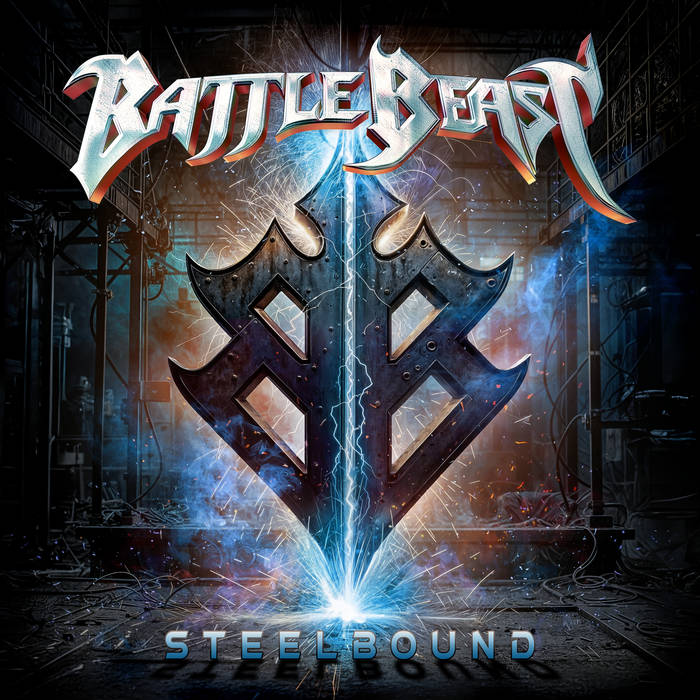
Album Review: Battle Beast - Steelbound

Sometimes, a band only needs one selling point to establish and maintain a career. There's so much music out there that everyone needs something that sets them apart, and there are times it isn't their songs. Gimmicks can catch people's attention, and personalities can hold it, but often it just comes down to one massive talent that give us hope the music will live up to that. 

In the case of Battle Beast, that talent has always been the voice of Noora Louhimo. Her voice is a massive force of nature, a gritty roar that rises to the absolute top of the mountain of power metal singers. The comparison between Battle Beast and Beast In Black makes this even more apparent, as does her performance on a song such as "Hurricane Love" from her Laurenne/Louhimo side-project. Noora is flat-out amazing.

Otherwise, Battle Beast is one of those bands like Powerwolf who deliver solid albums that are fun to listen to, but struggle to leave much of an impact. I really enjoyed "Circus Of Doom", but is there anything at all different about "Steelbound"? No, there isn't. You could play the records back-to-back and not know when one ended and the next began. The band has a very narrow perception of what their sound is, and they play within it the whole time.

At only thirty-seven minutes long, including a two-minute interlude, the band is delivering to us a compact burst of melodic metal that hits the same spot again and again. It's good, but how many times can you get a love smack in the same place before it starts to hurt in a way that isn't so enjoyable?

That is to say, the only issue with "Steelbound" is that I'm struggling to tell you why you need to listen to this album if you already know and love one of their earlier records. This one is good in the same way, and will scratch the exact same itch. If you find yourself in that mood, "Steelbound" is going to be perfect. I've certainly enjoyed my time with it. The band is professional, and gives Noora a solid platform to do what she does best. They deliver crunchy metal songs that have high-energy melodies that gets your fist pumping.

That comparison to Powerwolf works on two levels. Yes, they both make the same album again and again, but they also focus on their high-octane numbers to give us metal upon metal. They both have the talent and the voice to do more, and especially to lean into more dramatic fare, but they know what the audience wants. Not too many metal fans are like me, and love what power ballads can bring to the equation even more than the heartiest metallic attack.

Metal fans are going to find a lot to enjoy in "Steelbound". I did as well. Don't let my reticence hold you back.