Maybe this is all simply a result of me spending too much time thinking about music. I've been listening intently for two-thirds of my life, I've been writing about it for a decade, and I've always been a contemplative person. So as I am thinking about the various ways that we conect to music, and it impacts us as people, I find myself sometimes saying things that don't seem to mesh with the experiences that people of other dispositions. In some cases, I can easily see how they come to the conclusions they do, even if they are radically different than mine. For example, while I am not a fan in the least of music that is primarily rhythmic, I can understand that other people are wired in such a way that rhythm is their primary focus. No problem.
Then there are cases where, on a philosophical level, I simply don't see two sides of an argument. I have found myself in those situations before, especially when I pan certain records for what I say are objectively bad vocals, because the delivery is so slurred the lyrics are indecipherable. That is also an issue that arises from the majority of harsh vocalists, as almost all the growlers and screamers I encounter are nearly impossible to understand.
This led me to asking a simple question. Or what I thought was a simple question: If the listener can't understand the lyrics, what's the point of them?
I am a writer, and a poet, and I have talked before about my affection for language. Whether it's expressing a deep truth about the human condition, or simply putting together a beautiful image, words are profoundly important to me. That can be hard to square with listening to hard rock and heavy metal, which are genres not known for their literary prowess, but that isn't the point at hand right now. I am having a schism in my mind trying to understand how bands can intentionally put out records where their lyrics are a mystery to the audience, unless they sit down with the booklet (provided they bother printing them) and read along.
There are two concerns; 1)Is a vocalist who doesn't convey the lyrics failing in his/her job? and 2)Why write lyrics if they are going to go unheard?
Let's tackle them in order.
I have said about a handful of singers, and will also say about most harsh vocalists, that they are objectively failures at their role as musicians if they sing in such a way that we can't understand the lyrics. I realize this is a *pun not intended* harsh assessment, but it's one I firmly believe. A song is not just a few instruments and a voice running through strings of notes. A good song has meaning, it has something to say about the author, about us, about the world. So if a song is trying to say something, and that something is lost because the lyrics can't be heard, the singer has done their own art a disservice.
This works across media. When the trailer for "The Dark Knight Rises" premiered, viewers immediately complained they couldn't hear a word that Bane was saying. The producers immediately went back and cleaned up the audio as best they could, because they knew the audience needs to know what is going on. They didn't fold their arms and tell us to get lost, because that was the 'art' the actor picked. They didn't tell us we could just read the script to get the point. No, they realized a mistake, corrected it, and the end result was better for it. Singers are not actors, but in a sense they serve the same purpose. Their voices are used to project the message of the author to the audience. Anything that stands in the way of that happening is reducing the effectiveness of the art.
Which leads me to the second concern. If we have this great number of vocalists who give us unintelligible lyrics, why do they bother writing them in the first place? I have heard many people tell me over the years that they don't care about lyrics, and the voice is merely another instrument, especially in extreme metal. Ok, if that's reality, there should be no need for those singers to spend the time writing lyrics at all. The very fact that the time is spent writing lyrics proves to me these artists think the words are important to their work. Otherwise, they are telling us they enjoy wasting their time, which I doubt.
But this brings us to the point that frustrates me the most. If the artists consider the lyrics important enough to write, and they still don't make sure they present them to us in a way we can hear them, what does that say about them? If I'm being honest, my initial reaction to that question is to say they are being lazy. Depending on your voice, and your delivery, it can take a lot of work to sing with proper diction. But something being hard is not an excuse for not doing it. Whatever kind of vocals we're talking about, they can be performed clearly. One of my favorite records is Dan Swano's "Moontower", where he growls 90% of the vocals, yet every word he delivers is perfectly intelligible. And it's the clarity of his delivery, and the contrast between the humanity of his words and the savagery of his delivery, that makes it heavier than any of the more guttural vocals that can't be understood.
I will concede that I am probably more anal about this than most will ever be. I understand that. Not everyone is going to come at things from the same perspective I do, with the mindset of a writer. That's fine. What I fail to understand, even as people try to explain their views to me, is why they allow artists to give them a product that is inferior to what it could be. Even if the words don't matter to you, personally, shouldn't it still matter that the bands you listen to aren't putting in the effort to make the best record they can? Myself, I find that attitude from them to be a bit insulting.
It was insulting when Baroness released both "Purple" and "Gold & Grey", two albums with audible clipping and distortion that no recording school would give a passing grade. It was insulting when Metallica told us that "Death Magnetic", which was similarly brick-walled to the point of clipping severely, actually sounded great. So it is also insulting when the artists themselves defend performances that aren't up to par. If they can't pull something off, that's fine. We all have our limitations. Just don't put it on a record if you can't do it. Re-write the song so you can perform it properly.
Really, this all boils down to one simple question that I can't answer. If an artist puts out a record that strikes me as them not caring about their own music, why should I care about it? Or them?

Showing posts with label Commentary. Show all posts
Showing posts with label Commentary. Show all posts
Tuesday, July 11, 2023

Wednesday, April 15, 2020
Ten Years Of "Tonic", and Where Do We Go From Here?
It's a bit hard to believe so much time has passed, but soon will be the tenth anniversary of the release of Tonic's self-titled album. Considering that Tonic is my favorite band, and have been since the release of "Sugar" in 1999, that album was a big deal for me. Eight years had passed since "Head On Straight", and I had been reduced to thinking there would never be a fourth record. Sensing the end of your favorite band is not an easy thought for any music fan, let alone when that band hadn't given you a large catalog of music to hold dear when they were gone.
I didn't have to keep that thought in my head for too long after it dawned on me, as Tonic regrouped for their fourth album to be released in the summer of 2010. I remember the day I found the page on their label's site, complete with a player in the corner containing samples of every track. The record was still in the offing, and yet I was going to be given a sneak peak. What could be better?
When the record did finally arrive, I was both pleased and disappointed. It did not follow the direction of any of their previous records, but it did serve as a summation of everything Tonic had been up to that point. It was also their most streamlined and concise record, which continued the shift they had been making all along in their songwriting. I didn't see it that way at the time, but I have come to realize the evolutionary shift as a natural state of affairs.
Over time, that record has become as much a favorite as any of their others. Tonic remains my favorite band, and that self-titled album is loved just as much as their others, because they all form a tapestry that tells their story. It wouldn't be complete without all of them. And whether it's the perfect blend of acoustic and electric guitars in "Release Me", the angular riffs of "Bigger Than Both", or the powerfully simple melodies of songs like "Resolve", the record is chock full of great songs.
And now that I'm looking back at a decade spent with the record, I'm left with a rather uncomfortable question; do I want another one?
In the ten years since, there have been rumors and talk about Tonic working on new music, whether that takes the form of an album or not, but nothing has come to pass. A decade has elapsed without a single note of new Tonic music, and much like in the gap before the release of the self-titled record, I have come to terms with the idea that Tonic is never going to release another record. This, even as they still make the summer touring circuit, and play on music cruises. They seem happy not making music, so I'm left wondering if I'm happy with the same.
Of course I want there to be another Tonic record. It would be foolish to say I don't want more from my favorite band, wouldn't it? I don't think so. If you asked me this five years ago, of course I would want the next record. If you asked me three years ago, I probably would have said the same thing. But today, I'm not so sure. Enough time has passed that I'm not the same person I was when the last record came out, and neither are the members of the band. They have all grown older, their lives have gone in new directions. Does the music they would make today speak to me the same way it did then? Have we grown apart in the meantime?
It's not entirely a fair comparison, but these questions come to mind when I think about Emerson Hart's solo career. His record "32 Thousand Days" is very much a record dictated by his place in life, and while I appreciate it and enjoy it, Tonic it is not. I am in a very different place in my life than he is, and I'm not sure songs he writes now would have the same ability to connect with me. I don't see the world through the lens of a man approaching fifty, one trying to make a world for his daughter. That perspective would come through the music, even if he's trying to write Tonic songs and not Emerson Hart songs, otherwise they wouldn't be honest songs. I don't think he would try to play the part of Tonic.
We have to run risk assessment. Is it better to have the four records we do, and remember Tonic for their greatness, or take the risk of a fifth album not living up to those standards because of the flow of life? Look, I'm not discounting that it could be another great record that only adds to their legacy. That's what I'm hoping for, but I'm not holding out blind faith. Every year that has passed increases the chances of disappointment, and I would be foolish to ignore that reality.
So where do I come down on this? I'm not sure. As painful as it sounds to say I don't want my favorite band to make more music, I can see a lot of merit to it. But I'm also selfish, and I always want more. I suppose all of these words are a way for me to say I'm content whichever way things turn out.
I didn't have to keep that thought in my head for too long after it dawned on me, as Tonic regrouped for their fourth album to be released in the summer of 2010. I remember the day I found the page on their label's site, complete with a player in the corner containing samples of every track. The record was still in the offing, and yet I was going to be given a sneak peak. What could be better?
When the record did finally arrive, I was both pleased and disappointed. It did not follow the direction of any of their previous records, but it did serve as a summation of everything Tonic had been up to that point. It was also their most streamlined and concise record, which continued the shift they had been making all along in their songwriting. I didn't see it that way at the time, but I have come to realize the evolutionary shift as a natural state of affairs.
Over time, that record has become as much a favorite as any of their others. Tonic remains my favorite band, and that self-titled album is loved just as much as their others, because they all form a tapestry that tells their story. It wouldn't be complete without all of them. And whether it's the perfect blend of acoustic and electric guitars in "Release Me", the angular riffs of "Bigger Than Both", or the powerfully simple melodies of songs like "Resolve", the record is chock full of great songs.
And now that I'm looking back at a decade spent with the record, I'm left with a rather uncomfortable question; do I want another one?
In the ten years since, there have been rumors and talk about Tonic working on new music, whether that takes the form of an album or not, but nothing has come to pass. A decade has elapsed without a single note of new Tonic music, and much like in the gap before the release of the self-titled record, I have come to terms with the idea that Tonic is never going to release another record. This, even as they still make the summer touring circuit, and play on music cruises. They seem happy not making music, so I'm left wondering if I'm happy with the same.
Of course I want there to be another Tonic record. It would be foolish to say I don't want more from my favorite band, wouldn't it? I don't think so. If you asked me this five years ago, of course I would want the next record. If you asked me three years ago, I probably would have said the same thing. But today, I'm not so sure. Enough time has passed that I'm not the same person I was when the last record came out, and neither are the members of the band. They have all grown older, their lives have gone in new directions. Does the music they would make today speak to me the same way it did then? Have we grown apart in the meantime?
It's not entirely a fair comparison, but these questions come to mind when I think about Emerson Hart's solo career. His record "32 Thousand Days" is very much a record dictated by his place in life, and while I appreciate it and enjoy it, Tonic it is not. I am in a very different place in my life than he is, and I'm not sure songs he writes now would have the same ability to connect with me. I don't see the world through the lens of a man approaching fifty, one trying to make a world for his daughter. That perspective would come through the music, even if he's trying to write Tonic songs and not Emerson Hart songs, otherwise they wouldn't be honest songs. I don't think he would try to play the part of Tonic.
We have to run risk assessment. Is it better to have the four records we do, and remember Tonic for their greatness, or take the risk of a fifth album not living up to those standards because of the flow of life? Look, I'm not discounting that it could be another great record that only adds to their legacy. That's what I'm hoping for, but I'm not holding out blind faith. Every year that has passed increases the chances of disappointment, and I would be foolish to ignore that reality.
So where do I come down on this? I'm not sure. As painful as it sounds to say I don't want my favorite band to make more music, I can see a lot of merit to it. But I'm also selfish, and I always want more. I suppose all of these words are a way for me to say I'm content whichever way things turn out.
Tuesday, August 20, 2019
Manowar's Immorality Degrades Us All
*Editors Note* This commentary is excerpted from Episode 1 of the Bloody Good Music Podcast.
Words meaning something, and the absence of them can also speak volumes, which is clear by paying attention to Manowar. The loincloth wearing veterans are just the latest band to renege on their promise to retire, but that isn't the issue we need to talk about. Bands being dishonest to get you to buy tickets is not a new phenomenon. No, there is something far uglier going on in the camp of the true metal warriors, and it is one that has left me utterly disgusted, not just in the band, but in the metal scene as a whole.
Last year, guitarist Karl Logan was arrested and charged with possession of child pornography. While I won't make any definitive statement about his guilt or innocence, I think it's fair to say authorities usually don't charge you with that particular crime if they haven't found images or videos in your possession. This arrest put Manowar in an unattractive spotlight. There's a saying about adversity letting you see who people really are, and if that is indeed the case, we learned a lot about Manowar mastermind Joey DeMaio. The entirety of the band's statement said, quote, "Due to the fact that Karl and his attorneys are dealing with these issues, he will not perform with Manowar." Let that sink in for a moment, because, to the best of my knowledge that is the only statement that band has put out on the subject.
What Manowar said is that Logan will not be playing with them. Note what they aren't saying; that he is out of the band. Their statement leaves it an open question whether or not Logan is still an official member of Manowar. I don't know how the band is structured, so there is a very real possibility that Logan is a stakeholder in the company, and is still making money from every record and ticket sold by the band.
Manowar released the first of the three new EPs that will make up their new album this year, and in addition to it being a front-runner for the worst quote-unquote 'music' of the year, it answered no questions. The release came with no indication who was in fact playing on the songs. My own theory is that, given the awful quality, Joey DeMaio played the guitars, but the band has never publicly made it clear. Let me reiterate here; Manowar released music and asked fans to give them money for it, without saying whether or not an alleged pedophile was playing on the songs, or if he was profiting from them. I find this utterly unconscionable.
What's worse is the reaction this has garnered. David Shankle, the former Manowar guitarist no one knows or cares about, did an interview where he said, "Unfortunately, that's a sad thing... that Karl was arrested with some B.S. about child pornography. I hope... if there is any truth to any of it that he'll get the help he needs because he's a great guitar player." I'm sorry, but that statement is downright evil. Logan's proficiency with a guitar has absolutely nothing to do with this situation. Whether he's the most beloved musician on the planet or not, his actions stand alone from his talents, or lack thereof. What's worse is Shankle outright calling the charges B.S., despite knowing nothing about the evidence authorities have against him. In Shankle's mind, Logan is a good musician, so he can't be guilty of the charges. And in Shankle's mind, even if Logan is guilty, all he needs is help. Notice he never says Logan should be put in jail and held accountable if he indeed was in possession of images of sexually exploited children.
Sharing a hometown with Manowar, I have always been embarrassed by them. But I have also given them some slack, including Shankle, as I might be the only person with a critical outlet who has actually heard all three of his DSG band's records. Today, I feel dirty for being able to say that. Shankle, along with DeMaio's cowardice, are disgusting sacks of flesh containing no souls. They have put their friendships, and their wallets, ahead of protecting the innocent. They believe if they ignore the charges against Logan, fans will forget, and they can keep exploiting their fans for everything they're worth. I don't use that word lightly, either. Make no mistake, Manowar is exploiting their fans by leaving them in a position of possibly putting money in Logan's pockets, and potentially funding the next round of child abuse he encourages.
But the worst part of this whole ordeal isn't even Manowar themselves. There are always wretched people when you look hard enough. I can live with Manowar being contemptible people who don't deserve another second of my attention, but what I can't believe is the complete apathy shown by the rest of the metal universe. In the time since Logan was arrested, there has been no shunning of Manowar. There was no resuscitation of the controversy when the EP was released. There hasn't been a push by the metal media to get answers out of the band. They have seemingly succeeded in ignoring the problem until it went away. And we have let them.
Every now and again I note that I've never considered myself a metalhead, even though I listen to a fair amount of the music. This is why. If metal, as a community, can't push back against this kind of depravity, I want no part of it. As in politics, music now seems to have lowered the bar so much there isn't anything that will earn our scorn sufficiently to end a career. I am even ashamed to be a metal journalist if we are going to whitewash an incident as ugly as this, simply because something else will garner more clicks. We have a responsibility to speak out for what's right, to hold people accountable when they screw up. If we aren't going to do that, we should quit now.
But maybe I'm the only one left with a conscience.
Words meaning something, and the absence of them can also speak volumes, which is clear by paying attention to Manowar. The loincloth wearing veterans are just the latest band to renege on their promise to retire, but that isn't the issue we need to talk about. Bands being dishonest to get you to buy tickets is not a new phenomenon. No, there is something far uglier going on in the camp of the true metal warriors, and it is one that has left me utterly disgusted, not just in the band, but in the metal scene as a whole.
Last year, guitarist Karl Logan was arrested and charged with possession of child pornography. While I won't make any definitive statement about his guilt or innocence, I think it's fair to say authorities usually don't charge you with that particular crime if they haven't found images or videos in your possession. This arrest put Manowar in an unattractive spotlight. There's a saying about adversity letting you see who people really are, and if that is indeed the case, we learned a lot about Manowar mastermind Joey DeMaio. The entirety of the band's statement said, quote, "Due to the fact that Karl and his attorneys are dealing with these issues, he will not perform with Manowar." Let that sink in for a moment, because, to the best of my knowledge that is the only statement that band has put out on the subject.
What Manowar said is that Logan will not be playing with them. Note what they aren't saying; that he is out of the band. Their statement leaves it an open question whether or not Logan is still an official member of Manowar. I don't know how the band is structured, so there is a very real possibility that Logan is a stakeholder in the company, and is still making money from every record and ticket sold by the band.
Manowar released the first of the three new EPs that will make up their new album this year, and in addition to it being a front-runner for the worst quote-unquote 'music' of the year, it answered no questions. The release came with no indication who was in fact playing on the songs. My own theory is that, given the awful quality, Joey DeMaio played the guitars, but the band has never publicly made it clear. Let me reiterate here; Manowar released music and asked fans to give them money for it, without saying whether or not an alleged pedophile was playing on the songs, or if he was profiting from them. I find this utterly unconscionable.
What's worse is the reaction this has garnered. David Shankle, the former Manowar guitarist no one knows or cares about, did an interview where he said, "Unfortunately, that's a sad thing... that Karl was arrested with some B.S. about child pornography. I hope... if there is any truth to any of it that he'll get the help he needs because he's a great guitar player." I'm sorry, but that statement is downright evil. Logan's proficiency with a guitar has absolutely nothing to do with this situation. Whether he's the most beloved musician on the planet or not, his actions stand alone from his talents, or lack thereof. What's worse is Shankle outright calling the charges B.S., despite knowing nothing about the evidence authorities have against him. In Shankle's mind, Logan is a good musician, so he can't be guilty of the charges. And in Shankle's mind, even if Logan is guilty, all he needs is help. Notice he never says Logan should be put in jail and held accountable if he indeed was in possession of images of sexually exploited children.
Sharing a hometown with Manowar, I have always been embarrassed by them. But I have also given them some slack, including Shankle, as I might be the only person with a critical outlet who has actually heard all three of his DSG band's records. Today, I feel dirty for being able to say that. Shankle, along with DeMaio's cowardice, are disgusting sacks of flesh containing no souls. They have put their friendships, and their wallets, ahead of protecting the innocent. They believe if they ignore the charges against Logan, fans will forget, and they can keep exploiting their fans for everything they're worth. I don't use that word lightly, either. Make no mistake, Manowar is exploiting their fans by leaving them in a position of possibly putting money in Logan's pockets, and potentially funding the next round of child abuse he encourages.
But the worst part of this whole ordeal isn't even Manowar themselves. There are always wretched people when you look hard enough. I can live with Manowar being contemptible people who don't deserve another second of my attention, but what I can't believe is the complete apathy shown by the rest of the metal universe. In the time since Logan was arrested, there has been no shunning of Manowar. There was no resuscitation of the controversy when the EP was released. There hasn't been a push by the metal media to get answers out of the band. They have seemingly succeeded in ignoring the problem until it went away. And we have let them.
Every now and again I note that I've never considered myself a metalhead, even though I listen to a fair amount of the music. This is why. If metal, as a community, can't push back against this kind of depravity, I want no part of it. As in politics, music now seems to have lowered the bar so much there isn't anything that will earn our scorn sufficiently to end a career. I am even ashamed to be a metal journalist if we are going to whitewash an incident as ugly as this, simply because something else will garner more clicks. We have a responsibility to speak out for what's right, to hold people accountable when they screw up. If we aren't going to do that, we should quit now.
But maybe I'm the only one left with a conscience.
Friday, January 4, 2019
The Misogyny Of Weezer's "Pinkerton"
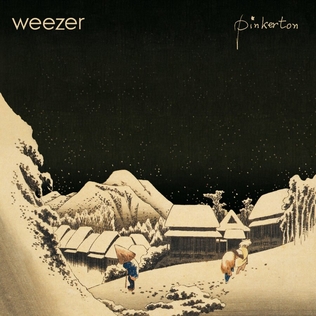
For the longest time, "Pinkerton" existed crystallized in its initial form. I heard the album when I was young, and the way I saw it then was the way I always saw it. I didn't realize at the time the benefit of the doubt I was giving the band.
There is another album that spoke to me in a similar manner that emerged from the following decade. That would be Jimmy Eat World's "Futures", which was likewise a dark album that spoke to the pain we feel when we haven't grown the scar tissue to let life's arrows bounce off our chests. Recently, as I was listening to that record and commenting to myself how it should have become the "Pinkerton" of another generation (or still mine, perhaps), the flash cracked in my head. Yes, "Futures" should have been more widely loved and accepted, but becoming a new "Pinkerton" is not the proper ending, because "Pinkerton" is not a proper album.
Society has changed immensely since 1996, and some leeway must be given, I suppose. But it has become clear to me that while I have always thought Rivers Cuomo is a terrible lyricist, "Pinkerton" reveals more than a penchant for bad poetry; it reveals Rivers' questionable attitudes towards women. The word 'misogyny' comes to mind.
Let's examine:
"Tired Of Sex" - The opening gambit to Rivers' confession, what was once seen as Rivers pining for love in a world of casual sex, is actually a song that shows Rivers believing women are disposable. He is indeed asking for the universe to send him love in lieu of sex, but his language reveals something ugly under the surface. He describes his sex life in terms of "making" women. Without love, the verb takes on a god-complex level of ownership regarding the women he was with, whom he respects so much (fictional or not) as to put their name in a song and leave implications for every woman with those names who was in Rivers' well-known social area during that time. Today, we could call that a mild form of slut-shaming.
Beyond that, River's complains "I'm spread so thin/I don't know who I am". With that couplet, Rivers passes the blame for his own existential crisis onto his sexual partners. It isn't his fault he's miserable and lost, it's the fault of all the sex he's having. The women, by extension, have taken so much of him that there isn't enough left for him to analyze and determine his own sense of self. It is the sort of myopic narcissism that can easily escape our attention, because Rivers couches it more than the average writer expressing these attitudes towards women. But it's there.
"Getchoo" - We need to hope this song is a metaphor, because if it isn't, it stands out as one of the most tasteless songs I can remember. Rivers' language is that of a man who commits domestic violence, who then laughs it off and says it was all a mistake. "Sometimes I push too hard/Sometimes you fall and skin your knee", he says. Taken at face value, Rivers is admitting to something deeply disturbing. "You think that I'm some kind of freak/But if you come back to me/Then you would surely see/That I'm just fooling around," he continues. Again, Rivers minimizes a woman's perspective. The 'she' of the song is clearly either scared or put-off by Rivers, but he insists she just needs more time with him, despite her worries. If Rivers wasn't scrawny, this would be pure intimidation.
But it gets worse. "I can't believe/What you've done to me/What I did to them/You've done to me", he finishes. At this point, Rivers is either saying their relationship (which the earlier lines indicates isn't actually a relationship) is mutually violent, or he is saying her rejection is akin to his physical abuse. There is self-loathing, and then there is whatever Rivers is doing on this song, where he makes himself the victim despite painting the picture of him as the only perpetrator.
"Why Bother" - One of the more 'innocent' songs, Rivers confesses his desire to masturbate to the image of the attractive women around him. He has decided rejection hurts too much to try making an actual connection, lest he suffer when it ends, so instead he will live with an idealized version of her in his mind while he pleasures himself. Like in "Tired Of Sex", Rivers is making this declaration public, letting every woman in his orbit know that he is or could be doing that with them in his mind at the time. Uninvited, it is a disturbing onus to put upon a woman.
"Across The Sea" - Even when I was younger, I knew there was something 'off' about this song. Rivers sings "I could never touch you/I think it would be wrong", acknowledging that a relationship between himself and an eighteen year old girl (if she was being honest) would be inappropriate. He then shows no self-control, saying "I wonder how you touch yourself/And curse myself for being across the sea". Despite knowing better, Rivers fantasizes about a barely legal girl touching herself while thinking about him, or listening to his music. His lechery extends to sniffing and licking the envelope her letter came in, where he is giving himself a physical manifestation of this girl to get himself off. Considering the real possibility the girl would exaggerate her age to make herself available to a famous musician, this song carries the potential of being a desire to commit statutory rape.
Rivers continues, "It's all your fault, momma/It's all your fault". Needless to say, blaming a woman is easier for Rivers than blaming himself, yet again. "This business is really lame/I gotta live on an island to find the juice", he then says. Why Rivers feels the need to confess his fetishes is beyond me, but it reveals a truth about the first half of the song. Rivers isn't hung up on the letter he received because he is interested in the girl as a person, it's entirely because she is Japanese. He has reduced her to her physical form, and now admits his fascination is due to his sexual frustrations.
"El Scorcho" - Rivers continues to be possessive. Beginning with "You wont talk, won't look, won't think of me", Rivers rejects her rejection, telling her "I think I'd be good for you/And you'd be good for me". He has written off her judgment, and supplanted it with his own, because he either believes he knows what she wants more than she does, or he doesn't care. He then "went to your room and read your diary". Nothing says love like invading someone's privacy, and then admitting it to the public. Rivers has now violated this woman, admitted to it, and still has the audacity to say she should be with him.
"Pink Triangle" - 1996 was a different time, but that cannot explain everything in this song. Rivers' attention is captured by "a sweet in floral prints", whom he begins to fantasize about. He then discovers "I'm dumb, she's a lesbian". A case of mistaken (sexual) identity is perfectly reasonable, and can make for a good song. There is plenty of comedy or pathos Rivers could mine in that situation. Instead, he gets creepy. First he says "Pink triangle on her sleeve/Let me know the truth". Here, he puts an onus upon the woman to publicly identify her sexuality (whether she wants to or not) so that people like him won't be tempted to leer at and fantasize about women who are not available to him. While the symbol was used by the LGBT community to take it back from bigoted forces, there are chilling undertones to a man in Rivers' situation finding solace in a minority group feeling a need to wear identifying marks. The innocent explanation is that Rivers was completely oblivious to the history of its origin, and bungles what was supposed to be a joke, but even that is not generous. At best, Rivers is ignorant of both history and sexual identity. At worst, he has found sympathy in a fabric branding campaign created by monsters.
But it somehow gets worse. "When I think I've found a good old-fashioned girl/Then she put me in my place/If everyone's a little queer/Can't she be a little straight?," he asks. Rivers is so determined to fulfill his sexual desires he expresses no concern as to the woman's identity. If she is indeed a lesbian, Rivers is implying that she should go against her own identity to give him what he wants. Whether he is asking for something permanent is not made clear, but his position toes close to the line of accepting the belief that underscores conversion therapy. Rivers narcissism yet again refuses to allow him to see a woman as anything but an object for him to conquer. She is not an agent with her own mind, she is not capable of decided she wants no part of him. Even though, in this case she is a lesbian, Rivers believes she can still find it in her to sleep with him, because that's what he views as important.
"Butterfly" - Ending the album with what sounds like a reflective ballad, and an apology, we instead get another song that is beyond questionable. Rivers sounds proud of himself for the line "If I'm a dog, then you're a bitch", which is a bad attempt at wordplay, but the least of the problems with this song. The extended metaphor is one where the object of Rivers' affection is a butterfly, whom he calls "my fairy pet". It once again, even subconsciously, reflects Rivers' attitude wherein he 'owns' whatever woman is in his gaze at that moment. As we have seen before, he refuses to accept a woman's agency over her own person.
That gets truly sinister in the chorus, where he sings "I did what my body told me to/I didn't mean to do you harm/Every time I pin down what I think I want/It slips away." Rivers' attitudes already revealed turn this potential metaphor into a more overt rape fantasy. The connotations of being pinned down and hurt because he did what he body wanted cannot be read as pinning a butterfly on a specimen board. It falls apart when he injects his bodily drives, which the entire album has illustrated constitute sex and nothing else. In that light, pinning a woman down and hurting her are not figurative language that can be written off.
And as if perfunctory, Rivers offers an apology at the end of the song, and the record. But after spending this song cycle degrading women's autonomy, treating them as objects, and pushing himself upon them against their wishes, how can we forgive Rivers? Yes, he does acknowledge the disgusting parts of himself, but the way he sings of them does not sound like a man upset at who he is. If he was truly repentant, he would spend more time examining what it is about himself that causes him to have these attitudes, and asking how he can change himself. Better yet, he wouldn't have dragged this side of his psyche out so bluntly, revealing the depths of his issues to the women he had encountered in his life, thereby given them reason to believe he could have been a threat to them. Rivers' apology sounds more like the 'I'm sorry you're offended' apologies that only pass someone's lips because they got caught.
In the end, Rivers' apology is that he wasn't enough of a man to exhibit any self-control. He writes himself as a debauched man-child, and wants us to forgive him more because he can't help himself than because he realizes what he has thought and done are terrible. The final act of his narcissism is to abdicate his responsibility for the things he is apologizing for. Without taking responsibility, an apology are empty words. And considering the implications of "Butterfly", no apology can suffice.
****
As a teenager, I did not hear any of this in "Pinkerton". It was a different time, and those issues weren't talked about the way they are today. I feel shame that I didn't hear those connotations in my twenties either. In fact, it wasn't until recently that I began to understand what I always thought was a bit weird was actually deeply disturbing. For twenty years, I have allowed that message to seep into my brain without understanding what I was exposing myself to. If I am lucky, there is no residual damage done by singing these songs in my head for so long.
So what am I supposed to make of "Pinkerton", now that I have come to see it in this way? Honestly, I have no idea. The record has spent so long being a formative piece of work for me as a music fan that I don't know how I can separate myself from it. On the merits, these songs give me ample reason to divorce myself from ever hearing the record again. These are no attitudes I want to associate myself with, and I don't feel comfortable giving praise to the man who thought it a good idea to put pen to paper and create them. That said, I also know that art does not need to be beautiful to have meaning. Perhaps the answer is to tell myself that Rivers had demons he needed to work out, and use the record as a way of making sure I never allow myself to feel any of the same things. It can be a warning.
What "Pinkerton" can never be considered again is a defining album of my generation. If it is, I weep for what it says about us.
Wednesday, July 25, 2018
Greta Van Fleet: The Art Of Business (The Rip-Off)
Greta Van Fleet has returned with the first taste of their upcoming debut album. Over their first two EPs, they got attention for rocketing up the rock charts, and for one other thing. Wait, what was that again.....?
Oh, that's right. They sound like the reincarnation of Led Zeppelin. I don't mean they sound like a band inspired by Zeppelin, I mean they sound like they have coldly dissected that band and copied everything about them they possibly could. Zeppelin is never getting back together, despite the desire for it, so Greta Van Fleet stepped in to give those old fans what they wanted.
And we have given them far too much of a break for how blatantly they have played us for fools. It went something like this.
Put out an EP: Sure, it sounds too much like Zeppelin, but all young bands take time to shake off their influences. They'll grow.
Put out another EP: Sure, it still sounds too much like Zeppelin, but they were probably old songs they already had and are clearing out, so their first album won't sound like that. They'll know better.
Put out a new single: It still sounds exactly like Zeppelin.
That's it. We've had enough time and evidence to say what need to be said; Grata Van Fleet is nothing but a crass marketing gimmick that we've all fallen for. They are not a 'band' in the traditional sense, and are instead a group who have decided to blatantly copy Zeppelin, to fill the space where the cries for a reunion have gone to die.
There is no other explanation anymore. From the very first song they put out, the comparisons have been everywhere, because they didn't even try to hide what they were doing. They have been asked about it time and again, and always try to push it off as a complete coincidence. Are we really supposed to be that naive?
I would think that any band worth their salt, any group that wants to be judged and appreciated on their own merits, would make a move away from Zeppelin's sound for no other reason than to stop the chatter. But that's not what Greta Van Fleet did. No, with their new single, they have leaned in to the controversy, intentionally giving the middle finger to anyone who doesn't bow down before their 'original' sound. We can see now what's going on, and the pathetic thing about it is the band doesn't seem to care. There was an interview where one member tried to claim they don't even know that much about Zeppelin, when there are anecdotes about their early shows being comprised of mostly Zeppelin covers.
Greta Van Fleet think we're stupid. And the sad thing is that a heck of a lot of us seem to be.
And here's the irony; Greta Van Fleet is actually a good band. I was cold on them at first, but I have to admit they are better songwriters (or hired better songwriters) than I initially gave them credit for. With a few more listens, their songs reveal themselves to not just sound like Zeppelin, but actually improve on the formula. They have less turgid blues, and more melody than the classic version did. That was always what kept me from being a big Zeppelin fan, and it tells me that Greta Van Fleet could actually be a great rock band...
... if they had an original thought between the four of them.
But what is clear to me is they are using the controversy and the comparisons to grow faster than they should, to milk as much money from the system as they can before people get tired of them regurgitating the past. It might be a savvy business move, but it betrays art.
Oh, that's right. They sound like the reincarnation of Led Zeppelin. I don't mean they sound like a band inspired by Zeppelin, I mean they sound like they have coldly dissected that band and copied everything about them they possibly could. Zeppelin is never getting back together, despite the desire for it, so Greta Van Fleet stepped in to give those old fans what they wanted.
And we have given them far too much of a break for how blatantly they have played us for fools. It went something like this.
Put out an EP: Sure, it sounds too much like Zeppelin, but all young bands take time to shake off their influences. They'll grow.
Put out another EP: Sure, it still sounds too much like Zeppelin, but they were probably old songs they already had and are clearing out, so their first album won't sound like that. They'll know better.
Put out a new single: It still sounds exactly like Zeppelin.
That's it. We've had enough time and evidence to say what need to be said; Grata Van Fleet is nothing but a crass marketing gimmick that we've all fallen for. They are not a 'band' in the traditional sense, and are instead a group who have decided to blatantly copy Zeppelin, to fill the space where the cries for a reunion have gone to die.
There is no other explanation anymore. From the very first song they put out, the comparisons have been everywhere, because they didn't even try to hide what they were doing. They have been asked about it time and again, and always try to push it off as a complete coincidence. Are we really supposed to be that naive?
I would think that any band worth their salt, any group that wants to be judged and appreciated on their own merits, would make a move away from Zeppelin's sound for no other reason than to stop the chatter. But that's not what Greta Van Fleet did. No, with their new single, they have leaned in to the controversy, intentionally giving the middle finger to anyone who doesn't bow down before their 'original' sound. We can see now what's going on, and the pathetic thing about it is the band doesn't seem to care. There was an interview where one member tried to claim they don't even know that much about Zeppelin, when there are anecdotes about their early shows being comprised of mostly Zeppelin covers.
Greta Van Fleet think we're stupid. And the sad thing is that a heck of a lot of us seem to be.
And here's the irony; Greta Van Fleet is actually a good band. I was cold on them at first, but I have to admit they are better songwriters (or hired better songwriters) than I initially gave them credit for. With a few more listens, their songs reveal themselves to not just sound like Zeppelin, but actually improve on the formula. They have less turgid blues, and more melody than the classic version did. That was always what kept me from being a big Zeppelin fan, and it tells me that Greta Van Fleet could actually be a great rock band...
... if they had an original thought between the four of them.
But what is clear to me is they are using the controversy and the comparisons to grow faster than they should, to milk as much money from the system as they can before people get tired of them regurgitating the past. It might be a savvy business move, but it betrays art.
Sunday, January 28, 2018
Slayer: The End
This week, Slayer announced their final world tour, which will presumably lead to the band being laid to rest. I have written in the past about my feelings toward Slayer, and this announcement has not stirred in me a change of heart. I am not so distraught over their impending exit that I have forgotten how the years since Jeff Hanneman's death have been the band treading water, trotting themselves out on the touring circuit to give a sanitized version of what Slayer once was. I am still of the opinion they should have hung it up a few years back, so I applaud them for at least choosing to bow out before they become a true embarrassment.
We can argue about the quality of Slayer's recent music, or their live shows, but there is no denying they have become something their younger selves would have never allowed; safe.
Slayer was always the one band that had name recognition who were not safe to share with family, who couldn't be talked about in polite company. They were the embodiment of evil through music (discounting black metal - a different conversation), the band you only whispered about in case anyone was listening in. Being a Slayer fan was a statement, a brotherhood of the underground.
But now, Slayer is a corporation, one that has sanded the rough edges off enough that they are as mainstream as any metal band can be. They go on corporate-sponsored tours, they sell their shirts in trendy stores for teenagers, they brand their name on any number of questionable merchandise items. Slayer is not a name that is feared anymore, they are not disturbing, or dangerous, or even edgy. The last time they wrote a song that made anyone the slightest bit uncomfortable was more than a decade ago, and Kerry King can't claim to have had any part in that.
So while it might be sad to think about Slayer leaving the stage, I contend it sadder to think about them staying. When I was younger, and was first hearing about Slayer, they were almost mythic in terms of how they were talked about. Slayer wasn't just a band, they were the living, breathing example of everything metal was supposed to do to corrupt the youth of the world. Now, parents take their kids to Slayer shows, and everyone bobs their heads and has a good time listening to "Angel Of Death", whose meaning has been all but lost.
I don't want to see Slayer carry on if all they are going to do is go through the motions. Kerry King cannot carry on the band on his own, which "Repentless" showed us very clearly. Slayer was always at their best when you had the push and pull of his writing and Hanneman's in competition. And let's be honest, Hanneman wrote far more of the Slayer songs anyone cares about than King ever did. With only King and his fifteen year-old's vocabulary (the man has seriously gotten dumber over the years), Slayer's new music might as well be made out of air. So if new music can't drive them, the only reason to go back out on tour after tour is to give the fans the old hits.
That would be a pathetic ending for Slayer. For the band that told us "God hates us all" to spend their last years pandering to crowds would betray everything Slayer once stood for. I want to think they're better than gouging their fans for expensive tickets tour after tour without delivering anything new to the experience, but I'm too cynical to say that. Not when Billy Joel still sells out MSG every month despite not having written a song in twenty-five years. Music is a business, and that's true for Slayer too.
So what I ultimately feel about the end of Slayer are two things; 1) The time is right, and 2) They are going out with a whimper. The end of Slayer should be a huge moment in metal history.
I don't see anything feeling different once they're gone.
We can argue about the quality of Slayer's recent music, or their live shows, but there is no denying they have become something their younger selves would have never allowed; safe.
Slayer was always the one band that had name recognition who were not safe to share with family, who couldn't be talked about in polite company. They were the embodiment of evil through music (discounting black metal - a different conversation), the band you only whispered about in case anyone was listening in. Being a Slayer fan was a statement, a brotherhood of the underground.
But now, Slayer is a corporation, one that has sanded the rough edges off enough that they are as mainstream as any metal band can be. They go on corporate-sponsored tours, they sell their shirts in trendy stores for teenagers, they brand their name on any number of questionable merchandise items. Slayer is not a name that is feared anymore, they are not disturbing, or dangerous, or even edgy. The last time they wrote a song that made anyone the slightest bit uncomfortable was more than a decade ago, and Kerry King can't claim to have had any part in that.
So while it might be sad to think about Slayer leaving the stage, I contend it sadder to think about them staying. When I was younger, and was first hearing about Slayer, they were almost mythic in terms of how they were talked about. Slayer wasn't just a band, they were the living, breathing example of everything metal was supposed to do to corrupt the youth of the world. Now, parents take their kids to Slayer shows, and everyone bobs their heads and has a good time listening to "Angel Of Death", whose meaning has been all but lost.
I don't want to see Slayer carry on if all they are going to do is go through the motions. Kerry King cannot carry on the band on his own, which "Repentless" showed us very clearly. Slayer was always at their best when you had the push and pull of his writing and Hanneman's in competition. And let's be honest, Hanneman wrote far more of the Slayer songs anyone cares about than King ever did. With only King and his fifteen year-old's vocabulary (the man has seriously gotten dumber over the years), Slayer's new music might as well be made out of air. So if new music can't drive them, the only reason to go back out on tour after tour is to give the fans the old hits.
That would be a pathetic ending for Slayer. For the band that told us "God hates us all" to spend their last years pandering to crowds would betray everything Slayer once stood for. I want to think they're better than gouging their fans for expensive tickets tour after tour without delivering anything new to the experience, but I'm too cynical to say that. Not when Billy Joel still sells out MSG every month despite not having written a song in twenty-five years. Music is a business, and that's true for Slayer too.
So what I ultimately feel about the end of Slayer are two things; 1) The time is right, and 2) They are going out with a whimper. The end of Slayer should be a huge moment in metal history.
I don't see anything feeling different once they're gone.
Wednesday, December 27, 2017
My Take: Music & Misery
"Did I listen to pop music because I was miserable, or was I miserable because I listened to pop music?"
Those were the words of Rob Gordon in the movie "High Fidelity", and they have long stuck with me as being more than a bit of wordplay. There is a connection between music and mood, an intrinsic bond that adheres a specific feeling to a song. We often hear about the genesis of a song, the feeling in the artist that sparked them into creating the piece of music. We take it for granted that music is emotional for the people who are writing and performing it, as that is the way in which the best music is created, but what about the rest of us?
As listeners, we might not have access to the intended feeling, but we have an emotional response to great music as well. Music can take us in all directions, holding a power over us that is stronger than we might like to admit a piece of art could have.
That brings up a point that I struggle with. There is a large amount of music that is made, specifically in the metal world, that actively promotes a dismal, miserable mood. Whether we're talking about music that plugs the amps straight into the players' anger, or black metal that treats the world as only containing misery, it's not easy to be a fan of certain types of music without finding yourself falling down into a well of negative emotions.
I made a conscious decision a while back to try to avoid these kinds of music. While I can understand the artistic need for the artists to pour those feelings into their music, if that's where they are in life, but as a listener I have no interest in following them down that path. Perhaps I am merely a cynic, but life makes it too easy to dwell on negativity as it is. The last thing we need is to intentionally pick up music that encourages those thoughts to take control.
I understand that many people say that miserable music actually makes them feel better, but that has never made any sense to me. I am by no means an empath, but hearing someone screaming their misery prompts me to think about that, to share that feeling, not to feel better knowing that someone else is going through tough times. Being miserable in a crowd of miserable people doesn't actually do anything to alleviate the problem, so it seems to me like a bit of self-delusion to claim it does.
I've noticed that since I have been actively avoiding those kinds of music, I have been a happier person. Music is an outlet, a release, and it can act as one when it focuses on being something other than a sonic noose we find perverse pleasure in tying for ourselves. I've seen a shift in the records that I've been listening to and reviewing, one where I have put a greater importance on how enjoyable it is to listen to the music. I'll never dismiss a well-written miserable record, but my praise will always come with the caveat that I'm not going to find myself listening to it often, because I don't see any point in subjecting myself to a mood killer when I don't have to.
So to circle back and answer the question that opened this, you can listen to miserable music because you're miserable, or you can be miserable because you listen to miserably music. Either way, I don't believe misery shouldn't be a part of music, so if you feel that way, I'd say you're doing something wrong.
Those were the words of Rob Gordon in the movie "High Fidelity", and they have long stuck with me as being more than a bit of wordplay. There is a connection between music and mood, an intrinsic bond that adheres a specific feeling to a song. We often hear about the genesis of a song, the feeling in the artist that sparked them into creating the piece of music. We take it for granted that music is emotional for the people who are writing and performing it, as that is the way in which the best music is created, but what about the rest of us?
As listeners, we might not have access to the intended feeling, but we have an emotional response to great music as well. Music can take us in all directions, holding a power over us that is stronger than we might like to admit a piece of art could have.
That brings up a point that I struggle with. There is a large amount of music that is made, specifically in the metal world, that actively promotes a dismal, miserable mood. Whether we're talking about music that plugs the amps straight into the players' anger, or black metal that treats the world as only containing misery, it's not easy to be a fan of certain types of music without finding yourself falling down into a well of negative emotions.
I made a conscious decision a while back to try to avoid these kinds of music. While I can understand the artistic need for the artists to pour those feelings into their music, if that's where they are in life, but as a listener I have no interest in following them down that path. Perhaps I am merely a cynic, but life makes it too easy to dwell on negativity as it is. The last thing we need is to intentionally pick up music that encourages those thoughts to take control.
I understand that many people say that miserable music actually makes them feel better, but that has never made any sense to me. I am by no means an empath, but hearing someone screaming their misery prompts me to think about that, to share that feeling, not to feel better knowing that someone else is going through tough times. Being miserable in a crowd of miserable people doesn't actually do anything to alleviate the problem, so it seems to me like a bit of self-delusion to claim it does.
I've noticed that since I have been actively avoiding those kinds of music, I have been a happier person. Music is an outlet, a release, and it can act as one when it focuses on being something other than a sonic noose we find perverse pleasure in tying for ourselves. I've seen a shift in the records that I've been listening to and reviewing, one where I have put a greater importance on how enjoyable it is to listen to the music. I'll never dismiss a well-written miserable record, but my praise will always come with the caveat that I'm not going to find myself listening to it often, because I don't see any point in subjecting myself to a mood killer when I don't have to.
So to circle back and answer the question that opened this, you can listen to miserable music because you're miserable, or you can be miserable because you listen to miserably music. Either way, I don't believe misery shouldn't be a part of music, so if you feel that way, I'd say you're doing something wrong.
Sunday, September 3, 2017
Taylor Swift's Real Problem
The world of pop culture has been going crazy for the last week over Taylor Swift's big comeback. Both the song and the accompanying video have broken the internet with reactions, almost universally bad. Taylor Swift has undergone a heel turn, it seems, and is now pop's most hated villain. While Adele is breaking sales records, and Rihanna is racking up #1s despite not being very good, and Beyonce is the cultural zeitgeist, poor Taylor is left to wonder what her place in the pop world is. That last bit is where the real problem lies.
Taylor Swift's problem is not that she has a phony image. That criticism has been with her the whole time, and it didn't stop her from amassing huge sales and a legion of loyal fans. She was obviously playing up her innocence, but she did it in a way that empowered young girls, which was commendable in a time when plenty of other pop stars were busy twerking rather than singing. Plenty of stars have been phony, and as long as the music still works, they have been able to make out just fine. No, that's not her problem.
Taylor Swift's problem is not that her new song is awful. Don't get me wrong, it most certainly is, but that can be survived. "Shake It Off" was barely a mediocre song, but Taylor's machine was able to turn it into an anthem that launched the biggest phase of her career yet. And in a time when the charts are so starved for a single decent song that Justin Beiber is the key to racking up huge hits, Taylor doesn't need good music to thrive. The people she reportedly is feuding with aren't good either, so playing down to their level would not preclude Taylor from having success. "Look What You Made Me Do" is horrible, but it's not worse than anything Fifth Harmony have ever put out. No, that's not her problem either.
Taylor Swift's problem is that she has become what she was always fighting not to be; a boilerplate pop star.
The appeal of Taylor Swift was always that she was a (nominally) country artist who could cross-over to the pop world and garner attention in a way that no one else has been able to for quite a long time. "1989" was the first step in changing her persona, but it was one that was done with enough care that she could make the transition without alienating people on either side. It was an unabashedly pop album, but she was the same person she had always been, so we could accept that she wanted to try some new things.
With this first foray from her new album, that Taylor is now gone. She admits as much in the lyrics, but she misses the symbolism of her statement. Not only is the naive and innocent Taylor gone from her music, the Taylor that had the benefit of the doubt from the public is gone now too. Pop stars are given no leash anymore. If they don't produce hit after hit without so much as a hiccup, they get tossed aside. By putting out just this one flop, Taylor will be pushing a boulder uphill.
The bad girl schtick is also the height of cliche. Every young woman in pop goes through something like this at one point or another. Britney Spears and Miley Cyrus basically went insane, Christina Aguilera went through a provocative phase that came across as cheap, so Taylor's portrayal of herself as a villain is right in line with what we should have been expecting. This new image is supposed to catch us by surprise and give us a new perspective on her as both a person and an artist.
It doesn't. Taylor Swift is still the carefully constructed public figure she has always been. If we were getting anything from her that felt remotely authentic, maybe this would all work out. But it's hard to listen to her work her way through a song like she's trying and not know she's playing a part. That's the problem. Yes, pop stars have always been actors, in a sense, but they were better at making the role seem convincing. Taylor can't do that yet. She's the heel who doesn't understand that a heel has to be justified in why they've turned to the dark side.
Taylor Swift turned to give her new record a story-line. That's not a good reason, and it isn't going to work.
Taylor Swift's problem is not that she has a phony image. That criticism has been with her the whole time, and it didn't stop her from amassing huge sales and a legion of loyal fans. She was obviously playing up her innocence, but she did it in a way that empowered young girls, which was commendable in a time when plenty of other pop stars were busy twerking rather than singing. Plenty of stars have been phony, and as long as the music still works, they have been able to make out just fine. No, that's not her problem.
Taylor Swift's problem is not that her new song is awful. Don't get me wrong, it most certainly is, but that can be survived. "Shake It Off" was barely a mediocre song, but Taylor's machine was able to turn it into an anthem that launched the biggest phase of her career yet. And in a time when the charts are so starved for a single decent song that Justin Beiber is the key to racking up huge hits, Taylor doesn't need good music to thrive. The people she reportedly is feuding with aren't good either, so playing down to their level would not preclude Taylor from having success. "Look What You Made Me Do" is horrible, but it's not worse than anything Fifth Harmony have ever put out. No, that's not her problem either.
Taylor Swift's problem is that she has become what she was always fighting not to be; a boilerplate pop star.
The appeal of Taylor Swift was always that she was a (nominally) country artist who could cross-over to the pop world and garner attention in a way that no one else has been able to for quite a long time. "1989" was the first step in changing her persona, but it was one that was done with enough care that she could make the transition without alienating people on either side. It was an unabashedly pop album, but she was the same person she had always been, so we could accept that she wanted to try some new things.
With this first foray from her new album, that Taylor is now gone. She admits as much in the lyrics, but she misses the symbolism of her statement. Not only is the naive and innocent Taylor gone from her music, the Taylor that had the benefit of the doubt from the public is gone now too. Pop stars are given no leash anymore. If they don't produce hit after hit without so much as a hiccup, they get tossed aside. By putting out just this one flop, Taylor will be pushing a boulder uphill.
The bad girl schtick is also the height of cliche. Every young woman in pop goes through something like this at one point or another. Britney Spears and Miley Cyrus basically went insane, Christina Aguilera went through a provocative phase that came across as cheap, so Taylor's portrayal of herself as a villain is right in line with what we should have been expecting. This new image is supposed to catch us by surprise and give us a new perspective on her as both a person and an artist.
It doesn't. Taylor Swift is still the carefully constructed public figure she has always been. If we were getting anything from her that felt remotely authentic, maybe this would all work out. But it's hard to listen to her work her way through a song like she's trying and not know she's playing a part. That's the problem. Yes, pop stars have always been actors, in a sense, but they were better at making the role seem convincing. Taylor can't do that yet. She's the heel who doesn't understand that a heel has to be justified in why they've turned to the dark side.
Taylor Swift turned to give her new record a story-line. That's not a good reason, and it isn't going to work.
Sunday, July 9, 2017
The Conversation: 2017, So Far
Chris C: Here we go again. It seems like the blink of an eye, but we already find ourselves at the mid-point of this year, which means it's a good time to take a stp back and try to figure out what the heck just happened. The passage of time isn't a topic up for discussion here, but in a way it also is. The acceleration of each impending sunrise does add more and more momentum onto the release schedule, which makes each trend reverberate even harder, and die out even faster.
To the topic of this year's music; The main takeaway I've had so far is that this has been a unique year in terms of the strata of rankings. I've managed to find a very solid number of great albums that I would have no problem putting on my list at the end of the year, and I've also suffered through more downright terrible albums than I can remember in recent years (and that's without all the extreme metal I don't even sample). What I haven't found are enough of those mid-level albums that give a year depth. To use a sports analogy (since we seem to love them), there are a lot of max-level albums, a lot of veteran-minimum albums, and very few that would bloat the salary cap with their perfectly acceptable performance and salary.
The reason that has been such a focal point for me is that the albums falling on the terrible end of the scale are mostly ones from big name artists who have been among the most hyped. When all that hype sinks in (and I'm not immune from getting my hopes up), and then the album is a crushing disappointment, those hopes make the suffering feel even worse. We're talking about bands like Iced Earth, Pain Of Salvation, and Danzig (Oh, Danzig. Would you like to talk about how far he's fallen?). Talk about those albums was everywhere, and once I heard them, I felt like I was watching a bad CGI movie, and I was the only one who could tell. Is the key to put your fingers in your ears and pretend an album doesn't exist until you actually hit the play button?
Couple that with decent but criminally disappointing albums from favorites of mine like Jorn, Fastball, and House Of Lords, and we get a crowded list of reasons to think 2017 might actually be even worse as a year (in total, not just music) than 2016. And that's a hard feat.
But there has also been plenty of good to talk about, but before I get into that, I'll let you give your impressions.
D.M: So, I think I agree with you that this year has been strange for rankings purposes, but not necessarily for the same reasons. Let me add the caveat before I get too far that my personal year has been so full of other major life-altering goings-on that I have to admit I’ve been fairly distracted from making entirely cogent critiques of music and have had the opportunity to really dig into fewer things. With that, allow me to launch into it.
I admit that to this point I have only found four or five records in total that I am truly willing to go to bat for. So continuing your apt analogy, there are some max-level players out there (though without spoiling it, if I were to pick an album of the year right now, it would be an instrumental record, which for me is nearly insane to even consider,) but I find that those max-level records are all max for different reasons. To continue down the analogy rabbit hole, I have a point guard, a shooting guard, a power forward, a small forward (is scoring forward the fashionable term now?) and a center. So I’m willing to pay them all top dollar, but they all do different things.
And even among that cream of the crop, there’s really only three albums so far that if you caught me on the street at any time and said ‘what albums do you love this year?’ I would think of their names. (Though, jumping ahead, I did really like the Soen album, though now some months later, I can’t really recall why, so I may have to revisit it.)
I also have found this year that among the lower strata of good albums (talk about a backhanded compliment,) that they are generally intriguing because they either do something new, or try a style I haven’t heard in a long time. Recently, I’ve been spending some time with The One Hundred’s record, which may or may not be great (and perhaps the fact that I haven’t decided is indication enough,) but I find myself drawn to it because it’s the first attempt at honest, new rap metal I’ve heard in a long time. Notable mostly because yes, trends in music ebb and flow, but by the end of its short life, rap metal had become so reviled and ridiculed that it seemed the genre would never heal. And yet, twenty years down the line (shit, I’m getting older, aren’t I?) here we may be again. Lest someone get the wrong idea, this is not a nostalgia trip for me (outside of Rage and Orange 9mm, me and rap metal never really got along,) but it is refreshing to see a band try to resurrect a genre from my youth that I never thought I would see again.
There’s more I can get into about genres come home to roost, new bands versus old bands and some thoughts on Chris Cornell, but I’ll save it for now and toss it back – what trends are you seeing this year?
CHRIS C: Rap metal, eh? I saw that album come across my desk, but I will readily admit I never even bothered to sample a single song from it. One of the things I've found out over the years is that as I've gotten older, I have less and less tolerance for music that misses what I think are the main points of making music. Rap metal would almost exclusively fit into that category. Or maybe Limp Bizkit just ruined everything for everyone for all of time. I wouldn't put it past them.
I will leave it to you to carry the ball with Chris Cornell's passing, since I was never really into any of his projects, but there is one thing I would like to say. I truly dislike the way that we, as a society, have usurped the word 'tragedy', and turned it into a synonym for 'sad'. They are not the same thing, and it does a disservice to both the memories of the truly tragic, and the push to avoid the sad, to confuse them. Buddy Holly dying in a plane crash was tragic. Chris Cornell's death is terribly sad, but I wouldn't put it in the same category, because calling it a tragedy gives it a connotation of being unavoidable, like an "act of God". It was anything but, and I'm afraid that the misuse of terms is going to make it harder to use his memory to increase awareness and prevention of drug abuse. Now that would be a tragedy.
To be honest, I don't really see any trends that have taken hold this year, other than the increase in really bad albums by artist who should know better. Perhaps we're in an odd time between the death of djent and whatever will come next, but there isn't any one dominant thing out there that has caught my attention. In a way, that lack of a trend is a trend in and of itself. Bands might finally have the opportunity to use that open space to carve out a unique identity for themselves. I've seen that a touch with Creeper, who don't look or sound like anything else going on in the punk/emo scene right now. It's almost a return to horror punk, which would actually be something I would like to see.
You mention Soen, and while they completely dismantle the point I was just making, I too love that record. But what I love about it is how they pretty blatantly take Opeth's "Blackwater Park" sound, strip out the death metal, and streamline it just enough to be different. I know you haven't, but plenty of people have spent thousands of words complaining about how Opeth's evolution has ruined that once great band. What's interesting about Soen right now, at least to me, is that "Lykaia" is actually the exact album people wanted Opeth to make when they started to change. I can't recall many times a band has taken up the sound and essentially replaced another. I find that fascinating.
Actually, there is one trend I've noticed, but it's only for my own sake, since I've been the dissenting voice for a long time now. This year has actually been better for metal than the last few. Sure, there are a few bombs to avoid, but metal might be swinging the pendulum back away from the djent and death metal that has infiltrated the biggest of names. Or maybe we're just lucky and all those bands are off-cycle this year. Either way, it's nice to not be screamed and growled at quite so much.
Let's hear your take on Cornell, and I'll ask you a question I asked myself not long ago; has this year had no giant releases? I can't think of any that, whether you like them or not, EVERYONE felt they had to hear and comment on.
D.M: Rap metal is a finicky thing to judge, because it almost takes the characteristics of rap more than it does of metal, in that who is performing the art defines the art more than the nature of the art itself. That probably sounds like the most pompous thing anybody's said today, so let me try to re-tread and also add the caveat that this is one lilly-white guy's opinion. 'Metal' as we know it has a number of different subgenres that are defined by their aural principles - too many subgenres, in fact. And while the quality of any given metal record is still very much defined by who is making it, there are discernible flavors to every genre even if the performers are crappy. 'Rap', by contrast, is entirely dependent on the individual creating the art. If the MC is somebody of high quality (Chuck D, KRS-One, Rakim,) then the rap is good. Absent that, rap that is executed by a so-called 'whack' MC is entirely tasteless (meaning without flavor, not meaning offensive or in poor taste,) like a canvas simply painted gray. Rap metal follows the second trend more than the first. So when the music is being played by people of skill (Tom Morello, who I know you are more lukewarm on than most,) it is excellent, but when it is left in the hands of hacks (Fred Durst,) the entire banquet suffers (despite the notable talents of Wes Borland, respect where it's due.)
But I told you that story to tell you this one - my brother, who is seven years older than me, was going through high school right in the heart of the early nineties. And while everyone was singing the praises of grunge, the last days of hair metal and Metallica's Black Album, he had one friend who was listening to a little band from Los Angeles called Rage Against the Machine, and their sound, love it or hate it, was totally revolutionary at the time of inception. So there is merit to the genre, when done properly.
That said, thanks for Limp Bizkit, the genre is now an object of ridicule, and I can never use the expression 'just one of those days' ever again.
On to more serious matters - the pain of Chris Cornell's death comes in the form of the realization that our understanding of mental health remains woefully inadequate. This is just another example of a situation where someone we all thought was in perfectly fine shape was actually suffering greatly on the inside, and had simply become adept at hiding his pain. And it'a a hard thing to think about - because even those trained to look for the signs of mental distress or turmoil may have missed any exhibitions of Cornell's plight, and perhaps even he himself had become accustomed to a feeling of familiarity about the whole thing and didn't understand how deep down the rabbit hole he was. Man, in layman's terms, it just plain sucks. It's another talent gone before his time, and moreover, another human life wasted without cause. My sadness at his passing partially resonates from his influence on me as an artist and performer, but also just comes from the sadness that always accompanies a suicide. From a life standpoint, before I get accused of speaking way above my pay grade on the issues of mental health, the lesson is to reach out to your friends both if you need help, or suspect that they need help. We're all in this together.
From a more objective musical standpoint, I think the loss registers most in the sense that grunge was arguably the last of the truly mainstream, broad-sweeping trends, and now many of its major familiar faces are gone. We had already had to cope with the loss of Cobain, Staley and Wood, but we thought Cornell would stick around, and even if the genre was never to be resurrected to its glory, at least we would share the memory of the important days with him. But now, (aside from Pearl Jam, who hardly qualified as a grunge band anymore (double parenthesis - and there's nothing wrong with that, it's just a fact,)) the once powerful and tidal force of grunge is figuratively, and perhaps literally, voiceless.
The lack of a trend does make for an interesting trend, because we haven't seen anything like this in recent memory. Even in the absence of mainstream promote-able trends which have more or less gone the way of the dodo, the underground genres have always been tied to waves from geographical locations, be it Gotherburg or Montreal or Boston or whatever, and those came with their own sound. Right now, and perhaps for the last two years, there's been no guiding principle in metal that has dictated the pace of the genre's progression. The only possible addendum one could make to that is that there seems to be a greater emphasis on stoner and more ambient metals, but there's an argument to be made that this has always existed ever since the debut of Black Sabbath, and so may be experiencing a resurgence more than a rebirth. So, we're seeing still more callbacks to the rock trends of the seventies, from twin guitars on down, which isn't a bad thing. That said, those trends are popularizing stoner metal, but stoner metal hasn't reached beyond its bounds to influence anyone else yet. For example, no one expects the upcoming Galaktikon album (which I am immensely excited for, by the by,) to exhibit stoner influences.
So now we've talked about the return of seventies rock trends, rap metal, the-style-Opeth-should-have-had, and if you listen to the new album from the Corroded and obfuscate your hearing just a little, it sounds like someone might be trying to make Rob Zombie-style metal again, which has been all but silent ever since "The Sinister Urge" (and yes, I realize Zombie has released several records since then.) So if you are a listener with a variety of taste in your palate, this is potentially a golden dawn. Let me follow up with this, though: why AREN'T we seeing a trend?
As for the lack of a major release, no, there's hasn't been one yet. But there will be. I don't know what it's going to be, but metal journalism is nothing if not predictable, and so I say with absolute faith that there will be some album from Mastodon or Behemoth or Ufomammut that everyone will be climbing all over each other to self-importantly bloviate about. You and I both know that metal loves nothing more than to find some album that people with sense want no part of and then expansively dictate to the audience about why that album is the most important album in a hundred years. THAT trend, much as we would prefer otherwise, recurs with depressing regularity.
CHRIS C: Your commentary on Chris Cornell was apt, and wise. Mental anguish is, in different terms, one of the thing that has always bothered me about metal, and why I hesitate to call myself a big fan. So much of metal intentionally focuses on the side of life that either causes or results in that kind of mental state. I'm not sure it's healthy for bands or listeners to spend so much time inundating themselves with so much anger and depression. I've mentioned this to you before, but I definitely noticed a difference when I cut much of that kind of music out of my life. In some ways, metal can often find itself a negative reinforcement, which is the last thing most people need.
Grunge is something that, despite living through the time, I don't understand. You just said that Pearl Jam wasn't really a grunge band, and heck, I'm not saying you're wrong. But combine that with the people who say Alice In Chains wasn't really a grunge band (they were metal), nor was Nirvana (pop), I have to ask; who the hell WAS a grunge band? It seems grunge was a word that got thrown out there to describe a fashion choice more than a musical one, and that really it all comes down to who wore unbuttoned flannel shirts. Has a genre ever been dependant on clothes before?
If I can play armchair psychologist here for a minute, I think the reason we aren't seeing a trend ties into the subsequent point about their being a lack of huge releases this year. In order to get a trend going (cynicism alert!), someone needs to demonstrate that there is money to be made selling those kinds of records. Since Ghost came out, I haven't seen anyone trying anything new that has broken through and shown a profit potential. Djent only blew up once Meshuggah and Periphery started raking in decent money. I feel that's what we're going to need before another trend really takes off.
The funny thing about the lack of huge releases is that we've had plenty of albums from what you would think were big enough names. Mastodon put out an album, but they've severely damaged their own brand, to the point they barely registered to a lot of people. Kreator had an album that was well-received, but it was much of the same, and not 'true' enough for many, so they didn't either. Then again, maybe we've just finally hit the point where we are too fractured for any one record to do that across the spectrum. I find it hard to believe that any fan like me can really be intrigued by a black metal record, or those fans by a power metal record. Metal is somewhat meaningless now. Dive a bit deeper, and each sub-group has big releases.
So now that we've gotten that out of the way, let me ask what has surprised you so far (good or bad), and what you're looking forward to for the rest of 2017.
D.M: Let me clarify a little - Pearl Jam certainly used to be a grunge band, but in the intervening years, they've veered away from their root sound. That's not an insult or strike against them, although that comes with the admission that I more or less lost interest in them after "Vitalogy," when their sound began to evolve and they became pioneers in the cardboard-CD-sleeve march. Their temperamental shift is likely a result of time as much as anything else; who's to say that if Soundgarden's timeline had remained unbroken, they wouldn't have done the same?
To address your concern, though, I think grunge, as many underground movements that become popular do, suffers from some brush back by adherents who now find the genre to be overexposed in retrospect. So, their reaction to trying to hold grunge close to the vest is to attempt to cut off the limbs that people can hold on to. There's also a geographical element involved in grunge that exists in few other mainstream genres. I, for one, however pretentious this may be, have never considered Stone Temple Pilots or Smashing Pumpkins part of the grunge movement, since they originated in San Diego and Chicago respectively, not the original Seattle scene (although make no mistake, while I never liked the Pumpkins, I do have an affinity for the first two STP records.)
Corollary to that, grunge can be hard to define because it was comprised mainly of facets from other genres, and was more an amalgam of those sounds than a truly new movement or innovation (which sadly may be what is presently dooming the genre to relative obscurity as newcomers seem to have bypassed the movement for inspiration.) But grunge was borne of punk, rock, metal, blues, an ambitious use of amplified gain, flannel shirts and teenage ennui. So, no single identifying marker exists.
For the record though, when I think about the core of 'grunge bands,' these are the club's ranking members (in no order): Soundgarden, Nirvana, Pearl Jam (then,) Alice in Chains, Mudhoney, Green River, Screaming Trees (who will forever be underrated,) Mother Love Bone, Tad, Temple of the Dog, and I know King Buzzo hates it, but the Melvins are inextricably tied to the genre whether or not they matched it musically. That's pretty much the list.
And in answer to your actual question about genres and clothes - I can't think of one. Was there a specific shoe tied to shoegaze?
Real quick before I go on, speak of the devil! Ufomammut just announced pre-orders for their upcoming album. Let the self-aggrandizement and fatuous preening of the reviewers lining up to fawn begin! (Members of Ufomammut, if you happen to be reading this, it's not your fault. We're cool.)
Much to my own surprise, I actually agree with you that 'metal' as a single label has very little meaning now, with the exception that perhaps Rob Zombie or Godsmack or Disturbed fit no other qualifiers and the term 'pop metal' just feels wrong. That said, I would offer one note of caution about the fractured audience. You're right, of course, the audience now, in perhaps all genres and not limited to metal, floating away from each other at an alarming rate, but it's been that way for a while now, and then all of a sudden there was Ghost. So while it happens with less and less frequency, it can still happen.
I think the thing that surprises me most this year actually has to do with me. Responsibilities in my life have caused me to have less time to monitor the goings-on of music, and even less time to actively review it, as attentive readers have no doubt noticed. The part that surprises me in all that is that there have been a number of releases by prominent old school artists that I found I just had no interest in. It felt like a waste of time to even launch the most cursory examination of their product, for I knew that I would either find nothing new, or be disappointed. As such, I haven't heard the new Mastodon, or the new Kreator. I didn't listen to Danzig's album. I didn't even blink at Iced Earth. And what feels weird is that I don't feel the slightest bit guilty about it. I think the omission of Danzig from my curiosity is the most shocking, only because I harbor such love for the first three Danzig records, and of course, the Misfits. But there it is. There appear to be some bands I'm simply done with. The rule isn't universal, as I'm very much interested in the upcoming Arch Enemy record and also rushed out to hear the new Dragonforce, but a lot of bands are starting to fall off the cliff for me as my free time just won't allow the indulgence.
As a side note, one other surprise - while I agree with the criticisms in your poignant and thoughtful review, I really did enjoy The Night Flight Orchestra.
So, as we begin to wrap up, what are you looking forward to in the year's back half?
CHRIS C: I will let you have the last word on grunge. I was still off in different musical worlds at the time, so I can't speak with anything but backwards looking knowledge of the scene. I get what you're saying about Pearl Jam. They are certainly more of what you would call 'classic rock' these days. I suppose that brings up a question; does a band's genre change over time as they evolve, or is it locked in place by their formative records?
Was Metallica always a thrash band? Is Opeth still progressive death metal? These are the sorts of things that drive metal nomenclaturists nuts.
Ghost did hit, but even their stunning success needs to be measured. Yes, they have achieved far more than anyone would have thought for a band of their kind, but they haven't come close to the heights that rock and metal bands used to. Aside from one late-night performance, they haven't come close to breaking into 'the mainstream'. Twenty years ago, the buzz they've generated would have led to filling stadiums, and at least one song crossing over to become a minor hit. Today, I'll guarantee you anyone who doesn't actively follow the metal scene would never have even heard their name. And now that there is a legal battle, and the masks have been pulled off, I'm afraid the gimmick might have run its course. I'm not sure the band is nearly as interesting knowing it's Tobias and the studio musicians.
You aren't crazy for how you're thinking. All of those big-names you mentioned weren't releases I was interested in listening to either. They are all bands that have hit the point of diminishing returns. They have either fallen from grace, or released so many albums at this point that another one can't possibly offer up anything new. It's a dilemma that artists face. There comes a certain point where the only way to please your fans is to quit. And let's face it, Iced Earth was kind of boring even at their best. Danzig I only listened to because of how shockingly bad the first single was. I could hardly believe what I was hearing, and needed to see how much the big magazines were paid off to claim it was a good album (answer; a lot).
The Night Flight Orchestra album was very good for what it was. The problem is that it was copying a style of music that never had much great songwriting. There has been so much nostalgia for the 80s lately (and why? I recall everyone younger than a boomer hating the Reagan years), and I'm a bit burned out on the sound.
My surprise of the year, if you're interested, is Harem Scarem. Here's a band that has been cranking out boring melodic rock since reforming, and they come out with an absolutely killer album this year. Bands that have been around twenty-five years aren't supposed to make their best music, but they went and did it. I've lost count of how many times I've listened to it.
As for the rest of the year, there isn't much on the horizon yet that I know of. I'm looking forward to the new Serious Black album, but considering it will be barely a year since the last one came out, I'm quite nervous about this being a rushed pile of leftovers (though Graveyard did the quick turnaround spectacularly, so what do I know?). The other big one is the long-awaited return of Nocturnal Rites. The first single just came out, and it's fantastic. Power/melodic metal might be getting a nice shot in the arm here. At least I hope so.
I'll give you the final word, and ask what you're looking forward to, and what you would like to see, if you were in charge of the world. Myself, my wish is the same one that I've had for several years now. I desperately want to see both Graveyard and Tonic finally get around to releasing DVDs. I don't know what the market for them is anymore, but I for one would love to have a document of a show, since I'm probably never going to get around to actually seeing them. Come on people, help a guy out!
D.M: Interestingly enough regarding Pearl Jam, I have often asked not only that same question, but how often a band suffers the opposite problem - where the band stays the same in sound and tone, but the expectations of their genre change underneath them. Like, when Bruce Springsteen started, he was rock, but now, he hasn't changed a single iota and his genre has devolved where he's now 'crap.' (Woohoo! Checked the 'cheap shot at Springsteen' box! Just under the wire!)
As for what I am looking forward to the remainder of the year, I just found out that the Offspring have a tour date near me, and while I may well be twenty years too late, I've still never seen them, so the chance to cross them off is exciting. As for actual album releases, I am interested in both the forthcoming Arch Enemy release, and the upcoming Galaktikon album, the latter more because I'm curious to see if it sounds like Dethklok (which has been hinted,) or Galaktikon (which would be awesome, considering I don't think anyone foresaw a follow-up coming there.) Because it still hasn't been released yet, I am contractually obligated to mention that I am still awaiting the final Blackguard album, "Storm." And also, it's been four years since the last Turisas record, so I am now checking their various social media and web accounts about once a fort night to see if there is any progress there. They keep announcing more concert dates, which is great, but no new music yet. I await with baited breath.
Chris C: And with your ritual shot at Springsteen now completed, I think that's a wrap for this discussion. It's been an odd year, and we have roughly six more months of it to go. Will it get better, will it stay weird? We'll reconvene in December and figure that all out. Until then, back to the music!
To the topic of this year's music; The main takeaway I've had so far is that this has been a unique year in terms of the strata of rankings. I've managed to find a very solid number of great albums that I would have no problem putting on my list at the end of the year, and I've also suffered through more downright terrible albums than I can remember in recent years (and that's without all the extreme metal I don't even sample). What I haven't found are enough of those mid-level albums that give a year depth. To use a sports analogy (since we seem to love them), there are a lot of max-level albums, a lot of veteran-minimum albums, and very few that would bloat the salary cap with their perfectly acceptable performance and salary.
The reason that has been such a focal point for me is that the albums falling on the terrible end of the scale are mostly ones from big name artists who have been among the most hyped. When all that hype sinks in (and I'm not immune from getting my hopes up), and then the album is a crushing disappointment, those hopes make the suffering feel even worse. We're talking about bands like Iced Earth, Pain Of Salvation, and Danzig (Oh, Danzig. Would you like to talk about how far he's fallen?). Talk about those albums was everywhere, and once I heard them, I felt like I was watching a bad CGI movie, and I was the only one who could tell. Is the key to put your fingers in your ears and pretend an album doesn't exist until you actually hit the play button?
Couple that with decent but criminally disappointing albums from favorites of mine like Jorn, Fastball, and House Of Lords, and we get a crowded list of reasons to think 2017 might actually be even worse as a year (in total, not just music) than 2016. And that's a hard feat.
But there has also been plenty of good to talk about, but before I get into that, I'll let you give your impressions.
D.M: So, I think I agree with you that this year has been strange for rankings purposes, but not necessarily for the same reasons. Let me add the caveat before I get too far that my personal year has been so full of other major life-altering goings-on that I have to admit I’ve been fairly distracted from making entirely cogent critiques of music and have had the opportunity to really dig into fewer things. With that, allow me to launch into it.
I admit that to this point I have only found four or five records in total that I am truly willing to go to bat for. So continuing your apt analogy, there are some max-level players out there (though without spoiling it, if I were to pick an album of the year right now, it would be an instrumental record, which for me is nearly insane to even consider,) but I find that those max-level records are all max for different reasons. To continue down the analogy rabbit hole, I have a point guard, a shooting guard, a power forward, a small forward (is scoring forward the fashionable term now?) and a center. So I’m willing to pay them all top dollar, but they all do different things.
And even among that cream of the crop, there’s really only three albums so far that if you caught me on the street at any time and said ‘what albums do you love this year?’ I would think of their names. (Though, jumping ahead, I did really like the Soen album, though now some months later, I can’t really recall why, so I may have to revisit it.)
I also have found this year that among the lower strata of good albums (talk about a backhanded compliment,) that they are generally intriguing because they either do something new, or try a style I haven’t heard in a long time. Recently, I’ve been spending some time with The One Hundred’s record, which may or may not be great (and perhaps the fact that I haven’t decided is indication enough,) but I find myself drawn to it because it’s the first attempt at honest, new rap metal I’ve heard in a long time. Notable mostly because yes, trends in music ebb and flow, but by the end of its short life, rap metal had become so reviled and ridiculed that it seemed the genre would never heal. And yet, twenty years down the line (shit, I’m getting older, aren’t I?) here we may be again. Lest someone get the wrong idea, this is not a nostalgia trip for me (outside of Rage and Orange 9mm, me and rap metal never really got along,) but it is refreshing to see a band try to resurrect a genre from my youth that I never thought I would see again.
There’s more I can get into about genres come home to roost, new bands versus old bands and some thoughts on Chris Cornell, but I’ll save it for now and toss it back – what trends are you seeing this year?
CHRIS C: Rap metal, eh? I saw that album come across my desk, but I will readily admit I never even bothered to sample a single song from it. One of the things I've found out over the years is that as I've gotten older, I have less and less tolerance for music that misses what I think are the main points of making music. Rap metal would almost exclusively fit into that category. Or maybe Limp Bizkit just ruined everything for everyone for all of time. I wouldn't put it past them.
I will leave it to you to carry the ball with Chris Cornell's passing, since I was never really into any of his projects, but there is one thing I would like to say. I truly dislike the way that we, as a society, have usurped the word 'tragedy', and turned it into a synonym for 'sad'. They are not the same thing, and it does a disservice to both the memories of the truly tragic, and the push to avoid the sad, to confuse them. Buddy Holly dying in a plane crash was tragic. Chris Cornell's death is terribly sad, but I wouldn't put it in the same category, because calling it a tragedy gives it a connotation of being unavoidable, like an "act of God". It was anything but, and I'm afraid that the misuse of terms is going to make it harder to use his memory to increase awareness and prevention of drug abuse. Now that would be a tragedy.
To be honest, I don't really see any trends that have taken hold this year, other than the increase in really bad albums by artist who should know better. Perhaps we're in an odd time between the death of djent and whatever will come next, but there isn't any one dominant thing out there that has caught my attention. In a way, that lack of a trend is a trend in and of itself. Bands might finally have the opportunity to use that open space to carve out a unique identity for themselves. I've seen that a touch with Creeper, who don't look or sound like anything else going on in the punk/emo scene right now. It's almost a return to horror punk, which would actually be something I would like to see.
You mention Soen, and while they completely dismantle the point I was just making, I too love that record. But what I love about it is how they pretty blatantly take Opeth's "Blackwater Park" sound, strip out the death metal, and streamline it just enough to be different. I know you haven't, but plenty of people have spent thousands of words complaining about how Opeth's evolution has ruined that once great band. What's interesting about Soen right now, at least to me, is that "Lykaia" is actually the exact album people wanted Opeth to make when they started to change. I can't recall many times a band has taken up the sound and essentially replaced another. I find that fascinating.
Actually, there is one trend I've noticed, but it's only for my own sake, since I've been the dissenting voice for a long time now. This year has actually been better for metal than the last few. Sure, there are a few bombs to avoid, but metal might be swinging the pendulum back away from the djent and death metal that has infiltrated the biggest of names. Or maybe we're just lucky and all those bands are off-cycle this year. Either way, it's nice to not be screamed and growled at quite so much.
Let's hear your take on Cornell, and I'll ask you a question I asked myself not long ago; has this year had no giant releases? I can't think of any that, whether you like them or not, EVERYONE felt they had to hear and comment on.
D.M: Rap metal is a finicky thing to judge, because it almost takes the characteristics of rap more than it does of metal, in that who is performing the art defines the art more than the nature of the art itself. That probably sounds like the most pompous thing anybody's said today, so let me try to re-tread and also add the caveat that this is one lilly-white guy's opinion. 'Metal' as we know it has a number of different subgenres that are defined by their aural principles - too many subgenres, in fact. And while the quality of any given metal record is still very much defined by who is making it, there are discernible flavors to every genre even if the performers are crappy. 'Rap', by contrast, is entirely dependent on the individual creating the art. If the MC is somebody of high quality (Chuck D, KRS-One, Rakim,) then the rap is good. Absent that, rap that is executed by a so-called 'whack' MC is entirely tasteless (meaning without flavor, not meaning offensive or in poor taste,) like a canvas simply painted gray. Rap metal follows the second trend more than the first. So when the music is being played by people of skill (Tom Morello, who I know you are more lukewarm on than most,) it is excellent, but when it is left in the hands of hacks (Fred Durst,) the entire banquet suffers (despite the notable talents of Wes Borland, respect where it's due.)
But I told you that story to tell you this one - my brother, who is seven years older than me, was going through high school right in the heart of the early nineties. And while everyone was singing the praises of grunge, the last days of hair metal and Metallica's Black Album, he had one friend who was listening to a little band from Los Angeles called Rage Against the Machine, and their sound, love it or hate it, was totally revolutionary at the time of inception. So there is merit to the genre, when done properly.
That said, thanks for Limp Bizkit, the genre is now an object of ridicule, and I can never use the expression 'just one of those days' ever again.
On to more serious matters - the pain of Chris Cornell's death comes in the form of the realization that our understanding of mental health remains woefully inadequate. This is just another example of a situation where someone we all thought was in perfectly fine shape was actually suffering greatly on the inside, and had simply become adept at hiding his pain. And it'a a hard thing to think about - because even those trained to look for the signs of mental distress or turmoil may have missed any exhibitions of Cornell's plight, and perhaps even he himself had become accustomed to a feeling of familiarity about the whole thing and didn't understand how deep down the rabbit hole he was. Man, in layman's terms, it just plain sucks. It's another talent gone before his time, and moreover, another human life wasted without cause. My sadness at his passing partially resonates from his influence on me as an artist and performer, but also just comes from the sadness that always accompanies a suicide. From a life standpoint, before I get accused of speaking way above my pay grade on the issues of mental health, the lesson is to reach out to your friends both if you need help, or suspect that they need help. We're all in this together.
From a more objective musical standpoint, I think the loss registers most in the sense that grunge was arguably the last of the truly mainstream, broad-sweeping trends, and now many of its major familiar faces are gone. We had already had to cope with the loss of Cobain, Staley and Wood, but we thought Cornell would stick around, and even if the genre was never to be resurrected to its glory, at least we would share the memory of the important days with him. But now, (aside from Pearl Jam, who hardly qualified as a grunge band anymore (double parenthesis - and there's nothing wrong with that, it's just a fact,)) the once powerful and tidal force of grunge is figuratively, and perhaps literally, voiceless.
The lack of a trend does make for an interesting trend, because we haven't seen anything like this in recent memory. Even in the absence of mainstream promote-able trends which have more or less gone the way of the dodo, the underground genres have always been tied to waves from geographical locations, be it Gotherburg or Montreal or Boston or whatever, and those came with their own sound. Right now, and perhaps for the last two years, there's been no guiding principle in metal that has dictated the pace of the genre's progression. The only possible addendum one could make to that is that there seems to be a greater emphasis on stoner and more ambient metals, but there's an argument to be made that this has always existed ever since the debut of Black Sabbath, and so may be experiencing a resurgence more than a rebirth. So, we're seeing still more callbacks to the rock trends of the seventies, from twin guitars on down, which isn't a bad thing. That said, those trends are popularizing stoner metal, but stoner metal hasn't reached beyond its bounds to influence anyone else yet. For example, no one expects the upcoming Galaktikon album (which I am immensely excited for, by the by,) to exhibit stoner influences.
So now we've talked about the return of seventies rock trends, rap metal, the-style-Opeth-should-have-had, and if you listen to the new album from the Corroded and obfuscate your hearing just a little, it sounds like someone might be trying to make Rob Zombie-style metal again, which has been all but silent ever since "The Sinister Urge" (and yes, I realize Zombie has released several records since then.) So if you are a listener with a variety of taste in your palate, this is potentially a golden dawn. Let me follow up with this, though: why AREN'T we seeing a trend?
As for the lack of a major release, no, there's hasn't been one yet. But there will be. I don't know what it's going to be, but metal journalism is nothing if not predictable, and so I say with absolute faith that there will be some album from Mastodon or Behemoth or Ufomammut that everyone will be climbing all over each other to self-importantly bloviate about. You and I both know that metal loves nothing more than to find some album that people with sense want no part of and then expansively dictate to the audience about why that album is the most important album in a hundred years. THAT trend, much as we would prefer otherwise, recurs with depressing regularity.
CHRIS C: Your commentary on Chris Cornell was apt, and wise. Mental anguish is, in different terms, one of the thing that has always bothered me about metal, and why I hesitate to call myself a big fan. So much of metal intentionally focuses on the side of life that either causes or results in that kind of mental state. I'm not sure it's healthy for bands or listeners to spend so much time inundating themselves with so much anger and depression. I've mentioned this to you before, but I definitely noticed a difference when I cut much of that kind of music out of my life. In some ways, metal can often find itself a negative reinforcement, which is the last thing most people need.
Grunge is something that, despite living through the time, I don't understand. You just said that Pearl Jam wasn't really a grunge band, and heck, I'm not saying you're wrong. But combine that with the people who say Alice In Chains wasn't really a grunge band (they were metal), nor was Nirvana (pop), I have to ask; who the hell WAS a grunge band? It seems grunge was a word that got thrown out there to describe a fashion choice more than a musical one, and that really it all comes down to who wore unbuttoned flannel shirts. Has a genre ever been dependant on clothes before?
If I can play armchair psychologist here for a minute, I think the reason we aren't seeing a trend ties into the subsequent point about their being a lack of huge releases this year. In order to get a trend going (cynicism alert!), someone needs to demonstrate that there is money to be made selling those kinds of records. Since Ghost came out, I haven't seen anyone trying anything new that has broken through and shown a profit potential. Djent only blew up once Meshuggah and Periphery started raking in decent money. I feel that's what we're going to need before another trend really takes off.
The funny thing about the lack of huge releases is that we've had plenty of albums from what you would think were big enough names. Mastodon put out an album, but they've severely damaged their own brand, to the point they barely registered to a lot of people. Kreator had an album that was well-received, but it was much of the same, and not 'true' enough for many, so they didn't either. Then again, maybe we've just finally hit the point where we are too fractured for any one record to do that across the spectrum. I find it hard to believe that any fan like me can really be intrigued by a black metal record, or those fans by a power metal record. Metal is somewhat meaningless now. Dive a bit deeper, and each sub-group has big releases.
So now that we've gotten that out of the way, let me ask what has surprised you so far (good or bad), and what you're looking forward to for the rest of 2017.
D.M: Let me clarify a little - Pearl Jam certainly used to be a grunge band, but in the intervening years, they've veered away from their root sound. That's not an insult or strike against them, although that comes with the admission that I more or less lost interest in them after "Vitalogy," when their sound began to evolve and they became pioneers in the cardboard-CD-sleeve march. Their temperamental shift is likely a result of time as much as anything else; who's to say that if Soundgarden's timeline had remained unbroken, they wouldn't have done the same?
To address your concern, though, I think grunge, as many underground movements that become popular do, suffers from some brush back by adherents who now find the genre to be overexposed in retrospect. So, their reaction to trying to hold grunge close to the vest is to attempt to cut off the limbs that people can hold on to. There's also a geographical element involved in grunge that exists in few other mainstream genres. I, for one, however pretentious this may be, have never considered Stone Temple Pilots or Smashing Pumpkins part of the grunge movement, since they originated in San Diego and Chicago respectively, not the original Seattle scene (although make no mistake, while I never liked the Pumpkins, I do have an affinity for the first two STP records.)
Corollary to that, grunge can be hard to define because it was comprised mainly of facets from other genres, and was more an amalgam of those sounds than a truly new movement or innovation (which sadly may be what is presently dooming the genre to relative obscurity as newcomers seem to have bypassed the movement for inspiration.) But grunge was borne of punk, rock, metal, blues, an ambitious use of amplified gain, flannel shirts and teenage ennui. So, no single identifying marker exists.
For the record though, when I think about the core of 'grunge bands,' these are the club's ranking members (in no order): Soundgarden, Nirvana, Pearl Jam (then,) Alice in Chains, Mudhoney, Green River, Screaming Trees (who will forever be underrated,) Mother Love Bone, Tad, Temple of the Dog, and I know King Buzzo hates it, but the Melvins are inextricably tied to the genre whether or not they matched it musically. That's pretty much the list.
And in answer to your actual question about genres and clothes - I can't think of one. Was there a specific shoe tied to shoegaze?
Real quick before I go on, speak of the devil! Ufomammut just announced pre-orders for their upcoming album. Let the self-aggrandizement and fatuous preening of the reviewers lining up to fawn begin! (Members of Ufomammut, if you happen to be reading this, it's not your fault. We're cool.)
Much to my own surprise, I actually agree with you that 'metal' as a single label has very little meaning now, with the exception that perhaps Rob Zombie or Godsmack or Disturbed fit no other qualifiers and the term 'pop metal' just feels wrong. That said, I would offer one note of caution about the fractured audience. You're right, of course, the audience now, in perhaps all genres and not limited to metal, floating away from each other at an alarming rate, but it's been that way for a while now, and then all of a sudden there was Ghost. So while it happens with less and less frequency, it can still happen.
I think the thing that surprises me most this year actually has to do with me. Responsibilities in my life have caused me to have less time to monitor the goings-on of music, and even less time to actively review it, as attentive readers have no doubt noticed. The part that surprises me in all that is that there have been a number of releases by prominent old school artists that I found I just had no interest in. It felt like a waste of time to even launch the most cursory examination of their product, for I knew that I would either find nothing new, or be disappointed. As such, I haven't heard the new Mastodon, or the new Kreator. I didn't listen to Danzig's album. I didn't even blink at Iced Earth. And what feels weird is that I don't feel the slightest bit guilty about it. I think the omission of Danzig from my curiosity is the most shocking, only because I harbor such love for the first three Danzig records, and of course, the Misfits. But there it is. There appear to be some bands I'm simply done with. The rule isn't universal, as I'm very much interested in the upcoming Arch Enemy record and also rushed out to hear the new Dragonforce, but a lot of bands are starting to fall off the cliff for me as my free time just won't allow the indulgence.
As a side note, one other surprise - while I agree with the criticisms in your poignant and thoughtful review, I really did enjoy The Night Flight Orchestra.
So, as we begin to wrap up, what are you looking forward to in the year's back half?
CHRIS C: I will let you have the last word on grunge. I was still off in different musical worlds at the time, so I can't speak with anything but backwards looking knowledge of the scene. I get what you're saying about Pearl Jam. They are certainly more of what you would call 'classic rock' these days. I suppose that brings up a question; does a band's genre change over time as they evolve, or is it locked in place by their formative records?
Was Metallica always a thrash band? Is Opeth still progressive death metal? These are the sorts of things that drive metal nomenclaturists nuts.
Ghost did hit, but even their stunning success needs to be measured. Yes, they have achieved far more than anyone would have thought for a band of their kind, but they haven't come close to the heights that rock and metal bands used to. Aside from one late-night performance, they haven't come close to breaking into 'the mainstream'. Twenty years ago, the buzz they've generated would have led to filling stadiums, and at least one song crossing over to become a minor hit. Today, I'll guarantee you anyone who doesn't actively follow the metal scene would never have even heard their name. And now that there is a legal battle, and the masks have been pulled off, I'm afraid the gimmick might have run its course. I'm not sure the band is nearly as interesting knowing it's Tobias and the studio musicians.
You aren't crazy for how you're thinking. All of those big-names you mentioned weren't releases I was interested in listening to either. They are all bands that have hit the point of diminishing returns. They have either fallen from grace, or released so many albums at this point that another one can't possibly offer up anything new. It's a dilemma that artists face. There comes a certain point where the only way to please your fans is to quit. And let's face it, Iced Earth was kind of boring even at their best. Danzig I only listened to because of how shockingly bad the first single was. I could hardly believe what I was hearing, and needed to see how much the big magazines were paid off to claim it was a good album (answer; a lot).
The Night Flight Orchestra album was very good for what it was. The problem is that it was copying a style of music that never had much great songwriting. There has been so much nostalgia for the 80s lately (and why? I recall everyone younger than a boomer hating the Reagan years), and I'm a bit burned out on the sound.
My surprise of the year, if you're interested, is Harem Scarem. Here's a band that has been cranking out boring melodic rock since reforming, and they come out with an absolutely killer album this year. Bands that have been around twenty-five years aren't supposed to make their best music, but they went and did it. I've lost count of how many times I've listened to it.
As for the rest of the year, there isn't much on the horizon yet that I know of. I'm looking forward to the new Serious Black album, but considering it will be barely a year since the last one came out, I'm quite nervous about this being a rushed pile of leftovers (though Graveyard did the quick turnaround spectacularly, so what do I know?). The other big one is the long-awaited return of Nocturnal Rites. The first single just came out, and it's fantastic. Power/melodic metal might be getting a nice shot in the arm here. At least I hope so.
I'll give you the final word, and ask what you're looking forward to, and what you would like to see, if you were in charge of the world. Myself, my wish is the same one that I've had for several years now. I desperately want to see both Graveyard and Tonic finally get around to releasing DVDs. I don't know what the market for them is anymore, but I for one would love to have a document of a show, since I'm probably never going to get around to actually seeing them. Come on people, help a guy out!
D.M: Interestingly enough regarding Pearl Jam, I have often asked not only that same question, but how often a band suffers the opposite problem - where the band stays the same in sound and tone, but the expectations of their genre change underneath them. Like, when Bruce Springsteen started, he was rock, but now, he hasn't changed a single iota and his genre has devolved where he's now 'crap.' (Woohoo! Checked the 'cheap shot at Springsteen' box! Just under the wire!)
As for what I am looking forward to the remainder of the year, I just found out that the Offspring have a tour date near me, and while I may well be twenty years too late, I've still never seen them, so the chance to cross them off is exciting. As for actual album releases, I am interested in both the forthcoming Arch Enemy release, and the upcoming Galaktikon album, the latter more because I'm curious to see if it sounds like Dethklok (which has been hinted,) or Galaktikon (which would be awesome, considering I don't think anyone foresaw a follow-up coming there.) Because it still hasn't been released yet, I am contractually obligated to mention that I am still awaiting the final Blackguard album, "Storm." And also, it's been four years since the last Turisas record, so I am now checking their various social media and web accounts about once a fort night to see if there is any progress there. They keep announcing more concert dates, which is great, but no new music yet. I await with baited breath.
Chris C: And with your ritual shot at Springsteen now completed, I think that's a wrap for this discussion. It's been an odd year, and we have roughly six more months of it to go. Will it get better, will it stay weird? We'll reconvene in December and figure that all out. Until then, back to the music!
Sunday, June 25, 2017
The Best & Worst Of 2017... So Far
As we approach the halfway mark of the year, I can't help but take a step back to do some accounting on what we've already heard this year. Coming off what I considered to be a slightly weak 2016, I was looking forward to seeing if that was a blip in the radar, or if there was a trend of weakening quality. There has actually been a bit of both, which makes this an interesting, but frustrating, year to sit through. The quality at the top of the market has been strong, but there have also been more unacceptable albums than I can remember in recent years. In alphabetical order, so as not to spoil anything, let's take a look at the best and worst so far.
The Worst:
Adrenaline Mob - We The People
There's an old saying that you can never go broke underestimating people's intelligence. That's what Adrenaline Mob is banking on, releasing one of the most flaccid albums and shameless attempts to hold on to their dying youth in recent memory. The only upside is that it's better than their previous album.
Danzig - Black Laden Crown
Danzig used to be captivating, but like many artists, he's lost sight of himself over the years. He can't hear that his voice is completely shot, nor can he hear that his production abilities are far below par. This is a terrible sounding record of boring songs.
Iced Earth - Incorruptible
Bands rip each other off all the time. What is less common is a band ripping themselves off, but that's essentially what happened here. Iced Earth has become a tribute band to themselves, rehashing the Matt Barlow era so much that this album might as well not even exist.
Pain Of Salvation - In The Passing Light Of Day
Prog can have a reputation for having its head up its ass, and for good reason. Where Daniel Gildenlow got the idea that anyone would want to listen to an hour of his tuneless warbling while the band thumps out bland riffs is beyond me. There's barely any music to this at all.
Steel Panther - Lower The Bar
The joke was funny the first time, and the songs were good. With each passing album, both have gone downhill. Now, I want to know why I'm supposed to think the same tired dick jokes are supposed to be funny. They've run out of ways to talk about banging strippers, so now all that's left is their mediocre music. Lower the bar, indeed.
The Best:
Creeper - Eternity, In Your Arms
Meat Loaf meets AFI, Creeper has done something amazing by packing massive amounts of (melo)drama into three minute songs. These are pocket-size punk operas, and add up to an album that is ear candy with surprising depth.
Harem Scarem - United
Coming out of nowhere, these veterans have put out their best record ever. Song after song, they deliver massive, candy-coated hooks that play over and over in my head. The guitar playing is quirky enough to catch your attention, sounding like a more streamlined version of The Winery Dogs. A phenomenal shock.
Nightmare - Dead Sun
We can quibble, since it came out in Europe last year. Either way, Nightmare has delivered an album that is as heavy as power metal can get, while retaining a strong sense of melody. Maggie Luyten injects life into the band, with her vocals stealing the show. She is a superstar in the making, based on this performance.
Orden Ogan - Gunmen
In the world of power metal, Orden Ogan is currently one of the very best. They've never disappointed, and on this album they kick their game up a notch again. Their second-best album, "Gunmen" is nearly an hour of killer metal that is heavy, epic, and beautiful. Blind Guardian wishes they sounded like this these days.
Soen - Lykaia
This is what Opeth should have evolved into. Soen takes a massive leap forward here, delivering their best album by a mile. The riffing and vocal tone might be a bit too close to Opeth for some people, but I love hearing a style that has fallen by the wayside. Musically inventive and hauntingly melodic, Soen has come into their own.
The Warning - XXI Century Blood
Three young ladies have earned their acclaim for this one, an album that delivers mainstream rock better than many of their major-label competitors. Listening, you would have no idea their ages. When you find out, you wonder how in the heck these three can make an album this good, while Halestorm squandered every opportunity in the world on their last album. One heck of a debut.
The Worst:
Adrenaline Mob - We The People
There's an old saying that you can never go broke underestimating people's intelligence. That's what Adrenaline Mob is banking on, releasing one of the most flaccid albums and shameless attempts to hold on to their dying youth in recent memory. The only upside is that it's better than their previous album.
Danzig - Black Laden Crown
Danzig used to be captivating, but like many artists, he's lost sight of himself over the years. He can't hear that his voice is completely shot, nor can he hear that his production abilities are far below par. This is a terrible sounding record of boring songs.
Iced Earth - Incorruptible
Bands rip each other off all the time. What is less common is a band ripping themselves off, but that's essentially what happened here. Iced Earth has become a tribute band to themselves, rehashing the Matt Barlow era so much that this album might as well not even exist.
Pain Of Salvation - In The Passing Light Of Day
Prog can have a reputation for having its head up its ass, and for good reason. Where Daniel Gildenlow got the idea that anyone would want to listen to an hour of his tuneless warbling while the band thumps out bland riffs is beyond me. There's barely any music to this at all.
Steel Panther - Lower The Bar
The joke was funny the first time, and the songs were good. With each passing album, both have gone downhill. Now, I want to know why I'm supposed to think the same tired dick jokes are supposed to be funny. They've run out of ways to talk about banging strippers, so now all that's left is their mediocre music. Lower the bar, indeed.
The Best:
Creeper - Eternity, In Your Arms
Meat Loaf meets AFI, Creeper has done something amazing by packing massive amounts of (melo)drama into three minute songs. These are pocket-size punk operas, and add up to an album that is ear candy with surprising depth.
Harem Scarem - United
Coming out of nowhere, these veterans have put out their best record ever. Song after song, they deliver massive, candy-coated hooks that play over and over in my head. The guitar playing is quirky enough to catch your attention, sounding like a more streamlined version of The Winery Dogs. A phenomenal shock.
Nightmare - Dead Sun
We can quibble, since it came out in Europe last year. Either way, Nightmare has delivered an album that is as heavy as power metal can get, while retaining a strong sense of melody. Maggie Luyten injects life into the band, with her vocals stealing the show. She is a superstar in the making, based on this performance.
Orden Ogan - Gunmen
In the world of power metal, Orden Ogan is currently one of the very best. They've never disappointed, and on this album they kick their game up a notch again. Their second-best album, "Gunmen" is nearly an hour of killer metal that is heavy, epic, and beautiful. Blind Guardian wishes they sounded like this these days.
Soen - Lykaia
This is what Opeth should have evolved into. Soen takes a massive leap forward here, delivering their best album by a mile. The riffing and vocal tone might be a bit too close to Opeth for some people, but I love hearing a style that has fallen by the wayside. Musically inventive and hauntingly melodic, Soen has come into their own.
The Warning - XXI Century Blood
Three young ladies have earned their acclaim for this one, an album that delivers mainstream rock better than many of their major-label competitors. Listening, you would have no idea their ages. When you find out, you wonder how in the heck these three can make an album this good, while Halestorm squandered every opportunity in the world on their last album. One heck of a debut.
Sunday, February 19, 2017
My Take: Beyonce, Adele, & The Grammys
Sunday night at the Grammys, Adele swept the major categories for the second time in her career, becoming the first artist to do so. The morning after, I awoke to a flood of stories that were angry rants about the robbery that took place. The overwhelming consensus of the commentariat was that Beyonce deserved to win, and it was somehow an affront to the idea of justice that she wasn't given her first Album Of The Year statuette.
These arguments came in three flavors:
1) Beyonce's album was better
2) Beyonce's album was a cultural force
3) Beyonce only lost because of racism
The first argument is one of personal taste, and if you think Beyonce made a better record than Adele, that's fine. I won't try to persuade you differently. But if you were being an objective observer, I don't know how you could have expected any other result.
Yes, "Lemonade" was a cultural force that resonated immensely. But it did so in a narrow band of the population. Beyonce's experiences are not universal, and her pride in making an album that was representative of her culture, while a brave stand for an artist of her stature, limited the appeal it could have across generational lines.
Also, the release of "Lemonade" was not strictly about the music. The accompanying videos, and the visual story the album told, was as much a part of the experience as the songs themselves. While that can be a powerful artistic statement, the reliance on video for delivering the message is self-defeating when then talking about awards that are handed out strictly for the music. "Lemonade" was not presented as an album, but an experience, which I think came back to bite it when the Grammy voters took up their ballots.
Furthermore, let's not forget about who won this award. Adele is not a token winner, some out of the blue name picked simply to (allegedly) uphold the voters' superiority complex. Adele was as much a phenomenon as Beyonce. "25" was not just critically acclaimed, but it crossed gender and age boundaries like no record ever has, selling more copies from its release to its Grammy nomination than any album in the history of recorded music. Think about that.
"25" was not a nice album that voters used as a way to send a message. It was the biggest record on the planet, and single-handedly smashed every conception we had about what record sales could be in the age of streaming. Beyonce's album was important to the people who heard it, while Adele's album had the added layer of being important to the very idea of recorded music. So let's stop talking as though Adele lucked into anything. She made a fantastic record that turned the world of music on its head.
But the worst take of all that I saw was one that declared Beyonce was robbed, and she should have won, because "she's an artist." I can't get over the dripping condescension in that statement towards Adele, who (and I'll get in trouble here) is more of an artist than Beyonce will ever be.
I personally don't care how many people it takes to make a record. A great song is a great song, regardless of how it came to be. But if you're going to use the argument that Beyonce is a great artist, please explain to me how that great artist needs more than two dozen people to write an album with her, including more than a dozen for a single song. That doesn't sound artistic to me.
Really, though, we need to get over the idea that our taste is the only taste that matters. All of these angry rants demanding Beyonce was really the winner are just people expressing outrage that people don't see things the same way they do. It should have been obvious that Adele has a wide and deep base of critical and popular support, and was always the front-runner to win this Grammy.
And if you're going to argue the other way, try arguing actual music merits. I'd love to hear that.
These arguments came in three flavors:
1) Beyonce's album was better
2) Beyonce's album was a cultural force
3) Beyonce only lost because of racism
The first argument is one of personal taste, and if you think Beyonce made a better record than Adele, that's fine. I won't try to persuade you differently. But if you were being an objective observer, I don't know how you could have expected any other result.
Yes, "Lemonade" was a cultural force that resonated immensely. But it did so in a narrow band of the population. Beyonce's experiences are not universal, and her pride in making an album that was representative of her culture, while a brave stand for an artist of her stature, limited the appeal it could have across generational lines.
Also, the release of "Lemonade" was not strictly about the music. The accompanying videos, and the visual story the album told, was as much a part of the experience as the songs themselves. While that can be a powerful artistic statement, the reliance on video for delivering the message is self-defeating when then talking about awards that are handed out strictly for the music. "Lemonade" was not presented as an album, but an experience, which I think came back to bite it when the Grammy voters took up their ballots.
Furthermore, let's not forget about who won this award. Adele is not a token winner, some out of the blue name picked simply to (allegedly) uphold the voters' superiority complex. Adele was as much a phenomenon as Beyonce. "25" was not just critically acclaimed, but it crossed gender and age boundaries like no record ever has, selling more copies from its release to its Grammy nomination than any album in the history of recorded music. Think about that.
"25" was not a nice album that voters used as a way to send a message. It was the biggest record on the planet, and single-handedly smashed every conception we had about what record sales could be in the age of streaming. Beyonce's album was important to the people who heard it, while Adele's album had the added layer of being important to the very idea of recorded music. So let's stop talking as though Adele lucked into anything. She made a fantastic record that turned the world of music on its head.
But the worst take of all that I saw was one that declared Beyonce was robbed, and she should have won, because "she's an artist." I can't get over the dripping condescension in that statement towards Adele, who (and I'll get in trouble here) is more of an artist than Beyonce will ever be.
I personally don't care how many people it takes to make a record. A great song is a great song, regardless of how it came to be. But if you're going to use the argument that Beyonce is a great artist, please explain to me how that great artist needs more than two dozen people to write an album with her, including more than a dozen for a single song. That doesn't sound artistic to me.
Really, though, we need to get over the idea that our taste is the only taste that matters. All of these angry rants demanding Beyonce was really the winner are just people expressing outrage that people don't see things the same way they do. It should have been obvious that Adele has a wide and deep base of critical and popular support, and was always the front-runner to win this Grammy.
And if you're going to argue the other way, try arguing actual music merits. I'd love to hear that.
Sunday, August 21, 2016
Albums Fans Hate, But I Don't
Anyone who is a fan of a band and has spent any amount of time in forums online, or reading the comments on YouTube videos, will know all too well that there hardens a collective thinking regarding that band's career. It starts small, with a few people arguing, but once one side grabs control of the discussion, time weeds out the dissenters to the point where there is a common consensus regarding which albums are the best, and which ones need to be run over on a dirt road.
I've encountered my share of these instances over the years. Usually, I'm the person dissenting from the consensus pick of the best album (a list I'll make sometime), but there are other times when a band has an album that the group-think considers either their worst, or doesn't bother considering at all, that I enjoy far more than the more revered releases. Here, then, are five of those cases:
Scorpions - Humanity: Hour 1
While recent years have found Scorpions retiring, un-retiring, and pulling out songs that weren't good enough in the 80s, there was a bright spot not that long ago. While the band did not earn much good will for bringing in outside songwriters who have written a fair number of pop tracks, I am not one of those bandwagon haters. This album is different than anything else Scoprions have ever made, and that's precisely why I love it. Instead of being the usual one riff song, these are melodic pop/rock gems that could have eased them into the final act of their career with maturity and grace. Instead, everyone but me has forgotten this album exists, even though it is the best written album of the band's career.
Dave Matthews Band - Everyday
I can still remember the furor when Dave Matthews announced this album, written with pop producer Glen Ballard. While it produced hits, the fans hated the slick, electric production, and I can't recall a single conversation about this album in the last ten years that wasn't about how terrible it was, and how we were robbed of "The Lillywhite Sessions" because of it. While that is indeed a shame ("Busted Stuff" is a pale imitation of the real thing), the fact remains that "Everyday" isn't a bad record, it just isn't a Dave Matthews Band record. Ballard's pop sheen helps tighten Dave's songwriting, and for the first two thirds of the album, this is the most focused and effective he's ever been as a songwriter. It's by no means my favorite album from the band, but I still spin it, and I seem to be the only person left who likes it.
Edguy - Tinnitus Sanctus
Edguy fans have seemed to be down on most everything that Tobi has done since "Hellfire Club", only to come around after the fact. The one exception is "Tinnitus Sanctus", which routinely is considered the band's worst album, sans their debut that was hardly professional. While I get why people don't like the darker, heavier, less fun and bouncy style that this album took, I find it amazing that I am not one of them. I usually hate when bands strip the fun out of their music, but there is something about "Tinnitus Sanctus" that succeeds, probably because Edguy is often too far in the happy direction. This is a better balance of light and dark, comedy and tragedy. It doesn't hurt that Tobi wrote some great songs, and this might be the only Edguy record without any tracks I would consider throw-away filler. It's easily my favorite Edguy record, and the only I reach for almost every time I want to hear Tobi.
Green Day - Warning
There are two Green Day camps. There's the one that dismisses everything that wasn't pure punk, and the one that only cares about "American Idiot". What they both leave out is "Warning", which is a fantastic little record that had no audience when it came out, and none today either. It was the segue between the band's two phases, a record that borrowed more from 60s pop than from their punk roots, and as such, no one knew what to make of it. That's a shame, since it's as catchy an album as anything they've ever done, but with a sense of maturity that neither their previous or later incarnations mastered.
Weezer - Make Believe
And now we get to the album that prompted this discussion. In my younger days, I spent a lot of time on a forum dedicated to Weezer, who were a vitally important band to me. One of the things that hasn't changed since then is that while there are fans who will forgive the truly wretched heaps of musical excriment Rivers has put out ("Raditude" anyone?), no one ever seems to forgive "Make Believe". People had heightened expectations after "Maladroit", but I'm not sure why. They thought a bit more guitar distortion was going to change who Rivers was, or how he wrote. It never was. Instead, we got "Make Believe", which ranks at the bottom for nearly every Weezer fan I've ever known. For myself, however, "Make Believe" is *gasp* my second favorite Weezer album. Yes, "Beverly Hills" is godawful, but that's my only gripe. "We Are All On Drugs" is punchy and catchy enough to forgive the lyrics, and the rest of the album is some of Rivers' best melodic writing. It's "The Green Album" with its wings spread open. There's diversity, a few interesting twists, and Rivers' sounding more energized than he had in ages. I get that people wanted something different, but "Make Believe" was a showcase of Rivers' pop sensibilities. It's certainly better than just about everything that's come since, so let's cut it some slack, ok?
I've encountered my share of these instances over the years. Usually, I'm the person dissenting from the consensus pick of the best album (a list I'll make sometime), but there are other times when a band has an album that the group-think considers either their worst, or doesn't bother considering at all, that I enjoy far more than the more revered releases. Here, then, are five of those cases:
Scorpions - Humanity: Hour 1
While recent years have found Scorpions retiring, un-retiring, and pulling out songs that weren't good enough in the 80s, there was a bright spot not that long ago. While the band did not earn much good will for bringing in outside songwriters who have written a fair number of pop tracks, I am not one of those bandwagon haters. This album is different than anything else Scoprions have ever made, and that's precisely why I love it. Instead of being the usual one riff song, these are melodic pop/rock gems that could have eased them into the final act of their career with maturity and grace. Instead, everyone but me has forgotten this album exists, even though it is the best written album of the band's career.
Dave Matthews Band - Everyday
I can still remember the furor when Dave Matthews announced this album, written with pop producer Glen Ballard. While it produced hits, the fans hated the slick, electric production, and I can't recall a single conversation about this album in the last ten years that wasn't about how terrible it was, and how we were robbed of "The Lillywhite Sessions" because of it. While that is indeed a shame ("Busted Stuff" is a pale imitation of the real thing), the fact remains that "Everyday" isn't a bad record, it just isn't a Dave Matthews Band record. Ballard's pop sheen helps tighten Dave's songwriting, and for the first two thirds of the album, this is the most focused and effective he's ever been as a songwriter. It's by no means my favorite album from the band, but I still spin it, and I seem to be the only person left who likes it.
Edguy - Tinnitus Sanctus
Edguy fans have seemed to be down on most everything that Tobi has done since "Hellfire Club", only to come around after the fact. The one exception is "Tinnitus Sanctus", which routinely is considered the band's worst album, sans their debut that was hardly professional. While I get why people don't like the darker, heavier, less fun and bouncy style that this album took, I find it amazing that I am not one of them. I usually hate when bands strip the fun out of their music, but there is something about "Tinnitus Sanctus" that succeeds, probably because Edguy is often too far in the happy direction. This is a better balance of light and dark, comedy and tragedy. It doesn't hurt that Tobi wrote some great songs, and this might be the only Edguy record without any tracks I would consider throw-away filler. It's easily my favorite Edguy record, and the only I reach for almost every time I want to hear Tobi.
Green Day - Warning
There are two Green Day camps. There's the one that dismisses everything that wasn't pure punk, and the one that only cares about "American Idiot". What they both leave out is "Warning", which is a fantastic little record that had no audience when it came out, and none today either. It was the segue between the band's two phases, a record that borrowed more from 60s pop than from their punk roots, and as such, no one knew what to make of it. That's a shame, since it's as catchy an album as anything they've ever done, but with a sense of maturity that neither their previous or later incarnations mastered.
Weezer - Make Believe
And now we get to the album that prompted this discussion. In my younger days, I spent a lot of time on a forum dedicated to Weezer, who were a vitally important band to me. One of the things that hasn't changed since then is that while there are fans who will forgive the truly wretched heaps of musical excriment Rivers has put out ("Raditude" anyone?), no one ever seems to forgive "Make Believe". People had heightened expectations after "Maladroit", but I'm not sure why. They thought a bit more guitar distortion was going to change who Rivers was, or how he wrote. It never was. Instead, we got "Make Believe", which ranks at the bottom for nearly every Weezer fan I've ever known. For myself, however, "Make Believe" is *gasp* my second favorite Weezer album. Yes, "Beverly Hills" is godawful, but that's my only gripe. "We Are All On Drugs" is punchy and catchy enough to forgive the lyrics, and the rest of the album is some of Rivers' best melodic writing. It's "The Green Album" with its wings spread open. There's diversity, a few interesting twists, and Rivers' sounding more energized than he had in ages. I get that people wanted something different, but "Make Believe" was a showcase of Rivers' pop sensibilities. It's certainly better than just about everything that's come since, so let's cut it some slack, ok?
Wednesday, June 22, 2016
Early (Sad) Impression: Meat Loaf - Braver Than We Are
I'm afraid that this album is going to be a sad, sorry ending to a truly legendary collaboration.
That thought was running through my mind before any information about the album had been made public. Meat Loaf had already recorded nearly every Steinman song of note, which didn't leave me with optimism that an entire album of material could be found that lived up to expectations. And since Steinman has not been actively writing for years, we were bound to do one of Steinman's favorite tricks; cannibalizing his own catalog.
The ten tracks on the album are mostly songs pulled from musicals Steinman has written, and a rehashing of "Loving You Is A Dirty Job". That is a frightening thought. Musicals are an entirely different world than Wagnerian rock and roll, and as expected, the two do not mesh here at all. Despite having heard these songs before, performed in different guises by different singers, these are uniformly slower, flatter versions that suck the life and energy out of them. "More" wasn't the greatest song when it was written and demoed for a Batman musical, but in this form it's even less engaging, for a reason I'll get to soon.
We also get a song written for the defunct project The Dream Engine, "Speaking In Tongues", which is utterly embarrassing for everyone involved. The entire song is built around images of trees, just so we can get the pun, "you've got a spark, I've got wood." Yes, because we need to men in their mid sixties making jokes about erections. I thought it was the lowest moment of Meat's career when he sang the line "I can barely fit my dick in my pants", but at least that was in the guise of an overblown, bragging song. This pun comes in a tender, reflective ballad. It's too juvenile even for Steinman's love of teenage angst.
And I'm not sure how I can ever listen to "Skull Of Your Country" without being reminded that it was turned into something so much better in "Total Eclipse Of The Heart". I understand Steinman recycles, but leaving in the "turn around bright eyes" motif, when it's already world famous in another song, is a decision that begs me to compare this album to ones that are worlds better.
But the worst part of all is the sad fact that Meat Loaf can no longer do this music justice. His voice has been declining in recent years, and from what I have heard here, he is beyond repair. His voice is not just rough, but it's small. The larger than life character of Meat Loaf has been reduced to a singer who can't keep up with any of the women guesting on these tracks. He is flat out out-sung not only by them, but in places by his own backup singers. It's shocking how old he sounds, missing notes and lacking any of the power or passion we've come to know from him. The time for retirement sounds like it's already passed.
If Meat Loaf wanted to finish his career with one more tribute to Steinman, I can think of a better way to do it. My advice would have been to take every great Steinman track he never recorded, and the ones he recorded without the man's input, and redo them one more time under his care. Not only would it have capped off a fitting relationship, it would have removed the need to have a string of albums that neither man wants to remember. I can imagine an album with Steinman-helmed versions of "Bad For Good", "Original Sin", "Left In The Dark", "Nowhere Fast", "It's All Coming Back To Me Now", "Surf's Up" and "Tonight Is What It Means To Be Young".
That would be something truly special. What we're getting instead is a reheated plate of leftovers that we didn't want the first time.
I will give the full album a chance when it comes out, but I think this will be my lone statement about it. I'm too depressed right now to consider writing a more formal review.
Friday, April 15, 2016
Mea Culpa - Time Crunch & Opinion Solidification
As a critic, my job is to relay my opinion of a record to you in a way that is hopefully informative enough to give you an impression of what that record is like, and whether it's worth your time to check it out. What never gets said, but is an underlying premise of this whole enterprise, is that opinions are nto static. You don't hear a record once, understand everything about it, and never need to reflect on how your views have changed with time and more experience.
I take great pride in my ability to judge how the arc of history is going to bend, at least as it pertains to my taste. Writing as many reviews as I have these last few years, I have found the ability to fairly consistently peg my first impression along the lines of how my opinion will ultimately settle out. The degree of my feelings might change slightly, but in the overwhelming majority of cases, I stand by nearly every word of the review I have written. But that's not to project an image of infallibility. I do make mistakes, and when that happens, I feel like it's my responsibility to own up to it.
That is why I am issuing a 'mea culpa' right now.
The review I wrote recently for Zakk Wylde's new album, "Book Of Shadows II", was indeed a positive one. I shared my affection for the record, and gave it due praise. Unfortunately, the circumstances of that review did not let me write a review that looks accurate, even just a week or so later. I received the album a week before the release date, and wanting to be timely, I got the review done in short order, as I often have to. But in the week that has followed, as I have listened through the album nearly a dozen more times, it pains me how wrong I was.
I should not have written that review.
I should have written something far more glowing, because the added element of time has let the album grow, to the point that I have to call it a heavy contender for the crown of Album Of The Year. You would not have gotten that impression from the review posted here, and I feel that going back and editing it after the fact to change the tenor of it would be dishonest. Instead, I am saying here that I was wrong in my initial judgment, and that if I could go back and do it again, I would tell everyone reading this that they owe it to themselves to go to iTunes or their favorite distributor, and listen to the samples of this album. I'm convinced that should be enough to illustrate just how good it is.
It has made an indelible mark on this year.
I take great pride in my ability to judge how the arc of history is going to bend, at least as it pertains to my taste. Writing as many reviews as I have these last few years, I have found the ability to fairly consistently peg my first impression along the lines of how my opinion will ultimately settle out. The degree of my feelings might change slightly, but in the overwhelming majority of cases, I stand by nearly every word of the review I have written. But that's not to project an image of infallibility. I do make mistakes, and when that happens, I feel like it's my responsibility to own up to it.
That is why I am issuing a 'mea culpa' right now.
The review I wrote recently for Zakk Wylde's new album, "Book Of Shadows II", was indeed a positive one. I shared my affection for the record, and gave it due praise. Unfortunately, the circumstances of that review did not let me write a review that looks accurate, even just a week or so later. I received the album a week before the release date, and wanting to be timely, I got the review done in short order, as I often have to. But in the week that has followed, as I have listened through the album nearly a dozen more times, it pains me how wrong I was.
I should not have written that review.
I should have written something far more glowing, because the added element of time has let the album grow, to the point that I have to call it a heavy contender for the crown of Album Of The Year. You would not have gotten that impression from the review posted here, and I feel that going back and editing it after the fact to change the tenor of it would be dishonest. Instead, I am saying here that I was wrong in my initial judgment, and that if I could go back and do it again, I would tell everyone reading this that they owe it to themselves to go to iTunes or their favorite distributor, and listen to the samples of this album. I'm convinced that should be enough to illustrate just how good it is.
It has made an indelible mark on this year.
Friday, February 19, 2016
My Take: Grammy Critics Getting It Wrong
As another edition of the Grammy awards have come and gone, we have been greeted with the same strain of second-guessing that has long infuriated me, due to its intellectual dishonesty. There is certainly legitimate criticism to be had, but rarely do critics of awards understand the logical failures of their own words, which render whatever point they were trying to make worthless. But before I get to that, allow me to say something positive about the show:
Ghost won a Grammy for "Cirice", and absolutely deserved it.
I quite enjoyed Ghost's album last year, with it making my Top Ten, and "Cirice" was one of my favorite songs of the year as well. It was only fitting that it capped off a great year for Ghost by winning a Grammy. Looking at the state of metal, even within the mainstream that the Grammys are willing to consider, it's a positive sign that Ghost was chosen as the winner. It shows that while I have been standing off to the side shaking my head at what metal is becoming, there is still a place for a band that is dark and heavy while retaining the musicality that makes music enjoyable to listen to. Kudos, Ghost. And kudos, Grammys.
That leads us to the critics of the show, who as always, have complaints about who won and who lost. It's just fine to have an opinion, but it has to be expressed in a way that doesn't reveal it to be petty griping. This year's biggest bone of contention is Taylor Swift's victory in the Album Of The Year category, beating out the hip pick of Kendrick Lamar. I haven't heard his album, so I will make no effort to take sides in the matter.
Where my troubles begin is that in much of the day-after criticism, there was a certain important point that was missing; the critics rarely said that Lamar's album was better.
That should seem like the first point that should come up if you're advocating that he was the more deserving winner. And yet, it was not. Instead, the commentary I was reading preferred to make the case that Lamar's album was more important because of the social commentary it provided, that his album captured the times in a way that Swift was unable to do. Those may very well be fair points, but they have nothing to do with picking what is supposed to be a better album.
The award is supposed to be for the best album of the year, and if the argument is about which one had a more pointed take on the social politics of the day, we're no longer arguing about music. While music can be powerfully political, that doesn't make it better than music that is written about unicorns and rainbows. Lamar's album is probably more significant in a cultural sense, I will grant you, but when did we start judging art by how it conformed to our politics, and not whether it was enjoyable?
If you thought "To Pimp A Butterfly" was the better record, that's perfectly fine. I'm just disappointed that the members of the media I read failed to make that argument in criticizing Swift's victory, despite the fact that she had made an album that was both critically acclaimed and the biggest of the year. That's no small feat, and the tone of the criticism brushed all of that aside without putting any logical weight behind the toss.
Ghost won a Grammy for "Cirice", and absolutely deserved it.
I quite enjoyed Ghost's album last year, with it making my Top Ten, and "Cirice" was one of my favorite songs of the year as well. It was only fitting that it capped off a great year for Ghost by winning a Grammy. Looking at the state of metal, even within the mainstream that the Grammys are willing to consider, it's a positive sign that Ghost was chosen as the winner. It shows that while I have been standing off to the side shaking my head at what metal is becoming, there is still a place for a band that is dark and heavy while retaining the musicality that makes music enjoyable to listen to. Kudos, Ghost. And kudos, Grammys.
That leads us to the critics of the show, who as always, have complaints about who won and who lost. It's just fine to have an opinion, but it has to be expressed in a way that doesn't reveal it to be petty griping. This year's biggest bone of contention is Taylor Swift's victory in the Album Of The Year category, beating out the hip pick of Kendrick Lamar. I haven't heard his album, so I will make no effort to take sides in the matter.
Where my troubles begin is that in much of the day-after criticism, there was a certain important point that was missing; the critics rarely said that Lamar's album was better.
That should seem like the first point that should come up if you're advocating that he was the more deserving winner. And yet, it was not. Instead, the commentary I was reading preferred to make the case that Lamar's album was more important because of the social commentary it provided, that his album captured the times in a way that Swift was unable to do. Those may very well be fair points, but they have nothing to do with picking what is supposed to be a better album.
The award is supposed to be for the best album of the year, and if the argument is about which one had a more pointed take on the social politics of the day, we're no longer arguing about music. While music can be powerfully political, that doesn't make it better than music that is written about unicorns and rainbows. Lamar's album is probably more significant in a cultural sense, I will grant you, but when did we start judging art by how it conformed to our politics, and not whether it was enjoyable?
If you thought "To Pimp A Butterfly" was the better record, that's perfectly fine. I'm just disappointed that the members of the media I read failed to make that argument in criticizing Swift's victory, despite the fact that she had made an album that was both critically acclaimed and the biggest of the year. That's no small feat, and the tone of the criticism brushed all of that aside without putting any logical weight behind the toss.
Subscribe to:
Posts (Atom)