Epica is one of those bands that I'm supposed to enjoy, because they combine many elements of successful metal, but I can't say that I ever have. Their music is so densely packed that their full-length records are just too much for me. The focus it takes to listen to one without drifting out is something I'm not often able to muster. So while they're a good band, they have never done much for me. But here we have the release of an EP, tracks that didn't fit the theme of their last album, which might be a benefit, at least for me. In a shorter burst, am I finally able to embrace Epica? Let's find out.
With six songs clocking in at just short of half an hour, Epica doesn't give us an opportunity this time to be overwhelmed. Sometimes more is not more, and being amazed shifts into being made a fool.
The title tracks kicks things off in typically bombastic fashion, with swelling choirs and epic-scope thinking. As the song goes through the verses, it hits the main melody, with some fantastic staccato strings giving color to the sound. That moment is fantastic, but the actual melody that Simone is singing isn't nearly as interesting as what the music is doing. She's a great singer, and it's criminal to not give her stronger melodies to work with.
And that's what strikes me most about this EP. Epica is a band of immense talent. They burn through their symphonic metal with technical mastery, and they add in strings and orchestrations that pump every song to the extreme. Musically, they are amazing. The problem is that they don't give that same attention to the vocals. Simone is the visual focus of the band, but she needs to be the aural focus as well. Her voice is special, and Epica simply doesn't write choruses that live up to her talent. A song like "Architect Of Light" is splendid, until the chorus comes and we get some very unmelodic singing, and choirs on top of choirs, to the point where Simone is completely washed out.
What I'm saying is that "The Solace System" is the first Epica release in quite a while I've been able to sit through in total, and it reinforced what I already thought of the band. They are massively talented, but they focus so much on composing their instrumentals that they lose sight of what I think is the most important element, even for a giant metal band; melodies you can connect with. If they ever figured out how to write those kind of vocals lines, Epica would take over the world. Right now, they're still a great band that frustrates me that I can't enjoy them more than I do.
Monday, August 28, 2017
Sunday, August 27, 2017
Singles Roundup: Taylor Swift, Foo Fighters, Trivium, & Arch Enemy
As I assumed would be the case, the fall slate of releases is being announced, and with them come new singles to herald the upcoming albums. Let's take a look at a few more:
Taylor Swift - Look What You Made Me Do
The biggest release of the fall will be the new one from Taylor Swift, and the first taste we're getting is a truly bizarre number. Taylor became a full-fledged pop star with "1989", which was an album I gradually warmed to. She did more with the limited palate of modern pop than most people could, and the string of singles off that album will be remembered for as long as she's around.
This song is something completely different. Instead of backwards looking pop, this is forward looking pop, which is where it falls apart. Modern pop is no longer about writing songs, but creating Vine-length memes, and that's where this song exists. Taylor tries to be a sultry noir vixen, but she's too innocent to pull it off. The beat of the song is plastic and flaccid, and worst of all is that she reduces the hook to a repetition of the title. None of Taylor's talent or personality are on display. The track tries so hard, but feels so bland. It's a terrible song, and a very bad omen.
Foo Fighters - The Sky Is A Neighborhood
I sort of gave up on the Foo Fighters with the whole "Sonic Highways" experiment. It wasn't because of the idea, but the execution. They became increasingly bland, losing all the spunk "Wasting Light" had. This new track is a continuation of the Foos aging ungracefully, writing slow and colorless 'rock' that doesn't offer much to listen to. Like the first single, there isn't much of a hook to this song, nor a riff to sink your teeth into. It's so generic that it becomes sad to realize this is the last rock band in the world to come along that can sell out arenas. This is not an arena sized song.
Trivium - The Hate From Your Heart
I don't even remember the last time I listened to a Trivium song. Curiosity got the better of me here, and I decided to give them a chance. I have to say I like where the band is going these days. They've matured into a metal band that understands the keys to songwriting. The riffs are simple and chunky, and many will complain the chorus is too radio friendly, but that's why it works. It's an inviting song that is easy to get into. Metal doesn't need to be more complicated than that. I may have to give the whole record a chance after hearing this.
Arch Enemy - The World Is Yours
The world's best (only?) arena death metal band is back again, and this song encompasses everything that's good about them. It's aggressive and definitely death metal, but it's also uplifting and anthemic. The guitar playing is magnificently melodic, and the main hook is so simple you can't help but remember it. In fact, the only downside to the song is that new second guitarist Jeff Loomis is unnecessary. His solo is notably weaker than Michael Amott's, and since solos are all he's responsible for on the record, having him around doesn't seem worth it. Anyway, I'm looking forward to the album after this. It's great.
Thursday, August 24, 2017
Album Review: Paradise Lost - Medusa
Paradise Lost got a shot in the arm when Nick Holmes joined Bloodbath. That foray back into the world of death metal reignited the fire within the band, and pushed them back into being the gloomy masters of metal they once were. That's not to say they went soft, but they weren't bringing the same level of death metal into their dark atmosphere that they once were. Returning with "Medusa", the band is promising to venture even further in that direction, which is sure to please many of their longtime fans.
They waste no time in showcasing that attitude, as "Fearless Sky" opens with a slow, crawling doom riff and Holmes croaking in his most decrepit voice (that's a compliment, by the way). Writing music that slow and foreboding without it becoming dull is difficult, but Paradise Lost has been at it long enough that they know when enough is enough. The song picks up just a touch at exactly the right moment, and Holmes delivery allows him to articulate hints of melody, which is immensely important. The short passages where his clean voice pops up are welcome, but actually unnecessary. That's not something I expected to ever say.
One of the underappreciated details about an album is vitally important here. The drum sound makes this album feel even heavier than it is. There's an organic feeling to that sound, where you can almost hear the wood reverberating with each hit. It's the kind of sound you don't hear very often anymore, as everyone tries to reach clinical perfection in their recordings. You could call this old-school, which wouldn't be wrong, but it's more that they're just doing it right.
But there are some issues with "Medusa". Despite being only forty-two minutes long, the album does drag a bit because of how slowly paced the whole thing is. I understand Paradise Lost isn't a speedy band by any means, but too many of the slow doom riffs packed one after the other begin to sound alike. And other than "The Longest Winter", which is primarily sung clean, the vocals aren't diverse enough to give the tracks individual identities either.
When we do get a faster track in "Blood And Chaos", it's entirely refreshing. If it had come in the middle of the album, rather than one track from the end, it would have done wonders for the pacing of the record. As it is, the middle section is one slow number after another, which saps the energy from the music.
Look, "Medusa" is well-constructed dark doom/death/Gothic metal. It's heavy, evil, and certainly hits all the marks it's aiming for. It's not the kind of music I tend to listen to, so I'm never going to find myself raving about something like this, but I certainly can appreciate when it's done well. Paradise Lost may be a band a bit long in the tooth, but their fangs are still sharp. "Medusa" is proof of that.
Tuesday, August 22, 2017
Album Review: Anubis Gate - Covered In Black
We're now in August, and I have talked very little about progressive metal this year. For whatever reason, there haven't been very many albums coming down the pike from bands of renown, or the albums that have come out have been disappointing. It's been a very weak year for prog metal of the 'traditional' sort ('traditional progressive' sounds like an oxymoron, no?). The only prog metal album that I've liked so far is Soen's "Lykaia", but that's not in the mold of more typical prog metal, which might be the explanation. Anyway, Anubis Gate is one of those bands that requires attention.
"Covered In Black" is what the cover suggests, an album dedicated to the darker side of life. You can hear that right away in the opener "Psychotopia". The guitars churn with a dark tone and the heaviness of modern, down-tuned metal. There have been progressive bands trying that particular trick, but they often get lost in the morass. Anubis Gate doesn't let the heaviness of the music overshadow the need to be melodic. Between the piano break in place of a traditional solo, and the moderately uplifting chorus, they've found the right balance. That's not always easy to do.
When the band is focused on hitting that mark, the results are very good. They have an appealing blend of progressive metal elements, and they write strong enough songs to pull in even people who aren't particularly interested in the more intricate nuances of their complex passages. Let's compare this to an album from earlier in the year by Vangough. Both are dark progressive metal albums, but Vangough didn't have a single memorable melody to go along with the heavier than usual riffing. Anubis Gate does, and it makes all the difference in the world.
And for the prog lovers in the crowd, while we don't get any epic statements that defy normal songwriting logic, we do get a trilogy of songs that I assume comprises a suite, in the form of "Black", "Blacker", and "Blackest". Two of the three are energetic numbers that are intelligently crafted metal songs with plenty of surface appeal. It's in the mold of what Voyager does, but I find them to be done better than their album from earlier in the year.
Really, the only thing I find odd about the album is "The New Delhi Assassination", which doesn't work at all for me. It's a conglomeration of world music sounds and stage setting, but I don't here it cohere into a song worth listening to.
Other than that aside, "Covered In Black" is one of the better progressive metal albums of the year, for sure. Anubis Gate is a prog metal band that is evolving their sound without letting go of who they are, and the result is music that is interesting on several levels. Your mileage will vary with how much you like prog metal, which is not my genre of choice most of the time, but for those inclined for this kind of music, Anubis Gate is trying to end this year's disappointments.
Sunday, August 20, 2017
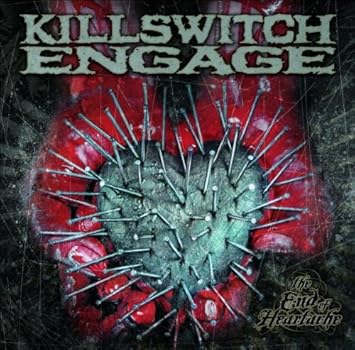
Revisiting: Killswitch Engage
I got into metal, seriously, in a weird way. I was sitting in on a friend's college radio show, and hearing a few of the tracks he was playing caught my attention in a way heavy music never had before. That might not be odd, but as a someone growing up in Upstate New York, the fact that the music was European power metal surely was. I don't know if I could have found more than two people I knew even casually who could have named a single band from that scene. Yet that is the music that moved me towards heavy metal.
At that time, the mainstream scene was seeing the rise of metalcore as a real force. Though I was focused on the European scene, I was taking note of the American bands that were leaving an impact. One friend in particular would often point me towards a specific band; Killswitch Engage.
This was just as "The End Of Heartache" was being released, and with ample time to kill on my hands, I would occasionally give the album a listen. It didn't strike me as anything special, but ever so often I would have the nagging thought that I needed to listen to it again, because I was missing something. Those feelings have kept at me for more than ten years now, even as I was reviewing new albums from the band, and just recently I decided it was once again time to look back at what I was missing.
The two incarnations of Killswitch Engage are nearly indistinguishable, in terms of the important traits, but they also couldn't be more different. The Jesse versus Howard debate still rages, because even though the band is doing the exact same things, their forces of personality completely changed how the music was heard. For me, the answer to the debate is simple. Jesse was there when they were still rough around the edges, and came back when they were going through the motions. Howard was there when the band perfected their form. He is, to me, the definitive voice of Killswitch Engage.
Two things about "The End Of Heartache" are clear to me, listening to the record these years later. One, it is the perfect encapsulation of what metalcore is all about. If you need a bllueprint for the genre, this album is it. There is ferocious heft to the guitars, but Howard is able to take the anger of an entire generation and turn that into anthems of communal self-esteem boosting. Killswitch was able to do what the other metalcore bands couldn't, by moving beyond just alternating clean and harsh vocals. Howard tapped into real emotion, and wrote melodies that worked on stage in a way that the audience could share the experience with the band. It was something special, and despite the simplicity of the construction, it was rock solid.
Unfortunately for Killswitch Engage, it was also the only one of their traditional albums that achieved the feat. Every other album of theirs has been trying to recapture that spark, without being able to keep the flame alive.
The one exception is their 2009 self-titled album, which broke the rules. Working with Brendan O'Brien, Killswitch Engage decided to push themselves in a different direction. Rather than focusing on their metal roots, that album pushed them further into melodic territory. The result was an album that fans hated, and that is always overlooked, but it's also the album that sticks with me the most. Is it softer than their others? Maybe. Howard screams a bit less, and the guitar tone is a bit fuzzier, but the band is still more than heavy enough. What it does best is twist the formula just enough to show us we don't have to be the self-loathing youth that first connected with the band's music. This was their growth, their showcase to the world that they had become adults who knew how to handle their baggage. They didn't need to share the anger with the world, because they were mature enough to push it into productive avenues.
That was short-lived, as not long after the record was released the band went through the kind of turmoil that could only have one result; the nostalgic attempt to recreate their glory days. You could say it worked, but nothing the band has done since then has reached the same heights. It's too safe, too clinical, to expected.
But there will always be something in me that looks back to those few records and understands now that Killswitch Engage changed heavy metal. I can't say if it was for the better or the worse, but I do know that no other band did what they did as well, not even themselves.
Thursday, August 17, 2017
Album Review: The New Roses - One More For The Road
Not that long ago, I reviewed a record from a band I had never heard of that caught my attention. That was the previous album from The New Roses, which was one I enjoyed quite a bit, and that I cheaply compared to that old group with the word 'roses' in their name. I thought I was hearing what was going to be a band to watch, and then when the first single for this new record were released, I was left scratching my head. Was this really the same band that I enjoyed? What had happened?
That was because of the song "Life Ain't Easy (For A Boy With Long Hair)", which was a southern rock song with asinine lyrics that made me cringe from the moment I heard them. I don't know what the inspiration for that sort of thing was, but it made me incredibly nervous about diving into the entire album. The slippery slope is a very real thing.
Hitting the play button, the first thing we hear is "Quarter To Twelve", which is more in line with the classic hard rock I was expecting. There are hints of Slash and Joe Perry in some of the guitar playing, and the rough vocals fit right in. That's when the band is at their best, but there are elements on this record that get thrown in and distract from their strengths. "My Own Worst Enemy" is a solid bluesy rock track with some very nice guitar work and a solid chorus. The problem is that right before that kicks in is a terrible few seconds of layered "na-na" vocals, which are a nod to the modern 'rock' that hits the pop charts. Not only does it sound bad, it sounds completely out of place for a band like this. They're short interruptions, but the kill the song every time they come along.
Thankfully, the majority of the album is made up of the kind of songs The New Roses excel at; gritty rock and roll that feel like a more direct and tame version of the drug-fueled Guns N' Roses experience. Those adjectives are not to be taken as a slight. Guns had gotten too far up their own backsides, so not being as self-indulgent, and self-destructive, is not a complaint. The New Roses have the same spirit, but don't drift off into 'artistic' neverlands. They stay in the sweet spot of writing songs.
The downside of their approach is that while The New Roses are a very good band at what they do, it can be said they don't define their own identity well enough that you're going to remember these songs long after you hear the album. That's what happened to me with their last album, and I'm afraid that's what will happen here too. The music is good, but since it reminds me so much of other things, it won't have the same impact as a group doing something clearly their own.
So with that being said, let's cut to the chase. "One More For The Road" is The New Roses doing their thing, and doing it well. Yes, "Life Ain't Easy..." is a terrible song, but it's only one track, and the rest of the album lives up to what I was expecting. There isn't a lot of good ol' hard rock anymore, and The New Roses provide that. I can easily recommend this album for anyone who wants a good time with some good music.
Tuesday, August 15, 2017
Album Review: Serious Black - Magic
Not all 'supergroups' turn out to be super, and few of them experience growth after their formation. The fact of the matter is that once a musician has established themselves, it's difficult to break free of that mold and do something new. The members of Serious Black were like that when they came together, putting out a good debut that often felt like more of the same from veterans of power metal. But last year's "Mirrorworld" was something different. That album showed tremendous growth, and more maturity, and earned itself a slot on my list of the best albums of the year (accurately; the deluxe edition did). So when they are ready to return but a year later, I am both excited for what they have in store, but I'm also a bit worried they might be pushing themselves a bit too hard. Which wins out?
This time out, Serious Black is offering up a nearly hour long concept album about a man and a journey through a magical land filled with witches and drama.
Over the course of two albums, the times I have most appreciated Serious Black are when they leave the blueprint of power metal behind. There's a time and a place for ripping through a double-bass number, but the songs where they gave Urban breed more space to ply his...ahem... magic were the ones that most resonated with me. That's why "Mirrorworld" caught me so off-guard when it was released. From the singles I had heard, I was not expecting the diversity of songwriting, nor the tracks that ended up being my favorites.
Concept albums are tricky, because there are tropes about them that have never sat right with me. The one minute introduction is one of them, a short interlude with the narrator welcoming us to the story, these sorts of tracks are inconsequential. Then there's "Burn Witches Burn", which is a nice little track filled with organs that I love in the background, but the song stops before the solo for a narrative breakdown. Spoken word and music are two things I don't think belong together, and it drags down my enjoyment of a song every time I have to listen to talking in the middle of one.
What works incredibly well on this album is the use of keyboards to set the tone of the songs. Shifting sounds from track to track, the sense of drama comes from the keyboards, which are able to add a slightly sinister feeling to what would otherwise be energetic power metal songs. There are a lot of concept albums that fail to match the feeling of the music to the narrative through-lines, but Serious Black has achieved the right balance, without resorting to ham-fisted usurping of a dozen genres for each scene. This still feels like Serious Black, through and through.
The other thing of note, at least to me, is that "Magic" is a tight, concise album. While it runs nearly an hour, each song briskly moves along, and if anything they feel like they need slightly more time to make their point. There is something to be said for leaving the audience wanting more, for sure, but at a couple of points I almost have the impression the band is rushing through the compositions, to make sure the record doesn't get too long.
Mostly, what I can say about "Magic" is that, in spite of stretching their creative boundaries with a concept, the album feels like a step back from where "Mirrorworld" was taking us. Yes, "Magic" has a narrative scope that expands outward, but the music is more traditional in its power metal forms, which doesn't feel to me as experimental as the softer songs, and more at times hard rock approach that "Mirrorworld" gave us. And with Urban's vocal approach, particularly with respect to the backing vocals, there is a hint of King Diamond's conceptual stories that creeps in. It never becomes distracting, but King's approach is one that relies far less on melodies and hooks, which has tamped down some of the buoyant choruses from what Serious Black is capable of.
Furthermore, this is an album that takes time before it fully sinks in. On my first listen, I was definitely underwhelmed by what I heard. But since I have a lot of respect for Urban, who has helmed some of my favorite recent metal albums, I gave it several more chances. With each listen, the songs became more familiar, and the bits that felt underwhelming became more clearly subtle than disappointing. "Skeletons On Parade" and "The Witch Of Caldwell Town" are the only tracks that immediately stuck out, and they remain the best songs on the album, with the kind of choruses that make power metal glorious. I particularly love how the latter track slows down for the last chorus, which makes it sound yet more epic. The rest of the album grows stickier with time, but you have to give it the chance to grow legs, which we don't always get the chance to do.
What I'm getting at is that my opinion is a bit two-fold. Serious Black are a very talented band, and this album is obviously put together by veterans who couldn't make a bad record without trying to deliberately do so. "Magic" is a very good album that doesn't feel like an album that would come out just a year after a monster release. Don't get me wrong; "Magic" is very good power metal. That's my issue, though. I was hoping Serious Black was going to break a bit more free of that mold. By focusing on a story, and bringing it to life through Urban's writing and performance, "Magic" isn't the melodic feast "Mirrorworld" was building towards.
While "Magic" is a step forward in some ways, it's a step backward in some others. It's a very good album, and it might very well end up being one of my favorites at the end of the year, but the nature of its construction is going to mean it's not an album that will stay with me as strongly as "Mirrorworld" did.
Sunday, August 13, 2017
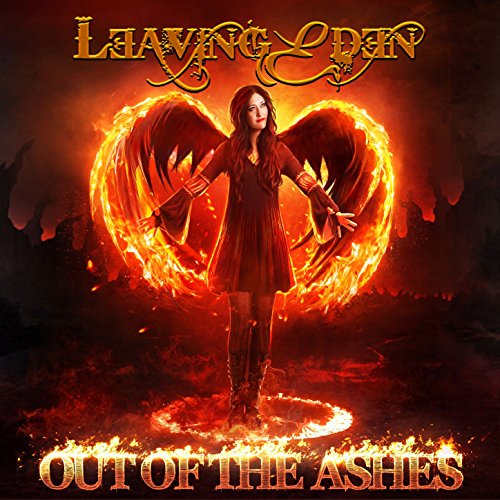
Album Review: Leaving Eden - Out Of The Ashes
The mainstream rock scene is one that I'm not sure I can even identify anymore. What constitutes rock these days is not what I remember, nor is it something I particularly enjoy. Whether we're talking about the screaming bands that are more metal than rock, or the sophomoric 'bro' bands, the range of sounds that get lumped under the same term is useless is helping us figure out if we're going to like something. That made me turn up my eyebrow when I saw Leaving Eden describe their new album as 'extreme rock'. I have no idea what that is, nor whether it's accurate or not, but I decided I needed to find out for myself.
These are pedantic issues to bring up, but I'm a writer who loves words, so I do need to say that 'extreme rock' is not a fitting description of Leaving Eden's music. There's nothing extreme about it, so I think they might be setting people up for disappointment if that's what they are expecting to hear.
That being said, what's important is the actual music. The first couple of tracks on the record are solid modern rock tracks that fit in with what the genre has been producing. There are moments where you can hear a melody begin to sparkle, but the songs pull back just enough to stop them from glistening. They're solid songs, but the adherence to being as rock as possible holds the songs back from what they could have been.
The title track fixes that, and shows what Leaving Eden is good at. With a more dramatic flair, it's a song that is able to use the atmosphere to sound heavy, while retaining a chorus that has a strong melody. Eve's vocals are at their best here, sounding confident with just a hint of aggression that makes it clear she's a rock singer through and through. That can get taken a bit too far, especially in some of the juvenile lyrics of "Sometimes", but usually she's the bright spot that differentiates Leaving Eden from a lot of the faceless bands that play similarly down-tuned rock and roll.
My favorite track on the album is "No Soul", which is the ballad that isn't really a ballad of the album. The riffs are as heavy as the rest of the album, but the duet vocals and hints of piano are a different tone, and the chorus has some of the sweep that a ballad usually does. It's a lovely piece of melodic hard rock, and is an avenue I think the band would be wise to explore more often.
So where do I come down on "Out Of The Ashes"? In a world of stale modern rock, Leavin Eden is a solid alternative to the usual names. This is a quick and enjoyable enough record, one that doesn't do much wrong. It's also a record that is a stepping stone to where the band needs to get. There is still room for improvement, which will hopefully continue to come. That being said, "Out Of The Ashes" is a fine record for now, while we wait for them to fully grow into themselves.
Thursday, August 10, 2017
Album Review: In Evil Hour - Lights Down
What do I know about punk and/or hardcore music? If I'm being honest, the answer is not much, since my favorite punk album is the least punk album Bad Religion admits exists (that would be "The Dissent Of Man", which is phenomenal). When it comes to grittier punk, I don't have much experience with the form. But considering the political climate all around the world, and my expectation that the fury being felt is going to propel a new wave of angry young bands, I thought it to be an appropriate time to dip my feet into the pool. To do so, I'm starting with the UK's In Evil Hour, whose melodic punk/hardcore is one of the early entries into our new political uprising.
"Binding Ropes" kicks things off with a riff, and a guitar tone, that is more heavy metal than pure punk. But once the chorus comes along, and the backing vocals pop up, that Bad Religion/AFI style of punk is made very clear. When it's done well, it hits just the right balance between bristling energy and anthemic shout-along. That's pretty much what In Evil Hour is able to do on this song. It's a fine opening statement.
"Enemy Within" follows with a sound that references not only AFI, but some of The Offspring's better singles, if they hadn't polished off all the rough edges. Keeping in mind that while The Offspring are rather bland and lousy now, they were once a really good band, so recalling those days is a worthy comparison to make. Not only that, but the song contains a breakdown that is surprisingly heavy, and Al's vocals shift from her gritty singing into a full on swallowed-glass roar. In a small dose like that, it definitely drives the point home.
In "Bitter", she sings "every day I feel a little more unsure". Isn't that how we all feel, as the world seems to be crumbling around us?
The band has a DIY charm to their music. "Lights Down" isn't a slick record with a sheen of money emanating off it. It's a record that feels more homespun, which makes it feel more authentic. Much like how it's ridiculous to hear a band of millionaires like Metallica still trying to write songs about being angry and young, punk like this wouldn't work if it sounded clinical and spotless. I actually quite enjoy hearing the humanity of the performances. Hitting the feeling is often more important than hitting the notes.
I went into this album having never heard In Evil Hour before, having only just discovered them as I read through a list of upcoming releases. They intrigued me enough to inquire deeper, and I'm glad I did. I won't try to say what the true punk fan is going to think of "Lights Down", but I can say that this is the kind of punk that I can get behind. It's political and angry, but it retains a melodic sense that remembers a subversive message goes down better when it's hidden in a catchy tune.
"Lights Down" is a record that hits the mark. I don't have the disposition of a punk rebel, but for a few minutes, In Evil Hour made it sound appealing. Definitely recommended.
Tuesday, August 8, 2017
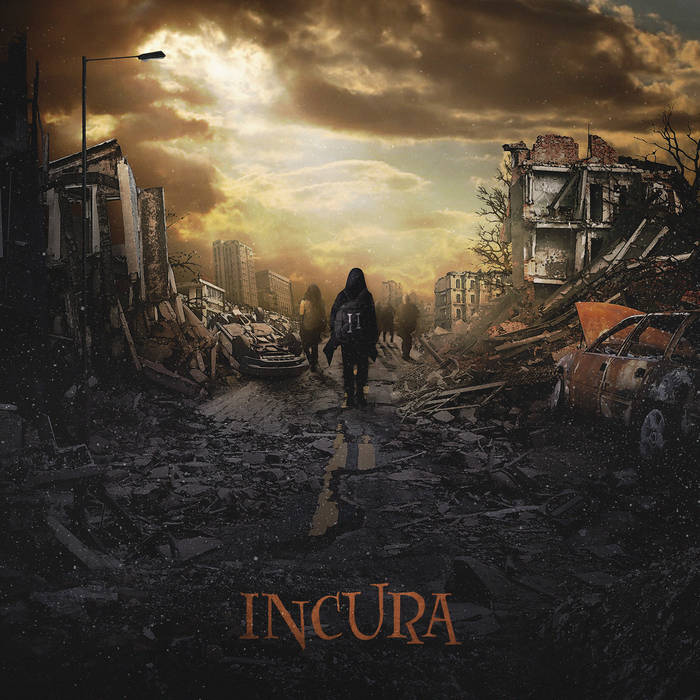
Album Review: Incura - Incura II
A couple of years back, I was a huge fan of the 'debut' record from Incura, which was an album that took a theatrical axe to the bloated corpse of melodic rock, painting the scene with a riotous sense of fun as vivid as the blood Sweeny Todd spilled on stages across the world. They understood that sometimes rock needs to embrace how overblown it can all be, and they made a record that was packed to the brim with unforgettable songs. But then they didn't follow up on that. Promises of a new album were made, but updates were slow in coming. Months passed without so much as a sentence confirming the album was still under construction.
So it was with great surprise that I saw the album show up, despite never hearing word from the band or their label that the album had even been recorded. It struck me as a huge mistake from a PR perspective, and if we weren't in the midst of the slow summer season, I might not have been able to fit this album into my schedule. That's criminal, since I had been looking forward to it so much.
Anyway, let's get on to the music. Within the first thirty seconds of "Love To Forget", everything I loved about Incura before is back for another go. The riffs are heavy rock that have some swing and bounce in them, and the vocals are such theatrical performances that I can already hear more serious rock fans whining that this is making a mockery of the form (as though bro-rock, black metal, and everything else doesn't do the same thing). Incura's version of rock is supposed to be fun and indulgent, and that it certainly is.
There was one thing missing from the cocktail in that opening number; the sticky melodies. The last record was one of those that stayed in your head whether you wanted it to or not, and that element is largely missing not only from that song, but from this entire album. I understand why completely; the first record compiled the very best Incura had ever written, and now they had to write that many more great songs in a shorter amount of time. That can be tough, I know.
That element might be absent, but Incura still has enough to propel the album forward. "Now Or Never" might be a bit subdued compared to the Incura I previously knew, but it's still a fun sing-along of a track that has a spirit that puts a smile on my face. As does "Remodel", which throws in hints of djent to the riffing, but has a vocal and chorus that is straight from the first album. It's exactly the kind of song I was hoping for, and it's fantastic.
In addition to the great new tracks, we also get the worst song I've heard from Incura yet, "Help Me Save Myself Tonight". I don't doubt that it means a lot to the band, but it's a flaccid track that bounces from meandering verses to a chorus that is more shouting than a melody. It's a completely misstep, and "This Is What You Get" doesn't do anything to reclaim the momentum. With some vintage effects to change up the sound, there was the chance for something interesting to happen, but the song again lacks a hook that would make the song memorable.
"Incura II" is not at all the record I had been waiting for. It was on my list of most anticipated records both last year and this year. So what happened? I can understand what happened with the songwriting, as I explained earlier. More puzzling is what happened to the album itself, how it appeared out of nowhere with no fanfare or buildup. I have a theory as to how that happened, but I don't want to get out ahead of myself there. All I will say is that unless this is all part of some renegade, underground marketing campaign, it's not a good sign for Incura.
When I saw this record was finally there to be heard, I was thrilled. I cleared out time as soon as possible to listen to it, and then felt more and more disappointed as the record kept playing. It's a decent enough record, but since my previous experience with Incura was amazing, "Incura II" is a pretty significant letdown. They say sequels are rarely as good as the original, and that's the case here. "Incura II" is a shadow of it's namesake.
Subscribe to:
Posts (Atom)