Thursday, September 15, 2022

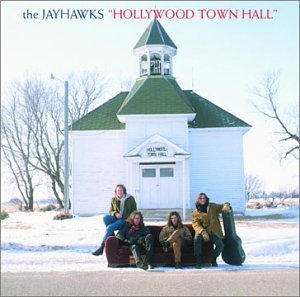
"Hollywood Town Hall" Still Stands Tall, Thirty Years On

I don't know if I believe in any sort of fate. Sometimes, it strikes me that it's merely a way for people to justify good luck, as if we need some more substantial reasoning for anything good that may happen. The idea that somehow events are fated to occur because the stars are in a certain position in the sky is the sort of thing that's so silly, if it hadn't been started millennia ago, we would laugh in the face of whoever tried to create it. So no, I'm not inclined to think that dates are actually meaningful, or that they hold some kind of code to the world.

"Hollywood Town Hall" came out on my birthday. I was too young to be searching out music at the time, and The Jayhawks would never be popular enough to stumble across in the conventional ways, so I was obviously not listening to the record at the time. I find it interesting that it came out on that particular day, but since many more records have also come out on that day throughout history, it is only a bit of trivia. Fun trivia, but trivia nonetheless.

I wouldn't discover The Jayhawks until years later, through that vestigial thing known as VH-1. There was a song that played for a short time there I fell in love with, and when I sought out more about the record it came from, I quickly discovered it was a one-off gem. I did run across an interesting cover on that album, though. That would be the song, "Blue". It was the first time I had heard the name The Jayhawks, and that weird line is the way I was reeled in by a record that would become a fixture of my listening, although I wouldn't know that at the time.

"Waiting In The Wings" at first sounded too much like "Mary Jane's Last Dance", which would have been funny to me if I did the math and realized at the time which song actually came first. Perhaps having that similarity was the door to which I could walk in and embrace what The Jayhawks were doing, since it was different than just about anything else I would be listening to at that point in time.

The Jayhawks sound has always been something unique; a blend of two very different voices that bring echoes of folk and power pop together, washed over with fuzz guitar solos. They are non-traditional, but in their own way a quintessentially Americana band. Coming from the heartland, they embrace all the elements of the various stripes of the music synonymous with that geography, but glossed with a layer of accessible melody that was a harbinger for the entire alt-country movement that would soon be a fad.

Mark Olson's voice takes on the role of the small-town preacher foretelling doom if the simple way of life is left behind, while Gary Louris is the calm voice of reason who reminds us change is inevitable. There is a dynamic of friction between Olson's old-time folk, and Louris' modern noise. The push and pull between them is why the band would fracture, come together, then fall apart again several times over the years. But when they did find their way together, the competition between them brought out the best in the music.

As time would advance, the relationship between the two became easier to hear in the music. Olson grounded the music with an organic sense of storytelling, and Louris wanted to expand the band's sound and bring in all manner of experimental sounds. It would take its toll on the music later on, but at the point "Hollywood Town Hall" was made, neither was pulling hard enough to nudge the band off-center.

The organ swirling in the background of "Crowded In The Wings" indeed gives the song the feeling of an old time religious revival, with the sticky melody no different than the faith healer's silver tongue convincing people they were hearing the literal voice of God. The Jayhawks wouldn't work in the same way without Olson and Louris sharing the majority of the vocals as a tandem. It's the way their voices blend, giving us two different emotional resonances at the same time, that makes the music stand out. While I love "Rainy Day Music" dearly as well, there's an earnestness only Olson could bring to the table. Louris' voice by itself can't raise the music to the same heights as his fuzzy solos. One brings the power, the other the nuance. It truly takes a village, in other words.

"Hollywood Town Hall" is a simple album wistful for simpler times, painting a portrait for us of a reality that never was. It looks back with rose-colored glasses, taking the same building blocks The Eagles would use, but arranging them in a way that didn't sound like a group of jaded old cranks who want to bust teenagers in the knees with their canes. The Jayhawks were telling us what they felt we were missing from the old days, while keeping one foot in the present day.

It's remarkable how timeless the album sound, as if it exists outside of any trend, style, or fad. As I listen to it now, the record sounds too old to be modern, but too new to be classic. These songs are a bridge between two times, which is fitting, because the early 90s were a period of great transition. One era was ending, another was beginning, and somehow The Jayhawks were there to note that with their music.

We could call that fate, if we wanted to. An album that neatly tied up the threads of change, released on a day of personal importance to me. That sounds like more than luck, doesn't it?

It isn't, but it is one of the best bits of fortune I have stumbled across. There was nothing like "Hollywood Town Hall" when it came out, and thirty years later, there still isn't much that can compare. The Jayhawks would ebb and flow even since, but there was something magical in the air when they made this record. "Hollywood Town Hall" is one of those albums that stands the test of time by not adhering to it. What is timeless can never get old, and since I love this record more now than when I first heard it what must be twenty years ago by now, there is no danger of that changing in the future.

Monday, September 12, 2022

Album Review: House Of Lords - Saints And Sinners

Music is a fickle thing, and few bands have embodied that more than House Of Lords. Their album "Indestructible" is one of my favorite melodic rock albums ever, and yet I find every album that has come since then to be rather forgettable. This hearkens back to when people say, "if you like ____, you'll like ____". It isn't that simple, since even within one band's discography, albums that all sound the same don't have the same impact. House Of Lords hasn't changed anything about what they do, but they only tapped into a well of songwriting I can also drink from for that one brief window of time.

This album continues that trend, as it often feels like the band doesn't quite have a handle on their own sound. We get songs like the title track, which are lighter fare, but amplify their ability to write anthemic choruses with angelic backing vocals. That sort of song, or "House Of The Lord", are really good compositions that do the job well. If the band stuck to doing that, they would probably be able to put together another album that worked as well as "Indestructible" did.

Unfortunately, the band is still focused on proving how hard they can rock. Those songs, like "Road Warrior" and "Roll Like Thunder", don't have the hooks necessary for this kind of melodic rock. They are too stock, too flat, and saddled with a production that puts the guitars so far back they don't have any power either. If they are trying to rock hard, we can't hear it, because the album sounds soft even at its heaviest. That explains why it's their more AOR songs that work better, but it doesn't explain why they picked guitar tones and a mix that work against almost half of the album's success.

Now, with that being said, is this album really that different from the one I love? Honestly, not really. They're using the same sounds and the same conceits, so you would think the results would be more closely aligned. But this is why I was talking about fickleness, as this album is quite far apart in terms of quality. There's something about the way the melodies are written now that don't hook me as much, that don't get my fist pumping as I'm tempted to sing along. Without that connection, the music is just sort of there.

Once again, House Of Lords has delivered an album that sounds the part, but doesn't stick the landing. There are hints of their greatness, but they can't keep it up for an entire record. When people use the phrase 'a shadow of themselves', I think an album like this is a good illustration of what they mean. It sounds like them from a distance, and it is them, but all the detail has been obscured. Those are what make things interesting, and this album falls short.

Friday, September 9, 2022

Album Review: Bloodbath - Survival Of The Sickest

As I have mentioned many times over the years, death metal and I don't have the best relationship. Though I have tried many times to get into it, the severe lack of melody and hook factor have made it nearly impossible for me to become a fan. Making things even worse is that some of my first exposure to death metal was through some of the original members of Bloodbath, also including the band's first album, which just so happened to be about as good as I think the genre can be done. So when I started out at the top, everything that came after has been a disappointment.

Bloodbath has become more stable since Nick Holmes joined, but this era of the band is perhaps the least interesting one yet. The truly horrendous guitar tone of the first record was so ridiculous it was amazing, and Mikael Akerfeldt and company delivered some truly hook-laden songs. "Like Fire" is one of the catchiest death metal songs I've ever heard, and it may have single-handedly ruined the entire genre for me. After his hiatus from the band, they have focused on being more of a true death metal band, where the camp factor has been stripped away. That was not for the best, if you ask me.

When the band took all the fun out of the music, all that's left is the crusty exterior. Like a loaf of bread, that might look the part from a distance, but it's hollow and unsatisfying. Let's look at the opening track here, "Zombie Inferno". The band rips through some flashy guitar licks to open the song, and Holmes sounds fine growling his way through the verses, but the 'chorus' to the song is just him screaming the title a couple of times. It doesn't have any melody to it, and even the rhythm of it is boring.

The vocals might as well not even be there, since they add nothing to the composition. I like guitars too, but a bunch of riffs is not a satisfying song. The haphazard way they get put together needs something over the top to tie them all into a coherent song, and that's where the band struggles most. It doesn't really make much sense, since I know at least the members of Bloodbath who are also in Katatonia know damn well how to write a song. Why they don't carry that over to this project is a mystery.

Or maybe it isn't. Since Katatonia is a very emotionally heavy project, and their records often take considerable time and energy to complete, Bloodbath is the fun side-project where they bang things out quickly and don't overthink what they're doing. If that's the case, they it makes sense why these songs aren't the most captivating compositions. They guys want to make some noise, and get away from their main gigs. Investing what it would take to make this record what it could be would be anathema to the whole point of it.

Personally, I miss the days when it sounded like the band was having a blast paying homage to their influences. They went from celebrating the old guard to being the old guard, and having to live up to that has sucked a lot of the life out of this. Life... death metal... yeah, that was unintentional.

Anyway, the point I'm making is that I'm the wrong person to judge whether this is good death metal for people who are into death metal. I can only say what I think of it as someone not predisposed to liking this style. That predisposition has not been changed.

Wednesday, September 7, 2022

20 Years of "Songs For The Deaf" - A Conversation


D.M: ...and so we find ourselves with another year and another anniversary.  This one strikes as more recent than our usual fare, which is usually viewed through the lens of decades of perspective.  Not only that, but I think this marks the first time when you and I have decided to analyze, celebrate and debate and album that was released at the point when we were already adults; legally anyway, if perhaps we were not fully formed and functioning members of a working society.  

We are talking about Queens of the Stone Age, and the 20th (could it be possible?) anniversary of their principle and foremost album, "Songs for the Deaf."

Given some other options, we agreed to take this one on I think because we were on the same page that there's a lot to dissect here - few albums in our lifetimes, let alone our formative years, are so complicated in terms of their fit into the era of their birth.  

"Songs for the Deaf" existed at that most unlikely, and increasingly rare crossroads, of college radio darling and mass-media success.  The album was impossible to avoid, growing from the shadow of the not so long forgotten Kyuss and given credence by virtue of the folks who deigned to appear on it, or otherwise were associated with it.  The album's legacy however, seems equally judged by not only its own merit, but the company it kept, and the influence it imparted in its wake.

Desert rock was really the last bastion of alternative rock in the traditional sense to find a foothold in the popular ear (parenthetical: 'alternative rock in the traditional sense' should functionally be a paradox, but we'll ignore that since that's not what we're here to argue about,) and "Songs for the Deaf" not only was the best example of the genre, but served as the last mosh-ready option in a genre that had largely given over to post-grunge and ultimately to emo.  

And so we're faced with the historical conundrum of a record that in retrospect seems an anachronism even in its own time, and yet might be the most influential album of the bunch.  At the risk of speaking out of turn, I think there's a clear shift in the thinking of the Foo Fighters after "Songs for the Deaf" - there's a change between "One by One" and "In Your Honor," that resonates all the way out through "Wasting Light," where it's impossible to hear the much-ballyhooed single "White Limo," and NOT hear "A Song For The Dead."  Even more obvious, does Them Crooked Vultures" even happen without "Songs for the Deaf?"

That's probably about enough by way of an intro.  Before we get too far into the details, I'll let you launch some initial thoughts on why we're here.


CHRIS C: I want to start with a potentially unrelated question. How many albums after "Songs For The Deaf" are important, classic records? There is a degree to which time is necessary to make such a judgment, but we also have a feeling before the dust settles whether it's going to blow back in our faces or not. It seems to me that over the last twenty years, whether it's an actual decline in quality, a saturation of avenues having been explored, or boomer generations that stopped caring long ago, very few records have the kind of acclaim and impact to be certified classics. Post "Songs For The Deaf", a case within genres can be made for "American Idiot" or "The Black Parade", but very few other records manage to sell, to inspire, and to provide something as essential as an enduring guitar riff.

Let me start there. "No One Knows" has become one of 'those' guitar riffs. You know the ones; they pop up on lists of the best riffs ever, and you hear them played in guitar stores by people who are picking up instruments looking for the one that will inspire them. That sort of thing seemed to die out after the guitar hero movement of the 80s. I've been running things through my head, and I can't really come up with many universally beloved riffs that have come out after this one. The only other one that compares is "Seven Nation Army".

The other big thing about this album, to me, is the movement it started. No, not a boon of desert rock. No, not the concept album returning to popular parlance (although we can talk about whether the concept adds anything to the experience - I don't think it does). What I'm talking about is the start of the 'hired gun superstar' era. Dave Grohl joining the band for this record, with his pedigree and fame, is the direct forerunner to Travis Barker appearing on every pop-punk album released today, among other things. Can you imagine if John Bonham had decided to use his off-time from Zeppelin's touring schedule to go drum for some underground band? That's what happened here, and the way Grohl elevated the band's stature (I firmly believe he is the one most responsible for QOTSA's rise) gave others the idea that they too could enhance their legacy by lifting other bands up.

I find your assessment of the Foo Fighters to be rather interesting, because I don't hear that at all. You're absolutely right about "White Limo", although I could also say that was Grohl paying tribute to Lemmy and Motorhead. Either explanation would illustrate why it's one of my least favorite Foo Fighters song. But if we're talking about desert rock, and QOTSA, I hear far more similarity between the two bands from the "One By One" album. It has the same dirty, jamming heart, and lack of concern for radio domination. To a degree, I think the two albums were almost a double record, with each band putting one half out. Then again, I'm also one of the few who thinks "One By One" is my favorite Foo Fighters album, so its twentieth anniversary also being this year is worth noting as well.


D.M: Ooooooooo, that's an excellent question, and a really delicious, subjective exercise that musical fanatics will assuredly and self-righteously rake us over the coals for.  Let's dive in!  You already started with "American Idiot" which I disagree with only because it is such an album of its time (....or is it?) and so its impact is more in remembrance than in enduring legacy.  That's an important metric here, and speaks to one of the greater and underrepresented qualities of "Songs for the Deaf," which is timelessness.  Queens of the Stone Age's record sounds every bit and vital and virile as it did then, at least as far as its idiom is concerned.  Some of this, at least as far as you and I are concerned, is a product of the time it was produced.  Digital recording and preservation is, to speak in clumsy metaphor, the plastic surgery of our musical era - stuff never sounds 'old' anymore.  Whereas you and I came of age in the '90s, when an album that was twenty years old sounded old.  Not bad, just old.

"Songs for the Deaf" is more than just a product of digital production, though - there's a certain snap to record that makes it instantly recognizable and consuming of attention.  But I'm getting off on a tangent.  Let me get back to that after I finish my original thought.

I'll grant "The Black Parade."  Sure.  As I scoured about, I thought for certain there was some bloated, self-important Radiohead album that would qualify, but somewhat to my shock, all of their 'classic' albums came before 2002.  (My opinion of Radiohead is no doubt showing, but I will grant them some measure of respect for being a band who never really caught on in a mainstream way, but always seemed to be able to sell out an NBA arena on two days' notice.)  So in answer to your query about albums in rock/metal/alternative that can hold a candle to "Songs for the Deaf," I am left with just three suggestions.  First off and most important, "Chinese Democracy."  Okay, I can't keep a straight face after typing that.  Moving on.  Avenged Sevenfold's "City of Evil," which probably has the most tenuous claim and I'm willing to leave behind.  The other two are more difficult.  Recency bias might play in here, but perhaps Ghost's "Meliora"?  Ghost has become something of a mainstream darling, and that was the album that catapulted them from 1,500 general admission headliner to 15,000 seat headliner (I know, because I watched it happen.)

The other....and I don't even want to bring it up, because it's awful, and because somehow I've taken on the role between the two of us of saying "you know, they suck, but don't forget about..." and that's Nickelback's "All the Right Reasons."  Gross.  I feel gross now.  I don't even want to talk about it.

...sigh....

Back to the point I was making, and it meshes with something you hinted at, particularly as it relates to "No One Knows."  Confession time - I know the first line of actual lyrics in that song.  I know nothing that comes after, because I've never felt like I had to.  The hook is so good, and the simple two-beat so effective, that it's easy to get lost just in the musical journey.  Homme's voice is more an instrument of harmony than it is a purveyor of meaning, and it's even more rare in that or any era when a voice so fits the pocket of the song.  This is part of the snap I was referring to above.  "No One Knows" is hardly the only example of this on the album, but it's the most prominent, and it's what makes this record so unique. And then, when you get into the chorus, and that fuzzy, desert-burned rhythm guitar strikes, drowning out Homme entirely, it lends an importance and a depth to a song that until that point feels flighty and weightless.  

There are few bands in my catalogue that are solely recognizable based on their guitar tone, and fewer still are the albums that can be identified by that same virtue.  Any Rage Against the Machine record.  "Ride the Lightning."  Boston's iconic first album.  "Master of Reality."  Not many others.  Virtually none in the new millennium, saving two: Wolfmother's first record, and "Songs for the Deaf."

There's more I want to get to, but I want to stop for now with this question to you in turn - is there a greater kingmaker than Dave Grohl?  And why is he the pinnacle of the form?


CHRIS C: I get what you're saying about "American Idiot", but I'm going to have to insist it's an enduring classic. It was massive at the time, we can argue that without it "The Black Parade" and every other mainstream concept album afterward may not have happened, but it's undeniable that the album has staying power. The singles were huge when they came out, and I continue to hear them on rock radio (on the times when I have no choice but to listen to it). I don't hear Radiohead, and the only My Chemical Romance song I hear isn't from their masterpiece, but Green Day is still all over the airwaves, even though they've sucked ever since.

You mentioned Nickelback, but none of their albums can be classics, since you can't find anyone who actually likes them. This stature is a mix of being popular and being loved. "Chinese Democracy" would fall under the same rule. I like it more than a lot of people, but I even as a thought experiment I can't make a case for it being a classic. "Meliora" is an interesting choice, and I'm giving it some thought, because it's dawning on me that success these days is far different than the timeframe I was originally thinking about. Ghost doesn't have crossover, top-40 hits, but they are hugely successful on the rock charts. You might have hit on one there, but I'm still going to say it's a lesser classic, if we say it qualifies.

I'll match your confession; I didn't know much of the lyrics to "No One Knows" either. I looked them up, and I've got to say, I'm not impressed. Rock lyrics are more often than not terrible, and there's part of me that is rather depressed by how little interesting poetry these people come up with. I know not everyone is going to write the way I do, but that old line James Hetfield had about writing as if he was a Mack truck doesn't strike me as always being a good thing.

With the snap and pocket you're talking about, is "Songs For The Deaf" the most prominent mainstreaming of groove in modern rock? Much of QOTSA's music is built on those hypnotic grooves, and it's quite different from the usual riff-iness rock music is associated with. It strikes me as almost being as if you took nu-metal, left it out in the sun until everything black faded to nearly white, and then listened to the brittle remains. And yes, I realize that is far more esoteric and poetic an image than we get from rock lyrics. That's sort of my point.

Do we want to have the guitar tone discussion? There's a couple of reasons why we haven't had any unique and identifiable tones in recent years. One is that a lot of these bands are lazy, and they are happy to copy the sounds they were inspired by. Another is that they all use the same gear, so any differentiation is going to be limited anyway. The last, and maybe the most important, is the prevalence of re-amping in the production process. If you've ever listened to an Andy Sneap production and thought they all sound the same, there's a reason for it. A large number of the records he makes are literally run through the exact same amp, because that's the sound they asked for. People are no longer finding old and sketchy amps that all had their own quirks. Everyone now has access to digital copies all based on one particular amp, so they're all painting with the same palate of colors.

Grohl might be the best kingmaker, and it's because of two things; his talent and his affability. He wouldn't have the power he does if he wasn't a remarkable drummer and songwriter, but he also wouldn't have the power he does if he wasn't a likeable guy. If Axl Rose joined three other bands, they wouldn't succeed, because no one is rooting for him. Grohl is one of the few guys who not only seems to truly love what he does, but who also seems to genuinely want everyone else to succeed as he has. Does anyone get that vibe from Jimmy Page?


D.M: A final thought to tie up the Dave Grohl point - I saw him perform live, only once.  It was with Them Crooked Vultures, at the now-defunct Roseland Ballroom in Manhattan, roughly across the street from the Ed Sullivan Theater.  I have seen many drummers in my days.  And I dare say, I have seen many more purely talented drummers than Dave.  But I have never, NEVER seen a drummer who hits his kit as hard, or plays with more enthusiasm and joy, than Dave Grohl.

Sure, let's have a guitar tone discussion!  Here's the fundamental question for me when it comes to guitar tone in the post "Songs for the Deaf" era: if you create fuzz and warmth through purely digital post-production means, and no one walking by could tell the difference, have you created authentic fuzz and warmth?  I think this is the same argument that people are making to argue the semantics of plant-based, or even cloned, meat.  What is the soul of a thing?  Is intent in music enough to overcome the trickery of production?

Much less esoterically, and this actually ties just a little into the Soundgarden/Nirvana debate we had earlier this year - Did the '90s represent the end of the Age of Guitarists?  Is that what made Homme or Stockdale or White so much more interesting, that they'd become an anachronism of a time gone by?  Parenthetically, even as accomplished as they are, I don't know that they measure beyond the legacy of the likes of Thayill or contemporaries from other genres like Hammett or Friedman or Cantrell or dare I even mention Van Halen?

But anyway, I wanted to unload another smattering of thoughts that pertain to the album we're talking about.  And you mentioned it without knowing I was going this way - that "Songs for the Deaf" may be one of the best examples of groove in mainstream modern rock.  There's a lot that goes into this conversation, not the least of which is the concept that makes metal fans' eyes cross: that for all the metal riffs and groove that I love, some (not all,) of the single grooviest riffs I know are born from rock and not metal.  "No One Knows" is certainly among them.  "Joker and the Thief" is in there, too.  More on that in a minute.  First: a brief aside about "No One Knows."

A lot of very kind words, including by me, were scribed when news of Mark Lanegan's passing came across the wire.  I invoke him here as the co-writer of "No One Knows," and a necessary staple of "Songs for the Deaf," mostly to say this: Mark Lanegan was a truly underrated songwriter for his entire career.  Not just his principal works with the Screaming Trees, or his mainstream success with Queens of the Stone Age, but his insightful and soulful solo career as well.  There's not much more to add than that as far as Lanegan himself is concerned, but it needed to be said.

It does draw to a larger point, though - that Queens of the Stone Age, and this album by extension, was both an important reminder of the grunge era, nearly ten years gone at time of release, and a critical bridge between that era and the next generation of rock to come.  Queens of the Stone Age, along with two bands we've mentioned already, Wolfmother and The White Stripes, were the vanguard for a rock revival, however brief, and reverberates today.  

To that end, I've always felt that "Songs for the Deaf" knew what it was: maybe the last of the great rock albums.  You can hear it on the album in an obscure way, told through the vignettes of the radio stations that one would experience driving through the California desert.  The stations get smaller and smaller in scope, sounding more frazzled and less well produced, exemplifying that perhaps Queens of the Stone Age knew they might be the last vanguard, struggling to keep purchase as creative, unique rock and alternative would be driven from the radio entirely, in favor of more soulless, corporately-produced music.


CHRIS C: Now we're venturing into the question of analog versus digital, and I don't know if I want to fully go down that rabbit hole again. What I will say is that I don't believe an amp, or a piece of vinyl, somehow has a soul. They're all just manifestations of sound with their own advantages and disadvantages. Let's start by remembering that early guitar distortion was just that; distortion of the intended sound. Those amps were never designed to sound the way The Kinks made them, so in a sense all we've been doing for the last sixty years is finding what version of noise sounds more pleasing to our ears than others. Somewhere along the line, we convinced ourselves music is supposed to only sound like it did in the 70s, even though it never did before, and never would again. So no, I don't really care whether the sound is organic or processed, only that it has an identity to it that makes a band a bit unique. Then again, QOTSA sound like many other desert/stoner bands, so being first to the mainstream with a certain sound definitely goes a long way to establishing yourself.

After all, no one criticizes a painter who uses the same color palate as everyone else. It's what you do with it that really matters.

Hmm... most people draw the line at the late 80s as the end of the road for guitarists. That's funny, since you can find dozens of players on YouTube who can play circles around the 'guitar heroes' of that time. I don't think the decline of rock music had much to do with the guitarists themselves, at least not in the sense I think you're going for. What I think happened was around the time we're talking about, John Petrucci's instructional videos came out, among other things. We saw guitar playing become more of a sport of technique, where the most gifted players fell into the trap of wanting to prove everything they could do. They either put out instrumental music, or they joined technical prog bands. We didn't have the greatest musicians writing and playing on songs that would become popular, so the entire genre started to wane in the public eye when it was populated largely by the second tier (Hello, Puddle Of Mudd!). So it isn't that it was the end of guitar players, but you have to look somewhere else to find them.

Oh god yes, metal is largely grooveless. Even in 'groove metal', it's often only in the basest of forms. Groove, like rock music itself, has roots in the blues. So since metal is rock with the blues stripped out of it, of course it feels too stiff and rigid to properly groove. There's a massive difference between headbanging to the rigid time of the drums, and swaying to the flow of a wandering bass. Metal often gets too far up its own ass to be any fun.

Lanegan was vital to "Songs For The Deaf", although I'm going to have to be the party pooper and say none of his solo work I ever tried to listen to caught my attention at all. I think he had run out of steam by the time he left QOTSA. But they would not have been who they were without him. Their earlier stuff is fine, but didn't set the world on fire. Their later stuff is also fine, but never really crossed over again. I think the key to all of this wasn't just Grohl's name value, but Lanegan throwing just enough of the Screaming Trees type melody into this record. Without him, I don't think Homme would have been able to write enough singles to keep the momentum rolling as it did.

I hear the album a bit differently. I take the radio vignettes as the band creating their own little world wherein they were rock stars. That makes "Songs For The Deaf" their last gasp effort to bring this more authentic style of rock to the masses, where they would fade back into the desert to amuse themselves if it didn't work. But like a self-fulfilling prophecy, the story came true, and they found themselves where they dreamed to be. It was almost a dare to the mainstream; the band saying they knew they had the songs, and all the stations needed was the courage to play them.


D.M: I think there's only one question remaining that we haven't touched on yet, and I'll give a brief take and then let you have the last word to take us home.

With Queens of the Stone Age as its figurehead, what's the ultimate legacy of desert rock?  

My best estimate is that the enduring impact of the genre is middling, in the literal sense.  Certainly, it comes nowhere near the revolutionary nature of the British Invasion, or the emergence of American punk, and indeed barely deserves to be mentioned in the same sentence.  But I also don't think that desert rock is akin to grunge; burning brightly but quickly, with little residue left behind save in some of the drop-tuned corners of alt rock and metal.  Ultimately, and I say this as a general defender of grunge, the failing of grunge is that it is only, as this moment, a memory of those who lived it.  

But I think desert rock possesses more staying power.  It is hampered by the fact that rock as a genre is less popular now than during its halcyon days, but nevertheless, the spirit of the movement can be heard living on in a number of popular bands that we mentioned earlier, up to and including the Foo Fighters.  

Moreover, the dry (for lack of a better term,) cracked-dirt guitar tone that the genre birthed can be heard in any number of facets, ranging from the emerging and popular like BRKN Love to the truly niche Mollo Rilla.  Desert rock created an influential sound that more than outpaced the lifespan of the genre itself.

And at the center of it all, "Songs for the Deaf," an album which endures beyond its years and will be cited as an influence for decades to come.


CHRIS C: I think the desert rock legacy is as arid as the landscape that birthed it. You mention grunge, and while the true era was indeed short and bright, we're still dealing with the legacy of it. If anything, the 'post-grunge' era was every bit as big as the original, and it certainly has lasted longer. With Creed and Nickelback as the biggest names to come from it, that particular modern rock sound has never fallen out of favor. It's why we gripe so much about what is popular on the rock charts these days. In twenty-five years, we haven't changed the sound all that much.

Desert rock never permeated that same way, but I think that's actually for the best. While grunge still hangs in the background of so much of what we listen to, the decades of hangers-on have lowered grunge's esteem. It's often derided by people who were not there at the time, and I get why they do. Desert rock is almost entirely represented in the public consciousness by "Songs For The Deaf". The legacy of the entire genre rests on one of its best examples. Imagine if grunge was only known for "Nevermind", "Facelift", and "Superunknown". We would think very differently about it, I imagine.

Ultimately, "Songs For The Deaf" stood apart at the time, and that has allowed it to stand alone today. Being peerless has its benefits, and that is what we have essentially been talking about this whole time.

Monday, September 5, 2022

Album Review: Allen/Olzon - Army Of Dreamers

You would think an artist making the exact change you suggested (not that I think they ever heard what I said - it was coincidence, I'm sure) would make you ecstatic, and be a guarantee of success. You would, but that's not quite how things work out. The first collaborative album from Russell Allen and Anette Olzon clocked in at #2 on my year-end list (although in hindsight it should have bene #3), and I only had one real nit to pick about it. For as great a melodic metal album as it was, I disliked the composition of the album as one-third Russell songs, one-third Anette songs, and one-third duets. The bits where they sung together were magical, and I couldn't understand why it wasn't put front and center all over the album.

That has been fixed for album number two. This record sees the two powerhouses sharing vocal duties throughout the record, finally sounding like a true duets album. It's such a simple choice to make, I'm left rather confused how the previous record was constructed the way it was.

When dealing with a Magnus Karlsson album, the results often rely on the singers. Regardless of the project he is writing for, the building blocks are always the same. He is a highly ocnsistent writer, but that sense of sameness works as a detriment as well. We know where the songs are going, and the melodies carry his trademark feeling. What separates one album from the next is the voice, and how well they are able to sell the hooks.

That is where this record shines, because Russell and Anette are two of the best at doing that. Their powerful voices, and the way they blend together, is something far more special than hearing Ronnie Romero trying to rasp his way through an ill-fitting melody, or an album where every song shifts tone with a new singer. This project has a unique sound to it, and like the original Allen/Lande albums that sparked this entire sub-sub-genre, the whole is greater than the sum of its parts.

As an album, this one is a different case than the debut. We are entertaining the question of highlights versus consistency. "Worlds Apart" had a handful of tracks that stand above anything on this record, specifically "What If I Live" and "Cold Inside". They were such gems it propelled the album near the top of my year-end list, even if the record itself was a big up-and-down. This record, by contrast, is a straight line of high quality. With Russell and Anette singing together in every song, the highs and lows are smoothed over, so we have to ask ourselves; is it better to have a handful of remarkable songs, or a whole album of nearly great ones?

That question has two different answers, depending on how we want to look at things. I think "Worlds Apart" will be more memorable, overall, because I can't get those few songs out of my head, even now. I still go back and listen to the highlights regularly, even if I seldom play the album in full. "Army Of Dreamers" is going to be the opposite, where I doubt I will repeatedly go back to the highlights, but I'm more likely to put on the whole album. It's a similar case to Anette's other band, The Dark Element, except in that instance, both ways of looking at things point me to the debut.

That's a long-winded way of saying "Army Of Dreamers" is an album that takes what was great about "Worlds Apart", and simply gives us more of it. Do I have some nits to pick with it? Sure I do, but they aren't important. I love melodic metal when it's done well, and this is done exceptionally well. It's the best album of this kind.... probably since the last one.

Friday, September 2, 2022

Kat Kennedy Is Anything But "Boring"

The best feeling you can get from a musician's oeuvre is indescribable. It's a feeling of knowing, where as soon as you hear a few notes, you not only know exactly who it is that's singing to you, but you feel like you know something about them. It might come from artistic honesty, but it doesn't always. What it truly embodies is the realization of an artistic identity they embrace and exploit. They know who they are, what they're supposed to sound like, and how to write to maximize that sound for all it's worth.

Kat Kennedy has found that sound. Her recent string of singles, "Party", "Unpacking", and "Bittersweet", have perfected her approach. As I described it before, Kat is following in the trend of 'Daria rock', taking a sound similar to Taylor Swift's "Folklore" album, but removing all of the natural cheer Taylor can't help but have in her voice. Kat's music is sadder, more 'numb', and nailing how so many people have been feeling for so long.

In the case of this new song, it comes in the form of the celebratory realization that she is now 'boring'. She is trading the exciting life of chasing the wrong people for the wrong reasons, and instead settling in to how good it can be to have nothing to do but be together with nothing to do. It might be 'boring', but that boredom is where deeper feelings are able to come out. How do you know if you actually like someone if you're constantly doing exciting things that get your adrenaline pumping? Anyone could look good when you've been wondering if your parachute is going to open. Someone looking good when you've been staring at them staring at a screen for six hours is a completely different ask.

So what exactly does a numb anthem sound like? Kat is showing us, as the music swells to the most powerful hit an apathetic musician can apply. The music is still subdued and slightly monochrome, but the energy getting the magnetic filings to move into a beautiful pattern is enough to get our toes tapping. Head-banging hurts after a few minutes, but this is something we can do all night long.

The advantage to being boring is that anything you do of any note will suddenly become the most interesting thing in the world. When a boring person manages to get the lid off a jar without needing one of those doohickeys from Bed Bath & Beyond, it's exciting. When a boring person solves the final Wheel Of Fortune puzzle before the contestant, it's exciting. When a song comes along and makes us feel better about not wanting to be exciting, paradoxically, it's exciting.

I am a boring person, and having a song that celebrates the beauty of being boring is exciting. They say life is in the simple pleasures, and that's what Kat's new song is. It's a simple pleasure that reminds us we don't always need to be searching for the next mountain to climb. Sometimes, remembering to breath is all the success we need. Now we have a soundtrack for that.

Oh, and Kat is definitely not boring. If you need the proof, just listen to her song prove that point.


Wednesday, August 31, 2022

Album Review: King's X - Three Sides Of One

King's X is one of those bands that seems to be adored by every 'real' music fan. The people who fall under the category of 'music nerd' have always held them up as one of the most underrated bands of all time, but for whatever reason, I don't think I've ever listened to one of their records. The closest I have come is the side-project Supershine, but that was because it featured one of the guitar players from Trouble, and not anything to do with King's X. I wasn't avoiding them out of any sense of contrarianism, but I didn't have any desire to to hear what I was supposedly missing out on. That changes today.

Right off the bat, I'm left rather confused by what is supposed to be so amazing. "Let It Rain" gets off to a slow crawl of an opening, and the chorus is an odd dirge of swaying notes and a not very memorable melody. The production of the record isn't helping, but everything sounding a bit muffled and unpolished. It almost sounds like a demo, which is only reinforced when the guitar solo comes in and feels like it's out of tune. Perhaps there are some deeply theory-centric chords being used, but nothing about this song is impressive to me as someone listening without that deep well of musical knowledge.

Up next we get "Flood Pt 1", which has a riff that should be deep and heavy, but the production leaves it feeling flabby instead. There's enough fuzz where it comes across to my ears like it was improperly recorded. I find it deeply unpleasant to listen to, and I didn't want to keep going. There's also the nit to pick where the song is named as part one, but there is no part two on the record. So what is it the first part of? It doesn't make any sense, but at least it gives me something to think about while the song is busy failing to impress me.

The trend continues through the whole of the record. The songs are only decent as best, and I don't hear a lot of great guitar or bass playing to point me in the direction of the band's supposed greatness either. To my ears, this sounds like one of the bands that never made it big for obvious reasons. If this is in any way representative of their career, I'm at no loss to explain why King's X has spent these decades in the underground. There simply aren't any songs here that are going to compete with the best everyone else is putting out.

"Give It Up" has one of those 'whoa oh' choruses that comes across like a pastiche of classic pop music, by people who don't understand what made that music work. This album is a dirge to sit through, between the slow tempos, the sludgy production, and the lack of a bright side (in both meanings of the term).

I'm not going to spend any more time dwelling on this, because the album isn't offensively bad in the way that inspires creative thinking. This record is just dull all around, and one of the most forgettable pieces of music I've heard this year. I know a lot of people treat King's X as legends, but this record doesn't give me any reason to believe them.

Monday, August 29, 2022

Album Review: Blind Guardian - The God Machine

I would say I have an odd relationship with Blind Guardian, but that would imply I actually have one. The fact of the matter is that even though Blind Guardian is in may ways the single biggest power metal band in history, I have seldom cared at all about them. I wasn't listening during their early speed metal period, the Tolkien-inspired concept albums are soooo not my thing, and their recent orchestral stuff is too overblown and down a road they probably shouldn't be taking. In fact, the only time I thought I really liked them was on "A Twist In The Myth", and since that album is roundly disliked by their fans, I'm once again in the position of being the weirdo who clearly doesn't align with anyone else.

This album opens in very odd fashion with "Deliver Us From Evil". The first minute involves a riff being played at an odd tempo, while Hansi whispers in the background. I don't know what stage it is supposed to be setting, but it sounds like the band screwing around before starting to play the track, and I really don't think that was the intention. It also sounds like they are trying to blend some of their early speed with their later progressiveness, and it makes for a rather disjointed song. And with the choir singing against Hansi in the chorus instead of with him, it also doesn't have the triumphant feeling the band's best songs have. It's just a strangely flat way to start the record.

Not helping matters is the mix of the record. At least on the promo I received, the mix is so flat it has to be turned up to ridiculous volumes for any of the details to become audible. Even Hansi's voice gets obscured by the guitars. That leaves the record sounding noisy when it really isn't, and a demanding listen even when the arrangements are obvious. I don't like having to work to be able to hear what's going on, and it definitely affected my enjoyment of the album.

Luckily, in an ironic sense, the album isn't really engaging enough that I would want to go back and fight through that hardship. By trying to be heavier and more aggressive, a lot of the grandeur that only Blind Guardian can bring is lacking. At least for me it is. They are supposed to be the band that sounds like a fantasy movie come to life, even if I don't care for the genre, but this record can't do that. The sound is more like a made for tv miniseries, where it might be good enough, but we know it could have been done on a more epic scale.

Maybe this all comes down to a matter of tone. With this being a more aggressive album, Hansi has to try to match that output, and I've never heard him as being good at that sort of thing. His voice is unique, but when he tries to project power and anger, it's when he veers closest to Muppet territory. He can do cleaner and more melodic things far more effectively than his role playing, so perhaps I find the songs dragged down just by the unnecessary warble of his voice.

In the end, I think it still comes down to songs. Blind Guardian simply don't deliver the kind of epic choruses I was expecting of them. These aren't songs that beg you to sing along with them, the way a crowd of 80,000 will the next time they play Wacken. These songs are more insular, and less memorable for it. By getting heavier, Blind Guardian weighed down the songs too much for them to rise above their mediocrity.

Yet again, it seems, Blind Guardian just isn't a band for me. But at least I tried.

Friday, August 26, 2022

Album Review: Dynazty - Final Advent

I find it rather interesting when there is a band who makes music I think it good, and I do like, yet I never find myself listening to them. Some bands slip out of my thoughts as soon as I'm not being prompted to remember them, and they stay in the ether until the next time someone mentions their name to me. I don't quite understand why that is, and I'm not sure I could explain the feeling either, but bands like Dynazty have never made a deep impression with me, even though I think they should have. Music is a funny thing, and our tastes are fickle, so maybe all of this is written off as coincidence.

Dynazty now, like always, make slick pop metal that blends mechanically heavy riffs with bouncing choruses designed to worm their way into your head. They are, in that way, similar to Amaranthe, minus the multiple singers. Pop and metal put together, especially if done well, should be right up my alley. So why do Dynazty always seem to be forgotten?

I think it comes down to the lack of something unique to make them stand out from the other bands that are doing much the same thing. Their guitars seldom play the sorts of riffs that bury themselves into my consciousness. With the focus firmly on the vocals, Nils' voice is wonderful, but it's also very conventional. He sounds similar to many other metal singers, and picking out what 'the Dynazty sound' is proves rather difficult. Most great bands have something about their sound you can pick out right away as being them and no one else. Dynazty doesn't.

If we take this album in a vacuum, the judgment is very different. For the most part, Dynazty delivers strong melodic metal that has plenty of charm, and a high enjoyment factor. Sure, there are some moments that don't work, like the vocal cadences in the verses of "Advent", but the band generally knows what they're doing, and deliver what we are expecting of them.

This is an album that's slickly produced, sounding absolutely massive. It's powerful, and the choruses are layered for even more power. There's not much to fault in the way this record is put together. And yet, I still find myself not being as drawn in by the songs as I should be. They tread the same ground, but Amaranthe's songs have deeper hooks. Another of the benchmarks for this sound, James LaBrie's "Impermanent Resonance" also grabs me far harder than Dynazty is able to. The quality is there, but something intangible is missing.

So what I can say about "Final Advent" is that Dynazty continue to deliver quality pop metal, and I'm sure it will hold a lot of appeal for the majority of the people inclined to that sound. For reasons I'm not going to be able to fully explain, I'm just not one of them. I won't deny their craft, or their ability, but their voice doesn't resonate with me. Dynazty are good, and I like this album just fine, but it's never going to become a part of me.

Wednesday, August 24, 2022

The Spider Accomplice Implore Us To "Fight"

Voltaire said he would fight to the death to protect someone's right to say something he disagreed with. Our current political landscape is calling for us to fight to protect the soul of democracy. And yes, The Beastie Boys said we had to fight for our right to party. The common theme is that fighting is a reality of life in every facet, wherein we have to struggle against the forces that seek to constrain and control us. Fighting is the ugliest thing humanity has ever undertaken, when for the wrong reasons, but the basis of heroism, when for the right ones.

After "Rebels And Riders" implored us to band together under our various freak flags, because we are always stronger when we embrace what ties us together, "Fight" points us toward our future.

"I cannot die, no matter how hard you try", VK sings to open the chorus. On the band's heaviest and hardest song to date, it sounds like a rallying cry for sure, as if we are riding the lightning that gave life to Frankenstein's creature. In this case, the creature is the rather progressive song that has captured our attention today. The sound is impeccable, Arno's guitars ring out with the power of a thunder clap, and everything carries with it the HD sheen of a 4K video. We'll get to that in a moment.

The Spider Accomplice is fighting for their future, and fighting for the sake of art. Would a normal band put out a song that has this much artistic exploration? No, I can't imagine you would hear your run-of-the-mill radio band daring to throw a shredding guitar solo, complete with tempo change, and a poetic soliloquy into a song released as a single. But isn't that the point? We fight to break out of the mold, because when we think inside the box all the time, we are trapped by its edges.

The vibe I get from this song, and the accompanying video, is quite similar to the seminal "The Black Parade". What we have are songs that are using the power of alt-rock to make a larger artistic statement. How I'm reading these songs is as part of a larger thought; art is too important not to throw your whole self into. VK sings, "in every song, in every line, I'll go on forever." That is the key to all of this. No matter the size of the audience who is listening to you right now, no matter how many gate-keepers at record labels would rather find something easier to sell, the music we make is going to be around far longer than any of us. Someone can try to cut us down, can try to drag us into their own self-loathing, but art is immutable.

"You know the words don't age. You know the truth lives on," VK continues. When you fight for something righteous, whether that fight gets you where you want to be or not, stories will endure about the struggle. Don Quixote tilted at windmills, but we still remember his name. (Quick aside - shouldn't the word 'quixotic' be pronounced like his name, since that's the etymology of it?) The people who fight against windmills today will go down as jackasses who think you can actually ground the jet stream. That's the difference between fighting for the right side, and fighting because being belligerent is your only personality trait.

Putting out music is a struggle, especially when you don't cater to the masses that expect to hear the same thing over and over again. The Spider Accomplice are persisting, they're fighting, and when you see and hear something like "Fight", it's easy to see why all the sweat and tears are worth it. "Fight" is a quick upper-cut of a song that then bobs and weaves, jabbing us over and over. And just when we think we're seeing stars, well, maybe we are. VK and Arno look the part in the video, with the lined tunnels of light showing us the darkness lives on the outside, and the band is where all the brightness is. They look like stars, and sound like them too. All that's missing is the black sky to put them against so they stand out. That's rock radio's playlists, right? I kid..... I think.

The point I'm making is that once again The Spider Accomplice does something rare; they surprise us with new facets to their personality. It's not something I'm artistically capable of, but I'm glad they are. They're a group I feel like I learn more about every time I listen to their music, people who have depth to them beyond simply wanting to rock. That is certainly a part of the fight, but it wouldn't be enough to push us forward.

"The Venomous Montage", when it arrives, sounds like it will be. Viva, las Spiders!

 "Fight" releases on Friday. Pre-save it, find the video, and more, here!