Thursday, September 30, 2021

The Spider Accomplice is "Clinging To Your Skin"

Two famous lines swirled in my head as soon as I heard, and saw, the newest song and video from The Spider Accomplice.

"Beauty is truth, truth beauty, - that is all" - John Keats

"Beauty is only skin deep" - A Cliche

We use our skin for myriad purposes. It is a metaphor for our strength, it is both literal and figurative protection for us, and it is a canvas upon which we can paint the pieces of our souls we cannot express in words. Our skin is the first thing a new person in our lives will see about us, no matter how much of it we choose to show. Skin is more than a membrane keeping our hearts from pumping life straight onto the ground. Skin is the way we communicate, the way we tempt vision and touch. Skin is the most honest thing about ourselves, unless of course it isn't.

The deception starts right away, as the muted chords and picked guitar figure Arno presents us evoke the memory of "The Boys Of Summer", only to blot out the sun and replace it with a dramatic, Gothic atmosphere that gives us the heaviest song of the band's oeuvre. Combining stomping, arena-sized rock with hints of symphonic metal, the song pushes and pulls against itself, slowing and speeding like a timed heartbeat as each breath of life-affirming air enters, cycles, and exits stale. In that way, the song is a draining experience, in the good sense.

VK sings to us about lies and deception, hopes and dreams, that all live under the very skin we are clinging to. So are we digging our nails in to keep hold of a person who doesn't really exist, scraping away the veneer to expose the truth underneath? Or does our skin seal in our hurts and regrets, which seep out and darken our blood when we are cut? That is the core of the song, the question of whether we can ever represent ourselves in full, or whether every relationship we enter is a baptism by fire, and we feel the heat in our eyes.

That word will pop up again to describe the video, which the cool young people might say is 'straight fire', which I say as someone neither young nor cool enough to know if that is even a saying anymore. We're presented with what lies on either side of the barrier, with VK and Arno performing atop the LA hills in beautiful sunshine, then diving into purple velvet and black lace to experience the darkness under the wrapping paper. VK's spidery dress reveals the stories she has written on her skin, and as her emotions writhe from her body, I'm left feeling the same sense of mystery I felt so long ago, when I would sit on my own piece of purple (almost) velvet and take in the sights and sounds of MTV. They weren't often this good.

The weight of Arno's guitar and the volume of VK's voice project an epic scope, and then proceed to fill every inch of the air and screen. The song doesn't rage, but there is a searing quality that stopped me in my tracks. In 1925, audiences gasped when Lon Chaney's makeup was revealed as The Phantom Of The Opera. Today, I knowingly smile when VK keeps writing songs that anchor the orbit of my own thoughts and works. She and Arno keep making music that evokes a true reaction, which much like the proliferation of CGI in movies, gets harder to achieve as we grow more jaded by the day. I don't take that for granted.

Skin is an apt metaphor for The Spider Accomplice to focus on. With this song to sit alongside "Crawl", we can see how the various roles skin plays are akin to the various styles the band takes on. In their recent singles, they have tackled Gothic overtones, power ballads, bittersweet pop, and even more. I started this out with that cliche about beauty only being skin deep. Skin can be beautiful, as VK has proven, but we can't be fooled into thinking the wrapping paper is the whole gift. Skin wraps around a soul, and it's those who try too hard to shine who wind up too slippery to hold onto.

VK sings that "time revealed the answer". Whether it's the lacy web, or the tack of LA sweat, we'll keep our grip on The Spider Accomplice. That much I already know.

Wednesday, September 29, 2021

The Past, The Present, & The "Futures"

In high school, I was in the perfect demographic to be a Weezer fan. I saw others wearing the t-shirts, and I knew the "Buddy Holly" video, but I kept my distance from the band's music. While others were talking about "The Blue Album", I nodded my head and kept to myself. I didn't want to be associated with Weezer, although I could not have told you why at the time. As it turned out, my intuitions were strong, and I have spent much of the last twenty years attempting to reconcile the appeal their early music has with the distaste I have for almost everything about Rivers Cuomo.

"Pinkerton" is the most obvious bone of contention, but it's far from the only one. When I was eighteen years old, I fell under the spell of the disaffected youth the album carried in its dirty guitars and pained lyrics. When I was in my twenties, I thought of the album as a nostalgic nugget that took me back to a time when my mind was less cluttered. When I hit my thirties, I finally saw it for the toxic mire it truly is. I have written about that topic before, so I will only say that I am ashamed to have spent so many years letting those ugly thoughts and ideas into my ears without realizing the need to wall myself off from them.

That brings us to Jimmy Eat World's album, "Futures". When the record came out in 2005, I had enjoyed "Bleed American", but when it came to darker music intended for the losers of the world, that was not the direction I was looking. When things were truly dark, I had Killswitch Engage's "The End Of Heartache" to pull at my strings. When I felt out of place, I still had "Pinkerton". This new record from the band I knew best from a poppy little single was on my radar, but faded quickly. Jimmy Eat World had made a more demure version of what I was already listening to, and I needed to be hit in the face at that point.

My mind had tied "Futures" and "Pinkerton" together, telling myself the latter album was the polished attempt to take an underground classic into the mainstream. All these years later, my intention was right, but reversed in the lenses of nostalgia.

The two albums are mining the same territory, but "Pinkerton" is the slag left behind to get caught in the tread of our shoes, while "Futures" is the refined ore cut into a gleaming gem. Both are albums of outsiders, both mine the darkness some of us prefer to stand in, but only one of them is written with a grace and maturity echoing the reality that bad things sometimes happen to good people. On "Pinkerton", bad things happen to Rivers because he is exposed as a terrible person. On "Futures", bad things happen because there can be no good without the bad.

That is illustrated in the lyrics to the title track, where Jim Adkins asks, "Why is it so hard to find a balance between living decent and the cold and real?" That's the question many of us have asked ourselves, and as the song reminds us, there is no answer. We look to the future in the hope something better is due to come along, but sometimes that hope is the only good thing we have. Is that enough?

The songs talk about relationships of convenience, and whether the connections we feel in the moment are enough to satisfy us, when we know they may not last forever. As committed as we might be in the here and now, tomorrow is a different day, and even the strongest foundation will eventually crumble.

"We're only just as happy as everyone else seems to think we are," he sings on "The World You Love". In that one line, we twist together issues of identity and meaning. We paint on a smile to fool people into thinking we're happier than we are, because we foolishly believe being thought happy is as important as actually being so. If we are looked at with envy rather than pity, perhaps the attention will swell our egos. It almost doesn't matter if the attention we receive is real or not, so long as it keeps us from fading into the ether.

The songs then transition into metaphors of drugs and depression, using both people and narcotics to stop ourselves from feeling reality's cold touch. It's a sad state, and a lonely road, but these songs understand the situation and make no excuses for how we ended up here. Rivers wrote songs about being miserable where he blamed everyone other than himself (almost exclusively women, for what it's worth), while "Futures" knows every wound is self-inflicted. It's the difference between acceptance and blame. Neither is healthy, but only one sets us on a path toward a better place.

By the album's end, Jim is singing, "I won't always live in my regrets". That is the silver lining in this dark cloud of a record. In time, either fortune will gift us something better than our depressive fog, or we will come to regret having our regrets. In either case, our focus will shift away from the pains, and toward whatever comes next. It may not be any better, but it will be different, only reinforcing how pointless it is to be consumed by temporary bouts with our demons.

There is a lot of philosophical thinking that "Futures" brings up in my mind, from reconciling the past with the present, to realizing it only takes one person to invite us in from being outsiders.

"Pinkerton" is not an album of reflection. It is a visceral reaction that feels good in the moment, but ultimately leaves us hollow. Like screaming until our voice gives out, or getting a misspelled tattoo, it is an action that leaves us in worse condition than when we started. If you listen to "Pinkerton" because you feel hopeless, it does nothing to reaffirm any faith in humanity. Hearing a litany of toxic attitudes, finished off with only a faint and half-hearted 'apology', we're asked to forgive a man who doesn't come across truly sorry. "Futures" doesn't paint a much brighter view of the world, but we understand and accept hope relies as much on us as anyone, or anything, else.

"Pinkerton" is an album that celebrates the very things that make us miserable. "Futures" celebrates that we are strong enough to make it through the waves of depression mostly in tact. The younger version of myself might not have understood all of this, but my subconscious recognized how "Futures" was making up for my own mistakes as a music fan.

I still have regrets, and I still have dark clouds. I also still have control of the ending, which as Jim finishes with, is "the one thing that stays mine".

And I will finish with another honest take. As much as "Futures" means to me, and as much as I love it, I'm also glad it's a one-off moment in time. Having more albums that mine this territory and echo in my soul the same way would be amazing, but they would become less special by rote. It's the flash of dark lightning "Futures" captures that makes it so hard to pull away from. The happenstance of finding one album out of an entire ocean of music that writes itself on your heart is the sort of thing you could call a miracle. If anyone could pull off the same feat, it would be a mere parlor trick.

Sign me up for the miracle.

Monday, September 27, 2021

Album Review: Alicia Witt - The Conduit

To paraphrase, they say every rock star wants to be an actor, and every actor wants to be a rock star. We've seen plenty of times over the years how the two co-mingle, and what is evident is while the passion may exist, only a select few have the talent to succeed on both stages. When I heard Alicia Witt's last EP, "15,000 Days", it was made clear she is one of those rare few who indeed can jump across the line whenever she sees fit. Her piano and vocal driven songs hit a sweet spot of mature pop and singer/songwriter music, establishing a mood and sound I have often returned to.

"The Conduit" carries on from that point, but also expands in directions to reveal more of the artist underneath. This is a songwriter's album, which I say knowing not everyone will understand what I'm trying to say. These songs are a showcase of the craft of writing songs, and the care that goes into using a melody to tell secrets and stories that connect us together.

There is a delicacy to Alicia's voice that shines on the up-tempo songs, where no matter how far they lean into a pop realm, the songs keep their emotional weight. That is where Alicia the actress can be heard, with her voice melting around the song to give us the pathos as well as the melody. Even among the best singers, not everyone is able to pull that feat off.

Those upbeat numbers, notably "Talk To You", "Chasing Shadows", and "Down She Goes", are beautifully lush songs that ride gentle waves of melody to form moments that are hard to forget. There is subtlety to the way they ingratiate themselves, but make no mistake they do exactly that. For me, they hit in the same spot that Elton John's late career albums do, trading in youthful piss and vinegar for the wisdom that only comes with experience.

These songs are telling the stories of the human experience; life and love, and all the humor and pain in failing to live up to the timelines we draw for ourselves. Bad first dates, relationships that were destined to fail, the longing to have someone else feel what we feel. Those are the universal experiences Alicia details through these songs, putting a beautiful gloss atop the scars of time, preserving the memories of how we became the people we are right now.

"The Conduit" is a delicate album, one that grazes across us like a breeze on a warm autumn day. There is a gentle caress to these songs, pulling our attention to where they came from, and giving us a reminder that no matter how still the air we are breathing might feel, every breath is fresh. I might be waxing a bit too much, but that's the way Alicia's song make me feel. She has give us beautiful music that might just sound like a wry and knowing smile.

Friday, September 24, 2021

Singles Roundup: Dilana, Kat Kennedy, Lordi, and Jewels & The Howl

This week, we have a few songs we need to talk about that stand on their own, and I either can't or won't be talking about in a larger context. I'll explain as we go along.

Rooftop Screamers ft Dilana - Tearing It All Down

What do you get when you combine the blues (which I don't like) with Dilana (who I love)? In the case of this song, you get the grit of the blues as it's supposed to be done. If the blues is about pouring out the pain of life to make room for better spirits, that's what we get here. Dilana's voice has always sounded like a bleeding heart, and the slick yet sweet sensation of blood on the tip of your tongue builds as the song unfolds. The guitars snarl and howl, like a barbed wire necklace reminding us to never get too comfortable. We get cut, then the healing balm of Dilana's vocal, and we see the scars tell our stories.

Kat Kennedy - Party

As time wears on, Taylor Swift's "Folklore" continues to grow in my esteem, and it's one of the few albums from recent times I think is going to have the staying power to be a true classic. I say that because Kat Kennedy's new song borrows heavily from that sound, and it's glorious. She has the same breathy vocal delivery, which perfectly fits the mood of the morning after too much of a good time. It's hangover music, in essence, delivered with the subtle and somber pop tones that remind us regret can be a good thing, because it shows we're capable of learning. I really found myself loving this song.

Lordi - Believe Me

I said enough about the utter failure that was Lordi's last album, where they took on a dozen different styles in a fictional jukebox of rock history. This is the first single from the SEVEN new albums they will be releasing to flesh out that terrible idea, and it's even worse than I could have imagined. Lordi cannot write disco, Lordi should not write disco, no one wants to hear Lorfi write disco. But they did it anyway, and it's a complete mess that I'm not sure has an audience. I was never going to sit through seven albums, but after hearing them do a take on "I Was Made For Lovin' You" that's a hundred times worse, I'm not going to listen to even one more song. They might have officially made it in the 'dead to me' pile.

Jules & The Howl and Deffo - Bring Me Your Tears (Unplugged)

I talked about this song when it was originally released, but this new acoustic version merits revisiting what the song has to offer. Stripped down to just Jules' voice and acoustic guitar, we do get illustration of the old adage about great songs needing nothing more than that, but the true joy is the extra space the sparse arrangement gives for the nuances of Jules' performance to stand out. Here, every ounce of pain Jules sings echos in the silent spaces. The song takes on a more somber, bluesier tone, but it also resonates louder than ever before. It's a powerhouse performance, and a sizzle reel all in three minutes.


Wednesday, September 22, 2021

Album Review: Tremonti - Marching In Time

I'll just say this; I've been growing less interested with every Tremonti record. The first one was a fun change of pace from Alter Bridge, and did something interesting throwing his melodic songwriting into the mix with some heavier, thrashier metal. The problem is the paired albums that followed were weighed down by songs that stretched things past their sell-by date, and I he was overmatched trying to write a compelling concept album about such an inhuman topic. It wasn't that Tremonti was losing his ability to write songs, but the project was taking turns away from what it was best served as. And considering that Alter Bridge's albums were better, I put my focus on them.

This album comes out of the gates re-establishing its identity. "A World Away" and "Now And Forever" feature deep, heavy riffs that are more metallic than even the harder-edged bits of Alter Bridge are known for. Mark switches from a thrashy pick attack to a sludgy groove with ease, and the latter song in particular features a melody that settles into the rumbling guitars beautifully. It takes me back to when I first heard "Brains" off the first album, and that's the niche Tremonti fills that neither Alter Bridge, nor Creed, can lay claim to.

"The Last One Of Us" takes us in a different direction, being a quasi-ballad that flirts with radio rock staples. Aside from it being a strong song that has a killer melody, what I like most about it is how it keeps the energy up despite its role on the album, sounding like a ballad on a crushing record should. It's the softer song, but it's hardly soft.

"In One Piece" is the typical Tremonti song that showscases his melodic writing in a way that a lot of heavier rock artists are unable to tap into. The song is heavy and brooding, the solo flashes all his technical skills, but the chorus is right from the best days of pop-rock. At his best, Mark writes better rock songs than most everyone on the scene. This album sees him at his best more than perhaps any of the albums bearing his own name.

The one place the album drags is "Under The Sun", where the groove feels a bit too slow, the chorus not explosive enough, and the flatness of Mark's voice is most apparent. Dave Grohl explained the "Wasting Light" album as if writing songs where every section was good enough to be a chorus. This song is the complete opposite, where every section should be the weak point. Instead, they all get put in the same song.

But that's one song out of a dozen, and with roughly an hour of music here, we can easily forgive one misstep. The rest of the album is Tremonti operating on all cylinders. As I mentioned at the start, I have been criticial of the last couple albums under this name, but not this one. Tremonti is back to doing what he does best, and not trying to be something more than he is. This album has a focus and a killer instinct that shines through.

"Marching In Time" is one of the best damn heavy rock albums of the year.

Monday, September 20, 2021

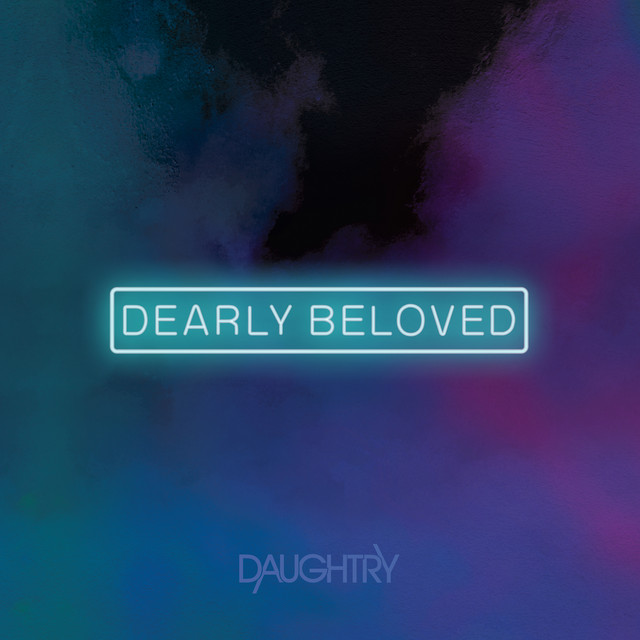
Album Review: Daughtry - Dearly Beloved

When I think of everything that's gone wrong with mainstream rock, no name better encapsulates it than Daughtry. No, I'm not referring to how he made his name on American Idol. I don't care about that, nor have I ever. If that influences the way you think of the music created, that's on you, not the artists trying to make a living. What Daughtry got wrong is the trend-chasing that leaves behind one audience for another, with the hope the new one gains you more fans than will abandon you as you move to places they don't want to follow.

I love the first two Daughtry albums. They are mainstream, pop for sure, and slick as hell, but they're also packed with great songs and melodies. They don't rock the hardest, but I don't care about that. They rock enough, and they sound amazing. But along the way, once 'bands' like Imagine Dragons took over rock, Daughtry shifted gears and tried to make their own demure, tuneless, rhythm-centric album. I don't like that style of rock to begin with, and I certainly didn't like Daughtry's take on it.

But perhaps this is the year of reverting to form. Maybe soul-searching was done last year, and some artists decided they were happier being who they are, embracing the fans they already have, rather than trying to chase down new people who wouldn't give them the time of day without their groveling.

"Dearly Beloved" sees Daughtry going back to the early rock sound, with a few updates. His voice is made for this stuff, and considering he and his co-writers are capable of doing it as well as anyone, it only reinforces what a terrible decision it was to try to be hip with the trends. The early singles "World On Fire" and "Heavy Is The Crown" find the band in their comfort zone, pumping out what are essentially guitar heavy pop songs. They have enough crunch and swagger to still rock, but the big melodies and huge vocals carry the day. I won't say it sounds timeless, but it isn't dated the way "Cage To Rattle" is going to be, and already is.

"Desperation" does start things out on a slow note, with more emphasis on the drum beat in the lethargic verses than on building a big and melodic chorus. It doesn't fall all the way down the rabbit hole, but it doesn't set the stage the way a proper opener should. That said, it does set the stage for this album, because as you listen to the rest of the songs, it becomes clear this isn't entirely a return to form, but rather a hybrid combining the past and the present. Songs like "Changes Are Coming" and the title track attempt to fuse drum loops and the tone of the dark period with more of the big arena choruses of the early records. Does trying to please everyone necessitate no one leaves happy?

That's the question we have to answer, and I wish I could tell you one way or the other. On the one hand, there are certainly enough melodic moments and great vocals to make me happy with the record. On the other hand, many of the pieces leading up to those bits feel as inauthentic as that last record did. This all stems from the fact that in the mainstream, what constitutes rock music isn't what rock ever was. That makes it nearly impossible to try to stay relevant while maintaining your identity. If you want to sound like yourself, you're old-fashioned. If you want to keep up with the times, you're losing your religion.

I suppose what I'm saying is that "Dearly Beloved" is the best album Daughtry could make at this point, so long as he hasn't given up on having rock radio hits. The reality of the situation is that the success he had early on isn't possible today, even with those same songs, so a change was necessary. He realized he went too far, and has corrected course. It still doesn't revert to the mean enough for my taste, but it's a big improvement, and it's all I could have asked for right now.

The Wallflowers have a song called "Nearly Beloved", which I later borrowed for my own use, and that's the most appropriate way for me to think of this record. It's nearly back to being something I can love, but it stops short of my arm's reach. Does that explain it?

Friday, September 17, 2021

Album Review: Rage - Resurrection Day

There are some bands where there just isn't much to say anymore. Rage falls into that category. Other than the changes in lineup that now seem inevitable, the records keep coming with regularity, and they all fall into the category of being fine. There hasn't been anything about Rage in a long time that has set one album apart from the rest, and after years and years of getting the same decent album again and again, what exactly are we supposed to think? Good on Rage for continuing on, and good on them if they feel as inspired as ever, but it hasn't carried over to the audience, or at least not to me.

This being their twenty-sixth album (yes, you read that correctly), there aren't any surprises to be found on a Rage record. Like Motorhead before them, Rage is making music for the die-hard fans, with the minor variations being noticeable only by them. This record sees the return of a two-guitar lineup, but honestly, you can't tell from listening to the album. Guitars are almost always at least double-tracked, so whether it's one player doing it twice or two doing it once each, the record sounds the same.

Peavy Wagner's voice has held up well over the years, and he still has some big choruses in him, but the band splits their time between accessible metal and more aggressive thrash. You could argue that gives the record diversity, but the thrashier songs lack the melodic appeal that makes Rage enjoyable. The title track is the first real song on the record, and it sounds huge, both with the fist-pumping chorus and the orchestral backing. "Virginity" follows with a heavier approach, and it makes for a jarring juxtaposition, because the latter song has very little of a hook to it. Thrash doesn't have to be that way, but it almost feels like a couple of those songs are included to give Peavy a break from having to come up with a good song to riff around.

"Arrogance And Ignorance" could be an apt title, as the song begins with distorted vocals that must be there for a reason, but they sound so terrible I didn't want to listen to the rest of the song to see what came later. It's a perfectly solid song, but throwing in that unlistenable bit before each verse just means I'm going to turn the song off. There is harsh for effect, and there is harsh and painful to hear. This is the latter.

I like the heavy groove "Monetary Gods" sets up, but the song than turns into a bit of a slog as Peavy tries to get political, and ends up railing against the rich without establishing enough context for his complaints. It's not a deep enough dive into the issue he's writing about, so the sarcasm of the chorus could be taken at face value if you aren't paying close enough attention. For a band that isn't known for being funny or clever, it's a risk to ask the audience to take that trip with you. I don't think it quite works.

Look, there are twenty-five other Rage albums, and there's no way I can sit here and tell you this is the best of them. I have only heard a fraction of them, and this isn't even the best of those. It's perfectly fine, but I don't think Peavy quite knows what he wants this version of the band to be just yet. There's groove-metal, thrash, arena rock, and even a pirate-esque song. It doesn't hold together as an album, and I don't think the songs are all strong enough to work as a collection of random songs either.

Rage is Rage, and by this point, you already know if you like them. If you do, this album is more of what you want. If you don't, this album isn't going to change your mind.

Thursday, September 16, 2021

Album Review: Bokassa - "Molotov Rocktail"

Let’s take some of the guess work out of this right away – you know Pro-Pain?  Sure you do, you know Pro-Pain.  Old school NYHC, lots of vitriol and overdriven guitars, simple but direct and evocative lyrics, testosterone for days.

Well, if you took Pro-Pain, and made them a bunch of happy but cynical drunks, the result would be Bokassa’s “Molotov Rocktail.”  It’s a bombastic romp through a tilted Norwegian mead hall, as the punks from Trondheim rumble and swagger through eleven cuts that vacillate between vague social commentary and downright silly.

The first thing that strikes about Bokassa’s new release is that, much in the same vein as we’ve discussed with bands like Destrage, there is always, always a big, melodic, hooky chorus that ropes the listener in.  The verses and music may get wayward in the interim, but the big loop always come back around with a classic punk gang vocal that gives each song a touchstone.

But there’s way more here than meets the eye.  Bokassa could have easily recorded just another beer-swilling punk record, but each track finds a little twist that separates it from both the pack and each other.  Is it the cheerleader chanting of “Pitchforks R Us”?  Is it the delightfully unexpected brass accompaniment of “Low (And Behold)” or “Hereticules”?  The cowbell of “Godless”?  Is it the Cheshire grin of the singalong chorus to the single “So Long Idiots!”?  Could be any one of them, each track has just a little something in there that draws the attention.  There are unusual and ingenious combinations around every corner.

Now, that’s not to say that the pure punk and metal mixture that sets the baseline for the record is of a lower octane.  Nono, there are plenty of super-heavy beats and strong riffs that carry the album.  The album never takes a break, there is no filler or misplaced, poorly executed ballads here; the energy is just as strong at the start for “So Long Idiots!” as it is for the rocky undulations of “Code Red” down towards the end.

It should be said that if you focused solely on the music here, without the intriguing adornments as mentioned above, there’s nothing here you haven’t heard before.  There have been a hundred bands that have sounded like this to some degree – Worthless United and Viking Skull both came to mind when listening to “Molotov Rocktail,” among others.  That doesn’t necessarily subtract from the album – everything here is tightly executed and well-orchestrated.  It just isn’t musically revolutionary.

There’s a lot of meat on the bone here, and fans of multiple genres will find something to like.  The creative flourishes and infectious energy of the album alone are worth the price of admission, and the juxtaposition of sing-song choruses filled with ardently cynical lyrics is an accomplished mix.  “Molotov Rocktail” is a great album, and should not be missed.


Wednesday, September 15, 2021

Album Review: Charlotte Wessels - Tales From Six Feet Under

I should begin this review with some context regarding Charlotte Wessels' time as the singer in Delain, but I'm not going to do that, because it says more that I would have to go back and do some research in order to be able to. Delain certainly established a profile for themselves, but none of their music ever stuck with me, so I was not left wondering what to think when the band's lineup disintegrated.

Over the last year, Charlotte used her time no longer spent on Delain, and the time spent locked down during the pandemic, to start writing and recording music entirely on her own. Other than a guest vocal on one song, everything on this album is Charlotte's doing, which is something I have great respect for. Unlike a lot of singers who will sing anything you put in front of them Charlotte is very much an artist here.

There are interesting textures to the opening "Superhuman", where strings weave in and around a programmed drum rhythm, creating something that sounds modern and fresh. It's the building block for something with a real presence, but Charlotte's vocal line doesn't take it to the next level. Her voice sounds great, but it floats when the song needs something to bite.

That carries through much of the record. Charlotte is exploring the sounds of modern pop quite often, doing it with a clarity of production that shows her skills are quite impressive. Her songwriting, however, isn't able to measure up often enough. Song after song, we're getting nice musical backdrops that sit under vocal melodies lacking the requisite hooks. It makes for pleasing ear candy, but it's a passing sugar high. The parts of music that are the most satisfying aren't present in these songs, and that means all the lovely sounds in the world aren't going to add up to a great record. You need to have either great melodies or searing passion, and this record is too restrained in both respects.

On songs like "Victor" and "New Mythology", the sounds are gorgeous. Charlotte shows a deft touch for building a production for herself, making a record that shines the spotlight on herself perfectly. I can't say anything bad about how she has made the transition to a more pop-oriented sound. That is flawless. And because of that, it's a shame the songs don't have the ability to stick the landing. This could have been the best pivot from a metal band to a pop album in recent years. I really believe that, if only the songwriting was as committed to the change as the production.

We'll call this a case of what could have been. "Tales From Six Feet Under" is a beautiful sounding album, but I don't think that's enough, as much as I want it to be.

Monday, September 13, 2021

Album Review: Robledo - Wanted Man

There are so many new bands coming out every year, sometimes it's hard to keep them all straight. It's even harder when a lot of the people involved move straight into doing other projects as well, which only adds to the confusion. What we're here to discuss today is the first solo album from James Robledo, who is the frontman of the band Sinner's Blood. They have only released one album, which was very good, and already he's on to making a solo album. I'm not sure what that says about the band's future, but that's not what we're here to talk about.

"Wanted Man" sees James playing highly melodic rock, which you would expect from an album penned by Alessandro Del Vecchio. After all, this is at least the sixth album I have come across this year alone that he has written. So you know what the record is going to sound like before you play it, which can be a good thing. It also doesn't sound that dissimilar from Sinner's Blood themselves, which makes me question what the need for a solo album is.

There are natural comparisons to make between this album and some of the others doing the exact same thing. Chief among them would be the Sunstorm album form earlier this year. Ronnie Romero's voice shares similarities in tone to James', and the music is the same slightly heavier melodic rock. Frankly, they could easily be interchanged without missing much of a beat. The big difference, to me, is how free and easy James' vocals sound compared to Ronnie. He isn't straining to add that little bit of rock n roll grit to his voice, which lets the melodies breathe a little more. It also helps that his voice layers beautifully, building huge swaths of vocals to power the choruses.

If we have established James is a fantastic singer, what do we make of the songs he had been given? That's a mixed bag. There are some really good songs here, like the expansive "Dreams Deceive", while songs like "Shelter From Pain" are rather generic. The album follows the blueprint of so many others, so there is very little about these songs that stands apart from Sunstorm's album, or Brother Against Brother, or several other albums.

And that's the big problem. Taken on its own, "Wanted Man" is a fine and solid album of melodic rock with some great vocals. However, I've already heard this style, written by the same pen, sung by voices of a similar tone, multiple times just this year. If you ask me what makes this different than those other two records, there isn't an answer. They meld into one sound, and almost come across like three chapters of a trilogy. And as we should know by now, anything that long needs to be trimmed. The same is true of these records. Three of them is just too much of the same thing, again and again, until even the good songs start to echo one another.

There's also one other point I have to make; "The Mirror Star" by Sinner's Blood is better than this album, so I sort of wish James would have just made another album with them instead. Sometimes the spotlight doesn't shine where you think it does, nor does it show what you intend.