Showing posts with label Blackguard. Show all posts

Wednesday, December 16, 2020

The Best Albums of the Year - D.M's List


Alright, we’re not going to waste a lot of time here – you all know what this is, so let’s get to a refresher on the rules and not waste any time –

Here’s how this works: to qualify, every album must be an original studio composition released for the first time in the calendar year of 2020.  No live albums, no compendiums, no re-releases.  Simple enough.  Only one other rule – it goes to 11.

Also, a brief disclaimer - some of these videos are Not Safe For Work.  You've been warned.

I dare say this is my most diverse top albums list ever.  Without further ado, let’s get a move on:

Honorable Mention) Eyes – Underperformer

It’s hard to find such open dichotomy on a single album.  There’s a lot here that doesn’t work on paper, and doesn’t even necessarily work in the execution, but the album contains a lot of cool moments and is persistently, violently ambitious.  That’s a strange combination of adjectives to be sure, but there it is.  The vocal performance is uneven and jarring, and the music can often descend into madness.  Yet, here it sits, earning recognition in a column extolling the virtues of the year’s best albums.  There’s something about this record that just clicks.  Try it out.

11) Dynazty – The Dark Delight

I dare not put this album higher than this, because it is irrepressibly over the top and cheesy as hell.  But there’s something about it that I can’t shake.  It’s unreasonably fun to listen to, and perfectly tuned to an adventuresome time or a robust night of D&D.  I can’t explain why I like it.  I just do.

10) Mollo Rilla – Viva El Camino

Let’s be clear at the top – not everything on this album works, and there’s no certainly that it’s even meant to.  But no album has reminded so closely of the single effort we got from Them Crooked Vultures as this expansive and varied record.  For an album that falls well within the confines of rock, there’s a sinister edge that lurks not too far beneath the surface.  The album crashes back and forth between sounds, all the while writing melodies and verses that go all the way to the margins and often beyond.  This is an explosive record, filled with roof-raising moments, hypnotic interludes and unhinged catharsis, all tied together with clean riffs and easy to recognize tenets of the genre.  The connective tissue is what makes this album work.  It won’t be for everyone, but those who give it a shot will likely find something that stokes their fire.

9) Psychosomatic – The Invisible Prison

Thrash isn’t dead!  Nevermind that Jeff Salgado sounds a little like young James Hetfield, that’s beside the point.  What Psychosomatic has crafted here is an old-school thrash banger, complete with buzzsaws for guitars and big, wide-open riffs that are elegant in their simplicity.  “The Invisible Prison” doesn’t seek to be anything but what it is – there’s no play at progression or artistic diversity or needless preening here.  The album is a full-speed-ahead battering ram sent to remind us all that thrash, in moments, is just as vital now as it has ever been, and will continue to be.

8) Ghostemane – Anti-Icon


As many of you read in the year-end conversation between Chris and myself (you did all read it, didn’t you?) I am deeply fascinated with whatever the apropos label for this burgeoning genre is.  Until I hear something that feels more comfortable, I am going with ‘industrial rap.’  In the final analysis, they seem so natural a pairing – a genre built to resemble the ceaseless pounding of machinery and a genre that thrives on memorable beats – that it’s surprising it took this long to see the marriage happen.  There is a note of caution; there’s not a huge amount of separation between this album and Ghostemane’s “N/O/I/S/E” from two years ago, which as a single album in 2020 doesn’t mean all that much, but does make one question the genre’s lifespan as a whole if no further innovation is possible.  That’s a problem for the future, though.  In the present, “Anti-Icon” is a killer ride, vacillating between punk and metal and electronic and rap and combining all those in a way that’s totally unique.  To write this off as ‘rap metal’ is to sell very short on its creativity and potential.

7) Turmion Kätilöt – Global Warning

For the second album in a row, I’m going to question the degree of separation between an album and a predecessor, but in this case, the comparison is with another band.  I’m not so sure there’s a great degree of different between this record and Fear of Domination’s “Metanoia,” from 2018, but that’s not a bad thing, because that’s a great record, too.  There’s something about this style of record that’s instantly and deeply infectious, either as a reflection of the catchy, overdriven beats or because of the inherent, almost pop-like insistence of them.  Most people would listen to the album and think that analysis mentally insane, but metal fans know that there’s a certain sensibility to this particular brand of metal that is highly digestible and devilishly melodic.

6) Blackguard – Storm


There are approximately ten thousand words I could write here about this album and how long it took to get to this point, but you’re all tired of hearing it from me over and over again.  We finally got here is what’s important.  “Storm” is everything Blackguard fans wanted it to be – it is the sublime combination of the spirit and energy of “Profugus Mortis” and the power and grit of “Firefight.”  This particular brand of symphonic death metal never really got a chance to shine, and indeed, Blackguard may be the last practitioners of it.  There is a fear here both that the musical world has forgotten about the band in the long wait between albums, and that this may be the band’s swan song effort.  If it is, it’s a fine way to go out, and astute listeners will be sure to drink in the skill it took to brew it.

5) Within the Ruins – Black Heart


I’m not sure ‘progressive deathcore’ is actually a thing.  It sounds kinda made up.  What isn’t made up is how powerful this album is.  There tends to be one album every year that cracks my top albums list because of the sheer force of its will, and this year “Black Heart” is it.  Within the Ruins’ new album takes the best part of The Browning and combines them with a variety and creativity throughout the record’s soundscape that the latter band has only been able to generate in moments.  The uninitiated will hear this album as an unholy pile of smashing and banging, but if you’re willing to listen to what’s actually happening, there’s an underlying sense of rhythmic timing that belies the cacophony laying it on top of it.  The guitars are in their turn both biting and delicate, creating an album that is many things rolled into a single, sonic assault.

4) Denzel Curry & Kenny Beats – Unlocked


I kept going back to this album over and over.  I wanted to absorb it, process and digest the production, track the cadences and rhymes in a way that I hadn’t felt about a rap album in literal years.  Kenny Beats does an excellent job winding his way through seemingly unrelated samples to create a jagged, surreal landscape, but make no mistake – that landscape exists for Curry to stand on and be a star.  He slings words like the great MCs of old, channeling the spirit of Rakim, but makes those words matter by emphasizing them with the bite of DMX.  In a mumble rap world gone mad, Curry represents a breath of positively pure oxygen.  Most shocking of all is that there are four or five distinctly different, memorable experiences on this record, and the whole takes less than eighteen minutes.

3) Master Boot Record – Floppy Disk Overdrive


A year ago, I don’t think I would have been ready for this record.  And I am fully cognizant of the fact that ten years from now, I may look back at this top albums list and say “what was I thinking?”  But there’s something here that’s undeniable.  Sure, long stretches of it may sound like ‘Battle at the Big Bridge’ from Final Fantasy V, but hey, that’s a great tune!  Kidding aside, this is too easily dismissed as ‘video game music.’  The fluctuations in tempo and the depth and range of the pieces, nevermind the endless twisting and weaving and aural combinations, are symbolic of the effort and craft that went into creating this record.  I have talked many, many times on these pages about wanting to hear something different, have a music encounter with something heretofore unheard and wild.  In 2020, this was it. 

2) Blues Pills – Holy Moly!


I’m going to invoke the great poet R. Kelly for a moment, and make reference to “Real Talk” (if you’ve never heard the song and need a good laugh today, I’ll wait while you go find it…….)

…..are you back?  Feel better?  Okay, let’s continue.

Real talk: the song “Dust” is reason enough to have this album at #2.  Especially for where it comes from, smack in the middle of the album, a wicked 12-6 curveball that collapses your knees because the five songs preceding had you looking fastball all the way.  I’m pretty comfortable calling it the best single of the year (though I admit, I probably introduced Alestorm’s “Shit Boat (No Fans)” to more people, but for totally different reasons,) and if the album had done nothing else right, that one transcendent moment would have been enough to deserve a standing ovation.  And yet, Blues Pills gave us a record of great experiences, and one small blemish that is, to my mind, not a musical problem but one of order (“Song From a Mourning Dove” should close the album, rather than “Longest Lasting Friend.)  Blues Pills has been a band on the rise since their ambitious, eponymous full-length debut six years ago, and in 2020, you can’t have a better forty minutes listening to music than “Holy Moly!”  That is, unless you’re listening to…..

1) The Heavy Eyes – Love Like Machines


Instant masterpiece.  Every time, and I mean every time, I was ambiently in my house, cooking or cleaning or doing laundry or whatever, and I wanted an album to put on, this one came to mind first.  Never once did I put it on and say ‘you know, I’m not feeling it, I’m gonna go somewhere else for my fix.’  This is a punchy record that delivers efficient feeling and power in a genre where the temptation to wander is often too great to resist.  The Heavy Eyes only break the four-minute barrier once, and this is the only band I can recall that can make a two and a half minute cut feel like four minutes – and have that be a compliment.  “Love Like Machines” demonstrates effortless mastery of the blues and its interaction with rock and metal, then clothes the whole thing in fuzzy, fat guitar tones and impossibly simple but devilishly catchy riffs.  This album is a must.  Tell your friends.  There’s something here for everyone.

Wednesday, February 5, 2020

Album Review: Blackguard - "Storm"


Glory of glories, the day we dared only dream of has finally arrived!

Studious readers of this page no doubt are aware of my longing for the next Blackguard album.  At the conclusion of every yearly conversation, Chris asks me what I’m looking forward to in the next year, and for every year since it was first announced in 2013, I have listed Blackguard’s “Storm” as one of the premier attraction of the subsequent twelve months.  Long have my hopes been dashed, and yet I kept the faith.

How we got here isn’t important.  What’s important is that we’re here now.

“Storm” is, in short, everything a Blackguard fan could want it to be.  It continues the band’s legacy by simultaneously fusing the farcical high-wire act of “Profugus Mortis,” with the down-and-dirty bulldozing of “Firefight,”  Cutting to the chase, the end product of “Storm” is a textbook in how symphonic death metal (just to mention two of the myriad styles it reflects,) should be executed in the modern era.

And yet, the band accomplishes this awesome feat by making only minor tweaks to their established formula.  Blackguard’s best strength has always been the ability to build atmosphere and strength, properly making a dramatic connection between the theme and pace of their music.  In the case of “Storm” this is most masterfully done during “Clouds,” which serves as a necessary interlude.  The album crashes ahead with the severity of a runaway freight train for the first measure, but “Clouds” is an etheric spacer that draws the listener back in to the gravitas of the album’s last three tracks, which by the by, might be the best sequence on the album.

Diving deeper, even within single tracks, Blackguard skillfully delineates the contrast between high and low tones.  “Visions (of Blood and Gold)” is constructed almost entirely on a foundation of juxtaposition between the arcing melody of a clean guitar and the thunderous rumble of the rhythm beneath.  It creates a depth of field that blends the best of power metal and death metal in a truly unique way.

Much of “Storm,” as we mentioned above, proceeds at a pace that can best be described as blistering, but the band is not afraid to change their pace as the mood suits.  Coming off the airy end of “In Dreams” (itself similar to the transition of “Clouds,”) we are launched into mosh pit fodder with the shambling, pounding gait of “Mourning Star.”  This is the flux point of the album, the end of the first act and commencement of the second, which tells two similar but different stories.

We’ve talked a lot about separation points and transitions for “Storm,” and while it’s true that those are the stand out moments on the record, it’s also true that those are the moment that stand out, if you take the double meaning.  “Storm,” for all its welcome revelations and refreshing breaths in the genre, does suffer from a degree of sameness.  Outside of the immediate, orchestral hook of album starter “By My Hand,” it can take several times listening through the album to really find the distinction between the tracks we haven’t talked about above.  It occasionally feels like the different flavors of guitar solo are the primary changes.

“Storm,” even with that, is a great way to start 2020 and in summation is an album that deserves the listener’s time and recognition.  Blackguard was a rising star upon the time of their hiatus and “Storm” represents the culmination of their evolution, even after a seven-year wait.

The only remaining question to keep fans up at night at this – this album was done years ago.  It took this long to wrest control of it from the label and release it unto the masses.  Will this be the end?  Does the band have an appetite for more?  We can only hope so.

Friday, April 1, 2016

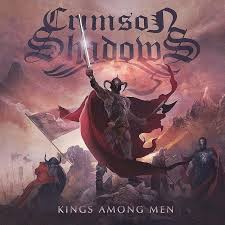
Emerging from the (Crimson) Shadows of Blackguard - A Conversation with Paul Zinay


The Canadian metal scene has reached maturity now, and the wave that crashed full bore onto metal's shore a few scant years back has seen some artists recede back into the ocean, and others make a permanent beachhead marking their arrival.  Two agents of two of the permanent bands, Crimson Shadows and Blackguard, are joining forces, as the energetic and charismatic Paul 'Ablaze' Zinay from the latter is now the front man for the thunderous and powerful former.  On the heels of the news, we sat down with Paul and talked his new band, the circumstances of Blackguard and all things Wu.

D.M: You’re the singer for Crimson Shadows now, how did that happen?

PAUL ‘ABLAZE’ ZINAY: Well, I’ve known the Crimson Shadows guys for a long time.  Blackguard and Crimson Shadows have been doing shows together almost since the beginning of Blackguard, and pretty much the beginning of Crimson Shadows.  We started off close to the same time, give or take.  We’ve been playing with those guys for years, so we became good friends with them.  Cory [Hofing,] their drummer, we’ve known him forever, talked business and all that.  A couple months ago, Cory called me up and let me know that Jimi [Maltais] was stepping down from his position with the band.  [Cory] knew that Blackguard was slowing down a little bit, and asked me if I wanted to join up with them.  At first I wasn’t sure if I wanted to, but he just kept bugging me [laughs].  So he’s bugging me about it, and I told him I had to think about it for a little while.  I knew I had been burned out from touring for a long time and if I joined with them I’d be pulled back into that.  We talked about it, we made sure all the details were right, and I said ‘yep.’  I love the music and I love the guys and I love hanging out with them and being on the road and playing songs with these guys.  So, I started demoing a new song and we’re working on a new record now and I’m really excited for where things will potentially go with this band.

D.M: So you’ve already started working on new material, then?

PAZ: I think there’s between six or eight songs that are musically done.  I’ve done two songs lyrically, but I’ve got more to do, I’ve got to pick it up and get those creative juices flowing again.  It’s been weird, because I haven’t actually written lyrics since the Blackguard record that’s not even out yet.  I wrote lyrics for that, that was a couple years ago, and I wrote lyrics for one Ages song.  It’s one of those muscles that’s in entropy and I need to start working it again, getting used to actually being creative in that respect.  You know, I’m in familiar territory, too.  Thematically, Crimson Shadows isn’t that far off from where Blackguard was.  Now I gotta come up with new ideas.  We’re trying to come up with a narrative for this record, something of a concept.  That’s been a new challenge, but it’s interesting, because now I have the parameters and let’s see if I can do it.

D.M: Not that Blackguard and Ages aren’t, but Crimson Shadows has always been a guitar band first, that’s always been the forefront of their sound.  How do you fit into that?

PAZ: Well, they’re a guitar band in the same way that, like, DragonForce is a guitar band.  It’s a very aggressive, power metal band, is how I’ve always seen them.  They have really great guitar parts and excellent guitar players.  I’m just going to play my role.  As a singer and a frontman I’m going to be there filling in those gaps in the songs.  The songs needs lyrics and they need vocals, and I’m doing that.  I’m gonna try to come up with great lyrics and good parts, memorable.  Hopefully I’m going to be able to add some components to the songs that make them better.

D.M: You collaborated with Crimson Shadows on their most recent album, did that give you greater comfort when they asked you to join, that it was a known commodity?

PAZ: Not necessarily.  They asked me to guest on the record when they were recording it because they were recording it here in Montreal with our ex-keyboard player Joe [Jonathan Lefrancois-Leduc].  We were in town and hanging out with them in the studio.  I was just hanging out and they were like ‘Paul, jump into the booth and do a vocal part!’ Okay, cool. [laughs].  It didn’t really affect my decision making, necessarily.  I genuinely love what they’re doing, just upbeat, fun music to play.

They were trying to get me to do a couple shows they had coming up, well at this point it was earlier in the year, but they had some shows that Jimi wasn’t able to do due to work purposes, this was before he officially decided to step away from the band, they were asking me to do a couple shows with them, a couple American dates, a couple Canadian dates.  It was too last minute, but I was trying to, so I was learning the set, and granted, I’d seen them live a couple times, so I really studied the lyrics and immersed myself in their music, and I was just loving it more and more actually listening to it and not just taking it in live.  I was listening to their set three or four times a day trying to learn it.  That was the process of me actually, officially joining the band, just immersing myself in their music and saying you know what?  I can totally see myself playing these songs live and having a fucking ball with them.


D.M: So, have you made your debut as their frontman yet?

PAZ: No, not yet.  I was learning their set a couple months ago, but there were scheduling conflicts and I couldn’t get out of work.  They wound up going with another guy.  I was learning the set as a failsafe, in case they really needed me on a one-off show.  My first show with them will be in late April, in Montreal, we’re opening for Nekrogoblikon.  We’re doing the Montreal and we’re doing the Toronto dates.  It’s gonna be really fun, I’m really excited.  Playing with Nekrogoblikon, too, I’ve known those guys from way, way, way back in the day.  Blackguard, before we even got signed, we were in contact with Nekrogoblikon to do a North American tour with them and Destroy Destroy Destroy.  This was ten years ago, when we were all kids saying ‘let’s try to get an epic tour together.’  It didn’t end up happening, unfortunately, but Nekrogoblikon is still going, they’re stronger than ever, and still an independent band as far as I know and they’re doing fantastic.

D.M: Aren’t they the band that if you go into their online store, you can give them five bucks and they’ll spit in an envelope and mail it anybody you don’t like?

PAZ: Really?  Holy crap, I didn’t even know about that.

D.M: I feel like I saw that in their online store at some point.  You could toss them a couple bucks and they’d make angry phone calls for you.

PAZ: Do you get proof of this?  Like, a video of them making the phone call?  I feel like that’s something where you could give them five bucks and have no idea if they’ve actually done it or not.  Awesome, nonetheless.

D.M: I suppose maybe what you get out of it is the peace of mind that you paid somebody to do that?  Maybe that’s the catharsis?

PAZ: [laughs] Kind of like saying, ‘I ordered a hitman, but not really.’

D.M: Do you anticipate that for Crimson Shadows you’ll have to change your singing style at all?

PAZ: Not really.  I’m trying to adapt my style a little but more.  Jimi used his lows a lot, and I use way more of my highs.  So I was learning the older set, I’m using more of my low singing.  But in the stuff that we’re writing right now, I’m trying to float a lot more between the two.  Which is what I did for Blackguard for the most part.  But I feel more comfortable in the highs.  The guys don’t want me to be Jimi necessarily, they want me to be me.  So I’m writing my own thing, and when the material comes out and I start writing for it, I’m going it give it my own taste.  We’re collaborating more, because this is the first time I’m working with another singer, too.  Greg [Rounding] and the others guys do clean singing, too.  So we’re collaborating lyrically and stylistically, like, what parts do you want to be on, what parts do you want me on?  We’re working together on a section here or there, so there’s a lot more dialogue that’s going to happen between us as the record progresses.  They’ve given me pretty much free range to do what I want, which is fantastic.  They trust me, this isn’t my first rodeo.  I’ve been around well over a decade at this point, and they invited me into the band because they liked my style and liked what I did.  I’m very much bringing me to this band.  It’s not going to sound exactly like Crimson Shadows with Jimi did.  I’m one hundred percent confident that we’re going to put out some fantastic music.

D.M: Your joining Crimson Shadows; What impact does this have on your commitments to Ages and to Blackguard?

PAZ: Ages is more a studio effort more than anything at this point.  We’re rehearsing to play live and writing new songs, but it’s been slow going since everybody has other commitments and conflicting schedules.  Ages happens when it happens, there’s no real rush to it.

And Blackguard [pauses] There’s not really any conflicts any more, unfortunately.  Blackguard’s not going to be doing too much in the future.  We’re no longer a full-time, touring band the way we used to be.  Crimson Shadows is effectively filling that void, in my schedule, anyway.  Crimson Shadows is my main project right now.  We haven’t made too many official announcements regarding what’s going on with Blackguard, though we are going to in the coming weeks.  We’re gonna answer everybody’s questions soon enough, but for anybody listening in on this, don’t expect us to go back into the full North American tour thing.

I want to tell you everything, but at the same time, I shouldn’t before there’s something official.  I want to spill all the beans all at once.  But there will be a conclusion of sorts to Blackguard.  People are asking what the hell’s going on because we’ve been out of the game a couple years.  Prior to stopping the touring a couple years ago, we had a record that we’ve been talking about for fucking three years that never came out.  The record’s still here, we have it, and it’s still gonna come out and that’s gonna happen this year.  That’s going to be a conclusion.


D.M: I suppose that’s my follow-up question – you were playing tracks from “Storm” live, so what’s the status of “Storm” currently?  You say we’ll see it this year?

PAZ: The record’s done.  It’s been tracked for over a year.  It was bad timing.  It was really, really, really bad timing.  “Storm” should have been released when we toured with Soilwork a couple years ago.  “Storm” should have been released then, and it wasn’t, unfortunately.  Basically, our inability to say ‘no’ to our booking agent kept us on the road, kept delaying the record.  It should have been out then.  If “Storm” was out by the Soilwork tour, a lot of things would have been different.  We just kept touring, it kept getting delayed, there were financial issues that kept delaying the record as well, which is something I’ll be shedding light on in the future.  We’re going to let everybody know the status of the band and of the record.  There was a series of unfortunate events that unraveled leading up to this record which inevitably stalled it.  It got delayed because of touring, then it got delayed because of financial reasons, and then we wanted it out by the end of the ‘Blodsvept’ tour, which was the last tour we did in 2013, but then we got back and we were burned out.  We needed a break and that was it, because nobody’s happy anymore and we were financially strapped.  It’s still an issue I’m dealing with today, the financial issue because of the tour.  It wasn’t pretty where we left off; the last anybody heard from us was the end of that tour, and it was a bad time for a lot of us.  We needed to step away, to have that time to focus on life, and now that we’ve had that time, now we can focus on how to properly release that record.  Everybody’s a little more comfortable.  It was just everything going wrong leading up to the potential release of this record, and then we needed to walk away from music for a little bit.  We were emotionally and psychologically and financially so burned out that we were in no position to release a record and then go tour that.  Then our relationship with Victory Records broke down, so we’re not with them anymore.  In the past couple years we’ve talked with a couple labels about releasing it, that’s something we’ll be talking about in the future when we make an official press release.  But [the record] will come out, and it’s gonna come out this year.  We’re coming together to make that happen.

D.M: Pivoting - a couple kickers before I let you go – for those who don’t know you quite as well, what’s your infatuation with the Wu-Tang Clan?

PAZ: Oh God…where do I begin with that?  Holy shit.  I don’t know if I would call it so much an infatuation so much as I would call it a very deep reverence for the RZA and that group.  I bought “36 Chambers” so many years ago for like, five bucks.  That’s one of the classics of hip-hop.

D.M: It is.  I’ve got a copy.

PAZ: It absolutely is.  By any standard, that’s one of the all-time great hip-hop records.  If you juxtapose that record against any of the popular so-called hip-hop records of today, man, those guys were real lyricists.  They could spit crazy rhymes and it was still saying something, like reflecting their struggle.  A couple of years a buddy of mind lent me a copy of “The Tao of Wu” which is RZA’s autobiography.  It’s part autobiography, part philosophical, the RZA talking about everything that makes him tick and the philosophy that he’s gone through life with.  He talks about the Taoists and Buddhists as well, basically everybody who shaped who he is.  He’s giving an accounting of how Wu-Tang came out of nothing and his vision for the group, the vision that he acquired over time, forming a group and the unfortunate downfall after the fact.  It’s honestly one of the most inspiring stories I’ve ever read in my entire life.  So my love and my infatuation with the Wu-Tang comes out of that.  It’s one of the greatest underdog stories, a group of African-Americans growing up in fucking New York in such a shitty time, coming from the crappiest circumstances, that made it, and were one of the biggest hip-hop groups in the world, beat all the odds.  It resonates not just with musicians but with anybody.  RZA’s got such passion for music and life and philosophy.  I feel like when I’m reading his words, when he’s giving advice, everything seems very applicable.  He takes each of his philosophies and it can be applied to a very real-life situation.  It spoke to me so deeply over the last couple years.  When I was reading the book I was sort of in depression at the time and some of the things in there helped get me out of it.  That’s why I feel this unwavering devotion to the Wu [laughs].

D.M: I’m with you – my rap collection is mostly old school, and I think the newest album I have is from Dead Prez or Saul Williams and those probably ten years old at this point, at least.  Not much that’s new has enticed me.

PAZ: In the hip-hop game, I feel like there’s a magic era.  In any era, there’s going to be artists that speak to you and artists that don’t.  Some of the guys who speak to me have always been the guys who have the best wordplay and who are really saying something, who have a message in their music.  I love Immortal Technique.  He’s got fantastic technique, but he’s also got such meaning in everything he says.  It’s not just abstract verses about bitches or money or the kind of stuff that’s really prevalent in the scene.  I love listening to the guys in Army of the Pharaohs, they’re awesome MCs and so creative in what they do.  As a singer and as a lyricist, the more I become obsessed with hip-hop, the more I feel I need to step up in my lyric life.  I feel this need to try different styles of lyric writing.  I love listening to hip-hop, I love the way they flow through ideas, and it has always given me influence for what I do in metal.  You can totally transpose one to the other, they’re not mutually exclusive.  The more I get into, the more I felt this need to study different styles.  It’s a huge component for me.

D.M: You mentioned that the two aren’t exclusive – hip-hop and metal and rap all come from the blues and are generally championed by people who are outcasts or minorities in some way – do you feel like that’s a connection that the metal crowd largely overlooks?

PAZ: I think it overlooks hip-hop generally speaking because it’s such a different culture.  Granted, there’s a lot of metal heads that I know that love hip-hop, they like Wu-Tang and the old school guys.  When you look at hip-hop music today as you see it through mainstream media, it’s some of the worst shit.  Like the Kanye Wests, the egomaniacs.  Kanye’s got some good songs, but I don’t appreciate what he does.  There’s just a divide in the culture that it’s hard for metal heads to appreciate a lot of what contemporary hip=hop artists are doing.  But if you go back and show Wu-Tang to a lot of metal heads, I think more of them would appreciate it.  Hip-hop with a real message, that’s not overly polished up, it’s not just a drum beat with a piano.  It’s unfortunate there’s such a cultural divide between metal heads and hip-hop, that it doesn’t resonate with people.  But a lot of it does, and people do see through the bullshit and the crappy artists and people are within the genre and have been able to appreciate a lot of the great artists.  I wish there were more metal heads who listened to hip-hop, you bring it up to people and they go ‘oh, that rap shit.’  No, no, no, no, no, go beyond the shit you hear on the radio or in the club.  Fuck the club.  It’s barely art, it’s there for mass consumption, it’s not real art.  It’s a bullshit version of it.  You gotta dig deeper, go to the underground, that’s where people have something to say, words and verses that you’ve never heard before.  I love listening to the new hip-hop artists and being blown away by the way they’re able to construct words and phrases, it’s so inspiring.

D.M: Let’s say hypothetically you’re at a Wu-Tang show and RZA pulls you out of the crowd and up on stage, and says ‘you’ve got one song.’  What’s your one song?

PAZ: Ooooh.  “Da Mystery of Chessboxin.”  That’d be it for me.


For more on Crimson Shadows, check them out on Facebook and Twitter 
For more on the Wu-Tang Clan, check them out on Facebook and Twitter