Showing posts with label interview. Show all posts

Tuesday, March 26, 2019

A Conversation with Erik Barath of Indestructible Noise Command


During the most lengthy hiatus in recent memory, Indestructible Noise Command was in danger of becoming a once-successful band that time had forgotten.  In 2010, they made their triumphant, violent return to the metal world, and everything has been trending up since.  Fresh off the release of their newest album "Terrible Things," we sat down with guitarist and ideaman Erik Barath

D.M.: Let’s start with how you feel about “Terrible Things.”  How does it separate itself from your previous albums, and what’s on there that fans won’t have heard from you before?

ERIK BARATH: On Terrible Things, we went back to our roots. It’s really a pure, old school thrash album so the fans that have been with us from the start will find it a familiar road they are traveling upon.

D.M.: It seems there’s less of the groove we saw on “Heaven Sent… …Hellbound,” (or “Black Hearse Serenade,”) and what feels like a return to traditional thrash – what made you go that way?

EB: Our music is dictated by whatever flows out of me. I just wrote “Fist Go Rek” and that opened a doorway in me. The rest of the album just followed that track as if it were an out of control freight train. We  are very comfortable with where we are right now. I think we’ll live here for a while.

D.M.: As you’ve gotten a little older, has the thrash writing process changed for you?  You can’t be the same person you were twenty years ago.  What’s your headspace like when you’re writing?

EB: Well now with the digital age, we don’t have to all cram into some dank rehearsal space and try and hash out a song. I can now record the song complete in my little studio and the boys just run with it from there. Much easier.

D.M.: One of the things that I appreciate about Indestructible Noise Command the most is your incorporation of the piano or a classical overture to enhance the sense of the moment – where does that come from?  What’s your influence in those moments?

EB: That probably comes from my first obsessions in music, which were Queen and The Beatles. Those bands showed there are no restriction or rules to rock n roll. You can make any other style or genre fit if you are clever enough and I love the challenge of making all the styles I love and feeling streaming through me fit together in one neat package.

D.M.: I believe I described the lyrics of “Identifier” as “deliriously random.”  It’s the album’s best song (one man’s opinion,) but what’s going on there?

EB: The song focuses on the madness following the 2016 elections so at the surface it’s political, but I approached it with poetic comedy. You will get it if you read between the lines. I left it as a bit of a puzzle.

D.M.: Talk about your band’s guitar tandem.  It’s one of the great pairs working today – if you were to compare them to the great metal tandems of then and now, whose company are you in?

EB: Oh I don’t know, Anthony [Fabrizi] and I are so different from each other and I especially from anyone else because I have no proper training, I know no theory so I learned to play my own way, which at times is unorthodox and chaotic, I think that’s why it works and has the sound it does.


D.M.: Once and for all – what happened that the band decided to go on hiatus in the first place?

EB: We had some really solid success with our first two albums in the mid-‘80s and wanted to get with a bigger label that could get us to the next level. Epic Records offered to sign us, and the deal was worked out and ready to sign when the head of A&R got fired. Our deal got cancelled. Then time just kept passing and we were lost at sea with wind in our sails. Being we were just over 20 years of age, we started fighting with each other and eventually called it quits.

D.M.: INC now has more albums post-hiatus than pre-hiatus.  What does that feel like?  Does it feel like you’ve crossed a threshold?

EB: It feels great. We actually feel like we’re at the top of our game and getting better. I have new material written already for the next record and it will be massive.

D.M.: What changed in the industry that made it the right time to end your hiatus and begin the second phase of your career?

EB: Oh, the industry sucks more than ever, it wasn’t that. I just started writing and it just started sounded better and better and it sparked the fire in the band. We do this for us and for the hard core fans that are still with us. The industry is a nightmare these days. And by Industry I don’t just mean record companies, I mean the overall business. It’s a money pit and recouping is harder than ever.

D.M.: Describe your hiatus as it relates to the band members – was there ever a falling out, or was everyone on board no matter how long it took?

EB: There had been talk of [a comeback] for years and years but it was always presented as getting together and playing some shows and I wanted to do a full comeback with new material, the whole 9 yards. It wasn’t until I started writing that it all clicked.

D.M.: As you look around in the modern version of a genre you helped foster, who gets it right in your opinion?  Who are the young thrash bands that are carrying on the torch properly?

EB: Municipal Waste are very cool. Kinda has the fun thrash thing that we were doing back in the ‘80s. Havok is a really solid thrash band as well. I am sure there are others that slipped my mind. The thrash scene is always pretty healthy with newbies carrying the torch.

D.M.: Okay, I gotta know – your band is from Connecticut and your bass player is Dave Campo.  Now, the Dallas Cowboys used to have a head coach named Dave Campo, and he’s from Groton, Connecticut.  Is there a relation there?  How many Campos can be there in such a small state?

EB: You know I have no idea [laughs]. I wish, he could hook us up with some sweet tickets [laughs].

Sunday, March 19, 2017

Spinning Seduction: Talking With The Spider Accomplice

If you have been reading this site over the course of the last six months, you will have picked up on my continued championing of The Spider Accomplice. The upstart rock band has been on a tear, releasing the first two installments of their conceptual "Los Angeles" series about their adopted hometown. Their music is adventurous yet familiar, powerful yet graceful. They are one of the most promising new bands of recent years, and have released the best EP in each of the last two years, hands down. As they prepare for the third and final installment of their trilogy, I got the chance to pose a few questions and find out what this spider still has to spin.


The Spider Accomplice seems to be picking up more and more attention. Do you think it was important to introduce the band, and the Los Angeles concept, in smaller pieces, as opposed to an entire album that could have gotten lost in the shuffle?

VK: I do; currently, there are so many pieces of media to draw our attention that a full-length record often gets short changed. We craft each song with intent and meaning, and when we release them in smaller groupings, listeners are more likely to absorb them.

Arno: Yes, I think this was the best way to introduce ourselves; in smaller batches of songs and keeping the momentum longer than just one release. And I think the songs work together better in small batches, and the story comes across better. People can concentrate on 6 songs easier than on 12 songs. But the key is to keep high standard all the time.

There are three members of the band, and three EPs that will form the whole of the "Los Angeles" project. Is that a coincidence?

VK: Like V from ‘V for Vendetta’, I do not believe in coincidence. ;)

Arno: I think yes. We just needed three EPs to tell the story.

How accepting are your fellow band members of the pink motif?

VK: It was their idea! I have had pink hair for years, and when we were discussing our stage attire, Arno said, “Let’s wear pink suits!” I thought he was kidding at first….Nope! They both were enthusiastic about it, and we haven’t looked back since.

Arno: We all like pink, and our look is unique. So no complains from anyone :)

Every band dynamic is different. What do each of you bring to The Spider Accomplice that lets you be so successful?

VK: On a creative level, Arno brings amazing riffs, I bring melodies and lyrics, and Justin brings artwork and sound design…then we all bring our musicality and see what we can cook!

Arno: As long as there's a good idea behind a song, and we are open minded, anything can happen. But being open minded is the strength we all share. We all have different influences, which hopefully comes across in our songs.

Was it intentional to have the songs showcase such an array of influences, or did it come naturally through the writing process?

VK: It was not something that was designed…we are all products of very diverse experiences and influences, so we write and play what sounds good to us.

Arno: We have lots of different influences, and this world is full of great music, so we want to be as diverse as possible. Just to keep music interesting and fun to play. Most likely it will sound like us in the end.

Sub-question: When writing a conceptual piece, were the songs written specifically for the sound of each part of the story, or did the story evolve to fit the music that you were writing?

VK: For me, it’s simultaneous. Songwriting is very visceral, and it comes out of that moment in time, that experience, and what I’m feeling- that usually informs the story.

Arno: It evolved. But the main thread is always there.

You've been in the industry for a while, so I was wondering what you consider the advantages of being an independent band. Is it in the back of your mind as a goal to grow The Spider Accomplice into a band that attracts a label?

VK: The advantage is we can do whatever the hell we want creatively. Usually a label curtails some of that. However; with the industry in such an upheaval, I rule nothing out- things can change. Whatever avenue is going to make it possible for us to make music- and play it for people who love it- for the rest of our lives is the road we’ll take.

Arno: I'd like to work with industry pros to help getting our music heard. Being independent is hard work and there;s only so much you can do, so it would be great to have people with knowledge of the industry to work with us.

As a writer myself, I'm always interested in the process. What does writing look like for the band? Or for yourself as a solo artist?

Arno: Writing is work too, but the most fun. Someone brings is in an idea and we brainstorm from that to make it interesting and fun for all of us.

VK: What he said!

I'd like to ask about a few specific songs, if I may. "Bromelaid" might just be the most striking song you've released yet. Am I wrong in hearing influences from The Smiths in the guitars?

Arno: Yes, there are influences from Johnny Marr, but also from other great guitarists from the era. I like the way they make music sounding big with very simple style of playing. But also, my influences come from very different genres and eras, from metal to jazz. When you put those together, I hope it sounds interesting:)

When you write a song like that, do you know immediately that you've got something special?

VK: We did-that song has been our baby since it was born.

Arno: I felt it with "Bromelaid". I knew we had something there from the start. And I'm very happy the way it came together.

"You Still Lie" is a very pop-friendly song. How important do you feel it is to write music that has an infectious appeal, that the crowd at one of your shows can sing along with?

Arno: I like the song and it came together very easily. We hadn't done a song like that, and if someone can make it catchy, it's VK. I wanted to make a happier song and there we were:) It's very important to have those kind of songs to break the ice. If a listener likes a song, they can dig deeper to find out the other songs and albums.

"Butterflies In A Beehive" is a beautiful, minor-key sounding song. How do you find the right balance between light and dark in your music?

VK: Lyrically, I don’t try to consciously do that…the words are just what come out of me.

Arno: When we try to make a happier song but we all like minor key songs, the songs come out as both. I think they sound hopeful and beautiful. And it's fun to play between light and dark. I hope they are bit more unpredictable.

The third installment of the "Los Angeles" series is in the works, I assume. When all three EPs are out, and put together into a whole, do you have any plans for where the band goes afterward?

VK: I have some ideas….. ;)

Arno: As long as I can write and play more songs, I'm a happy camper. Third part of the "Los Angeles" will sound different, again. And I'm already very excited about it. That's the priority right now, and after that, we'll see what's the best way to release new music. Will it be one album, or double album, no one knows yet:) As long as we keep working hard, and keep the high standard, anything can happen.

I know it's hard for independent bands to play live as much as fans would want them to, and that you've commented trying to explain the reality of touring. How important a part of being in a band is playing live for you? What do you get out of a Spider Accomplice show?

VK: If we could play every single night, we would. We love the live show, we love to tour, it’s the best damn thing on earth.

Arno: Playing live is very important, but it requires money to travel and advertise the gigs. All the money we make, we put in the band. But it seems there's never enough:) On stage, we give all we have, but we try to maintain dynamics. That's easy because we have a wide array of songs, but we always take the listeners into consideration by not playing too loud and showing variety of songs and feelings.

Finally, are there any other projects you're working on that you would like to tease?

Arno: Only The Spider Accomplice.

To hear and buy "Los Angeles: The Trap", and "Los Angeles: The Abduction", head over to The Spider Accomplice on Bandcamp.

And to keep up with the band, like them on Facebook.

Tuesday, March 7, 2017

Blessed By The Music: Talking With Neal Morse

Neal Morse is one of the most prolific artists, in any genre, in the last twenty years. Since coming on the scene with Spock's Beard, Neal has released countless albums with that band, on his own, and with Transatlantic and Flying Colors. He is also one of the most spiritual lyricists working on the prog scene, a facet that not only sets him apart, but imbues his music with a feeling unique from most everything else out there.

With the upcoming release of the DVD set chronicling the epic Morsefest 2015 event, I had the chance to pose a few questions to prog's preeminent songwriter.
The new Morsefest 2015 DVD set chronicles the second event celebrating some of your solo albums. What is it that draws you to writing these big, conceptual style albums that you've done so often?

When I was a kid, I was involved in a lot of big musical projects through the connections with my father. I sang the lead in an opera when I was nine years old when I saw “West Side Story,” and was quite taken with it. I think I've always wanted to do "big" pieces of music, and I love writing to a story. It's something I really calls to me and calls forth the music as well.

The Neal Morse Band is a different entity than where you were making those albums as a solo artist. What do Eric and Bill add to the performances of the older material?

Perfection! They play all the music with such passion and skill it's amazing. Also, their voices are so great and the vocal blend between all of us is so special we can bring that to the older material as well. Really brings it to life and a great way. 


You've performed suites of "?" before. How hard is it, as a musician with so much material in your catalog, to pare down the music to fit in the time-frame of a single show?


It is a challenge when many of your "songs" or 30 minutes long! It makes it very difficult to pick an encore! But at Morsefest, it is generally easier, because we choose what albums we are going to play far in advance so there isn't a lot of discussion about it. We know what we're doing.


Between the success of Morsefest, and the reception "The Similitude Of A Dream" received, do you feel you have found momentum in your career, and that your profile is growing?


It seems so. To quote this song, "we've got some new momentum, we better keep on going!" Yeah, it seems like with the new album and all the concerts going so well that the band is really killing it right now. I mean that in a good way of course. :-)  It's pretty amazing what is happening and I'm just trying to fully appreciate it and soak up the blessing of this time.


You've made countless albums with Mike Portnoy. It's well-established how close a relationship you have with him, but I'm curious; what is it he brings to the writing and recording process that makes him so invaluable?


Mike is so much more than just a tremendous drummer. He brings incredible arranging skill as well as musicality and vision to all of our projects and albums. He's also really enthusiastic, like when he loves stuff he just loves it times 10! And that can be really helpful in the studio maybe when everyone's confused and wondering whether what we're doing is right and good or not, Mike very often with his enthusiasm will push things through that are very good. He also has an incredible intuition about him about what the right approach is and where the piece should go next. His contribution to our many albums is highly valued.


Having released so many albums, are there any that have been received by the public in a way you weren't expecting, either for better or worse?


Yeah, sure. I was pleasantly surprised how well received THE SIMILITUDE OF A DREAM has been. Man, people are really going for this album in a big way. I've been disappointed sometimes with the response to some of my song oriented albums like SONGS FROM NOVEMBER. I always think if you really put your heart into an album and do it really well and it's got really good songs on it that it will eventually do well, but the sales on that one were pretty weak. I still think it's a great album. Oh well… Onto the next!


One of my favorite songs of yours is "The Change". Is it difficult to have great songs like that one which weren't on one of your bigger prog albums, so they don't get the appreciation or attention you might think they deserve?


It's strange in my world that what is generally thought of as commercial is uncommercial in my world and vice versa. So, yeah, it's weird that some of my songs that are a little more normal, if they're on an album of normal songs they don't get heard as much. I'm just glad to have an audience at all actually and to be able play music for a living is amazing so, praise the Lord!


These involved prog albums aren't all you do. My favorite of your albums are actually your singer/songwriter works, "God Won't Give Up" and "Songs From November". Are those albums you make for the enjoyment of it, or do you think there are lessons to be learned for your prog albums from writing simpler songs?


I just like to mix it up. After I've done a big Prog epic many times I'd like to just sit down and write some simple songs, you know? So I like to do different things and not always the same kinds of projects. So, yes I guess it is for my own enjoyment! :-) Hopefully it's for other peoples enjoyment too. 

As a songwriter myself, what I love most about your music is that you focus on writing great songs and great melodies, which can be rare in prog. Do you think that prog musicians now, who can grow up listening to nothing but prog, miss out on the advantages you had growing up in a time when music was less segregated, and you could be influenced by more different sounds and approaches?

Possibly, I don’t know, but I do always try to tell younger musicians and writers to always have a song in their epic pieces. It's really important to always have singable melodies and catchy song parts in amongst the instrumentals. That is something that people tend to drop out these days.


You are an incredibly busy musician, with the Neal Morse Band, Flying Colors, and Transatlantic. Do you have any plans, or thoughts, to making another singer/songwriter album in the future?


I do have a lot of half written singer-songwriter type songs right now. While I'm on vacation I'll just sit down and plunk out a few ideas. So I have quite a backlog of that right now, but I don't know with all the touring going on how long it will take me to get into all those ideas and finish them. We shall see.

Finally, less of a question this time. Your music is important to so many people, both spiritual and not. I think that's because of the positivity and the joy you put into it. What does it mean to you to be able to bring that happiness to your listeners?

It’s funny. When I was trying to get a record deal as a singer songwriter in the ‘80s and ‘90s, my music became more and more somber. I feel like I became a brooding songwriter. You know what I mean? And now I'm in such a different place that I can write from a place of deliverance and joy. It's really great to be able to impart that to others, but really all I can say is glory to God, because I was not like that before! It's really something that he has done in me and I'm glad it comes across in the music that I'm writing because I think that that's the greatest feeling that I could share. 

Thanks a lot man! God bless,

For information on everything Neal is working on, including ordering the Morsefest 2015 DVD set, go to Radiant Records.

Friday, August 19, 2016

The Continuing Evolution of a Devil - Steve Janiak of Devil to Pay


Fresh off the release of their new album, "A Bend Through Space and Time," we sat down with Indianapolis' own Steve Janiak, ideaman, vocalist and all around decent dude from Devil to Pay, one of the greatest independent metal bands going.  We talk his album, his band, his outlook, and a few other wildcards.

D.M: Let's talk about "A Bend Through Space and Time" - what's new for this album?  What part of it do you enjoy most?

STEVE JANIAK: A number of things, namely, we went to a different studio for the first time, Russian Recording in Bloomington, Indiana. Mike Bridavsky was at the helm and he is an immensely talented guy.  The other difference was the timeframe, we normally stretch out our recordings and take a month or more, cutting some here and some there after basic tracks are done. This time around we did everything in one week, finishing the weekend with mixing.

I have always enjoyed the creative parts of making music, writing, jamming, listening and reacting. Like tuning in a signal from outer space, it's part discovery and part following your gut instincts.

D.M: All the DtP records sound a little different, and this one is no exception - is there a conscious effort to shift sounds ever so slightly?

SJ: Not at all. We are merely doing what we always do and evolving along the way. You start at point A and end up at point B and dream about point C. Maybe unconsciously there is a desire to not repeat yourself, but it's never anything planned.

D.M: Do you think the albums are influences by what you're listening to at the time of conception?  If so, what are you listening to now?

SJ: Great question. I think it is possible to be directly influenced but unless someone else can point it out to me, I am too close to the material to hear any influences, beyond something obvious. Lately I've been listening to the onslaught of killer releases from Ripple Music, but I tend to go back to old favorites when I drive or clean the house.

D.M: When you're sitting around brainstorming riffs, when do you know you've hit upon a really good one?

SJ: Mostly you don't. Many times you have a buzz on and it all sounds spectacular in the moment. Later you listen to the recordings and the cream definitely rises to the top. We have hundreds of improvisations and rough ideas recorded. I go back and catalog them and each rehearsal becomes its own album, so to speak, with titles. The majority of these songs came from jams right after the last record came out. We have an insane glut of material, but our process is very slow.

D.M: How do you know when a record is 'done'?  Is it ever done?

SJ: [Laughs] The album is done when your time expires and the studio kicks you out.

D.M: Following the optimism of "Fate Is Your Muse," is there a different message on this new record?

SJ: Yes and no. Quite a few of the songs are about the choices we make. "Kobold in the Breadbasket" is a fantasy romp that is a disguised parable for our relationship with nature. "The Demons Come Home to Roost" is a warning from your own vice when you spiral out of control. "Recommended Daily Dosage" is a lament about our attitudes about health and the health care insurance industry. "Don't Give Away the World" being another cautionary tale of letting someone else dictate what you believe.

Beneath all of the songs is the basic idea that there is responsibility for what happens in life, even "Your Inner Lemmy" has teachable moments.

D.M: It's been roughly five years since your epiphany that preceded your previous album - mentally, where are you now?

SJ: I am still in the same space, without a doubt. I'm less in the 'study' mode these days and more in the 'apply what you learned' phase. I believe intention and expectation and belief are the cornerstones of turning your life around. All of these things have been slowly progressing since that initial event.

D.M: The last time we spoke, you were doing a lot of research into quantum theory and paranormal/metaphysical 'stuff.'  Where did that take you?  

SJ: Well, to be clear, the quantum theory stuff is pretty interesting but tough to relate to everyday events, not to mention difficult to wrap your head around. The metaphysical stuff I would almost consider a state of mind. It definitely influences how I perceive things, people, and events. At the time, it was as if a veil was lifted, and it can never be replaced. It doesn't matter how hokey it sounds, I found my comfort zone. Things have only gotten better in my life and most importantly of all, my attitude about the future is not the pessimistic, overly-critical, negative mind warp that it was in the distant past.


D.M: Your band has had a fairly solid lineup for a while now, which many independent bands struggle with - how do you keep the circle close knit?

SJ: We laugh about it now, because we've had our share of turmoil and disagreements, but our main focus for a long time has been 'let's write some music and stop worrying about the rest'. We're going on our 15th year as a band, it sounds so crazy to say it out loud. We all have other interests and other projects, and I suppose it fills some need to keep striving musically and song-wise, but if I had any advice for bands wanting the longevity thing, I'd have to say "don't sweat the small stuff", or "don't sweat at all", or maybe just "enjoy the ride?" Life is short, why you mad, bro?

D.M: What inspired you to write a song for Lemmy?

SJ: It was an accident. In 2013 Rob came in between some jams and started playing the main riff, and I asked him what it was. He had no idea at the time. So my synapses all fired off and I said, "we should make that a Motörhead type of jam", thinking it would make a fun B-side for another seven inch. I named it that same night. It became one of the ideas we went over and over. Eventually he thinks it's an Overkill riff, but by that time we already had the rest of the parts and some vocals. Months go by and we start looking at recording the album, the song is fully fleshed out and I have the base melodies worked out in my head. And of course we all loved it, now we have to put it on the record! I went through a ton of Lemmy quotes and tried to do Lemmy justice with my paraphrasing. After we recorded it, it sounded really huge. In my head I kept thinking he would someday get to hear it, then a few months later, he just died. I couldn't believe it. We shot a video and released it early as a tribute, in January of 2016.

D.M: Your cover art is usually more abstract or subtle than the one for this record - how did it come to be?  Are you the caveman?

SJ: I had seen some of W. Ralph Walter's art online and I was blown away. He was a friend of friends and I hit him up and asked if he'd be interested. I came up with this basic concept of a trans-dimensional alien goddess who exists beyond space and time coming down to breathe living knowledge into this caveman. Which is kind of how I feel about humanity and civilization in general. We are all stuck here waiting for something more, yearning in every direction, but can't quite see it... and I think it’s right under our noses.


The caveman in the picture is actually W. Ralph Walters himself, he painted himself in there. I have heard a couple interesting takes on the cover, one from a German reviewer, saying something about 'an alien stripper and some hippies', but the funny ones are the people who think it's Pepper Keenan from Corrosion of Conformity.  That is pretty entertaining.

D.M: Give me a preview - what's gonna happen with the Colts this year?

SJ: Well I am an optimist, generally speaking. I think if the coaches and the players can learn to stop worrying, and love the football, they could march right to the Super Bowl. But if I had to guess, I would say they're probably going to do fairly well this year and go pretty deep in the playoffs, but it's hard to gauge after all the injuries last year. I'll do a meditation now and picture Andrew Luck hoisting the Lombardi trophy after a year of ups and downs, then, when they do win, you can point to this interview and people might think I'm the next Edgar Cayce!

For more on Devil to Pay and to keep up on the latest news, check out their website and stay up to date with their Facebook page.

Thursday, April 14, 2016

Readying for the Next Round-Up: A Conversation with The Texas Hippie Coalition


It seemed an impossible dream as little as seven years ago, but The Texas Hippie Coalition has worked and toiled to build their momentum into a surging longhorn stampede that is giving the people what they want and knocking on the door of metal's elite.  As the red dawn of their new album "Dark Side of Black" approaches, Big Dad Ritch sat down with us to talk his band, his direction, the group's chemistry, and barbecue.

D.M: Let’s talk your new record – what’s new and different on this one?

BIG DAD RITCH: I think it’s just a darker approach than previous albums.  We always stay true to ourselves and where we come from, from a Texas attitude and red dirt ways.  But we have really turned up the heavy a notch, you know what I mean?  Try to make this album a little bit heavier than previous albums.

D.M: New producer for this record, too, now working with a guy who used to produce Pantera, what’s that like?

BDR: Oh, it’s freaking awesome.  You know, me and Sterling [Whitfield] have known each other a few years, know each other from a few places, having mutual friends, somebody we can reach out to whenever we need something.  I always wanted to work with Sterling, just in the previous albums, with the label, I wasn’t privy to picking my own producer, they always picked up two or three and sent me down that path.  ‘Pick one of these guys.’  This time around, I just looked straight up and down and said ‘this is who I want to work with,’ and they made it happen for me.

D.M: When people hear Texas Hippie Coalition, their automatic name association is with Pantera – do you resent that connection?  Is it a bad thing that your bands are so closely associated and people might overlook you?

BDR: If it could be a relationship like Waylon [Jennings] and Willie [Nelson], that would be awesome.  I think that the fact that I am most definitely influenced by Phil [Anselmo] and by all things Pantera – I really do think that many of the songs that we write Pantera wouldn’t venture to write.  It’s the attitude that we bring, and also my lyrical styling is a little bit different than Phil’s.  I think the things we do have in common is the true realness of Texas and that real power groove that you can’t escape.  If you listen to the albums in their entirety, people will say ‘oh, I heard a little ZZ Top in there,’ or ‘I heard Pantera there.’  It’s always good to hear those things because those are people you aspire to be like.  But it’s also good when you hear people say ‘I heard some black, dark, kinda Johnny Cash stuff in there.’  That’s when you know that everybody’s getting everything you’re putting into the chili, you know what I mean?

D.M: To that end, your love of Johnny and Hank and Waylon and Willie and all of them is very public, but on the heavy side, who are you looking to for inspiration?

BDR: Inspiration really can come from everywhere.  I can be inspired by a country song, a hip-hop song or really most anything, but mostly lyrics come from life.  When it comes to writing lyrics, I draw from a lot of people, Bob Marlette, Michael Hayes, Cord Pool, you never know what I’m going to pull out of my hat.  That’s how you get stuff like “Knee Deep” which represents the southern red dirt country feel that we have.  Then you get songs like “Hit it Again” which are definitely representative of the southern rock vibe, rock and roll, southern rock.  You get into the heavy stuff, the power groove, you can tell where some of our influences come from.  You listen to me lyrically, you can definitely tell that my influences come from some of the greats, and some of the best out there today.  Like Clutch.  I love Clutch.  I’ve seen Pantera probably thirty-five times I know for sure.  I’ve seen Clutch about twenty times as well.  Anytime somebody says ‘hey, Clutch has got a show, you guys wanna open for them?’ I never even try to find out what I’m getting paid, I just say yes.  I will do that show for the price of the ticket.  Being out on Mayhem [Festival,] there were a lot of great bands the year we were out, we got to see a lot of the heavier side of the music field.  I think all of them, Mushroomhead, Ice T, all of them had a little bit of impact on us, there’s something to this movement, and we don’t have to confine ourselves.  We can become free-roaming.  That’s the great thing about being in this band, we can lend ourselves to a country tone, a red dirt tone, a rock and roll, let’s get out and party Motley Crue-type vibe, and then also get out there and throw the heavy stuff on you that may have been from Black Label Society, Danzig or Korn.  A lot of people try to get on one channel, we’re trying to tune it all in.

D.M: You mentioned Mayhem – you guys were out there, it increased your exposure, there were a lot of people who may have been there for other bands but got tuned in to you – were you disappointed to hear about the death of Mayhem?  How did it help your band?

BDR: When I left [Mayhem] I went to speak with John Reese.  People often say that we’re hard to work with.  Man, if you go to a club and speak with them and the people in the front of the house, they’re gonna let you know that we’re one of the easiest people to work with.  In the moment, we are easy.  The one thing that’s hard is that we don’t pay to play.  And we won’t go on your tour and get paid nothing just to go on your tour.  We’re not young kids with parents taking care of everything.  Every bill that’s being paid, we’re paying that bill.  And that was one thing John Reese said, we kept pushing and pushing and pushing and he did purchase us.  He said one of the reason people may perceive us as being difficult or hard to work with is because we’re no pushovers.  And we’re really not pushovers.  We stand strong for what we believe in, and what we believe in is the almighty dollar [laughs].  John Reese came out to a bunch of the shows, and a lot of the bands on the tour would be surrounding our stage, on our stage and be there with us during our set.  All coming out and even getting in our prayer circle, our positive energy circle, just loving what we do.  John Reese told me ‘I’m so glad I got you guys, because these Mayhem fans are loving you guys, and I’m so glad I got to introduce you to larger crowds.’  At the end of everything, I went to his office and his people and I told him that up until this tour, everything we are to this point, we’d done it on our own.  But everything we do from this point forward, John Reese and Mayhem definitely played a role in what Texas Hippie Coalition is becoming and will become.  They definitely deserve our respect and our gratitude.

D.M: A quick aside – ten, fifteen years ago, did you ever say to yourself ‘someday I’m going to hang out with Ice T?

BDR: [Laughs] Never!  I never did.  I love Body Count.  I have this thing about one-man empires, which is something I aspire to one day be, the likes of Rob Zombie, the likes of Ice T, the likes of Ozzy Osbourne.  Those are my idols and the people I look up to.  Quite often when people talk about me and the people I look up to, it’s Nikki Sixx, bass player, not a frontman.  Pepper Keenan, guitar player, not a frontman.  The people that inspire me to be better like Vinnie Paul.  He’s a drummer, but he has his hands in so many different things and he’s just growing his brand, expanding his name.  When I met Ice T, the day that I first met him at the first [Mayhem] show in California, I stepped off stage and at the bottom of the stairs is Ice T and his son, and he looks up at me and he says ‘man, I just wanted to tell you, you are one bad ass mutha fucker.’  And I said, ‘damn it, Ice T, if we could take the stage and I could give you this mic and you could announce that to all these people, ‘cause I have been telling them for many years now that I am a badass.’ [laughs]  ‘And I believe that a lot of them believe me, but if you go up there and back my claim, I know damn sure they’re gonna believe me.’

D.M: Bending back to your new record – what’s your writing process for an album and was it different this time?

BDR: You know, I am constantly writing lyrics in my head.  I never write anything down on paper until I go into the room to sing.  And then I really only use it for reference, so I know the difference between when I’m saying ‘yes, we will’ and ‘you know we will.’ [laughs]  Just to make sure I’m not tripping over words.  I always keep all that gathered up, and when I officially started putting songs together for this album, I wanted a darker approach.  The process with each and every song writer I work with, we either go to their place or I bring them to my lake house, we work on songs.  This album was all written and produced very quickly.  Fastest I’ve ever done an album.  I wanted to make sure this album was not seamless, that this album wasn’t perfect.  I wanted the seams to show, I wanted there to be imperfection, I wanted there to be a feeling of rawness.


D.M: Cord Pool – when he first joined the band he was super young.  Now that he’s had a few years to settle in, as you watch him, how has he progressed?

BDR: When he first got in the band, my bass player, John Exall, said ‘this guy is not the guy.’  I told that this was the guy who was going to get us down to one guitar player.  This guy is that good, he will one day be revered the same way [Eddie] Van Halen is revered.  He said you’re crazy, it’s never gonna happen, we need to find somebody already in the business, already knows the business, is mature.  Now, my bass player’s like ‘dude, if ever in my life I was wrong and you were right, this is the time, because Cord Pool is the man!’  I said ‘damn it, John, he’s a dang guitar hero and he just doesn’t know it yet.’ And that’s the best kind.  Most of these guys think they’re guitar heroes and they’re just average guitar players.  That’s one of the main reasons I went after Sterling Winfield, was to have someone who was used to working with a great guitar player, but could still pull something immaculate out of someone who already thought they were the best.  We all know Dime[bag Darrell] not only thought he was the best, but he was the best.  Cord is starting to come into his own, he started helping me write some of the songs on this album.  Up to this point he’d only written one song in the past, and on this album he’s a contributing factor on three or four and the complete contributing factor on two.  His mechanical styling throughout the album is on point, with the rhythms, but where he steps above on this album is in his leads.  They are immaculate.  I can honestly say on almost every album I’ve ever made, I am the high point.  I just say that because I’m cocky, I’m arrogant, I’m a dickhead.  On this album, there are times I say Cord shines above all, and when there’s someone in the band who can do that, especially when I think so highly of myself, that’s a mountainous thing.  Cord is a bad boy, and he’s going to be a bad man very soon.

D.M: Is he old enough to drink yet?

BDR: He is!  [Laughs] He is, but he don’t like us to say anything about his drinking in case his mama finds out.

D.M: You and John Exall are the last remaining originals in the band, what’s your relationship with him and are you two the heart and soul of the Texas Hippie Coaltion?

BDR: From the very beginning when I wanted to start this band, I was a fishing guy and I had a company called Five Time Productions where we put on UFC-like fights, we had cages.  I used to say if it starts with an ‘F’, I do it, I fuck, I fight, I fish.  When I wanted to start a band, John was the first guy I talked to.  He said let’s do it.  Ever since the beginning, if there’s fixing to be a gunfight, John is the guy that he’s not waiting for you to ask him to join you in the street to fight these guys, he’s already got his guns on and is handing you your belt with your guns in it and is saying ‘let’s go shoot ‘em.’  [Laughs]  He is ready to go to war, anytime, it doesn’t matter.  When it comes to this cause, which is Texas Hippie Coalition, I am always about it, but in the same breath, John fights for this cause every bit as hard as I do, every minute of every day.

D.M: Getting to the important stuff – who makes the best barbecue in Texas?

BDR: Probably me.  Right now, I’ll tell you, I don’t eat steaks anywhere but at my house, because nobody can cook a steak better than me.  And I don’t very often eat barbecue abroad unless somebody says there’s a great joint.  I do have a little barbecue joint in my hometown called Randy’s, used to be Lou’s, I go down there and I get me some brisket every now and then.  But I never take his barbecue sauce, and I think he gets offended, but you know me, I don’t care.  That’s because my barbecue sauce, Red River Red, is the best sauce in the nation.  You can’t keep it bottled, we sell five hundred gallon vats.

D.M: You’ve been all over the country, have you found anyplace that compares to Texas barbecue?

BDR: Yeah.  Kansas barbecue is a little too sweet for me, Tennessee is just getting something wrong in their barbecue.  Down in Georgia though, every now and then I can get a good dry rub down in Georgia, once in a while I can get some good sauces in Georgia.  They’re very competitive in that market, but I would have to say that Texas is the home of the best bbq.


D.M: I recently was down in Texas and had the whole boot culture explained to me. So, who is your boot ‘guy’?

BDR:  Whatever’s on sale.  You know, I ain’t like those girls out there, I can handle just taking whatever’s on sale.  As long as it’s got real cowhide.

D.M: Does that go for your hats as well?

BDR: Actually, Jason Aldean gives me all my hats.

D.M: Other important stuff – should the Cowboys go get Johnny Manziel?

BDR: [Laughs] Man, I like Johnny Football.  I really do.  I even like his cockiness at A&M.  He kinda reminds me of, well, not every highway patrolman, because there are a lot of good highway patrolman, but he’s kinda like that one highway patrolman who’s just a little too proud to be behind that badge.  Even if that’s kinda conflicting with what I like or dislike, if we only had to go to him three or four games a year, since it seems apparent that if Romo’s in he’s not gonna play a full sixteen games, why not have somebody with the fire of Manziel?  Or hell, if we can pay him very little money, I’ll take Tim Tebow back there, because I think if Romo was out for four-game skid, I think they could at least get us two of those four.  [Laughs]  I’d rather spend the money on defense, definitely defense.  We’ve got one of the greatest offensive lines in the NFL, so we just need to find that running back who can take it to the next level with the running back, because you could see without Murray it hurt us.

D.M: A lot of people’s first exposure to the Texas Hippie Coalition was years ago when you appeared, of all places, on the Jerry Springer show.  How did that happen?

BDR: Man, it was just weird.  Jerry Springer’s bodyguards are all Chicago police.  If you know anything about Chicago, you know Chicago police have one of the hardest jobs on the planet.  Those guys gave us a holler about doing some stuff with them, we were all about it.  Across the United States, it seems like the alpha male types really like to work out to Texas Hippie Coalition.  In New York we get police escorts, in Philadelphia we get police escorts, in Florida the police pull us over [laughs].  Out in Arizona, the SWAT team always sends us messages from out there, all those guys send us stuff about how much they love THC.  I always tell people that if we’re playing in Tulsa, you should rob a bank that night, because every police officer will be at that show [laughs].  Whenever, Pete is his name, he gave us a holler, said hey, why don’t you come do the ‘Jerry Springer’ show, Jerry would love to have you.  So we did the show and did one pay-per-view as well.  It was hilarious fun.  As you know I was a bodyguard in the TV one, and I dang near got thrown down to the ground by a big ole’ girl.  It was one of the funniest things in my life.  Springer, when he was talking about how the guy couldn’t keep his pants up, the guy said ‘well, I’m a big guy, I can’t keep my pants up,’ and Jerry asked me to stand up and said ‘he’s a big guy and his pants are up and you can’t see his underwear,’ so I told him that’s because I don’t wear any.  The crowd started chanting ‘show us!’ so, it’s not on the TV show, but right to Jerry’s face, I said ‘it’s my goal in life that more people see my ass than see your face, Jerry, so here we go’ and I dropped trou and let everybody see my ass!  [Laughs]

D.M: We’ll get you out of here on this – as you said, you’re not kids, you have some perspective and experience.  Dating back to the beginning of your band, what’s something you could do differently if you could, and what’s your advice to young bands out there?

BDR: I probably wouldn’t do anything differently.  One thing I might do is realize a little bit earlier is that every guy you take the stage with the first time is not going to be there the hundredth time.  And that every guy you take the stage with the hundredth time is not going to be there the three hundredth time.  In this band, we’ve seen guys – Wes Wallace left and came back, Timmy Braun has left and come back, The Kid [Ryan Bennett] left and came back.  We’ve got a lot of good friends we’ve made along the way, but everybody’s gotta follow their own career path.  Some guys just couldn’t ride the bull for the full eight seconds, so they left for that reason.  Other guys just couldn’t keep their nose to the grindstone and pay attention to what’s important in the task at hand.  If you go out there every night thinking you gotta do drugs with everyone that offers, of if you gotta go drink with everyone that offers to buy you a drink, the next day when you go to take the stage, you won’t be a hundred percent.  And those people in the audience are paying for the hundred percent show, they’re not paying for the eighty-five percent show.  So, in life, I wish that at an early age I would have understood that I am gonna hurt relationships and I am gonna lose friends.  I wish I would have realized at an early point that I don’t have to drag all this on until the point that it becomes painful for everyone.  My advice to anyone out there with music is that listen, you’ve got a band.  There’s four of ya.  One of you quits, that’s doesn’t mean the other three have to quit.  There’s another guy out there.  That drummer quits, believe me, there’s another drummer out there who wants that spot, who wants to be in that band.  Go get him.  Get him in there and keep on going.  If you don’t think a band can go on going through endless amounts of people, Fleetwood Mac’s one of the biggest bands ever in the history of music, and they’ve had over sixteen band members. [Laughs]

Friday, April 1, 2016

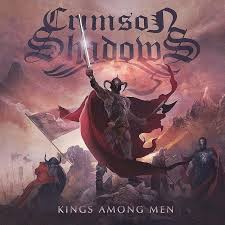
Emerging from the (Crimson) Shadows of Blackguard - A Conversation with Paul Zinay


The Canadian metal scene has reached maturity now, and the wave that crashed full bore onto metal's shore a few scant years back has seen some artists recede back into the ocean, and others make a permanent beachhead marking their arrival.  Two agents of two of the permanent bands, Crimson Shadows and Blackguard, are joining forces, as the energetic and charismatic Paul 'Ablaze' Zinay from the latter is now the front man for the thunderous and powerful former.  On the heels of the news, we sat down with Paul and talked his new band, the circumstances of Blackguard and all things Wu.

D.M: You’re the singer for Crimson Shadows now, how did that happen?

PAUL ‘ABLAZE’ ZINAY: Well, I’ve known the Crimson Shadows guys for a long time.  Blackguard and Crimson Shadows have been doing shows together almost since the beginning of Blackguard, and pretty much the beginning of Crimson Shadows.  We started off close to the same time, give or take.  We’ve been playing with those guys for years, so we became good friends with them.  Cory [Hofing,] their drummer, we’ve known him forever, talked business and all that.  A couple months ago, Cory called me up and let me know that Jimi [Maltais] was stepping down from his position with the band.  [Cory] knew that Blackguard was slowing down a little bit, and asked me if I wanted to join up with them.  At first I wasn’t sure if I wanted to, but he just kept bugging me [laughs].  So he’s bugging me about it, and I told him I had to think about it for a little while.  I knew I had been burned out from touring for a long time and if I joined with them I’d be pulled back into that.  We talked about it, we made sure all the details were right, and I said ‘yep.’  I love the music and I love the guys and I love hanging out with them and being on the road and playing songs with these guys.  So, I started demoing a new song and we’re working on a new record now and I’m really excited for where things will potentially go with this band.

D.M: So you’ve already started working on new material, then?

PAZ: I think there’s between six or eight songs that are musically done.  I’ve done two songs lyrically, but I’ve got more to do, I’ve got to pick it up and get those creative juices flowing again.  It’s been weird, because I haven’t actually written lyrics since the Blackguard record that’s not even out yet.  I wrote lyrics for that, that was a couple years ago, and I wrote lyrics for one Ages song.  It’s one of those muscles that’s in entropy and I need to start working it again, getting used to actually being creative in that respect.  You know, I’m in familiar territory, too.  Thematically, Crimson Shadows isn’t that far off from where Blackguard was.  Now I gotta come up with new ideas.  We’re trying to come up with a narrative for this record, something of a concept.  That’s been a new challenge, but it’s interesting, because now I have the parameters and let’s see if I can do it.

D.M: Not that Blackguard and Ages aren’t, but Crimson Shadows has always been a guitar band first, that’s always been the forefront of their sound.  How do you fit into that?

PAZ: Well, they’re a guitar band in the same way that, like, DragonForce is a guitar band.  It’s a very aggressive, power metal band, is how I’ve always seen them.  They have really great guitar parts and excellent guitar players.  I’m just going to play my role.  As a singer and a frontman I’m going to be there filling in those gaps in the songs.  The songs needs lyrics and they need vocals, and I’m doing that.  I’m gonna try to come up with great lyrics and good parts, memorable.  Hopefully I’m going to be able to add some components to the songs that make them better.

D.M: You collaborated with Crimson Shadows on their most recent album, did that give you greater comfort when they asked you to join, that it was a known commodity?

PAZ: Not necessarily.  They asked me to guest on the record when they were recording it because they were recording it here in Montreal with our ex-keyboard player Joe [Jonathan Lefrancois-Leduc].  We were in town and hanging out with them in the studio.  I was just hanging out and they were like ‘Paul, jump into the booth and do a vocal part!’ Okay, cool. [laughs].  It didn’t really affect my decision making, necessarily.  I genuinely love what they’re doing, just upbeat, fun music to play.

They were trying to get me to do a couple shows they had coming up, well at this point it was earlier in the year, but they had some shows that Jimi wasn’t able to do due to work purposes, this was before he officially decided to step away from the band, they were asking me to do a couple shows with them, a couple American dates, a couple Canadian dates.  It was too last minute, but I was trying to, so I was learning the set, and granted, I’d seen them live a couple times, so I really studied the lyrics and immersed myself in their music, and I was just loving it more and more actually listening to it and not just taking it in live.  I was listening to their set three or four times a day trying to learn it.  That was the process of me actually, officially joining the band, just immersing myself in their music and saying you know what?  I can totally see myself playing these songs live and having a fucking ball with them.


D.M: So, have you made your debut as their frontman yet?

PAZ: No, not yet.  I was learning their set a couple months ago, but there were scheduling conflicts and I couldn’t get out of work.  They wound up going with another guy.  I was learning the set as a failsafe, in case they really needed me on a one-off show.  My first show with them will be in late April, in Montreal, we’re opening for Nekrogoblikon.  We’re doing the Montreal and we’re doing the Toronto dates.  It’s gonna be really fun, I’m really excited.  Playing with Nekrogoblikon, too, I’ve known those guys from way, way, way back in the day.  Blackguard, before we even got signed, we were in contact with Nekrogoblikon to do a North American tour with them and Destroy Destroy Destroy.  This was ten years ago, when we were all kids saying ‘let’s try to get an epic tour together.’  It didn’t end up happening, unfortunately, but Nekrogoblikon is still going, they’re stronger than ever, and still an independent band as far as I know and they’re doing fantastic.

D.M: Aren’t they the band that if you go into their online store, you can give them five bucks and they’ll spit in an envelope and mail it anybody you don’t like?

PAZ: Really?  Holy crap, I didn’t even know about that.

D.M: I feel like I saw that in their online store at some point.  You could toss them a couple bucks and they’d make angry phone calls for you.

PAZ: Do you get proof of this?  Like, a video of them making the phone call?  I feel like that’s something where you could give them five bucks and have no idea if they’ve actually done it or not.  Awesome, nonetheless.

D.M: I suppose maybe what you get out of it is the peace of mind that you paid somebody to do that?  Maybe that’s the catharsis?

PAZ: [laughs] Kind of like saying, ‘I ordered a hitman, but not really.’

D.M: Do you anticipate that for Crimson Shadows you’ll have to change your singing style at all?

PAZ: Not really.  I’m trying to adapt my style a little but more.  Jimi used his lows a lot, and I use way more of my highs.  So I was learning the older set, I’m using more of my low singing.  But in the stuff that we’re writing right now, I’m trying to float a lot more between the two.  Which is what I did for Blackguard for the most part.  But I feel more comfortable in the highs.  The guys don’t want me to be Jimi necessarily, they want me to be me.  So I’m writing my own thing, and when the material comes out and I start writing for it, I’m going it give it my own taste.  We’re collaborating more, because this is the first time I’m working with another singer, too.  Greg [Rounding] and the others guys do clean singing, too.  So we’re collaborating lyrically and stylistically, like, what parts do you want to be on, what parts do you want me on?  We’re working together on a section here or there, so there’s a lot more dialogue that’s going to happen between us as the record progresses.  They’ve given me pretty much free range to do what I want, which is fantastic.  They trust me, this isn’t my first rodeo.  I’ve been around well over a decade at this point, and they invited me into the band because they liked my style and liked what I did.  I’m very much bringing me to this band.  It’s not going to sound exactly like Crimson Shadows with Jimi did.  I’m one hundred percent confident that we’re going to put out some fantastic music.

D.M: Your joining Crimson Shadows; What impact does this have on your commitments to Ages and to Blackguard?

PAZ: Ages is more a studio effort more than anything at this point.  We’re rehearsing to play live and writing new songs, but it’s been slow going since everybody has other commitments and conflicting schedules.  Ages happens when it happens, there’s no real rush to it.

And Blackguard [pauses] There’s not really any conflicts any more, unfortunately.  Blackguard’s not going to be doing too much in the future.  We’re no longer a full-time, touring band the way we used to be.  Crimson Shadows is effectively filling that void, in my schedule, anyway.  Crimson Shadows is my main project right now.  We haven’t made too many official announcements regarding what’s going on with Blackguard, though we are going to in the coming weeks.  We’re gonna answer everybody’s questions soon enough, but for anybody listening in on this, don’t expect us to go back into the full North American tour thing.

I want to tell you everything, but at the same time, I shouldn’t before there’s something official.  I want to spill all the beans all at once.  But there will be a conclusion of sorts to Blackguard.  People are asking what the hell’s going on because we’ve been out of the game a couple years.  Prior to stopping the touring a couple years ago, we had a record that we’ve been talking about for fucking three years that never came out.  The record’s still here, we have it, and it’s still gonna come out and that’s gonna happen this year.  That’s going to be a conclusion.


D.M: I suppose that’s my follow-up question – you were playing tracks from “Storm” live, so what’s the status of “Storm” currently?  You say we’ll see it this year?

PAZ: The record’s done.  It’s been tracked for over a year.  It was bad timing.  It was really, really, really bad timing.  “Storm” should have been released when we toured with Soilwork a couple years ago.  “Storm” should have been released then, and it wasn’t, unfortunately.  Basically, our inability to say ‘no’ to our booking agent kept us on the road, kept delaying the record.  It should have been out then.  If “Storm” was out by the Soilwork tour, a lot of things would have been different.  We just kept touring, it kept getting delayed, there were financial issues that kept delaying the record as well, which is something I’ll be shedding light on in the future.  We’re going to let everybody know the status of the band and of the record.  There was a series of unfortunate events that unraveled leading up to this record which inevitably stalled it.  It got delayed because of touring, then it got delayed because of financial reasons, and then we wanted it out by the end of the ‘Blodsvept’ tour, which was the last tour we did in 2013, but then we got back and we were burned out.  We needed a break and that was it, because nobody’s happy anymore and we were financially strapped.  It’s still an issue I’m dealing with today, the financial issue because of the tour.  It wasn’t pretty where we left off; the last anybody heard from us was the end of that tour, and it was a bad time for a lot of us.  We needed to step away, to have that time to focus on life, and now that we’ve had that time, now we can focus on how to properly release that record.  Everybody’s a little more comfortable.  It was just everything going wrong leading up to the potential release of this record, and then we needed to walk away from music for a little bit.  We were emotionally and psychologically and financially so burned out that we were in no position to release a record and then go tour that.  Then our relationship with Victory Records broke down, so we’re not with them anymore.  In the past couple years we’ve talked with a couple labels about releasing it, that’s something we’ll be talking about in the future when we make an official press release.  But [the record] will come out, and it’s gonna come out this year.  We’re coming together to make that happen.

D.M: Pivoting - a couple kickers before I let you go – for those who don’t know you quite as well, what’s your infatuation with the Wu-Tang Clan?

PAZ: Oh God…where do I begin with that?  Holy shit.  I don’t know if I would call it so much an infatuation so much as I would call it a very deep reverence for the RZA and that group.  I bought “36 Chambers” so many years ago for like, five bucks.  That’s one of the classics of hip-hop.

D.M: It is.  I’ve got a copy.

PAZ: It absolutely is.  By any standard, that’s one of the all-time great hip-hop records.  If you juxtapose that record against any of the popular so-called hip-hop records of today, man, those guys were real lyricists.  They could spit crazy rhymes and it was still saying something, like reflecting their struggle.  A couple of years a buddy of mind lent me a copy of “The Tao of Wu” which is RZA’s autobiography.  It’s part autobiography, part philosophical, the RZA talking about everything that makes him tick and the philosophy that he’s gone through life with.  He talks about the Taoists and Buddhists as well, basically everybody who shaped who he is.  He’s giving an accounting of how Wu-Tang came out of nothing and his vision for the group, the vision that he acquired over time, forming a group and the unfortunate downfall after the fact.  It’s honestly one of the most inspiring stories I’ve ever read in my entire life.  So my love and my infatuation with the Wu-Tang comes out of that.  It’s one of the greatest underdog stories, a group of African-Americans growing up in fucking New York in such a shitty time, coming from the crappiest circumstances, that made it, and were one of the biggest hip-hop groups in the world, beat all the odds.  It resonates not just with musicians but with anybody.  RZA’s got such passion for music and life and philosophy.  I feel like when I’m reading his words, when he’s giving advice, everything seems very applicable.  He takes each of his philosophies and it can be applied to a very real-life situation.  It spoke to me so deeply over the last couple years.  When I was reading the book I was sort of in depression at the time and some of the things in there helped get me out of it.  That’s why I feel this unwavering devotion to the Wu [laughs].

D.M: I’m with you – my rap collection is mostly old school, and I think the newest album I have is from Dead Prez or Saul Williams and those probably ten years old at this point, at least.  Not much that’s new has enticed me.

PAZ: In the hip-hop game, I feel like there’s a magic era.  In any era, there’s going to be artists that speak to you and artists that don’t.  Some of the guys who speak to me have always been the guys who have the best wordplay and who are really saying something, who have a message in their music.  I love Immortal Technique.  He’s got fantastic technique, but he’s also got such meaning in everything he says.  It’s not just abstract verses about bitches or money or the kind of stuff that’s really prevalent in the scene.  I love listening to the guys in Army of the Pharaohs, they’re awesome MCs and so creative in what they do.  As a singer and as a lyricist, the more I become obsessed with hip-hop, the more I feel I need to step up in my lyric life.  I feel this need to try different styles of lyric writing.  I love listening to hip-hop, I love the way they flow through ideas, and it has always given me influence for what I do in metal.  You can totally transpose one to the other, they’re not mutually exclusive.  The more I get into, the more I felt this need to study different styles.  It’s a huge component for me.

D.M: You mentioned that the two aren’t exclusive – hip-hop and metal and rap all come from the blues and are generally championed by people who are outcasts or minorities in some way – do you feel like that’s a connection that the metal crowd largely overlooks?

PAZ: I think it overlooks hip-hop generally speaking because it’s such a different culture.  Granted, there’s a lot of metal heads that I know that love hip-hop, they like Wu-Tang and the old school guys.  When you look at hip-hop music today as you see it through mainstream media, it’s some of the worst shit.  Like the Kanye Wests, the egomaniacs.  Kanye’s got some good songs, but I don’t appreciate what he does.  There’s just a divide in the culture that it’s hard for metal heads to appreciate a lot of what contemporary hip=hop artists are doing.  But if you go back and show Wu-Tang to a lot of metal heads, I think more of them would appreciate it.  Hip-hop with a real message, that’s not overly polished up, it’s not just a drum beat with a piano.  It’s unfortunate there’s such a cultural divide between metal heads and hip-hop, that it doesn’t resonate with people.  But a lot of it does, and people do see through the bullshit and the crappy artists and people are within the genre and have been able to appreciate a lot of the great artists.  I wish there were more metal heads who listened to hip-hop, you bring it up to people and they go ‘oh, that rap shit.’  No, no, no, no, no, go beyond the shit you hear on the radio or in the club.  Fuck the club.  It’s barely art, it’s there for mass consumption, it’s not real art.  It’s a bullshit version of it.  You gotta dig deeper, go to the underground, that’s where people have something to say, words and verses that you’ve never heard before.  I love listening to the new hip-hop artists and being blown away by the way they’re able to construct words and phrases, it’s so inspiring.

D.M: Let’s say hypothetically you’re at a Wu-Tang show and RZA pulls you out of the crowd and up on stage, and says ‘you’ve got one song.’  What’s your one song?

PAZ: Ooooh.  “Da Mystery of Chessboxin.”  That’d be it for me.


For more on Crimson Shadows, check them out on Facebook and Twitter 
For more on the Wu-Tang Clan, check them out on Facebook and Twitter

Thursday, March 17, 2016

Engaging in Ritual - A Conversation with Blood Ceremony


Blood Ceremony, perhaps more than any doom-based band working today, combines more elements and integrates more distinctive tastes than any of their contemporaries on the market.  As their new album "Lord of Misrule" stands poised to transfix listeners the world over, we sat down with vocalist Alia O'Brien to talk music, gender bias and a few others odds and ends.

D.M: Tell me about “Lord of Misrule.”  Where does this find your band, and what do you want people to take away from it?

ALIA O’BRIEN: I feel like it continues where “The Eldritch Dark” left off, first of all.  We again wanted to record analog, we wanted to record to tape.  This has some cohesive songwriting, I think.  Like “The Eldritch Dark,” I feel like our song length has diminished a little bit [laughs].  There is a degree of continuity between “The Eldritch Dark” and “Lord of Misrule,” but I do think this one is a little bit of a departure because we took more risks stylistically.  It’s also our first time working with producer Liam Watson at Toe Rag Studios in London, who’s known for his, well people call it the ‘Liam Watson Wall of Sound,’ but he records to eight track tape and really has his own very specific process that he uses.  I think this album does sound different than our last album because it has that Liam Watson sound.  Our vocal sounds are different on this album, for instance.  I think sound-wise, that’s where “Lord of Misrule” sits.
Thematically, it’s not a concept album, I think if anything we imagined it like a musical Feast of Fools, I guess the title implies that a little bit.  Just because everything is so incredibly varied, you know, a mysterious, buffet-style offering of musical tidbits or something [laughs].

D.M: You mentioned that there were a few places where you made adjustments to your sound for this album.  What kind of adjustments did you make and what made now the time?

AO: I think we made adjustments to, not the sound of the band, but the styles that we’re going to tackle.  Our lineup has been pretty solid for the last four years, which means I think we’ve developed a pretty consistent sound between the four of us.  There’s the musical dynamic that’s gelled into something that’s solid, basically.  I think perhaps because of that we feel confident tackling something like a northern soul style song like “Flower Phantoms” or a stark folk track like “The Weird of Finistere.”  I think probably because the band has become an entity unto itself, we can branch out in these directions and, I hope, still sound like ourselves.

D.M: This is a layman’s opinion, I’m not all that well-schooled in music theory, but it sounds like this album isn’t quite as dire as “The Eldritch Dark,” like you branched into some brighter musical directions.  Was that something you wanted to do, or did that just happen?

AO: I think that’s a product of some songs we had written trying a few things.  We wanted the production to stay pretty low key, so like, “Flower Phantoms” is an upbeat song, but it’s in a minor key and Liam Watson stripped a lot of things away to make it sound pretty stark, which I love.  Even in our happier numbers there’s an air of melancholy or unrest lurking beneath them.  In some cases, I think it’s a product of really crafty production on Liam’s part.


D.M: What was it about the Festival of Fools as a historical event that drew you to it?

AO: That was Sean [Kennedy,] that was Sean’s concept.  Initially I think what he imagined for the album once upon a time ages ago is that we would have between the songs a sort of Lord of Misrule figure introducing them or something like that.  Kind of in a “Sgt. Pepper’s” kind of way, like between the first and second song on “Sgt. Pepper’s” you have ‘one and only Billy Shears’ being introduced.  We were thinking we could be playful and do something like that, but then we decided that wasn’t really us.  But, the idea still influenced the order of the tracks, and we have a title track called “The Lord of Misrule.”  I think the thing that’s so compelling and tragic about the Lord of Misrule is that you have this temporary, in some tellings of saturnine practices, the appointment of someone to lord of saturnalia, and at the end of the festivities when the social order is reversed or inverted of muddled, the lord is sacrificed in Saturn’s name.  And this idea of a sacrificial lord being placed in a position of power and then killed is so heavy [laughs].  Our album ends with the song “Things Present, Things Past,” which is about death, basically.  We have these moments of strange festivity and this bit of revelry on the album, but it ends with quite a downer track.  That could be the arc of the lord’s trajectory.

D.M: There’s a common conception when people first hear Blood Ceremony that they listen for a few minutes and say ‘well, this is Black Sabbath with a flute,” but it’s not, really, is it?  What else is in there, who else inspires you?

AO: At this point, it’s funny, I think we listen to each other a lot.  I think in the early days, we were really looking to Italian prog for sure, some other places where that was common.  You know, some heavy rock.  For this album, I think our other influences may have bled in a little.  I was going through a pretty heavy Harry Nilsson phase, not that it’s my first time going through a Harry Nilsson phase, just revisiting it around the time of the album.  I think that’s seen on a couple of tracks.  I listen to a lot of soul, so when I wrote “Flower Phantoms” that was in there.  These things happen, I guess [laughs].  We all listen to so much stuff it all bubbles up in the music we write.  I think you write songs that you want to listen to.

D.M: Maybe this is a loaded question.  The identifier of Blood Ceremony, above everything else, is the flute.  What’s the deal with the flute?  How did you decide you were going to include that into the mix?

AO: For me, it was no decision because it’s my instrument [laughs].  It wasn’t something I picked up, I’ve played it for twenty years.  It’s my instrument of choice, although I did not initially choose it, it was forced upon me in a school band.  I quickly learned to do what I wanted with it.  I played a lot of jazz and I would transcribe guitar solos and stuff on flute.  It became my entry point into understanding all different types of music.  When Sean started Blood Ceremony in the early days and brought me on, I think he wanted flute on like, one song.  And it’s not unprecedented, Sabbath had, I think it’s “Solitude” they had flute on, Witchcraft had a song with flute on it, and we can name plenty of others, the Mamas and the Papas and so on.  He wanted to do something like that with a flute solo.  Soon as I showed up for practice, I think maybe he had never heard me play flute before, maybe he just knew I played flute, and I started playing along with the riff, getting into the song material and it just worked.  It was a little bit of a coincidence that it worked out that way.  I came in to play one song and ended up joining the band [laughs].

D.M: Now, most kids who have an instrument forced on them in a school band grow up to resent that instrument.  How long did it take you to enjoy playing the flute?

AO: It didn’t take me too long.  I was very disappointed, I wanted to play saxophone, but there weren’t enough to go around.  I came home and my dad asked me if I’d ever listened to Jethro Tull and I said ‘no.’  So he said I should go out and get some Jethro Tull, so I went out and bought “Thick as a Brick,” and I was like ‘oh, cool!’  There are many possibilities of flute playing, I don’t know what I had in my head, but it wasn’t Ian Anderson’s playing.  I started getting into Jethro Tull and I just learned flute alongside learning in band, I learned by listening to those records and playing along with them.  Then I started to enjoy it.

D.M: A few years ago when I was first listening to “The Eldritch Dark,” I critiqued it to a friend of mine, and I said it sounds almost like if Jethro Tull had deserved to beat Metallica for the Grammy in the ‘80s.  Is that fair?

AO: [Laughs].  That was really weird.  Genre’s a weird thing, right?  I think people in those decision-making positions can be out of touch at times.  I don’t want to say Jethro Tull didn’t deserve it just because I love them so much, but I think it’s a very interesting and confused moment in music history where there’s obviously a severe misunderstanding about what the genre of metal was, which is really funny.  I think the coolest thing was following that, Jethro Tull published an ad in a magazine or paper that said ‘the flute is a heavy metal instrument.’


D.M: As a woman growing up in heavier music, both in metal and rock, who were your role models?  Who did you look to?

AO: I have a smattering – I did look up to a lot of men, I wasn’t super limited to female role models, though I certainly had them along the way.  Any human who inspired me was helpful in guiding me along the way, I suppose, regardless of gender.  Ian Anderson, obviously.  I used to love the Beatles, I was quite obsessed.  I say ‘I used to,’ I love the Beatles [laughs] but at a young age I grew quite obsessed with them.  I love Bobby Liebling a lot, I think he’s a great performer, and I think I find him fun and frightening, which is a very difficult thing to be.  Another performer who is an absolute inspiration to me on many levels is Tina Turner, I think she’s incredible.  [Going back] from the Ike and Tina days, I love music from that era.  Also, she’s my multi-tasking hero because she’s paying a lot of attention to performance, she’s delivering these incredibly persuasive vocals and dance and choreography.  On stage I play the flute, keyboard and sing.  I look to her in those moments of transitions when she’s moving between vocals and dance just to see how she navigated that and I studied that a bit to see how to make my performance and my transitions between instruments look as smooth as possible and effortless.  Which it’s not, but there’s a way to make it look that way [laughs].

D.M: As a quick sidebar, you mentioned Bobby Liebling and I know you guys toured with Pentagram somewhat recently, how cool was that?

AO: It was great!  It was really great.  There was one night, I think it was when we were playing Burlington, and Bobby was taking a rest or gathering his energy before the show, and we were sound checking.  And he was standing right in front of us, watching.  I think we were all probably a little nervous, because he has amazing taste in music and he’d be able to exact where we pulled different ideas from or drew inspiration from.  I don’t know, it was Bobby Liebling, watching us!  That was a really great experience, and they were a really nice band and we only played a couple shows with them but they were really good.

D.M: Circling back for just a moment, as a woman in metal, do you find you are held to a different standard than your male contemporaries?  Either in how you appear or sound or present yourself?

AO: I’m sure, but that’s just being a woman in life, right?  Metal aside, definitely, there’s the notion of the male gaze and women are scrutinized.  I have been critiqued for not having a virtuoso voice, whereas I haven’t heard the same critique leveled at men who are just singing in various styles.  So, these sorts of things happen, but this is something that happens day to day on such a small scale that you stop noticing.  But I do generally feel that I’ve received a lot of support and been welcomed into the fold.  I’ve heard of other stories of individuals and women in metal having harder times, or encountering difficulties that I’ve never encountered.  My friend Laina Dawes, she wrote a book called “What Are You Doing Here?” about being a black woman in metal.  She talks about acts of targeted violence against people that she interviewed [for the book.]  She also included some of her own personal story.  None of that has happened to me, for example, but it happens.  So perhaps I’ve been lucky, I haven’t heard a lot of super sexist slurs, nobody has said ‘you’re good for a woman,’ or any of that kind of stuff.  I also step up on stage and I’m a classically trained flutist, so to some degree, I don’t think people are going to critique my skills as a flute player, for example.  I have this barrage of instruments that I can hit people over the head with [laughs] and maybe avoid some of the critiques that would otherwise be leveled at me.

D.M: Last thing – in reading other interviews that you’ve done previously, I picked up on something and I want you to know you’re not alone; among the various records that my dad played at the house when I was growing up, there was a lot of Boston and Doobie Brothers and The Who and all those wonderful things, but he also had a couple of Arthur Brown records.  What is it about Arthur Brown that so appeals, what is it about his particular brand of insanity that draws people to him?

AO: Man, I don’t know, but he’s just awesome.  It’s quite theatrical and melodramatic.  I think he has that voice, I can think of a few people – Screamin’ Jay Hawkins, Arthur Brown – that voice that sort of haunts you in your dreams.  And his monkey dancing!  You know what I’m talking about, with his waving arms, the moves are quite magnetic, you can’t forget him.  Once you see him dance, you’ll never forget the wonder that is Arthur Brown.

D.M: It always struck me that his were the rantings of a crazy person, but that whatever he was ranting about, he felt great conviction about.

AO: And maybe you should, too, yeah.  The doomsday prophesize-r who you don’t want to believe but maybe you should, because they’re so convincing.  There’s something about someone being so compelling and convincing that’s really attractive.

Find more about Blood Ceremony here