Showing posts with label album review. Show all posts

Thursday, July 30, 2026

Album Review: Combichrist - The Venom In The Mouth Of God

Today, class, we’re going to use an exceptionally nerdy analogy to help define what Combichrist’s new album The Venom In The Mouth Of God both is and isn’t.  Bear with us - the analogy is painfully arcane, but works in the context of dealing with an industrial record.

In recent years, electronic music has become pervasive in the mainstream as well as on the fringes - both in the sense that digital programming and electronic sounds are being incorporated into compositions at an increased rate, and that in some cases, electronic entities themselves are writing the music (see the current controversy with AI artists breaking through the country music charts.)  With that comes a sense that the music should be brighter, springier, more energetic, as electronics so often take us into higher registers and up-tempo beats.


Here’s where the analogy starts - there is a sense that electronic music is a late-era Gundam - agile, accurate, festooned in bright colors and blazing across the sky at a nigh-unbelieveable rate.  Combichrist, by virtue of being an industrial band from back before the proliferation and ready access of electronica, is a lumbering OmniMech; a seventy-five ton Mad Cat (or Timber Wolf,) of teeth and forward-facing visceral power, painted in unforgiving gunmetal gray. 


Ever since the band composed the soundtrack for the video game DmC: Devil May Cry, there’s been a theory that the band has slowly moved more toward metal and away from the straight industrial they cut their teeth on.  The culmination of this was 2024’s excellent CMBCRST, which one writer on these pages named the Album of the Year.


The Venom In The Mouth of God, slams the gears into reverse, and takes the band back to thundering basics.  It is not until halfway into the album with “Rise” that the band even hints at the metal that forged so much of the three albums before (we remain convinced that it was coded into the Geneva Convention and Vatican II that every industrial band has to write a song called “Rise” or “Risen” or “Rise Up” or some such.)  


While those metal hammers get dropped now and again, that’s not really what The Venom… is about.  The album wants to be sparse and haunting and deadly, a brooding monster with a fission core that threatens with every ponderous stride and shadow of presence.  While the songs at the outset prove the attempt, it’s in the back half where the record really flashes its jagged fangs.


No song on the album more proves Combichrist’s (and ideaman Andy LaPlegua’s) skill at composing in this vein than the questionably mature “S.T.F.U.” (not just a John Cena maneuver anymore!) This is one of those rare songs that shouldn’t work, but does - it is, ironically, kind of a strange cousin of Fear Factory’s ill-conceived “Back The Fuck Up” from 2001, a stream-of-consciousness quasi-rap that has no business being as well assembled or catchy as it is.


It sets the stage for the rest of the album, where, as odd as this sounds, Combichrist composes a series of beat poems on steroids, with LaPlegua as the cybernetic Allen Ginsberg.  Again, should this work?  Maybe not, but listen to the venomous undercurrent of “The Way We Want To Be Seen,” and try to find a crack in the armor.  LaPlegua has always had this in him; the ability to set introspective missives on personal anguish and impermanence to a cinematic beat (thinking of “Bottle of Pain” from One Fire,) but he really takes the chains off for this album and leans into the style.


What the listener takes away from The Venom In The Mouth Of God, will really come down to what side of Combichrist is preferred.  Those who exclusively believe the band’s best material has been in the their last three albums may well find this a harder journey, where those who lament the band ever straying from their roots will rejoice.  Either way, the fact remains that the album’s final eight songs will take the listener on a journey of steel and fire and discontent, with nary a beam saber in sight.


Monday, July 20, 2026

Album Review: North Sea Echoes - How To Cast A Shadow

I don't pretend to know the complications and considerations that go into the business of making music, but sometimes the optics make very little sense when viewed from the outside. Fates Warning was not the biggest band in progressive metal, but they had an audience, and they had a legacy. That made it rather difficult to understand how as the band wound their career down, the members have moved on to other projects that keep them busier than Fates Warning itself was. They make different shades of music, but it's all cut from similar cloth, so a progressive band would not have been out of place in attempting to traverse these new influences.

North Sea Echoes finds Jim Matheos and Ray Alder joining forces once again, exploring the melancholy strains of rock they have spent the last three decades trading in. This project has a bit more ambience, and electronic flourishes, but the heart of their partnership will always sound like themselves. As to why the situation seems so odd to me, let's address it this way; despite Fates Warning being in my sphere of knowledge, I'm not sure I knew this project's first album ever existed.

The trouble with melancholy is that there is a fine line between the beauty of sorrow and outright black depression. Plenty of bands have tried to ride that edge, only to find themselves in a bitter slog that shows no light making the trip worth taking. As the opening track on this record unfolds, the four minutes of slow ambience gives the impression we are headed toward the ugly side of the ledger. The song offers little in the way of an immediate musical foothold, traversing on a cloud of sound that struggles to explain why we are listening to it.

First single "Enjoy The View" follows, and paints a very different picture. The guitars enter the mix, which give the song more than enough energy to keep its movement intact. Ray sounds great belting out the chorus, which is able to find that balance I was referring to. This can be mistaken as nothing else but melancholy, but played with a passion that lets us think there is something waiting for us on the other side of it. It's the difference between film noir and simply not turning the lights on at all.

"Good Enough" is another slow build, but Ray's melody has a contour that makes it engaging and enjoyable, and this song builds to a true payoff, which is an essential part of letting the fuse inch forward. When the song is slow and doesn't build, it can feel like a waste of investing our feelings in it. When there is a cathartic moment for our pathos, it makes all the difference. That comes as Ray sings the chorus, "I'll leave a light on in case you come home/But I won't hold my breath". It's a beautiful melody, a lovely delivery, and a message that leaves enough of a cliffhanger to want to hear the next chapter.

The majority of the record follows suit, with enough texture and grit to the music to match the emotional heaviness Ray is singing with. These songs aren't metal, but the roots of their writing can be heard in the softer tones. If you transported Fates Warning back to a time when amps were less saturated, the result could very well sound like this record. There is also a familiarity with Opeth's "Damnation", if that record didn't muffle its sound quite as dramatically.

North Sea Echoes is indeed doing something different than Ray has achieved with his solo albums, or with A-Z. Taken together, the three projects split Fates Warning's personality as if a prism, giving us smaller ranges of the old totality. That makes them interesting distillations, and somehow more interesting than the fuller mixture. This record leaves me with questions I can't avoid asking myself, but know aren't necessarily fair; Is this better than Ray's solo albums, or A-Z? Sharing so much connective tissue, separating them is rather difficult.

What is less difficult is saying that all of these projects are more effective for me than Fates Warning ever was. Ray's solo albums both appeared in my year-end top ten list, as did A-Z's second album, and this feels like a lock to join them. I've heard very little music this year that stirred something in me, but North Sea Echoes absolutely has. It may not be the best album of the year, but it's not far off.

Monday, July 6, 2026

Album Review: Deep Purple - SPLAT!

When we talk about life and maturity, we assume there comes a point at which we are supposed to grow out of certain things. With members of Deep Purple pushing 80, the days of spelling in all caps and exclamation points should be behind us, no? Deep Purple has been on a run of inspiration making new albums, but they have been coming with odd titles and terrible cover art, which one could interpret as a lack of care being put into the product. The title of this record is practically begging me to write a pun about it being a sloppy mess hitting the floor.

What I find curious about Deep Purple is that after thirty years of developing a musical identity with Steve Morse that was befitting of a veteran band growing more adept at what they do, the band has chosen now to strip things back to the barest elements. Do men of this age have it in them to make raw and raucous rock and roll? To be completely honest, no, I don't think they do.

Part of that comes down to Ian Gillan, who at his age would be forgiven for not being close to the singer he once was. I don't think anyone would expect him to be, and I don't fault him for keeping his range in its comfort zone. The issue is that what his voice can do now is not compatible with making the band heavier and more neanderthal. It only highlights the absurdity of his lyrics, like when he literally tells us in a song that he is "scriblin' gib'rish", as if we didn't know that already. Ian's word choices have been growing more concerning by the album, and his stories aren't all that much better. Maybe it's just me, but I don't want to hear someone his age singing a song called "Jessica's Bra", I'm sorry.

Gillan also goes too far on "Guilt Trippin'", where he layers the highest shrieks he has left in him on the verses, which render the lyrics utterly unintelligible. I don't know why he ever thought that vocal tone was appealing, but not that he can't do it while enunciating, it's even more infuriating. If you write a lyric, make damn sure we can hear it. Otherwise, you wasted your time and effort, as well as mine.

The biggest failure of the album, though, is that it doesn't go far enough toward what it wants to be. The band is trying to be heavy and gritty, but they don't really have that in them any more. The tempos stay lax, and the guitars lack the bite to really hit hard. The whole thing sounds like a heavy record being played back through muffled speakers, or like a live show that didn't have a good sound engineer.

Maybe it's for the best that the band spends more time in longer instrumental passages this time around, which might help with some of those issues, but lands this album outside the realm of what I want to hear. This sounds like Deep Purple trying to be Deep Purple, rather than merely being themselves. As UFO got to the end of their career, they were facing most of these same issues, but their records gave me the impression they had accepted their fate, whereas Deep Purple feels like a band that thinks they can still recapture the 70s... while in their 70s.

I know the narrative around this record is going to be that Deep Purple is still putting out great records no matter their age, or how many guitar players have come and gone. Maybe the hardcore fans will believe that, but from my vantage point Deep Purple is a band that is pumping out too much music for the sake of saying their still so active. All of these albums comes across too loose and improvised, and without enough great songs to keep me interested. Merely being and sounding like Deep Purple isn't enough.

Friday, July 3, 2026

Album Review: Krystal System - "Da Punch"

We’re all familiar with the axiomatic mixing of ingredients into some greater whole.  The most common refrain used to illustrate this concept is “you got peanut butter in my chocolate!  You got chocolate in my peanut butter!”

Now, take that as a basic principle, and add in rainbow sprinkles and a cherry, and you get something musically akin to Krystal System’s new LP Da Punch.


Like a musically self-aware Voltron, the French electro-metal duo (which hardly seems like enough of an epithet to encapsulate what the band displays, but that’s what they call themselves) folds in pieces of a veritable panoply of genres to make something new.  Pop punk, old-school industrial, electronic, rock, and even a taste of those big, atmospheric Fear Factory ballads all blend into a sugary album of ear candy that’s hard not to smile at.  And, oh by the way, half the songs are in French.


Certain constants of music remain immutable.  One of them is the intrinsic appeal of the descending scale.  Every band and every genre has played with it, from the haunting tones of Led Zeppelin’s “Dazed and Confused,” to the thumping bravado of DMX’s “X Gon’ Give It To Ya.”  Right from the beginning of “Someday,” Krystal System dives into that same pool, filtering it through distortion and airier vocals than either of those other two examples, creating a song that buzzes with venom, particularly as it moves into the thunderous pre-chorus and ultimately into the catharsis of the chorus.  Never mind the hints of alternative that color the margins.


Not to be outdone for versatility, Da Punch then moves into “Eclats Rouges” (“red flashes,” for the uninitiated,) which, with apologies to the band for saying so, is a pop punk song with a singalong chorus that just happens to have some electronic overtones.


Step by step, Krystal System moves from form to form, and without warning, the next two songs take us through a loving tour of KMFDM records from the early ‘90s.  We’re taken on a journey of both the pure industrial drive of “Iryna’s song” (think “Rip the System,”) and then the proto-industrial metal of “Neon Cage” (akin to the entire Nihil album,) right down to the machine-gun drum machine sample.


One last highlight - “Soleil Noir”...well, it’s gonna sound odd, but the best descriptor of this song is that it sounds like the Pixies covered the boss battle music from the old Raiden video game series.  In French.  Yeah, that makes no sense.  But trust us, for all that your instincts are saying that can’t work, this song is, as the kids say, a bop.


There are several bands who have been lauded on these pages for their ability to stretch the definitions of genre or outright exceed them by reaching for disparate elements and flexing their adaptability.  Where Krystal System and Da Punch differ from those bands is that they reach outside those boundaries, but rather than adapt to the form, they make the form adapt to them, cramming and mangling other styles into their own existing idiom until the machine hums with life.


It should be noted that even on an album such as this, creativity in this mold can only be stretched so far - and while Krystal System accomplishes a hell of a lot on this record, the songs we didn’t discuss here are fine, but are permutations of the twists and turns already mentioned.  Which is in no way a knock, more of a note for accuracy’s sake.


Da Punch is one of the finest albums to come out this year, hands down.  It is energetic, explosive, exploratory, expansive, and a bunch of other adjectives that don’t start with the letter ‘e.’  It’s hard not to get caught up in the infectiousness of the beats and the groove.


Thursday, June 25, 2026

Album Review: Masterplan - Metalmorphosis

When a band takes more than a decade off from releasing new music, that says something to me. There are two possibilities that immediately come to mind. As a creator myself, I understand the ebbs and flows of inspiration, so the band might have felt they didn't have anything to say for all that time. There is also a business component where they might not have felt it made sense from a financial standpoint to bother making a new record. In either of those cases, it doesn't present us with cause to have great hope that the switch will be flipped and it will be as if no time at all had passed.

The thing about Masterplan is that they didn't take a break at their height, so they are not only trying to recapture the momentum they had, but reverse the slide back down the mountain. Their first two records were important pieces of power metal in the early 00s, but after Jorn Lande left the group, their stature took a notable hit. Rick Altzi is a veteran for sure, but he is not Jorn, and the band was shrinking before their hiatus.

Their return comes at an interesting time, because I don't see a rejuvenation of power metal at hand at the moment. That would lead me to think their hiatus was a creative decision, which is the more unfortunate of those possibilities. What Masterplan gets right with this record is not reinventing the wheel. This sounds like early Masterplan as we would want them to, if we look back fondly on that period of time. Personally, I have revisited some of that power metal in recent times, and it feels more and more like a phase, and not something that endures.

The problem comes in songs like "Shadow Man", where the composition feels stitched together from spare parts that didn't fit in any other song. The verses don't connect to the choruses, and the guitar solo sounds like a different tempo, so there isn't much cohesive flow to follow through to the end. The hook is solid, but everything about getting there is awkward, and those are the sorts of kinks a record thirteen years in the waiting shouldn't still have.

One of the hardest things to explain is charisma, and that is the key word that comes to mind listening to this album. There was something about this band with Jorn that had charisma, and I don't hear that same thing with Altzi behind the mic. He's hitting the notes, and he has the gravel in his voice, but it doesn't have the same charm to it. If some people have magnetic personalities, so too do voices, and Masterplan is lacking that as an artistic unit, at least to me. They're doing the right things, but it doesn't have 'spark', so to speak.

That being said, there is also a reality that this record isn't that 'classic' debut. There is no "Enlighten Me" or "Headbangers Ballroom" to be found here. None of these songs are as memorable as the band's previous best work, and some songs like "Pain Of Yesterday" are only memorable for how little I remember about them. The personality issues would be a minor thing if the album was hitting me the same way the debut did twenty years ago. I'm a different person, and Masterplan isn't a different band, so we're two ships that have spent too long headed in opposite directions.

Fans of power metal by rote will probably enjoy this record quite a bit. It sounds enough like those days of the power metal revival to scratch that itch if you have it. I don't, other than with my favorite band of that period, so this is more of a reminder to me of a sound I have outgrown than it is a reminder of something I used to love.

I wasn't expecting Masterplan to turn back time and rekindle a passion in me, and I wasn't disappointed. I'm just not that impressed either.

Monday, June 8, 2026

Album Review: Evanescence - Sanctuary

Twenty years ago was a weird time for rock and metal in the mainstream. With the ascension of nu-metal, we were wading through huge amounts of music that was the equivalent of those people who add protein powder to everything they eat or drink. When you remember that Drowning Pool had a genuine hit with "Bodies", it might be the weirdest time I've lived through as an observer of culture. What might be weirder yet is that in the midst of that, Evanescence rose near the top of that entire movement. They didn't fit in any box, and Amy Lee was worlds apart from any other singer you could hear on the radio at the time. Their success was confusing to me, and their enduring popularity remains as such.

Let's begin with this; I never got into Evanescence. I liked "My Immortal" and "Call Me When You're Sober", but I was distant from that entire wave of music in general, and classical sounding singers in particular. I thought very little about the band over the last twenty years, until very recently their name seemed to be everywhere. Maybe time has brought the streams closer together.

The first thing that hit me about listening to Evanescence intently for the first time in ages is that Amy Lee's voice is the missing connective tissue between the world of hard rock and symphonic metal. You can hear the classical influence, but it doesn't become as distracting as the operatic metal sirens. She is an outlier, and now I can see and hear why that would have been so appealing at the time.

As the album unfolds, she and the band deliver song after song that marry heavy groove in the guitars with vocals that flutter over the top with strong and memorable melodies. There's enough here to fit under the general umbrella of 'radio rock', but it's done with enough little diversions to be more interesting than the template following bands whose names I can never keep straight. Whether it's Amy's delivery, or a few seconds of a sludgy breakdown in "Tell Me When You've Had Enough", the band is offering something in every song that isn't quite what we expect.

I'm most intrigued by the song "About Us", where Amy takes out her anger on people who have created a world that paints us with shades of pain. After asking them if their actions have turned out how they wanted, she tells the audience that those people "don't give a damn about us", and neither does the God they use to justify their actions. We hear very little commentary in our discourse about what happens after prayer, only calls to engage in it. The interesting bit to reckon with is that distinction where faith and delusion intersect. Amy is pointing out that praying to someone who doesn't listen is no different than the actions that used to get people committed to mental institutions. I think the subtext of what she's referring to is clear enough, but we don't need to go there. That is almost irrelevant to the larger issue of people giving all credit to their religion when something goes right, but no blame when it doesn't. Logic, eh?

There is one issue I have with the record, which comes near the end in "Forever Without You". It's a nice enough piano ballad, but the chorus centers on a series of long, held notes. Lung power is impressive, but it doesn't make for a captivating melody on its own, and the song is the weakest on the album in that department.

Otherwise, Evanescence has impressed me greatly with this album. After twenty years that has involved a lot of drama, the band is not only still going, but might be making consistently better music than they ever have. I'm not sure how much the past will ever hit me, but the present is. And no, I will not finish that thought with the pun about it being a gift.

Thursday, May 14, 2026

Album Review: Crown Lands - Apocalypse

Over the years, I have described Dan Swano's album "Moontower" as 'if Rush played death metal' (I didn't invent the phrase, mind you), which has stuck with me as one of those phrases that seems too absurd to be true. It is, and every once in a while I run across something that cannot be explained in a way that doesn't sound utterly ridiculous without hearing the context. Today is one of those days, as there is only one thing I could think of when I played this album:

This is what it would sound like if Guns N Roses was a pop/prog band.

Yes, I know that sentence doesn't make a lot of sense, but it's the best way I can describe the basics of Crown Lands. Their sound is a combination of 70s prog riffing with 80s prog pop sensibility, capped off with vocals that sound like Axl Rose during his 'helium voice' period. It's utterly bizarre to wrap your head around, as something about the combination of sounds doesn't feel like it should work in the slightest, and yet... it does.

The songs leading up to the closing epic are tightly constructed, and do a fine job of balancing rock swagger with hooky accessibility. There is some 80s Rush in the sound, and maybe even a bit of yacht rock, but they are overwhelmingly entertaining songs. If they are cheesy, it's the type of cheese the band is well aware of, and melting into a silky fondue. I don't know if anyone can sing in this register and believe they can be taken seriously.

During the long wait for "Chinese Democracy", it was said Axl always wanted to be Elton John as much as he did a sleazy rock star. Crown Lands sound like what would happen if Axl's influence was 70s prog instead. It's a far more interesting perspective and 'what if' than Axl gave us with his industrial and electronic fascinations. The only place where it goes wrong is on the penultimate "The Revenants", which is more of a Zeppelin styled folk song, and happens to have the flattest and least interesting melody on the record. That the song goes absolutely nowhere doesn't help.

That journey is saved for the nineteen minute title track, which shifts its tone from moment to moment, trying to sum up and condense everything about the band into a single defining statement. It does that to a degree, but it suffers from the same problem a lot of prog bands fall victim to; the epic track is long, but not epic. Too often, these bands build their greatest statement from lesser parts, and trust that the size alone will be enough to set the narrative. That doesn't work for me, because I'm not impressed by the number of ideas you can stitch together one after the other if none of them leave an impression on me. The art of songwriting isn't amassing ideas, it's about creating great ones. There aren't nineteen minutes of them in this song.

That leaves me in a difficult position when it comes to telling you what I think about this album, because I'm torn. On the one hand, I find the first four full tracks strangely fascinating. If the album was fleshed out with more songs that continued that trend, I would be calling this an underdog contender for surprise of the year. The last two tracks, though, are half the record that finds the momentum running headlong into a brick wall. I can't say I enjoy those much at all. So are four short songs enough to recommend an album?

Yes and no. I can't tell you it's enough to want to revisit this as a whole, but I do think it's worth hearing the songs once just for the way it messes with your mind.

Thursday, May 7, 2026

Album Review: Rexoria - Fallen Dimension

Being fickle, or particular to be more generous, is something hard to put into words. I've never figured out how to explain to people what it is about one band among many who read from the same playbook that elevates them above all the rest. Why a vocal tone, or a melodic ear, hits me harder than others is the sort of thing that drives philosophers crazy. We think and argue for the sake of explaining the world, and yet we can't even explain ourselves. Sometimes even to ourselves.

Rexoria is one of those bands that stands apart from the crowd. Their last album was one of those power metal records that doesn't reinvent the genre, but reinvigorated it. While power metal is often rigid and played out, Rexoria had a flair and flourish to their sound that won me over. They were powerful and gritty, but melodic and unforgettable. The song "Fading Rose" was one of the best songs of that year, and there hasn't been much in the genre since that has reached the same heights. That makes Rexoria's return something to look forward to.

They call their sound 'royal metal', which might not be the best timing for such a declaration. With the world being in the state it is, reminders of royalty and their 'divine right of arrogance' is not going to go over well with anyone but tabloid publishers.

This album picks up where "Imperial Dawn" left off, utilizing their melodic metal with hints of electronica to balance Frida's massive, gritty voice. They can play on both sides of the light/dark line, giving more heft to the emotional moments, and more melody to the heavy moments. There's a similarity here to what Battle Beast was able to do with Noora Louhimo, but that band was more focused on being hard-charging and relentless. Rexoria has more shade and color to play with, which lets this album feel entirely different than "Imperial Dawn" in a way that, for instance, Battle Beast never achieved.

That record was power metal at its core, but with elements of almost hyper-pop boosting the choruses to massive levels of infectious energy. This record, on the other hand, is more focused on its power. The songs don't bristle with the same manic energy, and the choruses go for bigger notes than they do hooky melodies. Frida finds herself chanting the same line over and over on both "Metallic Rain" and "Malleus Maleficarum", which is a change of pace from the way they were writing the last time we heard from them. This record is more, dare I say, traditional in its approach to metal.

Now we get to the heart of the matter. Rexoria are still great at what they do, and there is a lot to like about this album and these songs. That being said, the overall tone and approach are very different, so this album is not an immediate sale for anyone who was a fan of the previous one. This might prove to be more successful, as there are surely a lot of fans who love traditional metal for its traditional aspects, but I would be remiss if I didn't acknowledge I found myself disappointed as the record played out. I was hoping for more songs that immediately dug into my mind and begged me to sing along, and instead these feel much more like songs I've heard before from other bands.

We do get one perfectly Rexoria track in "Break The Wave", where they tap into their gloriously pompous pop-metal. Hearing that song juxtaposed with the rest of the album only reinforces that they are missing a piece of the spark that made them so great, at least to me. The majority of "Fallen Dimension" is still good, but it doesn't stand apart from the crowd as much. Rexoria sound more like everyone else this time, which makes it even harder to explain why they hit me the way they did. The crowd has gotten a bit more crowded, so even though Rexoria is good, they blend in more.

That leaves this feeling like a step backward, and it makes me want to hear "Fading Rose" again instead.

Monday, May 4, 2026

Album Review: Geoff Tate - Operation Mindcrime III

Here's the problem with being a nostalgia act; you can't make new nostalgia. Geoff Tate has been trading in that ever since he left Queensryche, both by regularly playing "Operation Mindcrime" in its totality during his live shows, and by forming a band named after that album. Now, after years of being utterly irrelevant in terms of making new music, Tate has brought back the one piece of his legacy he still has access to for yet another go.

What's different this time is that "Operation Mindcrime III" is not a sequel, as the first sequel was, but rather a retelling of the original from a different perspective. We're nearly forty years on, so the chances of Tate capturing that magic again are virtually zero. That's both because my own experience as a writer tells me he likely doesn't remember the mindset he was in when we wrote the original, but also because he hasn't written a single decent song since the much derided "Frequency Unknown".

But here's the thing; "Operation Mindcrime" might be the most overrated album in metal history. Yes, it brought concept albums into the metal vernacular, but I don't consider that a good thing. I have never understood what about the songs is supposedly legendary, but then again, I don't know why people call Tate one of the greatest metal singers of all time. I know my brain is weird, but there's something about Tate's tone that is almost Muppet-esque. And since his voice has obviously been damaged by his own mistreatment of it, a new installment of this saga is something I will fully admit I only listened to out of morbid curiosity.

After the scene is set, the first song is titled "You Know My F*****g Name", which tells us all we need to know about the nuance and maturity that will be on display throughout the record. Hearing Tate bellowing about doing "whatever the fuck I want" is very much like watching a rebooted movie or tv show that tries to be 'gritty' by adding in more sex, violence, and profanity to cover up the fact they don't have a story, or an understanding of the original characters. At that point, all you're doing is borrowing names people recognize in an attempt to con them into accepting your subpar writing. If something once worked, and you can't make it work again without changing the entire identity of it, that's a 'you problem'.


Much of the same can be said of the melodic songwriting, which is non-existent. Tate turns this album into a slog of slow setups with little in the way of a payoff. The sparse verses highlight the peculiarities of his voice these days, where he slurs through words in ways that could understandably invite questions about his health. He does not sound good at all, which is amazing when you consider he sounds far better when doing guest vocals for Avantasia. How can he get less out of his own voice less than Tobias Sammet does?

"I'll Eat Your Heart Out" almost does something good, as the melodic swell sets the stage for an epic chorus... but it is the chorus. Everything about the album feels like it needs 'more', as this supposedly cinematic narrative comes across so small and inconsequential. With Tate's almost weeping delivery, we're supposed to feel some sympathy for what turned the character into what he became, but the warbling sound more like he is in physical pain than emotional pain, so I come away feeling sorry for Tate, not the character.

Coming in at a brief forty-four minutes, including multiple scene setting pieces, the record winds up feeling more like an EP that got stretched into a full length by slowing things down and adding some extra padding. Adding up just the real songs doesn't come close to matching the weight of the original "Operation Mindcrime", and those songs are largely slow and flaccid attempts to capture a time and sound that is entirely in the past. The entire project lacks energy, and has none of the creative ambition Tate's trilogy of albums had, even if they turned out to be terrible. You could tell form them Tate was interested in making them, while this feels like something he made only because it was the only way he could get the funding to keep making music.

I might not like the original "Operation Mindcrime", but I can at least understand what other people see in it. I can't see what appeal this album would have. The songs aren't there, and Tate's voice is a smoke and alcohol damaged disgrace. Nostalgia might be a powerful drug, but I don't know if it's strong enough to make this record something you'll actually enjoy sitting through.

Friday, May 1, 2026

Album Review: Cage Fight - "Exuvia"

Occasionally in this line of work, it’s difficult to explain why an album grabs attention.  Such is the case with Cage Fight’s new album Exuvia.  It’s an explosive record with a comfortable balance of hooks and brutality, and while that seems like an overly simple explanation for why the record is worthy of discussion…that’s more or less the crux of it.

Chris and I talk a great deal here about how one of the ways to stand out in a choked and overcrowded musical sphere is to do something familiar really well, and that’s the camp Cage Fight calls into.  Is there anything on Exuvia that makes the listener say ‘holy crap, I’ve never heard that before’?  No, not really.  Instead, the album offers a clever collection of established pieces - thrashy riffs, the relentless cadence of death metal bordering on grindcore, and big, thumping breakdowns like we’re used to hearing from Knocked Loose or Alien Weaponry.


Skip on down to the anthemic “Pick Your Fighter,” and you’ll hear what we’re talking about.  Sure, there’s a metal-on-metal crunch to the drawn-out second half of the song, but the big chorus that lends itself to crowds cheering along ties the piece back together.  It’s a similar phenomenon to Arch Enemy or the best works of Destrage, that no matter how far the band may go down the rabbit hole, there’s always a comeback hook to put it all back in sync.


Now, the differences between those two bands and Cage Fight are myriad, but the principal one is that while those bands strayed into other, sometimes abstract musical concepts, Cage Fight, when they venture into the unknown, defaults to being heavier than they were a minute ago.  ‘Heavier’ is the only word in metal that gets used more than ‘darker,’ to the point where both words have been rendered meaningless, but it applies here.  “Un Bon Souvenir,” is the perfect example.  There’s a melodic chorus (a rarity on the album, with clean vocals and everything,) but just when it seems like the track might get mired in melodrama, here comes the big 2/4-time breakdown to drag the track into the mud.  Which in this case is a compliment.


As the title track rolls around, it would be easy to think Cage Fight has shown all their cards, but this song brings another to the fore - suddenly, Exuvia becomes a melodic death metal record.  Where did this come from?  Who knows, and who cares, the song works, and provides an important and attention-grabbing change of pace just as the album was otherwise starting to lose its head of steam.


For all that, there is a ceiling to Exuvia. As stated earlier, what Cage Fight is trading on is the ability to be really good at the familiar; as with everything, there are levels to it.  To make a poor comparison - Cage Fight is really good at this music, but they are not, for example, as good at what they’re doing as Graveyard is at making blues rock.


In the end, what Exuvia really represents is a summer fling.  It’s a great, listenable record with many high moments and some unique puzzle pieces that fit together in interesting ways.  It’s an album that the listener will have fun with over the next few months, but by the time the leaves start to turn, attention may divert elsewhere.


Monday, April 27, 2026

Album Review: Foo Fighters - Your Favorite Toy

Is rock dead? Of course the answer is no, but there is a similar question we should be asking that isn't quite so easy to answer. Is rock cool? That's the one we really need to think about. Ever since rock and roll became a thing, it has been a source of cool, but it's easy now to look back and see how each generation of cool became lame as time wore on. That leaves us with a situation today where there is no new generation of rock in the mainstream, so the bands currently undergoing the lame-ing process are still the faces of rock.

No one fits that bill more than Dave Grohl, who has been spending the last decade destroying all the credibility he acquired from being in Nirvana. Foo Fighters have been growing stale, boring, and reliant on the kinds of gimmicks that make it feel as if they don't want to even be a band anymore. Maybe the passing of Taylor Hawkins was the right moment to put the band to rest, but instead they carry on making us question when the long fall finally hits the ground.

This album is centered around the concept of noise, and some harsh instrumental pieces Dave had been writing. They had 'energy' he felt the band needed, and became the basis for this record. That's at least an artistic choice, rather than the way they tried to usurp the vibe of different cities, or recording in different studios just for the sake of crossing them off their bucket list. It's been hard to defend the band's artistic process, and this record again shows Dave often forgets what made Foo Fighters (and Nirvana, for that matter) beloved in the first place.

This record shares the most DNA with "One By One", but the difference is stark; "One By One" was a record of tight songs that were played with raw intensity, while this record is a set of raw ideas that lack the songwriting polish to make them memorable. It's very much an illustration of the difference between music and sound. Plenty of people will enjoy this because it's loud and raucous, while those of us who appreciate the craft of songwriting more than the sound of a particular amp will come away disappointed.

The title track is where things hit rock bottom, as Dave buries his voice under a wash of distortion that is truly painful to listen to, which is baffling, because he can still scream well enough to get the distortion the natural way. Choices like that would engender long discussions if this was an album that was worth such investment, but these songs offer little for us to grasp and enjoy. It's a record that looks back at "Wasted Light" (their last good album) and thinks "White Limo" needed to be remade three or four times on a single record, when that was the worst song they had ever recorded up to that point.

Maybe Dave shouldn't be writing a song called "Child Actor" when his daughter is currently trying to get a music career off the ground. It plays too much into the narrative of nepotism and industry plants to feel obtuse, and Dave's continued shout of "turn the cameras off" sounds more like a man screaming his frustration about his personal life imploding in public than it does anything centered on the song's narrative.

I know I've been harsh on Foo Fighters over the years, and that's because I know they know better. "There Is Nothing Left To Lose", "One By One", and "Wasting Light" are great albums that kept rock going in the mainstream maybe longer than it would have otherwise. It's because they're reached those heights that the depths look as dark and depressing as they are. Dave hasn't completely forgotten how to write a decent song, but he doesn't pull them out very often anymore. This is one of those albums that will be successful on a name-brand basis only, and unfortunately that will be enough to keep Dave thinking he's on the right path.

Monday, April 20, 2026

Album Review: Admiral Sir Cloudesley Shovell - "The Trouble With The Shovell"


Lingering guilt. That’s what this review is about.

Way back in 2012, an editorial was written on the forerunner of this website, detailing the ten best albums of that year.  That editorial listed Admiral Sir Cloudesley Shovell’s album Don’t Hear it…Fear It! as the best album of the year.  On a list that included some all-time luminary albums such as The Sword’s Apocryphon, Cancer Bats’ Dead Set on Living and Graveyard’s Lights Out.


And there was nothing wrong with Don’t Hear It…Fear it!...but there is no way on this blue earth that it was the album of the year over some of the heavyweights listed above.  The mistake was immediate and irreparable.


So, each time The Shovell decides to release new music, the same guilty party that made that mistake devotes time and energy to the new record, to see if something can be gleaned from The Shovell’s progression that makes the guilt sting just a little less.


And so the exercise repeats, as the band stands to release their fifth full length album, “The Trouble with the Shovell.”


It’s…fine.  It’s an enjoyable record.  There are some great moments at the end, like “Blue Mountain Dust,” which evokes memories of the band’s best song, “Don’t Hear it…Fear It!” (not to be confused with the album of the same name,) and “Another Greasy Spoon,” which as the title suggests, is classic blues sleaze rock in its best and final form.  


Really, the whole record is a dirty, grimy rock experience, which fits well into what the idiom of The Shovell has always been, lo, these eighteen years.  Just pop on album opener “Laughing Gravy,” and be reminded of the same kind of mood that allowed Black Sabbath to open Master of Reality with “Sweet Leaf.”


The difference is, Master of Reality is so much more than that opening track, evolving into “Children of the Grave” and ultimately into the enduring classic “Into the Void.”  By contrast The Trouble With the Shovell never really moves past “Laughing Gravy” to become something more.  So, if you like the first track, you’ll like most of what follows.  And if you don’t, well…


There is the brief moment of “Kind Boy” which bops along with something almost akin to the upbeat tempos of classic southern rock, and that’s a fun interlude as The Shovell channels their inner Golden Earring.  As far as versatility goes, that’s about all that’s on offer, though.


The guilt remains.


Thursday, April 16, 2026

Album Review: Hokka - Via Miseria

There are two strains of goth-related rock/metal; the kind that was embodied by H.I.M., and the kind that comes with the cliche baritone delivery. Personally, I have never been able to get much into that more traditional style of goth, because too often it sounds like an affect being put on because it is expected. Those baritone deliveries come across like a costume, and being able to see the edges of the prosthetic make it difficult for the emotion to come through. Goth is about darkness and pain, and yet the way it is often delivered is more like wearing day-glow paint under a black light and wondering why no one thinks you're scary.

Hokka is taking the other path, with a sound that is no less centered on anguish, but doesn't bother trying to equate lower frequencies with lower moods. This also isn't H.I.M, per se, as that velvety haze is not present here either. Hokka is doing something different, wherein they are bringing goth together with emo and melodic rock, giving us a record that would not have been out of place as the soundtrack to the viral dance scene from "Wednesday". This is Addams Family dark, not razorblades on skin dark. That difference is important.

With songs called "In The Darkness", "Death By Cupid's Arrow", and "Murder Ballad", it's obvious we are not dealing with music that is going to make us feel good. That's true, but by embracing a sound that has a bit more energy and sizzle to it, Hokka is reaching out from those shadows to ask us the question from the best version of Batman: "Have you ever danced with the devil by the pale moonlight?"

In a way, this record reminds me of "The Black Parade", if that one was filtered through a sieve that took the sharper edges off of it. MCR went on tangents, threw in more anger and theatricality, but the core sound underneath that is similar to what Hokka is offering us here. Hokka is more singularly focused, and their stories of hurt are more internal, but the expression stems from the same place.

I would also compare this to the record Cemetery Skyline put out, which also blended goth and melody to great effect. That album had a bit more of the traditional goth baritone, which might have made it more acceptable to the old-guard than this record will be, but it also means Hokka is able to feel less like an intentional piece of nostalgia. Hokka's music sounds fresher, which might give us the impression it's more honest, because it's hard to talk purely in the past and have it make the same impact as something new.

Across these songs, Hokka shows a knack for delivering soaring melodies that are more memorable and engaging than a lot of goth croaking tends to be. They aren't content to set an atmosphere and cloak themselves in it, they want to give us the anthems for our pity parties, which they do.

I don't know if the goth and emo renaissance has passed us by, but whether the numbers are declining or not, Hokka has given us a record that would be a highlight regardless.

Thursday, April 2, 2026

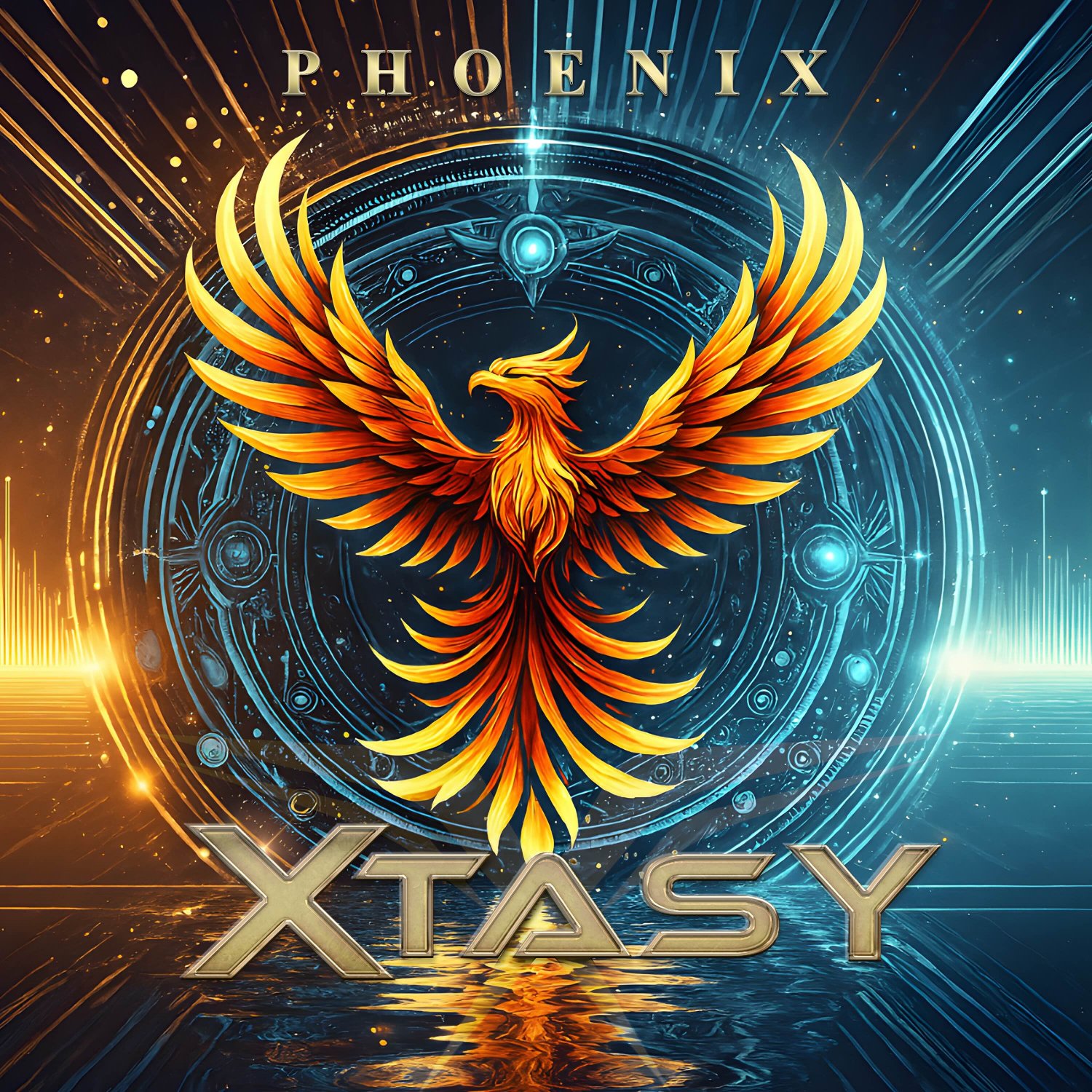
Album Review: Xtasy - Phoenix

When last we heard from Xtasy, they were epitomizing a phenomenon that occurs in music. No matter our preferred genre, there are bands that stand above all the rest, even when we can't explain exactly why. There are dozens of bands that will all use the same building blocks, but one will hit us in a way the others do not. What makes this even more interesting is when collaboration gets involved, and some of the same players and writers get different reactions with different bands.

Xtasy worked in collaboration with Erik Martensson of Eclipse on that record, and again on this record. That is notable, because Eclipse has been gaining stature in the melodic rock world, and yet I have gone back to "Eye Of The Storm" again and again, while Eclipse has done exactly what their name implies. There's something about Xtasy's sound that is brighter, sharper, perhaps more exotic, and it leads to a band that stands out in a crowded field.

Much of that focuses on Silvia's voice, which is the unique piece of this puzzle. Her tone is unlike most everyone who sings this kind of music, a piercing siren with the ability to put just enough rumble into her voice to keep the band's sound from getting too light and airy. She keeps this melodic rock from becoming soft rock.

"Can't Get Enough" embodies Xtasy at their best, with gang vocals that anchor a chorus you would be humming to yourself long after the record is over, and a guitar solo that offers just enough shred to tell us there's more they have to offer than what we're being shown. Moments like those make clear they are playing for the sake of the song, because the most impressive thing is to write and play songs that stick with us. Xtasy certainly did that on "Eye Of The Storm", and they're doing it again here.

Xtasy makes the whole package sound easier than it is. Writing memorable songs is hard, and so is selling them to the audience. I think that's actually what separates them from Eclipse, as Erik's vocal performances can't match the charm Silvia has. Some of her deliveries come with something close to an audible wink, which invites us in to be part of the music. There's no effort to convince us how hard they're trying, which reads with an authenticity I certainly appreciate.

In the six years since "Eye Of The Storm" came out, and despite the incalculable number of bands and songs I have heard since then, I never forgot Xtasy. Every time a melodic rock album came out that impressed me, what it did was remind me of the benchmarks of the genre, which include Xtasy for me. "Phoenix" has a lot to live up to, and it does. It doesn't have the ability to catch me by surprise the same way as when I first heard Xtasy, but the harder task is to impress us once we know what to expect. "Phoenix" picks up right where the band left off, and that they can keep the momentum flowing without missing a beat is impressive indeed.

"Phoenix" sees the band rising up once again, this time hitting a little harder, rather than subduing us into submission. Both approaches work, and which one you prefer will be entirely up to you. I, for one, am just glad to have Xtasy back.

Thursday, March 19, 2026

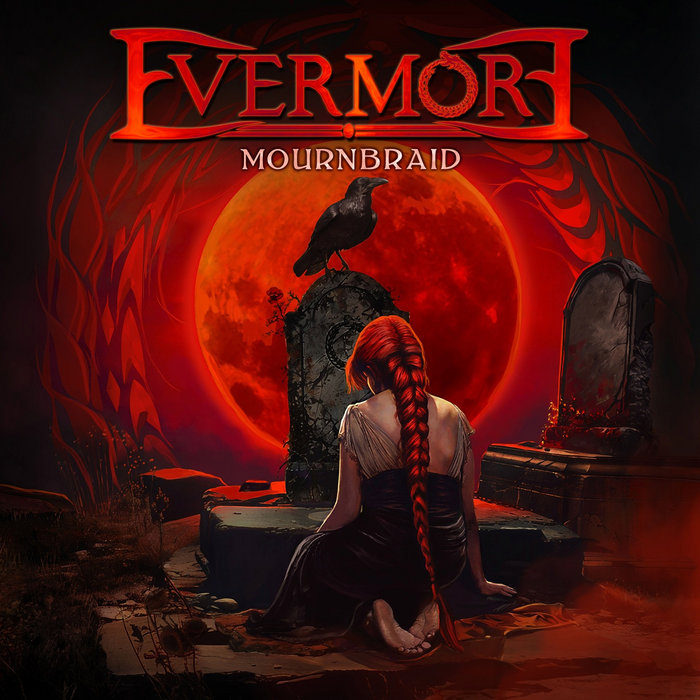
Album Review: Evermore - Mournbraid

We've had the discussion more than once regarding which particular niche in the metal world is the most retrograde, the most stuck in the cliches of the past. Often, the answer comes down on power metal, which not only has many bands fully content on never moving past the sound of the early days, but fully content to recycle some of the same melodic ideas. That makes power metal an easy genre to be a fan of, if you don't get tired of the same-ol'-same-ol', but it makes for a trying time if you don't need to hear the same thing for the hundredth time.

Every so often, though, power metal delivers something that hits the nostalgic spark in just the right way. It's in those moments we're reminded of why we loved the music when we did, and it also brings to mind questions about how and why we've changed over the years. That might be a bit weighty for this particular discussion, so let me cut to the chase.

Evermore have delivered to us an album that echoes from the past like one of the early Edguy albums. The grit of the guitars and some of the melodic choices are hugely reminiscent of "Vain Glory Opera" and "Theater Of Salvation", which are the exact albums that sent me down this path twenty-plus years ago. To hear that sort of music again doesn't feel stale to me the way the myriad Helloween clones do, perhaps because Edguy is a less common influence to hear, or perhaps merely because Edguy was always my favorite of that wave of power metal bands. You might hear early Hammerfall in all of this, and that would be just as accurate, but my perspective is my perspective.

The biggest asset the album has is a dedication to the mid-tempo. By keeping things a touch slower, the guitars have more power and crunch, and the choruses have more time and room to swell. This is power metal with a bit more 'oomph' than the lighter and happier variety. Especially with the old-school guitar tone, avoiding the fastest picking prevents the fuzz from washing over the riffs and turning them into a mash of noise. When they do settle into a chunky and muted groove, the thump hits just the way it should.

The one spot where this doesn't work for me comes in "Armored Will", which uses the double-meaning to claim their strength comes from being made of "heavy metal". I know it's a cliche of the genre, but the insistence on metal people constantly telling everyone how metal they are is the sort of thing that strikes of projection. Psychologically, I can see how it is as much to convince themselves as it is to convince anyone else, but I don't think it conveys the power and strength they think it does. Quoting Edguy's "Babylon" in the early verse of "Ravens At The Gates" tells me more about what metal means to them, to be honest.

Overall, "Mournbraid" is an album that does nostalgia the right way. These songs draw from the past without sounding stuck in it, and they pull from source material that hasn't been the subject of a hundred copies already. Edguy moved past this type of power metal very quickly, so it's interesting to hear an echo of it so many years down the line. In one sense, it's a nice reminder of what felt like a simpler time. In another sense, it's a peek into a parallel universe where Edguy didn't first evolve into a different kind of band, and then evolve into Avantasia.

Maybe I wouldn't have stuck it out for the ride as long if they hadn't, but I am enjoying this reminder of where we started. That's good enough for me.

Tuesday, March 10, 2026

Album Review: Tardigrade Inferno - Hush

Hmm.  Here we are, faced with Tardigrade Inferno’s new record Hush, their third full-length since their debut effort in 2019.  And while we are normally loathe to compare albums by different artists directly, it’s hard not to look back a week in time at Rob Zombie’s The Great Satan and remark: “this is what that should have been.”

Such a casual comparison is patently lazy, but it paints the necessary framework of how Hush should be viewed.  Tardigrade Inferno describe themselves as ‘dark cabaret metal,’ and while metal needs another subgenre like it needs a second coming of nu-metal, the epithet is essentially correct.  


By now the reader has put the pieces together - Tardigrade Inferno, originally hailing from St. Petersburg, Russia, have conjured the kind of dark carnival that Rob Zombie blazed the path for with such aplomb some twenty-five-plus years ago (and yes, I am purposefully ignoring the Insane Clown Posse, thankyouverymuch.)


Where TI (which we’ll abbreviate from here forward,) advances the cause is in their dedication to crafting an image within the music.  It’s more rare than ever to listen to a new record, particularly in the digital age without the benefit of liner notes, and feel swept into the proceedings in a tangible way; but close your eyes and it’s easy from the first strains of “The Final Show,” the album’s introductory cut, to feel the harrowing sunset over the abandoned amusement park, that ethereal transition as bright day gives way to the machinations of haunted night, and the hidden, clanking mechanics of the monsters of the midway (not to be confused with the Chicago Bears,) come rusting to life.


An overly dramatic description? Sure.  But also the point.  That’s the kind of twisted, tormented reality that TI presents with skill and conviction, the kind of the layered scenery it deliriously and thoroughly chews on with a broken-glass smile, daring you take the journey alongside.


The linchpin of the entire proceeding is vocalist Darya Rorria, who can vacillate skillfully between teasing laugh and brooding terror as easily as she breathes.  She tempts like a siren, appealing to your inner evils with a saccharine sweetness that entices and disarms, even as she openly sings about cannibalism on tracks like “Goor.”  


There’s an inherent sultriness to both Rorria’s performance and the rhythmic, heavy undulations of the music as a whole that separates TI’s brand of dark metal from their contemporaries.  It’s a rare intersection of roads when a band can be both as menacingly descriptive as Slayer, as literally brooding as Type O Negative and as playfully dangerous as 6:33, but that’s where Hush lands. (For Deep Purple fans out there, you’re going to be disappointed - there is no cover of DP’s 1968 classic of the same name.  Though TI should absolutely give it a shot.)


Which is not to say that TI sounds quite like any of those three in whole - rather, their music takes on, at the risk of being redundant, the affect of a dark cabaret, something like an adult version of the mysterious carnival from Ray Bradbury’s Something Wicked This Way Comes. Whether the long-nailed threat of a faux whimsical tune like “Deadly Fairytales,” or the out-and-out, fiery adrenaline of “Hide’n’Seek” or the title track, Hush comes at the listener with a lot of different attractions to lure every taste.


For all the subtle variations in style, there is a thematic consistency to Hush that ties the entire effort together - it attempts to give a window to the demons within, a catharsis to all the greedy, less-than-socially-acceptable thoughts we’ve ever had.  And with Rorria at the helm, blood and darkness and evil never sounded so sexy.  Or, with apologies to classic romps like “Dragula,” so fun.


A small splash of cold water - there are gaps in the proceedings.  Cuts like “Dead Fish Smile” and “I.C.D.” get lost in their own message and founder about too much, subtracting from the album’s overall flow.  There’s nobility in the attempt of these songs, but the band leans hard into their heavier side for them both, and it subtracts from their demonstrable versatility.  And “Goor,” well…as fun as it is, it is about cannibalism or something like it, so that’ll be a tougher pill for listeners who prefer something slightly more metaphoric.


That said - it’s been a long time since there was a metal album that drew the listener into its world like this - that so successfully captured the imagination and took the beholder out of their own reality and into the one the band creates.  If music is an escapist activity designed to make us either channel our troubles or forget them, then Tardigrade Inferno’s Hush is a pure example of that escapism.