Tuesday, March 8, 2016
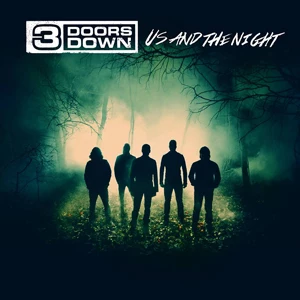
Album Review: 3 Doors Down - Us And The Night
Like a lot of bands that came around during the time that has been lumped under the banner of 'post-grunge', 3 Doors Down made a big splash when that sound was all the rage, and then has receded more into the background as rock music of all stripes struggles to find any popularity. Even when talking about a band that was mainstream, like them, you have to almost be a die-hard fan just to know what's going on. It should come as no surprise, then, for me to say that the band hadn't crossed my mind in several years, and I couldn't name you a track from their last several releases. That's not because of any feelings I have for them, but merely because rock music in the mainstream has been marginalized that much.
You can make the argument that rock music has evolved over the years, and that's true. However, there are certain ways that rock has changed, and there are certain ways that are obvious pandering to get another hit or two before the end of a career. Listening to the opening song here, "The Broken", it seems obvious to me which way the wind is blowing. The song has autotune, drum effects, and a synth that is too pop even for the worst 80s hair band. Even the rhythm being played is a take-off on indie rock, and has virtually nothing to do with the kind of rock I remember 3 Doors Down playing. That said, what's really at question is whether the song is any good, and the answer to that is... sort of. It's got the surface level appeal of modern pop, but it doesn't have much teeth, and there doesn't seem to be enough there to dig into on repeated listens. It's pleasant, but a bit like empty calories.
"In The Dark" follows, and is a much better track. It does away with the pretense of modern pop, and instead focuses on what the band is good at; delivering melodic rock that puts writing a good song ahead of reinventing the wheel. It shows a better sense of evolution, having turned the lights on and scrubbed away the darkness and grime of the post-grunge era, preferring to make something more akin to modern arena rock. It's a good sound for the band, and definitely is a better path to explore.
When I hear the vocal timbre on "Still Alive", it hits me what I'm hearing. 3 Doors Down has somehow morphed into what Daughtry was, until the flaming disaster that was their last album. Let's dispense with something right away; I don't mean that as a knock in the slightest. The first two Daughtry records are magnificent examples of how to fuse pop and rock in a way that feels organic, and when 3 Doors Down is focused on following that train of thought, they do themselves proud. "Believe It" is a really good song, and one I easily could have heard on rock radio back when I still paid attention to it. It's right in my wheelhouse, and it works.
There is diversity to the record, as well, and it comes with the usual issues. The ballad "Inside Of Me" is saccharine but effective, and is a needed reprieve. "I Don't Wanna Know" is a controversial song, with an approach that mirrors something Ed Sheeran might do, but it goes too far down the pop line even for a rock fan like me who still likes pop melodies. It doesn't have the authentic feeling that "Pieces Of Me" does, when that song properly uses its acoustic guitars.
Then we have the case of a song like "Love Is A Lie", which is a tight little rocker with a hooky as heck chorus. The only problem is that it immediately reminded me that the melody had almost idenitically been written by Nickelback a decade ago. The similarity dimmed my affection for the track. That's then balanced out by "Us And The Night", which goes back to hitting all the right marks.
So what the record amounts to is a bit of confusion. We get several fantastic songs that perfectly blend pop and rock, but then we also get a handful of tracks that are too pop-oriented for the band's own good, because they don't fit in with what we know of their sound. And, to be honest, they aren't nearly as good at writing those tracks. The good material on "Us And The Night" is great, but the band isn't willing to double down on their strengths in an environment that won't reward that. I understand it, but I don't like it, because it makes this album far less than it could have been. It's still good, but it clearly could have been better.
Monday, March 7, 2016
Album Review: Droids Attack - "Sci-Fi or Die"
Confession time. I am a nerd. Not like a League of Legends-playing, Doctor Who-swallowing, PC elitist nerd, but I definitely know the tactical value of siege tanks, remembering to carry a towel when I travel, and can tell a Rodian from a Vorlon. So I feel right at home diving into an album called “Sci-Fi or Die” by a band named Droids Attack, even if I am instantly reminded of the ‘Simpsons’ episode where Mark Hamill is being harassed and Homer angrily yells “NNNEERRDDSS!”
What we have here is an album that taps into many of the rich veins of metal fandom over the course of forty years of metal, steeped largely in the dirty rhythms and stop-and-go riffs of the blues metal tradition. The album really gets going with “Clawhammer Suicide,” a piece that puts the pedal down and crosses the intersection of Annihilator’s cadence with Clutch’s tone. These moments are when Droids Attack impress the most, employing copies (clones? Replicants? Life Model Decoys?) of the best tropes metal has to offer and infusing them into a giant, multi-title crossover.
The other look we get prominently on this, the band’s fourth full length album, is a less dramatic but still effective distorted mash that reminds of the headiest days of Viking Skull, a crafting of sludgy, noisy rock that’s being made for sludgy, noisy rock’s sake. What stands out is that hidden in the noise of the middle third of “Sci-Fi or Die” is a trick that lofty artists like Rush used to use to great effect – the ability to create to play a minimalist riff and occasionally change one or two notes out in order to create a more varied-sounding experience. Droids Attack do this a couple of times, both in “Mashenomak” and “The Maze,” and it works fairly solidly in an unexpected medium.
However, Droids Attack leans on this trick too often, creating a record that as it drags into the later tracks, sounds awfully similar to itself. Even within the songs, if a discerning listener simply clicks through the songs at about ten-second intervals, what he or she will hear is the same basic structure repeated ad nauseum. Even minor variances within the riffs can’t wholly prevent the turning gears of repetition, so “Mashenomak Strikes Again” and “Rebirth” sound uniform from beginning to end. Droids Attack has already displayed the talent to avoid this pitfall, so the ceaseless back and forth oscillations of the riffs don’t really grip the memory like seeing attack ships on fire off the shoulder of Orion.
So here’s the deal – what we’re left with for “Sci-Fi or Die” is essentially a really nerdy metal album made by nerds for nerds and there’s nothing wrong with that. There’s a market for that. Let’s be honest here, the metal scene has long been collected with nerdery of all stripes. I mean, come on, have you ever really listened to Venom’s “Welcome to Hell?” That’s the ramblings of three homely nerds who were frustrated because women wouldn’t touch them. So we’re merely experiencing the next in a long tradition.
That said, while “Sci-Fi or Die” is a capable album that ably captures and replicates the mechanics of honest and pure metal (with some progressive undertones,) it perhaps does not properly engender the spirit of the genre, or capture the imagination.
Sunday, March 6, 2016
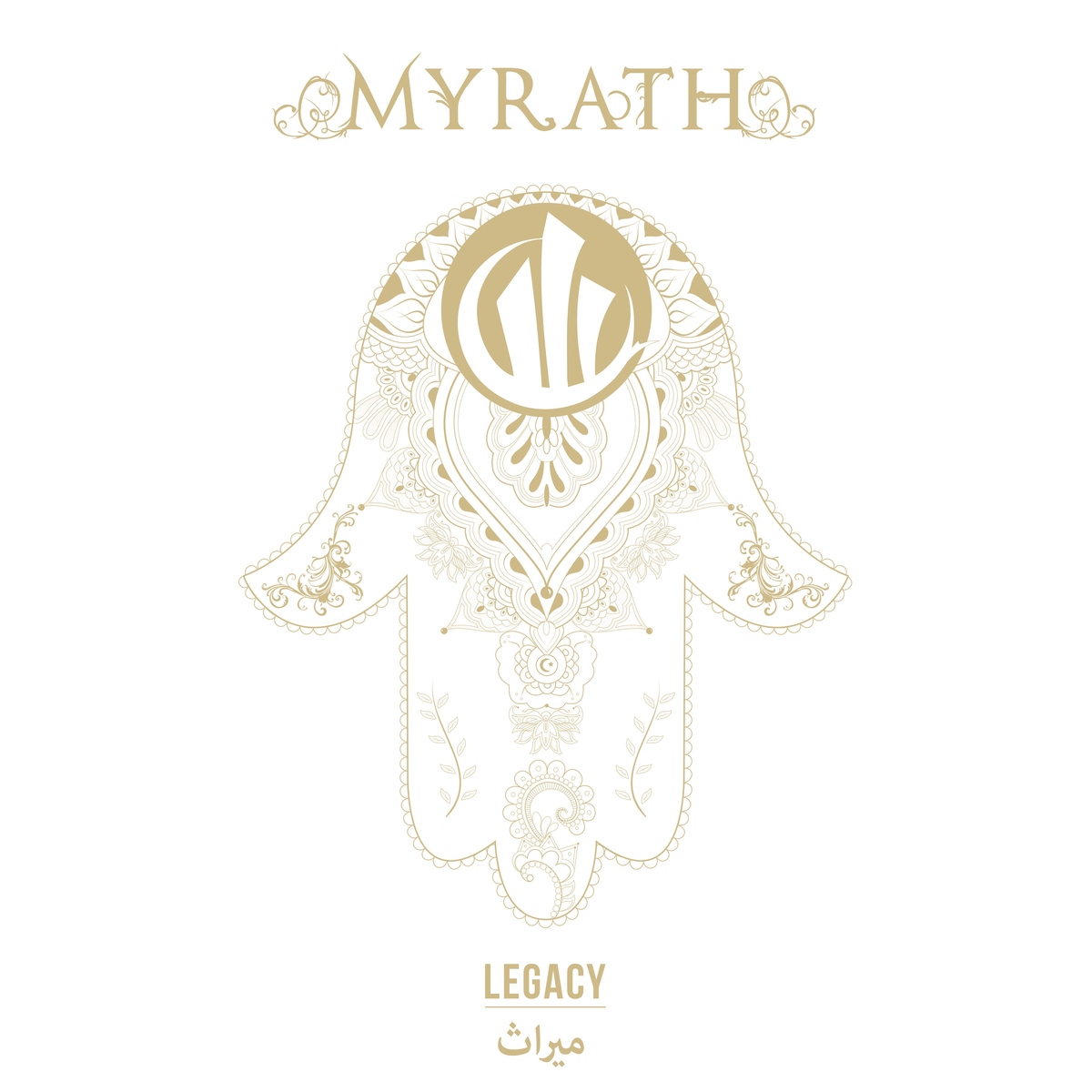
Album Review: Myrath - Legacy
Given the proliferation of metal bands, everyone needs to have a gimmick of some sort in order to stand out from the crowd, or so it seems. That's how we end up with bands dedicated to telling the history of Vikings, or of World War II, or in the worst of them all, a group of white guys from the United States lecturing everyone on ancient Egyptian lore. But, while most of the gimmick sounding bands don't actually have anything to do with the subjects they pick, there are actual bands who hail from places and cultures that make them unique by simple virtue of who they are. Myrath is one of those, a nominally progressive metal band that uses their Tunisian heritage to give a new feeling to their brand of prog metal, one that far exceeds the pandering done by the rest.
We get to hear it right away in "Believer", the first proper song on the album. It opens with a jaunty rhythm, but the main orchestral melody is played with some unusual intervals that sound completely original in this context. We're so ingrained by the standard notes guitars are capable that we can forget cultures have used instruments that play in the negative space. Myrath does that with the outside elements throughout this record, which can be a bit jarring, but more often makes you perk your head up and note that what they're doing is actually progressive; they're challenging the boundaries of 'normal' metal.
They also manage to do something that very little metal can anymore; be uplifting. There's a sense of optimism to the melodies running through these songs that drips of positivity, that makes the songs engaging and fun. Metal is so dark so often that it's refreshing to hear a record that doesn't mind letting in some light. When you get sections like the slapping breakdown in "Get Your Freedom Back", or the djent riffs in "Nobody's Lives", the expectation from everything we've ever heard is that the songs will get sucked down into a mire of faux-emo misery, but Myrath doesn't let that happen. Instead, the songs make sure they return to big, positive hooks.
"The Needle" might just be the best track here, as it builds from a sinister riff that brings to mind Guns 'N Roses classic "Rocket Queen", and takes off with a massive, hulking pop chorus that is absolutely killer. It's the kind of song that makes you wonder why metal usually seems intent on ridiculing the very thing that makes music so enjoyable. Even a song called "I Want To Die" can't bring things down too far, with a sweeping melody and dramatic flourishes that give it gravitas beyond simply being dark.
The record doesn't let up, either. I might call "Believer" a bit weak, but from then on the songs just keep hitting with huge hooks over and over again. And if you get the version that comes with the bonus track "Other Side", that just adds another tally in the win column. It's hard not to listen to a song like "Duat" and get swept up in Myrath's ability to spin a song. And there's something about the lo-fi, roaring twenties piano, leading off "Endure The Silence" that brings a smile to my face. The unusual little details Myrath throws into these songs always work, and never feel wedged in just for the sake of being different.
"Legacy" is an album that's hard to accurately describe. There's something about their blend of foreign elements with traditional melodic prog metal that doesn't fit neatly into our lexicon, leaving my with little to say but that this is an album that you owe it to yourself to at least check out. Myrath is making hugely melodic music that truly does something different, and that deserves respect. The fact that they pull it off this well deserves applause. "Legacy" is a great record, and along with the releases I've already reviewed from Sunburst and Redemption, have already made this a banner year for progressive-leaning metal.
Tuesday, March 1, 2016
Album Review: Black Wizard - "New Waste"
Pardon a brief rant at the outset – one of the most God damned annoying things in the whole metal genre is that when it comes to the world’s population of metal bands, large and small, fully a third of the field (and that’s a conservative percentage by some measures,) and damn near everybody who doesn’t specifically play thrash, death or black metal, gets stuck with the label ‘RIYL – Black Sabbath.’ Now don’t get it twisted; Sabbath means a whole bunch to the genre, but there’s only two real possibilities here. The first is that the law of probability and basic human common sense (who are not always friends, by the way,) conspire to conclude that this assertion about the Sabbath family tree is total crap. The second, and this has perhaps even more damning repercussions, is that the metal genre is much less diverse than we want to believe, and that metal fans are largely pacified by the same ol’ thing with a new coat of paint every few years. (The second option sends a chill down the spine as it immediately rings with at least a glimmer of truth. I don’t want to talk about it anymore. Let’s move on.)
I tell you that story to tell you this one; every so often, a band appears that is actually fucking deserving of the comparison to Sabbath, a band who ties many influences together but lives at the intersection of blues and doom (and I don’t mean the subgenre) that permeated the musical DNA of the boys from Birmingham. Black Wizard is one of those bands. (Side note: Black Wizard also sounds like somebody who could have opened for MF Doom in like, 2002. Neither here nor there. Carry on.)
What we have here with the band’s fresh album “New Waste” is a heady and ambitious throwback to the simpler days of metal, combined with some modern storytelling and pleasantly acrimonious vocals to create an image of both solid rocking and emotional discomfort. Where Black Wizard excels is in setting an atmosphere without flagellating a deceased equine – the middle third of “Vivian Girls” thuds the same small cabal of distorted chords over and over, centering on the positively Iommi-an point that this is kinetic but single-minded music, complete with intent and purpose. What keeps this and similar sections from droning on into oblivion is that Black Wizard knows when to release the tension of their songs, never letting one idea sit idle for too long.
Yet there are hundreds if not thousands of garage-band caliber would-be Sabbath disciples, so what separates Black Wizard from the throng? These British Columbians, possibly through intent but more likely through accident, also conjure in the mind’s eye the name of the currently defunct Priestess, a rock/metal hybrid band from the other side of Canada, who similarly specialized in injecting some adrenaline into prototype blues-metal riffs. “New Waste” closes with a two song set of “The Priest” and “Final Ripper,” both of which sound like sludgy cousins of the best moments of Priestess’ first record, the connection made doubly appropriate because of the vocal similarities of Black Wizard’s Adam Grant and Priestess’ Mikey Heppner. The two tracks are the album’s two best, combining Black Wizard’s penchant for big, mobile riffs with their deep understanding of the connections with metal’s heritage.
So far, we’ve compared Black Wizard to two other bands and perhaps not done a great job of showing what makes these upstarts unique. The answer, unfortunately for the reader, is that it’s difficult to describe, and best understood by simply hearing the album. With all the inky, swirling darkness that surrounds “New Waste,” there’s still a jaunty sense of fun buried deep in the album’s core, not always easy to detect but perceptible in the swinging toe-tap of cuts like “Eliminator.” The founders of the band were formerly unhappy construction workers, so there may be some catharsis concerning the turn to making music for a living that causes a hint of smile-inducing appreciation to be woven into the riffs of “Revival” and others. Nevertheless, it’s that strain of pleasure that disrupts the serious face of “New Waste” and actually makes the album a better experience for having it.
Now, “New Waste” isn’t perfect. There’s a throwaway or two, and the dice roll of a near-ballad with “Laughing and Lost” was unnecessary, but these are minor footnotes in the grand scheme of the record.
“New Waste” represents a great step for Black Wizard, a pedestal that they can be proud of and turns heads with. It’s a wonderfully enjoyable record for metal fans of many stripes, and welcome relief to fans who are tired of hearing unwarranted comparisons to Black Sabbath. Black Wizard is the real deal.
Album Review: Revenience - Daedalum
Darkness and metal go hand in hand, but what darkness is can't quite be defined. Heaviness does not by itself make music dark, despite what death metal will tell you, and even minor chords by themselves don't get the job done. Darkness is a feeling more than anything, one of those 'I know it when I hear it' concepts. There are days when gloomy, dark music is what you want to hear (I write this as it's raining), and there's a new band aiming to provide the soundtrack to those moments; Revenience.
The album kicks off with the short symphonic opening, "In A Landscape Of Winter", which does an effective job of setting the mood for the cold and dark music that is about to come. "Blown Away By The Wind" is the first proper song, and flows out of that symphonic introduction well, as the former track proves to not be an orchestral bit tacked on to make the album seem more grand than it really is. There is a theme of symphonic and Gothic elements that were hinted at in the intro, which makes it a necessary part of the experience.
As the song progresses, we get to hear what Revenience is all about. The guitar sound is remarkably clear, with production values that perfectly balance every element of the music. The orchestrations are suitably gloomy, and play well off the clean vocals, which anchor the song with a strong melodic component. The growls are used as a counterpoint, which is how they should be used, as the focus is put where it most belongs. A lot of bands that try this sort of thing rely too heavily on their death metal elements to make sure everyone considers them heavy and truly metal, but they render themselves uninteresting by letting the growls stand in the way of truly melodic singing. Revenience doesn't makes that mistake.
"Shamble" follows, and is the song I first encountered by seeing the music video. It's a song that captured my attention then, and still does, by blending a palpable sense of melancholy, heightened by the sparse use of piano, with a melodic hook that brings the sense of foreboding doom of a deeply twisted Vaudeville performance. It's a far better method of introducing unsettling and depressing sounds into metal than the shrieking misery of black metal. One sounds human and emotive, the other sounds like a bad joke.
"Flail" turns over the pre-chorus to the growled vocals, and that section reveals the band's biggest shortcoming. The verse's syncopated gallop, and the chorus' attempt at a massive hook are both wonderful, but there's a black hole in the middle. The band is not well suited for death metal, especially in the hollow sound of the vocals, and the inclusion of those elements as anything but background coloring is a mistake. Debora Ceneri is a strong enough singer to not need the growls to get the point across. Her work is the highlight of virtually every song here, giving the band an identity that can make them stand apart from every other band that borrows that guitar tone and plays riffs that come from the same school.
That phenomenon continues through the second half of the album, where songs like "Not My Choice" thrive on heavy atmosphere and rock solid melodic hooks, while "A-Maze" has flashes of brilliance that are weighed down by death metal forays that don't add anything to the composition. Instead of contrasting light with dark, it is dark with another kind of darkness, which doesn't achieve the desired effect.
But by the time the spritely forty minutes is over, Revenience has proven that their take on Gothic metal is absolutely relevant, and they have a ton of potential. I can definitely see how they can tweak the formula to make a truly stunning album, but "Daedalum" shouldn't be sold short. It's a debut album that makes it clear Revenience is a band that has a bright future in front of them. They don't play my type of metal, and they still won me over. That should tell you something.
Monday, February 29, 2016
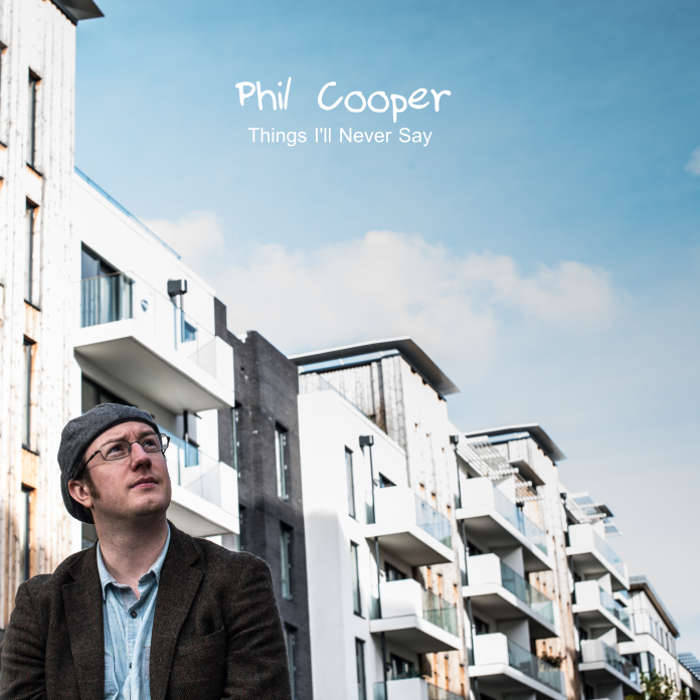
Album Review: Phil Cooper - Things I'll Never Say
You might not know it from reading the reviews that we publish here, but hard rock and heavy metal are not my first love when it comes to music. It is where I have my contacts in the 'industry', and it's where I have often felt most comfortable in recent years, but the music that I actually have the deepest connection to is the pop/rock sound of the mid 90s, when I was musically coming of age. Many of those albums, by bands like Tonic, The Wallflowers, and others are still the ones that top my list of favorites. I never gave up on that music, but what was easily available changed, to the point where I don't even know where to find such music anymore, if it indeed exists.
That brings us to Phil Cooper's new album, which might seem like an odd choice to be covering here, but really shouldn't be. In a better world, I'd have far more albums of this style to talk about.
We get started with the chiming chords of "Let It Fall", which reminds me of how infrequently clean electric guitars are used. It's probably not accurate to call the rhythm a shuffle, but it moves along at a solid pace, and lets the backing vocals play a prominent role. It's not as shimmering as power pop, but it's one of those songs that has a sunny appeal. "Sigh" takes more of a folk approach, and when Phil's vocals strain in the bridge, it has an air of "Rubber Soul" to it.
The protest song "I Don't Have a Voice" has a video making the rounds on YouTube, and hits the sweet spot. The electric chords ringing out are melancholy to match the tenor of the lyrics, while the melody hits just right. It reminds me of the good ol' days, just without as much rock volume pumped in to make it radio friendly. It's a really good song, one I can see making some impact (although I'm not up on British politics to comment on the message).
The middle of the album sees some stretching, with horns accenting "Old Wounds (Feel Like New Wounds)", and strings dotting the superior "To The Unknown Loves Of My Life". A slightly bigger production would have made the drama hit even harder, but it's a song that uses the coloring to great effect, and stirs up a tune that feels important because of the scope. There's a balance between folk and pop going on through much of the record, and that hinders the momentum. The more pop leaning tracks are able to endear themselves with suitable energy and strong melodies, but the folkier tracks don't have as much melodic focus. They aren't poor songs, but they're the kind that are written more for the songwriter than the audience.
"Things I'll Never Say" is a DIY album, and those are always commendable. It takes a lot of effort and courage to make a record and release it on your own, without having a pipeline reassuring you that you're on the right track. So yes, there are some rough edges and some songs that could have used a sharper focus, but the end result is still an album that has charm. It's an enjoyable way to pass some time, and sometimes that's really all we're looking for out of an album.
Sunday, February 28, 2016
Album Review: Karma to Burn - "Mountain Czar"
Maybe it’s something in the water. Something strange is going on, because for the third time in as many years, I am completely enamored with an album that is totally (or mostly, in this case,) instrumental. 2014 saw John 5 release the excellent “Careful With That Axe,” while last year the stick-to-your-ribs riffing of Mountain of Wizard’s “Casting Rhythms and Disturbances” nearly stole the show.
They are thusly joined now by Karma to Burn, an American rock trio who joins the phalanx of musicians that conscientiously resist the antiseptic, post-produced sound of digital tone by playing purely analog music, spiritually rooted in the concepts of rock from ages gone by.
Their new EP, “Mountain Czar” comes as a jumping off point for new fans; an accessible portion that signals the band’s future direction and attempts, by title alone, to give the band an identity tied to their mountainous home state of West Virginia. It’s not wholly unlike that phase Marvel comics went through, releasing “.1” issues all the time in an effort to give readers a chance to catch up and acclimate to what was going to happen next. This EP actually works better at that than those comics did (all love to Marvel, where Iron Man has been a favorite since I was ten.)
Anyway, what we really have here is five cuts, largely identified by number (Sixty through Sixty-Three, though they are not sequential on the record,) and one more cut that we’ll get to in a minute, that pound through six decades of rock history and pick and choose which elements are worthy of the amalgam of rock’s soul that makes up Karma to Burn’s artistic vision.
The EP highlights with “Sixty-One,” a rolling boil of down-home rock cooking that proves rock music can be measured and planned without needing copious digital fuckery (technical term) to align all the stars into a seamless, perfect symmetric whole. Rather, we hear a mix of rock as we knew it in the late seventies, when Deep Purple was really making waves, all layers and rich sounds with substantive bass backing. There’s more to it than that; the band borrows equally from classic acts like the Doobie Brothers and Mountain, weaving just a little country-rock influence into the mix, but the quorum of all these styles remains the heavy-handed proto-metal that launched a thousand careers.
The fifth cut (fourth on the record, for those playing our home game,) that we said we’d get back to is “Uccidendo Un Sogno,” which, to cut right to it, is a cover of Tom Petty and the Heartbreakers’ “Running Down a Dream” performed totally in Italian by guest vocalist Stefanie Savy. The cover rounds out the tones of the original somewhat and eliminates all the high-end fanciful feel of the Petty version to create a cover that is both familiar (that riff is certainly recognizable in any shape,) and original – a hard feat when taking on songs that are beloved by many. I always feel a little uncomfortable calling a cover the best cut on a record, it’s akin to telling a musician ‘I like the way you play, but not the way you compose,’ but “Uccidendo Un Sogno,” is creative and diverse and surprisingly wonderful.
Take whatever time you need to spin this EP, because it’s worth it. There are no duds here, and a couple tracks that are pretty brilliant. Use it to get ready for the next impending full-length release from Karma to Burn.
Saturday, February 27, 2016
Album Review: Sunburst - Fragments Of Creation
Many people whose opinion I value insist that progressive metal is in a boom period. The old guard are still out there and making good records, and there has been an influx of talent that has given hope for a new generation of bands to take up the mantle. When you consider a roster as deep as prog metal has, with Dream Theater and Fates Warning still out there, and bands ranging from Redemption to Vanden Plas in their primes, along with younger bands like Native Construct, progressive metal is in a good place. That depends on what you want from the music, however, as I have listened to many of these newer bands and been left underwhelmed. So many of them are wondrously talented, but waste it by not understanding that even in the world of prog, you need to write songs first and foremost.
Sunburst is a new progressive metal band built from the core of the band Black Fate. By not being completely rooted in the world of progressive metal, the hope is that they can bring that genre back to its song-oriented roots. The opening track, "Out Of The World", starts things off very much in that vein. The riffing is brutally deep, twisting around itself like the most deranged riffs Jeff Loomis came up with during Nevermore's unhinged period. But while that doesn't sound appealing, an amazing thing happens. When the chorus comes along, that tightly-wound playing opens up, and gives the hook plenty of room to breath. Vasilis Georgiou is a tremendous singer, and his melody is stirring. In these five minutes, we get heaviness, technicality, and rousing melody. That is the very definition of what progressive metal is supposed to be.
As "Dementia" continues, there's much about the guitar playing that incorporates elements of the djent strain of prog (which I'm not sure is actually prog, but that's a separate discussion), but does so in a way that shows how insular supposed progressive musicians can be. They take these crushing rhythms, but pair them with soaring guitar harmonies, and make sure to throw in a chorus that can be sung along with. It sounds like a simple formula, but putting something in there for everyone just makes the songs better than if they were single-mindedly focused on being progressive to prove they can.
There are going to be comparisons to Kamelot that come up, because of Vasilis' vocal tone reminding people of Roy Kahn, but I don't think that's the best analogy to make. What Sunbust reminds me of is the 'classic' lineup of Firewind. Vasilis sounds to my ears like a cleaner version of Apollo Papathanasio, and the entire band is what Firewind would be if they took every element of their sound to the extreme. That's a sincere compliment, because Firewind made one of the best power metal albums of the last decade in "The Premonition", and Sunburst is the modern progressive version of that sound. They retain in their sounds something that almost all progressive metal is missing; fun. You don't have to have a music degree to understand these songs, and you don't have to count snare hits to enjoy them either. Sunburst has written a batch of really good SONGS that can be enjoyed as such, or can be analyzed for the intricacies that make prog fascinating to music nerds.
There's nothing the least bit progressive about "Lullaby", but listening to it, it's hard not to get caught up in that sweeping melody. It just grabs you, and makes me wonder why all those other progressive metal bands have such trouble understanding why this approach works so well. I'm not sure that even the most esoteric of fans can really deny the sing-along fun of "Forevermore", which is a song that begs to look stupid miming along with it.
We do get a heavier dose of prog in the twelve minute closer, "Remedy Of My Heart". Starting off like a Nightwish song played by an actual metal band, we get a track that flows through heavier sections and lighter moments, eschewing the compact songwriting of the rest of the record for something more traditionally prog, but even so the band doesn't neglect the melodic moments. The vocals are subdued compared with the hookier numbers, but the melodies are still there, and the guitar solo in the final third of the song is soaring. The only thing missing is the epic ending the song needed. Instead of building to one last crescendo of immense proportion, a few harsh vocals lead out of that solo into a softly whispered ending. It was underwhelming as a way to end the song, and even more as a way of ending the entire album. The least powerful moment of the entire album is what we end on, which is a bit of a sour aftertaste.
But we shouldn't get lost is that Sunburst has made an excellent debut record here. They've taken what modern progressive metal is good at, and brought in elements of what it needs to be good at, to create a sound that will resonate with fans across the metal spectrum. This is what modern progressive metal should sound like.
Wednesday, February 24, 2016
Album Review: Headspace - All That You Fear Is Gone
Headspace made a name for themselves with their debut album, "I Am Anonymous", which seemed to garner more attention than singer Damian Wilson's main band, Threshold. While I have enjoyed some Threshold now and again, and consider "Dead Reckoning" (which Wilson was not on) one of my favorite progressive metal albums, I was not enthralled by what I heard of Headspace. I gave the 'singles' a chance, but the sound was not something that grabbed me enough to dive deeper into the album. But as I saw the accolades piling up, I felt I owed it to myself to give this new album a shot. So what do we get here?
We start off with "Road To Supremecy", which opens the album in a way that always frustrates me. There's a single guitar line sitting in the background, but then comes a pointless narrator to set up an element of a story that will soon be forgotten. The voice itself is hard to understand, and that's before dealing with the issue that I don't consider talking to be an acceptable for of music, except under rare circumstances. Once the song gets going, it still doesn't do much for me. There's a single melody that repeats too much, Wilson talks through the bridge and outro, and the tempo shift is abrupt and jarring. It's just not a well-written song, but rather prog cliches strung together.
That feeling never really leaves, as the album feels a bit like a television show, with the songs feeling more like the artificial delineations of commercial breaks, and not natural beginnings and endings to the musical ideas. Riffs and melodies appear to blend together, which is the point, but doesn't do much to make the songs feel like they can stand on their own.
We also get some odd detours, like "Polluted Alcohol", which spends six minutes running through a ballad of acoustic slide guitars, and bears absolutely no resemblance to anything else on the record. It feels completely out of place, disconnected, and doesn't have a strong melody to justify the foray into such oddness. It's a wondering song that doesn't go anywhere, and only gives Wilson some room for his voice to breathe without having to compete with the volume of a full band. Frankly, that isn't a problem, so I'm struggling to see why such a song would ever be written and put on this album.
I like the foreboding doom of "Kill You With Kindness", where the slow riff is colored with pianos underneath. Those elements are interesting, but then the song makes no use of Wilson's melodic abilities, slogging through eight minutes of rather tuneless music. Even the shift to acoustics, and then to an almost Latin rhythm make no difference to the ultimate conclusion.
These feelings never change, as every song builds up one thing, only to shift to another with no rhyme or reason. Prog often gets criticized for sloppy songwriting, and here that is absolutely an apt observation. These aren't songs that are shifting the instrumentation to give us the theme of a song in different ways, nor are they crafted to tell a story through the shifting music. Instead, what we get are songs that jump from piece to piece like a radio scanning for a signal strong enough to hold onto. We get this, then that, and without the connective tissue holding it together, it becomes a befuddling mess of music that is harder and harder to listen to. When so many shifts go by without making sense, you slowly start to realize that there is no payoff coming. That renders the entire album rather hopeless.
And that's mostly my takeaway from listening to this. Headspace has the personnel and the talent to make good music, but this album is nearly a blueprint in how not to write progressive metal. If you take every bad stereotype and throw them together, you get "All That You Fear Is Gone".
Album Review: Beseech - "My Darkness, Darkness"
After a nearly ten-year absence, long-running Swedish goth metal band Beseech has reformed with three all new members and turned the machine back on, presenting the world with “My Darkness, Darkness,” their sixth studio record overall. Having trampled a long and winding road through associations with different high profile metal record labels, Beseech is starting over only figuratively, continuing to produce goth metal in their same idiomatic style.
Now, goth metal takes on a lot of different meanings to a lot of different people, but in this case, we are speaking of the well-heeled roots of the genre, beginning with the romantic and theatrical tones of Bauhaus, before the genre even had a name. Beseech, much like Finnish genre darling HIM, are concerned much more with creating the proper image and setting and atmosphere than simply using the label goth to shock or repulse.
So it comes as a refreshing change of pace when we are greeted with the solid downbeat and melancholy guitars of album starter “Beating Pulse,” a song that is concentrated around proper songwriting and craft in the goth paradigm, rather than dark clothing and brooding tones. The song is bright without being chipper, like seeing a rainbow through a dirty window. It’s properly laid out and executed with confidence.
The title track is a whirlwind of different influences and tones, incorporating some mock-country guitar for the opening, a piano riff that fits well in the pocket of the music and a pristine flow that leads to a hook-laden and memorable sing-along chorus. It’s the album’s best track by leaps and bounds, the clear signal that Beseech both knows how to write songs and still has power and authority in their genre despite their long absence. This kind of professionalism and expertise is dotted through the experience of “My Darkness, Darkness,” making for an album that is not bold, per se, but striking in how it creates plenty of feelings without needing a ton of bells and whistles.
There’s really only glaring drawback with Beseech’s record. Which is, WHY THE FUCK ARE WE WHISPERING?! All the time! The whole album! It’s enough to drive a man bananas! Like, okay, I get it: plenty of artists have used whispered tones with great success in their careers. Blue Oyster Cult did it. Clutch and Monster Magnet have both done it. Danzig does it. Marilyn Monroe famously did it for John F. Kennedy (first time Danzig and Marilyn Monroe have been in consecutive sentences.) 69 Eyes does it. Rage Against the Machine. Peter Steele frequently used his whisper as a contrasting agent, to make his harrowing bellow all the more profound. The list goes on. The issue with “My Darkness, Darkness” is that Angelina Sahlgren Söder and Klas Bohlin never emerge out of that fog. In the end, it causes two distinct problem for the record, the first is that it never really feels like the wheels up and we’re off the ground – there’s an energy sap that’s persistent, particularly in spots like the repeated drone outro of “Darksome.” The second is that a song like the title cut that we spoke about earlier, which is wonderful in pitch and color and cadence, lacks urgency and comes across like The Birds doing metal covers.
This is the kind of record that can make you want to bite your fingernails in consternation, because so there’s so much good here, but it’s marred by a single critical flaw. Now, there’s an argument to be made that Beseech is simply sticking to their idiom, that goth metal should maintain a muted countenance, and sure, there’s merit in that. Far be it from me to judge a band who’s been pounding pavement (off and on) for roughly twenty-five years. But there’s also something to be said for innovation and flexibility and in this case, Beseech might just be holding themselves back from their best music.
Subscribe to:
Posts (Atom)