Friday, April 29, 2016

Album Review: Red Tide Rising - "Voices"


Red Tide Rising, under the auspices of wishful thinking, sounds like it might be the title of some 1960s proto-Cold War propaganda documentary about how Americans have to keep a vigilant eye out for Bolsheviks.  In truth, Red Tide Rising is an upstart band from Colorado who yearns to make the collective listening audience remember when mainstream metal was cool.  Their new EP “Voices” is a tour-de-force in the modern metal of the turn of the millennium, a chronicle of that which we had forgotten in the labelling of bands.

It’s rare in modern music to encounter a band who defies the conventions of subgenre qualifiers, rarer still in metal.  Yet here we see a band who, much like Rob Zombie in the late ‘90s is simply playing ‘metal,’ which is refreshing when every other new band has to be labelled ‘death-‘ or ‘black-‘ or ‘doom-‘ or some equally empty epithet.

And yet here we are, the strains of “Voices” reminding us of a simpler time in metal, when a band could be heavy without needing a gimmick or a particular visual accompaniment.  In the wake of Disturbed, Korn and Staind (who were entangled in the machinations of the popular radio gears) coloring people’s opinions of baseline metal, occasionally for better but often for worse, it’s easy to forget that there’s a lot of currency in this brand of music.

So we begin with the first of the five songs, “Writing on the Wall” which characterizes much of the experience of Red Tide Rising as a whole.  This is a band comfortable in their skin, playing within themselves and demonstrating an understanding of what they want to accomplish.  “Writing…” pounds with dedicated fury, but intelligently does not reach beyond its grasp; the song may not wow with technical proficiency, but it doesn’t really need to, either.  That’s not that this is about.  These are pieces that are meant to impart energy to the listener through the use of big riffs and powerful chords, and the band presents that idea extremely well.

While that musical idea continues through the five cuts, the other striking impression that Red Tide Rising imparts is the idea of righteous, uncompromising anger.  The transition of rock and metal toward songs exclusively about partying and women and drugs, all performed with a sardonic smile, was so subtle that most accepted it as fact without question, but “Voices” reminds us that this was not always the case.  “You’re Nothing (But Shit)” is an honestly angry song, both in the razor’s-edge music and the disaffected vocals, burning with conviction and free of bullshit posturing.

Total tangent – bonus points to “Voices” for having cool cover art.  That kind of thing seems to matter less and less in the stupid digital era, but I’m personally still a sucker for good cover art and good line art to boot, of which “Voices” has both.

The only real drawback of this effort is that it’s too short.  Five songs does not an adequate sample size make, and both as a potential fan and actual critic there is a desire for more, and quickly.  “Voices” illustrates a simple, charismatic premise of metal and executes in a way that is both groovy and infectious.   With that said, Red Tide Rising’s new compendium is well worth the time and effort, a solid promise of more greatness to come.

Thursday, April 28, 2016

Album Review: Purson - Desire's Magic Theatre


The passage of time is a funny thing. Sometimes, a moment can seem to last forever, and other time we blink and a lifetime has passed us by. When it comes to the occult rock renaissance of recent times, the latter is definitely the case. I remember reviewing Purson's debut album, which doesn't feel that long ago, and yet here we are with their second effort, as that particular sound seems to have run its course. Occult rock is still out there, but is no longer in touch with the cultural zeitgeist. Though that might sound like a bad thing, that might actually do Purson a world of favors, because now they can explore their music without the expectations of popularity that come along with being in the 'it crowd' of the moment.

That attitude makes "Desire's Magic Theatre" a more interesting album that what came before, exploring this, that, and everything else they can think of. The title track illustrates this, using its six minutes to throw dirty bass-lines, horn sections, and chirping birds into one big stew. All it's missing is eye of newt, and we'd have a recipe for a sinister potion. Perhaps it would be a time travel concoction, because the analog production of the record takes us straight back to the late 60s, with everything that brings with it. Personally, that's not an era of production I'm fond of.

"Electric Ladyland" is another weird mashup, taking a too much on-the-nose Hendrix riff, and using that as a way of branching off into a purely Beatles baroque pop song. It's so weird that it's compelling, and I think if the band decided to focus on that route, they could carve out an identity for themselves that no one else is even close to.

They don't do that, preferring to indulge their inner artists at every turn. From song to song, and even within them, you never know what you're going to get. Moods and tones change from minute to minute, as the record embodies the attention span of a psychedelic trip. While that means things never get old, it also means that the band is often too engaged in setting up a new sound to put them to good use. The sounds are interesting, but the songs seldom are. With the exception of when they channel the spirit of vintage Paul McCartney, the material simply isn't as compelling as the vision.

Rosalie Cunningham still has one of those voices that could entrance you, but a voice alone is rarely enough to sell an album. That's the case here. The songs give her so little room to put her voice to good use, reducing her to clunky melodies that are sung with little energy or charisma. It almost feels as though there's a concerted effort to not make her the star of the show, when she's the entire reason anyone has shown up at all. It's a mistake, and it hampers this record from ever taking off.

If that all sounds like I'm disappointed in the record, that's because I am. What I remember taking away from Purson's last record was a sense that there was a foundation there for immense growth, the potential for the band to become something both unique and extraordinary. "Desire's Magic Theatre" may be unique, but it's decidedly ordinary. It's a decent record, but in this crowded day, decent isn't good enough anymore.

Wednesday, April 27, 2016

Album Review: Good Tiger - "A Head Full of Moonlight"


In an era when nostalgia runs rampant around every corner, it’s refreshing to find a new band with a new idea and a new direction.  Formed in 2015, Good Tiger assembled a collection of musicians from lesser-known but highly professional bands and started walking down a path of dynamic hard rock that incorporated a lot of different elements from all across the spectrum.  With some word of mouth and a crowd-sourced recording budget, the culmination of all these efforts is “A Head Full of Moonlight,” as ambitious a debut album as one can imagine.

Good Tiger has a lot going on.  Jumping a head a little bit, the star of the show is drummer Alex RĂ¼dinger, who in each and every track shows the capacity to clap out thunder, instantly change pace and tone and alter his signature seamlessly.  He provides the meaty backbone of each track, providing a stable bass for tunes like “Snake Oil,” and weaving a percussive tapestry for “I Paint What I see.”  Everything builds off of his success.

Which then brings to the borderline progressive nature of the melodies.  Single “Where Are The Birds” begins with an airy, echoed staccato guitar picking, which is ultimately accompanied by a throaty but clean bass riff, each element separate and distinguishable in its own right but still obviously working in concert with each other.  This dynamic continues for the entire record, and while the experiment doesn’t always gel, “A Head Full of Moonlight” never fails to be at least academically interesting.  It’s a testament to the band’s skill that musicians who are learning to compose with each other for the first time can be so compelling and varied.

The garnish on this record is the vocals of Elliot Coleman, once a member of TesseracT and now an integral piece of the Good Tiger puzzle…


This is where the sky darkens considerably for this promising debut album.


Coleman’s vocals are ill-suited for the music beneath him, as he demonstrates little versatility or adaptability in his performance.  There is a single moment where the music rises to meet him, for the single “Aspirations” right in the middle of the record, but beyond that, what’s going on beneath Coleman is always more interesting than what he’s doing himself.

His voice isn’t shrill, but it is thin and surprisingly child-like in performance, sailing carelessly through the upper ranges but never quite sounding on point with the desired effect.  The end result is entirely off-putting; durational tolerance for Coleman’s vocals will vary depending on disposition and inclination, but the maximum seems to be about twenty minutes in a single sitting before there needs to be a break.

Which is all the more disappointing because so much of “A Head Full of Moonlight” carries so much promise.  In the end though, the idea of Good Tiger’s debut is superior to the debut itself.

Tuesday, April 26, 2016

Megadeth "Poisonous Shadows" in 360!


Regardless of your opinion of Dave Mustaine and Megadeth (and my own views are varied and complex on the subject,) their release yesterday of a 360 video taken from the Virtual Reality  for "Dystopia" is a fun watch and academically intriguing from a production standpoint.  The ability to control your own camera and move it in real time as you see fit, essentially making your own music video, is a new concept, and the vaguely surreal movement of the camera overall brings to mind shadowed memories of the "Virtual Insanity" video by Jamiroquai.

Anyway, take this for a spin.  Cool concept.

Monday, April 25, 2016

Album Review: The 69 Eyes - Universal Monsters


The world is a small place, we notice, as our degree of connectivity has made reaching every corner of the globe as easy as ordering a pizza. We can get music from countries we didn't even know existed, and see and hear from musicians who we would have otherwise lived our entire lives never knowing. So yes, the world is smaller than is used to be, but it's still a massive place, and we cannot possibly know everything there is to know. Case in point; The 69 Eyes are here to release their eleventh studio album, and despite a career lasting more than twenty years, this is the first encounter I've ever had with them.

So what do we get from this album by the heroes of 'goth 'n roll'? Sadly, for the geek in me, the title is not a reference to an album written about the classic monsters of the early Universal Studios movies.

Instead, what The 69 Eyes deliver is an album of hard-charging, old-school rock and roll with tinges of Gothic flavor to give them a distinct flavor. Take the opening song, "Dolce Vita". The song opens up with a riff that is pure rock and roll, but as soon as the vocals start, you know you're getting something different. With a deep tone and a spoken cadence that is straight out of the Goth scene of yesteryear, the song rumbles along into a chorus that wonderfully blends dark attitude with catchy rock hooks.

The first single, "Jet Fighter Plane", takes things in a different direction, with some extra punk attitude thrown into the proceedings, mixed in with a piano line that completely undercuts the snarling vocal. It's actually a great bit of misdirection, because it keeps the song from rigidly adhering to expectations. Even if you thought you knew where the song was going, the little details like that are just enough to keep you guessing. That is the feeling I get from "Blackbird Pie", which twists and distorts the old nursery rhyme into a heavy, dramatic burst of Gothic flare. I'm not sure I've ever heard the story told with such a sinister voice, but it definitely fits the theme.

There's something unique about virtually every song here. "Lady Darkness" has a swinging rhythm that bounces along and reminds me of the pre-Ghost band Subvision, while in "Miss Pastis" we get what sounds like an accordion and a surf-rock riff. They're little details, but giving each song its own identity goes a long way to making sure that they are all memorable outside the context of the album. You can listen to the oddly familiar "Shallow Graves", followed by the Dio-esque drama of "Jerusalem" and know they're the same band, but they don't sound anything alike.

Of course, all of these little details wouldn't matter if the songs they color weren't good. Uniformly, the songs on "Universal Monsters" are damn solid. The energy and the hooks are both more subdued than I would usually go for in rock and roll, but that works with the tone the band maintains, and these songs are written in a way where they don't feel like they should be played and faster or heavier. If I could mangle a phrase, this is chilled-our rock music. You wouldn't use it as the soundtrack to a raging party, but it would be perfect for when the obnoxious guests have left, and you're having a late-night conversation that takes an unexpectedly deep turn.

So what we get with "Universal Monsters" is a record that understands how an album is supposed to be built, and offers us forty-six minutes of dark 'goth 'n roll' that does the moniker proud. Sure, I think the title was a missed opportunity for some blatant nostalgic storytelling, but The 69 Eyes don't need that to make a compelling album. "Universal Monsters" isn't my usual style, but it won me over.

Sunday, April 24, 2016

Album Review: The Jayhawks - Paging Mr. Proust


Whether they like it or not, it will always be 1992 for The Jayhawks. No matter how much time has passed, or how much water has flowed under the bridge, they will always be remembered for the unique combination of Gary Louris and Mark Olson, and how they helped to write the playbook for alt-country, or Americana, or whatever you want to call the music they were making. The fact that the band kept going when Olson left has become a footnote, especially in light of his return for the band's last album, "Mockingbird Time". But Olson is gone once again, and we are faced with a different reality: The Jayhawks are a far different, and in many ways more interesting band when he's not around.

Interesting is the first word that comes to mind when listening to this new album, because Gary Louris and the rest of the band have made an album that is hard to pin down, hard to define, and also a bit hard to embrace. At their best, whether they were being experimental or not, the band's best songs were rooted in strong harmony and sweet melody. That is not always the case here.

The first single, "Quiet Corners & Empty Spaces" opens the album exactly how you would expect it to, feeling like nothing has changed since "Rainy Day Music". Louris' vocals have that familiar tinge of melancholy, the guitars shimmer as they pluck out arpeggios, and the chorus has that laid-back 60 AM radio feeling that they do so well. It's a perfect track to remind us of where this iteration of the band left off, and why "Rainy Day Music" is one of those albums that should have garnered much more attention.

Things take a detour right after that. "Lost The Summer" has heavy guitars that are swamped under so much echo they sound wretched, and the song then wanders through spacey verses, before hitting on a weak chorus. I think it was supposed to be a song that sets an atmosphere, but none of that comes through, and instead, it stunts the album before it can build up any momentum. That actually is a common theme here. The Jayhawks are too good a band to not write some great songs, but here those songs are surrounded by material that tries new things, and all of them fall flat.

The songs that play to the strengths of The Jayhawks are lovely additions to the band's canon. "Lovers Of The Sun" is tender beauty, "Isabel's Daughter" is stacked with gorgeous harmony vocals, while "The Devil Is In Her Eyes" could be a lost Louris/Olson collaboration, it's that good.

But we also get songs that belie the band's tendencies for songcraft. A song like "Ace" is five and a half minutes of a single groove being beaten into the ground, which might be excusable, if it was a good groove, or if there was a melody over the top of it. Neither is the case, and it sits in the middle of the record like a giant, rusted anchor.

I'm not one of those people who thinks The Jayhawks live and die based on Olson's presence. They made bad records with him, and frankly, I've always seen them as being driven by Louris anyway. "Rainy Day Music" is a favorite of mine, so I have no dog in the fight. But I get the impression on this album that, after the reported acrimony of the last album cycle, they wanted to be different and do new things. That's all well and good, except they didn't do things they are good at. The songs that sound like The Jayhawks are good, and the experimental material, to be charitable, is there too.

The Jayhawks can make good records in this incarnation. This isn't one of them. Whatever the band's feelings were, "Mockingbird Time" was a better record. I wasn't disappointed by the one.

Thursday, April 21, 2016

Album Review: Texas Hippie Coalition - "Dark Side of Black"


Most times when at artist returns to their roots in order to find inspiration, it is a lion in winter, a veteran act with much more road in the rearview than the windshield, trying to peel back the veil of years and discover a musical fountain of youth.  By contrast, the Texas Hippie Coalition, still a young band by band standards, have circled the wagons on both their sound and their production, a conscious effort to inject some new but familiar dark blood into the band’s life.  The resulting product is “The Dark Side of Black,” a raw and brutally efficient ten-cut record that promises a heaping helping of dry-rubbed, red (black?) dirt mayhem, that sounds more like a companion to the debut album “Pride of Texas” than it does any of their work in the last five years.

Now metal fans, I know what you’re thinking.  Whenever any band, new or old, starts talking about being ‘heavier’ or ‘darker’ you have to suppress an involuntary shudder.  Those are the predominately meaningless buzzwords that have become ubiquitous in the very heart of our chosen genre – it is the music equivalent of a TV show being ‘edgy.’

But wait a minute!  Skip by album opener “Come Get It” for a second and fixate your attention on the album’s single “Angel Fall.”  You ever see the old movie “Sneakers?”  There’s that scene where Whistler suddenly and accidentally discovers what Janek’s little black box can actually be used for, and he looks up and just says ‘holy…cow.’  That’s sort of the feeling of “Angel Fall.”  This is new.  This is a marriage of southern metal swagger and chorus paired with double-timed thrash beat-downs.  THC hasn’t ever written a song like this, a powerhouse of machine-gunned rage coupled with the band’s penchant for deliberately paced sing-along choruses.  Now we’re getting somewhere.

(Sidebar apropos of nothing – the first pass through, I heard the lyric “dead, red rose” as “Derrick Rose” which I thought was funny because I could only picture Derrick Rose looking up suspiciously from eating a sandwich somewhere, sure he just heard his name on the wind.)

“Dark Side of Black,” as we discussed briefly at the top, starts to synergize with “Pride of Texas” at multiple points, beginning with “Knee Deep,” which sounds nearly like a redux of the earlier album’s “Leavin’” both in tone and pacing.  It’s another reminder that that THC has hit upon a fairly workable formula for slower (dare I suggest ‘romantic’) songs that still have some teeth and a sinister sneer.


And then we’re back on pace, continuing with the new look Texas Hippie Coalition as guitarist Cord Pool and bassist John Exall thunder through “Villain,” setting a deeply rhythmic stage for vocalist Big Dad Ritch to lay down his idiomatic, bravado-laden vitriol, all creating a new version of the same THC bombast that we’ve come to expect over the last decade.
Speaking of Cord Pool, the man is just barely that, easily the youngest member of THC and yet his playing on this album, through some combination of his own maturity and the producing of Pantera veteran Sterling Winfield, belies just how young he really is.  Pool’s winding, artful lead for “Dark Side” is a sort of coming-of-age for him as a guitar player, demonstrating his ability to not just slam out infectious rhythms, but actually compose a multi-faceted aural visage that could play in both high and low metal circles.  This is juxtaposed against his shred for “Rise” (because doesn’t every metal band write a song called “Rise?”) which in combination gives listeners a look of a guitar player who is coming into his own as a shining talent.

And we don’t even have time to talk about “Into the Wall,” which bears a lot of fun, romping punk hallmarks and might be the most fun song on the record.

Now listen, Big Dad Ritch said that he wanted the seams of this album to show, that the production should be raw and fast and borderline crude, to match the band’s fastest writing period for an album ever.  Well, that was achieved, as the grit on this album again takes us back to “Pride of Texas,” Winfield leaving a lot of production magic safely untouched in his closet.  Which is fine for the album as a complete, authentic experience, but does mean that there are some parts which don’t work, as the puzzle pieces don’t always fit cleanly.  In particular, “Hit it Again” didn’t really need to be seven and a half minutes long, as THC is not the band who’s going to use that time to explore different directions.  Accordantly, Ritch’s lyrics are passable but not especially novel or different from what we’ve come to know as THC, bearing the telltale signs of a flurry of inspiration that had to be gotten down before the ideas escaped into the ether.  Of course, the attraction to Big Dad’s bellow has always been the swagger and bravado above all else, which remains perfectly and enjoyably intact for this record.

In the end, “Dark Side of Black” is easily the band’s best record since “Rollin’” and is in contention to be their best album to date, sure to move bodies and develop a sentimental connection with fans.  Big Dad Ritch and John Exall, the originals, have put a lineup around them they can have faith in, as this foursome has found a way to reinvent the band’s sound while not forsaking the hallmarks that got them here.  At the top we talked about rarities in music, and this last is perhaps the rarest and most laudable of all.  “Dark Side of Black” is excellent by any standard.

Wednesday, April 20, 2016

Album Review: Haken - Affinity


Over the last few years, possibly no band has done more to elevate their stature than Haken. Their previous records have been nearly unanimously praised by both critics and progressive musicians, to the point where it's hard to find a dissenting opinion. They are considered one of the shining lights of prog at the moment, which makes it all the more curious that I don't think I've given them a fair shake yet. I've heard bits and pieces of their music, but nothing, not even the rapturous talk, has been enough to convince me I'm missing out on anything. As this new album arrives, I'm willing to consider the error of my ways, and so I dive headlong into the abyss.

After the obligatory minute of noise that supposedly sets the stage, "Initiate" follows literally from the title. What we get is four minutes of shifting tones and sounds, with jangly Smiths-style chords, a heavy breakdown, pianos, and plenty of crooning. It's a lot to fit into four minutes, and frankly, it's probably too much to try, since none of the parts are especially strong. It's one of those songs that's pleasant enough to listen to, but you can tell as you're hearing it that you won't be able to remember a lick of it when the album is done.

The literal theme continues on "1985", which is a time capsule unearthed from prog's past. Between the synth tones and the faker than fake drumming, the sound is pulled so hard from the 80s that it feels like a relic, and makes the song come across as a gimmick. It's hard to take it seriously in the present, since it was consciously made to feel like it was from another time, minus the bass drop, of course. The shame of that is that not only are the sounds they borrow from the darkest days of prog, they are also horrible when compared to what the band can do when they play things straight. It was an unnecessary trick that drags down what is otherwise a very good song. The pieces are more well-integrated, and the main hook of the song is more than solid.

"The Architect" delivers the heaviest dose of prog on the album, stretching to nearly sixteen minutes, and packed to the brim with spastic riffing and ramshackle songwriting that bounces from here to there like Daffy Duck before his personality was changed from insane to paranoid. It's in here that I hear the problem I've always had with my experiences listening to Haken; they don't carry on the through-line of their songwriting well enough. They come up with a nifty riff or a solid melody, and then it's gone thirty seconds later, because they have something else they want to try. While that might excite the people who condemn songs for following an A-B-A-B structure, it also means that these songs take detours when they don't need to, and needlessly dilute their own power. "The Architect" has great ideas in it, but there's also a good five minutes or more of padding that doesn't add anything to the crux of the song. If that was trimmed out, we would have a sharper, leaner, more powerful song.

The only through-line Haken hits on repeatedly is the recurring theme of digitization, which rears its head in the form of stilted, distorted vocals bits that are supposed to sound like the voice of a computer. They are not interesting in the least as musical bits, nor do they add anything of note to the songs, other than to propagate the conceit. We'd be better off without them, to be honest.

The shorter tracks here tell the story. Songs like "Earthrise" still have some of the tricky instrumentation Haken likes to employ, but there it's used in a way that doesn't distract from the song. We don't turn into a brick wall, but instead just get a solidly written and executed song. That shouldn't feel refreshing, but it is. Hearing that, or "The Enless Knot", it makes me wonder why the 'epic' was put together in such a disjointed fashion. It's not as though Haken can't write a good song, they just let prog overtake them.

I can hear in "Affinity" what it is people love about Haken. They're seriously talented, and can take prog in a direction that not many others can. That said, they are also a band that is frustrating to listen to, because they insist on being weird for the sake of being weird too often, often at their own expense. There's a lot to like in "The Affinity", but not enough for me to say it makes a great album.

Tuesday, April 19, 2016

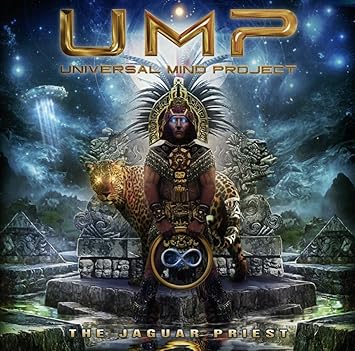
Album Review: Universal Mind Project - The Jaguar Priest


It feels like every month we get a power or progressive metal album that features an all-star cast. I'm not exactly complaining, but I do wonder why so many of these projects pop up, when the core members could be building their own bands instead. It's a trend that started with Avantasia, but that was a side project that eventually grew into something far bigger. These smaller projects that are done on the side of bands that aren't that big to begin with, they confuse me. If the takeaway is that the songwriters need the names of established acts to get any attention, I'm not sure that's much of a selling point. Still, there have been many of these get-togethers that have been very good, so I try to give as many of them as possible a chance.

The core of Universal Mind Project's sound lies in the dueling male and female vocals, which is actually something that isn't done on an album length scale very often. And when "Anthem For Freedom" opens the record with a big, sugary hook sung by both singers, it's apparent that the approach works. The song has a big, cheezy synth line that could have come from an 80s pop song, which gets balanced out by a few growled vocals. You get the standard progressive guitar and keyboard solos, and it all gets wrapped up into an appealing package.

Likewise, "The Bargain Of Lost Souls" is a beautifully dramatic song, lush with string embellishments, and sung by Nils K. Rue of Pagan's Mind. He puts in a great performance, and the song is exactly what good progressive power metal should be; heavy, hooky, and interesting. But like a lot of these sort of projects, the songwriting isn't as consistent as I would like to hear. While the tracks I mentioned are fantastic, they're alternated with tracks like "Truth", which has a bland melody, and "Awakened By The Light", which embraces the prog side too much, and doesn't settle on a single idea long enough to develop it.

The simpler songs, like the piano ballad "A World That Burns" work better, because they're more focused. It's easy for anything that touches in prog to get so engrossed in the playing that the songs suffer, and that happens on this album when the songs try to stretch out a bit. Even those numbers aren't without charm, but they don't pack the same punch. Neither does the appearance by prog trivia answer Charlie Dominici, whose vocals get so buried under layers of echo that he might as well have phoned in his performance. The last time he released a record, he could still sing, so I don't understand making him sound like the mic was malfunctioning while he recorded his parts.

And really, I don't see the necessity of the roster assembled for the album. While it's interesting to hear a couple of these people, by and large I think the album would have been more effective had they limited the vocalists to the two actual project members, so they could develop chemistry together, and give the project a more unified sound. If you ask me what Universal Mind Project sounds like, it's a hard question to answer, because of that fact.

But let's not be too hard on this. While I would have made different choices, this is still a good record. There are a couple of fantastic tracks, and several more good ones here. I would like for it to lean more in the power and less in the prog direction, for the sake of the songwriting, but "The Jaguar Priest" remains a well-executed example of what they're going for. There is certainly plenty of potential for the next outing to improve on the shortcomings on display here, but this is a solid debut. No, it's not Avantasia, but it's better than Timo Tolkki's awful attempts to recreate it. Better by far.

Monday, April 18, 2016

Album Review: Gypsy Chief Goliath - "Citizens of Nowhere"


One of the fundamental problems with genre labels is that they leave very little room for interpretation and flexibility.  By this point, the metalverse has more or less worked out what each of its three hundred thousand or so subgenres should sound like, and anytime somebody doesn’t fit the mold, they’re simply assigned a new genre label.  The manic scramble to label that which we haven’t heard before could probably be classified as an obsessive compulsive disorder, if you really look at it objectively.  Which brings us to Gypsy Chief Goliath, the Canadian stoner metal band that is more than just typical stoner metal fare.  The band and their new release “Citizens of Nowhere” blends and weaves Type O Negative, Clutch, and Kyuss with maybe, just maybe, a little Candlemass sprinkled in there for atmosphere.  It’s an expansive journey that stays on point without holding back.


There’s a certain vein of malice running through the circulatory system of “Citizens of Nowhere,” one that is capably real and ably portrayed by the musicians.  We’ve seen bands like Midnight Ghost Train or Black Wizard take on dour tones in the past, but they have difficulty holding and selling it within their natural blues structure.  Gypsy Chief Goliath, by contrast, wallows in the entangling mud of deep tones and vocals growls to lend an air of malice into a genre that is too often placated with wisps and flights of hallucinogen-induced fancy.  Sure, “Holding Grace” has some light-hearted tones, but the stark main riff helps create a little bit of ominous discord, while the vocal delivery combines the most enthusiastic parts of Viking Skull and Orange Goblin.


Where GCG excels is in patience.  “Citizens of Nowhere” is a premier exhibition in craft, taking its time and never rushing to a conclusion too early.  The album lets the tension build, whether in the grime-soaked halls of “Odyssey” or the otherworldly deep construction of “Elephant in the Room”.  Harmonica or no harmonica, “Black Samurai” is a thick plodder that absolutely refuses to budge more than it has to, but instead uses every part of its six minutes to its advantage, sewing in a blues-y guitar solo and some tidal rocking.  For a band that is capable of showing as much bite as this band is, the ability to let the songs either breathe or brood is a huge advantage over many of their contemporaries.


The one thing worth mentioning is concerning Gypsy Chief Goliath is that stoner metal purists may find themselves wishing that the band would use their melodic aptitude more to their advantage.  To call the band ‘stoner metal’ is accurate only to a point (not that the labels matter a whole heck of a lot,) because the band insists on using a more violent edge within their analog sound.  Academically that’s very interesting, but from a listening standpoint it sounds occasionally disconcerting.  GCG teeters precariously on the line between threatening and soulful which can make for a challenging listen if the goal is to simply space out and let the warm tones flow through you.


Overall, more good than bad here.  Substantially more.  Gypsy Chief Goliath does a lot of things right, even if their concoction is occasionally confusing in direction and intent.  “Citizens of Nowhere” is an enjoyable and dynamic listen, particularly for fans who are inclined into this style of music.  It’s not just your father’s stoner metal anymore.