Here's a fact of life; no matter how much new music you listen to, you're going to miss out on something great. That is the case with The Spider Accomplice. Despite knowing about VK Lynne beforehand, I completely missed when her new project dropped the first installment of this triology of EPs late last year. It's a shame, since if I had heard it at the time, I would have included it in my year-end coverage, since it was the best EP of the year. It was modern rock the way it should be done; not downtuned and miserable, but intricate and melodic. Here we were able to see a band come out with an opening statement that did exactly what such a thing should do; it made me want more.
Which brings us here, to part two of the trilogy. The story continues in these six songs, which tell a story of Los Angeles that I do believe is far more bleak than the music would let on. Let's dive in, shall we?
"Bromelaid" opens things up with the kind of infectious cheer that makes it hard not to smile. The guitars have that jangle and shine that echos classic pop music, and VK spins out a melody that weaves into the fabric of the music to make a perfectly stitched earworm. There's a note at the end of each chorus where he voice leaps up into an almost squeal, but it's in a way that makes me think of a stereotypically pert and perky pettite sketch. It's an audible cue of cuteness, and I'll be damned if it doesn't work. The whole song is like that, welcoming and enticing. In addition to being a damn good song, it makes you want to hear what else they have in store for us.
"Messy Vampire" ups the energy, with a bit more of a punk flair to the bouncing rhythm, but the synths and jangling surf guitar in the background have enough vintage pop flair to recall a version of the Smiths where Morrissey wasn't an insufferable misanthrope. VK's approach is much warmer, and it allows the song to blossom as a pop nugget that will get the crowd singing along. "Behold The Day" pulls back the reigns, but only in terms of the energy. With a bubbling bass line and slashing guitar chords, it's a restrained song, but it's wonderfully melodic when the time comes. There's always something interesting going on in the music besides the guitar and bass locking into one simple, two-note riff. There's layers here that make the songs much more interesting than most bands would be able to do with these pieces.
"You Still Lie" is a song that I'm sure hits me in a different way than it does most people. I can't hear those acoustic guitars leading into that particular melody without being instantly reminded of "Kissed A Butterfly" by my favorite singer ever, Dilana. That would be enough to make it a winner, but putting back on my cloak of objectivity, the track is also another lovely pop song that is hard to resist.
"Hollywood Hotel" is the closer, and boy does it close the EP out in style. After the narration sets the stage for this scene, we get a punky number with a guitar riff that recalls The Offspring's classic, "The Kids Aren't Alright", bristling with energy and attitude. It's a good song just there, but the last minute is what makes it so, so good. The song shifts into a late-night bar sing-along, with the whole group singing along in feigned drunken revelry. That feeling comes through loud and clear, and there's a spirit that comes through that sucks you right in. It's captivating.
So here's the bottom line; The Spider Accomplice has likely just made the best EP of the year two years in a row. "Los Angeles: The Abduction" is six tracks of beautifully deep and melodic pop/rock that does more in twenty-five minutes than a lot of bands do in entire albums. Put them together, and these two EPs already make a heck of an album. Knowing there's a third part still to come means not just that we don't have to wait forever for more great music, it means that the "Los Angeles" project has the potential to be one amazing piece of music when it's fully assembled. We just got this chapter of the story, and I already can't wait to hear how it wraps up.
The Spider Accomplice continues to show they have a world of potential to become a legitimately amazing band.
Listen and buy the EP here.
Friday, September 30, 2016
Wednesday, September 28, 2016
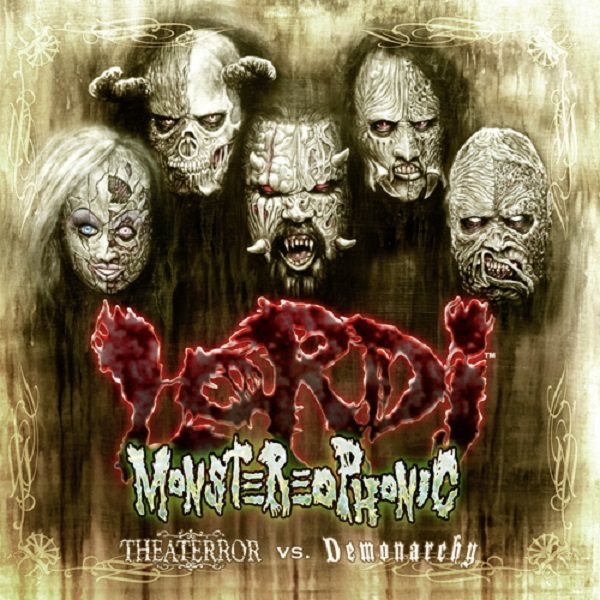
Album Review: Lordi - Monstereophonic
It seems like it's been ages since Lordi bust onto the scene thanks to
Eurovision, giving us that previously unbelievable sight of a hard rock
band in full monster costume taking part in a pop song contest. When
they came out, I was a full believer that they
were going to make great headway, since "Hark Rock Hallelujah" was
about as good a pop song as a rock band can write. Unfortunately, ever
since then Lordi has struggled to live up to the hype. Their albums are
inconsistent, and they haven't managed to score
another song that blew up and captured rock fans they way they did
right at the start. I think I completely lost track of their last two
albums, since I don't even remember listening to them. But this time is
supposed to be different, so I'm back to give them
another chance.
The conceit this time is that we're getting a psuedo-double album. While it only clocks in at just over an hour, we have half of a record that is good ol' Lordi, while the back half is a conceptual suite of songs that stretches the band beyond their normal four minute routine. After all this time, there is a serious question to ask whether or not they're capable of making such a change.
Let's start with the traditional side of the record. Lordi's love of the 80s shines through on "Let's Go Slaughter He-Man", which features keyboards straight out of "Flashdance", as well as subject matter that will bring a nostalgic smile to people of a certain age (yes, I'm of that age). But what's better is that Lordi has recaptured their sing-along fun in a way I haven't heard in a while. Nothing they write will top their masterpiece of bubblegum rock, but Skeletor would rightly raise his horns to this track. It's a far better track than the actual single, "Hug You Hardcore", which has too much modern heaviness, and not enough of the campy fun Lordi needs in order for the joke to work.
The rest of these tracks fall into the category of being pleasantly bland. There's nothing wrong with any of them, but they lack the propulsive hooks that make a band like Lordi so much fun. "Mary Is Dead", in particular, never feels like it gets going at all. It's a song stuck in first gear, when it's begging for something bigger to come along. This half of the record reinforces the complaints I've had about Lordi all these years. They can write one or two great songs, but they rarely follow through with entire albums that deliver that quality.
The second half of the album is markedly different. "Demonarchy" announces this with a thrashy riff, more aggressive vocals, and even a guitar tone that is far harsher than what we had already heard. I don't think that was a good idea, as the more 'metallic' guitar sound here is scratchy and brittle, and doesn't sound any heavier than their normal sound. It just sounds more annoying.
These six tracks are certainly a new Lordi, one that is not confined by pop song constructions, one that is decidedly more modern in their sound. The campy 80s feeling is completely stripped away, which is interesting, and also questionable. The band's entire career has been spent working within that framework, so to so radically shift, in the middle of an album no less, is a jarring decision. I'm not sure what the make of it, but what I can say is that I think this half of the album is more successful in doing what it aims to. These songs aren't as concerned with being fun and catchy, which makes the job of songwriting that much easier. I don't know if "The Unholy Gathering" would have worked as a pop song, but in this context, the hook sounds like a massive metal hymnal.
What I'm a bit confused by is the decision to split the album like this. It sounds to me like the band wanted to try this new approach, but weren't fully committed to putting out an entire record they didn't know fans would accept. So rather than tack one single onto a concept album to keep people happy, they've given us this duality, which I'm not sure is successful. The two sides appeal to such different tastes (for a single band, I mean) that one is surely going to come out the victor by a large margin.
For me, the second half of this album reigns supreme by a substantial amount. That half of the record is not just good music, but it makes for an interesting change of pace from Lordi. I would have liked to hear an entire record committed to exploring that new style. Instead, we have the record as it currently exists, which I really don't know how to judge. It doesn't really hold together as one album, since everything about it is split down the middle. I'll certainly give a recommendation to the conceptual side, but the traditional Lordi material is a bit disappointing here. I don't know what the future holds for Lordi, but I would advise them to settle on one style or the other before making another record. This experiment leaves me as confused as entertained.
The conceit this time is that we're getting a psuedo-double album. While it only clocks in at just over an hour, we have half of a record that is good ol' Lordi, while the back half is a conceptual suite of songs that stretches the band beyond their normal four minute routine. After all this time, there is a serious question to ask whether or not they're capable of making such a change.
Let's start with the traditional side of the record. Lordi's love of the 80s shines through on "Let's Go Slaughter He-Man", which features keyboards straight out of "Flashdance", as well as subject matter that will bring a nostalgic smile to people of a certain age (yes, I'm of that age). But what's better is that Lordi has recaptured their sing-along fun in a way I haven't heard in a while. Nothing they write will top their masterpiece of bubblegum rock, but Skeletor would rightly raise his horns to this track. It's a far better track than the actual single, "Hug You Hardcore", which has too much modern heaviness, and not enough of the campy fun Lordi needs in order for the joke to work.
The rest of these tracks fall into the category of being pleasantly bland. There's nothing wrong with any of them, but they lack the propulsive hooks that make a band like Lordi so much fun. "Mary Is Dead", in particular, never feels like it gets going at all. It's a song stuck in first gear, when it's begging for something bigger to come along. This half of the record reinforces the complaints I've had about Lordi all these years. They can write one or two great songs, but they rarely follow through with entire albums that deliver that quality.
The second half of the album is markedly different. "Demonarchy" announces this with a thrashy riff, more aggressive vocals, and even a guitar tone that is far harsher than what we had already heard. I don't think that was a good idea, as the more 'metallic' guitar sound here is scratchy and brittle, and doesn't sound any heavier than their normal sound. It just sounds more annoying.
These six tracks are certainly a new Lordi, one that is not confined by pop song constructions, one that is decidedly more modern in their sound. The campy 80s feeling is completely stripped away, which is interesting, and also questionable. The band's entire career has been spent working within that framework, so to so radically shift, in the middle of an album no less, is a jarring decision. I'm not sure what the make of it, but what I can say is that I think this half of the album is more successful in doing what it aims to. These songs aren't as concerned with being fun and catchy, which makes the job of songwriting that much easier. I don't know if "The Unholy Gathering" would have worked as a pop song, but in this context, the hook sounds like a massive metal hymnal.
What I'm a bit confused by is the decision to split the album like this. It sounds to me like the band wanted to try this new approach, but weren't fully committed to putting out an entire record they didn't know fans would accept. So rather than tack one single onto a concept album to keep people happy, they've given us this duality, which I'm not sure is successful. The two sides appeal to such different tastes (for a single band, I mean) that one is surely going to come out the victor by a large margin.
For me, the second half of this album reigns supreme by a substantial amount. That half of the record is not just good music, but it makes for an interesting change of pace from Lordi. I would have liked to hear an entire record committed to exploring that new style. Instead, we have the record as it currently exists, which I really don't know how to judge. It doesn't really hold together as one album, since everything about it is split down the middle. I'll certainly give a recommendation to the conceptual side, but the traditional Lordi material is a bit disappointing here. I don't know what the future holds for Lordi, but I would advise them to settle on one style or the other before making another record. This experiment leaves me as confused as entertained.
Monday, September 26, 2016
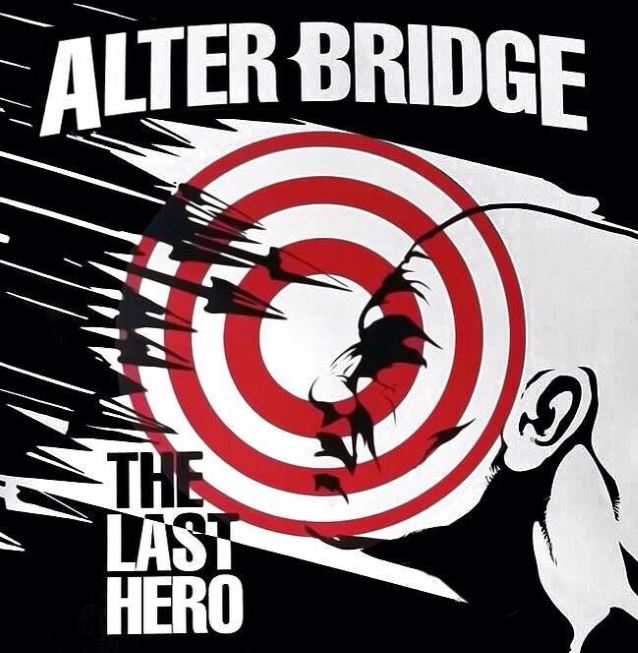
Album Review: Alter Bridge - The Last Hero
Let's start with a moment of honesty. I don't think there was really anyone who could have expected Alter Bridge to become as successful as they have. Sure, they had a bit of a leg up on getting their name out there at first, but there was no reason to think they would become a fairly large band in America, and an arena headliner in Europe. That is a bit surprising, but not at all undeserved. Over the course of their four records together, they have turned themselves into a beast of a hard rock band, establishing themselves as possibly the brightest light burning in the mainstream. In fact, my only issue with them is that they have been slowly drifting further and further into metal territory, which I think went too far on "Fortress". Their last album was too heavy for the band's sound, and suffered from not giving Myles Kennedy enough space to work with.
Now that Mark Tremonti has made three albums with his speed metal/radio rock hybrid solo project, I was hoping that Alter Bridge would tone things down just enough to return to their sweet spot, making delightfully heavy hard rock that still packs a melodic wallop.
I'm happy to say that "The Last Hero" straddles the line perfectly, and delivers on all aspects of what makes Alter Bridge such a great band. If you like the heaviness, there are more than enough big, deep guitars here to keep you happy, but the songs don't forget to pull back just enough for Myles to deliver his huge, uplifting choruses. It sounds to these ears that Alter Bridge has finally found the perfect balance between their heaviness and melody. It's a beautiful thing to behold.
The band announced the album with the release of "Show Me A Leader", which is a propulsive song that has a speed metal type riff, and a pulsing chorus that jerks the song out of, and then right back into the groove, with Myles leading the rallying cry. It kicks off the album, and as good as the track is, it's not even close to being the best "The Last Hero" has to offer. As we progress throughout the album, the songs unfurl their elements to showcase a sophistication and depth most modern rock can't match. These are songs that can fill an arena, yes, but also bludgeon you with big, meaty riffs as well.
It amazes me that after Myles has made four albums with Alter Bridge, and two with Slash, and Mark has made three albums with his solo project, they're still able to infuse these songs with hooks that are this strong, and this fresh. I can speak from experience that after writing enough songs, it's difficult to continue to find new phrasings to keep your songs from beginning to blend together, but that isn't a problem here. Alter Bridge are, amazingly, still in their songwriting prime.
Whether they're pulling out the mind-numbing heaviness of "The Other Side", or the slick melody of "My Champion", there isn't anything that Alter Bridge can't do. These guys have been around long enough that they know how to write songs, so when they up the ante when it comes to how heavy modern rock can be, they're able to reign it in with melody at just the right time. And, unlike my opinion of some of Tremonti's solo work, this is organic heaviness. There's no clashing of speed metal and radio rock here. These songs have all the pieces fitting together beautifully.
In fact, the only thing I can say about this album in a less than stellar light is that it might be a bit on the long side. At 66 minutes, it's a long album, and that doesn't even include the bonus track. There isn't anything on the album that screams to be cut, but I think clocking in at a touch under an hour would make it an easier record to replay again and again.
But if that's all the criticism I can muster, it says a lot about the quality of the record. I've yet to be fully on board the Alter Bridge train. "AB III" is the only album of theirs I fully bought into, but this album is one that could change my mind. It reminds me most of "AB III" of everything in their catalog, which I consider a great thing. Like that album, "The Last Hero" is the kind of heavy rock you just don't hear very often anymore. The music world would be a far better place with more bands putting out albums like "The Last Hero."
Sunday, September 25, 2016
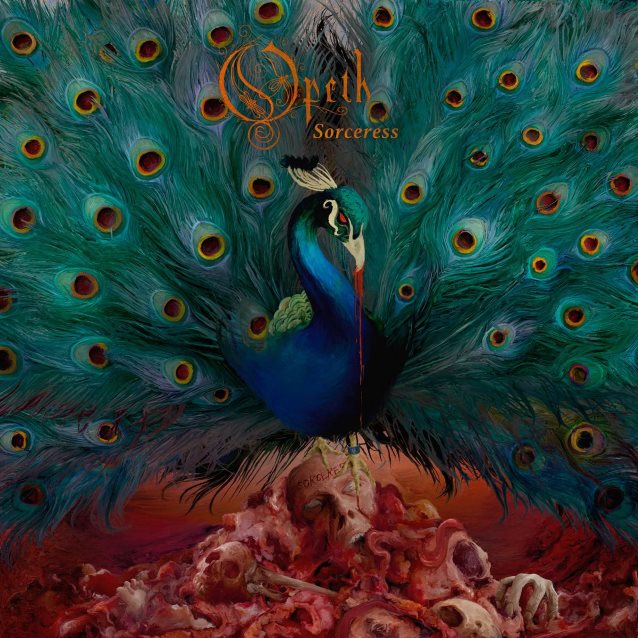
Album Review: Opeth - Sorceress
Be careful what you wish for.
That saying comes to mind every time I put on a new Opeth record. There was a time when I listened to them, and the only thought that came to mind was, "how much better would they be without the growls?" Mikael Akerfeldt was on such a songwriting roll for a long time that the pure death metal parts were all that stood between them and mass success. So when they finally shifted their sound, it should have been the start of something great, and I should have eaten it up. Instead, their dedication to old-school prog has sucked not just the life out of them, but their creativity as well. Opeth is a completely different, lesser band because of the change. But I'll get to that later.
"Sorceress" is the third album in Opeth: Phase Three. So far, this iteration of the band has released two blisteringly mediocre albums that have redefined the ways that a modern metal band can go off the rails. I'm not talking about the lack of heaviness. I don't care about that aspect in the slightest. With the change in sound came a change in songwriting, and that has been one of the most baffling losses of talent I've ever seen.
When Opeth was at their height, Mikael would write a twisting helix of death metal, and then throw in an unbelievable melody to make you wonder just where in the hell this guy came up with such stuff. "Still Life" and "Blackwater Park" may not be the most economical songwriting, but they have such spark, passion, and damn memorable songs that it's painful to hear how far Mikael has fallen. With each passing album, his writing gets more and more vanilla, to the point where he's serving up cold milk without a hint of flavor.
"Sorceress" is Opeth at their absolute worst. This album is a testament that creativity is fleeting, and you have to take advantage of it while you can, lest you become this boring. Mikael tries to bring back some of the old heaviness, but he does it by playing riffs that could have come off a Gojira album, which is not his style at all. The title track is built on such a simple, boring riff that the entire song is a long slog where you check your watch waiting for it to be over. The rest of the album doesn't make things any better.
We get a mix of a few tracks that try to be heavy, and a few that wander completely off the prog rails. Songs are slow, soft, and without any redeeming ideas. Here's the crux of the problem; when Mikael was writing death metal with melody thrown in, he wrote his vocal lines making sure that the growled parts were interesting enough on their own, but now that he's writing nothing but clean vocals, he's gotten lazy. He writes the first thing that comes to mind, and doesn't care if it's interesting or not. As long as his voice sounds good (which it doesn't anymore, as much as he strains to sing nowadays), he thinks that's good enough. Well, it's not.
Between the barely there vocal melodies, and the long passages of meandering and tepid riffs, there just isn't anything on this album that captures your attention. It's rehashed prog, yes, but it's boring rehashed prog. You can sound like everything else and still write interesting songs, but that's not what Opeth does anymore. Mikael hears something on an obscure old vinyl, copies the sound for a few minutes, and thinks that's a great piece of Opeth-ian music. It's not. It's a record collector scavenging because he no longer has anything left in himself.
I'm not saying Opeth is dead, but they're on life support, and "Sorceress" isn't convincing me that they're ever going to make a recovery.
That saying comes to mind every time I put on a new Opeth record. There was a time when I listened to them, and the only thought that came to mind was, "how much better would they be without the growls?" Mikael Akerfeldt was on such a songwriting roll for a long time that the pure death metal parts were all that stood between them and mass success. So when they finally shifted their sound, it should have been the start of something great, and I should have eaten it up. Instead, their dedication to old-school prog has sucked not just the life out of them, but their creativity as well. Opeth is a completely different, lesser band because of the change. But I'll get to that later.
"Sorceress" is the third album in Opeth: Phase Three. So far, this iteration of the band has released two blisteringly mediocre albums that have redefined the ways that a modern metal band can go off the rails. I'm not talking about the lack of heaviness. I don't care about that aspect in the slightest. With the change in sound came a change in songwriting, and that has been one of the most baffling losses of talent I've ever seen.
When Opeth was at their height, Mikael would write a twisting helix of death metal, and then throw in an unbelievable melody to make you wonder just where in the hell this guy came up with such stuff. "Still Life" and "Blackwater Park" may not be the most economical songwriting, but they have such spark, passion, and damn memorable songs that it's painful to hear how far Mikael has fallen. With each passing album, his writing gets more and more vanilla, to the point where he's serving up cold milk without a hint of flavor.
"Sorceress" is Opeth at their absolute worst. This album is a testament that creativity is fleeting, and you have to take advantage of it while you can, lest you become this boring. Mikael tries to bring back some of the old heaviness, but he does it by playing riffs that could have come off a Gojira album, which is not his style at all. The title track is built on such a simple, boring riff that the entire song is a long slog where you check your watch waiting for it to be over. The rest of the album doesn't make things any better.
We get a mix of a few tracks that try to be heavy, and a few that wander completely off the prog rails. Songs are slow, soft, and without any redeeming ideas. Here's the crux of the problem; when Mikael was writing death metal with melody thrown in, he wrote his vocal lines making sure that the growled parts were interesting enough on their own, but now that he's writing nothing but clean vocals, he's gotten lazy. He writes the first thing that comes to mind, and doesn't care if it's interesting or not. As long as his voice sounds good (which it doesn't anymore, as much as he strains to sing nowadays), he thinks that's good enough. Well, it's not.
Between the barely there vocal melodies, and the long passages of meandering and tepid riffs, there just isn't anything on this album that captures your attention. It's rehashed prog, yes, but it's boring rehashed prog. You can sound like everything else and still write interesting songs, but that's not what Opeth does anymore. Mikael hears something on an obscure old vinyl, copies the sound for a few minutes, and thinks that's a great piece of Opeth-ian music. It's not. It's a record collector scavenging because he no longer has anything left in himself.
I'm not saying Opeth is dead, but they're on life support, and "Sorceress" isn't convincing me that they're ever going to make a recovery.
Thursday, September 22, 2016
Album Review: Charred Walls Of The Damned - Creatures Watching Over The Dead
Ahh yes, Charred Walls Of The Damned. A band that was branded with the label of a 'supergroup' when they came out, despite the two known members of the band being only known as replacements for more legendary players. The combination of Richard Christie and Tim 'Ripper' Owens combined for what was actually a solid record, and one of the few times Owens was not a complete bore behind the mic. I'll never say he can't sing, but Owens is one of those people with a voice so bland that he makes nearly everything he does sound lethargic and generic. That turned out to be the case for album number two from this group, which quickly reverted into the territory of being mediocre to the extreme. See what I did there?
Part of that generic feeling comes down to how ubiquitous Owens was for a while there, singing on too many records in too short a time, and the other part is that band member Jason Suecof's production is one note, shared by every band he works with. Combined, there isn't anything in the the actual sound of Charred Walls that we haven't heard before.... literally.
The promise of this record is a more direct, back to basics, and punchy album. The opener "My Eyes" delivers on that promise, with four and a half minutes of semi-thrash riffing, shredding guitar solos, and a focus on building a big chorus for Owens to shine on. And speaking as someone who didn't like the second record at all, I have to say it works. "The Soulless" doesn't work as well, despite it's more frantic thrash energy. The issue is that the entire chorus is built around Owens' upper register, which is the weakest and most annoying range of his voice. It's where you could make a comparison to a certain Muppet and not be out of line.
But there's a run of songs through the middle of the record that show what this band can do well. "Afterlife", "As I Catch My Breath", and "Lies" are all good tracks that balance the band's affinity for thundering heavy metal with softer moments, and a real attempt to build big melodies. It's a solid formula, and would work if the band stuck to it. But then we get a song like "Reach Into The Light", which is less than three minutes of stop/start metal with Owens shrieking over the music in a way I can't imagine ever wanting to hear again in my life. It's an uncomfortable vocal approach, but it doesn't matter, because there's not much of a song there either.
And that is ultimately what "Creatures Watching Over The Dead" is as an album. There are some good tracks here that would form the core of a solid album, but there are a couple of tracks that go completely against the grain of what they're trying to achieve, and too much emphasis on Owens' worst traits as a singer. Charred Walls is a pretty good band when they do what they're good at. I'm just not sure they understand what that is.
Wednesday, September 21, 2016
Album Review: Soilwork - "Death Resonance"
The release of a collection of rarities from any band is automatically a reason to pause as a fan. Absent the most dedicated completists among the faithful, the fans at large are always skeptical of rarities albums because the band can package it however they want, the overriding message is always one of ‘here’s a bunch of stuff we had kicking around that we’d like to cash in on.’ The cynical among us would even suggest that fans shouldn’t spend their hard-earned dollars here, because these are all songs that the band didn’t think were good enough to make the grade the first time around, and why has that suddenly changed?
Now, that’s not to doom Soilwork’s “Death Resonance” out of hand, but it does tell of a cautionary note that goes into the proceedings of listening to the record. Now, there’s some saving graces incorporated here. There’s the usual window dressing of a couple previously unrecorded tracks, but the meat here is that most of these songs had been released in some form previously, predominantly in the Asian market (sidebar – why does Asia always get the expanded releases? Somebody explain this to me.)
So, to spin an unusual analogy, let’s compare “Death Resonance” to making meatballs. You know when you’re making meatballs and you get down to the scraps of your meat mixture, and you scoop all the odd and ends and remnants together and compress them into one final meatball that finishes off the batch? Sure, maybe it’s smaller than the others, or has a higher bread crumb percentage or just doesn’t look as pristine as the prime meatballs, but damn it, it’s still a meatball, and it still tastes good. That last meatball is “Death Resonance.”
By this point you probably all think I’ve lost my wits (as though you didn’t suspect that before,) so let me elaborate. First things first, and let’s get the bad stuff out of the way. The five remixes at the end of this record? Cut ‘em. They don’t add much but time to the record, and they’re worth listening to once, but don’t add a ton of ‘wow’ material to the overall experience. So boil this down to ten songs before you dig in.
Where “Death Resonsance” really shines is as an active chronicle of Soilwork’s career starting at the end of phase two (if you will,) and up to the present (phase three, by most accounts.) Some of this material dates as far back as “Stabbing the Drama,” which is now eleven years old, if you can believe it (where does the time go?) and runs right up to the two new cuts, reflecting the many changes of the band over that time period. Over the duration of this collection, you hear Soilwork evolve from punchy, rhythmic death metal band into artistic, thrashy death metal band and all of the stops in between, which means this album houses a great deal of variety in a small package.
So what you end up with is all the highlights of Soilwork that you love with none of the filler. Right in the middle of “Death Resonance,” starting with “My Nerves, Your Everyday Tool” and running all the way through “When Sound Collides,” we hear hallmarks of the same kind of songwriting that ran the extensive gamut from the all-encompassing chug of “The Crestfallen,” to the mature precision of “Living Infinite I.” To have examples of all these things in one place, even if the songs are only 85% of their bigger brothers, has value as a retrospective.
“Death Resonance” was automatically worth the price of admission if you are even a moderately well-schooled Soilwork fan, but this collection, in distinct contrast from the usual spate of rarities albums, has value for even casual fans who come with less personalized memories and experience. There’s a pleasantly abundant selection of good material here, worthy enough for a purchase by most metrics.
Monday, September 19, 2016
Album Review: Operation:Mindcrime - Resurrection
It's been a rough couple of years for Geoff Tate. His last outing with Queensryche was the horribly received "Frequency Unknown" (which I actually liked), which then led to the slightly better reviewed debut from his new outfit (which I absolutely hated), which leads us to the second part of the trilogy just a year later. I'll give Tate credit for one thing; it's not easy to keep going out there and putting out new records when most of the people who will hear it are already dead-set on hating the result. At this point, there's nothing he could do that will make people happy, which in a way has to be liberating. Unfortunately, that attitude led to one of the worst albums of last year, a bizarre mess of influences that never should have been put together. But for some reason, I feel more optimistic about this second effort, so I'm willing to give it a chance.
After wasting a minute of my life with a mostly silent 'introduction', the first few seconds of "When All Falls Away" immediately raises a big issue; the production. I don't any of the details about how this album was recorded, but the sound is muffled and below par. Perhaps Tate tried to record all three of these albums on the normal budget of one, but the sound is lacking from what I expect of a professional album these days.
Of course, the other issue is that the album starts with that pointless intro, and then goes straight into a two minute instrumental, followed by a thirty second setup piece, and another one minute track. It's more than five minutes into the record before an actual song starts playing, which is an unacceptable amount of time. When I have hundreds of new albums to get through, superfluous material that serves no purpose only makes me more inclined to turn the record off before I can even give it a chance. Whoever sequenced this album made a horrible mistake that ruined any chance of the album being good.
But what happens once the music gets going?
The first real song is "Left For Dead", which is one of the better songs Tate has written in a long time. There are a few hints of his prog past in the scales used by the guitar leads, but the song is at its heart an arena-ready rock number, which is a standard it lives up to well. Tate wisely sticks to his voice's best range these days, and the main melody is the kind of thing that doesn't sound impressive, but before you know it you have it stuck in your head. It feels to me like a song that could have been on "Frequency Unknown", so take that for what you will.
After that, the album starts to get weird. "Healing My Wounds" is an odd mixture of funky bass, what sounds like a Japanese motif, and then for good measure a saxophone solo thrown on top of it all. It's an odd juxtaposition between that track and "The Fight", which is a really nice semi-ballad that uses a more melodic approach to showcase Tate in his best light.
"Taking On The World" is a better experiment, where the band is able to segue from a stomping heavy riff to a sing-along chorus that balances the sides of the band's appeal. It shows that for whatever odd predilections Tate might have when it comes to his music, he can still still down and write a good, solid rock song. Like a lot of artists, though, I think he gets lost in his desire to be a creative force, and doesn't realize where his talents are best suited. That might make him feel good about his creative energy, but it makes records that don't focus on what he's best at. If he turned out an entire album as good as the songs I've highlighted, he certainly wouldn't have endured so much media harassment.
But ultimately, while "Resurrection" is a better album than the first one, I can't say it's really all that good as an album. There are a few really good songs here, and the makings of something great, but Tate is unable to focus long enough to let it develop. Just when you get a song that is fantastic, it's followed up by one that doesn't seem to have the slightest idea what it is. The album is scattershot like that, and making it through the entirety without wondering what exactly you're listening to is a bit difficult. There are things about "Resurrection" I like, but not enough to give this a recommendation as anything more than something to give a curious listen to.
Sunday, September 18, 2016
Classic Review: Dan Swano - Moontower
When death metal first emerged, it was
a novelty, a branch of metal that was never expected to be anything
other than a carnival oddity. Against all odds, it caught on with a
large portion of the public, and soon there were bands lining up all
around the world trying to get a piece of the action. What started
off as a breath of fresh air, a new sound that was original and
unique, quickly became a breeding ground for mediocrity. All genres
are subject to bands converging to a single sound, but with death
metal stripping most of the humanity from their vocals, that
singularity was easier to achieve than anywhere else. Before long,
death metal was everywhere, and few bands were able to maintain an
identity that separated them from the masses.
One of those that
was able to was Edge Of Sanity, because mastermind Dan SwanÓ§
possessed one of the few growls that was able to stand out. He was
not the indecipherable voice that would lead to the 'cookie monster'
generalization, he was able to use his voice like a singer, putting
both force and melody to his demonic performance. The band would run
its course, and when SwanÓ§
took on the task of making a solo album, he showed what extreme metal
can truly be.
“Moontower” is
not extreme metal in the sense that traditional death metal is.
Rather than overwhelming you with the sheer brutality of the music,
SwanÓ§
uses his death metal voice as a means to subvert traditional formats,
illustrating how the human element is often the only thing separating
what we perceive to love from that we hate. “Moontower” was
described as the imagining of what it would sound like if Rush had
played death metal, and it's a fair assessment. SwanÓ§
does not trade in the typical chugging riffs and double bass
drumming. “Moontower” is built on the foundation of progressive
rock, with a more subdued guitar attack, and a pronounced focus on
vintage keyboard sounds.
On songs like
“Patchworks” and “Uncreation”, SwanÓ§
is able to do something no other death metal vocalist can, growling
sturdy hooks that could anchor more traditional rock songs. Death
metal vocalists are not known for being interesting writers, mostly
sticking to a single tone, while growling simply rhythmic patters.
SwanÓ§
is unlike any other, as he is able to use his voice to growl melodies
that swirl and flow like any other singer, but with the fury and
power of a throaty roar. He is able to bridge the gap, giving the
songs an intensity a pure singer never could, but retaining the
elements that can make the music connect with people who don't care
for death metal.
Those two songs are
the cream of the crop, but there are no weak moments on “Moontower”.
From the opening seconds to the end, the album is an unholy mix of
Rush and death metal, one that works far better than it had any right
to. The experiment sounds absurd, but SwanÓ§
makes it work, because he is fusing the two sides of his personality.
What may have come across as a gimmick in lesser hands works here,
because SwanÓ§
is pouring his heart and soul into these songs. The effort shows, as
“Moontower” resonates as an intensely personal journey.
What is most amazing about “Moontower”
is that, despite the genius of the album, nothing else has ever
sounded like it. No one has copied the formula, perhaps because no
one else understands it. “Moontower” may not sound like an
extreme metal album, but it is one, because it steps outside the
rules of what is expected. It is wholly original, which is often the
most extreme thing an artist can say.
(The only negative is that "Moontower" has been out of print for longer than I have known of its existence. Despite its status as a classic of the genre, it is nearly impossible to get a physical copy of the album. I would dearly love to have one, but the pricing on a used copy is ridiculous. How, in this age when items can be printed on demand, has "Moontower" been allowed to slip out of existence?)
Wednesday, September 14, 2016
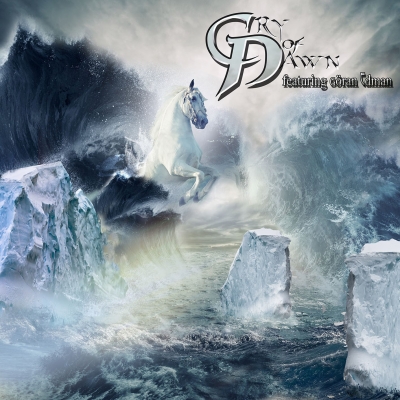
Album Review: Cry Of Dawn - Cry Of Dawn
Some artists are never able to find that one band or project to carry them through a career. They wind up hopping from one to another, always impressing with their talents, but not making a name for themselves because they are constantly reintroducing themselves to the world. It's the reality of the music business right now that a large number of musicians need to be involved in multiple projects to keep themselves afloat, but the negative side of that is they are always searching for an identity. Goran Edman has been around the melodic rock scene for thirty years now, but he's been involved in so many bands over the years that it's hard to identify him with anything in particular. That may just be the inspiration for Cry Of Dawn, a vehicle for his voice, brought together by songs provided by Frontiers' stable of songwriters.
Cry Of Dawn is all about AOR/melodic rock of the 80s variety. If you like cheesy keyboards and synths that sound straight out of a tawdry Whitesnake video, there's plenty on this album for you. That's a joke. I don't mean it as a negative at all. Melodic rock of this kind always has a bit of cheese factor to it, so leaning in to it and embracing that fact, isn't a bad thing at all.
The problem with an album like this, which adheres so closely to traditional AOR, is that there isn't much interesting to say about it. You and I both know exactly what this album sounds like from the description, and there isn't a single thing about it that deviates from those expectations. Now, that's not a bad thing, except for the fact that I'm a writer trying to write down my thoughts. Describing the music is a big part of doing that, and there are only so many ways to describe the exact same thing before even the most loquacious of us run out of adjectives and metaphors.
So let's just say in more general terms that, even if we know the sound, the quality of the music can still be in question. Goran is rightfully the star of the show, but I'm past the point where I will listen to music just because I enjoy the voice, unless it's one or two very special people. I need the songs to deliver as well, and that's what we have to address here. Are these songs good enough?
Yes they are. There aren't any here that immediately jump to the front of the line, but on the whole the record is filled with songs that have strong, enjoyable hooks for Goran to sing. Some, like "Life After Love" are obviously weaker, but the majority of the album is perfectly good AOR that makes for an enjoyable listen. This is by no means a classic album, or even the best of this variety that's come along this year, but it's a good album, and maybe it can give Goran the spotlight that he's never had.
Monday, September 12, 2016
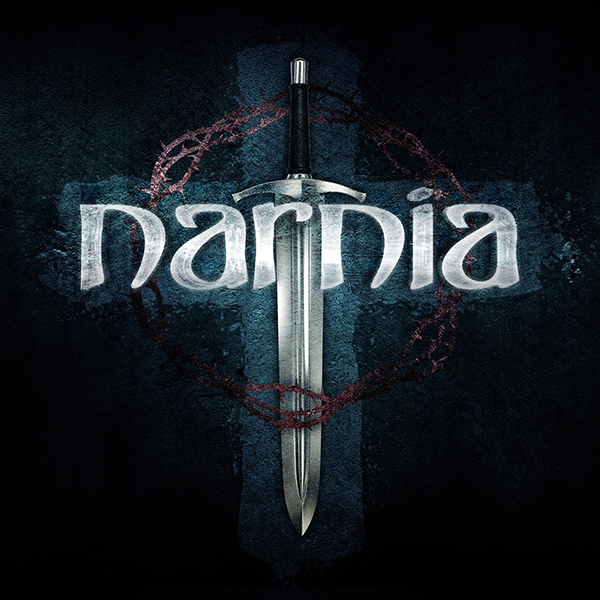
Album Review: Narnia - Narnia
When you see a new album, and the name on the front cover is Narnia, what do you think? If you're me, you think something to the effect of, "Oh boy, another fantasy-laden power metal band." Fair or not, we do judge things by their cover, and I've heard far too much power metal over the years that seems utterly convinced Middle Earth is a real place. So while I'm usually game to give most anything a try, I was not particularly thrilled by the prospect of a band named for a fictional land. Fantasy stories don't do it for me, especially in music.
So it was with a bit of surprise that I was greeted by "Reaching For The Top", which is a song more in line with the legacy of Dio than what I was expecting. It's punchy, and has good heft and energy. It's a solid little track, except for the lyrics, which deal with being a rocking band. I'm sorry, but even Dio couldn't pull off writing songs about how awesomely he rocked. It's a weak topic, and I always say that if you have to tell people how much you rock, you don't. This song certainly doesn't change my opinion on that topic.
Things quickly get better. "I Still Believe" is a solid melodic metal track, with a deliberate pace, excellent vocals, and a chorus that ups the ante just the right amount. The sound is modern power metal, with more emphasis on deeper guitars and heaviness, and less on double-bass speed, which gets boring quickly. But just when you think you have things figured out, the band goes and throws in a lyric that name-checks Jesus Christ. Look, I have no problem with religious music. Neal Morse is one of my favorite musicians, after all. But there's something about writing that bluntly, and throwing proper nouns into the lyrics, that comes across poorly. I can't imagine anyone not sitting in a mega-church ever singing along to those words.
We also get a song in "Thank You" which is apparently directed to their creator, but which I would advise against ever sending. It's such a weak, flaccid song that it doesn't express any feelings in a way that would make you think it's gratitude. Frankly, if I was given a thank you note like that, I would seriously wonder where I went wrong.
I'm sure Narnia means well, but they just don't have what it takes to make this record good enough. Power metal doesn't ask for the most involved musical backdrops, and they don't give them to us. So when there aren't guitar riffs to remember, it all rests on the vocal hooks, and Narnia doesn't deliver. These songs aren't as uplifting and hooky as they need to be, and the record comes across sounding lifeless because of it. It's competent music, but nothing more.
Subscribe to:
Posts (Atom)