Tuesday, January 31, 2017

Album Review: Fleesh - What I Found

It's funny how sometimes you can go years without hearing something, and then in short order you hear it popping up everywhere. Usually, it's one song that has escaped your mind only to come back with a vengeance, but it can happen to larger themes as well. Last year, I reviewed the most recent release from Lucid Fly, who have the unusual (I'm not sure why) sound of modern rock with some prog tendencies, capped off with a female singer. It was something I haven't heard in quite a long time, but here we are just a bit later, and Fleesh is doing something similar in nature, though not necessarily in sound.

Fleesh is a duo from Brazil who have embraced the sound of early neo-prog, but without the excesses that can come along with songs that stretch across an entire side of vinyl. They use the instrumental structure of early Genesis and Yes, but do it in a way concise enough for this modern world.

You don't have to get far into the opening title track before it becomes apparent that Fleesh is a abnd with a warm, inviting sound. There's a richness to the layers of guitars and keyboards that invites you in. Gabby Vessoni's vocals are similarly warm, and it all adds up to a sound that pulls the best aspects from nostalgia. You can hear that spacey, early 80s guitar tone on the solo, but the heart of the song is the melody, which leaves behind the obtuse writing of that time period for something more immediately engaging.

A song like "If I" is both wonderfully laconic and liltingly beautiful. If there's such a thing as restrained pop, this would be a solid example of the style. It's a gentle approach to reeling you in, as opposed to hitting you over the head with musical adventures. That is the album's best attribute, and also the one thing that holds it back.

There is evident influence from the early neo-prog bands, and I admire Fleesh's self-control to not fill their songs with too much instrumental noodling and needlessly expansive song structures. However, the other side of the coin is that their restrained approach to music leaves the album lacking a bit of energy. It's beautiful music, but it strikes me as the kind of album you put on while you're doing something else. It sets a mood, and it serves as a lovely backdrop, but I think it needs a bit more pep to be your full focus for the fifty minutes it lasts.

That being said, let's be clear for a moment; Fleesh has made a beautiful album that recalls the best of neo-prog, and offers up nearly an hour of songs that make a lovely backdrop for life. Not everything has to stand out and demand to be the center of attention. "What I Found" doesn't, and really it might be better off for it. For what the aim of this album is, it absolutely succeeds.

Sunday, January 29, 2017

Album Review: Charetta - Fate Strikes Twice

One of the things I've noticed over the last year or two is the ever increasing number of bands that have been coming forward with honest to goodness female rock singers. There was a long time where it seemed the only way a band would consider a woman was if she was a classically trained soprano, but I'm happy to see that has changed. Perhaps I'm just getting old, or maybe I'm ahead of the curve in realizing that the morose men flooding the genre are flaccid and boring, but there's something about a strong woman leading a rock band that gives them a leg up.

Filed under the category of "things I missed in 2016", Charetta is just the latest band in that realm that I've had the chance to share with you.

Charetta's sound is one that is heavy on groove, with low-tuned guitars and riffs that are written to get the crowd at a show moving. The first track here, "We Will Survive", shows what Charetta can do incredibly well. The riffs and thick and chunky, with enough grit to make it clear this is rock and roll, while Angelina's vocals throw out a chorus that has a hint of pop to it. It's a fun, catchy number that appeals to both sides of the equation, which is exactly what great modern rock should be doing.

Of all the modern rock I've listened to in the last couple of years, I can say that easily 80% of it comes from bands who have completely forgotten that music is supposed to be enjoyable, and songs need to be memorable. Charetta doesn't have that problem. In addition to having a good sound, they also know the importance of writing songs with real hooks. That should be a given, but modern rock has blunted songwriting so much that it's shocking to hear a band doing it right.

Even where you think there could be an issue, reading the title "I'm Not Your Bitch", Charetta overcomes the stereotype by writing a song that has a message more nuanced than the language points to, and they do it with a song that uses a sensual hook to support the point they're making. When Angelina lets out a scream at the end of the bridge, it's not just a feature thrown in to make the music 'edgy', it serves a real purpose in expressing the anger behind the song. That's smart songwriting.

Now, could you say that Charetta isn't doing anything new here? Yes, that's not an unfair assessment, but it looks at things from the wrong perspective. There are two ways of approaching the world; inventing the wheel, or improving the wheel. Charetta doesn't need to be blazing new trails when the one that's already there is so sparsely populated by bands that leave any lasting footprints. Instead, they take the sound we're already familiar with and write better songs than the majority of them. That's just as worthwhile a cause than creating a whole new sound just for the sake of being the first to do so.

"Fate Strikes Twice" reminds me a fair bit of Forever Still's album from early 2016, which wound up on my year-end list. If you remember that album, and how quickly Nuclear Blast moved in to scoop them up after the self-release, that will give you a good indication of what Charetta is serving up. And like that album, this is a collection of previous EPs with a few new tracks included to flesh out the record. Both parts are good, but you can hear the difference and growth in their writing between the two halves. Nevertheless, "Fate Strikes Twice" is a good piece of modern rock, and is one from 2016 that deserves to find some new life in the new year.

Thursday, January 26, 2017

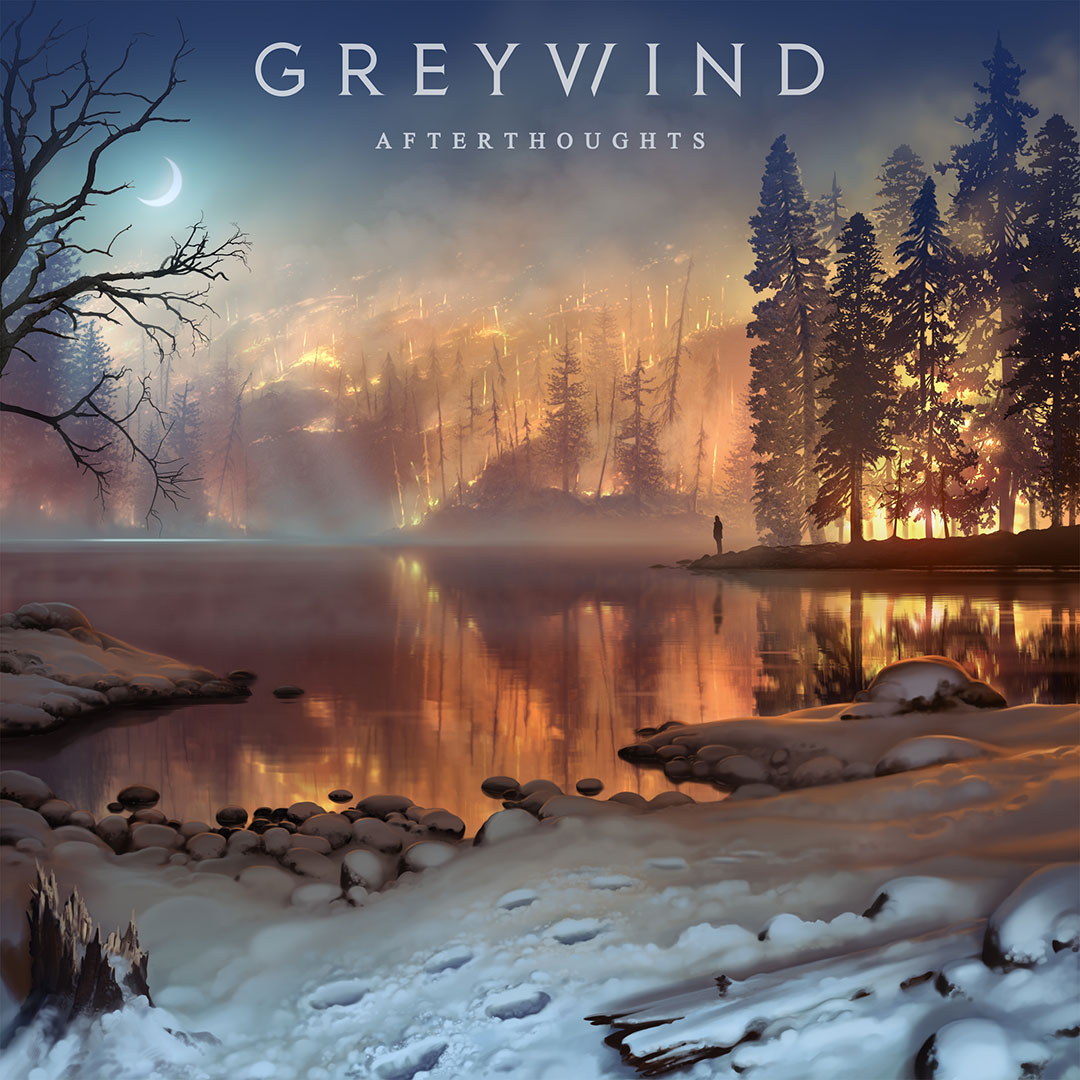
Album Review: Greywind - Afterthoughts

One of the big surprises of last year was that Jimmy Eat World was able to rise from the ashes of obscurity to make a great record, one that found its way onto my list of the best albums of the year. Alternative rock of that stripe has been all but non-existent in recent years, so hearing something that had both muscle and melody of that variety was incredibly refreshing. Fast-forward a few months, and we're now receiving the debut album from Greywind, who reference that brand of rock as a key influence in their sound. "Afterthoughts" is following in that mold, and has the chance to fill a hole that is desperately needed.

Greywind takes a slightly different tract, marrying that surging sound to elements of post-rock atmospherics, creating an identity that is more slow-burning and introspective. Within each song, you get moments of power juxtaposed with graceful passages of emotion. Adding that darker, more conceptually heavy component to the music has the potential to elevate the music above the simple formula of power chords and sugary hooks that might have been expected.

That's the potential. Whether or not they hit those marks is a different story. What is successful is the approach they take of blending the soft and the heavy in the same song, as opposed to taking their reserved moments and putting them in separate songs. That is often done, and it usually fails, because a four minute stretch of meandering notes doesn't often have anything compelling to offer. But by utilizing those elements as a set-up for the more muscular hooks, both sides get to play off each other. It should be Songwriting 101, but it's amazing how often bands lack an awareness of how to best frame their ideas.

Which brings us to the crux of the album. While Greywind has a laudable sound, and show they understand how to construct songs to make them most effective, the actual content of the music doesn't quite live up to the promise. There are good tracks here, notably the opening trio of "Afterthoughts", "Forest Ablaze", and "Circle", but the album spends too much time lost as it tries to get from one good moment to the next. This style of music isn't known for its memorable riffing, and that carries through, with little of the guitar work doing anything of note. It sets the stage, but through the slower moments, there are just hints of fragmented chords that are place-holders until the choruses come. It would work well enough if the choruses had enough punch, but the hooks are solid when they need to be devastating.

"Afterthoughts" is a fine record, and it's enjoyable to listen to, but there was the potential for even more here. With a bit more polishing here and there, this could have been elevated to where Jimmy Eat World landed with "Integrity Blues". Both albums are dark, pop-fueled rock records, but only one of them managed to convey the feeling and the sound of putting a candy coating on a bitter pill. Greywind has the ability to get there, but they need more experience before they make the record that will define them. This is a good first step, but it's a record that feels like them finding their footing for what will come next.

Tuesday, January 24, 2017

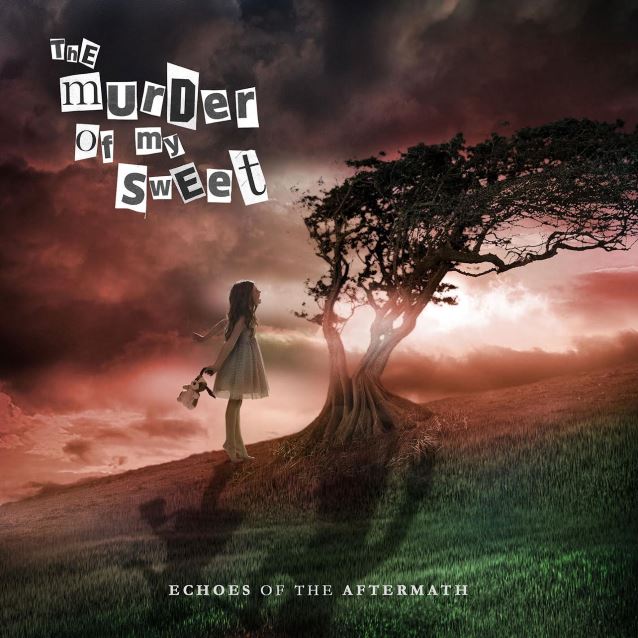
Album Review: The Murder Of My Sweet - Echoes Of The Aftermath


It was only a little more than a year ago that The Murder Of My Sweet released their big, sprawling, dramatic concept album, "Beth Out Of Hell". That album made a sizeable impact, and earned high praise from all around. It did not from me, however, because I had missed it when it came out, and didn't actually hear the record until far later. It was the kind of thing that was right up my alley, so I was disappointed in myself, but not in the record. Capitalizing on that success, the band is back in short order with a new batch of songs, this time without the grandiose concept pushing them to epic heights.

What we get this time is an album that promises the same kind of symphonic fervor, but with songs that are more straight-forward and compact. Hearing that, combined with the short time between the two albums, does throw up a few warning bells. Are they warranted?

The answer to that isn't quite so simple. It will depend very much on what you're expecting of this album. If you're expecting, or hoping, that it will be a continuation of "Beth Out Of Hell", you might be disappointed. Without the story and the scope behind it, this record doesn't feel as titanic in proportion as its predecessor. There's nothing wrong with having a more intimate record, but we can't pretend we don't judge things in relation to others.

However, if you keep in mind that this is a different beast, "Echoes Of The Aftermath" is just as enjoyable an experience as "Beth Out Of Hell" was. While I was initially disappointed by the preview tracks that were released, they make far more sense in the context of the album. The Murder Of My Sweet is much more of an album band, so perhaps it was just that one track on its own didn't have the right elements to blow me away as a single. But when I hear "Racing Heart" during the album's run, it not only fits right in, but it sounds fresher and more lively.

The band knows that it's not enough to slap some orchestral keyboards onto mediocre songs and claim to be doing something amazing (unlike some bands that will remain nameless). These songs are cinematic and lush, but they are at their core strongly melodic metal tracks that have an endearing vocal presence. Angelic Rylin doesn't have the pure vocal power that many of her peers do, but that actually works in her favor. Rather than throwing out huge bursts of vocal volume to drown out the melody, she uses her warmer tones to bend the melody into something more engaging. It's because of sharp writing, but also a keen understanding that sometimes less can be more. Oversinging these songs would not have made them any better.

When the band is hitting their marks, they make some fantastic music. The entire first half of the record is the kind of lush and melodic metal that speaks to both the metal and pop fan in me. That is the kind of music that has the chance of being something special, and I was preparing on first listen to hand out my highest recommendation. However, the middle of the album loses a substantial amount of steam, ironically beginning with "Flatline". There's a stretch of tracks where the bounce disappears, and the songs get bogged down in slower tempos and weaker hooks. They're fine enough songs, but bunched together after a string of great material, the difference in quality is more notable.

So to circle back to my comment about warning bells, there was a reason for them to be sounding. I don't know enough to say if it was because of the short turnaround or the pressure of following a huge record, but this one doesn't reach the same heights as "Beth Out Of Hell". It's a good record, don't get me wrong, but it's one where I can see room for improvement. It's long enough that it would have been a better experience to remove one or two of the slower tracks and focus on the warm melodies the first half of the album showcased. Like a real echo, "Echoes Of The Aftermath" is a little quieter, a little weaker, than the original. It's still good, but there's a reason bands have trouble following up the album of their career. Stepping out of a shadow is hard, and this album doesn't quite get there.

Sunday, January 22, 2017

Ten Years On: Revisiting 2007

While I am not the most obsessive of people, I have scraps of paper lying around listing every album I've listened to for at least the last decade. I know that if I don't do so, I will forget about great records when I go to do my year-end awards, but in the long-term, those lists serve as a nice reminder of how I have ended up where I have. Sometimes, in those lists, I can see the first steps down paths that have branched well off from where my musical tastes used to be.

In that spirit, I am taking the opportunity to look back a decade, and see where I was then, where I am now, and how my views have changed in the intervening years. And as the year goes along, when the schedule permits it, I am planning to have a few special pieces talking about some of the more important albums from 2007.

But first, let's recap what my picks were that year:

10. DSG - Hellborn
9. King Diamond - Give Me Your Soul... Please
8. Fall Out Boy - Infinity On High
7. Magnum - Princess Alice And THe Broken Arrow
6. The Codex - S/T
5. Bloodbound - Book Of The Dead
4. Allen/Lande - The Revenge
3. Bruce Springsteen - Magic
2. Scorpions - Humanity: Hour 1
1. Emerson Hart - Cigarettes & Gasoline

Where to begin? The most obvious place is with my final selection, as while at the time I was trying to give DSG the benefit of the doubt, there has been literally nothing in the last ten years to warrant that decision. It's a record that has aged extremely poorly, and I can't quite say why I defended it so strongly at the time.

The other glaring choice is Bloodbound. Sandwiched between two excellent record was this one, which I think I overrated because of how much I wanted to like it. It's not a bad record, but it pales so much in comparison to the two records Urban Breed made with the band that it's difficult to see it as anything but a disappointment. Neither of those albums should have made the list.

My bigger crime was not including those, but keeping Fall Out Boy far too low on the list, and excluding three records that have become among the very best that year had to offer. Redemption's "The Origins Of Ruin" is one of my handful of favorite progressive metal albums, Nightingale's "White Darkness" is a fantastic throwback to 70's prog-inspired hard rock, and Keldian put out their one and only good album, which was a sci-fi power metal album so weird that it was amazing. All of those albums I was a fool for not embracing sooner. I would blame youth, but I was old enough at the time to know better.

But what did I get right? The top three selections I made were all correct, though I might quibble over the order. We'll leave out for now that I probably don't see objectively when it comes to my favorite songwriter, so let's examine the other two. Scorpions took a huge risk by making a concept album, with the help of hit-maker Desmond Child and his friends. I know the record is not looked fondly upon by the band's fans, and I get why, but that's the exact reason I love the record so much. Instead of the bravado and riff-heavy approach the band had been taking on their lackluster later works, "Humanity" was a full-on modern, melodic rock album. Yes, it's obvious the band had help from pros, but who cares when the results are this good?

But the most important album of the year was Bruce Springsteen's "Magic". I am no devotee of The Boss, but this is the one album of his where I buy into the hype surrounding him, which is funny, because it's probably his most forgotten album of the last fifteen years. What makes "Magic" so wonderful is that Springsteen isn't concerned with being the working-class hero making big statements on life and politics. These are smaller songs, and they are a deliberate homage to the pop hits of the late 60s. That sunny sound gives the record bounce that not even Springsteen can kill, and it just so happens they're also some of the best melodic constructions of his career. In a way, it's the un-Springsteen Springsteen record, and it was probably the best record of 2007.

Thursday, January 19, 2017

Album Review: Stephen Pearcy - Smash

Here's an admission; despite being just old enough to remember the tail end of the 80s hair metal scene, I don't think I've ever voluntarily listened to a RATT song. In fact, despite knowing the names of one or two, I don't think I even subconsciously know what any of them sound like. RATT is, in my mind, one of those bands that has achieved a level of recognition that is mostly dependent on people remembering their name, and not their music. And that is without even getting into the fighting and legal issues that RATT has been going through recently. That's something that I am not even going to touch.

But while that is going on, Stephen Pearcy has been busy putting together a new solo album. That is what we're here to talk about.

For an album with a bright red devil on the cover, things get off to a slow and sluggish start. "I Know I'm Crazy" hs a slow buildup of swelling sound, and then meanders through an even slower verse that might be trying to be bluesy, but I can't really be sure what the aim is. Things at least kick into gear for the chorus, although that does lead us to my major problem with the album, which is unfortunately Stephen himself.

The 80s were a time of excess and decadence, where bands were able to achieve success as much through their big hair and bigger videos than through the music itself. Stephen, frankly, seems to be a victim of this. His voice just doesn't cut it for this music. His tone is too shrill, and every time he tries to power through, there is audible correction being done. It's not as embarrassing as some recent efforts by Geoff Tate, but Pearcy doesn't have the voice to be the centerpiece of an album anymore.

He could get away with his limitations if the album was designed to accommodate them. But it isn't. The band doesn't provide meaty enough riffs to take the attention away from Pearcy's voice, nor does Pearcy provide himself solid enough hooks to require our forgiveness. Too much of the writing is depending on Pearcy to have the vocal charisma to carry the load, and unless I'm pining for the old days, I don't see how anyone can say he does anymore.

I don't have a problem with meat-and-potatoes rock, but I still expect it to be good. On this album, I don't hear anything that stands out as being above average. It's a perfectly bland album that is entirely reliant on Pearcy to sell it. Whatever charms he has are completely lost on me, so I can't say this record has done anything for me. It's something that not long after this review gets posted, I will fade from my memory.

Kind of like the 80s...

Tuesday, January 17, 2017

Album Review: Firewind - Immortals

There was a time when I thought that Firewind was the most promising band on the planet. They had made a good record in the form of "Allegiance", and then followed that up with the phenomenal hooky rock meets power metal juggernaut "The Premonition". If that was going to be the genesis of their future, Firewind had both the buzz and the talent to have become the next big thing. That didn't happen, obviously. They stumbled back into making decent music, then lost their singer, then Gus G became more interested in being Ozzy Osbourne's sidekick than pushing his own band. I get it, but that means that hopes for this new Firewind record are at all-time lows.

With a new singer in tow, this album also marks a complete shift in how the band operates, with Gus G writing all of the material with melodic rock omnipresence Dennis Ward. While that ensures things are in steady hands, it also could clog up the process with a stale quality, given the number of albums he has had a hand in writing/playing/producing.

The big story, of course, is new singer Henning Basse. He's a solid singer in his clean tones, but for some reason he tries to be more aggressive than Firewind's music calls for, which is not a sound that he or the band is particularly good at. He also lacks the charisma that Apollo had during his tenure, so Firewind has certainly become more focused on Gus G's guitar work. That is not the best decision either, since it might be an uncommon opinion, but Gus is not all that interesting a guitarist. He's a great player, but the music he comes up with is lock, stock and barrel power metal by the numbers.

That leaves us in the position of saying that most of the credit for the album is going to be given to Dennis Ward, who I have to assume is responsible for most of the vocals lines and hooks. Ward does give us some good songs here. The opening "Hands Of Time" unfolds into a sweet and effective chorus, the likes of which Firewind used to trade in with ease. But those have been largely replaced with choruses that use more gang chants, and less melodies. "Back On the Throne" could be a song from Dio in the 80s, when he was often in the habit of not bothering to write choruses, since his voice was powerful enough to carry even a song fragment to success. Henning isn't Dio, and he can't do that. The under-written songs need more meat on the bone if they are going to be satisfying.

Firewind is also jumping on the growing bandwagon of bands writing about historical wars and battles, which is a cliche now, but also takes them in a direction that doesn't play to their strengths. Firewind is not an epic, majestic band that can create sounds big enough to replicate the theater of war. They were at their best when they wrote hooky songs that blurred the lines between power metal and melodic rock. Those days are long gone, and we're all the worse for it.

Look, I don't want to pile on Firewind. They're not doing anything bad here. It's a perfectly solid record that die-hard power metallers are going to enjoy. But as someone who used to think quite highly of the band, I'm sad to see them go down a path that feels like a regression towards being like everyone else. Firewind had an identity all their own once, and now they sound like plenty of other bands. "Immortals" will play well with fans of all of that, but it disappointed me.

Sunday, January 15, 2017

EP Review: Shallow Side - One

The EP. As a format, it seems to be growing in popularity. As we consume music in new ways, fewer people bother sitting through the experience that is a full album. We want everything now, and in pieces that fit our short attention spans. It can be hard to make an impact with a full album, if you don't already have an established base of fans, so I understand why EPs are growing. They're faster, easier, and cheaper. They are also less satisfying, but that's just me.

Shallow Side is jumping on the bandwagon, using this EP as a way of introducing themselves before their album launches. These six tracks will give us a taste of what is to come on the full-length, while hopefully whetting our appetite to want more.

Things kick off with "We Roll", which is heavy on the drums and bass for the basis of the song, with a few guitar licks coming in to maintain rock credentials. It doesn't sound that far removed from what Fall Out Boy has been doing since their resurrection, albeit without the pretentious and annoying lyrics. It's completely different from the single, "Rebel", which is a more traditionally rock and roll track. "Rebel" still has the modern touches that make it unmistakably of the moment, but it uses the dynamics between quiet verses and the heavy rock chorus to have much more to offer.

That comparison to Fall Out Boy pops up again in "Fight Or Flight", where the background vocals that are used sound like something they would utilize. It's a popular sound that Shallow Side is working with, but they have more of a rock edge to them than most of the bands that qualify as this brand of 'rock' these days. That gives them a leg up on the competition. Rock music needs to actually be rock music if it's going to be any good. Those other bands are not, while Shallow Side has much more promise.

Look, is this really my kind of music? No, I'm not all that enamored with music that relies this much on establishing a rhythm as the key part of the songs. But, I know what the style is, since it's everywhere, and I can say that Shallow Side is doing it better than many. "Can You Hear Me" is a better song than anything a 'rock' band has placed on the Hot 100 in a long time, but that's also not saying a lot.

Is this EP good? Yes, it is. Does it make me excited for the album, when it drops? Well, that's a tricky question. It does its job of showing that Shallow Side has potential to make some good music, and the record could be very good for what it is. The issue I have is that I know this style of music is never going to floor me, so I can only be so excited by the prospects. But if you like current pop/rock. Shallow Side is definitely worth checking out.

Friday, January 13, 2017

Album Review: Solarus - Reunion

I have had several lengthy arguments over the years regarding the nature and meaning of progressive metal. There are two different ways to define it, and there is no consensus about to be reached on which way we should go. So with the caveat in place that I have no idea whether or not I accept the term, let's move to the subject of prog/power metal. That specific area is the one that raises the most questions, and it is there that Solarus resides. This is where we get bands like Vanden Plas, Pagan's Mind, and now Solarus. It isn't quite power metal, and it isn't quite progressive metal, so we really need to find a catch-all term for it.

Solarus comes to us as a plucky, independent band, making their first statement entirely on their own. One thing I have learned over the years of doing this job is that you can't write off bands just because they come to you through alternative means. Last year, my second favorite album, and two of my top five, came from independent bands.

You wouldn't know this about Solarus just by listening to "Reunion". The sound is a big and polished as any major (for metal) label effort in this style. The guitars have the clarity and heft to match the best of the genre, and the mix puts the vocals in perfect balance with the music. Even with the democratization of music production, making a record that sounds this good is not an easy thing, so the band deserves kudos for giving us such a wonderful sounding album.

All of that would be a footnote if the music doesn't back up the technical successes. I will confess that this style of music usually does little for me. I can't say why, since I like all of the elements, but the end result usually sounds too sterile for my liking. Solarus, however, has made a record that exceeds the vast majority of prog/power that I've been hearing.

There is a major reason for that, and it's the vocals of Sarah Dee. While she doesn't have the most powerful or technically precise of voices, she has a brighter tone, and puts all the right effort into her performance. And in the vocal duets with the baritone of Matt Marinelli of Borealis, we get a version of 'beauty and the beast' metal that doesn't have to bring in the ugly scars of death metal to achieve the balance of light and dark. [Aside: Why do bands regularly bring in guest vocalists who sound so much like the main singer? The point of a duet is to have to different voices to play off. Right?]They can serve as melodic counterparts to one another, and the melodies here are all smartly written, and have just enough bounce to keep pace with the chugging guitars. Often, we hear these kinds of bands put forward chorus after chorus of flat, drawn-out notes, thinking that they are sweeping and epic. In truth, they're mostly tired and boring, and Solarus completely avoids them.

But this is a full band effort, and there is much to appreciate all around. The guitar playing is sharp and heavy, giving a meaty metallic undertone for the orchestral parts and the sweet vocals. Adding to that, we get some of the more effective solos in the genre, capped off with a truly gorgeous tone on them. The lead guitar is really a treat here, and used in just the right balance to showcase the playing without distracting from the songs. Lucas McArthur deserves plenty of acclaim for tastefully leading his band through his adept playing.

Often, the bands that play this style are either not heavy enough, or they coast on powerhouse vocalists, to wind up with a sound that is less than the sum of the parts. Solarus tweaks the formula just enough that they avoid every problem that could face a power/prog band. Their songs are heavy, intricate enough, dramatic, and wonderfully melodic. From "Shattered Skies", to "Prayer For The Fallen", and the immense title track, there is hardly a weak moment to be found on this record. This is not just an excellent example of how to make power/prog matter again, it's a record that unfolds a little more every time you listen to it. That means it will grow on you, and since it makes a good first impression, that means it's going to wind up being one of the better metal records of 2017.

Wednesday, January 11, 2017

Album Review: Grave Digger - Healed By Metal

What can we say about Grave Digger? The band has been around for decades, and seemingly done it all. They've entered that air of seniority, where every time they make a record, it's an event both because we know what we're getting, and because they're an institution. Even when they aren't reaching their old heights, they are always welcome to bring along some new music. It's the same boat that Motorhead reached before their ultimate conclusion, and it's a better boat than the one Judas Priest is in, which is the one where we cover our eyes and hope they don't embarrass themselves again.

Or at least that's what we want to think. "Healed By Metal" starts off in a way that has me questioning everything. I have a long-standing dislike of songs that talk about metal as a subject, and the title track opens the album by reaffirming everything I've ever said on the subject. It's cheesy, ugly, and makes me certain that I don't want to be part of the metal culture if it sounds like that. It's a song that wants to be an anthem, but you can't force those things to happen. They just do.

Case in point: "Free Forever". That is a song that does everything "Healed By Metal" wants to, but it actually succeeds. There's a bit of swagger in the riff, the vocals are appropriately gruff, but then the chorus has that Running Wild style shanty melody that works exceedingly well. In fact, the few tracks in a row that follow the opener make me wonder how the band thought not only that it was good enough to make the album, but to lead it off and serve as the title. It was a horrible decision, and almost made me neglect the record entirely.

I don't consider it a coincidence that the other track that drags the record down is "Ten Commandments Of Metal", which falls into the same quagmire. Perhaps there should be an eleventh commandment; thou shalt not write metal about metal.

But those two tracks don't define the whole of the album. The rest of the tracks are Grave Digger's enjoyable blend of traditional and power metal, and they offer up enough to make the record worth its while. Veteran bands usually know how to deliver a solid record, and that's what Grave Digger has done here. It's solid, which is the good and the bad. But hey, it could always be worse.