Once the leaves start to turn pretty colors (it's actually them losing their color, but that's more depressing, isn't it?), it can mean only one thing; Christmas season is about to start. Just as pumpkin spice is now hitting store shelves while we're all still sweating under the summer heat, Christmas is sneaking up on us while we figure out which kind of Halloween candy to make sure we have extra of for ourselves (for me, it's Reese's).
There are many things to be concerned about with the stretching out of the holiday season, but one that bothers me the most is the increased amount of time I have to spend ducking holiday music. The local radio stations even start their twenty-four hour a day Christmas before Thanksgiving. That's getting to be a bit much.
I don't like the traditional Christmas songs, whether that's just an issue of overexposure, or if my grinch-ly personality has something to do with it. But it's not as though I don't like any Christmas music, it's just that the songs I listen to during the holiday season are not the traditional ones... or any of the ones you've ever heard of. My playlist includes a Christmas song from Blues Traveler, Ronnie James Dio and Tony Iommi doing "God Rest Ye Merry Gentlemen", Weird Al singing about a North Pole massacre, an eleven minute power metal epic about Frosty's daughter falling in love with Santa's son (it's called "Wynter Fever", by Theocracy), and a bizarre little ditty from a guy I still can't remember how I found called Gunther, along with The Sunshine Girls. That's my weirdness.
Today, we get a new holiday entry from The Spider Accomplice, who are here to make sure our festivities are not without a gift. That comes in the form of this new song, "It's Christmas Eve, America".
Openign with strings and minor key piano chords, this is not a holly, jolly kind of Christmas. We probably don't deserve to have one right now, anyway. VK Lynne gives a restrained but powerful performance, as if begging us to remember the good things the season is supposed to encompass. Actually, the title fits that kind of existential questioning of the world. By focusing on Christmas Eve as a time of joy, and not just Christmas Day, it's a subtle reminder that we shouldn't need a holiday to push us in the direction of good, hope, or joy. But I may be reading too much into things.
With VK's voice at the helm, even a subdued version of The Spider Accomplice has a raw power to them. Their songs, this one in particular, have a slow burn that becomes evocative even when it doesn't sound like there's anything overwhelming to what they are giving us. By making this song simple, it allows us to focus on each and every element, but none more clearly than the humanity of VK's voice. And really, isn't a human connection, and human compassion, both what the holidays are all about, and what the world needs more of right now?
The Spider Accomplice's "It's Christmas Eve, America" is available everywhere November 1. Maybe it'll get added to your holiday playlist. For links to everything Spidery you need to know, visit them on Facebook.
Wednesday, October 30, 2019
Monday, October 28, 2019
Album Review: Deaf Rat - Ban The Light
Over time, there's a reason why things begin to grow less interesting. The original hard rock bands had influences that spanned all of music, from pop to blues, from R&B to folk. It gave us a variety of bands that all sounded different, that all brought something new to the table. Today, the majority of rock bands cite the same handful of influences, so they are all drawing from the same blueprints. There will be minor deviations, but the basis of everything we hear is mostly the same, so it's hard to get excited about the next version of what we already have. I don't blame Deaf Rat for being influenced by Led Zeppelin, Guns N Roses, and AC/DC, but when I hear dozens of records saying the same thing, I'm not exactly chomping at the bit for another.
What separates Deaf Rat is a bit of Iron Maiden thrown into the mix, which we get early on, as the very first riff of the album is a galloping bit of metal that certainly gets things off to an energetic start. The song unfolds in more standard rock configurations, but it builds to a solid hook that gets the job done. The vocals, courtesy of Frankie Rich, have that higher-register, slightly strained tone that Myles Kennedy has been featuring for years. Or, in other places, he sounds a lot like a version of Sebastian Bach that didn't wreck his voice with years of screaming.
Then, as we move deeper into the album, the band's influences reveal themselves to be lies. I hear very little of any of the bands the members mention as their inspirations, and far more from bands like Motley Crue, and later Sixx:AM. The latter of them is a band that Deaf Rat reminds me of more than any other, with that modern take on glam-ish rock that is trying to be unabashedly mainstream, while still maintaining an aura of being above such things. In other words, Deaf Rat has made a modern radio rock album, but the way they talk about it makes me think they're a bit embarrassed by how accessible their music is. They want the 'artistic cred' of being less mainstream, which I don't get. Making music more people can enjoy isn't a sign of weakness. So much of our thinking is backwards.
If you put all of that to the side, and consider Deaf Rat as a radio band, then "Ban The Light" becomes a very good record. When you compare this to the stuff that is on the modern rock charts (at least here in the US - I haven't seen European charts to know if they're better), Deaf Rat not only slides in comfortably, but they have better songs than the majority of them. "Tying You Down" is better than any song Five Finger Death Punch has ever written, and probably the entirety of Godsmack's catalog too. Fans of mainstream rock should be thrilled by Deaf Rat.
Plenty of these songs have big, strong hooks that should make them concert staples. The acoustic ballad "Bad Blood" is the biggest exception, never building to anything that feels satisfying, and serving as more of an intermission than anything. Other than that misstep, the rest of the record delivers on the band's formula. Deaf Rat isn't what I thought they would be, and they aren't what they say they are, but the results are a blend that works. There's nothing to be ashamed of in being mainstream, especially when you do it well. Deaf Rat does.
What separates Deaf Rat is a bit of Iron Maiden thrown into the mix, which we get early on, as the very first riff of the album is a galloping bit of metal that certainly gets things off to an energetic start. The song unfolds in more standard rock configurations, but it builds to a solid hook that gets the job done. The vocals, courtesy of Frankie Rich, have that higher-register, slightly strained tone that Myles Kennedy has been featuring for years. Or, in other places, he sounds a lot like a version of Sebastian Bach that didn't wreck his voice with years of screaming.
Then, as we move deeper into the album, the band's influences reveal themselves to be lies. I hear very little of any of the bands the members mention as their inspirations, and far more from bands like Motley Crue, and later Sixx:AM. The latter of them is a band that Deaf Rat reminds me of more than any other, with that modern take on glam-ish rock that is trying to be unabashedly mainstream, while still maintaining an aura of being above such things. In other words, Deaf Rat has made a modern radio rock album, but the way they talk about it makes me think they're a bit embarrassed by how accessible their music is. They want the 'artistic cred' of being less mainstream, which I don't get. Making music more people can enjoy isn't a sign of weakness. So much of our thinking is backwards.
If you put all of that to the side, and consider Deaf Rat as a radio band, then "Ban The Light" becomes a very good record. When you compare this to the stuff that is on the modern rock charts (at least here in the US - I haven't seen European charts to know if they're better), Deaf Rat not only slides in comfortably, but they have better songs than the majority of them. "Tying You Down" is better than any song Five Finger Death Punch has ever written, and probably the entirety of Godsmack's catalog too. Fans of mainstream rock should be thrilled by Deaf Rat.
Plenty of these songs have big, strong hooks that should make them concert staples. The acoustic ballad "Bad Blood" is the biggest exception, never building to anything that feels satisfying, and serving as more of an intermission than anything. Other than that misstep, the rest of the record delivers on the band's formula. Deaf Rat isn't what I thought they would be, and they aren't what they say they are, but the results are a blend that works. There's nothing to be ashamed of in being mainstream, especially when you do it well. Deaf Rat does.
Friday, October 25, 2019
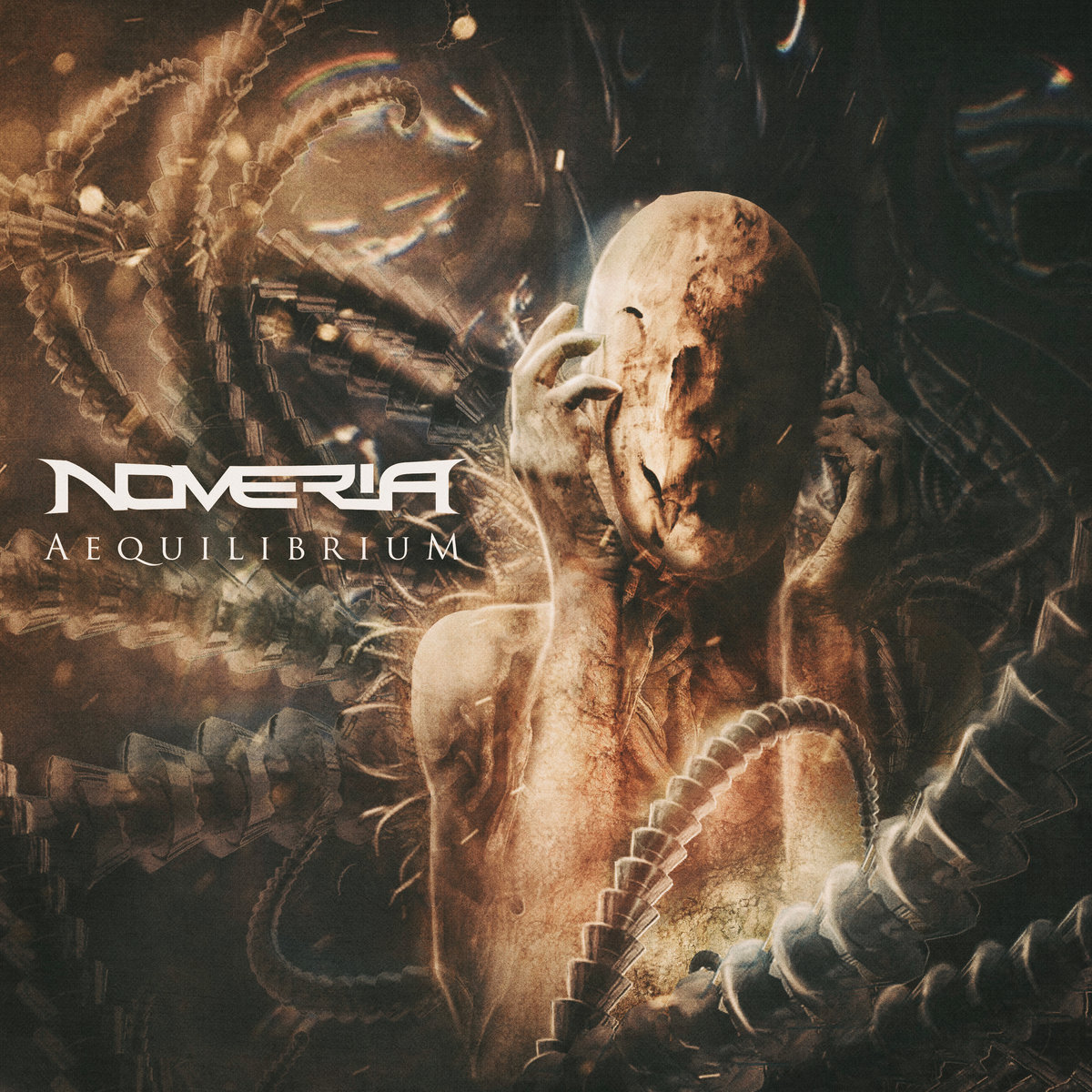
Album Review: Noveria - Aequilibirum
I know I've talked about this before, but it still bothers me when I see a new 'progressive metal' album come along where every song is roughly five minutes long. I'm not saying you need to write side-long epics to be prog, but there is now an entire genre of bands that play rather conventional songs in rather conventional lengths, who I'm supposed to call prog for... reasons? I'm not entirely sure they've ever bothered to make an argument why. It might be an assumption that if you call yourself something, I'm supposed to follow suit, which doesn't make any sense to me. I don't mean to be a contrarian, but when he world makes no logical sense, I'm not jumping off the cliff simply because you tell me an umbrella will break my fall.
Noveria is among these bands, with their album labeled 'progressive power metal', despite the longest song clocking in at 6:34, and all of them falling within roughly a minute of each other. That doesn't make a first impression of "OMG, prog!"
Then again, the moniker 'progressive power metal' is one that has virtually never been earned. That term gets used for bands that fall in between the sound of prog metal and power metal, but aren't really either. They're sort of like musical peanuts; neither a pea nor a nut. That doesn't mean they can't be good, but it's an entire genre that shouldn't exist, at least not with this name.
"Waves" opens the album much like Evergrey did on one of their recent albums (sorry, they all blend together), with blast beats jarring the listener in the first seconds, followed by softer pianos, and then a more traditional song structure from there. It is a bit unusual to use the blast beat in this style, so they get half a point, but they lose a full point thereafter, since blast beats are terrible. Relentlessly hitting the snare as fast as you can, with no rhythm or groove, is as unmusically as you can play drums, and there's a reason very little music utilizes it as a common technique.
As the album moves along, we get a lot of intricate guitar playing and soaring choruses, which very much continues that Evergrey comparison. Noveria sounds very heavily inspired by them, down to the vocal timbre, which isn't as much a baritone, but has much of the same quality trying to make this technical music sound emotional. That's an awfully high bar to clear, and it's one that is seldom cleared. For whatever reason, the biggest gut-punches are delivered with simplicity, and that's not Noveria's thing.
There are moments when they try, and they reveal the fundamental flaw in how the record is constructed. In "Blind", the chorus is trying to be a standout emotional moment, but the song has to shift tone and tempo entirely as it moves both in and out of the chorus, to the point where it doesn't feel like it belongs with the rest of the song. The shift to get where they need to be is too jarring, and a shallow payoff trying to make up for the rest of the song. "The Nightmare" is more effective as an emotional vehicle, but that's because it's a ballad, and doesn't try to do too much, instrumentally. There's an inherent restraint that lets the band get there that the rest of the record is incapable of.
But let's also be clear; if you like this style of metal more than I do, Noveria does it well. I think it's trying way too hard, but plenty of people love it, and I'm not going to dissuade you from giving it a shot if you're one of them. There's a lot of great instrumental prowess, and some solid melodies. On a surface level, it's enjoyable stuff. My problems with it go to more theoretical levels, so casual listeners can probably disragard everything I've said before this paragraph.
There are several Evergrey clones out there, and while Noveria is not one of them, they do something similar, but better than almost all of them. Everygrey fans will get a lot out of Noveria. I'm a weirdo who's favorite Evergry album is "Torn" (actually, that's the only one I like), so my opinion here is outside the norm. All I would say is that if you're into this style, go back and listen to Ascendia's "The Lion And The Jester". That's 'prog' metal that actually clears the emotional bar.
Noveria is among these bands, with their album labeled 'progressive power metal', despite the longest song clocking in at 6:34, and all of them falling within roughly a minute of each other. That doesn't make a first impression of "OMG, prog!"
Then again, the moniker 'progressive power metal' is one that has virtually never been earned. That term gets used for bands that fall in between the sound of prog metal and power metal, but aren't really either. They're sort of like musical peanuts; neither a pea nor a nut. That doesn't mean they can't be good, but it's an entire genre that shouldn't exist, at least not with this name.
"Waves" opens the album much like Evergrey did on one of their recent albums (sorry, they all blend together), with blast beats jarring the listener in the first seconds, followed by softer pianos, and then a more traditional song structure from there. It is a bit unusual to use the blast beat in this style, so they get half a point, but they lose a full point thereafter, since blast beats are terrible. Relentlessly hitting the snare as fast as you can, with no rhythm or groove, is as unmusically as you can play drums, and there's a reason very little music utilizes it as a common technique.
As the album moves along, we get a lot of intricate guitar playing and soaring choruses, which very much continues that Evergrey comparison. Noveria sounds very heavily inspired by them, down to the vocal timbre, which isn't as much a baritone, but has much of the same quality trying to make this technical music sound emotional. That's an awfully high bar to clear, and it's one that is seldom cleared. For whatever reason, the biggest gut-punches are delivered with simplicity, and that's not Noveria's thing.
There are moments when they try, and they reveal the fundamental flaw in how the record is constructed. In "Blind", the chorus is trying to be a standout emotional moment, but the song has to shift tone and tempo entirely as it moves both in and out of the chorus, to the point where it doesn't feel like it belongs with the rest of the song. The shift to get where they need to be is too jarring, and a shallow payoff trying to make up for the rest of the song. "The Nightmare" is more effective as an emotional vehicle, but that's because it's a ballad, and doesn't try to do too much, instrumentally. There's an inherent restraint that lets the band get there that the rest of the record is incapable of.
But let's also be clear; if you like this style of metal more than I do, Noveria does it well. I think it's trying way too hard, but plenty of people love it, and I'm not going to dissuade you from giving it a shot if you're one of them. There's a lot of great instrumental prowess, and some solid melodies. On a surface level, it's enjoyable stuff. My problems with it go to more theoretical levels, so casual listeners can probably disragard everything I've said before this paragraph.
There are several Evergrey clones out there, and while Noveria is not one of them, they do something similar, but better than almost all of them. Everygrey fans will get a lot out of Noveria. I'm a weirdo who's favorite Evergry album is "Torn" (actually, that's the only one I like), so my opinion here is outside the norm. All I would say is that if you're into this style, go back and listen to Ascendia's "The Lion And The Jester". That's 'prog' metal that actually clears the emotional bar.
Thursday, October 24, 2019
Album Review: Lacuna Coil - "Black Anima"
Some of the reason it has taken us so long to pen an editorial review of Lacuna Coil’s “Black Anima” is because the album represents a large, moving target. This is Lacuna Coil old and new and then new again, complete with the rare mid-career photographic image change.
Is it even accurate to call it mid-career? That would assume a forty-year lifespan for the band, which certainly isn’t impossible given their current momentum and likely resulting inertia, but the point nevertheless remains – it’s abnormal for an established artist to suddenly and dramatically alter their look. All the press photos for “Black Anima” feature an unrecognizable assembly of musicians in make up. Time will tell whether this is a permanent change or just an album-cycle one, but either way, it causes a raising of the eyebrow.
Musically, the usual platitudes were heaped onto the fire of the record's promotion – this album is to be ‘heavier’ and ‘darker,’ than previous efforts, which evokes little but a yawn from listeners at this point, who have been so supersaturated with the terms that the words render no more meaning.
There are touchstones of the band that ring true throughout their fairly impressive legacy which remain intact here; a veritable backbone upon which the album’s experimentation rests (which we’ll dive into momentarily.) The rubbery reverb of their guitar tone is a longtime friend who automatically feels familiar, as the band settles into their well-honed pace and cadence with tracks like “Under the Surface.”
Additionally, Lacuna Coil still functions as an expression of the dynamic between binary vocalists Cristina Scabbia and Andrea Ferro, both of whom are every bit as effective both singularly and in tandem as they’ve ever been. Their vocal hand-offs are powerful and well-woven, neither outshining the other, but rather serving in harmonious compliment (even if the nature of the dichotomy is intentionally inharmonious.)
The band’s previous effort, “Delirium,” shades a lot of the proceedings here. That album, a worthy achievement released in 2016, restored the band to balance in several ways, not the least of which was the elimination of a slicker, popular sound that some fans had come to resent. Ferro had spent several years as a talented backup singer, and “Delirium,” from its opening call, brought him back to the fore.
And it is in that continued spirit of growth that “Black Anima” shines best. Both Scabbia and Ferro, the former in particular, push themselves into new ranges and octaves. This leads to one of the album’s more transcendentally brilliant moments, when Scabbia nearly loses control in the chorus of “Reckless.” There is a passion here that is tangible, an earnest sense of desperation that gives the composition weight.
Later on we hear “The End is All I Can See,” a Lacuna Coil ballad in the style of “Cybersleep,” remarkable for its comparative placidity and also because it is the rare track where Ferro carries the entirety almost by himself. Sonically, the song is a distant cousin to some of the lower-dose Fear Factory tunes of that band’s heyday, akin to the sweeping measure of “Resurrection.”
As with many Lacuna Coil albums of the past, one of the truths of “Black Anima” is that it is dotted with momentous singles but cannot carry that momentum through every track. For every punishing but melodic romp like “Sword of Anger,” there’s a flat “Veneficium,” which shows promise but never completely blossoms. There are many moments on the record of experimentation that never quite gain traction – even the title track, which bristles with a subtle piano melody played throughout, piques the interest but ultimately leaves with the impression that it could have, and perhaps should have, been more.
Part of the success of “Delirium” and “Karmacode” and “Comalies” and even “Dark Adrenaline” was that the albums showcased a deep emotional connection to either an idea or a theme. “Black Anima” just doesn’t give off that same feeling, and so the album doesn’t carry as much import or momentum.
That doesn’t make it a bad album, and in fact it is not a bad album – merely a less inspiring one when measured against the back catalogue of a band that has showcased such prowess in the past.
“Black Anima” has some unique moments of growth and evolution, which is incredibly impressive from an artist two decades into the game, and should be celebrated. The ultimate upshot though may be this: Lacuna Coil has always been a singles band, and listeners should go into “Black Anima” with the knowledge that the record does little to change that.
Wednesday, October 23, 2019
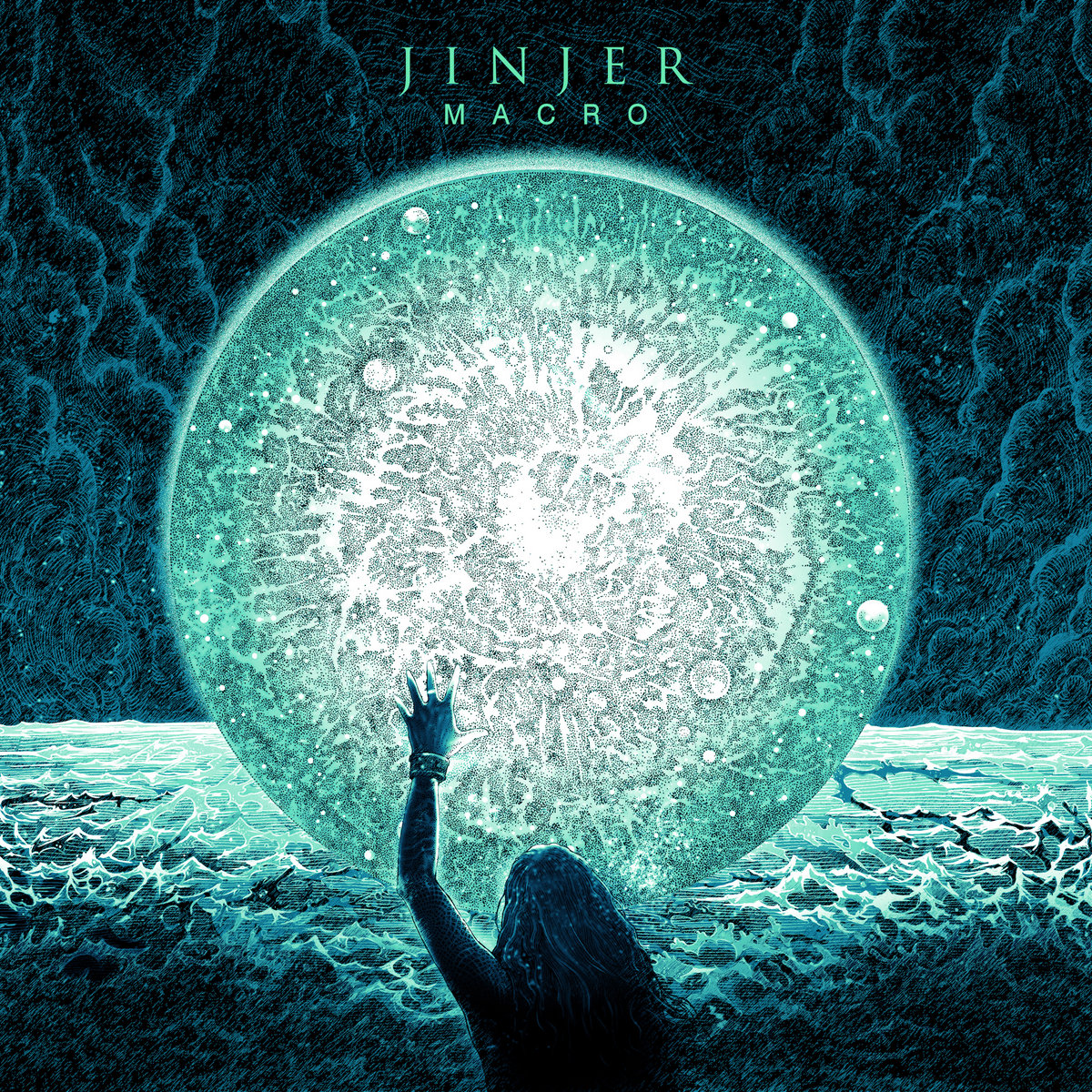
Album Review: Jinjer - Macro
Last week, I talked about the new album from Infected Rain, and pointed out how they are very much in tune with a trend that I see being set up, one that is being led by Jinjer. We can call it 'hodgepodge metal' if we want to, but the basic idea is that bands are now free to throw anything and everything into one giant stew pot, seeing if all the seasonings come out tasting unique, even if there's a real risk it will be an absolute mess. In one sense, I applaud musicians who think outside the box, but I also worry that it's a sign of artists who don't know who they are or what they want to do. That's one of the reasons I hadn't previously talked about Jinjer, but since they came up as a direct comparison last week, I figured I might as well give them another chance to prove me wrong. So how did they do this time?
They certainly give us a lot to chew on. Within virtually any track on the album, we get crushing modern riffs, ferocious vocals, and moments of atmospheric melody. They never stay in one place for too long, and are intent on exploring every facet of what they can do. Sometimes, that means they deviate from something that is working, while other times it means they can throw an extra good idea or two into a song that otherwise wouldn't make it.
There's a give and take here, where in my mind the band is clearly better at one side of their split personality than the other. And this might be weird coming from me, but Jinjer is actually better when they are heavier, and more attuned to their death metal inspirations. Those segments of the songs are everything they should be, and Tatiana Shmayluk's harsh vocals are massive, deep, and bone-rattling. I can nit-pick over some of the harsh vocal patterns, but they have the pieces to be good at that side of the equation.
Their clean, melodic passages aren't as interesting. Tatiana's voice isn't as strong as a clean singer as it is growling, which leaves those bits sounding as if they struggle to keep up with the heavier moments. It isn't as much a yin and yang pulling the band in different directions as it is an ebb and flow where one pull is obviously stronger. This is where, when comparing Jinjer to Infected Rain, I find the biggest difference. That band had better melodies, stronger hooks, and a more appealing clean voice. At least for me, it did.
And then there's the element to all of this I can't outrun; giving me everything is a bit like giving me nothing. Jinjer has groove metal, death metal, atmospheric sections, and even a few riffs that pull from jazz. That's great, but the more you put into the mix, the more things I have to be a fan of to enjoy the music. With each new sound added in, the pool of potential listeners shrinks. It's creatively interesting, but I can't say I've ever been in a mood where what I wanted to hear was a mash-up of all these things. Normally, I would want to hear one or the other, or perhaps two of them juxtaposed. But with even more than that, I'm simply not that fond of certain parts of Jinjer's sound.
Philosophically, I could spend time here asking questions about what identity means to a shape-shifter, but I'll leave that for you to decide. If you ask me what Jinjer sounds like, there's no easy answer. Likewise, if you ask me if I like Jinjer, that's not an easy call either. They are doing some interesting things, and I appreciate their daring, but there are also glaring flaws. It's a record that is going to be hit-or-miss, but the ratio will be different for everyone.
They certainly give us a lot to chew on. Within virtually any track on the album, we get crushing modern riffs, ferocious vocals, and moments of atmospheric melody. They never stay in one place for too long, and are intent on exploring every facet of what they can do. Sometimes, that means they deviate from something that is working, while other times it means they can throw an extra good idea or two into a song that otherwise wouldn't make it.
There's a give and take here, where in my mind the band is clearly better at one side of their split personality than the other. And this might be weird coming from me, but Jinjer is actually better when they are heavier, and more attuned to their death metal inspirations. Those segments of the songs are everything they should be, and Tatiana Shmayluk's harsh vocals are massive, deep, and bone-rattling. I can nit-pick over some of the harsh vocal patterns, but they have the pieces to be good at that side of the equation.
Their clean, melodic passages aren't as interesting. Tatiana's voice isn't as strong as a clean singer as it is growling, which leaves those bits sounding as if they struggle to keep up with the heavier moments. It isn't as much a yin and yang pulling the band in different directions as it is an ebb and flow where one pull is obviously stronger. This is where, when comparing Jinjer to Infected Rain, I find the biggest difference. That band had better melodies, stronger hooks, and a more appealing clean voice. At least for me, it did.
And then there's the element to all of this I can't outrun; giving me everything is a bit like giving me nothing. Jinjer has groove metal, death metal, atmospheric sections, and even a few riffs that pull from jazz. That's great, but the more you put into the mix, the more things I have to be a fan of to enjoy the music. With each new sound added in, the pool of potential listeners shrinks. It's creatively interesting, but I can't say I've ever been in a mood where what I wanted to hear was a mash-up of all these things. Normally, I would want to hear one or the other, or perhaps two of them juxtaposed. But with even more than that, I'm simply not that fond of certain parts of Jinjer's sound.
Philosophically, I could spend time here asking questions about what identity means to a shape-shifter, but I'll leave that for you to decide. If you ask me what Jinjer sounds like, there's no easy answer. Likewise, if you ask me if I like Jinjer, that's not an easy call either. They are doing some interesting things, and I appreciate their daring, but there are also glaring flaws. It's a record that is going to be hit-or-miss, but the ratio will be different for everyone.
Monday, October 21, 2019
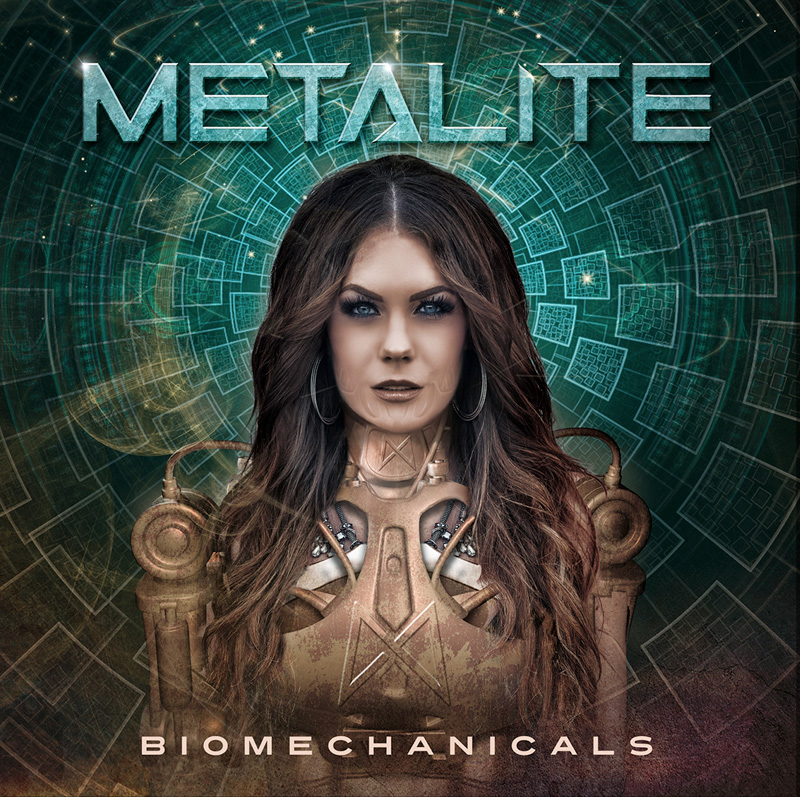
Album Review: Metalite - Biomechanicals
I've made it clear before that I don't particularly enjoy when bands, or usually the label's PR writers, make claims they can't back up. I get that they have to try to sell me on giving their record a chance, but it doesn't help when they say things I know aren't true even before listening to a note of the music. I don't like being lied to, and that's what I feel these people sometimes are doing. I got that impression with this album, which came with advice that "the quintet from Stolkholm reinvents classic Melodic Metal". No, they don't, and they didn't need to say they did. I heard the first single, and was already impressed enough to give the album a spin. Going so far as to say this is revolutionary is ridiculous.
The claim arises because of "Metalites expertly use of electronic elements" (the missing apostrophe and odd syntax is theirs, not mine), and a lyrical theme about the dangers of technology. Stop me if you're heard this before, but both of those are complete cliches because they've already been done to death. The only way this is revolutionary is if we've somehow made a complete orbit and arrived back at the start. Just stop with this crap.
Metalite doesn't need this anchor dragging them down, because their music is actually good. It can more than stand on its own. They have written a collection of very modern melodic/power metal that has big, bright hooks that new singer Erica Ohlsson delivers with aplomb. It isn't all that far removed from Within Temptation's "Resist" from earlier in the year, which is a good thing, consider that remains a highlight of the year in this genre.
The difference is that Metalite, as their name would imply, puts a bit more metal in the sound, eschewing some of the more dramatic and emotional tones for something more relentless. Given the theme, and those electronic bits, that's a good decision. I don't think adding bleeps and bloops to something trying to evoke a reaction from the audience would be very effective. I also don't think the electronic elements work in this context either, but they don't detract. They're just there, which I take to mean they shouldn't be there. Everything in a song should have something compelling to say why it's there. These electronic bits don't really do that.
Fortunately, the core songwriting is strong. These tracks deliver chugging metal and strong hooks, very much the way that Sinheresy did a couple months ago. As you can tell by dropping yet another perfectly tuned reference, I'm still hung up on this sales job.
If we can put that aside, songs like "Mind Of A Monster" are what this modern strain of metal should be. If you want to hear glossy, hooky, and rather fun metal, this is going to be for you. I very much enjoyed listening to this record giving me yet another dose of Amaranthe-ian metal. Oops, there I go again.
So here's the deal; "Biomechanicals" is an album I definitely like, and would certainly recommend, that is getting held back by its own hype. These reviews I write are basically one long conversation where I tell you what's going on in my mind, and what my reaction to these records is. In this case, that doesn't tell the story I want to tell, or that Metalite would want me to, but it's me being honest. My issues aren't going to affect you, so have at it. Metalite has made a record you won't regret listening to.
The claim arises because of "Metalites expertly use of electronic elements" (the missing apostrophe and odd syntax is theirs, not mine), and a lyrical theme about the dangers of technology. Stop me if you're heard this before, but both of those are complete cliches because they've already been done to death. The only way this is revolutionary is if we've somehow made a complete orbit and arrived back at the start. Just stop with this crap.
Metalite doesn't need this anchor dragging them down, because their music is actually good. It can more than stand on its own. They have written a collection of very modern melodic/power metal that has big, bright hooks that new singer Erica Ohlsson delivers with aplomb. It isn't all that far removed from Within Temptation's "Resist" from earlier in the year, which is a good thing, consider that remains a highlight of the year in this genre.
The difference is that Metalite, as their name would imply, puts a bit more metal in the sound, eschewing some of the more dramatic and emotional tones for something more relentless. Given the theme, and those electronic bits, that's a good decision. I don't think adding bleeps and bloops to something trying to evoke a reaction from the audience would be very effective. I also don't think the electronic elements work in this context either, but they don't detract. They're just there, which I take to mean they shouldn't be there. Everything in a song should have something compelling to say why it's there. These electronic bits don't really do that.
Fortunately, the core songwriting is strong. These tracks deliver chugging metal and strong hooks, very much the way that Sinheresy did a couple months ago. As you can tell by dropping yet another perfectly tuned reference, I'm still hung up on this sales job.
If we can put that aside, songs like "Mind Of A Monster" are what this modern strain of metal should be. If you want to hear glossy, hooky, and rather fun metal, this is going to be for you. I very much enjoyed listening to this record giving me yet another dose of Amaranthe-ian metal. Oops, there I go again.
So here's the deal; "Biomechanicals" is an album I definitely like, and would certainly recommend, that is getting held back by its own hype. These reviews I write are basically one long conversation where I tell you what's going on in my mind, and what my reaction to these records is. In this case, that doesn't tell the story I want to tell, or that Metalite would want me to, but it's me being honest. My issues aren't going to affect you, so have at it. Metalite has made a record you won't regret listening to.
Friday, October 18, 2019
Album Review: Dream State - Primrose Path
It's not often I hear a song and say, "Holy shit, what was that?" It's the kind of rush that keeps me on the hunt for new music, but it's a rare bird, which leaves me torn on whether to shout my praises or keep quiet so as not to scare it away. That isn't what happened the first time I heard Dream State. That experience would have been their "White Lies" single, and then the "Recovery" EP. That was enough for me to put them on the list of bands to make sure I was following, because I wanted to hear more from them. I knew from that material that Dream State had already made something really good, but they had potential to grow into something even better. Oh, did they ever.
When "Hand In Hand" was released earlier in the year, it was that "Holy shit" moment I was referring to. Listening to it, I wasn't just hearing Dream State continuing on as a good band, I was hearing the beginning of something massive. While their earlier work was good, this was great. It was the kind of song that tells you everything you need to know about how far a band can go. Dream State, with that song alone, could go as far as they want. But that wasn't the end of it. The next two singles, "Primrose" and "Open Windows" were every bit as good, and put together made for as good a three song suite as there's been all year. They hinted at an album that could rewrite my judgment of the year.
Dream State aren't just making great music, they're making important music. Their sound is that of hope. These songs are born from the darkness in singer CJ's life, but these are not the misanthropic rantings of an angry person wallowing in their own depression. No, Dream State is the vehicle by which she, and the audience, are able to run away from their demons, to feel a human connection with others who have gone through the same thing and come out the other side. Carl Jung wrote about a theory of the collective unconscious, wherein we are all connected at an innate level. Dream State is a collective consciousness, binding us together be reminding us we aren't alone. That is such a vital thing, today more than at other times, and it permeates every facet of "Primrose Path".
The band has mastered a difficult art, that of making aggressive music that still resonates as anthemic. CJ regularly injects her pained screams into these songs, and the band's sound can be categorized as post-hardcore, but their songs are massive, endowed with huge hooks and choruses that their fans can sing along with. Not only are they fantastically memorable, but they allow the listeners to become part of the experience by banging their head and singing the words themselves. It may be accidental, but it's an essential part of continuing the theme of "Primrose Path" being a catharsis for everyone.
And therein is the word I wanted to get to, catharsis. That's the feeling that washes over me listening to this record. Emotions in music come in all forms, which I can illustrate just using releases from this month. Michael Monroe made a pure rock n' roll record that makes me feel happy. Ray Alder made an album that makes me feel the back-side of an episode of melancholy. Dream State makes me feel optimistic about the future. These songs may emerge from a dark place, but they are illuminated by the light at the end of the tunnel. And as the record plays out, they become easier to see as we draw nearer to the source.
I've been taking the big-picture view, because that shows us everything we need to know. Dissecting the songs one-by-one, analyzing individual riffs and lyrics, isn't as important as understanding the meaning. When we stare at a painting, like Edvard Munch's "The Scream", we don't notice and obsess over every brush stroke. Hell, I doubt almost anyone who isn't a devoted art fans even knows there's more than one version of that painting. The differences between them aren't important, because the message gets through in all of them. That's how I feel about "Primrose Path". Yes, the songs are all great, but there isn't a need to say which ones are better than others. That's missing the point.
"Primrose Path" isn't that kind of album. This is one of those rare records that speaks to us at gut level. It's greatness is heard, but also felt. There's no need to go beyond that. "Primrose Path" is everything I could have ever hoped for, and everything so many people are going to need. Simply put, it is stunning.
When "Hand In Hand" was released earlier in the year, it was that "Holy shit" moment I was referring to. Listening to it, I wasn't just hearing Dream State continuing on as a good band, I was hearing the beginning of something massive. While their earlier work was good, this was great. It was the kind of song that tells you everything you need to know about how far a band can go. Dream State, with that song alone, could go as far as they want. But that wasn't the end of it. The next two singles, "Primrose" and "Open Windows" were every bit as good, and put together made for as good a three song suite as there's been all year. They hinted at an album that could rewrite my judgment of the year.
Dream State aren't just making great music, they're making important music. Their sound is that of hope. These songs are born from the darkness in singer CJ's life, but these are not the misanthropic rantings of an angry person wallowing in their own depression. No, Dream State is the vehicle by which she, and the audience, are able to run away from their demons, to feel a human connection with others who have gone through the same thing and come out the other side. Carl Jung wrote about a theory of the collective unconscious, wherein we are all connected at an innate level. Dream State is a collective consciousness, binding us together be reminding us we aren't alone. That is such a vital thing, today more than at other times, and it permeates every facet of "Primrose Path".
The band has mastered a difficult art, that of making aggressive music that still resonates as anthemic. CJ regularly injects her pained screams into these songs, and the band's sound can be categorized as post-hardcore, but their songs are massive, endowed with huge hooks and choruses that their fans can sing along with. Not only are they fantastically memorable, but they allow the listeners to become part of the experience by banging their head and singing the words themselves. It may be accidental, but it's an essential part of continuing the theme of "Primrose Path" being a catharsis for everyone.
And therein is the word I wanted to get to, catharsis. That's the feeling that washes over me listening to this record. Emotions in music come in all forms, which I can illustrate just using releases from this month. Michael Monroe made a pure rock n' roll record that makes me feel happy. Ray Alder made an album that makes me feel the back-side of an episode of melancholy. Dream State makes me feel optimistic about the future. These songs may emerge from a dark place, but they are illuminated by the light at the end of the tunnel. And as the record plays out, they become easier to see as we draw nearer to the source.
I've been taking the big-picture view, because that shows us everything we need to know. Dissecting the songs one-by-one, analyzing individual riffs and lyrics, isn't as important as understanding the meaning. When we stare at a painting, like Edvard Munch's "The Scream", we don't notice and obsess over every brush stroke. Hell, I doubt almost anyone who isn't a devoted art fans even knows there's more than one version of that painting. The differences between them aren't important, because the message gets through in all of them. That's how I feel about "Primrose Path". Yes, the songs are all great, but there isn't a need to say which ones are better than others. That's missing the point.
"Primrose Path" isn't that kind of album. This is one of those rare records that speaks to us at gut level. It's greatness is heard, but also felt. There's no need to go beyond that. "Primrose Path" is everything I could have ever hoped for, and everything so many people are going to need. Simply put, it is stunning.
Wednesday, October 16, 2019
Album Review: Infected Rain - Endorphin
The great thing about the future is that none of us can see it. The scary thing about the future is that none of us can see it. Something is coming, and it will involve change, but no one knows what that will entail until it actually happens. We might have a hunch, or a hope, but the only way we're ever going to find out what comes next is to wait until this chapter is over. I've seen enough trends come and go to know this about the future; it will change, but it will stay the same. No sound will ever go away, we will merely add new ones to the already too-long list of genres. Our options will expand, and I will feel even more overwhelmed trying to keep a base of knowledge widespread enough to feel good about.
The current wave of the future in metal are what I will call ratatouille bands. They are the ones who don't adhere to genres, and throw everything under the sun into one pot, trying to see if the result can please everyone. Much like how every color put together makes a weird shade of brown, I'm not convinced all forms of music can sound good when combined. Jinjer is the band everyone knows about doing this, but Infected Rain was actually the first of them I encountered.
The good thing about Infected Rain is that no matter what kind of metal you like, there will be moments on this record you will love. The bad thing about Infected Rain is that unless you love every kind of metal, there will be moments on this record you will hate. Since I don't know anyone with standards who loves everything metal entails, that means this record is akin to the ol' claw machine; plenty of hope interspersed with disappointment.
Just look at the opening track, "Earth Mantra". It opens with blast-beats and screamed vocals, then segues into a clean guitar figure and whispered vocals, then adds electronic bits, then explodes into a metallic fury again. I ask the question genuinely; are there a lot of people who love blast beats and ambient dream-gaze, and who want them combined in the same song? When I'm listening to something like that, all I can think is that it can't possibly appeal to a large number of people. For instance, I love the melodic part over the heavy guitars that ends the track, but Lena's barking in the first half doesn't hold much appeal to me.
I find "Black Gold" to be far more successful, because it has a better focus on what it's trying to be. The song is aggressive throughout (maybe a bit more than I'd like), but everything is built around that energy level, and it fits together well. It lacks melody, but that makes sense for a track of that style. They makes up for that on "Symphony Of Trust", where Lena uses her clean voice to great effect. In fact, that leads me to the biggest disappointment on the album. Screaming/growling vocalists seldom write melodic vocal lines for their harsh voices, but I was hoping that Lena' background with clean singing would lead her to write the same kinds of vocal lines for both sides of her voice. She doesn't.
So throughout the album we ping-pong from moments of aggressive metal to (attempted) beautiful melody. There isn't a formula for how these transitions are handled, which I think is a drawback. As a listener who prefers one side of this equation, I prefer knowing there is going to be a pay-off for me in most or all of the songs. I don't get that impression when listening to this record. They are there, but they can't be counted on, if that makes sense.
Comparing Infected Rain to Jinjer might be a cheap ploy, but let me indulge myself anyway. I have given both bands a try, and while they take similar approaches, only one of them has shown me the kind of songwriting that could eventually win me over. Jinjer is the bigger name, but Infected Rain has a better sense of melody, and uses enough of it to make me think there's something here worth keeping an eye on. I've never gotten that impression from Jinjer.
So what do I think of "Endorphin"? Well, that's a bit harder to pin down. There is a lot to like, but also enough I'm not so fond of, to make it a split decision. I get why they don't, but if they could hone and focus their sound just a bit, I could find myself getting into it. As it stands, "Endorphin" is an album that I hear quite a bit of potential in, and like for what it is, but what it is will hold it back. Hopefully, you'll get even more out of it than I did. They're well worth giving a shot.
The current wave of the future in metal are what I will call ratatouille bands. They are the ones who don't adhere to genres, and throw everything under the sun into one pot, trying to see if the result can please everyone. Much like how every color put together makes a weird shade of brown, I'm not convinced all forms of music can sound good when combined. Jinjer is the band everyone knows about doing this, but Infected Rain was actually the first of them I encountered.
The good thing about Infected Rain is that no matter what kind of metal you like, there will be moments on this record you will love. The bad thing about Infected Rain is that unless you love every kind of metal, there will be moments on this record you will hate. Since I don't know anyone with standards who loves everything metal entails, that means this record is akin to the ol' claw machine; plenty of hope interspersed with disappointment.
Just look at the opening track, "Earth Mantra". It opens with blast-beats and screamed vocals, then segues into a clean guitar figure and whispered vocals, then adds electronic bits, then explodes into a metallic fury again. I ask the question genuinely; are there a lot of people who love blast beats and ambient dream-gaze, and who want them combined in the same song? When I'm listening to something like that, all I can think is that it can't possibly appeal to a large number of people. For instance, I love the melodic part over the heavy guitars that ends the track, but Lena's barking in the first half doesn't hold much appeal to me.
I find "Black Gold" to be far more successful, because it has a better focus on what it's trying to be. The song is aggressive throughout (maybe a bit more than I'd like), but everything is built around that energy level, and it fits together well. It lacks melody, but that makes sense for a track of that style. They makes up for that on "Symphony Of Trust", where Lena uses her clean voice to great effect. In fact, that leads me to the biggest disappointment on the album. Screaming/growling vocalists seldom write melodic vocal lines for their harsh voices, but I was hoping that Lena' background with clean singing would lead her to write the same kinds of vocal lines for both sides of her voice. She doesn't.
So throughout the album we ping-pong from moments of aggressive metal to (attempted) beautiful melody. There isn't a formula for how these transitions are handled, which I think is a drawback. As a listener who prefers one side of this equation, I prefer knowing there is going to be a pay-off for me in most or all of the songs. I don't get that impression when listening to this record. They are there, but they can't be counted on, if that makes sense.
Comparing Infected Rain to Jinjer might be a cheap ploy, but let me indulge myself anyway. I have given both bands a try, and while they take similar approaches, only one of them has shown me the kind of songwriting that could eventually win me over. Jinjer is the bigger name, but Infected Rain has a better sense of melody, and uses enough of it to make me think there's something here worth keeping an eye on. I've never gotten that impression from Jinjer.
So what do I think of "Endorphin"? Well, that's a bit harder to pin down. There is a lot to like, but also enough I'm not so fond of, to make it a split decision. I get why they don't, but if they could hone and focus their sound just a bit, I could find myself getting into it. As it stands, "Endorphin" is an album that I hear quite a bit of potential in, and like for what it is, but what it is will hold it back. Hopefully, you'll get even more out of it than I did. They're well worth giving a shot.
Tuesday, October 15, 2019
Album Review: Life of Agony - "The Sound of Scars"
We’re going to commit a cardinal sin of editorial review writing, and give away the verdict early. “The Sound of Scars,” the new album from Life of Agony and sequel to the all-time classic “River Runs Red” is a laudable achievement and an excellent listen, well worth the time of old fans, and a fantastic invitation to a genre left for dead by many new fans.
The textbook says not to do what we just did, but we’re about to go fairly deep into the reeds, and we needed the context of the verdict to provide some stable ground.
And now I’ll commit a second cardinal sin of reviewing, which is to inject myself into the proceedings.
I am having a hell of a time trying to assess this album properly. It’s not that I didn’t want a sequel to “River Runs Red,” it’s that I never expected one – and the fact that the band is expressly promoting the album as such makes it hard to know by what standard the album should be judged; is this a relic of the past and times gone by, or is this the beginning of a resurgence by one of the best innovators in the class?
Certainly, with all the band has been through, and with society’s increased focus on issues of mental health, a sequel was in the cards. If we can speak plainly, no one is better equipped in the metal community than Life of Agony to represent the sum total of those issues in a way that is both responsible and appropriate. As a quick aside and without going into the gory details, I’m glad they did – I’ve been presented with my own (comparatively minor) mental health issues over the past couple years, and the subject needs as much spotlight as it can get.
As we said at the top, I like this album. A lot. We’ll get into the minutiae in a minute, but the point that needs to be addressed is that there’s an inexorable phantasmagoria involved with this album. The close association to “River Runs Red” means that the memories of that record get mixed up in the interpretation of this one and it becomes a difficult mental exercise to separate the two. It’s like when you’re talking to your parents and your brain fills in the image of them from your childhood, but then you see a picture of them without context and realize that they have in fact gotten older.
Which only becomes complicated because of the following point – I like “The Sound of Scars” a lot, but I don’t entirely know why. The album hits all the right notes (pun intended,) and the songwriting strays back to the edgy and dangerous origin of the band, even more than their previous effort, “A Place Where There’s No More Pain.” For all that, there is a certain lack of musical innovation here; the album doesn’t feel very ‘new,’ and so I’m forced to wonder if I enjoy this record so much because of its own merits, or as an exercise in nostalgia. I have led myself to believe it’s the former, and I hope against hope I’m right, for as frequent visitors to this website will note, the latter would make me an unholy hypocrite.
As a second point, there will be some question as to whether this album impacts the legacy of “River Runs Red.” Part of the power and emotional effectiveness of that album was the no-nonsense recognition of the pain and struggle of the protagonist, ending with his lamentable suicide. If only someone had reached out to him, or if only he had known there were like-minded people out in his world….
To discover in the early going of this new effort that he survives doesn’t necessarily tarnish that impact, but it could alter its interpretation. This new album sees the same character grow and struggle and strive all over again, this time ending with a glimmer of hope that both appreciates and respects his troubled journey and gives him the chance to thrive as he goes forward. In the new millennium maybe that’s the message we most need to hear, and I hope that for fans this doesn’t diminish the weight of “River Runs Red,” but there will be an argument that it could (I can see it now: ‘well, the dude lives, so everything’s okay, right?’ Which is infantile in its simplicity and dismisses the point entirely,) and my fear is that the more stubborn among us will cling to what was rather than grasp what could be (which is, in itself, a theme of the album.) Remember, people; you probably know someone who is struggling. They may not show it, and they may not even really know it. But it’s serious. Check in on the people around you. It makes a difference.
Anyway, the record. What’s novel is that no one writes songs like this anymore, and so perhaps what’s ‘new’ is actually a continuation that has laid dormant for too long. Somewhere in winding path that’s become metal, we lost the ability to write sharp, spiky melodies and still have them be melodies. Life of Agony was among the best at this in the first place, and they don’t disappoint here, with the infectiously rhythmic “Scars” leading off the album.
There are many bands who would have attempted and failed to write “Black Heart,” the album’s second real cut, for they could not have balanced it so well on the precipice between heavy and anthemic. There are those uneducated or naïve metal fans who will smear “The Sound of Scars” for sitting in the middle of these two styles, but those fans are fools. Superior songwriting will carry the day in any genre, and metal is no exception. The vacillation between the heavy beat and the accenting guitar is a nuance that would be lost in many cases, but makes for great composition here.
While many will point to the shadow of “River Runs Red” that colors the songwriting of “The Sound of Scars,” there are many other bands that can be faintly heard here, through intention or accident. “Lay Down” bears the hallmarks of both Rage Against the Machine’s “Vietnow” and Nirvana’s “Smells Like Teen Spirit,” while still sounding intrinsically like an LoA original.
In a moment of levity, the first fourteen seconds of “Eliminate” are almost identical to the first fourteen seconds of The Bouncing Souls’ “Manthem,” to the point that I had to do a double check to make sure it wasn’t a cover I had missed. Seriously, pull up both songs and take a listen. (Unnecessary tangent – “Manthem” appears on TBS’ “How I Spent My Summer Vacation,” which to me, is still the greatest pop punk album ever written, and it’s not close.)
Where we hit the meat of the album is in the middle, with “Empty Hole” and “My Way Out.” This is where “The Sound of Scars” shines brightest, as Life of Agony best displays their unique blend of rock, punk and metal to glorious consequence, bending all three genres into an inseparable weave that makes for two powerful songs paired with strong lyrical messages.
Two and a half years ago, I wrote about “A Place Where There’s No More Pain” and said this: “…the message remains the same as it was almost a quarter century ago. Life is hard, it can be unfair, mistakes are made, and somewhere, buried down at the bottom…[is] the knowledge that you’re not alone. It’s a message that has become Life of Agony’s stock in trade (and how could it not, just look at the band’s name,) and it is where their music is the most comfortable.”
That remains emphatically true for “The Sound of Scars,” and that’s what both continues to fuel the band and makes this an album not to be missed.
Monday, October 14, 2019
Album Review: Alter Bridge - Walk The Sky
I have to give credit to Alter Bridge for one thing; all of their albums are unique. They have made it a habit of giving us different sides of their sound with each release, not all of which are as enjoyable for me, but that show they aren't going through the motions. They keep challenging themselves as artists and songwriters, and I appreciate that. It would be easy for them to see their success and decide to do that same thing over and over again. One of the reasons I think they've been so successful is that we know we need to listen to the new records, because it won't be what we already expect. There can't be any complacency from us either.
Over their last couple of records, they have been trending heavier, adding in more metal to their original sound. I haven't been particularly fond of that move, both because I think they work better as a rock band, but also because it blurs the lines and makes it less clear why the Tremonti side-project needs to exist. So when the singles to this album started coming, and they hinted at a return to a sound more reminiscent of "AB III", I was excited.
That doesn't mean Alter Bridge is softening up, it just means they aren't packing their songs with as many notes. The bouncing, down-tuned riff anchoring "Wouldn't You Rather" is still incredibly heavy, but there's enough space for the riff to establish some groove. A lot of this record is more for bouncing your foot than banging your head, and that's not a bad thing at all. It also sets up interesting possibilities, like on "In The Deep", where the metal picking is saved for the chorus, which is a reversal of the way songs are usually constructed. It catches your attention, and from there the battle is made much easier.
Some might be nervous about the introduction of keyboards on this record. "Godspeed" opens with a riff buoyed by a synth, but we're not talking about a "Jump" situation. They aren't domineering, or shrill, and they don't distract from what Mark and Myles are doing with their guitars. They merely give the band another layer of texture to play with, which opens up new opportunities.
I mentioned "AB III" earlier, and as this album unfolds, the comparison between the two grows stronger. Both albums have Alter Bridge playing low-tuned, really heavy rock songs that still have plenty of melodies. That being my favorite Alter Bridge album doesn't hurt when it comes to this one's appeal. Like that album, this one has heaviness, groove, and big melodies, which I've always considered the basis of Alter Bridge's sound. They got away from that, especially on "Fortress", so it's nice to hear them getting back to rocking like this.
Alter Bridge is absolutely one of the best modern rock bands, and this album is them nearly at their best, but it does still have the one flaw most of their records do; it's too long. Clocking in at just over an hour, I do find myself wishing it was ten minutes or so shorter, not because any of the songs aren't up to par, but just because long records have been getting harder and harder for me to sit through. A forty-five minute record will get more repeated plays than a sixty minute one. It's simply harder to find the time to properly listen to a full hour of an album.
There comes a point where we enact the law of diminishing returns. Are the songs at the end of the record lesser than those at the start? I don't think so, but they can sometimes feel that way, because the thirteenth track treading similar ground can't have the same impact as the first or second. If "Clear Horizon" had been placed in the early part of the track listing, and "Godspeed" the latter, I expect my initial reaction to both would have been reversed. They are both excellent tracks, but one was able to hit me with fresher ears.
Length aside, "Walk The Sky" finds Alter Bridge in a good place, once again delivering powerful modern rock that moves the genre forward, both in quality and nuance. There is a depth to their music few bands of this kind have, more musical than most are capable of, and more philosophical than any want to be. For me, they haven't quite matched their magnum opus, but they've come close, and that's more than good enough. "Walk The Sky" is everything it needs to be.
Over their last couple of records, they have been trending heavier, adding in more metal to their original sound. I haven't been particularly fond of that move, both because I think they work better as a rock band, but also because it blurs the lines and makes it less clear why the Tremonti side-project needs to exist. So when the singles to this album started coming, and they hinted at a return to a sound more reminiscent of "AB III", I was excited.
That doesn't mean Alter Bridge is softening up, it just means they aren't packing their songs with as many notes. The bouncing, down-tuned riff anchoring "Wouldn't You Rather" is still incredibly heavy, but there's enough space for the riff to establish some groove. A lot of this record is more for bouncing your foot than banging your head, and that's not a bad thing at all. It also sets up interesting possibilities, like on "In The Deep", where the metal picking is saved for the chorus, which is a reversal of the way songs are usually constructed. It catches your attention, and from there the battle is made much easier.
Some might be nervous about the introduction of keyboards on this record. "Godspeed" opens with a riff buoyed by a synth, but we're not talking about a "Jump" situation. They aren't domineering, or shrill, and they don't distract from what Mark and Myles are doing with their guitars. They merely give the band another layer of texture to play with, which opens up new opportunities.
I mentioned "AB III" earlier, and as this album unfolds, the comparison between the two grows stronger. Both albums have Alter Bridge playing low-tuned, really heavy rock songs that still have plenty of melodies. That being my favorite Alter Bridge album doesn't hurt when it comes to this one's appeal. Like that album, this one has heaviness, groove, and big melodies, which I've always considered the basis of Alter Bridge's sound. They got away from that, especially on "Fortress", so it's nice to hear them getting back to rocking like this.
Alter Bridge is absolutely one of the best modern rock bands, and this album is them nearly at their best, but it does still have the one flaw most of their records do; it's too long. Clocking in at just over an hour, I do find myself wishing it was ten minutes or so shorter, not because any of the songs aren't up to par, but just because long records have been getting harder and harder for me to sit through. A forty-five minute record will get more repeated plays than a sixty minute one. It's simply harder to find the time to properly listen to a full hour of an album.
There comes a point where we enact the law of diminishing returns. Are the songs at the end of the record lesser than those at the start? I don't think so, but they can sometimes feel that way, because the thirteenth track treading similar ground can't have the same impact as the first or second. If "Clear Horizon" had been placed in the early part of the track listing, and "Godspeed" the latter, I expect my initial reaction to both would have been reversed. They are both excellent tracks, but one was able to hit me with fresher ears.
Length aside, "Walk The Sky" finds Alter Bridge in a good place, once again delivering powerful modern rock that moves the genre forward, both in quality and nuance. There is a depth to their music few bands of this kind have, more musical than most are capable of, and more philosophical than any want to be. For me, they haven't quite matched their magnum opus, but they've come close, and that's more than good enough. "Walk The Sky" is everything it needs to be.
Subscribe to:
Posts (Atom)