Tuesday, October 31, 2023

Album Review: Robots of the Ancient World - "3737"


Let’s be honest with ourselves – it’s easy to be a doom band.  Let’s be honest with ourselves again – it’s easy to be a stoner band.  Ergo, it is easy to be a stoner doom band.  Inboxes of music people across the globe are positively turgid with demos and promotional material concerning a bunch of greasy, long-haired denim-wearers who have fuzzed out their guitars and decided to play blues-based, eight-minute dirges in two-four time.  And all of them have a name that combines some vestiges of fantasy (or the occult,) science fiction, ancient civilization, and a color.  If someone said to you “have you heard the new Chartreuse Parallactic Ziggurat album?” you already know that it’s a stoner doom record.  Parenthetically, it’s also easy to get noticed as one of these also-ran bands.  The mere appellation of “sounds like Black Sabbath” garners attention, since the Sab Four were such innovators and masters within the art form that their name carries great cache, yet to be, and perhaps never to be, diminished by time.

With great patience comes great reward, though.  For those willing to sift through the mire, there are occasional diamonds uncovered within the burgeoning piles of run-of-the-mill muck.  Enter into the fray Robots of the Ancient World (who, yes, are guilty of the naming convention mentioned above, but bear with us,) and their new release “3737.”  

The most difficult part of being a stoner or doom band is not only being interesting in some way, but maintaining whatever it is that’s so interesting throughout the duration of the record.  Truly, absent anything else, that’s the foremost strength of “3737,” and the thing that sets it apart from the nebulous cloud of contemporaries – this album is never boring.  

A number of important executive decisions were made here, not the least of which is that the album keeps to a slim six tracks, so even though they average about seven minutes said and done (the two-and-change interlude of “Apollo” notwithstanding,) it never feels as though “3737” has worn out its welcome, even as it wends through the sloping, ten-minute curves of “Silver Cloud” right at the end.

Not only does Robots of the Ancient World elude the noose of dragging on too long by its simple duration, it makes the most of its time through the use of catchy but varied and creative riffs, and juxtaposes that against the unique-for-the-genre vocals of Caleb Weidenbach.  Caleb bites his words off, not given to the airy groaning or wailing that is so often associated with the genre (even by Ozzy, truth be told,) and the twin guitars of Nico Schmutz (great name,) and Justin Laubscher never give into the temptation of extending a song out merely because the time is available to do no.  Everything snaps, everything has a purpose, and the end effect is kind of like if Misfits-era Danzig sang for “Escape From the Prison Planet”-era Clutch.  

It's through that lens that one must view the album opener “Hindu Kush,” as the Clutch-ian chug, highlighted with just a little accent of The Sword’s distortion, is both the album’s best piece, most anthemic, and sets a perfect table for the mid-throttle selections that come thereafter.

“3737” does have some of the traits more common to an album of this type – it’s easy to get lost in the head-nodding and lose focus on the music for periods at a time, but the band shows great skill in always changing the proceedings at just the right interval to bring attention back again.  It’s worth repeating what was said above – this album is never boring.

To make a comparison to wines, if you prefer your stoner doom to be more full-bodied and rich, then by all means spin this new Robots of the Ancient World record.  Your senses will be rewarded.


Monday, October 30, 2023

Album Review: Taylor Swift - 1989 (Taylor's Version)

The uncanny valley can be thought of like that moment on the highway when your car passes the crest of a small hill, and you can feel your body being pulled down by the seat-belt. We describe that as if our stomach is rising up in our chest, and what we're actually dealing with is a figment of gravity's distortion. The same thing can happen with time and our memories, as sometimes we are confronted with a doppelganger that makes us question our own sanity. It isn't quite deja vu, because we know it isn't the same, but it's so close we wonder if we've slipped into one of the theoretical alternate dimensions.

Taylor Swift has finally reached what I consider the most important chapter of the 'Taylor's Version' series. As she has reclaimed the rights to her songs in one of the most successful 'eff you's' in music history, we have confronted just how much Taylor Swift has come to define pop music in our current age. That started with '1989'.

Pop music and I have had an amicable divorce, and rarely have I felt a compulsion to look in on what my ex has been up to. We have moved on from each other, except for the cases where it is unavoidable we wind up in the same place at the same time, and I can't help but stumble across those feelings of longing for what pop music once meant to me. When "1989" came out, it started a new era of pop music we are still in the midst of, and it made me question whether I had actually signed the papers in pencil instead of pen.

No, I will not even try to defend "Shake It Off", but the rest of the record was the bending of time, taking the pop music Taylor and I grew up on, and melding it with the synthetic future we were still programming. If we believe in time loops, "1989" is evidence of one, as it shows how little changes from one generation to the next, other than the faces and voices who sing and shout in defiance of this fact.

So what do we make of a new version of this watershed album? This is where the uncanny valley comes into play, as these are nearly identical versions to what we have known and loved, but they aren't identical. There is just enough of a difference to know we are listening to a recreation, to see the slight-of-hand as it is being executed. The skill of magic still exists when we know how the trick is done, but the wonder is gone. I can't help but think that is the best explanation I can give for how I felt listening to 'Taylor's Version'.

The first thing of note is that the production has been modernized, with the overall sound being even louder and more compressed. The synths, and Taylor's voice, are put front and center even more than before. This gives the record an aggressive sound that doesn't match the cool delivery of the original, and it shifts the focus onto the one aspect the album is trying to hide; time.

Taylor Swift is still a young woman, and I'm not trying to say she has in any way diminished as a performer, but she isn't the same person who sang the original recordings of these songs. Her voice has different colors and overtones, and her inflections have changed after singing these songs hundreds of times on tour. After so much repetition, it's difficult for anyone but the most talented actress to put the same passion into the performances. The record always had an air of disconnection, which is one of the key factors that made me love it as much as I did, but it feels less intentional now than it did back then.

This is where we get to something we don't often recognize; the difference between the song and the recording. There is a reason why the Grammys award separate trophies to the writers and performers of the best songs of the year. A song is not a performance, even if that is how we have always experienced them. Songs are ethereal things that exist beyond us, even if they are entirely us. I'm getting a bit esoteric here, but the point I'm trying to make is that a great song is a great song no matter who is performing it. We heard that when Ryan Adams (a name I'm loathe to mention) covered the entire album for some unknown, but probably creepy, reason. The songs shone, even though he came at them from a completely different angle.

That is to say "1989" is still a great album, because the songs are great. No parallax distortion between our ears and our memories is going to change that. It does, however, show that even for those of us who are musicians, and who deal with hearing our own songs done in different ways, we grow attached to a certain performance. We begin to think of the song as being the same thing as that recording, even though we know it's not true.

This is all a long-winded way of saying that "1989" is a pop landmark, and would be regardless of which version came out first. I would likely say they are equally good if I was able to hear them with fresh and unbiased ears. I can't do that, though, and so I am left listening to a remake.

When "Psycho" was remade shot for shot, many of us asked what exactly the point was. It was the audience's fault if they couldn't see the brilliance in a film that didn't look quite of the time, not the movie's fault. The same is true here, as "1989" gets updated for the modern time. I know why Taylor Swift is doing this, and I commend her for taking control of her own music, but I also can't help but feel like I'm listening to the needle tracing the outline of a 'new and improved' sticker, when it might be new, but it surely isn't improved.

'Taylor's Version' isn't New Coke, it isn't that interesting. Instead, this is audio Crystal Pepsi.

Friday, October 27, 2023

Rolling Stone's List Begs The Question: What Makes A Great Guitarist?

Recently, Rolling Stone put out a new list of the 250 greatest guitarists of all time, which of course led to much consternation and complaining from the guitar community. Such is inevitable, but what these sorts of projects always do is remind me that I view the guitar quite differently than most people who play the instrument do.

I'm not going to rehash the picks, because their order really doesn't matter very much, other than to say there are certain names that pop up and always lead to sneering and derision. From the community's perspective, I understand why. From mine, I don't at all.

I like to draw a distinction between the terms 'guitar player' and 'guitarist'. We use them interchangeably, but I consider them very different takes on the same instrument. A guitar player is someone who plays the guitar, and can do amazing things from a technique and skill standpoint. A guitarist is someone who uses their guitar to make great music. You would think the music they play would obviously be a consideration, but I can't tell you how often I run across the attitude that chops and solos are all that matter when judging a guitar player.

Let's use a sports analogy here. Is the greatest quarterback the one who can throw the ball the hardest? Is the greatest golfer the one who can drive the ball the farthest? No, and no. Those are both skills, and they are impressive, but they aren't the point. There's a reason why home run derby and long drive competitions don't have regular, national television time-slots. They get boring very quickly, when you realize it's the same thing over and over again.

That is why I like to say something rather controversial; "___ is not a great guitarist." I usually fill that sentence in with Yngwie Malmsteen, but it can be any number of incredibly talented players. The reason I say that is because I have trouble saying people are good at what they do when they have never played a single note of music that has interested me. The point of music is not to be able to perform tricks with the fretboard, but to make good music. Isn't it?

I'm not sure if we can answer that question. There was a Steve Vai song that came out a while back, and after listening to it, I found it rather tuneless and just ok. In the guitar community, the video of him playing it on a multi-neck guitar in one take was a sensation, and it drove me absolutely crazy. If you have to watch someone play the music for it to be properly impressive, is the music actually impressive? I would say not. Music is not a visual art form, or at least it needs to be able to stand up as strictly audio, so those sorts of episodes make little sense to me.

Was it impressive to watch Vai play that song? Absolutely, it was. Would the actual song itself be any different if it was recorded in parts, and layered together in the studio? No, no it wouldn't.

And that's the problem with guitar playing. Ever since the glory days of classic rock, guitar players have been showmen who use their solos to try to rip attention away from the more obvious focal point at the front of the stage. We have always used solos as a shorthand for talent, with James Hetfield being perhaps the only player ever ranked so highly for his rhythm playing. That's only an entire side of guitar, and the side that allows for solos to even exist. Who needs that, right?

What I'm getting at is not a complaint over any of the people who are or aren't on the list, or where they rank. I really don't care enough to be outraged one way or the other. It's that when I see Kurt Cobain show up on a list like this, I completely understand it. What he has done with a guitar is more impressive than what Yngwie (Sorry, but I like beating up on the guy) has ever done; he's made people care. Writing memorable songs that have spoken to a generation of fans, songs that have stood the test of time, is a more important skill than sweep-picking or two-handed tapping.

If you want to prioritize technique and soloing when thinking about guitar players, go ahead. I'm not going to stop you, or tell you that you're wrong, but I would ask why writing songs is not the first and foremost thing that a guitarist should be known for. Music without music is what, exactly?

I like to think of the example of the novel, "Gadsby". It was written entirely without the letter 'e', and is a triumph of skill and determination as a writer. Does that make it any good, or the author a good writer? No, that fact is completely independent of its value as a work of art. Art is supposed to engage us, to make us feel something we can't get through any other means. A great story, or a great song, is able to do that. A parlor trick done with a guitar will not have that same impact, nor can it survive having the curtain pulled back on the illusion.

The point of all this is to say that people who are closest to something are often the worst judges of it. Musicians focus on aspects of music the majority of the audience can't even hear, and are amazed at the things they aren't able to do themselves, whether they even like the sound of them or not. There is an entire ecosystem of musicians who don't care about making music, but rather just the acts of making music, if that makes sense. There are so many guitar players who love playing guitar, but not playing music. I find myself wondering how their universe and mine can revolve around different centers.

Maybe I'm just a self-loathing guitarist, a guitar player who isn't impressed by guitar playing, because I know I'll never be able to play like that. I'm weird.

Wednesday, October 25, 2023

Album Review: Sorcerer - Reign Of The Reaper

Despite my affection for things that are melancholy, I don't often find myself listening to or enjoying much in the realm of doom. One of the rare exceptions to that was when Sorcerer released "The Crowning Of The Fire King", which blended doom and classic metal in such a way I couldn't deny it. It was epic and heavy, but also melodic, and it didn't drag along on tempos too slow to enjoy. I suppose that means it wasn't doom enough to be the kind of doom I don't enjoy, but let's not get caught up too much in the nomenclature. The point is that Sorcerer proved they could do something few bands could.

That made it rather disappointing when "Lamenting Of The Innocent" failed to capture me in the same manner. That record, for whatever reason, simply didn't have the same staying power. The question I found myself with was asking which of the two was the anomaly, which is what we're here to answer today.

The title track is a prime example of what leaves me a bit confused by Sorcerer. It has a slow build to an epic chorus, which is great. Then it completely stops as one riff transitions to the next, and the solo comes in shredding. Then it introduces some growling vocals in the coda. Bringing various influences into the mix is a good thing, but there needs to be more cohesion about when and how you do it. For instance, the shredding solo after the song slows to a crawl makes no sense at all. If the riff had been building in tempo, then it would be justified. Instead, it feels like it comes out of nowhere, and it gives the song more of a 'pieced together' aura.

The thing that gets me the most is (and this will sound weird coming from me of all people) the lack of focus on massive guitar riffs. While I love melodic choruses as much as anyone, doom like this needs to have those huge, epic riffs you can 'duh duh duh' to yourself like Beavis & Butthead used to do. Those are why Candlemass has long been one of the first names anyone mentions when it comes to doom, and the comparison makes Sorcerer sound like they are missing out on a key element to this sound. Without those riffs, there's an argument to be made that this is just slower alternative rock.

If I view the album through that lens, it makes more sense to me. Everything is focused on making the melodies stand out as much as possible, which leads us in interesting directions. It does give us rousing choruses, but it also leaves the album feeling less heavy than it actually is. The other aspect is that the slower tempos suck energy out of the melodies, so while they are aiming for grandeur, they lose some of their bite as it takes longer for each note to transition to the next. There's a reason why bands often play their songs faster in a live setting, and it's because it's harder to get invested when the tempos don't match the type of melody you're going for.

This record feels like it wound be more comfortable, and more effective, if you increased the bpm by a handful on nearly every song. Maybe it wouldn't be as much doom, but I think it would be a more memorable experience. As it is, Sorcerer sounds like expert professionals, but the songs don't cut with the same level of surgical precision. This makes two albums in a row where I'm left wondering what it was about "The Crowning Of The Fire King" that made it so special.

Monday, October 23, 2023

Album Review: The Iron Roses - The Iron Roses

There aren't many feelings better than when you come across a new band or album by random chance, and it winds up being better than the releases you've been anticipating. It hasn't happened often for me this year, but knowing there are diamonds out there that will flash in your vision when you aren't even looking for them is one of the great joys of being a music fan. It's a different kind of experience than when one of your favorites lives up to all your expectations, and it's one that can make or break a year.

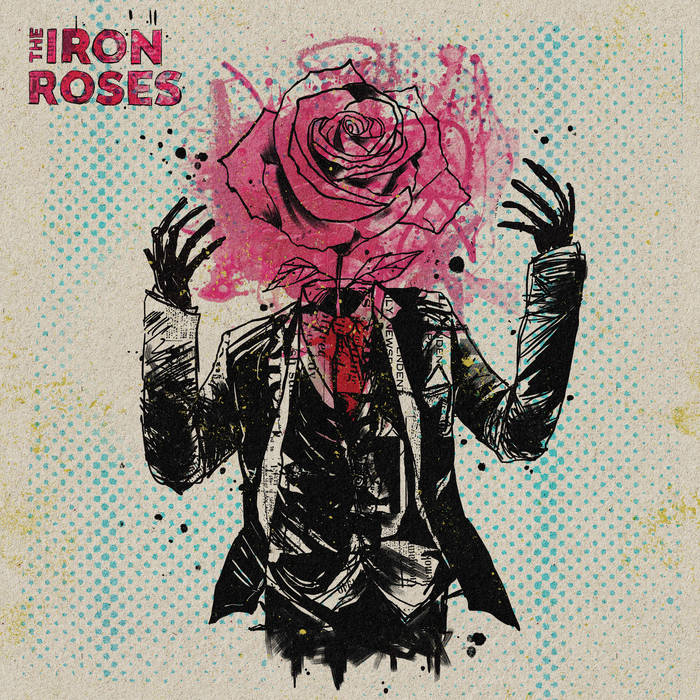
The Iron Roses came to my attention that way. I listened to this record after seeing their name and the album cover, with more free time on my hands than expected after a couple of records I was expecting to be listening to obsessively flamed out in tones of misery. I was looking for something fun, something to lift my mood, and The Iron Roses fit that bill perfectly.

From the very first listen of the opening number, "Screaming For A Change", it was clear The Iron Roses had something rather special going on. The song is a protest punk anthem, bouncing along with a rapid-fire hook that is far more infectious than the majority of the music that gets labeled 'pop-punk'. Combined with the dual vocals of Nathan Gray and Becky Fontaine, the song has depth and power that really digs in. Considering that Blink 182 also put out an album released on the same day, the difference in immediate appeal is stark. The Iron Roses are clearly the winners in that comparison.

As we move through the record, the band keeps delivering on that formula, with song after song of jaunty punk numbers calling out society for its failings in the catchiest of ways. It's the old trick of subverting our expectations by putting the message in a wrapper where we might not realize what is being absorbed until we've already fallen for the songs. There is much about our current climate that deserves to be called to account, and the lack of music in the mainstream addressing these issues during our dark chapter is one of those mysteries I can't quite explain. I don't know if it was fear, or if we were just too exhausted, but the artistic backlash never developed.

The Iron Roses hit us with short-and-sweet songs that say what they need to, say it in a way that gets lodged in our minds, and then they move on to the next topic. Only one song reaches the three-minute mark, and the record itself is less than half an hour, so it's almost as if the band has so much passion they can't stop themselves from rushing through everything they want to say. That works in the album's favor, as the extra energy propels these songs forward, and gives us a record that leaves us wanting more. This is an album that I can easily find myself playing multiple times in a day, which doesn't happen very often.

To be fair, I do have to say that "The Hustle" leaves me a bit cold, with its very different approach. That song doesn't quite sound like it belongs with the other ten, but it's a minor diversion. The rest of the album is nearly perfect, and for me to say that about a punk record is really saying something. In a way, there's a similarity to Rise Against. Both bands are telling us about where society is failing us, and both write songs with hook after hook that can't be denied. The difference is in tone, where Rise Against embodies our anger and frustration, while The Iron Roses are throwing open their arms to invite people to the cause.

When it sounds this good, it's a cause worth taking up.

Friday, October 20, 2023

Album Review: Blink 182 - One More Time

There is a reality out there that tragedy brings people together. It shouldn't always take something horrible to remind us of who is important in our lives, or what we still want to achieve, but sometimes clarity can only come when all else is lost. That might explain why Blink 182 is now back together. With plane crashes and cancer (does a relationship with a Kardashian count?) serving as reminders of how fragile everything is, the band put aside everything that broke them up, and have reunited for... one more time.

Maybe I've gone soft as I've gotten older, but when three people come back together after contemplating their mortality, and they are now approaching middle age, I expect a little more from their first statement than a f'n cum joke.

"Edging" was how we learned the band was back, and it did not bode well. It's one of the poorest singles this version of the band ever put out, it's annoying to the extreme in its construction, and it highlighted a problem that is going to be unavoidable when talking about however long this era of Blink winds up being.

That problem is that while this is the classic Blink lineup, it doesn't sound like classic Blink. That is entirely down to Tom's voice, which sounds even less like Blink than did the lineup with Matt Skiba. Tom is an alien conspiracy enthusiast, so maybe he'll appreciate this, but his vocals sound like he is an alien replicant whose software hasn't yet mastered the nuances of cloning human speech. It's a jarring experience to listen to him, kind of enjoy the song, and only halfway through realize that it's Tom singing. Mark is the one who has gone through physical trauma, and yet he sounds like he always has (albeit a bit more tired).

The worst is when Tom takes his turn on the emotional title track. Between what his voice has become, and the reverb they put on to mask it, he sounds like what bad CGI looks like in a movie. It's a facsimile of something real, and I don't know how to reconcile the present with the past. I still have a lot of fondness for "Enema Of The State" and "Take Off Your Pants And Jacket", but those memories are standing in the way of properly assessing what I'm hearing now.

"Edging" remains the low point of this record, and with sixteen other tracks, it easily could have been cut without being missed. However, that wouldn't solve the issue of these songs often being underwritten. "Dance With Me" uses 'na na' nonsense to fill out the chorus, and other songs lean heavily into repetition to fill out the still short running times. 'Catchy' is not a word I would use to describe these songs.

But ultimately, this record is about nostalgia, and that's where things really get tricky. This record is trying to be nostalgic for both Blink's comedic and serious sides, and I don't know how those can coexist on the same record. I mean, I suppose they can seriously miss the days of being assholes, but that's not the same thing. This is a far cry from Johnny Cash looking back on his life when he recorded "Hurt". That was powerful and moving, while this is just sad.

I say this is sad because Blink is unable to sound like Blink anymore, and I think more than anything it reminds us that you can't always go home again. Sometimes the past is gone, and moving on to new things is the way it has to be.

Wednesday, October 18, 2023

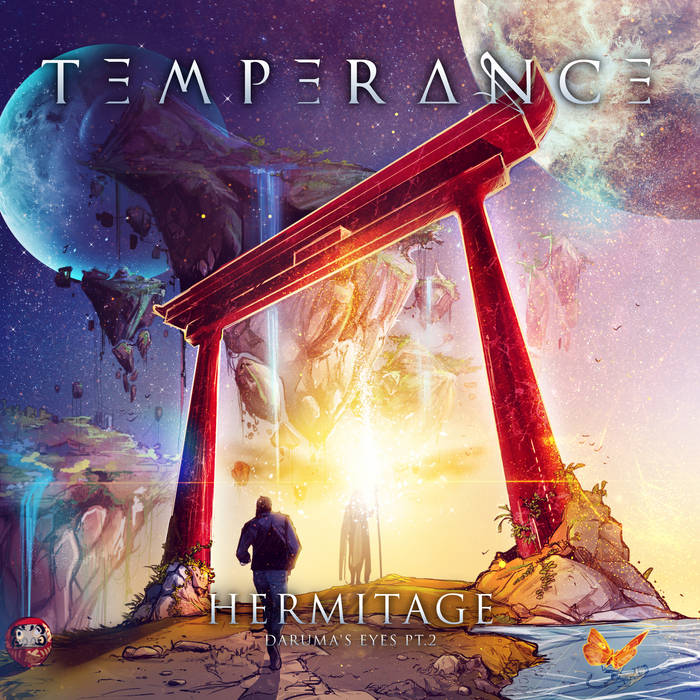
Album Review: Temperance - Hermitage: Daruma's Eyes Part II

Do you see how the title of this record says it is part two of the "Daruma's Eyes" story? You might think that means the previous album was part one, but oh no, that would make too much sense. As much as I loathe when concepts get stretched over multiple albums, this is Temperance pulling a Dream Theater. Part one of this story was a single track that appeared three albums ago. It's on the one Temperance album I go back to regularly still, but it took me looking through their band page to remember that's where the connection comes from.

What makes that even more of a head-scratcher is that in the time since part one of the story, the band's female vocalist has changed, meaning we don't even have the same voice on both parts of the story. It was ridiculous when Iced Earth pulled that in the middle of the "Something Wicked" period of Jon Schaeffer losing his mind, and I don't think it makes any more logical sense here.

So that means this record is a whopping fourteen tracks that expand a story I don't care about into a full album. I'm not going to get involved in talking about the story at all, because I'm completely disconnected from it as a listener. I look for music that can make me feel something, and that I can put to use to bend and change my moods. A fantasy story about a haunted doll is not going to speak to me on any level, so the analysis of that aspect of the record is better left for someone who does care.

Besides, any good concept album can be enjoyed without the story as a set of songs. That, even more than the story, is what makes this record so disappointing. When I first heard "Of Jupiters And Moons", I was stunned by the way they blended three voices with super catchy melodies. It was unique, and rather amazing. With each passing album, the band moved even further in the direction of what I call hyper-pop-metal, and they remained among the very best at it.

This album, by virtue of trying to be more of a metal opera, tones down what makes Temperance so fun. These songs aim for a more sweeping and epic tone, which they are, but at the expense of the melodies having the same bite and stick. There's less energy to these songs than in the past, and that isn't helped out with a production that (at least as heard in the promo I received) flattens the layers of vocals so I can barely hear the interplay of voices. The album is loud and metal, but the mix has no depth to it at all. It's one thin band of sound, and reminds me of the early days of digital music, where we knew 128kbps mp3s weren't good, but they were all we had.

More than anything, this is an album that tests my patience. As I just mentioned, the production is frustrating and tiring to listen to, the album is far too long, and there is enough narration to move the story along that I find myself rolling my eyes. By the time the album gets to the halfway point, I'm already checking to see how many songs are left before it's over.

There's a reason I sound like I'm being overly harsh, and it's because Temperance's mastermind just made a far, far better record with his side-project Fallen Sanctuary. The album that group put out was a massive amount of fun, dripping with tons of immediate and unforgettable hooks. None of that is present here. The 'drama' of the story sucks the life out of these songs, perhaps because they have to make sure to hit all of the plot points. All I know is that Temperance has always been more enjoyable to me than this, and even the side-project was as well. Bigger isn't always better, and efforts like this was the proof.

That's not to say this is a bad album, because Temperance are a very good band, and there are still moments here that remind me why I like them so much. Those are fewer and further between than usual, and they aren't enough to make the slog of getting to them worth the hassle. If you're going to make a record this long, and this involved, it needs to hit every mark. I can't say this one does.

How often will I want to spend more than an hour sitting through this? Probably never again.

Monday, October 16, 2023

Album Review: Theocracy - Mosaic

This might be the weirdest thing I've ever said about a band; I pretty much only listen to Theocracy for their Christmas music.

They're a good band, and I enjoyed their first two albums when they came out, but somewhere along the way I found myself drifting away from their music, with the exception of their comedic holiday output. Those tracks get listened to every December, and have yet to get old.

Part of that is my relationship with power metal growing tired over the years, but just as much there's part of that which comes down to what the band's very name entails. For a band named after a system of life where religion is put in control, it's hard for me to shake the connotations that entails, not the least of which because those who most loudly promote Christianity these days seem to have never heard a word their savior said.

Looking at the titles of the tracks on this record, with mentions of sin, deification, messiahs, and the Red Sea, it's once again a record that puts Matt Smith's spiritual beliefs front-and-center. He does it in slightly different fashion this time, with a record that aims to be heavier and thrashier than usual. That's an interesting choice to make, because Theocracy's appeal has (at least for me) never been in their guitar playing, but rather in Smith's massive chorus. Going back, a song like "Laying The Demon To Rest" off their second album was as heavy as anything they've ever done, but what made the song an enduring favorite was the anthemic chorus.

By focusing on a more thrash-like approach with the instrumentals, the songs are written in a way that takes away some of what makes the band as good as they can be. Faster and more wiry guitar lines don't give the same amount of space to weave melodies, and the songs suffer for that. That also comes down to some of the production choices, like in the title track, where Smith saves the backing vocals to highlight only the last phrase of each couplet. The song would sound bigger, and I think the chorus would be more effective, if it had the choir of voices amplifying the whole thing. It might also mask some of the grammar, where it ends with him saying, "We are mosaic." Um... shouldn't it either say 'we are mosaics', or 'we are a mosaic'? It sounds awkward the way he sings it.

But at least that song tries to have a melody. "Sinsidious" goes all-in on being heavy, so much so the chorus is almost a flat bark. That was the fear I had when they said there was more of a thrash influence, and it came to bear. It might have a good message, but it's hard for it to land when the song itself is so tuneless. It's the sort of song that I, if I was a producer, would have tossed aside before ever starting to record.

Ultimately, this record is not going to win me back over to Theocracy's side. There was a reason I lost track of them over the previous few records, and it's on display again with this one. The first two albums featured a few songs on each that were inescapably hooky. I can still hum a couple of them back right now, despite having not heard those albums in years. There isn't a single melody on this record I can do that with right after it's done playing. For being a melodic power metal band, there just isn't enough strong and memorable melody on display here. These songs lack that killer instinct to sink their claws into me.

If I want to listen to Theocracy, it's either the Christmas music, or the first two albums. They stand far above where we are right now.

Friday, October 13, 2023

 Album Review: Creeper - Sanguivore

There are three kinds of albums that end up on the negative side of the ledger. There are those that leave me disappointed, those that leave me sad, and those that piss me off. Fortunately, there haven't been very many albums in that latter category over the years. When they do pop up, however, it makes them stand out even more. It's rare for music to do something so egregious is truly makes me angry, since there is always something else I can turn to instead, but it does happen from time to time.

Creeper just did it to me.

No, this has nothing to do with Creeper once again transforming themselves, as they went from emo-tinged pop-punk, to dramatic classic rock, to now Goth-influenced 80s rock. That is merely the recipe for disappointment, so I can live with that. I expect bands to disappoint me at some point, so Creeper going down this rabbit hole is unwelcome, but rather harmless.

What pisses me off about "Sanguivore" is the way they talked about the album leading up to it, dedicating it to the memory of Jim Steinman. Steinman is my first and foremost musical hero, so I should absolutely love an album inspired by him, and written about vampires. It's right up my alley.

Unfortunately, other than Creeper saying that, there isn't a single damn thing beyond the "Bat Out Of Hell" pastiche of the opening epic on this album that leads me to think they've ever heard a Steinman song in their lives. (Honestly, that is the best song on the record, hands down, so if they had merely done a whole album following that blueprint, this would be a far different review.) I know they have, because there were more echoes of him on their previous album. As Steinman moved into the 80s, as Creeper is, his style did change. But he remained dramatic, and sarcastic, and overblown to the extreme. Creeper.... has deflated into a mess of Goth (not Gothic) mumbling and bad drum loops.

The thing that kills me about this record is that the answers are right there in front of Creeper's faces. They have already done songs that have the bombast and majesty, the twisted fun and sarcasm, and every damn song on both of their first two albums are better than anything they have to offer here. "Eternity, In Your Arms" was far darker than this record, while "Sex, Death, & The Infinite Void" took more risks and wrung more drama out of their abilities.

By contrast, this record is entirely tame, flat when it should be building to an emotional torment, and completely without a sing-along chorus that makes the disease so infectious. The plague wouldn't have killed anyone back in the day if it was delivered through these songs, they're that easy to avoid.

Yes, I am being extra critical because Creeper invoked the memory of my hero, but even if they didn't, this would still be their worst record be a mile. It lacks any of the fun, cheese, or camp that they have traded in thus far. That gets replaced by a vague sense of 'dark' that really just means applying grease-paint and calling it a day. They follow through on the formula of record-building they had already established, and each one of them was done better before.

The opening epic? More memorable when it was "Black Rain". The ending piano ballad? Better when it was "I Choose To Live". The slow burn? Better when it was "Misery". And let's not pass by the fact that the recording of "Chapel Gates" simply sounds terrible. It doesn't even feel like it belongs on this record, it's that different.

Creeper has at least done us a service here by revealing a truth about who they are and who they aren't. They are a band of actors, who with each album put on new personas and sounds. That is fun as a parlor trick, but I'm realizing it means there really isn't much of a core to who Creeper are. By jumping from decade to decade, genre to genre, pastiche to pastiche, they don't want to do the work of digging deep and finding out who they are and what they have to offer us. Everything is a story, because they don't want to tell us their own.

"Sanguivore" is not the worst album of the year, but it is the one I'm going to have the hardest feelings about. Creeper actually has the potential to do great things, so their fall from grace is higher, and the stain where their vampire corpses splattered the ground are ever wider. Jim Steinman used to say you have to go over the top to see what's on the other side. The other truth to that is when you go over the top, people can't see when you fall.

Creeper didn't go far enough to avoid my sight. I see them, and I wish I didn't. This record makes me sad, and angry, and I hope against hope I'm able to never think about this again when I listen to Jim Steinman's music. If Creeper ruins that experience even 1%, it's an unforgivable sin.

Wednesday, October 11, 2023

Album Review: Ronnie Atkins - Trinity

Optimism is a funny thing, isn't it? We treat it as an admirable trait to be able to look into the future and expect good things, but why is that a good thing if there's no reason or evidence pointing us in that direction? Sometimes, optimism is as much about denying reality as it is about trying to make our futures better. There's that line of thinking out there that says good things will come if you simply want them enough. It's no wonder, when we have garbage like that passing as 'advice', why we treat acknowledging things for how they are as a sign of something being wrong with us.

For his third solo album, Ronnie Atkins keeps up his optimism, but lets the music take a bit of a heavier turn this time. It's very much like the Nordic Union project he's a part of, but with a bit more spiritualism thrown into the mix, as opposed to caramelized sugar. Ronnie's voice is clearly better for music on the heavier end of the rock spectrum, so that much is a welcome development. His previous solo albums were a bit too cloying for my taste, even though I completely understand and appreciate why they were that way.

This one is more up my alley, but it moves into territory where the comparison with Nordic Union becomes harder to put aside. Since this is mining much of the same territory, I can't help but think of that project when listening to this album, because... it's just better. That's not to say this album is bad, but whether it's the too smooth for it's own good chorus on "Shine", or the hook-devoid "Godless", the songs Erik Martensson wrote with Ronnie are better at sticking the landing.

In fact, I would also say the last couple of Pretty Maids albums, which veered into quite heavy territory, are also better records. Maybe I'm just not in a place where sunny optimism is what I want or need to hear, but the most upbeat parts of this record feel more annoying to me than uplifting. When he sings that "if you can dream it you can do it", it rings hollow, since I've spent the last year watching dreams get further away. Hearing the implication that it's my fault for not manifesting it makes me angry, to be honest. As I said to someone in an off-handed manner; fate must have been created by someone who already got what they want in life.

When the album stays a bit less sugar-coated, like on "Sister Sinister" and "Raining Fire", there's a lot of good it has to offer. That doesn't make the album great as a whole, but it's enough to move the needle into the green. This record isn't as good as (especially the first two) Nordic Union's efforts, but there are a few winning songs here well worth hearing. I don't know if that qualifies as the optimistic take on the record, but then again, I really don't care.