Tuesday, April 12, 2016

Album Review - Surgical Meth Machine - "Surgical Meth Machine"


What to make of Surgical Meth Machine, the new project of longtime Ministry frontman Al Jourgensen, which he describes as both ‘free of the legacy of Ministry’ and ‘the most Ministry of all.’  We’ve been talking about solo projects a lot lately, and Surgical Meth Machine doesn’t change that narrative, though as one might expect, Journgensen’s enlistment in the trend comes with his particular brand of musical and thematic flair.

To begin with, the self-titled album is fast.  The first half of the album blisters by at a screaming pace, displaying beats-per-minute well into the hundreds, dancing precariously on the line between intelligible and single-tone mess.  It is a testament to Journgensen’s understanding of his own music that he effectively keeps Surgical Meth Machine on the right side of that balance, even with his radical experimentation further down the rabbit hole of industrial.

The tone of the record is pretty easy to detect off the jump.  There’s an awful lot of S.O.D-style sensibility here, a general veneer of ‘fast as possible, offend everyone, fuck the universe,’ that lends the record a certain...humor?  Seems hard to believe, but it’s true.  Jourgensen’s tongue is planted firmly in his cheek, but there’s also a consistent condemnation of cheap, empty criticism and musical elitism, so there is some substance amongst the joyful noise.

It takes two listens to really be able to parse out and dissect the record, but it’s worth taking the time.  For better or worse, the first experience will be a blur, as the first four or six songs all windup into ludicrous speed.  Listening to the album’s opener “I’m Sensitive” is a lot like watching a helicopter rotor start up – the blades start out as individual entities, but eventually reach a rotation that makes them indistinguishable from each other.  Surgical Meth Machine crams a lot into a small space, becoming essentially the next evolutionary step in industrial, taking on the question of just how many beats can be heard and how acute can the production really be?

It’s on the second pass that listeners will start to hear elements that stand out.  “I Want More,” comes across like a category five hurricane of broken glass, the kind of song that thrash junkies will put on repeat until they determine the best possible way to break their neck trying to keep up.  The not-Slayer intro portends what’s to come in the song, although it throws frequent curve balls with every day lexicon in the lyrics, big gang sing-alongs and a surprisingly melodic guitar solo.  Really, the guitar work for “I Want More” is the most incredible takeaway, as it seems a Herculean feat to be both that clean and that fast for the duration of the piece.

The pattern repeats for “I Don’t Wanna,” though the song is double overlaid with the usual industrial distortion and blurring that makes for a crunchier experience.  Pleasant surprise, there’re capable and fitting guest vocals from Jello Biafra, who resonates with his perfectly nasal righteous bitchiness, which I mean as a complement.

Further down is another track of critical of music critiques and elites, as we travel into “Unlistenable,” which mostly descends into non-musical madness, but is notable because I’m pretty sure Jourgensen samples the dialog from the swearing in of Curly during The Three Stooges’ “Disorder in the Court.”

Anyway, following this is when the album shines brightest, though it comes at the expense of the heavy industrial motif and gives way instead to a speed-injected homage to pop metal and Judas Priest.  “Gates of Steel” is a genuinely good time and surprisingly easy listen despite its speed, featuring more of the laser-precise guitar work that we heard so gleefully on “I Want More.”  The song transitions seamlessly into “Spudnik,” which is pretty much the same song just with a different title and different lyrics, like a play in two acts.  This is where the variety of Jourgensen shows through the most, as these two songs sound almost like classic rock or old speed metal songs, but attentive listeners will hear a hint of Gabber in the framework, making up the beat.  It’s a clever mix and an unusual pairing, but works very well here.

From there the record tries a few EDM tricks and ends with an off-kilter piece where Jourgensen croons his lines to a willing audience, but to listen to the whole record in one sitting can be physically tiring, so this part might be best saved for later.


The sensory overload of Surgical Meth Machine is total, which means listeners must exhibit some patience in trying out the album.  It works best as a sort of cosine wave, beginning with the ferocity of pure industrial at the limits of perception, but gradually giving way to cleaner sounds and some esoteric electronic experimentation.  Jourgensen pulls no punches here and tries whatever seems to suit his fancy, while still staying within his experience.  This is by no means a perfect album and it’s unlikely that any individual will love all that it contains.  That’s hardly the point though, and in the meantime, I feel safe saying that anyone who is inclined to give it a spin will find at least a couple things they do like.

Monday, April 11, 2016

Album Review: Dynazty - Titanic Mass


There are two main strands of power metal these days. You have the traditionalists, who faithfully adhere to the formula that Helloween created way back when, continuing to write endless repetitions of the old songs. It's a sound that is successful, but also stagnant. Then there is a strain of power metal that was once again created by Helloween, but on their red-headed stepchild of an album, "The Dark Ride". That album ushered in the age of modern power metal, where some bands tried to mesh the heavy, mechanical riffing of melodic death metal with the sugary choruses we're addicted to. It's a formula that Bloodbound nailed to perfection on "Tabula Rasa", and James Labrie's recent solo albums have utilized to great effect. But, it can also be a disaster in the waiting. Just ask Human Fortress and Hammerfall.

Dynazty is now firmly in the camp of bands who are modernizing power metal. Their previous album was well-received for it's tight take on the form, and this new album is proposing to take things even further in that direction. Over the course of these eleven tracks, Dynazty polishes their sound until it gleams in the sunlight.

"The Human Paradox" opens the album with galloping guitars that cut with the signature tone you would hear on a Soilwork album. The verses are almost perfunctory, a way to segue from that riff to the chorus. That's where we get to hear what this album is all about; big, hooky choruses that might cross the line too far into pop for a lot of metal fans. The one thing you can't deny is that these are catchy songs that do exactly what they set out to achieve.

Unlike the colossal mistake Hammerfall made, Dynazty never sounds like a band trying to cling to a trend. Their heavy, thrashy guitars are an integral part of who they are now. You can't fake that kind of identity for an entire album, not without letting on that you have to push yourself to write and play that kind of music. If you're familiar with the albums I mentioned earlier, they will give you an insight into what this album sounds like more than any words I can write. It's a very particular sound, one that I absolutely love when it's done well. I've often written that this is what the future of metal should sound like, as opposed to the myriad ways metal has started to become synonymous with growled, shrieked vocals.

The downside to "Titanic Mass" is that for as good as these songs are, and believe me they're good, there is a degree of sameness that creeps in. It doesn't take very long into the album before the non-stop rhythms of the guitars start to fold in on themselves like a black hole, making it a feat of attention to remember which song you're still listening to. That doesn't take anything away from how enjoyable the record is when you're listening, but it does start to creep in when you go back to think about which your favorite songs were.

The two exceptions are the title track, which is memorable for it's lack of a chorus befitting the rest of the album, and "I Want To Live Forever", which uses a slower pace to break up the album and serve as a focal point. It's not a ballad, but by taking a foot off the gas, it gives the album a needed change of pace, because the stretches of songs on either side of it are cut from the same cloth. It's an attractive cloth, however. I'm not sure how you can listen to "Roar Of The Underdog" and not want to bang your head and sing along. Dynazty has the singer and the melodic chops to pull this off, and they do it well. The writing in almost uniformly on point, and those choruses are the kind of stuff plenty of bands would rip off, if they had the talent to do so.

Overall, there's not much to be said critically of "Titanic Mass". It's a sharp, focused album that doesn't waste any of its time, and delivers songs that are both heavy and hooky, which is hard to pull off. While I wouldn't put it up with "Tabula Rasa" and "Impermanent Resonance" to form a holy trinity of modern power metal, it's not too far behind. "Titanic Mass" is a thoroughly enjoyable record, and one that even people who hate power metal should give a chance. If all power metal sounded like this, it wouldn't have such a bad reputation.

Sunday, April 10, 2016

Album Review: Ihsahn - "Arktis"


Listening to Ihsahn’s new record “Arktis” is in many ways the stereotype experience of listening to any record of any solo project, with all the benefits and trappings that implies.  Ihsahn is the long-running epithet for Vegard Tveitan, founding member of Emperor and accomplished multi-instrumentalist in his own right.  His diverse musical musings make up the bulk of the new album from his solo project, which means that first and foremost, a listener must divorce him or herself from the conception that Ihsahn will sound just like Emperor.  Solo records tend to travel one of three paths, which are a) that the artist wishes to leave their musical home to experiment with some other ideas, b) the artist wants to perform in a genre they are not commonly associated with, or most often c) which is both, and that’s where we find “Arktis.”

The album begins much in the usual Ihsahn mold, with some airy keys and a heavily atmospheric black metal sensibility, coupled with the usual growled vocals.  We get this for a small smattering of songs in the open, and while they’re fine for what they are, only “Disassembled” shows us the true potential of this record, with a thumping riff juxtaposed against a surprisingly earnest and soft outro.

The middle of “Arktis” is where the value really lies, as we see Ihsahn step outside the death-black metal box and open up into new possibilities heretofore undiscovered.  “South Winds” is both weirdly beautiful and incredibly haunting, a deep and nearly subliminal keyboard line that bores into the ear and sets the stage for the soft but unquiet melody of the song.  This is all decorated with a mix of rasped and sinisterly whispered vocals, all of which combines to create a unique and catchy experience.

By comparison, and this is where the versatility of a solo project can show through - particularly as Ihsahn takes the place of Emperor and makes its own impression – we are shortly thereafter asked to partake in “Until I Too Dissolve,” which begins with a wonderful but contextually out of place Van Halen riff.  But this is where we’ve seen other acts like Richard Kruspe’s Emigrate and Peter Tagtgren’s PAIN really shine, right?  In showing their devotion and respect for trends that worked in the past, but still turning those elements into something new and enjoyable.  “Until I Too Dissolve” is no different, combining the easy hook of a proto-metal riff with the modern pounding of death metal to conjure a song that is both dangerous and easily enjoyable.

The disappointment of “Arktis” lies in the fact that there isn’t more of this kind of experimentation on the record.  Much of the second half of the record starts to blend together or shifts too easily back into the usual black metal patterns.  That isn’t to say that those songs are poorly constructed or anything less than professional caliber, but it does put a damper on the expansive promise of the two moments mentioned above.  The rest of the tracks sway between the metal harshness of Ihsahn’s legacy and a few attempts to deliver more emotional content, but there’s not as much pure enjoyment there.

So “Arktis” has some brilliance between beginning and end, but doesn’t consistently resonate with it.  Ihsahn as a musical project is in the transitional period between solo project and full-time fixture, so it’s understandable that the man and band would try to establish a base, but there’s a richer vein that could well be explored in the future.

Friday, April 8, 2016

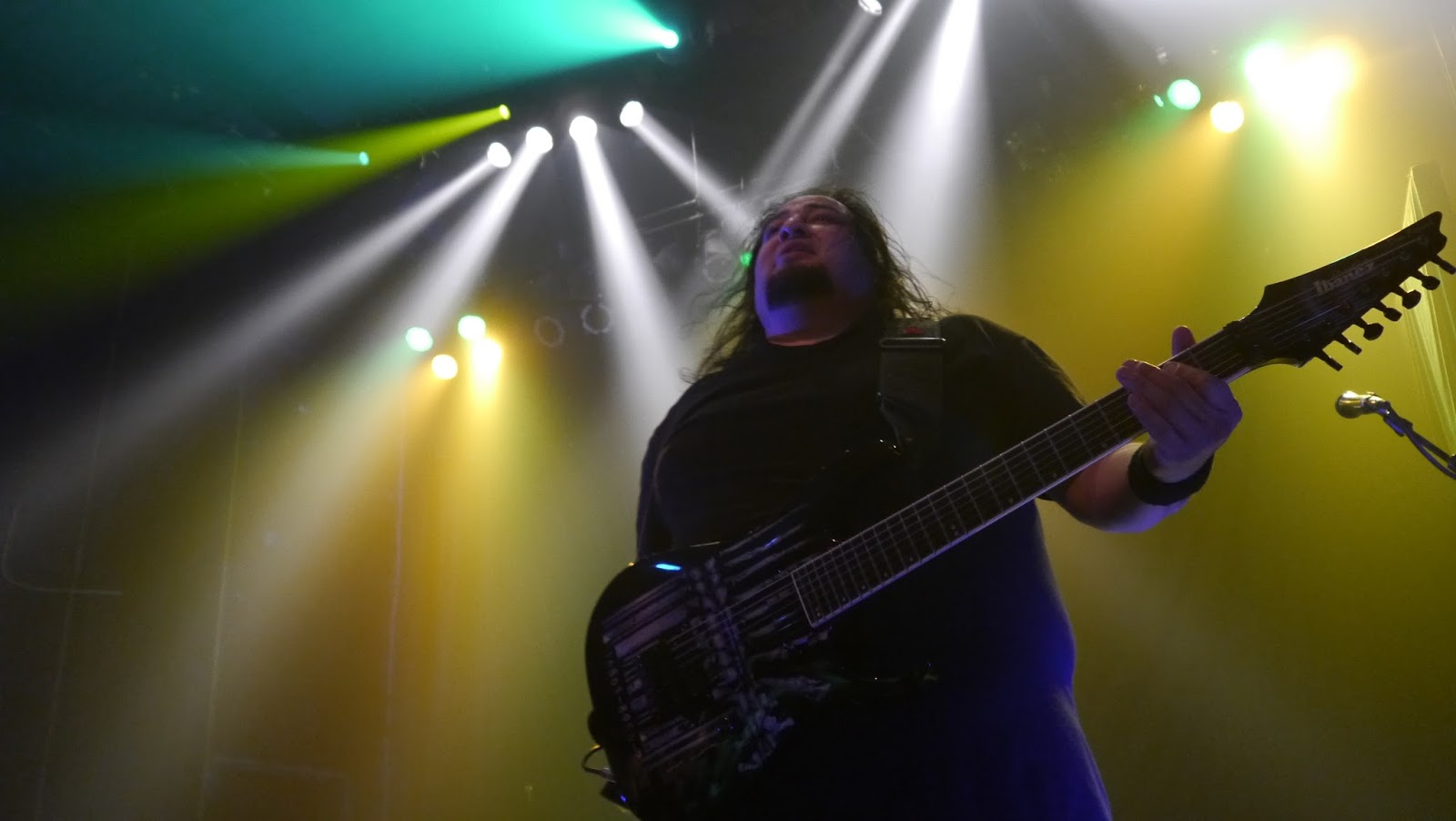
Concert Review - The Demanufacture Tour - Fear Factory & Soilwork


Coming into the evening, it was plainly clear that the Demanufacture Tour was Fear Factory’s night.  That’s why people were there, that’s who the paying customers wanted to see.  There was to be a celebration of one of the great, truly shaping albums in metal’s history, and all other concerns were secondary.

And yet, as Soilwork took the stage on a sold out night deep in the heart of Manhattan and faced up to a waving sea of industrial-hungry appetites, the winds shifted.  The Swedish metal band, veteran of a thousand shows and no stranger to the headline stage, were not inclined to acquiesce the evening quietly.  Led by the battle-tested confidence of vocalist Bjorn Strid and buoyed by the infectious enthusiasm of guitarist Sylvain Coudret and bassist Markus Wilbom, the band smashed forcefully through some of their best work.


Led by the title single of their new album, the band launched into one crowd favorite after another, using their limited time to blast a firehose worth of power-driven heavy metal into the ear canal of every participant.  Soilwork continued their celebration of the ten (now eleven) year anniversary of “Stabbing the Drama,” by again drawing heavily on that record, beginning with the measured march of “Nerve.”

Where the set really took off is in the middle, beginning with a tight but appropriately heavy “The Crestfallen,” forever a people pleaser with its immediate blast of rhythmic power, a surefire guarantee when the bodies in the mosh pit need proper motivation.  This continued, band members slamming along with the energetic crowd, through “Follow the Hollow” and culminated with one of Soilwork’s many masterpieces, “The Living Infinite I.”  Suddenly, the temperature in the venue had increased as bodies slammed wholly into one another, arms flailed and voices raised in riotous celebration.  Soilwork may not be the headline of this tour, but their performance is both professional and engaging, some of their best work in years.

Still, the biggest reception of the evening was reserved for the reason we all had gathered – Fear Factory promised to play their seminal album “Demanufacture” in its entirety.

Worth mentioning – the first and only real non-sequitur of the evening was seeing Fear Factory introduced in person by Dennis Haskins, most commonly recognized as Mr. Belding from “Saved By the Bell.”  Evidently, he is a friend of Fear Factory and longtime fan.  Turns out, he’s also familiar with profanity and how to use it.  Moving on.


Fear Factory fans for years have come to anticipate “Demanufacture” having a certain presence in a live setting.  “Replica” is a prerequisite of any Fear Factory performance.  This show would be different – the album would not just have a presence, it would BE the presence.   While “Obsolete” sold more copies, it is this cardinal effort from the band’s early days that has always captured the imagination of the fans and critics alike.  Normally, the ‘play a full album’ concert gimmick can be a dicey scenario, as it’s often fair to say that the crowd would rather see pieces of the entire catalogue when balanced against a single effort.  “Demanufacture,” by contrast has many deep cuts on it that have been secret favorites of fans, but rarely see the light of day.    Eleven songs over fifty-five minutes.  The stage was set.  The introductions were made.

Emerging in a stark blue light, Burton C Bell, Dino Cazares and company wasted no time, churning out the title track before the audience was done cheering with anticipation.  The pulse of the concert was set – this was to be no mere recitation of an album.  This was a celebration breathing fiery life into a classic.  Each band member, even those who weren’t present when the album was originally recorded, threw their whole being into the experience, selling each measure with intent and aplomb.


The classics of “Demanufacture” are known commodities, so it was truly the album cuts that were revered most by the fans.  “Zero Signal” was a thunderous blast of industrial impatience, each measure crisp, each rifled riff timed perfectly.  Fans near and far could be heard exclaiming to their friends “When will we ever see this song again?” as Fear Factory pounded out the infectious snare of “New Breed,” and later the sinister menace of an excellent “H-K (Hunter-Killer).”

And then it happened.  “Body Hammer.”  One of the great industrial riffs of all time, taken off the shelf and given back to the masses, a series of punctuated industrial explosions that caused smiles on some, furious head-banging by others, and both for many.  The only disappointment in hearing this and the other cuts was the crushing realization that some of these may be once-in-a-lifetime opportunities.

There was a break in the action following the conclusion of the album, but the night wasn’t nearly over.  There was a second, albeit understandably shorter, set to get to.


As ever, the crowd reached deep for the first song in the second set, “Shock,” complete with arms pumping, bodies flying and pulses racing.  “Shock” has become of the one of the great live songs of all time, fully indoctrinated in the hall of fame along with “Hallowed Be Thy Name” and “For Those About to Rock.”  It is the only song I can recall seeing that each time it is played, the most pit looks like staged mosh pit, fit for the big screen.  Naturally, with no interest in allowing the momentum to recede, Bell simply asked “Can you feel it?” before the timeless crunch of “Edgecrusher” started punching fans in the mouth.

There was more after.  “Archetype” made an appearance, “Dielectric” and a handful of other new songs were played, but the crowd, roused into a ninety minute frenzy and stuffed into an overheated sold-out venue, was beginning to tire.  The band played on, never showing any sign of exhaustion, singularly interested in delivering the best live experience.

There was one more moment of kinesis, as the crowd chanted along with the final song of the evening, “Maryr.” It was a celebration not just of the band and of a great show, but of the experience we all realized we had just had together.  Cheers went up.  Horns went up.  Hands were clapped.  Tired thanks, both directed at and from the stage, were said.  We walked out into a cold Manhattan night, appreciative.

Wednesday, April 6, 2016

Album Review: iamthemorning - "Lighthouse"


Russian songwriting duo iamthemorning is remarkably creative in their diversity, as the duo takes on many different faces across their new album “Lighthouse”.  Running a complete and thorough gamut between crystalline fragility and jaunty confidence, the beauty of the album lies in that very versatility.  Most albums can be diagnosed by the strengths of their great individual tracks, but “Lighthouse” is better served by addressing the album’s flow as a whole.

Which functionally begins with “Too Many Years” and it wonderfully displays all the open possibilities that iamthemorning brings to the table.  The entire piece is paced by the sanguine but pained vocals of Marjana Semkina, who sings with an elegant, effortless aplomb that shows her character.  The song as a whole is mellow but dotted with the promise of a threatening drum beat, ever-present below Semkina’s swan song.

The duo’s album is a concept, a journey that takes us through the deteriorating psyche of a woman as she struggles against mental demons both real and imagined.  Where the album really shines is in the disjointed, off-kilter pieces that fit the story while concurrently standing out from the baseline idiom of the record.  “Libretto Horror” has a certain devilish smirk in its undercurrent, the piano of Gleb Kolyadin taking on a personality somewhere between Grieg and Joplin.

We see much of the same for “Matches” a similar tune that twists and contorts as the pivotal character spirals deliriously out of control, bending rhythm and melody into a bright but tormented spiral of beautifully composed and artistic progressive music.

The one sour note of “Lighthouse” is that iamthemorning probably returns to the placid well a little too easily, returning there as a home base.  It’s not that the heavy dose of emotionally heavy music is unpleasant, it’s just that it doesn’t speak to the great variety that iamthemorning is clearly capable of.  For all that “Libretto Horror” shines, there are many more “Harmony” or “Clear Clearer” which tell much the same musical story.

Sidebar: there’s a small sticking point in the defining of iamthemorning as a ‘progressive’ act.  Not that the labels really matter, but something about the labelling of this band, based on their presentation and frequent associations with artists from Porcupine Tree and other modern prog luminaries, feels a little too easy.  Iamthemorning is both more and less than what we traditionally think of as prog, a piano duo that creates easy melodies but doesn’t necessarily create the immersive atmosphere that a full prog band is capable of.  It’s neither here nor there, but if you’re picking up this album based solely on its genre label, be warned that the experience within may not quite be what you think it is.

Iamthemorning has nevertheless produced a record that is worthy of praise because of its versatility, even if that versatility isn’t displayed as frequently as it could be.  It’s doubly rare to encounter a record that can be both a pleasant listen and haunting at the same time.  Artists of all genres could take a lesson from the artistic integrity of iamthemorning, and their new record is worth a listen just for that.

Tuesday, April 5, 2016

Album Review: Treat - Ghost Of Graceland


Hyperbole can be used to great effect, but it can also start a project in such a deep hole that it can never climb out. I understand that with as much music as is being made these days, you have to do whatever you can to try to get attention for yourself, but there are limits to how far I'm willing to let things slide. Treat is pushing the limit a bit with this new album, as the press materials describe this as the new album from the 'hard rock legends'. I'm sorry, but there is no way that Treat are legends. Legends are either the bands that even people who don't follow music would know the names and songs of, or are the bands that modern bands still draw their inspiration from. In either case, Treat are not legends. That being said, I know how this works, so I'm not going to hold it against them. After hearing the singles that were released, I was actually quite excited to hear this record, putting aside my brief disgruntlement.

"Ghost Of Graceland" kicks things off in fine fashion. The main riff is heavy, bluesy, and a touch sinister, while the chorus is pure AOR melody. It's a great song, and definitely sets expectations high for the rest of the album. "I Don't Miss The Misery" follows with an even heavier, modern riff that grinds along into the verses, while the chorus once again soars up into a huge melody. These two tracks are not just great music, they show a band that understands that rock and roll needs to be about more than tuning down a guitar and stringing riffs together. There's a real sense of songwriting here, and a focus on making sure that everything in the songs is memorable.

I'm a sucker for ballads, and we get one in "Do Your own Stunts" that hits the right notes. The pianos carrying the beginning of the song are lovely, but it's the keyboard parts and orchestrations once the band kicks in that really hammer the song home. It's a little dramatic touch that makes the song feel more emotional than if it was a more stripped-down arrangement.

For a band that's been around thirty years, Treat is still learning some new tricks. The guitar arpeggios that open "Endangered" feel completely modern, and give a nice counterpoint to the more unabashedly pop chorus the song is packing. It's one of those songs that could have easily gone off the rails, but it manages to keep from stepping over that line, and it works as a bit of bright, shiny ear candy. By the time this song and "Inferno" pass by, I'm reminded strongly of the Nordic Union album that was put out on the same label, Frontiers, earlier in the year. Like that album, Treat is hitting on melodic rock with a heavy bent towards modern pop choruses. And like that album, Treat is doing it exceptionally well.

On the whole, the second half of the album isn't as strong as the first, but it's a minor distinction. Songs like "Alien Earthlings" and "Too Late To Die Young" may not compete for the best on the record, they're still charming songs that go down easy. And while the second ballad, "Alone Together" is similar to the prior ballad, it lacks the rocking punch to push it to a higher level, so it feels like a missed opportunity.

That being said, let's not mince words. "Ghost Of Graceland" is a really good record that's a heck of a lot of fun. It's big, catchy hard rock that has a lot to offer. Sure, it feels a bit tame in comparison to Nordic Union's record, but considering how that record is a strong contender for the best album of the year, that isn't an indictment. Treat has done well for themselves here, and "Ghost Of Graceland" is a record that should appeal to anyone who's a fan of AOR, or anyone who listened to guitar pop on the radio in the mid to late 90s. It takes me back there, and that's always a good thing.

Monday, April 4, 2016

Album Review: Zakk Wylde - Book Of Shadows II


Over the course of his two-plus decades in the music business, Zakk Wylde has made a few things abundantly clear to me. First, pinch harmonics are among the most annoying things a guitarist can do. Second, his Black Label Society has driven a singular idea into the ground. And third, when he strips away the artificially inflated metal stereotypes, he's not so bad. This album, being "Book Of Shadows II", is obviously a sequel to the original. That album, among Zakk's entire discography, is the one moment where he has shown himself to be more than an Ozzy clone. His softer material is quite good, probably because it forces him to abandon his usual bag of tricks.

The drawback to any of Zakk's album has always been his vocals, which lack both the tone and power you would expect from someone fronting a major outfit. That is where albums like this work his advantage, because the softer material and more laid-back atmosphere limit his need to stretch beyond his limited comfort zone. His tone is still peculiar, but he sounds comfortable, which is a huge improvement over the usual Black Label Society material.

"Autumn Changes" starts the album off with the now trademark mix of clean electric and acoustic guitars, setting the stage for music that would sound right at home as the ballads of 70s Southern rock albums. Between the harmonized vocals through the choruses, and the bluesy tone of the solo, it's a beautifully somber song that establishes the perfect tone for Zakk's songwriting. Of course, being a guitar hero, Zakk can't resist indulging himself in a few spots. There's a lengthy solo in "Lay Me Down" that is as fiery as anything the album has to offer. I'm not sure if it quite fits the mood of the song, but it certainly stands out.

That word keeps popping up; mood. More than anything, your enjoyment of "Book Of Shadows II" is going to come down to how much you appreciate the tone and tenor of music that is better suited for a night out at a coffee-house rather than a biker bar. I can imagine the people who take offense to any ballad that appears on a rock album being aghast at the almost whispered vocals in "Darkest Hour", but they would be completely missing the point. Music, even rock music, is about so much more than cranking up the guitars and being heavy all the time. Anyone who isn't a two-dimensional cardboard cutout has multiple sides to their personality, and these songs as Zakk showing that he has a way to age gracefully.

He has often mentioned his love of Elton John, and while "Book Of Shadows II" doesn't sound much like any of Elton's classic records, it does have a similar spirit to how Elton was able, later in his career, to reinvent himself as a stripped-down artist who put writing songs above the need to be a character. That's what I feel like Zakk is doing here, writing more from the heart of who he is, freed from the expectations that come along with his main gig.

That doesn't make this a perfect album. While there are some great tracks, and everything here is good, there is also the law of diminishing returns at work. The record's leisurely pace is a benefit, but it begins to drag by the time we hit the hour mark (even longer with the bonus tracks). I hate to say it, but there's too many songs here. At fourteen tracks long, there's too much material in the same vein. It would be a much stronger record if it was cut down to 40-45 minutes.

So what "Book Of Shadows II" is can be summed up thusly; it's a good album that showcases the very best of what Zakk Wylde has to offer. It simply overstays its welcome a bit.

Sunday, April 3, 2016

Album Review: Vampires Everywhere - "Ritual"


Vampires Everywhere has gone through a lot in a few short years.  It was only five short years ago that the band debuted on Hollywood Waste Records, but in the intervening period, only vocalist Michael Orlando remains from that release.  He doesn’t go by Michael “Vampire” anymore, the band dropped the exclamation point from the end of their name, and after a genuinely scary and life-altering car accident, Michael changed the name of the band to “The Killing Lights” and then apparently changed it back again.  So a lot’s happened, for those playing our home game.  Now in 2016, the band returns with their third full-length record (no longer on Hollywood Waste, by the way,) “Ritual,” and there’s a great deal of new ground to cover.

For their previous full-length “Hellbound and Heartless,” we saw the band commit to a full sound, an aural experience somewhat like the early days of Rob Zombie or Marilyn Manson, but way, way past the margins with distortion and thump.  By contrast, this new record is nearly a complete change in direction, exchanging the fury of righteous angst for the hollow chill of near-electronic production.

One thing to get out of the way first.  One of the single most interesting moments for “Hellbound and Heartless” was when Vampires Everywhere completely reimagined the Nirvana classic “Rape Me,” molding the song in their own sound and laying down a totally different track than the one we had grown accustomed to.  In theory, that’s how all covers should be; creatively inspired interpretations that make people say ‘woah.’  Vampires Everywhere has repeated that trick for “Ritual,” only this time they’ve taken on a tougher sell – a metalized, appropriately whip-tongued hash of Hozier’s “Take Me to Church.”  The cover starts out innocently enough, with frontman Orlando speaking through the opening lyrics a la Spider from Powerman 5000, but slowly and surely mutates into something new, particularly as Chelsea Grin’s Alex Koehler lends his serrated vocals into the mix.  For a band’s cover to be notable as part of their full effort means they did something very different, and Vampires Everywhere once again rings that bell.

Anyway, on to the album proper.  The album opens with “Black Betty,” but there’s no Ram Jam in sight.  This, by contrast, continues some of the lyrical themes of rejection and showmanship that the band applies frequently, but the sound has changed to reflect a much greater electronic and industrial influence.  Where the song succeeds is in falling back to a big metal chorus that in isolation can persist without any context from the surrounding song.  “Black Betty” is essentially a song in two halves, and while it’s a bizarre juxtaposition to hear two pieces that have little in common with each other but at joined at the hip, the song is both an interesting experiment and a reasonable showcase of the musical composite to come.

“Ritual” essentially works in two parts, with the Hozier cover as the transitional point.  The second half of the album is where the band shines most, as Orlando and company’s real song-writing chops shine through the thickly decadent facade of industrial.  Beginning with “The Demon Inside Me,” the band uses steady beats and (dare I accuse them?) some pop constructions to craft songs that are at once accessible and menacing.  There’s a lot of open space in these riffs, which is fine and moreover works to the band’s benefit – Vampires Everywhere is not a band that wants or needs to club the listener over the coconut with crazy riffs and masturbatory displays of guitar theatrics.

Rather, as you travel through “Violent World” and “9 Lives” and into “American Nightmare” (not a cover of the Misfits song, though there’s a thought…) what the listener is left with is an impression of a band who may sound thick with loose ends and sludge, but has actually measured twice, cut once, and built a sound framework of rock principles from which to hang their macabre metal creations.  It’s all really very laudable, as Orlando’s vocal performance scales back from the threatening rasp of his previous albums but is nevertheless turgid with attitude and edge.  His new sound fits nicely into the pocket of his band, as his relatively clean lines really make the music’s big choruses pop, no pun intended.

It doesn’t hurt the case of “Ritual” that Vampires Everywhere have also included the requisite dose of good old American rock sleaze, a tradition that began decades ago and continues through to the present.  It’s taken many forms over the years, but in this case it’s a sinister grin that runs through the record, concurrently beckoning and warning the listener about the contents within.

So, attentive readers may have noticed that we did not discuss much about the first half of the record, and that’s with a purpose.  The album’s second half is the shining star, so if you’re listening at home, work backward.  With that said, the track record of bands making adjustments to their sounds is rocky and chaotic at best, which means that “Ritual” is really quite an accomplishment.  Old fans will find new things to like, old enemies should give Vampires Everywhere a second shot.

Saturday, April 2, 2016

Coming This Summer: Tonic Week


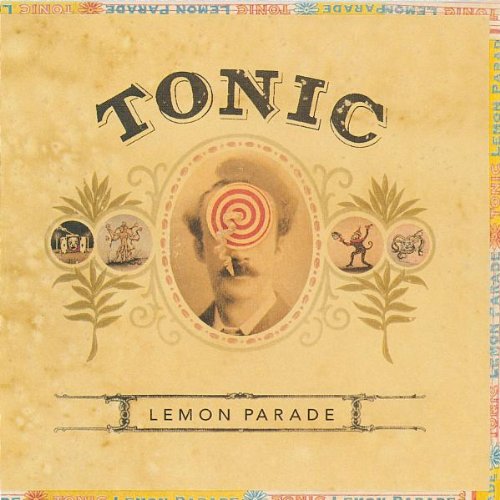
To celebrate the upcoming twentieth anniversary of their seminal album, "Lemon Parade", alternative rockers Tonic have entered the studio to record a special acoustic version of the record (which you can pre-order here). To be released at a yet to be announced date, the new version of the record will pay tribute to the legacy that songs like "If You Could Only See" and "Open Up Your Eyes" created, when they dominated rock radio in the 90s.

With Tonic being my favorite band, and "Lemon Parade" currently residing as my favorite album of all time, I will be doing my part to celebrate the occasion with Tonic week. Coming this July, as the anniversary approaches, I will be dedicating a week of coverage here at Bloody Good Music to the band, their albums, and the impact they have made.

In addition to a retrospective of my relationship with "Lemon Parade", a list of my favorite Tonic songs, and reviews of their albums, I'm hoping to have the opportunity to detail the new acoustic version of the record as well. This is a momentous occasion for those of us who grew up with the music, and I will not be letting it go without giving it the proper respect.

Friday, April 1, 2016

Emerging from the (Crimson) Shadows of Blackguard - A Conversation with Paul Zinay


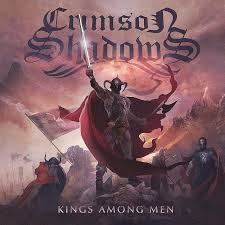
The Canadian metal scene has reached maturity now, and the wave that crashed full bore onto metal's shore a few scant years back has seen some artists recede back into the ocean, and others make a permanent beachhead marking their arrival.  Two agents of two of the permanent bands, Crimson Shadows and Blackguard, are joining forces, as the energetic and charismatic Paul 'Ablaze' Zinay from the latter is now the front man for the thunderous and powerful former.  On the heels of the news, we sat down with Paul and talked his new band, the circumstances of Blackguard and all things Wu.

D.M: You’re the singer for Crimson Shadows now, how did that happen?

PAUL ‘ABLAZE’ ZINAY: Well, I’ve known the Crimson Shadows guys for a long time.  Blackguard and Crimson Shadows have been doing shows together almost since the beginning of Blackguard, and pretty much the beginning of Crimson Shadows.  We started off close to the same time, give or take.  We’ve been playing with those guys for years, so we became good friends with them.  Cory [Hofing,] their drummer, we’ve known him forever, talked business and all that.  A couple months ago, Cory called me up and let me know that Jimi [Maltais] was stepping down from his position with the band.  [Cory] knew that Blackguard was slowing down a little bit, and asked me if I wanted to join up with them.  At first I wasn’t sure if I wanted to, but he just kept bugging me [laughs].  So he’s bugging me about it, and I told him I had to think about it for a little while.  I knew I had been burned out from touring for a long time and if I joined with them I’d be pulled back into that.  We talked about it, we made sure all the details were right, and I said ‘yep.’  I love the music and I love the guys and I love hanging out with them and being on the road and playing songs with these guys.  So, I started demoing a new song and we’re working on a new record now and I’m really excited for where things will potentially go with this band.

D.M: So you’ve already started working on new material, then?

PAZ: I think there’s between six or eight songs that are musically done.  I’ve done two songs lyrically, but I’ve got more to do, I’ve got to pick it up and get those creative juices flowing again.  It’s been weird, because I haven’t actually written lyrics since the Blackguard record that’s not even out yet.  I wrote lyrics for that, that was a couple years ago, and I wrote lyrics for one Ages song.  It’s one of those muscles that’s in entropy and I need to start working it again, getting used to actually being creative in that respect.  You know, I’m in familiar territory, too.  Thematically, Crimson Shadows isn’t that far off from where Blackguard was.  Now I gotta come up with new ideas.  We’re trying to come up with a narrative for this record, something of a concept.  That’s been a new challenge, but it’s interesting, because now I have the parameters and let’s see if I can do it.

D.M: Not that Blackguard and Ages aren’t, but Crimson Shadows has always been a guitar band first, that’s always been the forefront of their sound.  How do you fit into that?

PAZ: Well, they’re a guitar band in the same way that, like, DragonForce is a guitar band.  It’s a very aggressive, power metal band, is how I’ve always seen them.  They have really great guitar parts and excellent guitar players.  I’m just going to play my role.  As a singer and a frontman I’m going to be there filling in those gaps in the songs.  The songs needs lyrics and they need vocals, and I’m doing that.  I’m gonna try to come up with great lyrics and good parts, memorable.  Hopefully I’m going to be able to add some components to the songs that make them better.

D.M: You collaborated with Crimson Shadows on their most recent album, did that give you greater comfort when they asked you to join, that it was a known commodity?

PAZ: Not necessarily.  They asked me to guest on the record when they were recording it because they were recording it here in Montreal with our ex-keyboard player Joe [Jonathan Lefrancois-Leduc].  We were in town and hanging out with them in the studio.  I was just hanging out and they were like ‘Paul, jump into the booth and do a vocal part!’ Okay, cool. [laughs].  It didn’t really affect my decision making, necessarily.  I genuinely love what they’re doing, just upbeat, fun music to play.

They were trying to get me to do a couple shows they had coming up, well at this point it was earlier in the year, but they had some shows that Jimi wasn’t able to do due to work purposes, this was before he officially decided to step away from the band, they were asking me to do a couple shows with them, a couple American dates, a couple Canadian dates.  It was too last minute, but I was trying to, so I was learning the set, and granted, I’d seen them live a couple times, so I really studied the lyrics and immersed myself in their music, and I was just loving it more and more actually listening to it and not just taking it in live.  I was listening to their set three or four times a day trying to learn it.  That was the process of me actually, officially joining the band, just immersing myself in their music and saying you know what?  I can totally see myself playing these songs live and having a fucking ball with them.


D.M: So, have you made your debut as their frontman yet?

PAZ: No, not yet.  I was learning their set a couple months ago, but there were scheduling conflicts and I couldn’t get out of work.  They wound up going with another guy.  I was learning the set as a failsafe, in case they really needed me on a one-off show.  My first show with them will be in late April, in Montreal, we’re opening for Nekrogoblikon.  We’re doing the Montreal and we’re doing the Toronto dates.  It’s gonna be really fun, I’m really excited.  Playing with Nekrogoblikon, too, I’ve known those guys from way, way, way back in the day.  Blackguard, before we even got signed, we were in contact with Nekrogoblikon to do a North American tour with them and Destroy Destroy Destroy.  This was ten years ago, when we were all kids saying ‘let’s try to get an epic tour together.’  It didn’t end up happening, unfortunately, but Nekrogoblikon is still going, they’re stronger than ever, and still an independent band as far as I know and they’re doing fantastic.

D.M: Aren’t they the band that if you go into their online store, you can give them five bucks and they’ll spit in an envelope and mail it anybody you don’t like?

PAZ: Really?  Holy crap, I didn’t even know about that.

D.M: I feel like I saw that in their online store at some point.  You could toss them a couple bucks and they’d make angry phone calls for you.

PAZ: Do you get proof of this?  Like, a video of them making the phone call?  I feel like that’s something where you could give them five bucks and have no idea if they’ve actually done it or not.  Awesome, nonetheless.

D.M: I suppose maybe what you get out of it is the peace of mind that you paid somebody to do that?  Maybe that’s the catharsis?

PAZ: [laughs] Kind of like saying, ‘I ordered a hitman, but not really.’

D.M: Do you anticipate that for Crimson Shadows you’ll have to change your singing style at all?

PAZ: Not really.  I’m trying to adapt my style a little but more.  Jimi used his lows a lot, and I use way more of my highs.  So I was learning the older set, I’m using more of my low singing.  But in the stuff that we’re writing right now, I’m trying to float a lot more between the two.  Which is what I did for Blackguard for the most part.  But I feel more comfortable in the highs.  The guys don’t want me to be Jimi necessarily, they want me to be me.  So I’m writing my own thing, and when the material comes out and I start writing for it, I’m going it give it my own taste.  We’re collaborating more, because this is the first time I’m working with another singer, too.  Greg [Rounding] and the others guys do clean singing, too.  So we’re collaborating lyrically and stylistically, like, what parts do you want to be on, what parts do you want me on?  We’re working together on a section here or there, so there’s a lot more dialogue that’s going to happen between us as the record progresses.  They’ve given me pretty much free range to do what I want, which is fantastic.  They trust me, this isn’t my first rodeo.  I’ve been around well over a decade at this point, and they invited me into the band because they liked my style and liked what I did.  I’m very much bringing me to this band.  It’s not going to sound exactly like Crimson Shadows with Jimi did.  I’m one hundred percent confident that we’re going to put out some fantastic music.

D.M: Your joining Crimson Shadows; What impact does this have on your commitments to Ages and to Blackguard?

PAZ: Ages is more a studio effort more than anything at this point.  We’re rehearsing to play live and writing new songs, but it’s been slow going since everybody has other commitments and conflicting schedules.  Ages happens when it happens, there’s no real rush to it.

And Blackguard [pauses] There’s not really any conflicts any more, unfortunately.  Blackguard’s not going to be doing too much in the future.  We’re no longer a full-time, touring band the way we used to be.  Crimson Shadows is effectively filling that void, in my schedule, anyway.  Crimson Shadows is my main project right now.  We haven’t made too many official announcements regarding what’s going on with Blackguard, though we are going to in the coming weeks.  We’re gonna answer everybody’s questions soon enough, but for anybody listening in on this, don’t expect us to go back into the full North American tour thing.

I want to tell you everything, but at the same time, I shouldn’t before there’s something official.  I want to spill all the beans all at once.  But there will be a conclusion of sorts to Blackguard.  People are asking what the hell’s going on because we’ve been out of the game a couple years.  Prior to stopping the touring a couple years ago, we had a record that we’ve been talking about for fucking three years that never came out.  The record’s still here, we have it, and it’s still gonna come out and that’s gonna happen this year.  That’s going to be a conclusion.


D.M: I suppose that’s my follow-up question – you were playing tracks from “Storm” live, so what’s the status of “Storm” currently?  You say we’ll see it this year?

PAZ: The record’s done.  It’s been tracked for over a year.  It was bad timing.  It was really, really, really bad timing.  “Storm” should have been released when we toured with Soilwork a couple years ago.  “Storm” should have been released then, and it wasn’t, unfortunately.  Basically, our inability to say ‘no’ to our booking agent kept us on the road, kept delaying the record.  It should have been out then.  If “Storm” was out by the Soilwork tour, a lot of things would have been different.  We just kept touring, it kept getting delayed, there were financial issues that kept delaying the record as well, which is something I’ll be shedding light on in the future.  We’re going to let everybody know the status of the band and of the record.  There was a series of unfortunate events that unraveled leading up to this record which inevitably stalled it.  It got delayed because of touring, then it got delayed because of financial reasons, and then we wanted it out by the end of the ‘Blodsvept’ tour, which was the last tour we did in 2013, but then we got back and we were burned out.  We needed a break and that was it, because nobody’s happy anymore and we were financially strapped.  It’s still an issue I’m dealing with today, the financial issue because of the tour.  It wasn’t pretty where we left off; the last anybody heard from us was the end of that tour, and it was a bad time for a lot of us.  We needed to step away, to have that time to focus on life, and now that we’ve had that time, now we can focus on how to properly release that record.  Everybody’s a little more comfortable.  It was just everything going wrong leading up to the potential release of this record, and then we needed to walk away from music for a little bit.  We were emotionally and psychologically and financially so burned out that we were in no position to release a record and then go tour that.  Then our relationship with Victory Records broke down, so we’re not with them anymore.  In the past couple years we’ve talked with a couple labels about releasing it, that’s something we’ll be talking about in the future when we make an official press release.  But [the record] will come out, and it’s gonna come out this year.  We’re coming together to make that happen.

D.M: Pivoting - a couple kickers before I let you go – for those who don’t know you quite as well, what’s your infatuation with the Wu-Tang Clan?

PAZ: Oh God…where do I begin with that?  Holy shit.  I don’t know if I would call it so much an infatuation so much as I would call it a very deep reverence for the RZA and that group.  I bought “36 Chambers” so many years ago for like, five bucks.  That’s one of the classics of hip-hop.

D.M: It is.  I’ve got a copy.

PAZ: It absolutely is.  By any standard, that’s one of the all-time great hip-hop records.  If you juxtapose that record against any of the popular so-called hip-hop records of today, man, those guys were real lyricists.  They could spit crazy rhymes and it was still saying something, like reflecting their struggle.  A couple of years a buddy of mind lent me a copy of “The Tao of Wu” which is RZA’s autobiography.  It’s part autobiography, part philosophical, the RZA talking about everything that makes him tick and the philosophy that he’s gone through life with.  He talks about the Taoists and Buddhists as well, basically everybody who shaped who he is.  He’s giving an accounting of how Wu-Tang came out of nothing and his vision for the group, the vision that he acquired over time, forming a group and the unfortunate downfall after the fact.  It’s honestly one of the most inspiring stories I’ve ever read in my entire life.  So my love and my infatuation with the Wu-Tang comes out of that.  It’s one of the greatest underdog stories, a group of African-Americans growing up in fucking New York in such a shitty time, coming from the crappiest circumstances, that made it, and were one of the biggest hip-hop groups in the world, beat all the odds.  It resonates not just with musicians but with anybody.  RZA’s got such passion for music and life and philosophy.  I feel like when I’m reading his words, when he’s giving advice, everything seems very applicable.  He takes each of his philosophies and it can be applied to a very real-life situation.  It spoke to me so deeply over the last couple years.  When I was reading the book I was sort of in depression at the time and some of the things in there helped get me out of it.  That’s why I feel this unwavering devotion to the Wu [laughs].

D.M: I’m with you – my rap collection is mostly old school, and I think the newest album I have is from Dead Prez or Saul Williams and those probably ten years old at this point, at least.  Not much that’s new has enticed me.

PAZ: In the hip-hop game, I feel like there’s a magic era.  In any era, there’s going to be artists that speak to you and artists that don’t.  Some of the guys who speak to me have always been the guys who have the best wordplay and who are really saying something, who have a message in their music.  I love Immortal Technique.  He’s got fantastic technique, but he’s also got such meaning in everything he says.  It’s not just abstract verses about bitches or money or the kind of stuff that’s really prevalent in the scene.  I love listening to the guys in Army of the Pharaohs, they’re awesome MCs and so creative in what they do.  As a singer and as a lyricist, the more I become obsessed with hip-hop, the more I feel I need to step up in my lyric life.  I feel this need to try different styles of lyric writing.  I love listening to hip-hop, I love the way they flow through ideas, and it has always given me influence for what I do in metal.  You can totally transpose one to the other, they’re not mutually exclusive.  The more I get into, the more I felt this need to study different styles.  It’s a huge component for me.

D.M: You mentioned that the two aren’t exclusive – hip-hop and metal and rap all come from the blues and are generally championed by people who are outcasts or minorities in some way – do you feel like that’s a connection that the metal crowd largely overlooks?

PAZ: I think it overlooks hip-hop generally speaking because it’s such a different culture.  Granted, there’s a lot of metal heads that I know that love hip-hop, they like Wu-Tang and the old school guys.  When you look at hip-hop music today as you see it through mainstream media, it’s some of the worst shit.  Like the Kanye Wests, the egomaniacs.  Kanye’s got some good songs, but I don’t appreciate what he does.  There’s just a divide in the culture that it’s hard for metal heads to appreciate a lot of what contemporary hip=hop artists are doing.  But if you go back and show Wu-Tang to a lot of metal heads, I think more of them would appreciate it.  Hip-hop with a real message, that’s not overly polished up, it’s not just a drum beat with a piano.  It’s unfortunate there’s such a cultural divide between metal heads and hip-hop, that it doesn’t resonate with people.  But a lot of it does, and people do see through the bullshit and the crappy artists and people are within the genre and have been able to appreciate a lot of the great artists.  I wish there were more metal heads who listened to hip-hop, you bring it up to people and they go ‘oh, that rap shit.’  No, no, no, no, no, go beyond the shit you hear on the radio or in the club.  Fuck the club.  It’s barely art, it’s there for mass consumption, it’s not real art.  It’s a bullshit version of it.  You gotta dig deeper, go to the underground, that’s where people have something to say, words and verses that you’ve never heard before.  I love listening to the new hip-hop artists and being blown away by the way they’re able to construct words and phrases, it’s so inspiring.

D.M: Let’s say hypothetically you’re at a Wu-Tang show and RZA pulls you out of the crowd and up on stage, and says ‘you’ve got one song.’  What’s your one song?

PAZ: Ooooh.  “Da Mystery of Chessboxin.”  That’d be it for me.


For more on Crimson Shadows, check them out on Facebook and Twitter 
For more on the Wu-Tang Clan, check them out on Facebook and Twitter