Wednesday, August 5, 2015
Album Review: Agent Fresco - Destrier
It should go without saying, given the definition of the term, that you never know what you're going to get when you listen to avant-garde music. Sometimes, you get music that is just a step off the beaten path, and sometimes you get music that doesn't realize that someone has already cut through the forest, and there's no need to carry a machete and hack your way through a maze of tangled branches. What the most abstract music has going for it is that no matter how good or bad it is, the experience will always be interesting. It is often used as a cop-out, an artist saying "it's not supposed to be good, it's supposed to be challenging", but the more I think about it, the more it's a genius way of getting around their own limitations.
Over the course of fourteen pieces of music, Agent Fresco travels and traverses a wide array of sounds and feelings. "Let Them See Us" is the first of these what I will call scenes, and it opens with over a minute of pure droning noise before anything resembling music begins. That snippet of song is a piano and drums ballad, a tender offering with falsetto crooning that is not at all what I would expect a record to open with.
"Dark Water" follows with a mix of pop balladeering and indie rock chords, and that jangling guitar goes a long way to propping up an otherwise leaden song. "Pyre" is much better, with a stronger melody, and a main rhythm that is off-kilter enough to remind you that you're not listening to a normal record. The beat hesitates where you would expect the hit to come, twisting the time just enough to make you think about what you're hearing.
The title track then makes things even weirder, bouncing from chords to single bass notes in an instant, then segueing to a section that sounds like the bass amp has broken. Throwing that in between two melodic section is completely bizarre, and exactly what the whole point of this is.
As the record unfolds, I'm struck by two opposing thoughts. One of them is that Agent Fresco has the building blocks to something here. There are ample moments when they conjure a more interesting version of indie rock, and have the chops to deliver it. The other thought of mine is that the pursuit of being weird damages the record's potential. There is a good reason why conventions develop, and the fact that this record fails to adhere to many of them is what makes it so frustrating. A song will have an interesting melody, but then the music under it will be too skeletal to enjoy, or the song will shift without warning or any attempt at a segue into something radically different. It may be fun from an artistic perspective, but it gets annoying as a listener.
The other problem with the record is that it simply doesn't have much energy going for it. The vast majority of the music here is played with such a laid-back approach that it always feels like the kind of performance you get from a stage actor running through the material for the eighth time that week. Artistic music isn't always known for its passion, but a bit more fire would have made this far more enjoyable.
I don't want to sound like "Destrier" is a bad record. There are moments in these songs that are very good, and if the whole thing was streamlined just a bit, it could have been good. I realize that what I'm saying goes against the purpose of this record, but art and commerce don't always go hand in hand. This may be artistically valid, but it's just not compelling enough as a record people have to listen to.
Tuesday, August 4, 2015
Album Review: Cattle Decapitation - The Anthropocene Extinction
One of the arguments that I have gotten sucked into more than once is what the very definition of music is. For a lot of people, especially those who enjoy extreme metal of all stripes, music is anything that occurs to a beat. For others, like me, there are hallmarks of music that go beyond an instrument making the sounds you are hearing. Songs are constructed in certain ways, sounds are used to convey the ideas, and the whole process is designed to create something that people are going to enjoy. There is a place in all of this for noise, but it must be used as a color to fill in the lines. Noise itself is not music. But we'll get to that in a moment.
Cattle Decapitation is now the biggest name in the world when it comes to grindcore, or grindcore-adjacent music. Over the course of their careers, they have 'elevated' the genre to the point where it is now big enough to almost be on the radar to be snubbed by the mainstream. Despite possessing massive talents for sonic destruction, and a frontman with a voice envied by most who play a similar style, the band has used their tasteless sensibilities (the cover of "Humanure" is not so much offensive, but comedic only to the juvenile sense of humor of a brain-damaged 12 year old) to ensure that no one who isn't invested in extreme metal will ever take them seriously.
This record opens with "Manufactured Extinct", and it's slow rolling chords that echo doom metal of old. It's already the best minute of music I've ever heard from Cattle Decapitation, and doesn't last very long. Once the body of the song comes in, the usual aural assault begins. The guitars and drums pound away in unison on the beat, while Travis Ryan actually delivers a good performance behind the mic. His vocals are deep and violent, but still clear enough that you can hear he's singing. The clear vocals are both terribly sung and a terrible idea, but at least Cattle Decapitation is trying to be less abrasive.
As "The Prophets Of Loss" kicks off with a machine-gun flurry of kick drums, I'm struck by the mix of the record, which pushes the drums all the way to the front. They are so loud that it's difficult to hear the guitars, a decision which makes the record sound about as heavy as a Weezer album. This trend continues on for most of the record, as the drumming is so busy that there's no room in the songs for anything else to stand out. If there are riffs here that I'm supposed to be headbanging to, I can't hear them. This record sounds like the mix a bassist would receive on stage so he knows where he is in the music. It doesn't sound like a record normal people would want to hear at all.
I'll give Cattle Decapitation credit for one thing; this record is not mindless speed and heaviness. They do attempt to integrate some flow and movement into the songs, slowing down in places, and trying to inject some atmosphere in between the sturm und drang of their death metal fury. These are also the best moments on the record, mainly because they're the only ones that sound like music.
That brings us back to the point I was starting with. Cattle Decapitation may be music because it's played on instruments and pressed on CDs, but that doesn't mean much. This kind of music is what angers me about extreme metal, and makes it impossible for me to embrace it, even when I can appreciate the artistic motivation behind it. Music is, in its simplest terms, a combination of melody and rhythm. What music like this does is completely remove the melodic component, instead giving us a never-ending assault of rhythms. It is not that far removed from a better produced version of a little kid pounding on pots and pans on the kitchen floor. It is such a one-note display that there's nothing here you won't pick up from the first seconds, and no matter how amazing the display of speed might be, you can't remember and hum a double-bass flurry.
But I knew all of this before I listened to this record. Why did I listen anyway? That's a good question, and one that I can only answer with curiosity. Every so often, I wonder if I have reached the point where extreme metal like this will finally make sense to me. And so, I put on one of those albums, and I discover yet again that it isn't something wrong with me, it's something wrong with the music. Cattle Decapitation may be good at what they do, and plenty of people may absolutely love this stuff, but to me it still isn't music.
Cattle Decapitation is well-coordinated noise that takes a lot of skill to pull off, but still doesn't come close to reaching the standards for what I would call music, even if they are trying harder to get there.
Sunday, August 2, 2015
Album Review: Cradle of Filth - "Hammer of the Witches"
When one thinks of extreme metal, it seems fair to say that Cradle of Filth are among the most prominent and successful of its practitioners and have already established a full legacy of music, controversy and worldwide performances. Among their peers, the band has nothing left to prove. Yet, Dani Filth and his always-rotating case of band members continues striving to create the darkest, loudest, downright spookiest metal horrorshow of them all, culminating this time with twisted themes of “Hammer of the Witches.”
This marks the first effort from the English band since the departure (again) of Paul Allender, erstwhile guitarist and unique shredder, who often added a certain undefinable something to the aura of the band’s music. In his absence, Dani has brought in Marek ‘Ashok’ Smerda and Richard Shaw to play guitar, but the real headline seems to be the addition of Lindsay Schoolcraft, symphonic keyboardist and solo artist. With her and the new axe-men in tow, “Hammer of the Witches” is an album full of the usual high drama and theatric presentation that fans have come to love from Cradle, all beginning, as they all seem to, with Dani’s train whistle scream.
That said, Cradle of Filth has long made their mark in extreme metal by practically reserving the trademark on the sound of a circular saw making intimate contact with a food processor, and nothing about that paradigm has shifted in the slightest. You can throw darts at the album from one end to the other and pretty much find examples of the pure insanity that this band can engender. What takes a discerning ear, however, is to hear the deeply rooted crunch of the band’s myriad riffs. “Enshrined in Crematoria” changes sound a couple times, but the unmistakable buzz of prototype thrash lives within the veins of every moment, which is a sensation that permeates much of the record.
It is worth noting that while the general buzz of Cradle rumbles on in its own idiomatic style without Allender, there is a little something lost without his designed instability. While still well executed, “Hammer of the Witches” feels more mechanical than the best Cradle albums, as though it doesn’t quite possess the same spirit of musical adventurism of records past. Where “Deflowering the Maidenhead, Displeasuring the Goddess” moves with nice pace and puts together pieces that do shift the lens of the song, it’s hard to escape the feeling that there’s a wild left turn that’s somehow absent. This feeling pops up now and again throughout the record and while it doesn’t subtract from the quality of the music that is there, it gives the sense that “Hammer” could have been a little more.
Where “Hammer of the Witches” gains back some ground from the loss of Allender’s unique craftwork is in the greater sense of well-timed harmony. The band has been known on occasion to feature female vocals to add some profile and depth to the usual pastiche of grinding metal, but the employment of Lindsay Schoolcraft by the band gives the listener another voice to focus on, adding more to the mix than the usual window dressing of female influence. Schoolcraft’s tone in her various appearances provide a melodic juxtaposition to Dani’s howling that works in the album’s favor.
As ever with Cradle of Filth, the phrase “acquired taste” comes into play. That’s not an insult or a criticism of the product, merely a statement of fact. Those who have never been able to tolerate the specific wanderings of Dani and company will not change their minds here. Longtime fans should take note that “Hammer of the Witches” is not quite on the level of the two albums that precede it, but it is still a solid showcase that displays some of the band’s versatility. Worth a spin.
This marks the first effort from the English band since the departure (again) of Paul Allender, erstwhile guitarist and unique shredder, who often added a certain undefinable something to the aura of the band’s music. In his absence, Dani has brought in Marek ‘Ashok’ Smerda and Richard Shaw to play guitar, but the real headline seems to be the addition of Lindsay Schoolcraft, symphonic keyboardist and solo artist. With her and the new axe-men in tow, “Hammer of the Witches” is an album full of the usual high drama and theatric presentation that fans have come to love from Cradle, all beginning, as they all seem to, with Dani’s train whistle scream.
That said, Cradle of Filth has long made their mark in extreme metal by practically reserving the trademark on the sound of a circular saw making intimate contact with a food processor, and nothing about that paradigm has shifted in the slightest. You can throw darts at the album from one end to the other and pretty much find examples of the pure insanity that this band can engender. What takes a discerning ear, however, is to hear the deeply rooted crunch of the band’s myriad riffs. “Enshrined in Crematoria” changes sound a couple times, but the unmistakable buzz of prototype thrash lives within the veins of every moment, which is a sensation that permeates much of the record.
It is worth noting that while the general buzz of Cradle rumbles on in its own idiomatic style without Allender, there is a little something lost without his designed instability. While still well executed, “Hammer of the Witches” feels more mechanical than the best Cradle albums, as though it doesn’t quite possess the same spirit of musical adventurism of records past. Where “Deflowering the Maidenhead, Displeasuring the Goddess” moves with nice pace and puts together pieces that do shift the lens of the song, it’s hard to escape the feeling that there’s a wild left turn that’s somehow absent. This feeling pops up now and again throughout the record and while it doesn’t subtract from the quality of the music that is there, it gives the sense that “Hammer” could have been a little more.
Where “Hammer of the Witches” gains back some ground from the loss of Allender’s unique craftwork is in the greater sense of well-timed harmony. The band has been known on occasion to feature female vocals to add some profile and depth to the usual pastiche of grinding metal, but the employment of Lindsay Schoolcraft by the band gives the listener another voice to focus on, adding more to the mix than the usual window dressing of female influence. Schoolcraft’s tone in her various appearances provide a melodic juxtaposition to Dani’s howling that works in the album’s favor.
As ever with Cradle of Filth, the phrase “acquired taste” comes into play. That’s not an insult or a criticism of the product, merely a statement of fact. Those who have never been able to tolerate the specific wanderings of Dani and company will not change their minds here. Longtime fans should take note that “Hammer of the Witches” is not quite on the level of the two albums that precede it, but it is still a solid showcase that displays some of the band’s versatility. Worth a spin.
Saturday, August 1, 2015
Singles Roundup: Motorhead, Huntress & More
More and more new music has been finding its way onto the airwaves (Can I even call them that? Is there a term for lyric videos as a medium of transmission?), so I think it's time to once again dip my toe in and take a look at the choices that are being made to promote some upcoming records. Let's start the single parade:
Motorhead - Electricity
The second single from the upcoming record, and once again it's hard to say anything besides Motorhead sounds like Motorhead. It's a short, snappy number that sounds like most everything that the recent run of records has had to offer. The one troubling aspect is that all of Lemmy's vocals are double-tracked here. I know why they did it, but the sound isn't quite perfect on them, and it draws attention to the fact that Lemmy's voice can't cut it without some help anymore. Still, a solid track.
Huntress - Flesh
I've reviewed an album or two from Huntress, and I was always fairly 'meh' on them. They're a fine band, but nothing exciting. This song, however, is the best thing I've heard from them yet. There's good energy to the track, the sound is the right amount of raw, and Jill Janus provides a damn catchy chorus. I would still like a bit more of her natural tone to shine through, but this is a great teaser for what sounds like it could be a really good record.
Trivium - Silence In The Snow
Trivium has never been a favorite of mine. I can see their talent, but they write boring songs. This is another one of those. It doesn't really go anywhere, the vocals have an odd climb in the chorus, and the entire sound is dark and drab. I don't expect much from Trivium, and they continue to justify that.
Saxon - Battering Ram
Saxon has fallen into the modern problem; their record is produced by Andy Sneap, and you know they from the first second the song starts. It barely sounds like Saxon had any input into the record, and this song doesn't have much going for it either. The riffing is ok, but the solos are weak, and the chorus is varying repetitions of the chorus. There isn't a melody to it at all. It's lazy songwriting, and a weak track.
Ghost - Absolution
Yet another new Ghost track. So far, all three singles have been better than anything from the previous record, save "Body And Blood". I won't go into too much detail, because I have heard the entire record now, and will be reviewing it in the coming weeks. "Cirice" is still better, but this is a solid track that's well worth checking out.
Motorhead - Electricity
The second single from the upcoming record, and once again it's hard to say anything besides Motorhead sounds like Motorhead. It's a short, snappy number that sounds like most everything that the recent run of records has had to offer. The one troubling aspect is that all of Lemmy's vocals are double-tracked here. I know why they did it, but the sound isn't quite perfect on them, and it draws attention to the fact that Lemmy's voice can't cut it without some help anymore. Still, a solid track.
Huntress - Flesh
I've reviewed an album or two from Huntress, and I was always fairly 'meh' on them. They're a fine band, but nothing exciting. This song, however, is the best thing I've heard from them yet. There's good energy to the track, the sound is the right amount of raw, and Jill Janus provides a damn catchy chorus. I would still like a bit more of her natural tone to shine through, but this is a great teaser for what sounds like it could be a really good record.
Trivium - Silence In The Snow
Trivium has never been a favorite of mine. I can see their talent, but they write boring songs. This is another one of those. It doesn't really go anywhere, the vocals have an odd climb in the chorus, and the entire sound is dark and drab. I don't expect much from Trivium, and they continue to justify that.
Saxon - Battering Ram
Saxon has fallen into the modern problem; their record is produced by Andy Sneap, and you know they from the first second the song starts. It barely sounds like Saxon had any input into the record, and this song doesn't have much going for it either. The riffing is ok, but the solos are weak, and the chorus is varying repetitions of the chorus. There isn't a melody to it at all. It's lazy songwriting, and a weak track.
Ghost - Absolution
Yet another new Ghost track. So far, all three singles have been better than anything from the previous record, save "Body And Blood". I won't go into too much detail, because I have heard the entire record now, and will be reviewing it in the coming weeks. "Cirice" is still better, but this is a solid track that's well worth checking out.
Thursday, July 30, 2015
Album Review: Faith No More - "Sol Invictus"
For more than a decade, Faith No More fell silent as the world at large and the world of music raged around them. Fans wondered why their favorite band was so conspicuously absent, how the members couldn’t find the wherewithal to get back together and provide some sense to a changing digital landscape. Now, seemingly in the fashion of most pop culture these days, the influential alt-musicians have come back into vogue, though rather than a ‘hey, remember when’ sentiment, new album “Sol Invictus” seems to be the continued extension of Faith No More’s voice rather than just a re-tread.
The one difficulty of properly reporting and judging any Faith No More project is that one has to factor out the overwhelming pressure applied by the boisterous and relentless Cult of Mike Patton; those fans who vehemently believe that the entirety of Patton’s prodigious and plentiful career is completely above critical reproach.
A large part of the intrigue of “Sol Invictus,” as it has been so many times when Faith No More is involved, is the variety of presentation. There’s a veritable circus of different tropes and styles, from the repetitive punch of “Superhero” to the pop-rock of “Black Friday.” Patton and company (and the company part is not to be undersold,) play comfortably in a variety of styles of tropes, giving the listener more for their money. The album manages to invite all listening styles and tastes, which is a welcome change in an era where every artists is expected to stick to one idiom.
The flip side of that coin is that “Sol Invictus” lacks in cohesion. There’s very little sense of flow to the record, as disparate sounds will crash haphazardly into one another. There’s a certain amount of this to be expected among any of the progenitors of alternative music as it began in the ‘90s, but this record is particularly mercurial. The strung out funk of “Sunny Side Up” launches headlong into the grimy grunge of “Separation Anxiety” without regard for what the transition is. Secondarily, it’s hard to determine what the singles on this album are. The concept of ‘single’ is no doubt blurred in this digital era, but it still stands to reason that there are songs which stand out from the others and there’s no individual track that shows enough of a complete concept to be marketed as the album’s anchor.
As with many Patton projects, there’s a certain cloud of smarm that has to be acknowledged saturating much of the album. It’s hard to listen to “Sol Invictus” and not hear it, whether Patton is singing about being ‘your leprechaun’ or belting out the seemingly earnest chorus of an entire song called “Motherfucker.” Longtime fans have come to embrace this particular quality as part of the larger Faith No More experience, but newcomers or those trying again for the first time in a long time will need to either accept or ignore if they wish to assimilate the entire production.
That said, “Sol Invictus” has many solid parts, as the slow churn that develops out of “Cone of Shame” and the haunting jingle of “Rise of the Fall” both rise to the occasion and create immersive listening. In a rare twist, the album is actually better when the musicians involved throw away a lot of their window dressing and simply write good songs. In this case, substance reigns significantly over style.
So in the end, there is plenty of substance on “Sol Invictus,” it’s just that it’s easier to treat the record as a collection of distant ideas than a singular whole. Not unlike many Primus records, this album can be a confusing listen if attempting to travel one end to the other, but it’s not a bad ride if you take it in short bursts.
The one difficulty of properly reporting and judging any Faith No More project is that one has to factor out the overwhelming pressure applied by the boisterous and relentless Cult of Mike Patton; those fans who vehemently believe that the entirety of Patton’s prodigious and plentiful career is completely above critical reproach.
A large part of the intrigue of “Sol Invictus,” as it has been so many times when Faith No More is involved, is the variety of presentation. There’s a veritable circus of different tropes and styles, from the repetitive punch of “Superhero” to the pop-rock of “Black Friday.” Patton and company (and the company part is not to be undersold,) play comfortably in a variety of styles of tropes, giving the listener more for their money. The album manages to invite all listening styles and tastes, which is a welcome change in an era where every artists is expected to stick to one idiom.
The flip side of that coin is that “Sol Invictus” lacks in cohesion. There’s very little sense of flow to the record, as disparate sounds will crash haphazardly into one another. There’s a certain amount of this to be expected among any of the progenitors of alternative music as it began in the ‘90s, but this record is particularly mercurial. The strung out funk of “Sunny Side Up” launches headlong into the grimy grunge of “Separation Anxiety” without regard for what the transition is. Secondarily, it’s hard to determine what the singles on this album are. The concept of ‘single’ is no doubt blurred in this digital era, but it still stands to reason that there are songs which stand out from the others and there’s no individual track that shows enough of a complete concept to be marketed as the album’s anchor.
As with many Patton projects, there’s a certain cloud of smarm that has to be acknowledged saturating much of the album. It’s hard to listen to “Sol Invictus” and not hear it, whether Patton is singing about being ‘your leprechaun’ or belting out the seemingly earnest chorus of an entire song called “Motherfucker.” Longtime fans have come to embrace this particular quality as part of the larger Faith No More experience, but newcomers or those trying again for the first time in a long time will need to either accept or ignore if they wish to assimilate the entire production.
That said, “Sol Invictus” has many solid parts, as the slow churn that develops out of “Cone of Shame” and the haunting jingle of “Rise of the Fall” both rise to the occasion and create immersive listening. In a rare twist, the album is actually better when the musicians involved throw away a lot of their window dressing and simply write good songs. In this case, substance reigns significantly over style.
So in the end, there is plenty of substance on “Sol Invictus,” it’s just that it’s easier to treat the record as a collection of distant ideas than a singular whole. Not unlike many Primus records, this album can be a confusing listen if attempting to travel one end to the other, but it’s not a bad ride if you take it in short bursts.
Wednesday, July 29, 2015
Album Review: Year Of The Goat - The Unspeakable
A lot of bands have been learning the lesson recently that if they want to sound evil, the way to do that is not to go into the furthest extremities of black and death metal, but rather to embrace the more sinister forms of hard rock and heavy metal that initiated the creation of those genres. Using bands like Mercyful Fate as a guide, as opposed to Cannibal Corpse, these new bands have managed to bring back the off-putting sound that turned the normal music that was popular into something with more darkness and edge.
Year Of The Goat brings us an adventurous take on this sound, with ample doses of both traditional metal and doom metal, wrapped up in a package that also includes some hints of proto-prog. The opening "All He Has Read" shows all of these elements off, as the band stretches out their sound over nearly thirteen minutes, giving the song more than enough time to establish its tone and tenor. There's a soft wash of building noise before the first riffs come in, and when they do, it's not with the usual over-driven ferocity. The guitars are raw in the vintage style, and continue on until we've reached four minutes of playing time. A nimble-fingered riff brings us into the main thrust, as the tone switches just a bit, finding a beautiful balance.
What makes this all work so well is that it's not just a song that is able to sound like the soundtrack to an old horror movie. No, there is an actual song in there, with a delightfully airy chorus of ethereal backing vocals, and a swelling feeling that fits the epic length of the track. It's a killer opening.
"Pillars Of The South" takes a different tact, with a jangly, riff that for some reason reminds me of surf music, and a chorus that recalls classic Blue Oyster Cult (those backing vocals are used beautifully). It is also something that immediately strikes me as being a far better interpretation of what Ghost has been trying to do than their second album was. It's solid, catchy rock that sounds far more evil than it really is.
"The Emma" is a deeply sinister waltz, exactly the kind of song you would expect zombies to slow dance to at a wedding.... you know, if zombies were really a thing. And on cue, the band completely shifts gears with "Vermin", which is a peppy, energetic track that has an irresistibly catchy chorus that shows just how much Year Of The Goat is twisting traditional hard rock into something more interesting, as opposed to starting off from an impenetrable block of metallic noise. It is seriously one of the best tracks so far this year.
Without getting into a track by track review, the level of quality Year Of The Goat is delivering never drops, as the album presents track after track that is beautifully melodic while still sounding like the bar band that should be playing in Hell. That's a compliment, in case you couldn't tell. From the opening chords, all the way through the sweeping grandeur of "Riders Of Vultures", every song here is infectious. I've been listening to this daily since my first spin, it's that hard to shake.
Almost all of the bands that ply in either aspects of this sound are either unwilling or unable to write songs that balance the dark image with melodies that will make people remember the tracks and want to listen to them over and over again. The fact that Ghost was able to write two or three of those on each of their two albums has made them the biggest name in this occult-style dirty rock, but I don't hesitate for a second to say that "The Unspeakable" blows them out of the water. Over the course of these nine tracks, Year Of The Goat establishes themselves as a band to be reckoned with, because this is an album that works on more than one level. It sounds gloriously old, it's a fresh spin on hard rock, and it's just a great record to throw on and rock out to.
This has been a great year for music, and there have been some albums that are right in my wheelhouse that have bowled me over and are locks for top spots on my year-end list. But for something that comes out of left field, Year Of The Goat has achieved something monumental here, they're going to give those records a run for their money, and "The Unspeakable" is anything but what it's title suggests. Go out and listen to this record right now, because it is flat-out one of the best records of the year, and a sure-fire contender for album of the year.
Tuesday, July 28, 2015
Album Review: The Dead Daisies - Revolucion
Are there any words that can be written about Guns N' Roses anymore than
carry any meaning? The band now defines what it is to be a joke in rock
and roll, having spent the last two decades doing everything in their
power to make people believe it's all been
a long con. But the players in the current version of the band still
have a bit of integrity, so when they're able to escape the evil
clutches of the band that does nothing, they like to prove they are
still capable of creating music. A couple of them join
forces in The Dead Daisies, this time fronted by one time Motley Crue
singer John Corabi. Yes, I realize how appealing that sounds. Stay with
me for a minute.
Moving beyond the joke of saying that the biggest thing to take note of is that this album exists, what The Dead Daisies do here is make an album that shows they just want to have fun and play some actual music. Over the course of thirteen tracks, and nearly an hour, they bash out some simple rock and roll, and sound like they're having a lot of fun doing it. That can't be said of the bigger bands these peope have been in before this.
Things kick off an a positive note with "Mexico", which given its message of having a good time partying down south, should be a Sammy Hagar song. But the song has a nice groove, and an energy to it that makes it appealing, unlike "Evil", which is a failed attempt at writing a dark and dirty track. Instead of sounding sinister, it stands out like a sore thumb on an album that is mostly about having a good time. There's more than enough material here, so it should have been left on the cutting room floor.
After that, the album settles into a comfortable groove, with a selection of rockers that bring hooks to the table, and softer songs that emphasize the band's melodic capabilities. "Empty Heart" is a standout, with it's flawless guitar tone, swaggering attitude, and huge chorus that makes it a massive bar-band anthem. It's one of those songs that reminds you that rock and roll gets too far up its own behind sometimes, that all you need is a riff and a melody to make a great song.
They prove their veteran credentials throughout the record by doing that, making music that is both timeless and endearing. A song like "Something I Said" could have been a long lost Eagles or Jayhawks songs, and that vintage Americana vibe is where the band is at their best. That feeling pops up in "With You And I" and "Sleep", which are among the best tracks here.
What don't work as well are the harder rocking numbers. They aren't bad, but the hooks get lost as the guitars get turned up. The guitar playing just isn't interesting to carry whole songs alone, and that's what happens on "Get Up, Get Ready", and the aforementioned "Evil", and those are the tracks that drag the album down. I get why the band wanted to have a harder edge and some more attitude on the record, but it's not what they're best at.
What "Revolucion" can best be considered is a fun diversion from the usual rock and roll drama. It's a fun record that has some good songs, and is an enjoyable way to pass some time. It isn't the kind of record that is going to make a deep and lasting impact, but they don't all need to. "Revolucion" is a good record, a perfect summertime record, and that's fine by me.
Moving beyond the joke of saying that the biggest thing to take note of is that this album exists, what The Dead Daisies do here is make an album that shows they just want to have fun and play some actual music. Over the course of thirteen tracks, and nearly an hour, they bash out some simple rock and roll, and sound like they're having a lot of fun doing it. That can't be said of the bigger bands these peope have been in before this.
Things kick off an a positive note with "Mexico", which given its message of having a good time partying down south, should be a Sammy Hagar song. But the song has a nice groove, and an energy to it that makes it appealing, unlike "Evil", which is a failed attempt at writing a dark and dirty track. Instead of sounding sinister, it stands out like a sore thumb on an album that is mostly about having a good time. There's more than enough material here, so it should have been left on the cutting room floor.
After that, the album settles into a comfortable groove, with a selection of rockers that bring hooks to the table, and softer songs that emphasize the band's melodic capabilities. "Empty Heart" is a standout, with it's flawless guitar tone, swaggering attitude, and huge chorus that makes it a massive bar-band anthem. It's one of those songs that reminds you that rock and roll gets too far up its own behind sometimes, that all you need is a riff and a melody to make a great song.
They prove their veteran credentials throughout the record by doing that, making music that is both timeless and endearing. A song like "Something I Said" could have been a long lost Eagles or Jayhawks songs, and that vintage Americana vibe is where the band is at their best. That feeling pops up in "With You And I" and "Sleep", which are among the best tracks here.
What don't work as well are the harder rocking numbers. They aren't bad, but the hooks get lost as the guitars get turned up. The guitar playing just isn't interesting to carry whole songs alone, and that's what happens on "Get Up, Get Ready", and the aforementioned "Evil", and those are the tracks that drag the album down. I get why the band wanted to have a harder edge and some more attitude on the record, but it's not what they're best at.
What "Revolucion" can best be considered is a fun diversion from the usual rock and roll drama. It's a fun record that has some good songs, and is an enjoyable way to pass some time. It isn't the kind of record that is going to make a deep and lasting impact, but they don't all need to. "Revolucion" is a good record, a perfect summertime record, and that's fine by me.
Sunday, July 26, 2015
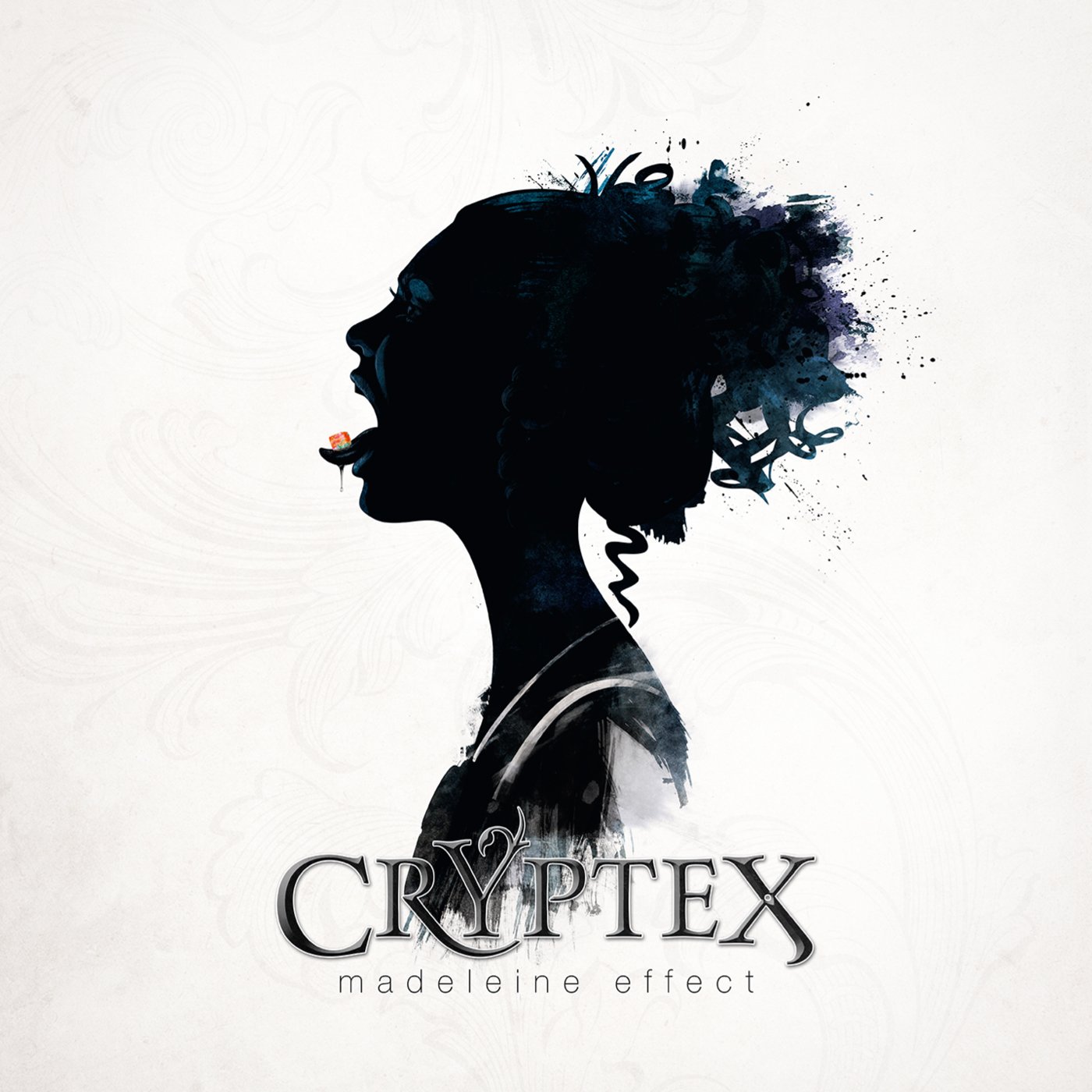
Album Review: Cryptex - The Madeleine Effect
As I grow older, and the sheer amount of music that I've heard increases exponentially, I notice two things happening. On the one hand, I find myself being grabbed by simple records that don't bring a single new idea to the table, but present back to me good songs in a style I'm already a fan of. As I get exposed to more music, and realize how much of it is disastrous, I have really come to appreciate what a gem finding a great old-fashioned album can be. But on the other hand, I have also seen my horizons spread in certain directions, notably in the more progressive/arty vein. In the last few years, I have heard plenty of records that are either all-out prog, or are avant-garde and theatrical, that have really hit me. So while it doesn't make a lot of sense, right now I love records that are either exactly what I would expect, or are something completely weird.
Cryptex does a fine job of straddling those lines, and bringing me an album that plays to both sides of my current taste. What they do on "The Madeleine Effect" is fuse catchy pop/rock with an artistic flair. Pick any song on the album, and what you're going to get is a great hook, and a hefty dose of atmosphere that wouldn't be out of place on a theater stage.
The opening "The Knowledge Of Being" shows you this right from the start, with a sneaky, sinister hook and a vocal that sounds like an actor losing himself in a role. And when the chorused vocals kick in at the end, there's no way to hear them as anything but a big chorus number that would punctuate a plot point in a story.
"Ribbon Tied Swing" has even more theatrical flair, from the rollicking piano line, to the vocals that swell in that corny way musicals prefer, but it all gets tied together with a melody that has some real teeth. Even though none of these songs stretches much beyond the four minute mark, they don't stagnate in repetition. There's always a bridge, if not an entire movement, that turns the song on its head. That's where the avant-garde influence comes in, where the band moves beyond the scope of simple rock and roll.
"Stroking Leather" is probably the oddest song of the bunch, shifting from dulcet accordion to raging hand-clapping, to ambient piano, all within the first two minutes. There are bits and pieces that are really good, but it's so disjointed a song that it fails to hold together as a cohesive piece of work. That's a danger when you're making music like this, but it's thankfully one that only pops up rarely.
After a couple of wildly oddball, but great, tracks, we get to "Orange Blossom City Girl", which appropriates the feeling (if not the riff) of "Sweet Home Alabama". It gets turned into something far different, but I'm not sure the nod-and-wink was such a good idea. It's too familiar, and takes me out of the moment of listening to Cryptex.
Ultimately, what "The Madeleine Effect" winds up being is an album that I can easily see a good portion of the people hating. It's weird, it throws a lot of non-rock ideas at you, and the vocals are going to be polarizing. All I can say is that while there are obviously flaws with the record, and it's by no means perfect, it's also quirky, charming, and fun. I had a good time listening to the record, and even if I don't foresee it becoming a staple of my listening habits, it's something that's certainly worth hearing, because it's unique. There's not a lot of music that is.
Saturday, July 25, 2015
Album Review: Powerwolf - "Blessed and Possessed"
The coming of a new Powerwolf record is like a visit from that old friend that you haven’t seen in a lifetime, but the conversation always seems to pick up where you last left off. Normally, music fans’ reaction to a band that stamps out one style of record is swift and vociferous, as fleeting, fickle tastes demand some new innovation or mechanic. Once or twice in a generation however, there’s an artist who falls under what can casually be called ‘The AC/DC corollary;’ a band who has such thorough understanding of their niche and charm that they do the unthinkable – never change their sound one iota and still be crowd pleasing and effective.
My compatriot Chris recently put it to me thus: “Powerwolf is one of those bands that absolutely makes the same record every time out, and I think that's perfect for them. I don't want to know what Powerwolf doing something wildly different sounds like.” He has a point, because the corollary question there is ‘what else would you want Powerwolf to do?’
Not far from the top we hear the most clarion example of everything we’ve discussed to this point. “Dead Until Dark” feels incredibly like a song we already know – maybe a b-side selection from “Blood of the Saints” or something from “Preachers of the Night.” That’s not to say that it’s stale or sounds like a misbegotten retread, no, just that the song so demonstrates all that we know and love about Powerwolf’s singalong anthems that it feels natural and comfortable to hear it again.
Shortly following up on that cut is “Army of the Night,” the kind of cut that thrives on a crisp punctuation of percussion and a rousing, all-in chorus hook. Not to cross too many nerd lines here, but the song could really function as the theme for the upcoming season two of “Attack on Titan” (sidebar: anybody ever noticed the trend that anime shows almost invariably have crappy theme songs? Is that a written law somewhere or something?) It’s another gleeful variant of the idiomatic Powerwolf formula and feels right at home batting in the top half of the lineup.
As if the idea needed further reinforcement, the listener is then greeted with the powerful recitations of “Armata Strigoi,” a chanting rumble that invariably becomes deeply rooted in the auditory canal and incredibly difficult to dislodge. Hours of otherwise productive time during a work day will be spent humming the simple but remarkably effective cadence of the melody. Powerwolf’s ability to use frequent returns to craft a rolling call is underrated; it’s an employment of a technique that’s borderline based in the call and response and blues, but the theory behind it has been tested and found true.
The album’s highest achiever is “Higher Than Heaven” an energetic romp featuring all the caution of an unbridled charger. This is the prototype song that Powerwolf has always built their sound around, a carousal of reckless abandon that sounds like the victory song of a mead-soaked Germanic hunting lodge. Nevermind that the song reminds ever so vaguely of a stepped up version of the Stonecutter’s theme, this is the kind of opus that brings smiles to the listener.
The most difficult concept in all of consumable mass media is defining the perpetually elusive ‘it.’ In power metal, a genre that commonly refutes the idea of evolution or change, determining what’s ‘it’ is even more arduous. That said, Powerwolf has ‘it.’ In a subgenre clogged with many middle-aged men adorned with stringy, long hair that believe with a straight face that the sensibility of the eighties remains alive and well, Powerwolf remains a fresh face, capitalizing both on the innate humor of their presentation and the inimitable drama that Iron Maiden laid the groundwork for. This works. “Blessed and Possessed” works. Don’t miss it.
My compatriot Chris recently put it to me thus: “Powerwolf is one of those bands that absolutely makes the same record every time out, and I think that's perfect for them. I don't want to know what Powerwolf doing something wildly different sounds like.” He has a point, because the corollary question there is ‘what else would you want Powerwolf to do?’
Not far from the top we hear the most clarion example of everything we’ve discussed to this point. “Dead Until Dark” feels incredibly like a song we already know – maybe a b-side selection from “Blood of the Saints” or something from “Preachers of the Night.” That’s not to say that it’s stale or sounds like a misbegotten retread, no, just that the song so demonstrates all that we know and love about Powerwolf’s singalong anthems that it feels natural and comfortable to hear it again.
Shortly following up on that cut is “Army of the Night,” the kind of cut that thrives on a crisp punctuation of percussion and a rousing, all-in chorus hook. Not to cross too many nerd lines here, but the song could really function as the theme for the upcoming season two of “Attack on Titan” (sidebar: anybody ever noticed the trend that anime shows almost invariably have crappy theme songs? Is that a written law somewhere or something?) It’s another gleeful variant of the idiomatic Powerwolf formula and feels right at home batting in the top half of the lineup.
As if the idea needed further reinforcement, the listener is then greeted with the powerful recitations of “Armata Strigoi,” a chanting rumble that invariably becomes deeply rooted in the auditory canal and incredibly difficult to dislodge. Hours of otherwise productive time during a work day will be spent humming the simple but remarkably effective cadence of the melody. Powerwolf’s ability to use frequent returns to craft a rolling call is underrated; it’s an employment of a technique that’s borderline based in the call and response and blues, but the theory behind it has been tested and found true.
The album’s highest achiever is “Higher Than Heaven” an energetic romp featuring all the caution of an unbridled charger. This is the prototype song that Powerwolf has always built their sound around, a carousal of reckless abandon that sounds like the victory song of a mead-soaked Germanic hunting lodge. Nevermind that the song reminds ever so vaguely of a stepped up version of the Stonecutter’s theme, this is the kind of opus that brings smiles to the listener.
The most difficult concept in all of consumable mass media is defining the perpetually elusive ‘it.’ In power metal, a genre that commonly refutes the idea of evolution or change, determining what’s ‘it’ is even more arduous. That said, Powerwolf has ‘it.’ In a subgenre clogged with many middle-aged men adorned with stringy, long hair that believe with a straight face that the sensibility of the eighties remains alive and well, Powerwolf remains a fresh face, capitalizing both on the innate humor of their presentation and the inimitable drama that Iron Maiden laid the groundwork for. This works. “Blessed and Possessed” works. Don’t miss it.
Thursday, July 23, 2015
Album Review: Kinetic Element - Travelog
The thing about progressive music that often gets overlooked is that it can often be too much of a good thing. There is certainly a time and a place for twenty minute epics that transport you to new musical worlds. That is the very nature of progressive music, to shatter your expectations and make you see things in a different way. But a lot of prog doesn't do this, because it adheres to a rigid set of rules. Prog today needs to be built from the sound of one of the forefathers of the genre, it needs to be expansive, and it certainly needs epic tracks all over the place. Kinetic Element is following that path, producing "Travelog", a seventy minute album where the shortest track still nears the ten minute mark.
That 'short' song is the title track, which follows the twenty minute epic opener. "Travelog" is a song that brings to mind early Genesis, with soft guitars plucking away, flute interludes, and a laid-back atmosphere that doesn't do the running time many favors. It's pleasant enough music, but between the pacing and the flat vocals and melodies, the song just don't really go anywhere, despite having ample time to develop into something more than it is.
Backtracking to the aforementioned epic, "War Song" opens the album with ambition, spending twenty minutes playing what should have been a five minute song. For the length, I would have expected multiple sections that moved the song in new directions, but instead it's a single melodic composition stretched out with massively extended instrumental passages. Those passages are the best parts of the song, given the lackluster vocal parts, but they do get to be a bit much for my tastes. I appreciate the organs that come in towards the end, but by then my attention has lapsed, and I'm ready to move on.
"Vision Of A New Dawn" has the same construction, and again is missing something because of it. It's not that they're bad tracks, it's just that they don't offer enough throughout the entirety of their lengths to keep the listener engaged. Great prog is able to run through the instrumental flourishes, but always return to the core of the song. That's what's missing here. The vocals and the melodies just aren't strong enough to justify the time between them.
There is certainly promise in the instrumentals here. The playing is all quite good, and there are sections, especially those when pianos and organs take the stage, that have some really good ideas. I don't say this often, as I'm not a fan of instrumental music, but this album would have been better off without vocalists, if someone could not have been found to write better vocal lines. As it stands, the vocals drag down all of these songs, both through the inability to craft a memorable chorus, and their lack of power and finesse.
"Travelog" is one of those albums that is hard to criticize, because I know the people who made the record did it out of love for the music. I can hear that, and I can see what they wanted to do, but it just doesn't hit the mark. Every genre has a margin for error, but the massive scope of the music makes prog's much smaller. This isn't terribly far off target, but it's enough to make this a bit disappointing.
Subscribe to:
Posts (Atom)