Our Top Story: As if we haven't already been gouged enough by the music business, Live Nation and Ticketmaster have said that they consider concert tickets to be underpriced, and see increasing said prices to be a huge source of revenue growth moving forward. As researchers noted, in the last twenty-four years, the average price of a ticket to a concert has increased 250%, and yet these companies think that is still not enough. The reality of the concert industry is eating itself, and considering that is the major source of income for bands, they are bringing on their own demise sooner than it would naturally occur.
There are two different concert industries. There is the one of the huge artists, and the one for everyone else. At the highest level, they might be able to get away with this scheme. The biggest artists only go to the biggest cities, where more people have more money. The average fan of any of these artists likely lives too far away to ever see them, or can't afford the cost of good seats to a show. These concerts are events where people will have to treat those two hours (if they're lucky) as a vacation, and organize their entire life around affording and getting to that one special night. That is not a sustainable model.
The rest of the music world has to pick up the scraps that are left. They go to the smaller towns across the country, playing in bars and clubs where many of the people in the crowd are there to drink, and the music is a nice bonus. When you're driving across the landscape in a decade-old van, playing to crowds where you can count how many people are watching while you play, there's a hard price limit on what you can charge. Bands simply cannot charge exorbitant prices in small-town America when they're struggling to fill even smaller venues. Calling tickets that aren't yet selling underpriced is ignoring the reality on the ground.
Raising prices is one thing, but telling fans they aren't paying enough is a special kind of stupid. Live Nation and Ticketmaster are not only planning to rob you, they're telling you in advance, so you feel even worse when it happens, because you couldn't stop it.
In Other News: Justin Bieber was shamed into deleting a post that was calling on his fans to cheat the system in order to give his latest flop of a single a shot of becoming #1. It was technically a reposting of something put up by a fan, but it in Bieber endorsed the idea of making a playlist of his latest song that could be played throughout the night, while sleeping, to rack up plays he didn't earn. There are two elements to this story I hate. The first is Bieber so blatantly cheating, and being rather shameless about it. I've grown to realize expecting better of nearly anyone is stupid, but it does still amaze me to live in a time without shame. Corruption is as commonplace as ever, but it's done more openly, and somehow we've come to accept it. That doesn't say much for us.
The other angle is that there doesn't seem to be a reliable way to assess what songs are actually popular. Radio play is sometimes bought and paid for by corporate structures, download sales are being phased out, and streaming is able to be gamed through these pathetic means. So how exactly are we to judge which songs are truly popular, and which have had money poured into the right means of inflating their stats? I don't know if there is a way, and that renders the entire idea of the charts possibly meaningless. That might actually be a good thing, though, since it could lead to us listening to what we want, rather than what's popular. Who knows?
And Also: In a recent interview, members of Greta Van Fleet said, "these days, there isn't a lot of rock that gets stuck in your head." While the band gets criticized routinely for their sound, on this account they are absolutely right. If we're talking about the American rock scene, and especially the music being played on rock radio, there is a decided lack of memorable songs. The trend has been going on ever since the end of the grunge era, but in recent years the decline has become even more profound. As post-grunge became influenced by itself, guitars kept dropping their tunings, and singing became less important, what counts as rock music has been devolving.
Turn on a radio now, and when you aren't being played songs from the 90s still, what we get are largely bland songs that barely have riffs or melodies, and use angst and/or screaming as a replacement for memorable songwriting. That's why a band like Ghost is able to stand out. They write memorable songs with catchy choruses, the kind of music that appeals to audiences. Funny how that works, huh? It's actually why Greta Van Fleet is also successful. While they may sound remarkably like Led Zeppelin, they also write songs that have more immediate appeal to them than anything Breaking Benjamin, Godsmack, Five Finger Death Punch, and the like have come up with in a decade. Rock has become so insulated that the crossover elements that once made it big have been selected out of it, leaving us nothing but the most commonplace elements. That's not a recipe for excitement.

Friday, January 31, 2020

Wednesday, January 29, 2020
Album Review: Lordi - Killection

Maybe I'm a bit of a prophet, because I wrote those words before reading the material that accompanied the record, wherein the concept is revealed as this record being a 'greatest hits' compilation of Lordi's hit singles if their fictional monster identities had been making music for the radio over the last forty years. Singles, eh? How did I ever arrive at the idea that's what Lordi is best at....
This would have been good information to have known when the album's first track was released, because now it makes sense that "Shake The Baby Silent" sounds like a Rob Zombie track because that's exactly what it's supposed to be copying. What at first sounded like a weird case of theft decades too late turns out to be a just a stupid gimmick. The song is still terrible, but at least I know why it exists. Lordi hasn't completely lost their minds, like I thought they might have.
Of course, there's a big problem with an album operating under this conceit; asking fans to enjoy both Zombie-esque 90s pseudo-industrial rock and synth-heavy 80s pomp-cheese rock is a bridge too far. I don't see a lot of the audience being willing to go along with all of the styles Lordi tries on throughout the album. There isn't enough overlap between them, and just being Lordi isn't enough to wash that away, especially since there is another bit of uncomfortable information here; Lordi isn't good at most of these styles.
Lordi does have a side to them I enjoy, but they are not a diverse band by any means. There is one mode they succeed in, and this album shows that when the branch out and try other things, they aren't very good at it. The campy fun and big hooks of their best stuff aren't present anywhere on this record, partly because they're so focused on recreating the sounds of the past, but also because they are adopting styles that don't mesh with their best qualities.
The other thing I don't quite get is why they didn't order the songs in supposed chronological order. It's jarring to go from a couple of 80s rockers straight into a dirty late 60s number, only to veer right back after. I like compilations to be chronological, so we can see how the artists evolved and changed with the times. This batch feels more random than anything. And that's without addressing their Kiss-disco track.
So is this album entirely a failure? Well, as an album, yes. "I Dug A Hole In The Yard For You" is a good song, but it sounds like every other Lordi single, so that's why. Everything else here is about the worst Lordi music I've ever heard. Lordi are not good at proto-metal, yacht rock, hair metal, or any of the other stuff they try here. It's bad music, and most of it doesn't even sound like Lordi, so I don't know who is supposed to enjoy this. I sure didn't. This is the first album short-listed for worst of the year honors.
Monday, January 27, 2020
Album Review: Serenity - The Last Knight

In fact, after the last album left me rather cold, I wasn't expecting to cover another of theirs (if circumstances gave me enough content to do so), but I do try to give everyone a fair shake, so I listened to the two singles put out for this new effort. And much to my amazement, they were back to being the Serenity I like the most, and even if they turned out to be the highlights of the record, they were enough to draw me back in.
At their best, Serenity play power metal of the dramatic kind. The keyboards and orchestral sounds give the songs the scope and setting of a fantasy epic, as this time the album seems centered around medieval knights, so we get yet more power metal songs about swords and steel. I'll say this; I'm rather tired of the projection metal bands put forward of themselves as knights, warriors, etc. You're musicians, and there's nothing heroic about playing a guitar. Swinging a sword for any purpose besides self-defense isn't exactly heroic either, but moral examination isn't something I expect to be found in metal albums.
Georg Neuhauser remains a polarizing vocalist, with one of the most nasal voices in the genre. I don't mind him, and he certainly gives the band a sound unique from everyone else. That also made a certain 'mystery' band from not too long ago not much of one, but that's an unnecessary diversion. At his best, Georg gives the band big, strong hooks that his voice is able to maximize. "Set The World On Fire", one of those aforementioned singles, is exactly that. The chorus comes in with a dramatic swell and stomping energy, but it also has a melodic sheen so polished it only needs one play to become familiar. It's a gem of a song, no doubt.
As for that problem I mentioned, this is finally the record where they have solved it. The song I singled out already is one of the best ones here, but the rest of the album stands up to that high bar with aplomb. "Souls And Sins" boasts a massive hook, while "Keeper Of The Knights" has plenty of charm of its own. Serenity is adept at making their music sound bigger than it actually is, which they continue here. The ten main songs on the album are all roughly four minutes long, with no surprises along the way, but the record feels more expansive than that. Being compact but sounding widescreen is an interesting combination we don't often get to hear.
What those last two paragraphs are saying is that after years of being teased, Serenity has finally reached their potential. "The Last Knight" is, to my ears, the best album they've yet made. This is the best distillation of who they are and what they do given to us yet. From a few heavier moments, to the tavern sing-along "Queen Of Avalon", everything the band throws at us works in the context of this record. It's not exactly 'relatable', but power metal has never really been that.
So I'll say this; "The Last Knight" will never become a true favorite of mine, because there isn't anything in the subject matter for me to use as a mirror or a therapy, but it is a great record in a time when power metal has very few of them, and it's a ton of fun to listen to. Serenity has finally hit the bulls-eye, and "The Last Knight" is the first great album of 2020.
Friday, January 24, 2020
Bloody Good News: The Grammys and Aerosmith; Ugly and Uglier
Our Top Story: Heading into the Grammys, the awards show is even more of a mess than usual. The now former head of the Academy has been forced out amid allegations of improper conduct, but there is a more interesting wrinkle to the story. As she is burning bridges that will never again be crossed, accusations are being leveled that there is widespread cheating and corruption in the voting committees. Notably, she says that at least one nominee for Song Of The Year finished 18th in the balloting, and was given a nomination anyway because the artist served on the board making those decisions, as well as one of their representatives.
This doesn't come out of nowhere. The Grammys have been treated like a joke for ages. It's been roughly twenty years since Homer Simpson threw away his Grammy, stating it's not actually an award. The prospect of their being corruption among the Academy is not in the least bit surprising. What does come a bit out of the blue is the stupidity of the remaining members, who didn't forsee a spurned member going public with insider information. Like them or not (and I would almost always argue not), this is why NDAs have become so widespread. A competently run organization would have locked up a potential dissident in an agreement to protect their secrets. The fact that no one here did that is wildly incompetent.
But let's get back to the issue of music for a moment. What do we make of the fact that we know have information in the public telling us that some (many?) of the nominees being celebrated this year were judged even by the committees to not be worthy? For everyone who has written off the Grammys over the years, as they have shifted from being an awards show to being a televised concert, we now have something we can consider proof that it's all a scam, that the record companies are giving awards to the people whose records they are trying hardest to sell.
That may or may not be true, but the story points out a glaring flaw that inhabits just about every pursuit; people are stupid. Any system that includes the people involved in what is going to be awarded is inevitably going to fall apart. Artists cannot be in any way responsible for honoring their peers. Not only is their conflict when they make their own music, but there is conflict whenever a friend (or nemesis) is considered for a nomination. Also, people who do something are often the worst judges, because they are so involved in their own career and their own music that they hear far less than we, the general public, do.
The same thing is true for anyone else who works behind the scenes, as either a producer, agent, or record company executive. They all have self-interest they can't completely shut off, and the people they already know and/or have an investment in will get all the attention. The only way for an award to be considered the least bit genuine is if there is independence for the people handing them out. If it's nothing but the industry patting itself on the back, of course there won't be any respect. Self high fives don't count.
How did no one see this coming?
In Other News: Speaking of the Grammys, Aerosmith will be performing, and they are embroiled in an equally ugly situation. Drummer Joey Kramer was injured last year, and needed time off from performing to heal up. When he says he was ready to come back, the band disagreed, and forced him to audition and prove he was up to the job, after which they denied his re-entry to the band in time for several honors coming to them this weekend.
I'm not sure I can think of another example, off the top of my head, of a member of a band not being allowed to take back his or her rightful spot. This isn't a situation where someone is trying to rejoin after leaving a band. Kramer has always been the drummer of Aerosmith, and the other members have simply told him he can't play. Members who all, at various times, have either left the band or held them up, with no repercussions. Joe Perry left Aerosmith, yet he was welcomed back. Steven Tyler put the band on hold while he did American Idol, then publicly tried to start a solo career, only to return when it was clear no one gave a damn about him without the band. So why is Kramer being singled out and treated like this?
The simple answer is because they can get away with it. Drummers are almost always the most anonymous members of a band, and can easily be replaced without many people noticing or caring. To most people, Aerosmith is Tyler and Perry, and if they can save a few bucks with someone else playing drums, it's not a surprise they would try to put a few more bucks in their own pockets. It isn't a secret that a lot of bands their age are nothing more than business arrangements, where the members only see each other on stage. If that's the reality you live in, screwing someone over is simply monetary policy. They may not see it as screwing a friend. Fifty years in the band doesn't mean much if the 'band' is looked at as a corporation.
There's no getting around stating facts; this is a shitty way to treat a band member. If fifty years in a band gets you that little respect, perhaps the rest of us have to reconsider how much respect to give the resrt of the band.
This doesn't come out of nowhere. The Grammys have been treated like a joke for ages. It's been roughly twenty years since Homer Simpson threw away his Grammy, stating it's not actually an award. The prospect of their being corruption among the Academy is not in the least bit surprising. What does come a bit out of the blue is the stupidity of the remaining members, who didn't forsee a spurned member going public with insider information. Like them or not (and I would almost always argue not), this is why NDAs have become so widespread. A competently run organization would have locked up a potential dissident in an agreement to protect their secrets. The fact that no one here did that is wildly incompetent.
But let's get back to the issue of music for a moment. What do we make of the fact that we know have information in the public telling us that some (many?) of the nominees being celebrated this year were judged even by the committees to not be worthy? For everyone who has written off the Grammys over the years, as they have shifted from being an awards show to being a televised concert, we now have something we can consider proof that it's all a scam, that the record companies are giving awards to the people whose records they are trying hardest to sell.
That may or may not be true, but the story points out a glaring flaw that inhabits just about every pursuit; people are stupid. Any system that includes the people involved in what is going to be awarded is inevitably going to fall apart. Artists cannot be in any way responsible for honoring their peers. Not only is their conflict when they make their own music, but there is conflict whenever a friend (or nemesis) is considered for a nomination. Also, people who do something are often the worst judges, because they are so involved in their own career and their own music that they hear far less than we, the general public, do.
The same thing is true for anyone else who works behind the scenes, as either a producer, agent, or record company executive. They all have self-interest they can't completely shut off, and the people they already know and/or have an investment in will get all the attention. The only way for an award to be considered the least bit genuine is if there is independence for the people handing them out. If it's nothing but the industry patting itself on the back, of course there won't be any respect. Self high fives don't count.
How did no one see this coming?
In Other News: Speaking of the Grammys, Aerosmith will be performing, and they are embroiled in an equally ugly situation. Drummer Joey Kramer was injured last year, and needed time off from performing to heal up. When he says he was ready to come back, the band disagreed, and forced him to audition and prove he was up to the job, after which they denied his re-entry to the band in time for several honors coming to them this weekend.
I'm not sure I can think of another example, off the top of my head, of a member of a band not being allowed to take back his or her rightful spot. This isn't a situation where someone is trying to rejoin after leaving a band. Kramer has always been the drummer of Aerosmith, and the other members have simply told him he can't play. Members who all, at various times, have either left the band or held them up, with no repercussions. Joe Perry left Aerosmith, yet he was welcomed back. Steven Tyler put the band on hold while he did American Idol, then publicly tried to start a solo career, only to return when it was clear no one gave a damn about him without the band. So why is Kramer being singled out and treated like this?
The simple answer is because they can get away with it. Drummers are almost always the most anonymous members of a band, and can easily be replaced without many people noticing or caring. To most people, Aerosmith is Tyler and Perry, and if they can save a few bucks with someone else playing drums, it's not a surprise they would try to put a few more bucks in their own pockets. It isn't a secret that a lot of bands their age are nothing more than business arrangements, where the members only see each other on stage. If that's the reality you live in, screwing someone over is simply monetary policy. They may not see it as screwing a friend. Fifty years in the band doesn't mean much if the 'band' is looked at as a corporation.
There's no getting around stating facts; this is a shitty way to treat a band member. If fifty years in a band gets you that little respect, perhaps the rest of us have to reconsider how much respect to give the resrt of the band.
Wednesday, January 22, 2020
Album Review: Serious Black - Suite 226
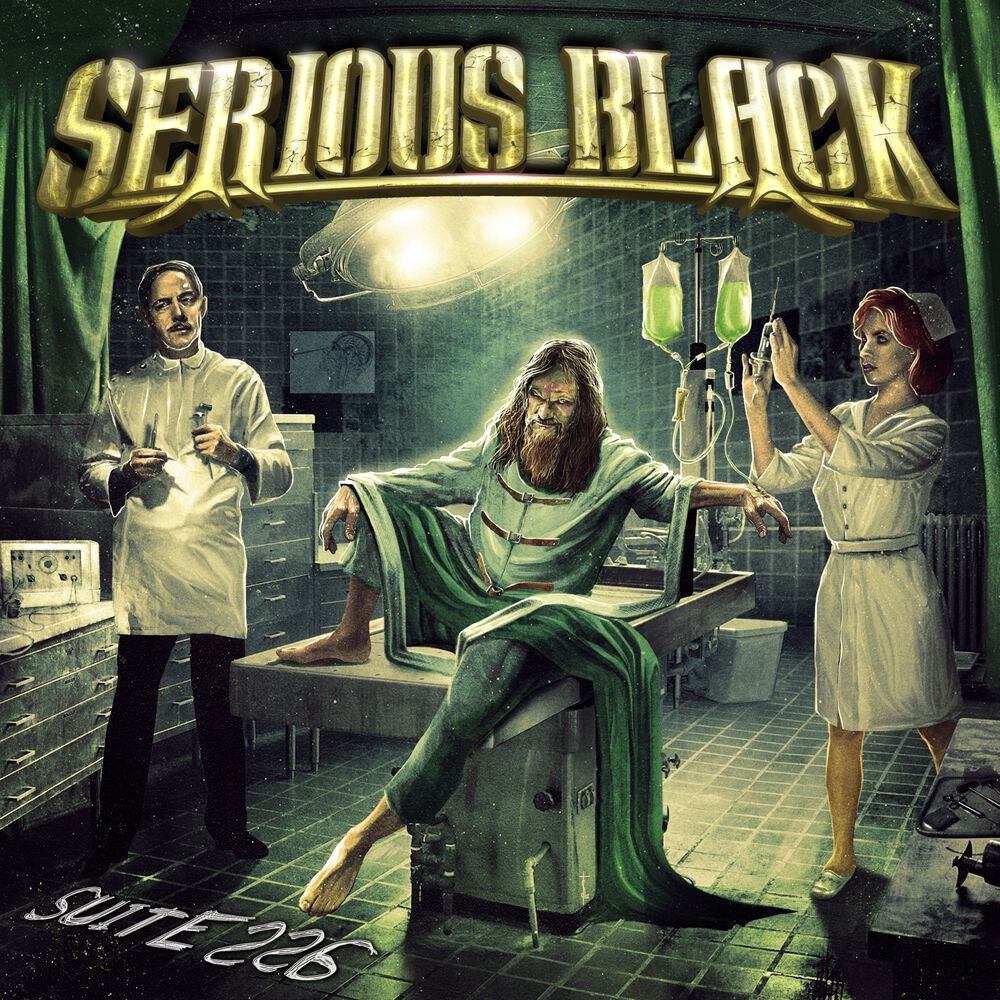
The other notable bit about this album is that the band is shifting their direction back to their beginning, with a more power metal oriented sound, tempering some of the more hard rock and traditional metal elements the last two albums integrated. Especially on "Mirrorworld", those were some of my favorite bits.
Anytime a metal band is making concept albums, especially those about psychological/horror themes, there's an inevitable comparison to King Diamond. That's hard to ignore when this record gets started, since "Let It Go" not only has moments like the introduction of the guitar solo that feel like an Andy Laroque construction, but Urban Breed throws vocal inflections into the verses that have the same sort of sinister tone that King Diamond often uses in between his falsettos.
Throughout the album, we get fewer riffs, and more chugging power chords that shift even more of the heavy lifting to Urban's melodies. That's the nature of power metal in its traditional form. The guitars and drums beat away with a steady gait, with the energy supposedly being exciting enough to get us to the choruses. There was a time I was convinced of that argument, but I don't necessarily believe it anymore.
However, if there is a singer in power metal who can carry that burden, it's Urban Breed. From Tad Morose's "Matters Of The Dark", to Bloodbound's "Tabula Rasa", to Trail Of Murder's lone album, to "Mirrorworld", he has given us several albums of the highest-quality metal melodies. He shows flashes of that on this record, with "Let It Go", "Solitude Etude" and "Fate Of All Humanity" boasting the kinds of big, sticky hooks that make power metal great, and Urban one of the better purveyors of the craft. There are also tracks like "Castiel", though, where the chorus is more of a simple chant of the title, and it doesn't have any of the snap or sheen I look for. It tries to drive the point home, but it isn't very sharp.
"Heaven Shall Burn" is much the same. Urban's cadence in the chorus simply isn't melodic, and I have never been someone for whom a repeated line with gang vocals is enough for. I'm looking for more out of a songwriter than that, and it's disappointing when someone who I know is capable of writing great songs isn't able to do so. I shouldn't be surprised, since the previous album was muc the same way. There were three or four fantastic tracks that sat among an album that otherwise was a step back from their peak. That's where we are here as well.
Serious Black has now given us four albums, and three of them fall into the category of 'pretty good with a couple great songs'. They've only made one great record in four, so perhaps the time has come to declare this is who Serious Black are. They're a band of veteran hands who made solid music, but who don't have enough of the spark of a new group to hit their heights. That's fine, and I'm not complaining about this record, but I'm also not going to say it's got my blood pumping. "Suite 226" is enjoyable enough, but it isn't "Mirrorworld". It's not even close.
Monday, January 20, 2020
Album Review: Temperance - Viridian

A large part of that was due to the band's multiple vocalists, who play off one another and add plenty of depth and nuance to the writing, the performance, and especially the harmonies. That record has a few flaws, sure, but it was a bright and vibrant piece of work that has lingered in my mind ever since. With the band moving to a new and bigger label, and riding off the success of that record, I certainly came into this record expecting something really good.
The album gets off to a ripping start with "Mission Impossible", one of the singles the band previewed before the release. It wastes no time getting right to the heavy riffing, with the slick modern sound that has been slowly taking over the scene. The difference is that Temperance is able to take that rhythmic foundation and graft on huge hooks and melodies, which are sweetened by the three voices blending into a far more lush sound than a lot of bands are able to achieve, whether through choice or multi-tracking the same voice several times. There's a real difference when you have different singers coming together, and it's Temperance's biggest selling point. It sounds phenomenal.
I go to this well often, but there is a natural comparison to be made here with Amaranthe. They both have multiple singers, a knack for huge choruses, and a polished modern sound. They also operate on a level above the usual competition. There are a lot of bands that can match the chugging guitars and the hints of electronic influences, but it's rare for any to consistently write sticky hooks. Temperance is able to do that, and "Viridian" picks up where the last album left off, in that regard.
This record is a bit different, though. The band is focused more on their metal edge, with less symphonic bits softening their sound. They're equally adept at both, so that isn't a criticism, merely an observation. What it does is set them up for success, because this record is even more focused, and primed to cross over to more metal fans than before. The band took their music, pared it down to the bones, and worked to deliver an album with a laser focus on their target audience.
To that end, "Viridian" is exactly the type of album I'm always searching for. There's not much better than heavy guitars and huge melodies, so especially after the slow holiday season and start to the new year, this is the first album of 2020 that feels satisfying. There's plenty of metallic crunch here to headband to, there's little details in the background to put your tongue firmly in your cheek, and of course the hooks will have your head bopping along. At certain times, what we need most of all are records that can make us feel good, and I get that sense from "Viridian". There's something about the sound that is uplifting.
I'll be honest, though. While this record sates me, I do miss some of the elements from "Of Jupiter And Moons" that didn't make it to this album. The songs are great, but the scope of the record has been narrowed slightly. That's not a problem, but when you get to the gorgeous orchestral ballad "Scent Of Dye", it opens up so many possibilities that it would have benefitted the album even more to go down that road a bit more often.
Still, that's no reason to complain. Temperance has once again given us an album that shows power metal being done as well as anyone is doing it, justifying their climb up the ranks, and putting the first marker down in the battle to top the rankings in 2020.
Friday, January 17, 2020
Album Review: Magnum - The Serpent Rings

Once again, Magnum deliver us a solid hour of new music, which if I'm being honest, is at least ten minutes too much. All of their albums are roughly that length, and even the ones I like feel like they go one one or two songs too much. Unless you're writing nothing but killer tracks, and hour is asking a lot these days.
We get off to a good start with "Where Are You Eden?" The song does what Magnum does best, blending some crunchy rock with beautiful keyboard and orchestral work. Look, this is Magnum's twenty-first album, so we've heard it all before. The only question with each album is which bits of their history get emphasized, and has Tony Clarkin pulled out a couple extra great melodies. The answer to the former is Magnum trending toward their heavier side, and the answer to the latter is... sort of.
Like all Magnum albums, the songs are smooth and melodic, but not a lot of them hit the grandiose notes that their best songs do. The chorus to "Not Forgiven" is one of those moments, but for every song like that, there's a "Madman Or Messiah" where they lose that magical feeling. Or there's the title track, which spends more than two minutes building up to an ascending melody that is the perfect way for the song to explode into a massive chorus... but instead it pulls back to a very small sounding melody instead. All the work setting the stage was done just so the lights could get turned down a few notches too far.
Then there's "House Of Kings", where Catley and the band try for an aggressive approach, and nothing about it works. Catley's voice is not an angry one, and him pushing himself doesn't sound very good. Maybe it's his age, but he's clearly at his best when he's singing in a more dramatic or emotional tone. Forced aggression doesn't sound natural for him, or for Magnum.
There are still some good songs on here, like those I've mentioned, as well as "The Great Unknown" and "Man", but I'd be lying if I said it added up to a full album of great Magnum material. The good stuff is good, but there's enough lesser material that it drags down the album's average. If you cut out three tracks, and left this as a forty-five minute album, it would be pretty good. Not one of their best, but certainly something work coming back to. I can't really say that about the full record. I would say this is one to pick out the good songs, and focus on them. If you do, you've got five or six very good Magnum tracks. That's not so bad.
Wednesday, January 15, 2020
Album Review: Revolution Saints - Rise
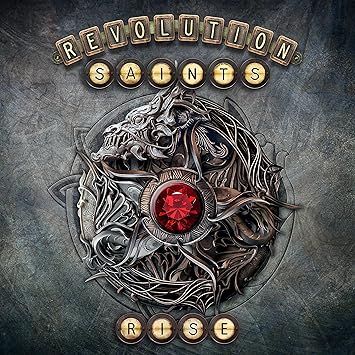
Things get off to a good start with the first single, "When The Heartache Has Gone", which is a classic melodic rocker where Deen Castronovo gets to sing some smooth melodies (even if he seems a bit low in the mix), while Doug Aldrich adds in a shredding solo. It's exactly what you would expect from this kind of melodic rock, but it's just sharper than a lot of the other records the conveyor belt churns out, and Deen's voice gives it a unique identity. The bits where Jack Blades takes a few lines instantly sound more generic just by virtue of the tone of his voice.
I like melodic rock that still rocks, so "Rise" is the kind of track we need to hear more of. It's a bit heavier, has more energy, and that helps the record feel more urgent. It's easy for these bands to get too soft too often, and then the records feel rather limp and lifeless. There is actually a big difference between AOR and melodic rock, and too often bands cross over without realizing it.
With this album, Revolution Saints connect back to that first album, and deliver songs that hit on the promise of the genre. "Coming Home" and "Closer" inject a bit of drama, packed with strong melodies and an uplifting spirit. Melodic rock is supposed to make you feel good, and that's what Revolution Saints are giving us here. Is it a bit cheesy? Sure, but that's part of the charm. A little bit of that is fun, as long as it's kept in check, and it certainly is here.
A fresh year means a fresh start for every genre, a bit of a reset, and I find that very helpful. Without the distinction, every record would be another knot on a thread that never seems to end. They would be there, but they would all be the same. Revolution Saints are starting off 2020 on the melodic rock front, and in doing so they are giving us a good starting point. There will be a lot of similar records to come as the year unfolds, so it's nice to have a measuring stick that's worth using. "Rise" gets back to doing what Revolution Saints are best at, and that means we get a record well worth hearing if you're a melodic rock fan. And to think, January was at one time a wasteland for album releases. Getting us with fresh ears can be a good thing. It is for Revolution Saints.
Monday, January 13, 2020
Album Review: Sons Of Apollo - MMXX
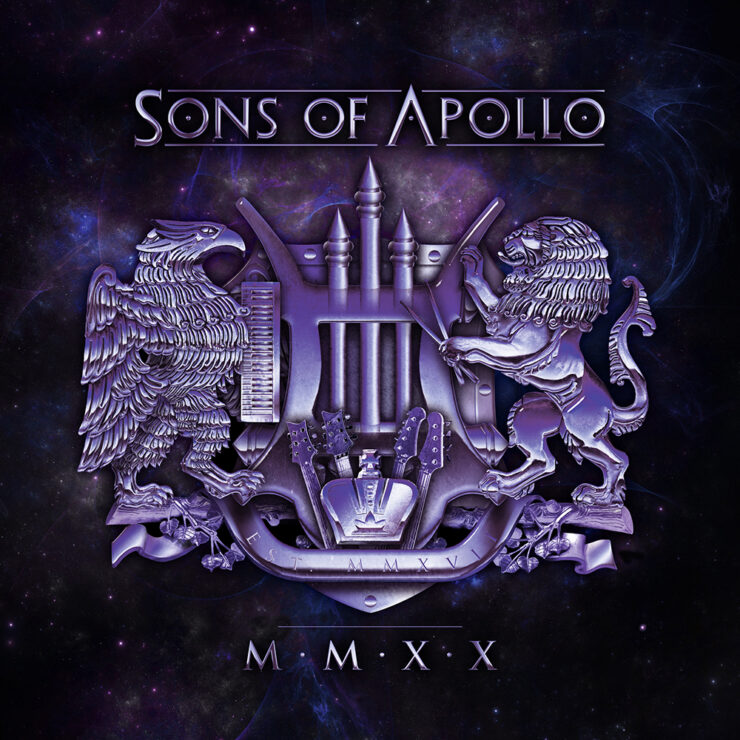
They shouldn't have been promoting themselves until they knew who they were. Lesson learned?
That's what we find out with their second album, which has the benefit of a record/tour cycle behind it. The band has played together, both live and in the studio, and they should have a better understanding of who Sons Of Apollo are.
"Goodbye Divinity" is both the first single, and the opening track, and it welcomes us back to their world with the best elements of the debut. The playing is excellent, the sound is low-tuned and heavy, and Jeff Scott Soto gives the band a strong melodic edge. It's very modern, but anchored on strong songwriting, very much like the singles from the debut album, which I felt were the best tracks on that record. There is a lack of highly proficient melodic rock/metal, which is a niche that Sons Of Apollo can definitely fill. Tracks like this one prove that point with ease.
Although the band keeps the running times relatively compact, save for the fifteen minute closing epic, a funny thing happens once we get past the opener. The next two tracks, "Wither To Black" and "Asphyixiation" both see the melody sanded down in favor of a more rhythmic vocal approach, which might make the songs sound heavier, but it doesn't make them as memorable. I shouldn't be surprised, though, since the same exact thing happened with Mike Portnoy's other recent band, The Winery Dogs.
With "King Of Delusion", we got the second longest track, and one that relies heavily on establishing a groove with the guitars. Between that approach, and the type of melody Soto brings to the table, it reminds me a bit of Dio's "Master Of The Moon" album. This song has a solo piano intro, and some heavy grooves, so it's crying out to have a suitably epic chorus, but that never comes. Soto's work throughout the record is lacking the snap and hookiness that "Coming Home" or especially "Alive" brought to the first record. These songs are, if anything, more subtle this time around.
I like the band's focus on this album. They have picked an identity for who they are going to be, and they largely stick to that, so this record holds together as a more cohesive piece. That being said, this collection doesn't have those couple of great melodic tracks that appeal to listeners such as myself. This is less of a prog metal album than the first, but it feels more like one, in that it's not a very immediate listening experience. If you don't focus on the details of what's going on, it's easy to have the melodies slip by unnoticed.
And herein lies the issue; Sons Of Apollo are a band with immeasurable talents.... except for the most important one of all. They are all among the best at what they do, but this record spends fifty-one of its fifty-eight minutes displaying a lack of virtuosity in the songwriting department. The playing and singing is excellent, and there are good ideas to build on, but the core melodic songwriting that people who aren't hardcore musicians grab on to (that would be me, if you can't tell) are largely missing. The myriad solos in "New World Today" are impressive, but where's the hook I'll be singing to myself while I wait for my cup of coffee to finish brewing?
Sons Of Apollo have simultaneously taken a step forward by defining who they are, and a step backward in delivering an album that is less of either side of the coin. It's not like this is a bad record, but it doesn't live up to even their flawed debut. They could, and really should, be doing so, so much better than this.
Friday, January 10, 2020
Album Review: Poppy - I Disagree

Poppy has been generating massive amounts of buzz, at least in certain circles, for this new album. I have heard her name as much as anyone leading into 2020, with several people whose opinions I listen to all saying hers is one of the most anticipated records of the year. All of this is despite her not being conventionally popular; having no hit song, no hit album, no established touring draw. She is big because people say she is going to be big, because apparently there is just enough cross-over that someone other than one particular music silo has taken a shine to her.
So I did what all curious critics do; I opened the door to mine, and I decided to see what all the fuss was about. I don't care about being popular, but I am intrigued by how bad something has to be before it stops generating acclaim, and so I sat down and listened to the music of Poppy to see why she is considered the next big thing.
Honestly, I can't hear anything in this music that explains it. I know that music doesn't have to appeal to many people anymore to be successful, but it should still have to appeal to someone, right? I don't know what appeal Poppy holds.
Poppy's music is like art-house cinema; it is dark, bleak, abstract, and intended only for a tiny slice of the audience. There is no feel good moment, no obvious narrative, nothing to pull you back from the boredom of having your soul crushed by an artist who wants to remind you of the depressing nature of humanity. If ever someone needed a soundtrack for a four hour, black and white movie with copious visual sadism, Poppy would fit the bill.
This wretched album starts with "Concrete", a 'song' that tries to pull together the riffing of Slipknot, 60s harpsichord pop, and vocals that sound like a six year old. It's a complete mess, with no justification whatsoever for the violent shifts in style. It's trying to be off-putting, but that alone isn't art. It's a built-in defense mechanism to use as an excuse if and when people don't like what they're hearing. "Oh, they're not supposed to like it. It's too challenging, or too dark, or too....." You get the idea. It's music that can't fail, because failure is the point. Actually, I suppose if it does become popular, Poppy would be a failure. Huh.
The title track is even worse, since it has a kernel of a good idea in the main melody, but it's surrounded by tuneless noise. It's musical schizophrenia, and I simply can't hear how someone is going to enjoy all of the various bits and pieces Poppy has thrown into her sausage grinder. The chunks haven't blended into a tasteless paste. I can hear each one, and they don't go together whatsoever.
I suppose the confusion and depression this album stirs in me is one of two things. It is either an indication that I truly am too old to be listening to what's 'popular', or the concept of songwriting is dead. They might both be true, but the latter is the one that bothers me the most. Music is personal, and everyone's experience is different, but songs are more than collages of randomness. Songs speak to the human experience, they have something to say about it. At least they should. You could read into it that Poppy is telling us the world is tearing apart around us, but that line of thinking feels far too complex for this record. No, the distinct impression I get is that Poppy (and the people behind the scenes guiding this) is trying to be artistic without a full understanding of how that's done. Being weird for the sake of being weird isn't art. It's a cry for attention.
After listening to "I Disagree", we're the ones who should be crying.
Subscribe to:
Posts (Atom)